Grande Prairie has a real, structured mental health support network for workers and families. Local need is significant, with 327 people identified as experiencing homelessness in the City's 2022 Point-in-Time Count, equal to 0.51% of Grande Prairie's population of 64,141, and the report notes an 83% increase since the first count in 2006, which helps explain why counselling, crisis response, and family-support navigation matter so much in this region. For more information, see our Grande Prairie family counselling.
When you're trying to keep up with work, parenting, relationships, and your own mental health all at once, finding help can feel harder than it should. Some people need immediate crisis support. Others need ongoing counselling, a trauma-specific service, or just a clear starting point that doesn't involve calling five different places and repeating the same story each time. Grande Prairie does have options, but they serve different purposes, and the biggest challenge is often knowing which door to open first. If stress and exhaustion are already piling up, it can also help to understand the early signs of strain, including preventing burnout at work. For more information, see our counselling in Grande Prairie.
"Grande Prairie offers mental health resources for workers and families through hospital-based crisis care, public outpatient services, community organizations, and ongoing counselling options that fit different levels of need." For more information, see our family counselling.
This guide is built to help you choose based on situation, not just a list of names. You'll see what each service is best for, what it usually does well, and where the trade-offs are.
1. Alberta Health Services (AHS) – Addiction & Mental Health, Grande Prairie
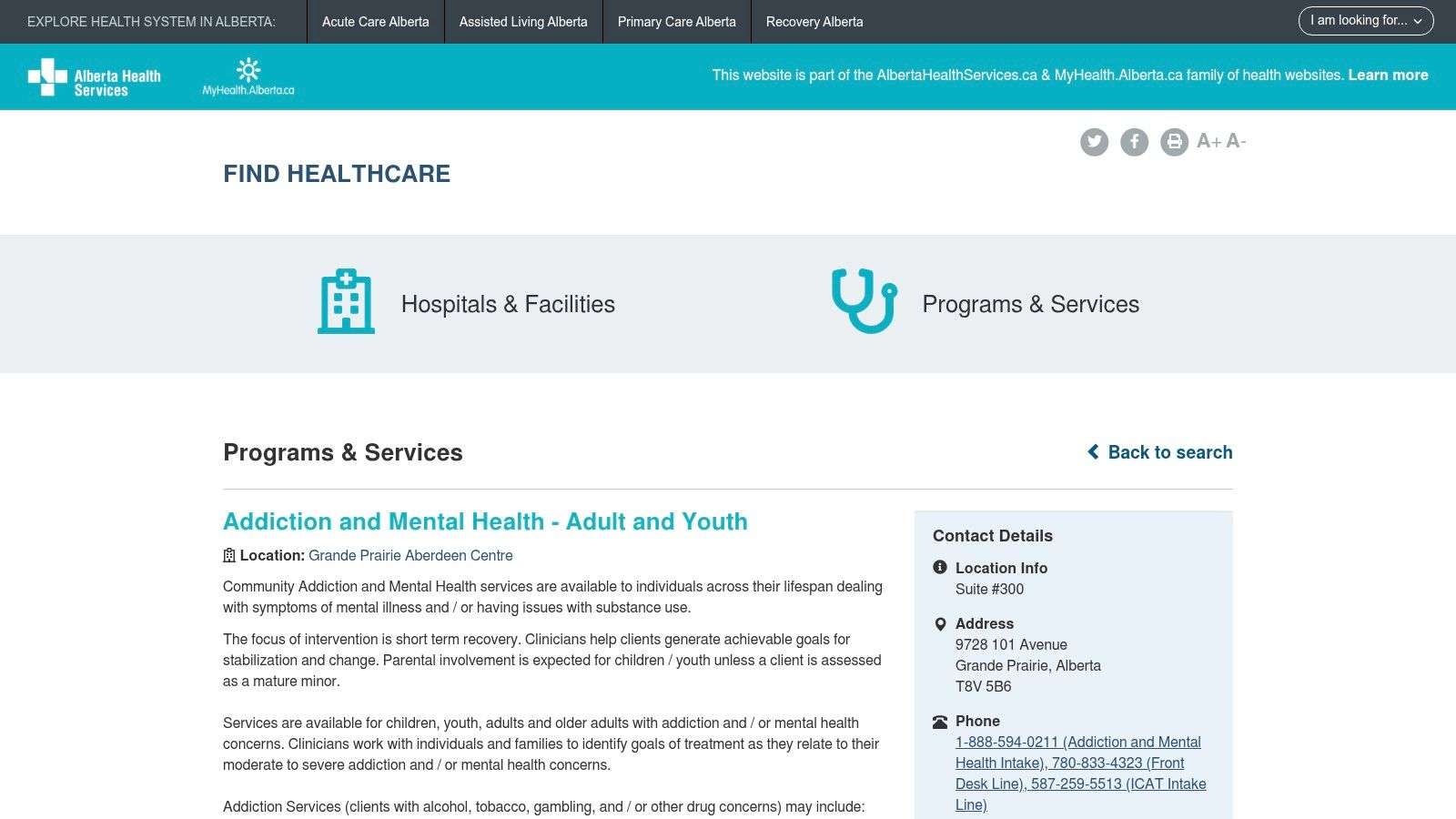
For many people, AHS is the most sensible first call when the problem is serious, but not an immediate emergency. This is often where adults, youth, and families start when they need assessment, treatment planning, or direction into the broader public system.
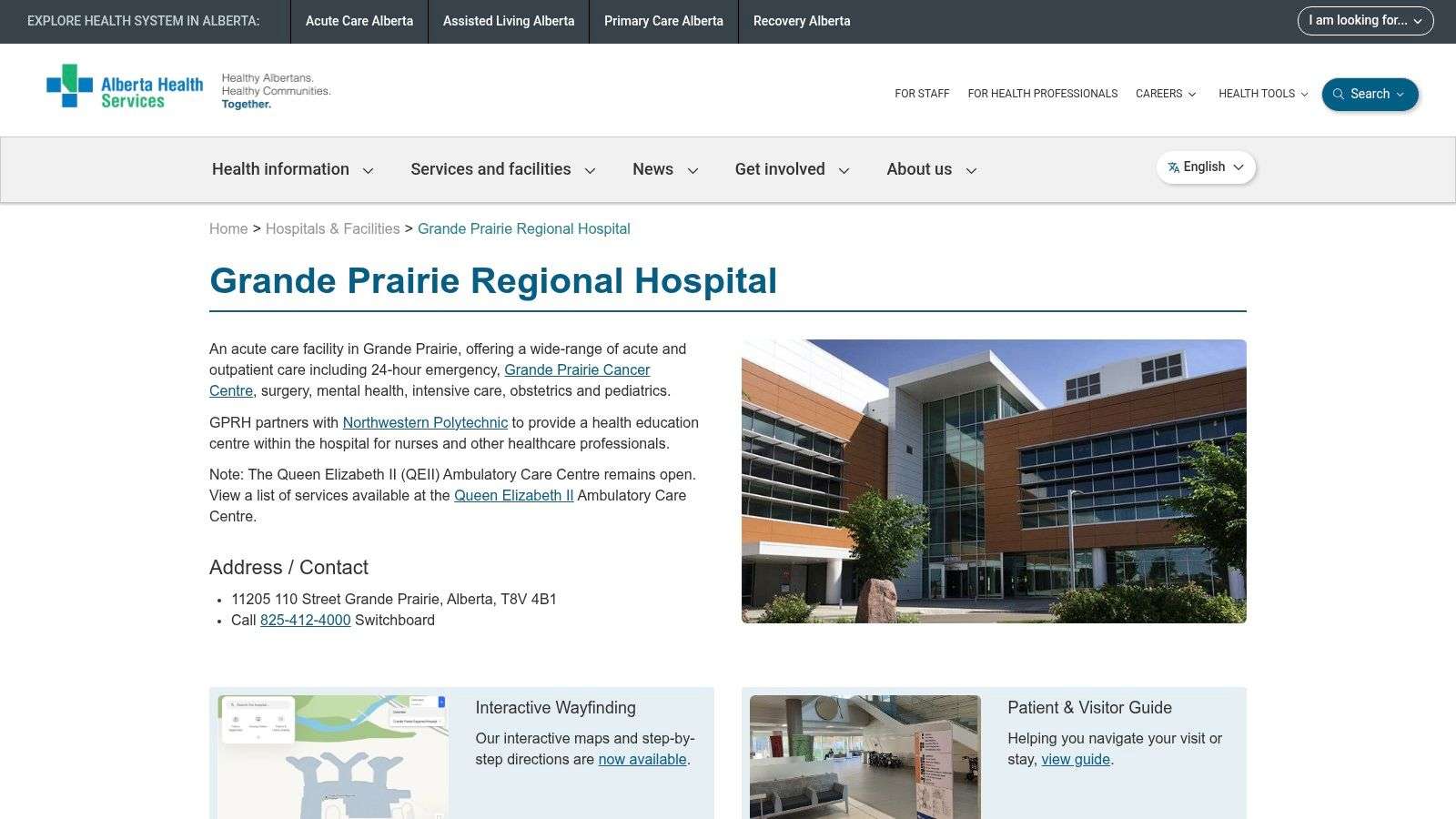
What makes this option especially practical is that Grande Prairie has a formal non-urgent access point at the hospital where callers are screened and triaged. Alberta Health Services says that intake typically takes 30 to 45 minutes with a mental health therapist, and the service operates Monday to Friday from 8:30 a.m. to 4:30 p.m. through the Grande Prairie Regional Hospital mental health intake service.
Best use for this service
Use AHS when you need more than informal support and less than emergency-room care. It fits situations like worsening anxiety, depression, substance use concerns, trauma symptoms, complicated grief, or family distress that needs coordinated follow-up.
What works well
- Structured entry point: You aren't left guessing whether you need psychiatry, counselling, community care, or another AHS program.
- Family-inclusive planning: Public systems can be imperfect, but they can also be useful when several services need to connect.
- Broad referral network: If your needs change, you're already inside the system most likely to coordinate next steps.
What doesn't work as well
- It can feel administrative: Intake and eligibility questions can be tiring when you're already overwhelmed.
- Business-hours access: If your distress spikes at night or on weekends, you'll need a different pathway.
Practical rule: If the issue is urgent but not life-threatening, call intake during working hours. If safety is in question, skip intake and use emergency services.
You can review the local program through AHS Addiction and Mental Health in Grande Prairie.
2. Grande Prairie Regional Hospital (AHS) – Emergency Mental Health & Inpatient Psychiatry
Some situations don't need a directory. They need immediate action. If someone is at risk of harming themselves, is in severe mental distress, is acutely intoxicated and unsafe, or can't care for themselves, the hospital is the right place.
The key trade-off is simple. Hospital mental health care is built for stabilization, not for long-term therapy. One Alberta Health Services page notes that the local crisis team is accessed through the Emergency Department and focuses on stabilization, assessment, referral, and follow-up rather than routine outpatient care through the Grande Prairie regional crisis service.
What to expect
Emergency mental health care usually moves fast around safety questions and more slowly around comfort. Families sometimes expect a therapy-style conversation. In reality, the team is usually deciding whether the person can go home safely, needs observation, or needs admission.
That doesn't mean it's the wrong setting. It means you should use it for the right reason.
- Go to the ED for immediate danger: Suicidal intent, psychosis, severe agitation, or inability to stay safe.
- Expect short-term decisions: The aim is to reduce immediate risk and connect follow-up care.
- Plan for discharge needs: Ask who to call next, what symptoms should trigger return, and what supports are available after the visit.
Hospital care is often the right first step in a crisis and the wrong place to expect weekly therapy.
You can find the hospital through Grande Prairie Regional Hospital.
3. Canadian Mental Health Association – Alberta Northwest Region / Recovery College Grande Prairie
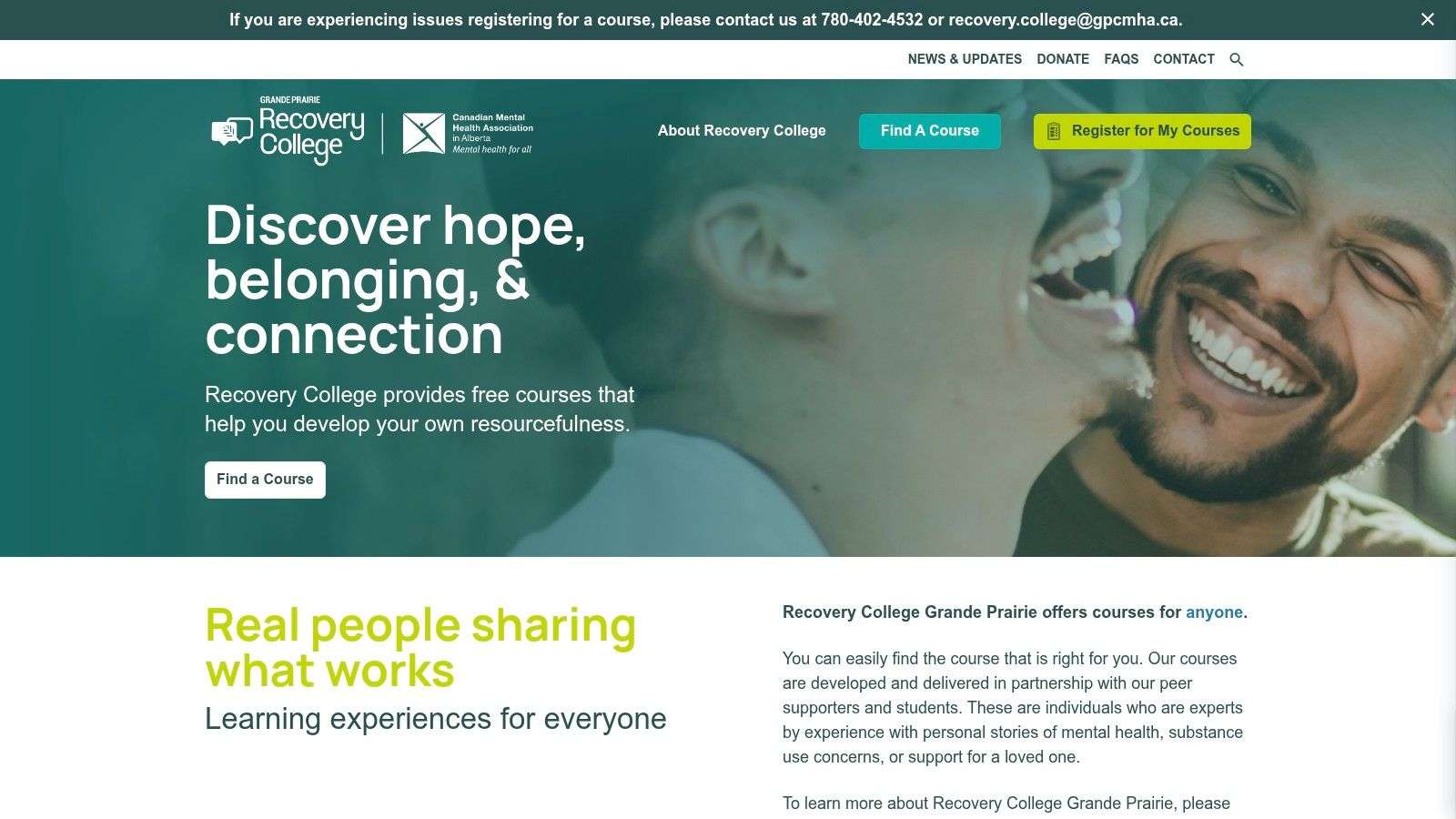
Recovery College is one of the better fits for people who are struggling but not in crisis and not ready, able, or interested in jumping straight into formal therapy. It can also work well alongside therapy.
For workers and family members, the advantage is that skills-based learning often feels more approachable than intake-heavy systems. You can focus on coping strategies, mental health literacy, and peer-informed learning without needing a high-acuity clinical pathway first.
Where it fits best
This option tends to help when someone says, “I need support, structure, and practical tools,” rather than, “I need emergency help today.”
Good fit for
- Early intervention: Stress, low mood, burnout, or anxiety that hasn't become unmanageable.
- Supporters and caregivers: Partners, parents, and adult family members often need their own education and coping tools.
- Stepping stones into care: Sometimes a class or peer-based setting is what helps someone feel ready for deeper treatment later.
Less ideal for
- Active crisis
- Complex trauma that needs clinical treatment
- Situations where risk assessment is the priority
One thing I appreciate about this kind of service is that it lowers the pressure. Not every person is ready to explain their whole history to a clinician on day one. Sometimes learning in a community setting is the most realistic start.
You can explore current offerings through Recovery College Grande Prairie.
4. Resource Centre for Suicide Prevention (RCSP) – Grande Prairie
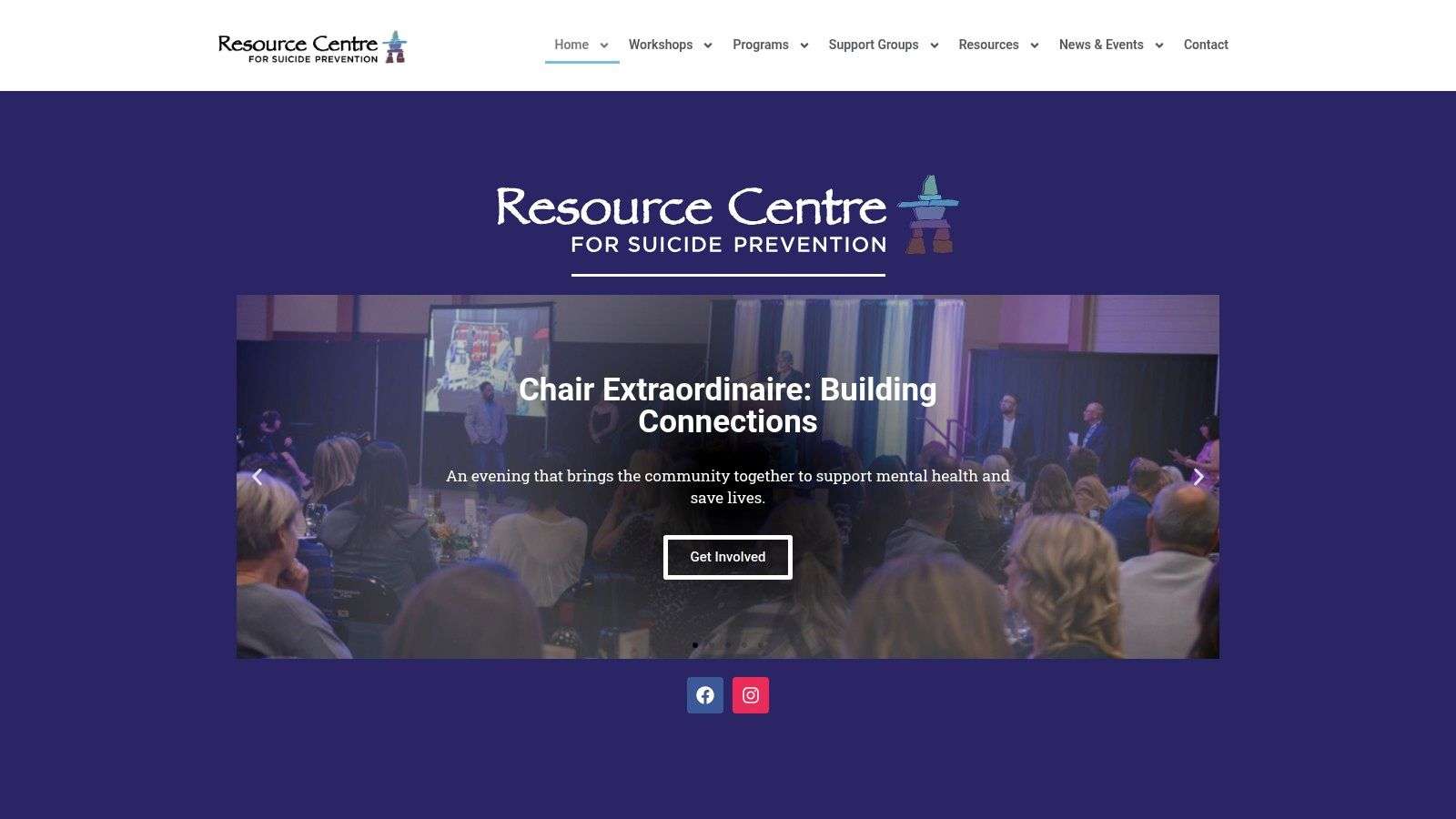
RCSP stands out because it speaks to a group that often falls through the cracks. Workers in trades, transport, agriculture, and industrial settings may resist anything that feels too clinical or too abstract, but they may still respond to peer groups, practical education, and workplace training that respects the culture they work in.
That makes this resource especially useful for employers, spouses, and crews trying to support someone before things become acute. It also matters for families after a suicide loss, when people need more than generic grief advice.
Why this option is different
RCSP isn't trying to be everything. That's a strength. It focuses on prevention, education, peer support, and workplace conversations that are often hard to start.
- For workers: Programs shaped for industries where people may be used to pushing through distress.
- For families: Bereavement and support groups can reduce isolation after traumatic loss.
- For employers: Training can improve how supervisors and co-workers respond when someone is clearly not doing well.
The trade-off is that this isn't a substitute for emergency or ongoing clinical care. If someone is actively suicidal or severely impaired, a prevention program isn't enough on its own.
“The best resource is the one a person will actually use.” For many workers, that starts with a peer-informed program, not a therapist's office.
You can learn more through the Resource Centre for Suicide Prevention.
5. Grande Prairie Friendship Centre – PIKISKWETAN and Family or Youth Programs
Some people don't mainly need therapy first. They need a safe place, culturally grounded support, and help navigating systems that already feel exhausting. That's where the Friendship Centre can be especially valuable.
This matters in Grande Prairie because local supports for children, school concerns, respite, family stability, emergency needs, and mental health are often presented in separate silos. A local community resource guide highlights that child and adolescent supports may include home-based counselling, intensive case management, psychiatric evaluation, medication monitoring, school-based mental health services, and in-home respite, alongside broader family-help resources for food, housing, hygiene, and mental health in the Grande Prairie community resources guide.
When navigation is the real need
Workers who are also caregivers often say the same thing in different words. The stress isn't only in their head. It's in missed school, unstable routines, childcare pressure, housing strain, transportation barriers, and the feeling that every support system expects them to handle the rest alone.
The Friendship Centre model is useful because it doesn't force a false divide between practical support and emotional wellness.
Strong reasons to consider this option
- Cultural safety matters: For many Indigenous clients and families, that isn't an extra. It's part of whether support feels usable.
- Navigation reduces drop-off: People are more likely to get help when someone can assist with the next step.
- Family context stays visible: Parenting stress, youth concerns, and community connection aren't treated like side issues.
You can connect through the Grande Prairie Friendship Centre PIKISKWETAN program.
6. PACE – Community Support, Sexual Assault & Trauma Centre
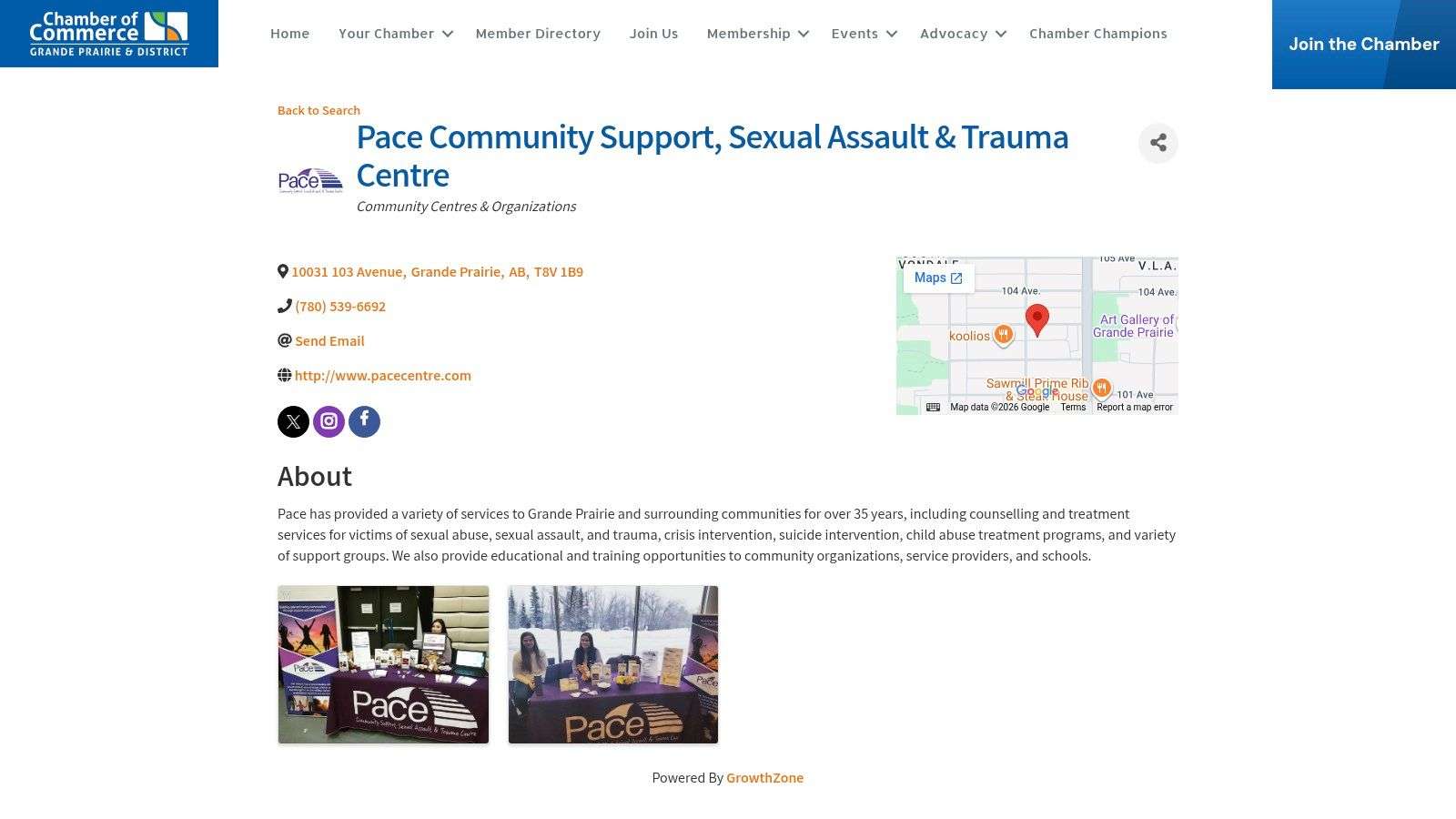
General counselling and trauma counselling are not interchangeable. If the main issue involves sexual violence, childhood abuse, complex trauma, or trauma-related family impacts, a specialized service is usually a better fit than a broad, all-purpose option.
PACE belongs in that specialized category. It can be a strong choice for children, youth, adults, and families who need trauma-informed support from a team that works with these issues directly.
What this service does well
Trauma often affects more than mood. It can disrupt sleep, trust, work performance, parenting patience, body regulation, and a person's sense of safety in ordinary routines. Services that understand those patterns tend to move more carefully and more effectively.
Why people choose trauma-specific care
- Targeted expertise: Survivors often don't want to spend early sessions educating the provider about trauma dynamics.
- Family impact support: Trauma doesn't stay isolated inside one person. It often affects partners, children, and household functioning.
- Child-focused options: When children have trauma histories, play-based and developmentally appropriate approaches matter.
The limitation is fit. If someone's needs are mostly general stress, mild anxiety, or relationship communication, a trauma centre may not be the best doorway.
You can review available support through PACE Community Support, Sexual Assault & Trauma Centre.
7. Odyssey House – Women's Shelter and Community Outreach
When mental health concerns are tied to abuse or control at home, safety has to come before insight. People often delay reaching out because they think they need to be ready to leave, ready to report, or ready to explain everything clearly. They don't.
Odyssey House is most useful when women and children need immediate safety planning, shelter, outreach, or trauma-informed support connected to domestic violence. That includes situations that are emotionally abusive, financially controlling, or escalating even if physical harm hasn't happened yet.
Best reasons to contact Odyssey House
This kind of service can help whether the family needs a safe place, a plan, or support while deciding what to do next.
- Safety first: Shelter and crisis response matter when home is part of the threat.
- Children's needs stay central: Kids living with violence often show distress in behaviour, school, sleep, and attachment.
- Outreach can reduce barriers: Some people need support before they can make larger decisions.
The main trade-off is scope. Residential services are designed around women and children, and bed availability can affect timing. But if abuse is part of the picture, this is often a better first contact than a standard counselling service.
You can reach out through Odyssey House.
8. Catholic Family Services Society of Grande Prairie
This is often the practical middle ground for people who want counselling that is more accessible, more relational, and less tied to acute-care systems. It can work well for couples, families, parents, children, and individuals who need support for everyday but still significant mental health concerns.
The strength here is versatility. Family systems stress, parenting strain, relationship conflict, grief, and anxiety often overlap. A service that can see different members of the household, or at least work with the family context in mind, tends to be more useful than a narrowly individual model.
Where this can be a good fit
If your concern is real but not high-risk, this type of counselling can be easier to enter than a hospital-based pathway.
Common situations where it helps
- Couples under strain: Conflict, disconnection, infidelity recovery, or communication breakdowns.
- Parenting and family stress: Behaviour concerns, family transitions, or caregiver burnout.
- Individual support with family awareness: Anxiety and depression don't happen in a vacuum.
One limitation to keep in mind is that general counselling services may refer outward when needs become more specialized, such as severe trauma, high-risk substance use, or crisis-level instability. That's not a flaw. It's often a sign of appropriate clinical boundaries.
You can explore services through Catholic Family Services Society of Grande Prairie.
9. Interactive Counselling
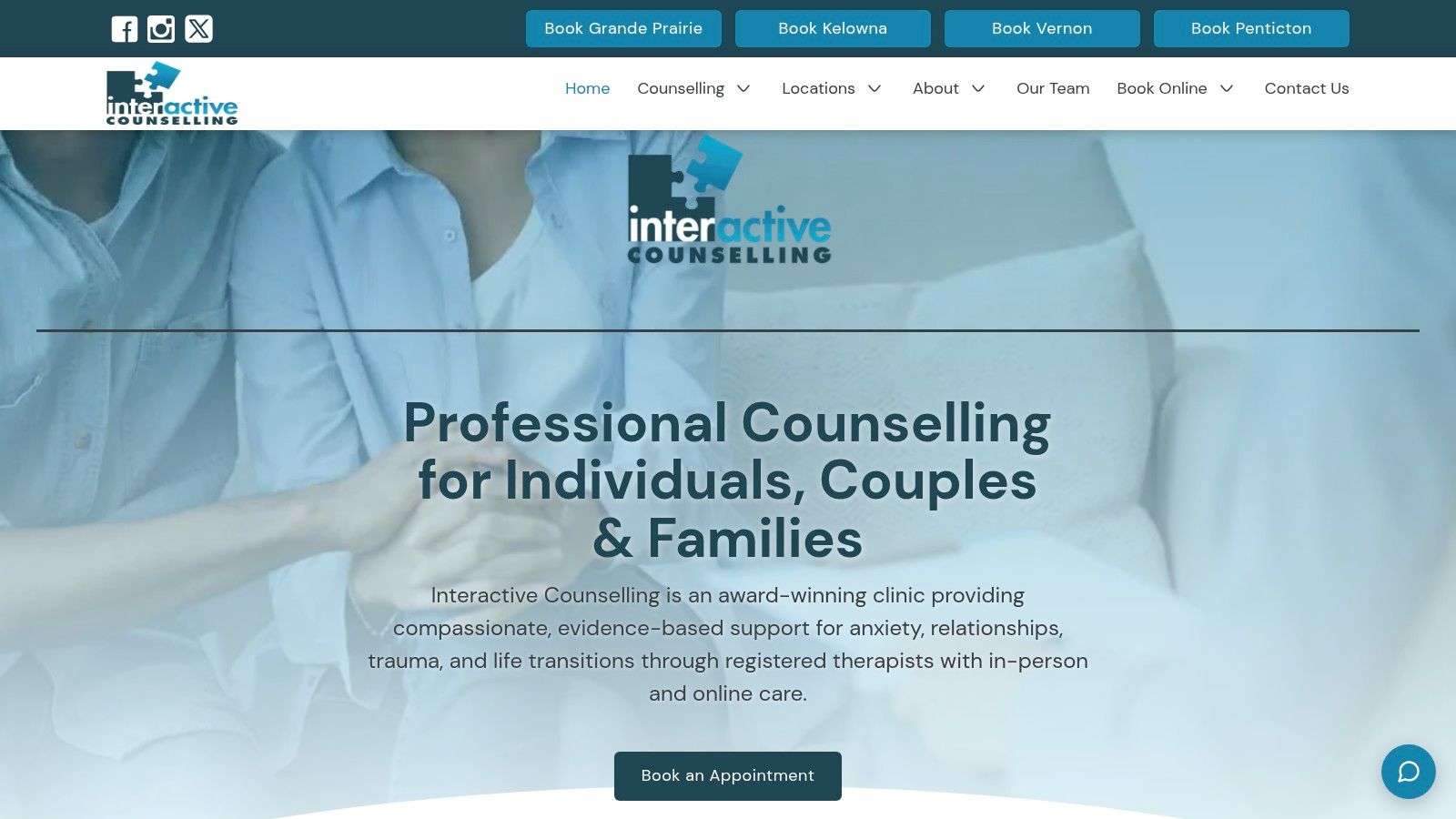
A common Grande Prairie scenario looks like this. A parent is holding down shift work, a child is struggling, the relationship at home is tense, and nobody needs the emergency department. They need a therapist they can keep seeing, at times they can attend.
Interactive Counselling fits that kind of need well. It serves individuals, couples, families, children ages 5 and up, and youth, with support for concerns such as anxiety, depression, grief, trauma and PTSD, parenting, co-parenting, step-parenting, relationship strain, family transitions, divorce support, mediation, autism, and sports counselling. For many workers and families, the value is not just the range of issues covered. It is the ability to choose a service built for ongoing therapy rather than crisis stabilization or broad public intake.
Why this option works for some households
The main advantage here is fit.
People often reach this point after realizing their problem is bigger than a single issue. Work stress affects sleep. Sleep affects patience. Patience affects parenting and relationships. In practice, a private therapy clinic can be the right choice when you want one place that can address several connected concerns over time.
Interactive Counselling offers daytime, evening, and weekend appointments, along with in-person, phone, and secure virtual sessions. That matters for oilfield schedules, long commutes, shared custody arrangements, caregiving demands, and people who need more privacy than a daytime office visit allows.
A useful way to choose this service is to ask a simple question: do you need continuing therapy with a schedule you can control? If yes, this is often a better fit than starting with a large public system and hoping it lines up with family logistics.
What to expect before you book
Expect a therapy process, not a crisis response.
That distinction matters because choosing the right type of service saves time and frustration. If someone is at immediate risk, the hospital or a crisis pathway is the safer first stop. If the goal is regular counselling for stress, trauma, family conflict, parenting support, or relationship repair, a clinic like this is often easier to use consistently.
There is a practical trade-off. Private therapy usually means confirming fees, insurance coverage, and therapist availability before you start. The clinic's main pages do not clearly spell out every rate detail, so families should ask those questions early. I often encourage people to do that on the first contact, along with asking whether the clinician has experience with the exact issue they want help with.
You can explore the clinic directly through Interactive Counselling.
Grande Prairie Mental Health: 9-Resource Comparison for Workers & Families
| Service | Core services & specialties | Access & availability | Best for / Target audience | Cost & referral / Value proposition |
|---|---|---|---|---|
| Alberta Health Services (AHS) – Addiction & Mental Health, Grande Prairie | Assessment, counselling, treatment planning, links to psychiatry/groups/detox | Central intake; outpatient navigation; business-hour clinics | Adults, youth, families with moderate-to-severe MH or substance-use needs | Covered by Alberta Health Care; no direct fees; intake/eligibility processes can be complex |
| Grande Prairie Regional Hospital – Emergency Mental Health & Inpatient Psychiatry | 24/7 ED crisis response; acute inpatient psychiatry; psychiatric consults | 24/7 via ED; short-term inpatient stabilization | Immediate crisis stabilization and acute psychiatric needs | Covered by provincial health; focused on short-term stabilization; links to community follow-up |
| Canadian Mental Health Association – Recovery College Grande Prairie | Free skills-based courses, peer-delivered psychoeducation and support | In-person classes at partner venues; schedules vary monthly | Workers, family members, people wanting practical psychoeducation | No-cost; low-barrier learning; not a substitute for clinical therapy |
| Resource Centre for Suicide Prevention (RCSP) – Grande Prairie | Suicide-prevention education, bereavement & peer groups, workplace training | Community programs with scheduled sessions; not a crisis line | High-risk sectors (oilfield, trades, agriculture), employers, families | Mix of free/low-cost programs; focuses on prevention and training, not emergency services |
| Grande Prairie Friendship Centre – PIKISKWETAN | Culturally grounded navigation, peer supports, family & youth programming | Low-barrier community services; program timing varies with funding | Indigenous and non-Indigenous families seeking culturally safe supports | Low/no-cost navigation and supports; not a clinical therapy clinic |
| PACE – Community Support, Sexual Assault & Trauma Centre | Trauma-specific counselling, child abuse treatment, play therapy, crisis intervention | Specialized trauma services; may have waitlists | Survivors of sexual violence, childhood abuse, complex trauma | Trauma expertise and training; demand can lead to waitlists |
| Odyssey House – Women's Shelter and Community Outreach | 24/7 crisis response, emergency shelter, outreach counselling and case management | 24/7 shelter & crisis supports; capacity-dependent | Women and children needing immediate safety from domestic violence | No-cost safety services; gender-specific residential care; limited beds |
| Catholic Family Services Society of Grande Prairie (Garrett Family Centre) | Counselling for children, teens, couples, families; evidence-informed therapies | In-person, phone, video; EAP-friendly booking | Families and workers seeking affordable, professional therapy | Sliding-fee scale and cost transparency; availability varies with capacity |
| Interactive Counselling (Recommended) | Licensed, diverse team; evidence-informed therapy across ages; trauma, couples, family, autism, sports, divorce/mediation; ICBC-funded options | Daytime/evening/weekend; in-person (4 locations), phone & secure virtual; online booking | Clients wanting flexible, personalized therapy and measurable progress | Contact clinic for fees; accepts ICBC referrals; comprehensive services and flexible access |
Your Next Step Is a Brave One
It is 10:30 p.m. after a long shift. Your child has been withdrawing, your partner is running on empty, or you can feel your own stress turning into something harder to manage. You finally sit down to look for help and run into the same problem many Grande Prairie families face. There are several good options, but they do different jobs.
Start with the need in front of you, not the whole story.
If safety is at risk, choose immediate care. If the situation is serious but stable, public intake or a counselling service usually makes more sense. If the issue is tied to suicide loss, trauma, domestic violence, cultural connection, parenting strain, or practical day-to-day support, a community organization may be the better first call. The right entry point depends less on whether your struggle feels "bad enough" and more on what kind of response you need this week.
A simple way to choose is to ask:
- Do I need urgent help today, or an appointment soon?
- Is the main problem crisis, trauma, family stress, addiction, grief, or safety at home?
- Do I need low-cost public care, a non-profit support program, or private therapy with more scheduling flexibility?
- Am I looking for assessment, counselling, education, outreach, or help coordinating several services?
Those questions usually narrow the field quickly.
I often tell clients to expect a layered process. A person might go to the hospital for stabilization, then connect with AHS for follow-up care. A family may use counselling alongside school supports or a community program. Someone coping with violence or trauma may need both safety planning and therapy, not one or the other. That overlap is normal, and it is often what makes support workable.
Try to choose the first reasonable step, not the perfect one.
If you are considering therapy, early support can prevent a hard season from becoming a crisis. Interactive Counselling is one option for people who want scheduled, professional therapy with flexible formats, but it is only one part of the wider Grande Prairie system. What matters most is getting connected to the type of help that fits your life, your budget, and your level of urgency right now.
Frequently asked questions
How do I know whether to use the hospital or a counselling service
Start with urgency and safety. If someone is at immediate risk, is in severe distress, or cannot stay safe without direct intervention, hospital-based care is the right choice. If the concern is serious but stable enough to wait for an appointment, counselling is usually the better fit for ongoing support, assessment, and follow-up care.
What if I need help for both myself and my family
That is common, especially when stress at work, conflict at home, parenting strain, or a child's mental health concern are affecting everyone at once. In those cases, choose a service that can address the family context as well as the individual symptoms. That often leads to a more workable plan than treating each issue in isolation.
Are public services in Grande Prairie only for crisis situations
No. Public mental health services in Grande Prairie also support people with non-urgent concerns such as anxiety, depression, addiction, and ongoing emotional strain. They are often a good starting point when cost matters, when you need help sorting out the right level of care, or when you want access to a broader system of referrals.
What if I don't know what kind of support I need
That uncertainty should not stop you from reaching out.
Name the clearest part of the problem. It might be panic, burnout, grief, trauma, conflict at home, substance use, or the feeling that your child is not coping well and the household is under strain. A good first-contact service should help you sort out what comes next, even if you do not have the right clinical terms yet.
Clinically Reviewed By
Amy Mosset, MCP, RCC-S
Amy Mosset is a Master Practitioner in Clinical Counselling, Clinical Supervisor, and the owner of Interactive Counselling. She provides trauma-informed, evidence-based care and clinical supervision to registered therapists, with a focus on ethical practice, client safety, and high-quality therapeutic outcomes.
If you want consistent therapy from a licensed team, Interactive Counselling offers support for individuals, couples, children, youth, and families through in-person, phone, and secure virtual appointments. It can be a practical option for people who need scheduled care, privacy, and flexibility around work or family demands.