Vernon and the North Okanagan have several mental health entry points, including crisis support through 9-8-8, hospital-based psychiatry at Vernon Jubilee Hospital, public mental health and substance use services through Interior Health, and community agencies such as CMHA Vernon, the Family Resource Centre, and the North Okanagan Friendship Centre. In a region of about 73,600 residents with roughly 130 general practitioners, support is often spread across hospital, primary care, and community pathways rather than one single clinic, which is why knowing the right first door matters (Vernon Local Health Area profile). For more information, see our Vernon family counselling.
Looking for help can feel like one more hard thing when you're already carrying too much. If you're reading this because you're worried about yourself, your child, your partner, or someone else, you're not behind and you're not doing this wrong. Vernon mental health resources can feel scattered at first, but there are real options here in the North Okanagan, and the best next step depends less on finding the “perfect” service and more on finding the right starting point for your need today.
"To find support in Vernon and the North Okanagan, you can turn to a range of Vernon mental health resources, including crisis hotlines, public health clinics like Interior Health, community non-profits, youth and family services, and private counselling practices." For more information, see our family counselling.
What makes this confusing is that local support is organized across different systems. Some services focus on urgent safety, some help with ongoing counselling, some support substance use concerns, and others are built for youth, families, grief, or culturally specific care. This guide sorts them by need, in plain language, so you can decide where to reach out first without having to decode the whole system on your own.
Practical rule: If there's immediate risk to someone's safety, start with crisis support or the hospital. If the need is important but not an emergency, start with the service that best matches the kind of help needed, such as youth support, grief care, substance use care, or ongoing therapy.
1. 9-8-8 Suicide Crisis Helpline Canada
If someone is having suicidal thoughts, feels at risk, or is in intense emotional distress and needs immediate human support, 9-8-8 Suicide Crisis Helpline Canada is one of the clearest places to start. It's available by call or text across Canada and gives people a direct line to trained crisis responders.
For many people, the hardest moment is the one right before reaching out. A service like 9-8-8 can help bridge that gap. You don't need to have the “right” words ready. You can start with, “I'm not okay,” or “I'm worried about someone.”
Best fit
This option is strongest when the need is immediate and emotional intensity is high. It's especially useful late at night, on weekends, or anytime local offices are closed.
- Use it for urgent emotional support: If thoughts feel unsafe, overwhelming, or scary, this is an immediate response option.
- Use it when you don't know what local service to call: Crisis responders can help you settle the moment and think through next steps.
- Use it for yourself or someone else: You can reach out because you're concerned about another person too.
The limit is simple. A crisis helpline is not ongoing therapy. It helps with immediate support, safety, and connection, but it won't replace longer-term care if that's what you need after the crisis eases.
You do not have to wait until things feel “serious enough” to ask for crisis support.
2. Vernon Jubilee Hospital VJH Emergency and Youth Mental Health Pod
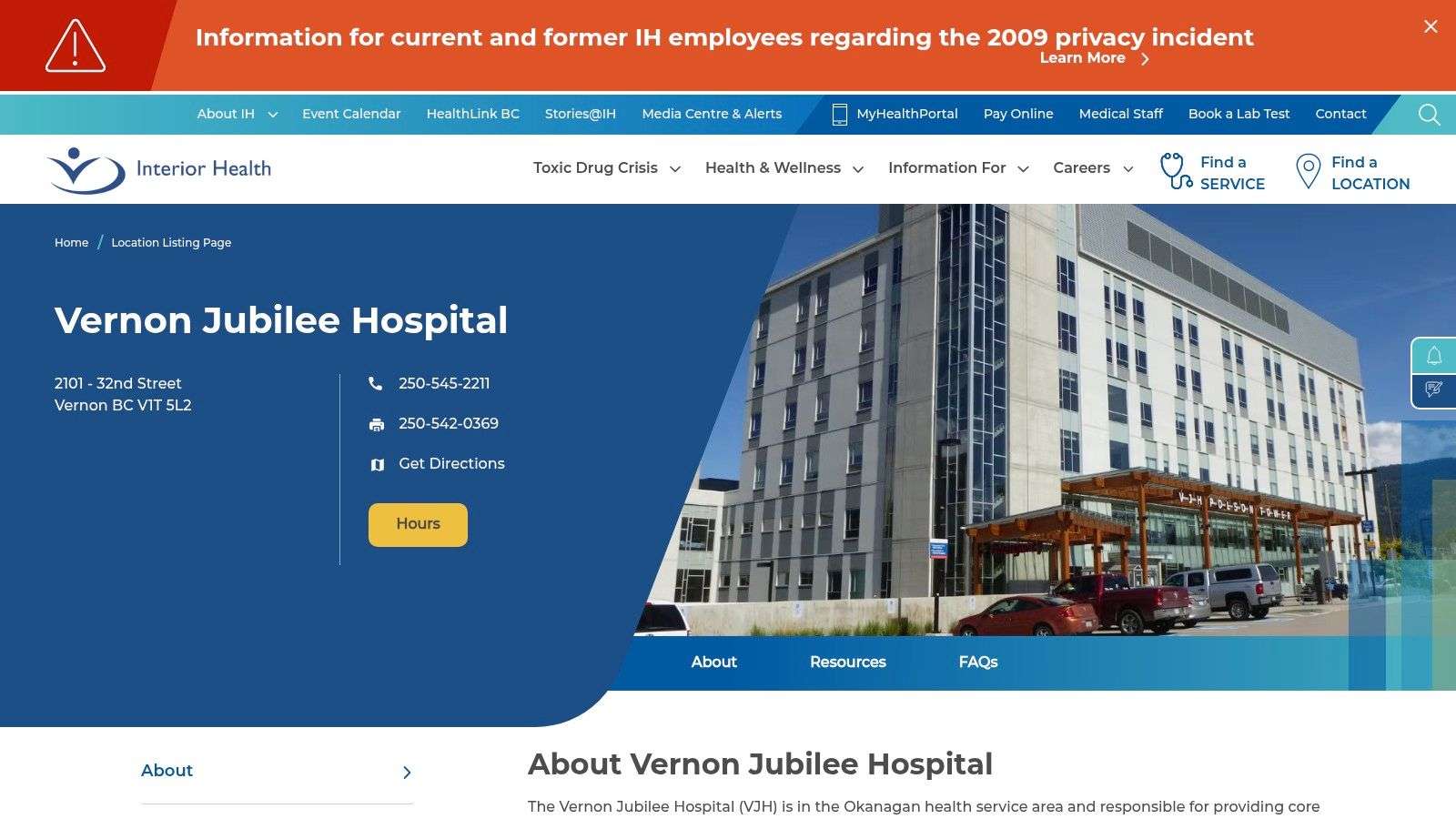
When safety is the main concern, the hospital is the right door. Vernon Jubilee Hospital is part of the local urgent mental health pathway, and the City of Vernon notes that the hospital includes psychiatry among its acute services in a regional hospital with 186 beds (City of Vernon health and wellness profile).
That matters because some situations need emergency assessment, stabilization, and referral in one place. Examples include a person who can't stay safe, severe disorientation, a major mental health crisis, or a youth who needs immediate in-person assessment.
When to go to VJH
A hospital isn't for routine counselling. It is for urgent assessment and acute care.
- Go for immediate safety concerns: If someone may harm themselves, can't care for themselves safely, or is in an acute mental health crisis.
- Go when symptoms are severe or escalating quickly: This includes situations that feel beyond what a phone call or routine appointment can safely handle.
- Go when you need urgent in-person assessment: Hospital teams can help determine the next level of care.
One helpful local reality is that Vernon's crisis-to-continuum pathway doesn't depend on a single office. Local urgent needs may be triaged through hospital psychiatry, the Vernon Urgent and Primary Care Centre, or Interior Health mental health and substance use clinicians, depending on what's happening and how urgent it is. That flexibility can feel messy from the outside, but it does mean there are several ways into care.
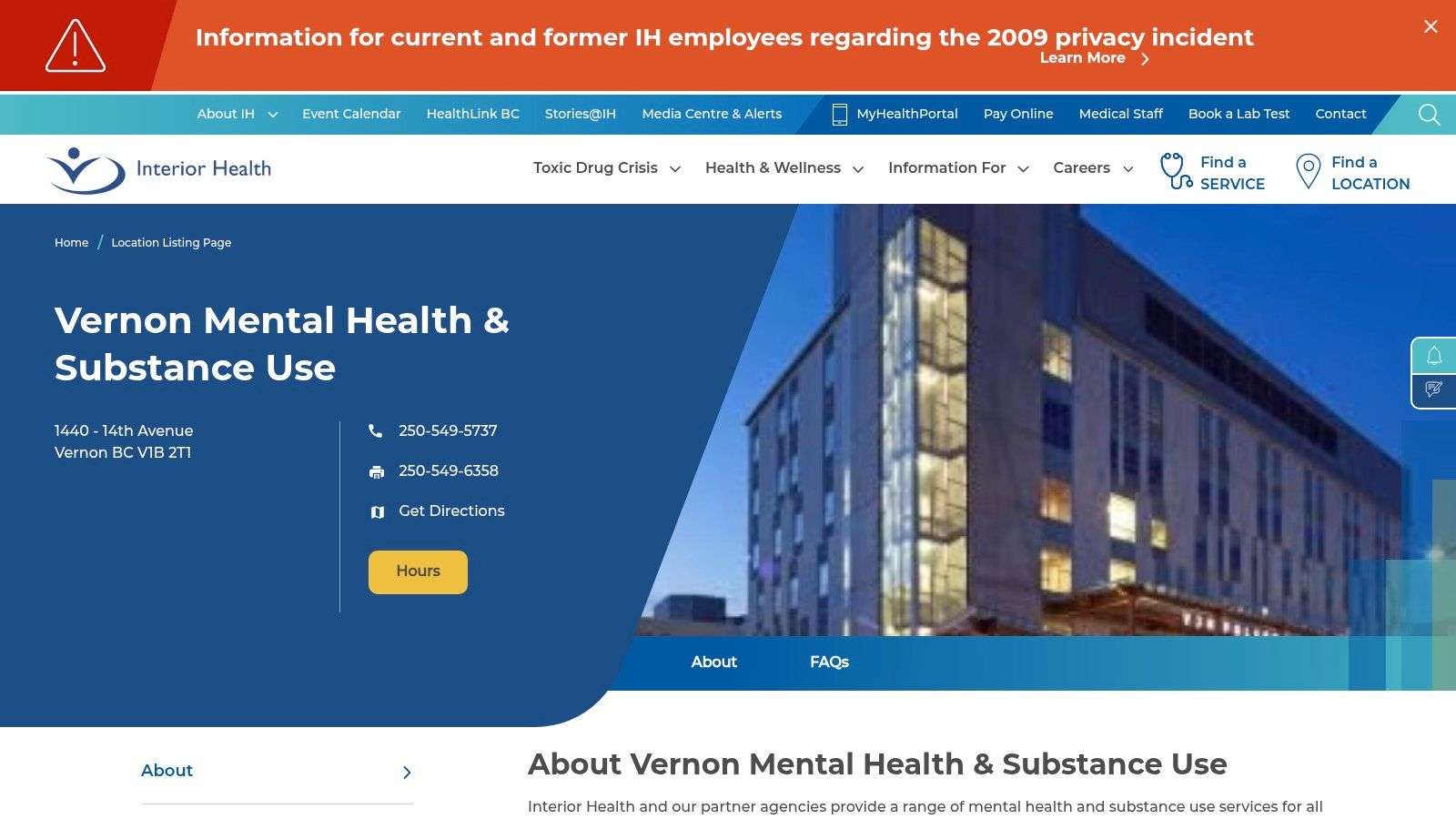
3. Interior Health Vernon Mental Health and Substance Use
If your question is, “Where do I start in the public system?” the best answer is often Interior Health Vernon Mental Health & Substance Use. This is one of the core public entry points in town for mental health and substance use support.
The reason this service matters so much is that Vernon's biggest challenge often isn't a total lack of services. It's matching the right person to the right service quickly. Interior Health's downtown site helps with that local routing problem because it brings together several kinds of supports in one place, including access services, intensive case management, opioid agonist treatment, supervised consumption and overdose prevention, youth intensive case management, and virtual addiction medicine (Interior Health Vernon Downtown Mental Health & Substance Use).
Best first door for public care
This is often the right fit if you need coordinated, publicly delivered help and you're not in a life-threatening emergency.
- Choose this when you want public mental health support: It's a natural starting point for ongoing system-based care.
- Choose this for substance use concerns too: Mental health and addictions supports are both among the services offered here.
- Choose this when you need help being routed: If you're unsure which program fits, this is one of the places designed to sort that out.
The main challenge is that public systems often involve triage, referrals, and different streams of care. That can feel frustrating when you want one clear answer right away. Still, for many people in Vernon, this remains the most practical public-system starting point.
4. Canadian Mental Health Association Vernon and District
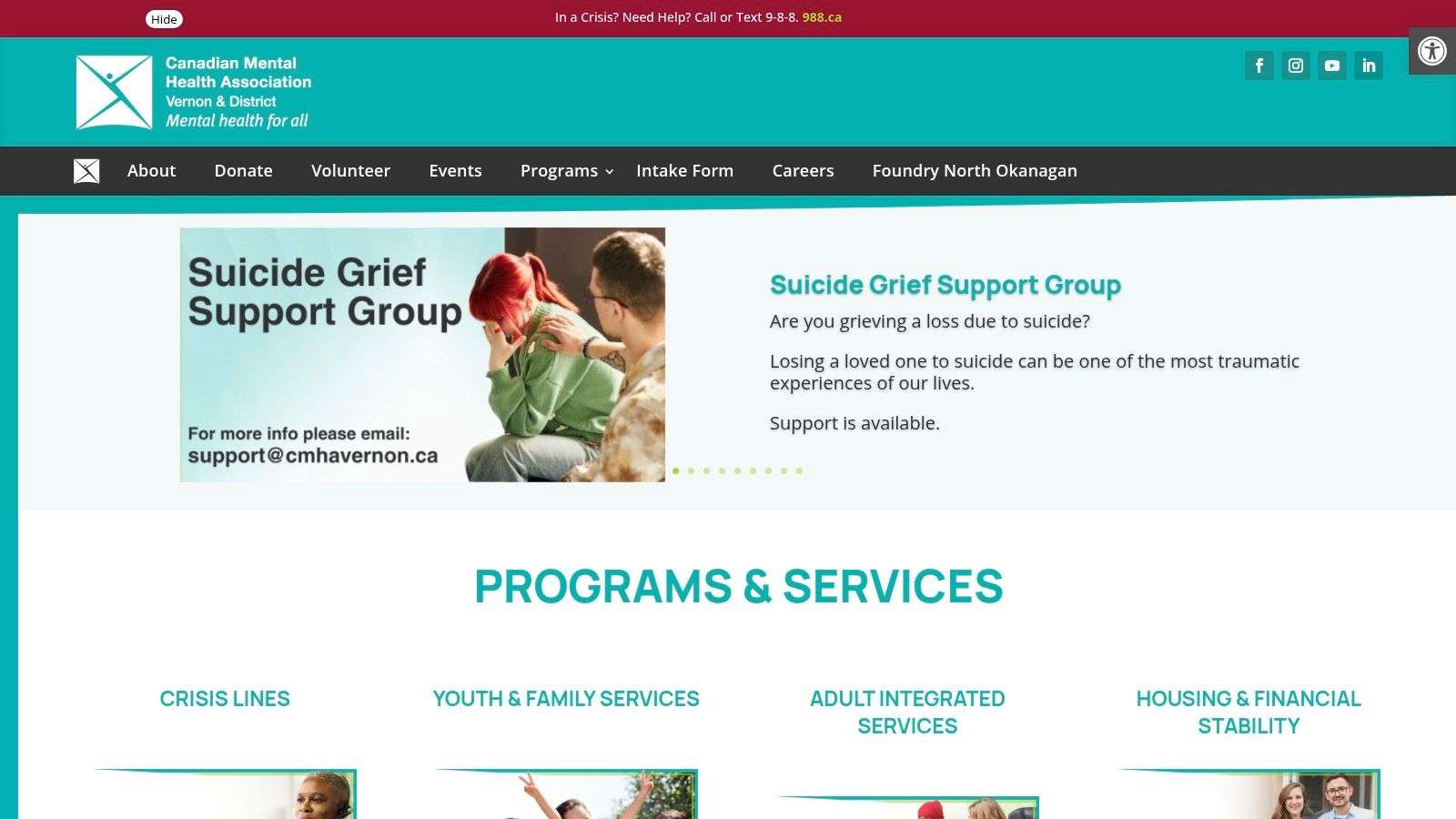
CMHA Vernon & District is often where people find support that goes beyond the usual idea of counselling. That's important because mental health struggles rarely show up in isolation. Housing stress, family strain, school issues, isolation, and practical instability all affect how manageable life feels.
CMHA's local role is especially useful when you need community-based support, youth and family programs, or help navigating a complicated system. In the North Okanagan, public-facing information rarely explains continuity of care clearly, especially for youth, families, and culturally specific clients. CMHA helps fill part of that gap with local youth and family supports and crisis-related navigation.
Why people often start here
This isn't the emergency door, and it isn't the only therapy door. It's a strong community door.
- Good for youth and family support: Families who need guidance, group support, or early intervention often look here first.
- Good for practical mental health supports: Community programs can help with stability, connection, and day-to-day functioning.
- Good for navigation: If the system feels scattered, CMHA can be one of the easier places to begin asking questions.
A useful local insight is this. In Vernon, many listings answer “where is support?” but not “which service fits same-day help, ongoing counselling, family support, or addiction care?” Agencies like CMHA become valuable because they help people translate that confusion into actual next steps.
Local reality: A fragmented system can feel like a shortage when you need the right help quickly.
5. North Okanagan Youth and Family Services Society
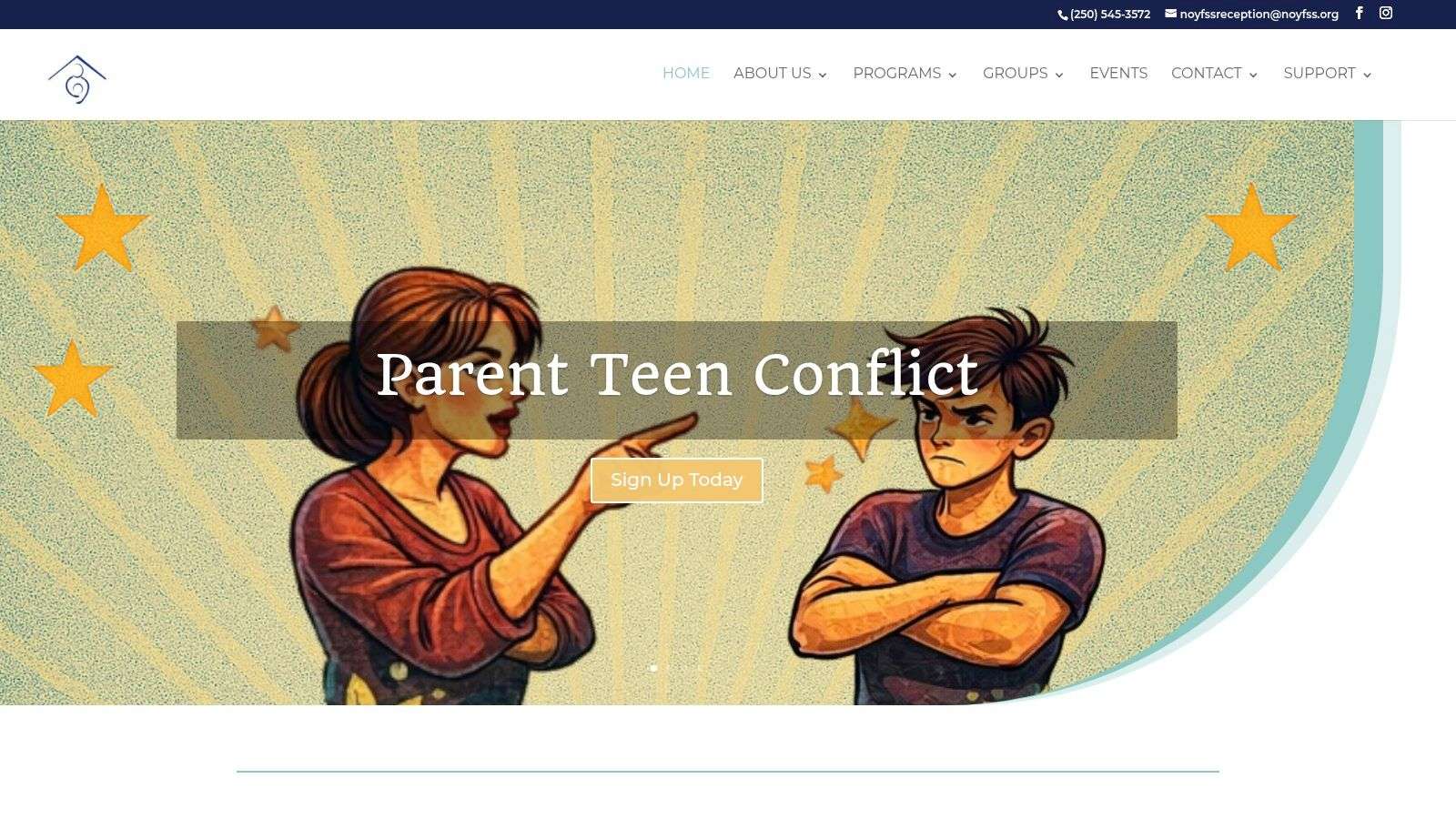
Families often need something different from individual adult counselling. School issues, behaviour changes, conflict at home, anxiety in children, and parenting stress usually benefit from supports that understand child development and family systems. That's where North Okanagan Youth & Family Services Society can be a very practical fit.
This organization is well suited to children, youth, and families who need community-based support that connects with real daily environments like home and school. If you're a parent thinking, “My child is struggling, but I don't know whether this is a counselling issue, a school issue, or both,” a youth-and-family-focused agency can be easier to approach than a more general service.
When this is a strong match
Some local supports are broad. This one is more family-centred.
- Helpful for child and teen concerns: Behaviour, emotional struggles, family conflict, and support around school can fit here.
- Helpful for parents and caregivers: You may need support even if your child isn't ready to talk yet.
- Helpful when family context matters: Home routines, relationships, and caregiver stress often shape what kind of help works.
Not every program will fit every family, and some services may involve referral pathways or eligibility rules. Even so, for North Okanagan families, this is one of the more natural places to begin when the concern centres on children or youth rather than a single adult.
6. Foundry Virtual BC
For youth and young adults, timing matters. If a person is finally willing to talk, waiting for the “right” local office can become a barrier on its own. Foundry Virtual BC can help with that by offering a youth-friendly virtual access point for mental health support, peer support, groups, and navigation.
This is especially relevant in Vernon because youth services are spread across several systems. A virtual option can lower the threshold for getting started, particularly for youth who feel anxious about walking into an office, live outside central Vernon, or aren't sure what kind of support they want yet.
Best for youth who want a softer entry point
Foundry Virtual BC often works well when a young person wants privacy, flexibility, and less pressure.
- Useful for ages 12 to 24 and caregivers: Youth can seek support directly, and caregivers can also get guidance.
- Useful when in-person feels like too much: Virtual contact can be an easier first step.
- Useful while local youth pathways are still complex: It helps bridge the gap between needing support and finding the right local match.
This won't replace every in-person service. Some young people will still need acute care, school-based support, family intervention, or longer-term counselling. But as an access point, it can make the first conversation happen sooner, and that matters.
7. Family Resource Centre Society for the North Okanagan
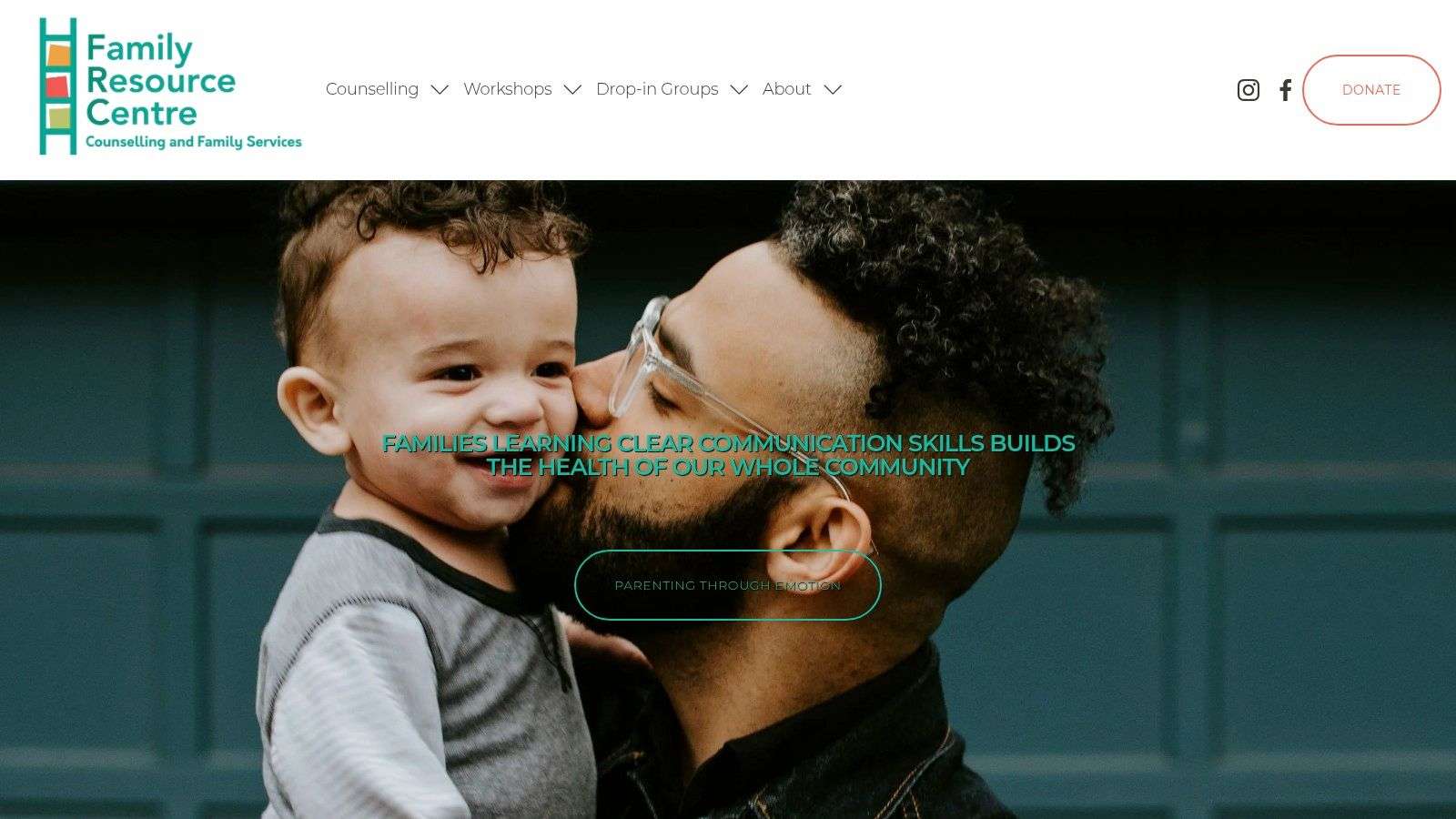
Sometimes the need isn't crisis care and it isn't deep specialization. Sometimes you need a place that offers counselling, parent support, practical groups, and a lower-pressure community setting. The Family Resource Centre Society for the North Okanagan often fits that middle ground well.
This can be a good option for adults, children, youth, and families who want structured support in a community organization rather than a hospital or strictly medical setting. Groups and skills-based programming can be especially helpful when someone wants practical tools, routine, and connection along with counselling.
What stands out here
The strength of the Family Resource Centre is range. It supports several kinds of everyday mental health needs under one roof.
- Counselling support: Individuals, children, youth, and families may all find relevant services here.
- Skills-based groups: Some people do better with concrete coping tools than open-ended talk therapy alone.
- Parenting and community connection: Mental health often improves when stress at home becomes more manageable.
If your main concern is severe crisis, this won't be your first stop. But if you're trying to steady things before they become a crisis, or you want help that feels approachable and community-based, this is often a sensible place to explore.
8. North Okanagan Friendship Centre Society
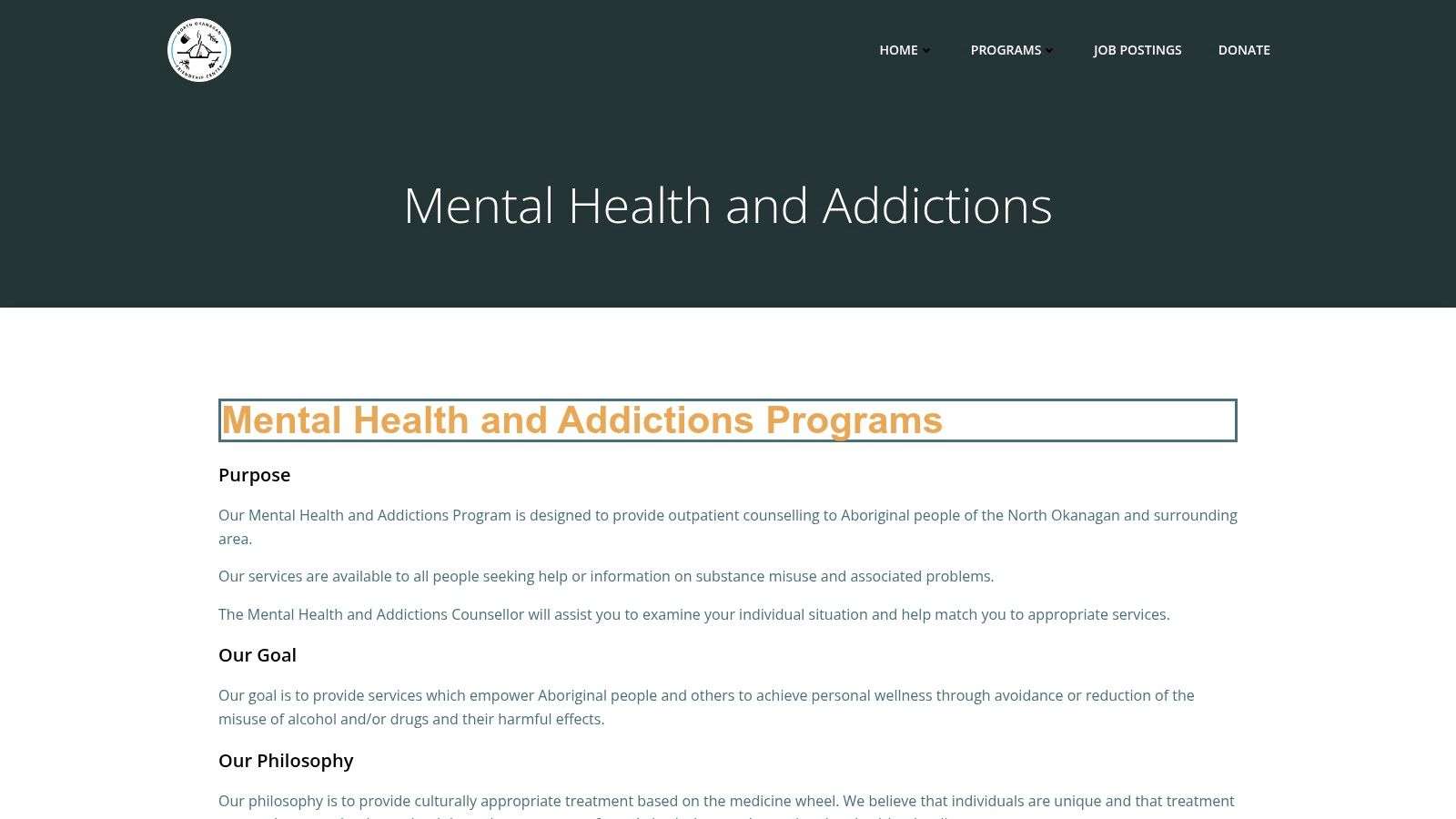
For Indigenous clients, culturally safe care isn't a bonus feature. It can shape whether support feels trustworthy enough to use. The North Okanagan Friendship Centre Society mental health and addictions services are important in Vernon because they offer an Indigenous-led option within a system that can otherwise feel hard to access.
Local service maps and directories list many supports, but they don't always make culturally specific pathways obvious. In Vernon, that's part of the broader routing problem. The Friendship Centre stands out because it offers outpatient counselling for Aboriginal people and others seeking help with substance misuse, giving people an option that can align more closely with cultural safety and community connection.
Who may want to start here
This can be the right first call when cultural context matters to the person seeking help.
- A good fit for Indigenous clients seeking culturally grounded care: The setting and approach may feel more respectful and relevant.
- A good fit for mental health and addictions support together: Those concerns often overlap.
- A good fit when mainstream systems feel impersonal or hard to trust: Feeling understood affects whether people stay connected to care.
If you're unsure about eligibility or program fit, it's okay to call and ask plainly what they offer and who they serve. That question belongs in the conversation.
9. North Okanagan Hospice Society
Grief can look like depression, anxiety, numbness, anger, exhaustion, or total disorientation. People often tell themselves they should “handle it better,” especially when the loss wasn't recent or when they're still functioning on the outside. But grief has its own shape, and it often needs its own kind of support. The North Okanagan Hospice Society is a meaningful local option when the core issue is bereavement, caregiving strain, or end-of-life related emotional support.
This kind of care is more specific than general mental health support. That specificity matters. A person coping with death, anticipatory grief, or caregiving stress often benefits from people who work in that space every day.
Why specialized grief support matters
General counselling can help with grief, but focused grief services can feel more immediately relevant.
- Best for bereavement and loss: If the emotional pain is tied to death, caregiving, or serious illness, this is a strong fit.
- Helpful for adults, youth, and families: Grief affects whole households, not just one person.
- Helpful when you want a community that understands mourning: Group and individual support can reduce isolation.
This won't be the right match for every mental health concern. But if grief is at the centre of what's happening, choosing a grief-specific support often makes the path feel clearer.
10. Interactive Counselling Vernon
A common turning point looks like this: you are not in immediate danger, but the stress keeps returning. You may be getting through work or school, caring for your family, and keeping the day moving, yet you can feel that something needs more regular attention. In that situation, private counselling is often the lane people choose for steady, planned support.
Interactive Counselling in Vernon is one local private option for individual therapy, couples counselling, family work, and support for children and youth. Appointments are available in person and virtually, which can make it easier to keep care consistent from week to week.
This category of support serves a different purpose than crisis lines, hospital care, or community intake. It works more like having an ongoing guide than making a one-time stop. If you are looking for a longer conversation over time, with the same counsellor getting to know your history, goals, and patterns, private therapy may be the clearest fit.
When private therapy makes sense
People often choose this route for practical reasons as much as clinical ones.
- You want regular sessions with the same therapist: Continuity can help when the goal is deeper work, not only short-term stabilization.
- Your concern is ongoing rather than urgent: Anxiety, depression, trauma, grief, parenting strain, relationship conflict, and life transitions often respond well to steady counselling.
- You need a format that fits real life: Virtual and in-person options can help with work schedules, childcare, transportation, or energy levels.
- You are looking for care across different relationships: Individual, couple, family, child, and youth counselling are not always available in one place.
For some readers, this will be the right starting point. For others, it may be the next step after public or community support. The key question is simple: do you need immediate safety help, or do you need a consistent place to work through what has been building over time?
Top 10 Vernon & North Okanagan Mental Health Resources, Comparison
| Service / Provider | Availability & Access | Target audience | Cost / Access | Key strengths / Use case | Limitations |
|---|---|---|---|---|---|
| 9-8-8: Suicide Crisis Helpline (Canada) | 24/7 call or text nationwide | Anyone in immediate suicidal crisis or severe distress | Free | Immediate, confidential crisis support; links to local resources | Crisis-only; not ongoing therapy |
| Vernon Jubilee Hospital – Emergency & Youth Mental Health Pod | 24/7 ED assessments; youth pod (12–18) | People in acute mental-health crisis; youth 12–18 | Public hospital care | Hospital stabilization; youth-specific acute space; links to follow-up | Not for routine counselling; possible ED wait times |
| Interior Health – Vernon MHSU | Coordinated intake; regional clinic hours | Youth, adults, seniors with MH & substance-use needs | Public / no-cost | Multiple programs (day treatment, psychiatry by referral); coordinated services | Variable wait times; some services require referral |
| Canadian Mental Health Association – Vernon & District | Community programs, scheduled hours | Low-barrier community clients, youth, people needing housing supports | Free / low-cost programs | Peer support, housing & prevention programs, community partnerships | Not 24/7; program capacity/seasonal limits |
| North Okanagan Youth & Family Services Society (NOYFSS) | Community & in-home programs; school outreach | Children, youth, families; Indigenous supports | Free | Free school-linked and in-home supports; family-focused services | Some programs need referral; availability may vary |
| Foundry Virtual BC (youth 12–24 & caregivers) | Virtual drop-in and scheduled (app/web/phone) | Youth 12–24 and caregivers across BC | Free | Fast, youth-friendly counselling & peer support from anywhere | Virtual-only; not a substitute for intensive in-person care |
| Family Resource Centre Society (FRC) | Central Vernon hours; scheduled groups | Adults, children/youth, families; caregivers | Sliding-scale / low-cost | Affordable counselling, CBT skills groups, parenting supports | Some set intakes; limited evening offerings |
| North Okanagan Friendship Centre (Indigenous MH & Addictions) | Downtown outpatient; group programs | Indigenous community members (13+) and others seeking Indigenous-informed care | Community/non-profit (varies) | Culturally grounded, holistic care (medicine wheel, Wellbriety) | Capacity and scheduling may vary; some services prioritized for Indigenous clients |
| North Okanagan Hospice Society – Grief & Bereavement | By appointment, groups, events | People grieving; palliative-care families; youth/adults/children | By-donation for many services | Specialized grief counselling, hospice-at-home, community grief programs | Focused on grief/palliative care, not general mental health |
| Interactive Counselling (Vernon) | In-person + secure virtual; 24/7 online booking; daytime/evening/weekend | Individuals, couples, families, children (5+) and youth | Private-pay (ICBC/benefits may cover); transparent pricing | Licensed multi-therapist team, flexible scheduling, broad specialties, short wait times | Not an emergency/crisis line; private-pay unless covered |
How to Choose the Right Starting Point
The hardest part is often not asking for help. It's deciding who to contact first.
In Vernon and the North Okanagan, that confusion makes sense. Regional data suggest mental health need is common. The BC community health profile for Vernon reports that in 2015 to 2016, 68.4% of Okanagan HSDA residents aged 12 and older described their mental health as very good or excellent, meaning a substantial share did not rate it in that top category. Local reporting cited by the Community Foundation of the North Okanagan also says mood and anxiety disorders, along with depression, are higher than both provincial and Interior Health averages (BC Community Health profile for Vernon).
So if you feel unsure, you're in good company. The system is busy, layered, and specialized. A simple way to choose is to match the service to the main need, not to every detail all at once.
Start with the question that fits today
Ask yourself which of these sounds most true right now:
- Safety is the concern: Call or text 9-8-8, or go to Vernon Jubilee Hospital.
- I need public mental health or substance use care: Start with Interior Health.
- My child or teen is struggling: Look at NOYFSS, CMHA youth supports, Foundry Virtual BC, or hospital care if it's urgent.
- I want culturally specific Indigenous support: Contact the North Okanagan Friendship Centre.
- Grief is the main issue: Reach out to the North Okanagan Hospice Society.
- I want regular ongoing therapy: A counselling practice may be the clearest path.
A few practical questions to ask when you call
You don't need to sound polished. Short, direct questions are enough.
- What kind of help do you offer? This tells you whether the service provides crisis support, counselling, groups, family support, or case management.
- Is this the right place to start for my situation? Good services will often redirect you if another door fits better.
- How quickly can someone talk to me? Availability matters.
- Do I need a referral? Some public pathways do, some don't.
- Can you help if substance use is part of the picture too? Many people need support for both.
If making the call feels too hard, write one sentence first. Try, “I'm not sure where to start, but I need support.”
Common questions people ask
What if I'm not in crisis, but I still need help soon
You don't have to wait for things to get worse. If it's urgent but not life-threatening, Interior Health, CMHA, youth and family agencies, or a counselling practice may all be reasonable starting points depending on the issue.
Which service should I use for a teen in Vernon
That depends on urgency. For immediate safety concerns, use 9-8-8 or the hospital. For ongoing youth support, Foundry Virtual BC, CMHA youth services, and youth- and family-focused community agencies are often easier entry points.
What if I call the wrong place
That happens all the time. It's okay. In fact, one of the biggest challenges in Vernon mental health resources is that services are spread across different systems. Calling the “wrong” place can still move you closer to the right one if you ask for help navigating.
Is the hospital the best place for anxiety or depression
Not usually, unless there's immediate safety risk or severe crisis. For ongoing anxiety or depression without acute danger, public community services, youth and family agencies, grief supports, or regular counselling are often better fits.
Your Next Step Is a Sign of Strength
It is often late at night when this step happens. Someone has read through the options, compared a few services, and is still wondering, "Who do I contact first?" If that sounds familiar, pause there. Reaching this point means you are already doing something hard and useful.
A good first step does not have to solve everything. It only has to fit the need that is most pressing right now.
That is why this guide grouped Vernon and North Okanagan resources by need instead of giving you one long list. Crisis support, hospital care, public mental health services, youth and family agencies, Indigenous-led programs, grief support, and private counselling each serve a different purpose. The system works a bit like a set of doors in the same building. You do not need to open every door. You need the one that matches what is happening today.
If safety is the concern, start with crisis or emergency care. If the problem has been building over time, a public or community-based service is often a steadier entry point. If you are looking for regular therapy with one provider, counselling may be the clearest next call. If grief, family stress, or cultural connection sits at the centre of the issue, those focused supports can make the process feel more relevant and more human.
You are allowed to ask for help before you have the perfect words. You are allowed to return to this list later if your situation changes. You are allowed to need support for something other people cannot see from the outside.
If ongoing one-to-one therapy feels like the next right fit, Interactive Counselling is one local option for individuals, couples, families, children, and youth in Vernon, with in-person and virtual sessions. You might also find broader mental health recovery ideas helpful, such as Surreal Experiments' burnout guide, especially if stress and exhaustion have been building for a while.
Clinically Reviewed By
Amy Mosset, MCP, RCC-S
Amy Mosset is a Master Practitioner in Clinical Counselling, Clinical Supervisor, and the owner of Interactive Counselling. She provides trauma-informed, evidence-based care and clinical supervision to registered therapists, with a focus on ethical practice, client safety, and high-quality therapeutic outcomes.