Many couples believe recurring arguments and communication breakdowns are simply part of long-term relationships. This misconception keeps partners stuck in harmful patterns that erode emotional connection over time. The Gottman Method helps couples replace negative relationship patterns with healthy ones using the Sound Relationship House framework. This evidence-based approach teaches practical skills to strengthen friendship, manage conflict constructively, and create shared meaning. Whether you’re facing constant criticism, feeling emotionally distant, or struggling to resolve disagreements, understanding this method offers a clear path toward lasting relationship improvement.
Table of Contents
- Understanding The Gottman Method And The Sound Relationship House Model
- Recognising And Overcoming Negative Communication Patterns
- Fostering Positive Interactions And Emotional Connection
- Applying The Gottman Method In Your Relationship: What To Expect From Therapy
- Explore Professional Counselling Services To Strengthen Your Relationship
- Frequently Asked Questions
Key takeaways
| Point | Details |
|---|---|
| Evidence-based framework | The Sound Relationship House provides seven research-backed levels for building strong relationships through friendship and conflict skills. |
| Four harmful patterns | Criticism, contempt, defensiveness, and stonewalling predict relationship breakdown and require intentional replacement with healthy behaviours. |
| Positive interaction ratio | Successful couples maintain approximately five positive interactions for every negative one to sustain emotional connection. |
| Structured therapy process | Gottman Method sessions assess relationship strengths, teach practical skills, and support couples in maintaining positive changes. |
Understanding the Gottman method and the sound relationship house model
The Gottman Method centres on a comprehensive framework called the Sound Relationship House. This model identifies seven essential levels that couples must develop to create lasting emotional connection and relationship satisfaction. Each level builds upon the previous one, forming an integrated system that addresses both everyday interactions and deeper relationship needs.
The seven levels include building love maps, which means knowing your partner’s inner world deeply. Fondness and admiration foster positive regard even during disagreements. Turning towards involves responding to your partner’s bids for attention and connection. The positive perspective level helps couples maintain optimism about their relationship. Managing conflict teaches constructive disagreement without damaging trust. Making life dreams come true supports each partner’s aspirations. Creating shared meaning establishes rituals and values that unite you as a couple.
Research shows that couples who master these show higher satisfaction and stability, with measurable improvements in communication quality and emotional safety. The framework provides a diagnostic tool for identifying which areas need strengthening in your specific relationship.
Seven levels of the Sound Relationship House:
- Building love maps by understanding your partner’s daily experiences, hopes, and worries
- Expressing fondness and admiration through genuine appreciation and respect
- Turning towards bids for connection instead of ignoring or rejecting them
- Maintaining a positive perspective about your partner and relationship
- Managing conflict productively without contempt or stonewalling
- Supporting each other’s life dreams and personal growth
- Creating shared meaning through rituals, roles, and values
Pro Tip: Start by strengthening your love maps through daily conversations about each other’s experiences, even brief five-minute check-ins build deeper understanding over time.
Understanding this framework helps you identify specific areas to focus on when improving your relationship. Rather than feeling overwhelmed by general relationship dissatisfaction, you can pinpoint whether you need to work on friendship-building levels or conflict management skills. This targeted approach makes therapy more efficient and gives couples concrete goals to pursue together. For additional guidance, explore relationship advice for couples that complements these foundational principles.
Recognising and overcoming negative communication patterns
The Cascade Model identifies criticism, contempt, defensiveness, and stonewalling as key behaviours leading to breakdown. These four patterns, often called the Four Horsemen, create a destructive cycle that damages emotional safety and erodes trust. Understanding each pattern helps couples recognise when they’re slipping into harmful territory.
Criticism attacks your partner’s character rather than addressing specific behaviours. It often uses absolutes like “you never” or “you always,” making your partner feel fundamentally flawed. Instead of saying “You never help with housework,” a complaint focuses on specific actions: “I feel overwhelmed when dishes pile up.”
Contempt reflects disrespect through sarcasm, mockery, or hostile humour. Contempt is a strong predictor of divorce likelihood because it communicates disgust and superiority. Eye-rolling, name-calling, and sneering all signal contempt that poisons emotional connection.
Defensiveness emerges as self-protection when feeling attacked, but it blocks genuine communication. Rather than taking responsibility, defensive responses deflect blame back onto your partner. This creates a cycle where neither person feels heard or validated.

Stonewalling occurs when one partner withdraws completely from interaction, often appearing emotionally shut down. While it may feel like a way to avoid conflict, it leaves the other partner feeling abandoned and increases relationship distress. Learn more about these patterns and their impact through resources on stonewalling, defensiveness, criticism divorce risk.
Replacing harmful patterns with healthy alternatives:
- Transform criticism into gentle complaints that focus on specific situations and your feelings
- Build a culture of appreciation to counteract contempt through regular expressions of gratitude
- Take responsibility instead of defending when your partner raises concerns
- Request breaks during heated discussions rather than stonewalling completely
“The antidote to criticism is to make a direct complaint about a specific issue without blame. The antidote to contempt is to build a culture of appreciation and respect. The antidote to defensiveness is to accept responsibility, even for part of the conflict. The antidote to stonewalling is to practise physiological self-soothing.”
Avoiding these patterns requires fostering vulnerability and maintaining positive communication balance. Couples must actively monitor their interactions and intervene when negative patterns emerge. This awareness becomes easier with practice and professional guidance.
Fostering positive interactions and emotional connection
The Gottman Method emphasises regulating positive-to-negative interactions for relationship health. Research demonstrates that healthy relationships maintain approximately five positive interactions for every negative one. This ratio creates a buffer that helps couples navigate disagreements without damaging their emotional bond.
Positive interactions include small daily gestures like expressing appreciation, showing physical affection, or sharing humour. These moments build emotional reserves that couples can draw upon during stressful periods. Even brief positive exchanges throughout the day strengthen connection more effectively than occasional grand gestures.
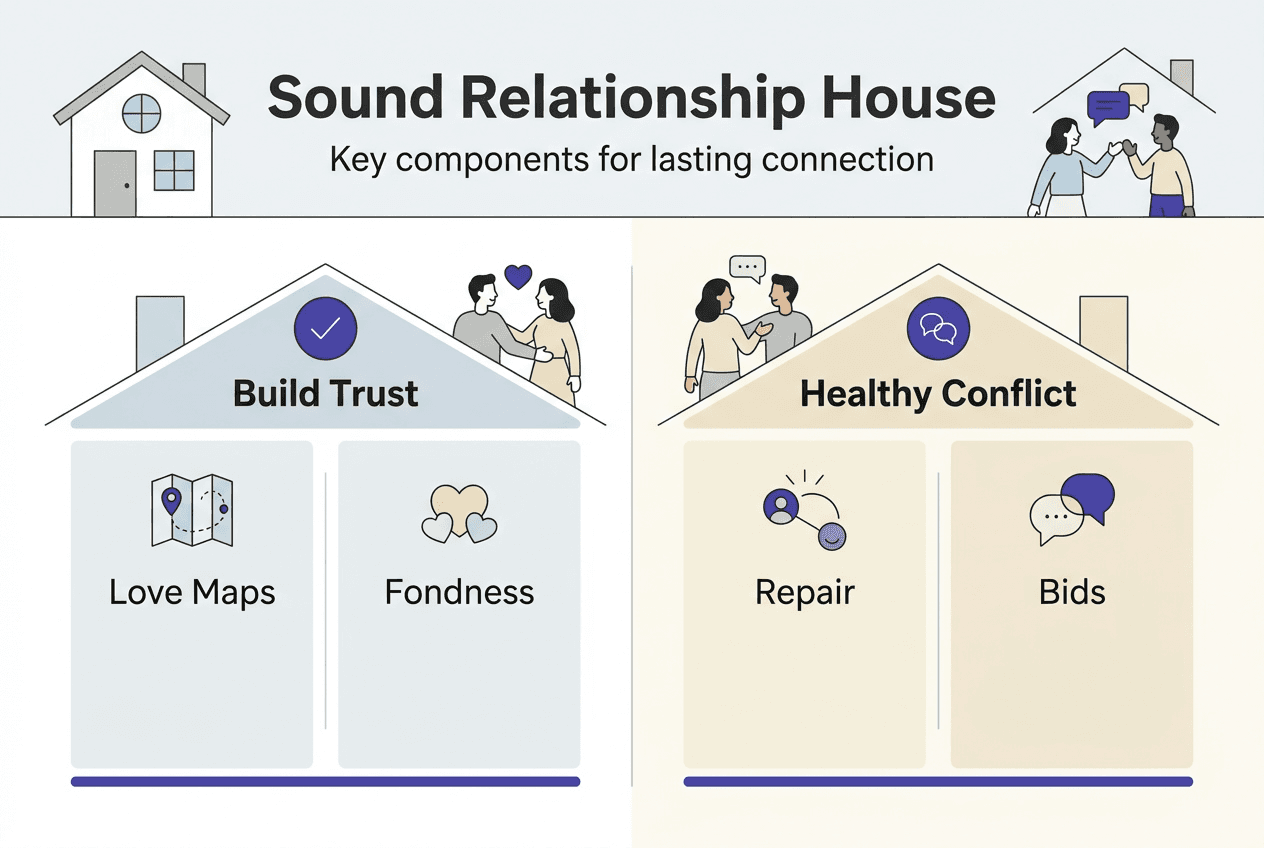
Turning toward bids for connection represents a crucial skill for maintaining this positive balance. Bids are attempts to gain attention, affection, or support from your partner. They might be as simple as sharing an interesting article or asking for help with a task. Partners who consistently turn toward these bids, rather than turning away or against them, report significantly higher relationship satisfaction.
Managing conflict calmly preserves the positive atmosphere even during disagreements. This involves using soft start-ups when raising concerns, accepting influence from your partner, and practising repair attempts when discussions become heated. Couples who master these skills can discuss difficult topics without triggering the Four Horsemen patterns.
Practical strategies for building emotional connection:
- Express specific appreciation daily by noticing and acknowledging your partner’s contributions
- Respond positively to bids for connection even when you’re busy or distracted
- Create regular rituals of connection like morning coffee together or evening walks
- Practise active listening by reflecting back what you hear before responding
- Use gentle humour to de-escalate tension during minor disagreements
- Schedule regular state-of-the-union meetings to discuss relationship health proactively
Pro Tip: Keep a shared gratitude journal where you both write one thing you appreciate about each other daily, this simple practice significantly shifts your focus toward positive qualities.
Building a culture of vulnerability supports reducing criticism and defensiveness. When partners feel safe expressing needs and fears without judgment, they’re less likely to attack or withdraw. This emotional safety develops gradually through consistent positive responses to vulnerability. For more detailed guidance, review practical ways to improve communication that reinforce these foundational skills.
Regularly practising these skills enhances trust and emotional safety. The key is consistency rather than perfection. Couples who maintain awareness of their interaction patterns and intentionally cultivate positive moments create relationships that withstand inevitable challenges and conflicts.
Applying the Gottman method in your relationship: what to expect from therapy
Gottman Method therapy sessions begin with a comprehensive assessment of your relationship’s strengths and weaknesses across the Sound Relationship House levels. Therapists typically use structured questionnaires and interviews to identify which areas need attention. This diagnostic phase provides a roadmap for your therapeutic work together.
Your therapist teaches specific skills to identify and replace negative patterns as they emerge in real time. Rather than simply discussing problems, you’ll practise new communication techniques during sessions. This experiential learning helps couples internalise healthier patterns that they can apply at home.
Sessions include conflict management training that goes beyond basic communication tips. You’ll learn how to use soft start-ups when raising concerns, how to make and receive repair attempts during arguments, and how to self-soothe when physiologically flooded. These concrete skills transform how you navigate disagreements.
Creating shared meaning becomes a focus as therapy progresses. Couples explore their individual dreams, values, and goals, then work to support each other’s aspirations while building common ground. This process strengthens the relationship’s foundation beyond simply reducing conflict.
Friendship building receives equal attention to conflict resolution. Therapists guide couples in deepening their love maps, expressing fondness and admiration, and turning toward each other’s bids for connection. These friendship skills often deteriorate in distressed relationships but respond well to intentional cultivation.
What happens during Gottman Method therapy:
- Initial assessment using research-based questionnaires and couple interviews
- Feedback session where therapist shares findings and recommends focus areas
- Skill-building exercises practised during sessions and assigned as homework
- Regular progress reviews to adjust therapeutic goals as needed
- Maintenance planning to sustain improvements after formal therapy ends
Pro Tip: Complete assessment questionnaires thoughtfully and honestly, accurate information helps your therapist tailor interventions to your specific patterns and needs.
Therapy supports couples in setting goals and maintaining positive changes beyond the therapy room. Your therapist helps you establish realistic expectations and create accountability systems. Many couples continue using Gottman Method tools years after therapy concludes, having integrated them into their daily relationship maintenance.
| Therapy component | Purpose | Typical duration |
|---|---|---|
| Assessment phase | Identify strengths and growth areas | 1-2 sessions |
| Skill building | Learn and practise new patterns | 8-12 sessions |
| Maintenance | Sustain improvements independently | Ongoing |
The structured nature of Gottman Method therapy provides clear milestones and measurable progress. Unlike open-ended talk therapy, this approach offers specific techniques and frameworks that couples can apply immediately. For guidance on maximising your therapy experience, review tips on preparing for couples counselling before your first session.
Explore professional counselling services to strengthen your relationship
Professional counselling can guide couples through the Gottman Method effectively, providing expert support as you learn and apply these relationship-building skills. Interactive Counselling offers couples counselling services designed to help Canadian couples strengthen communication and emotional connection using evidence-based approaches.
Online and in-person options adapt to your needs across Canada, making it easier to access quality therapy regardless of your location or schedule. Whether you prefer meeting with a therapist face-to-face or connecting from home, flexible formats ensure you can prioritise your relationship health.
Preparing well maximises therapy benefits for lasting relationship improvements. Understanding what to expect and coming ready to engage actively helps you progress more quickly. Consider exploring the advantages of online therapy for couples if scheduling or location presents barriers to in-person sessions.
Frequently asked questions
What is the Gottman method in couples therapy?
The Gottman Method is an evidence-based approach that helps couples strengthen their relationships through the Sound Relationship House framework. It focuses on building friendship, managing conflict constructively, and creating shared meaning. Therapists use research-backed assessments and interventions to address specific relationship challenges.
How does the Gottman method help improve communication?
This approach teaches couples to replace harmful patterns like criticism and contempt with understanding and positive bids for connection. Partners learn to express needs without attacking character and to respond to each other’s attempts at engagement. The method emphasises maintaining a high ratio of positive to negative interactions.
What are the four negative behaviours that can harm relationships?
Criticism, contempt, defensiveness, and stonewalling comprise the Four Horsemen that predict relationship breakdown. These behaviours cause emotional damage by attacking character, showing disrespect, deflecting responsibility, and withdrawing completely. Awareness helps couples avoid them through therapy and intentional practice of healthier alternatives.
How can couples prepare for Gottman method therapy sessions?
Be open to vulnerability, set goals together, and be ready to engage actively in exercises and homework assignments. Understanding the basics of the Sound Relationship House beforehand boosts therapy effectiveness. Review resources on preparing for couples counselling to maximise your investment in the therapeutic process.
Recommended
- Stonewalling, Defensiveness, Criticism: 90% Divorce Risk
- How to Prepare for Couples Counseling for Lasting Change – Interactive Counselling
- 10 Actionable Pieces of Relationship Advice for Couples
- 7 Key Benefits of Marriage Counseling for Stronger Relationships – Interactive Counselling