Many people believe relationship struggles stem from incompatibility or poor communication skills, but the root often lies deeper in emotional patterns formed during childhood. These patterns, called attachment styles, profoundly influence how you connect with romantic partners, handle conflict, and express vulnerability. Understanding your attachment style and your partner’s can transform relationship dynamics, fostering greater emotional intimacy and security. This guide explores the four primary attachment styles, how they interact in partnerships, and practical strategies to build healthier, more fulfilling connections.
Table of Contents
- Attachment Styles Explained: How Your Early Connections Shape Adult Relationships
- The Four Main Attachment Styles And Their Behaviours In Relationships
- How Different Attachment Styles Interact: Common Relationship Dynamics And Challenges
- Strategies To Build Secure Attachment And Healthier Relationships
- Explore Professional Counselling Services To Support Your Relationship
- Frequently Asked Questions
Key takeaways
| Point | Details |
|---|---|
| Attachment styles shape emotional responses | Your childhood experiences with caregivers determine how you relate to partners in adulthood |
| Four primary styles exist | Secure, anxious, avoidant, and disorganised attachment each create distinct relationship patterns |
| Style combinations affect dynamics | Different attachment pairings produce predictable interaction cycles that can strengthen or strain bonds |
| Change is possible with effort | Therapy, self-awareness, and consistent practice can shift insecure patterns toward secure attachment |
Attachment styles explained: how your early connections shape adult relationships
Attachment theory reveals how early life experiences shape coping styles and relationship behaviours throughout adulthood. Your attachment style originates from interactions with primary caregivers during infancy and childhood. When caregivers consistently respond to your emotional needs with warmth and attentiveness, you develop secure attachment, learning that relationships provide safety and support. This foundation creates adults who feel comfortable with intimacy and can regulate emotions effectively during stress.
Insecure attachment styles emerge when caregiving is inconsistent, unresponsive, or unpredictable. These patterns include anxious, avoidant, and disorganised styles, each reflecting different adaptive strategies children develop to cope with unmet emotional needs. An anxiously attached child might intensify distress signals to gain attention, whilst an avoidant child learns to suppress needs and rely solely on themselves. Disorganised attachment often results from frightening or chaotic caregiving, leaving children without a coherent strategy for seeking comfort.
These childhood patterns persist into adulthood, profoundly affecting romantic relationships. Your attachment style influences how you:
- Seek closeness and intimacy with partners
- Respond to conflict and perceived threats to the relationship
- Regulate emotions during stressful interactions
- Communicate needs and vulnerabilities
- Trust others with your emotional wellbeing
Recognising these patterns offers insight into why certain relationship challenges feel automatic or overwhelming. When you understand that your reactions stem from deeply ingrained emotional blueprints rather than character flaws, you can approach yourself and your partner with greater compassion. This awareness creates space for intentional change, allowing you to develop more secure ways of relating that honour both your needs and your partner’s emotional reality.
The four main attachment styles and their behaviours in relationships
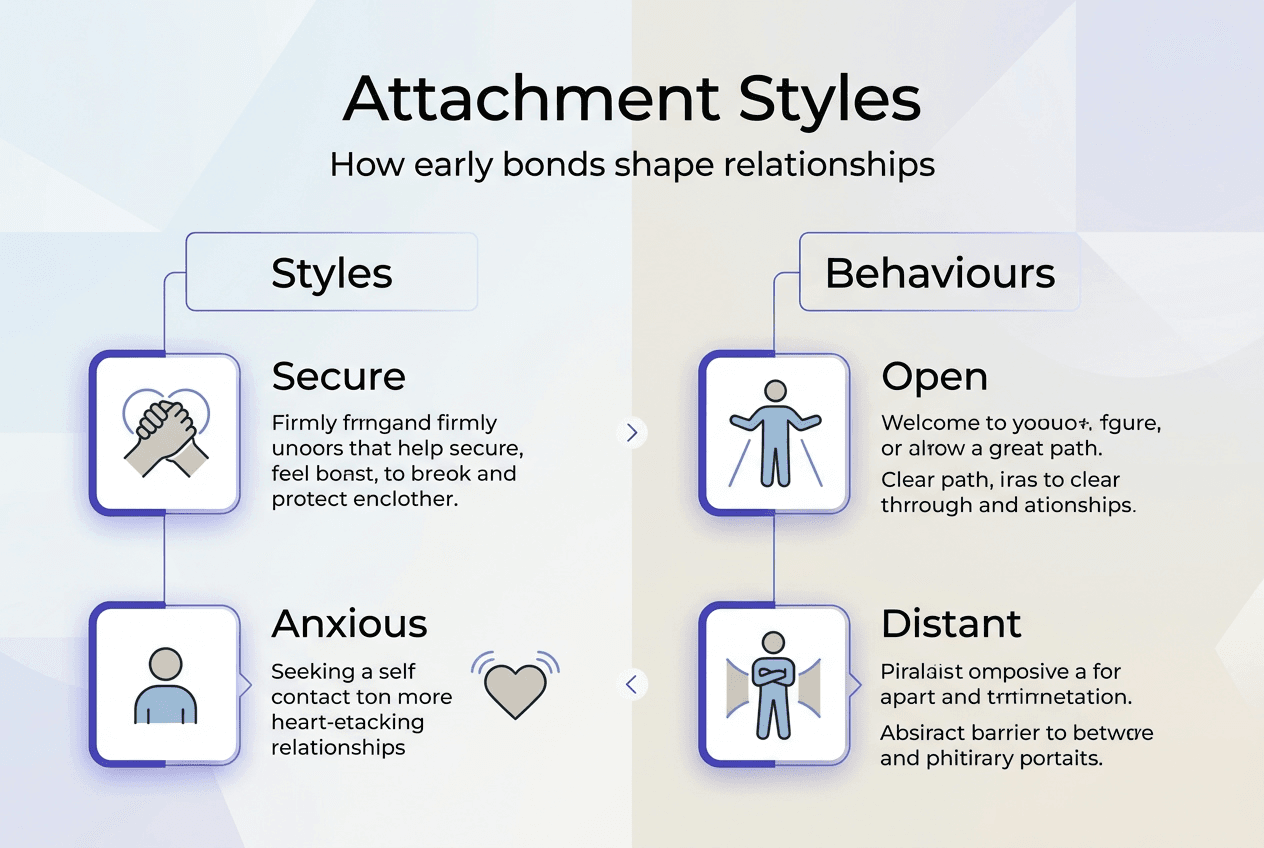
Secure attachment represents the healthiest relationship pattern, characterised by comfort with both intimacy and independence. Securely attached individuals trust their partners, communicate needs directly, and handle conflict constructively without becoming overwhelmed or withdrawn. They view relationships as sources of support whilst maintaining personal autonomy, creating balanced partnerships where both people feel valued and understood.

Anxious attachment manifests as heightened fear of abandonment and intense need for reassurance. People with this style often worry their partners don’t truly love them, leading to behaviours like frequent contact seeking, jealousy, or emotional reactivity during separations. They may struggle with self-soothing, relying heavily on partners for emotional regulation. Whilst their capacity for deep connection is strong, anxiety can create exhausting cycles of seeking validation and interpreting neutral behaviours as rejection.
Avoidant attachment features emotional distancing and discomfort with vulnerability. Individuals with this style value independence highly, often suppressing emotional needs and maintaining psychological distance even in committed relationships. They may struggle to express feelings, avoid deep conversations about the relationship, and feel suffocated by partners’ needs for closeness. This pattern protects against perceived threats to autonomy but can leave partners feeling lonely or rejected.
Disorganised attachment combines elements of both anxious and avoidant patterns, creating unpredictable relationship behaviours. Often linked to trauma or severely neglectful caregiving, this style reflects conflicting desires for connection and self-protection. People with disorganised attachment may simultaneously crave intimacy whilst fearing it, leading to confusing push-pull dynamics that strain partnerships.
| Attachment style | Core fear | Typical behaviours | Relationship challenge |
|---|---|---|---|
| Secure | Balanced perspective | Open communication, emotional availability | Minimal, handles conflict well |
| Anxious | Abandonment, rejection | Seeks reassurance, emotionally reactive | Over-dependence on partner validation |
| Avoidant | Loss of independence | Emotional withdrawal, minimises needs | Difficulty with intimacy and vulnerability |
| Disorganised | Intimacy itself | Unpredictable, contradictory responses | Chaotic patterns confuse partners |
Identifying your attachment behaviours during conflict provides valuable self-awareness. Pro tip: Notice your automatic response when feeling disconnected from your partner, whether you pursue contact intensely, withdraw into solitude, or oscillate between both extremes. This pattern reveals your dominant attachment style and highlights areas for growth.
How different attachment styles interact: common relationship dynamics and challenges
Secure-secure pairings typically create the healthiest relationship dynamics. Both partners communicate openly about needs, navigate disagreements with respect, and provide consistent emotional support. These couples repair ruptures quickly because neither person interprets conflict as threatening the relationship’s foundation. They maintain individual identities whilst building deep intimacy, creating partnerships that feel both stable and fulfilling.
Anxious-avoidant combinations often produce the challenging pursuer-withdrawer pattern with documented therapy success. The anxiously attached partner seeks closeness and reassurance, interpreting the avoidant partner’s need for space as rejection. This triggers increased pursuit, which overwhelms the avoidant partner, causing further withdrawal. The cycle intensifies as each person’s behaviour confirms the other’s core fears, creating frustration and disconnection.
This dynamic unfolds predictably:
- The anxious partner feels emotional distance and seeks connection through questions, physical closeness, or requests for reassurance
- The avoidant partner experiences this as pressure or intrusion, triggering their need to create space and maintain independence
- The avoidant partner withdraws emotionally or physically, using strategies like working late, engaging in solitary activities, or becoming less communicative
- The anxious partner interprets withdrawal as confirmation of abandonment fears, intensifying efforts to reconnect and restore closeness
- The cycle repeats with increasing intensity unless one or both partners recognise the pattern and consciously interrupt it
Disorganised attachment adds unpredictability to any pairing. Partners may struggle to understand sudden shifts between intense connection and abrupt distancing, creating confusion and insecurity. These relationships often require professional support to establish consistent emotional safety and develop more coherent interaction patterns.
| Pairing | Common dynamic | Primary challenge | Growth opportunity |
|---|---|---|---|
| Secure-Secure | Mutual support, effective communication | Maintaining connection during external stress | Deepening intimacy through vulnerability |
| Anxious-Avoidant | Pursuer-withdrawer cycle | Meeting different intimacy needs | Learning each other’s emotional language |
| Anxious-Anxious | Intense emotional reactivity | Managing mutual anxiety without escalation | Developing self-soothing skills together |
| Avoidant-Avoidant | Emotional distance, low conflict | Creating genuine intimacy | Practicing vulnerability in safe increments |
Pro tip: When you recognise your relationship pattern, share this awareness with your partner. Naming the cycle removes blame and creates collaborative problem-solving opportunities. Instead of “you always pull away,” try “I notice we fall into that pursuer-withdrawer pattern we read about. Can we try responding differently this time?”
Strategies to build secure attachment and healthier relationships
Developing secure attachment requires consistent practice and often professional guidance. Start with open, vulnerable communication about your emotional needs and fears. Share your attachment style with your partner, explaining how childhood experiences influence your current behaviours. This transparency builds understanding and reduces misinterpretations during conflicts. When your partner knows you withdraw because intimacy feels overwhelming rather than because you don’t care, they can respond with patience rather than hurt.
Self-reflection helps identify personal triggers and automatic responses. Notice when you feel activated in your relationship, what specific situations or words trigger insecurity, and how your body signals emotional distress. Journaling about these patterns reveals themes that guide your growth work. You might discover that perceived criticism triggers anxious attachment responses, or that requests for emotional support activate avoidant distancing.
Professional therapy offers structured approaches to healing attachment wounds. Reparenting therapy provides emotional safety by helping you internalise the consistent, attuned caregiving you may have missed in childhood. Emotionally Focused Therapy helps couples identify negative interaction cycles and create new patterns based on emotional accessibility and responsiveness. The Gottman method teaches specific skills for managing conflict, building friendship, and creating shared meaning in relationships.
Individual therapy complements couples work by addressing personal attachment histories. A therapist can help you:
- Process childhood experiences that shaped your attachment style
- Develop emotion regulation skills for managing relationship anxiety
- Challenge core beliefs about your worthiness of love and connection
- Practice new behaviours in a safe, supportive environment
- Build self-compassion for your attachment-related struggles
Consistency matters more than perfection when building secure attachment. Small, repeated actions that demonstrate reliability and emotional availability gradually rewire your internal working models of relationships. Show up for your partner predictably, follow through on commitments, and respond to their bids for connection. Pro tip: Track your progress by noting moments when you chose a secure response despite feeling triggered to react from your insecure attachment style. These victories accumulate into lasting change.
Explore professional counselling services to support your relationship
Professional counselling provides expert guidance for understanding and reshaping attachment patterns that affect your relationship satisfaction. Interactive Counselling offers comprehensive counselling services tailored to individual and couple needs, including approaches specifically designed to address attachment concerns. Whether you’re working through anxious attachment, helping your partner understand avoidant patterns, or navigating complex relationship dynamics, experienced therapists can facilitate meaningful growth.
Preparing for couples counselling maximises the effectiveness of your sessions and helps you feel more comfortable discussing vulnerable topics. Our mental health counsellors work collaboratively with you to identify goals, develop new communication skills, and create the secure emotional foundation your relationship deserves.
Frequently asked questions
What are attachment styles in relationships?
Attachment styles are emotional and behavioural patterns that develop from childhood caregiving experiences and shape how you relate to romantic partners throughout life. They influence how you express love, handle disagreements, seek closeness, and respond to perceived threats to the relationship. Understanding your attachment style and your partner’s provides valuable insight into recurring relationship dynamics and helps you develop more secure, satisfying connections.
Can attachment styles change over time?
Yes, attachment styles can shift toward greater security through intentional effort, therapeutic work, and positive relationship experiences. Whilst your core attachment patterns tend to remain stable without intervention, consistent exposure to secure relationships and targeted therapy can rewire your emotional responses. Research shows that individuals who engage in attachment-focused therapy and practice new relational behaviours often develop more secure attachment over time, leading to improved relationship quality and emotional wellbeing.
How can couples work together to improve insecure attachment patterns?
Couples can strengthen their attachment security by openly discussing their fears, needs, and triggers without judgement. Creating regular opportunities for vulnerable conversation builds trust and understanding. Couples counselling preparation helps partners enter therapy with clarity about their goals and openness to change. Professional guidance teaches specific skills for breaking negative cycles, responding to each other’s attachment needs, and building the emotional safety that secure attachment requires.
What therapy methods help with attachment issues?
Reparenting therapy helps adults heal childhood attachment wounds by providing corrective emotional experiences that build internal security. Emotionally Focused Therapy helps couples identify negative interaction patterns rooted in attachment insecurity and develop more responsive, attuned ways of relating. Other effective approaches include psychodynamic therapy for exploring attachment origins and cognitive-behavioural techniques for changing unhelpful relationship thoughts. Many therapists integrate multiple methods based on your specific needs. Exploring available counselling services helps you find the right therapeutic approach for your attachment concerns.
Recommended
- Pursuer-Withdrawer Pattern: 45% Therapy Success Rate
- Why Some People Fear Love and Closeness – The Impact on Relationships
- How to rekindle attraction in your relationship in 2026
- How Childhood Emotional Neglect Shapes Adult Attachment: A Guide to Healing