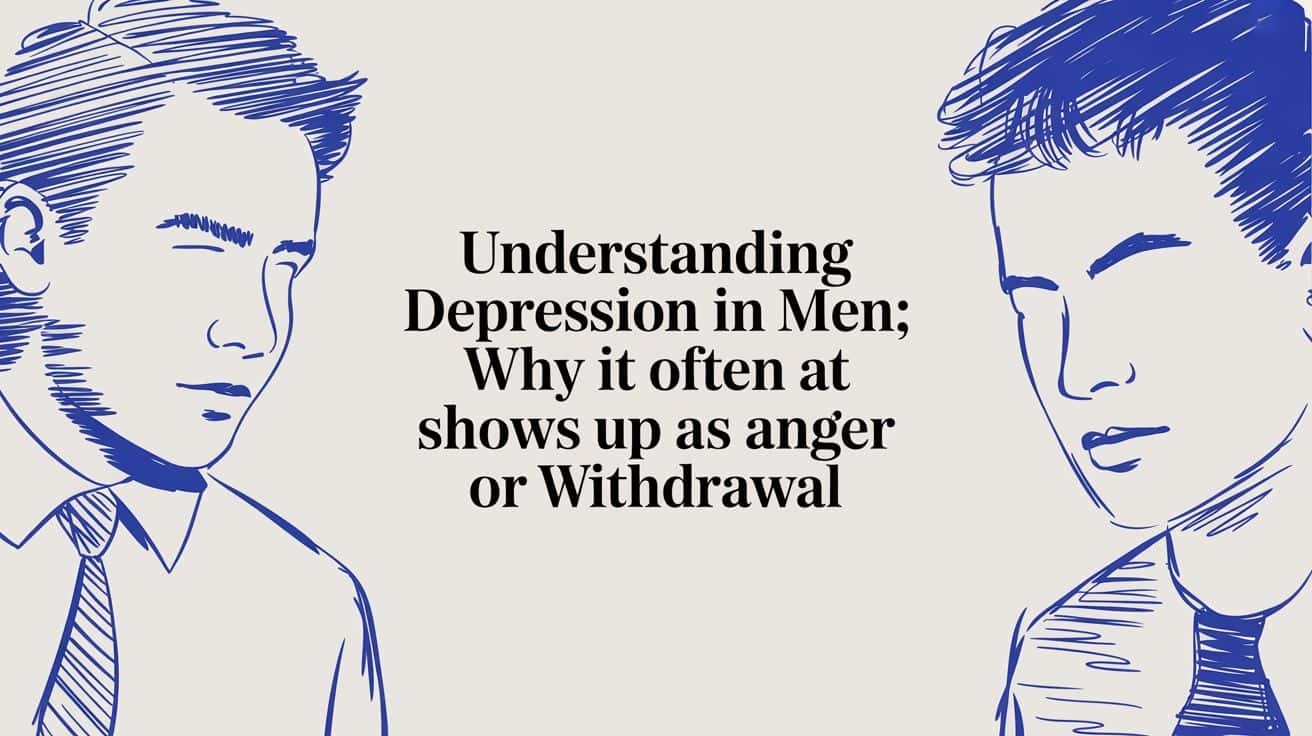
It can be confusing, even painful, when the man you care about—or the man you see in the mirror—seems distant, irritable, or constantly on edge. You might be looking for answers, wondering if it's just stress, a rough patch, or something more. Understanding why depression in men often shows up as anger or withdrawal is so important because these behaviours are frequently the hidden face of deep emotional pain. For more information, see our depression counselling.
“Societal expectations often pressure men to suppress sadness and vulnerability, causing these feelings to surface as more ‘acceptable’ external behaviours like anger, irritability, or emotional withdrawal.”
The Hidden Face of Male Depression
When we think of depression, most of us picture persistent sadness, frequent crying, and a general lack of energy. While those are absolutely valid signs, they don’t paint the full picture, especially for men. A complex mix of social conditioning and biology means that for many men, depression can wear a completely different mask—one that looks a lot more like frustration, anger, or a complete shutdown.
This can be incredibly isolating, both for the man going through it and for the people who love him. He might not even realize he's depressed because his experience doesn't line up with the classic symptoms he's always heard about. Instead, he might just feel like he's constantly "on edge" or that his fuse is getting shorter and shorter. His internal struggle is real, but the outward signs are often misunderstood.
Anger as a Common Symptom
For many men, expressing vulnerability can feel like a failure. From a young age, they're often taught to be strong, stoic, and in control. Crying might be framed as weakness, and asking for help? That can feel like it's off the table entirely.
When genuine feelings of sadness, hopelessness, or worthlessness creep in, that conditioning kicks into high gear. Instead of being acknowledged, those emotions get pushed down and can morph into something more socially "masculine": anger. This isn't usually a conscious choice; it's a deeply ingrained defense mechanism. Research highlights a powerful connection between masculine norms and anger in depression that helps explain this pattern.
This is why you might see:
- Sudden, seemingly unprovoked outbursts of temper.
- Increased irritability over small, everyday annoyances.
- Hostile, blaming, or aggressive language.
- A general sense of being "ticked off" at the world.
Recognizing the Different Signs
Simply knowing that depression can look different in men is the first real step toward compassion and finding the right kind of support. It helps reframe the behaviour, seeing it not as a character flaw, but as a symptom of underlying pain.
The table below contrasts classic depressive symptoms with how they often show up in men, making it easier to spot the less obvious signs.
Classic Depression Symptoms vs. How They Can Appear in Men
| Classic Symptom | How It Can Appear in Men |
|---|---|
| Persistent Sadness or Crying | Irritability, Frustration, or Aggressiveness |
| Loss of Interest in Hobbies | Escapist Behaviours (e.g., excessive work, sports, or gaming) |
| Feelings of Worthlessness or Guilt | Blaming Others; Heightened Sensitivity to Criticism |
| Fatigue or Low Energy | Restlessness or Agitation; Inability to "Switch Off" |
| Social Isolation | Emotional Withdrawal; Pulling Away from Loved Ones |
| Changes in Appetite | Increased Substance Use (alcohol or drugs) to Cope |
Spotting these alternative signs can be a real lightbulb moment. It allows us to look past the anger or the emotional distance and see the person who is struggling underneath.
Why Anger Becomes Depression's Mask
To get to the heart of why depression in men so often looks like anger or withdrawal, we have to look at the powerful, unwritten rules of masculinity. Many boys are taught from a young age that being a man means being tough, self-reliant, and in control. Expressing sadness or fear feels like breaking a fundamental rule—a sign of personal failure.
This conditioning creates a tough spot for many men. When feelings of sadness or hopelessness bubble up, they don't just feel bad; they can feel like a direct threat to their sense of self. Because these emotions are labelled "unacceptable," the mind searches for a different, more socially sanctioned way to express the pain. For many, that outlet becomes anger.
The Pressure Cooker Effect
Picture unexpressed emotions as steam building up inside a pressure cooker. The sadness, hurt, and fear get pushed down, but they don't just vanish. Instead, the internal pressure silently mounts. Sooner or later, that pressure needs an escape route.
Without a healthy release valve, like talking things out or simply allowing for vulnerability, the lid is bound to blow. For many men, this explosion shows up as:
- A short fuse or constant irritability.
- Sudden outbursts of rage that seem to come from nowhere.
- A cynical or hostile attitude.
- A constant feeling of being on edge.
This isn't a conscious decision to be angry. It's more of an involuntary overflow of suppressed emotional pain. In a way, the anger acts as a shield, protecting the man from the very vulnerability he’s been taught to avoid his entire life.
This concept map shows how depression can be the core issue, but the visible signs often radiate outward as anger and social withdrawal.
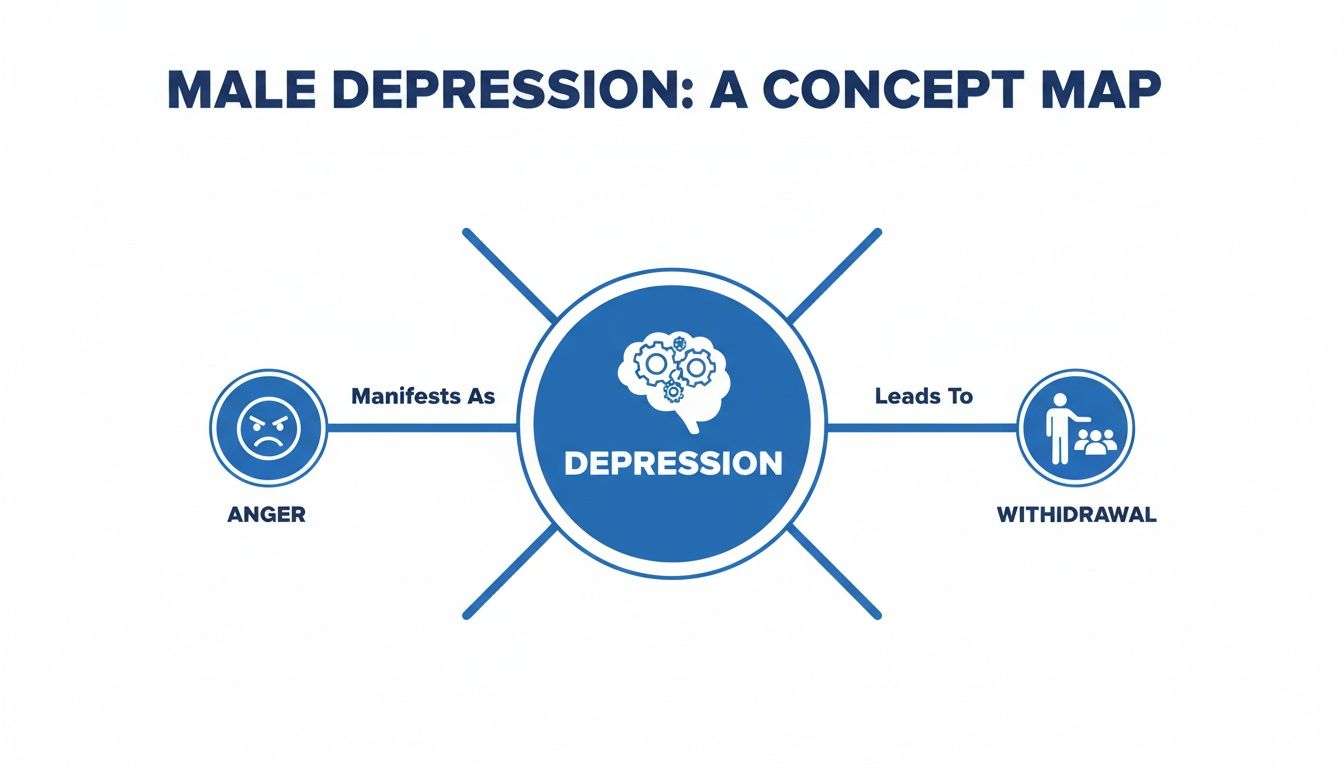
As you can see, what's happening on the inside isn't always what we see on the outside, which is why the real problem can be so hard to spot.
From Social Script to Silent Suffering
This social script doesn't just shape how men show emotion; it also dictates their willingness to ask for help. Admitting you're struggling and need support can feel like admitting you've failed. This creates a painful, dangerous cycle.
A man feels depressed but believes he has to hide it to be "strong." He bottles up his sadness, which then erupts as anger or causes him to pull away from the people who care about him. This anger and isolation damage his relationships and make him feel even more alone, yet asking for help feels impossible because of the very pressure that created the problem in the first place.
This is exactly why so many men suffer in silence, their pain invisible to others and sometimes even to themselves. They might feel that something is deeply wrong but lack the words or the permission to call it what it is: depression. The link between these emotions is complex, and it can be helpful to read more about Untangling Anger and Anxiety.
Recognising this internal conflict is the first real step toward helping. It allows us to see that the irritability or emotional distance isn't necessarily an act of aggression or indifference, but a desperate signal of a much deeper struggle. Knowing this builds a bridge of empathy—and that's where healing can finally begin. Learning about how emotional triggers shape our reactions is another key piece of the puzzle, offering insight into how to identify and manage these responses.
The Unseen Risks of Untreated Depression in Men
When depression in men goes unnoticed because it’s disguised as anger or withdrawal, the consequences can be incredibly serious. What might seem like a personality issue—a short fuse, risky choices, or just pulling away—is often a man’s desperate attempt to manage immense internal pain. Ignoring these signs is like ignoring the check-engine light on your dashboard; sooner or later, something is going to break down.
For many men, that breakdown doesn't look like quiet sadness. Instead, as the internal pressure builds to an unbearable level, it can explode outwards in destructive ways. This is when we often see a surge in high-risk behaviours.
How Hidden Pain Can Surface
Untreated depression can create a void, one that's quickly filled by unhealthy ways of coping. These aren’t deliberate acts of self-destruction but rather flawed attempts to feel anything other than the constant, gnawing pain or numbness.
These behaviours can look like:
- Substance Abuse: A noticeable increase in drinking or drug use, often framed as a way to "unwind" or "take the edge off."
- Reckless Behaviour: This can be anything from aggressive driving and impulsive spending to engaging in physically dangerous activities.
- Escalating Anger: Outbursts that become more common or more intense, leading to fractured relationships or problems at work.
- Complete Shutdown: A withdrawal so complete that it isolates him entirely from his partner, family, and friends.
It's crucial to reframe these actions not as choices, but as symptoms. The anger isn't who he is; it's a signal of the pain he's in. The withdrawal isn't a rejection of you; it's a sign he's overwhelmed and doesn't know how to ask for help.
The Most Tragic Consequence
The silence that surrounds male depression comes with a devastating and irreversible cost. In Canada, the statistics are a grim reminder of why we must recognize these different symptoms. Men die by suicide at a rate three to four times higher than women, a tragic reality that is often the end result of hidden suffering.
The Mental Health Commission of Canada highlights that while men experience depression, they are far less likely to seek or receive help for it. This gap represents a massive number of men who are struggling completely on their own.
This isn't just data; it's a story of preventable tragedies. Each statistic represents a man whose pain became so overwhelming that he felt he had no other way out. It’s a powerful reminder that irritability, risk-taking, and emotional distance can be cries for help from someone who doesn’t have the words to say, “I’m not okay.” Understanding the connection between depression, motivation, and energy can offer further clarity on the internal struggles at play.
Recognising anger and withdrawal as potential signs of depression is one of the most important steps we can take. It changes the entire conversation from one of judgment to one of compassion, opening the door for genuine help and recovery. Seeing the pain behind the mask isn’t just helpful—it can be life-saving.
How Masked Depression Affects Your Relationships
When the man you love pulls away or snaps with uncharacteristic anger, it’s completely natural to feel hurt, confused, and maybe even rejected. You might find yourself walking on eggshells, constantly replaying conversations in your head and wondering what you did to cause this sudden shift. This kind of tension can strain even the strongest bonds, leaving you feeling isolated and alone within your own relationship.

It’s incredibly tough to be on the receiving end of this behaviour. But it's so important to understand that his anger and withdrawal are often symptoms of his depression, not a true reflection of how he feels about you. The man you know and love is still in there, but he's struggling behind a mask of irritability and emotional distance.
Reframing the Behaviour
The first—and most powerful—step you can take is to consciously reframe what you’re seeing. This doesn’t mean you have to excuse hurtful actions, but it does mean changing how you interpret the source of the problem. It’s a subtle but crucial shift from thinking, "He's angry at me," to realizing, "He's struggling with something that's coming out as anger."
This reframing is an act of compassion, for him and for yourself. It allows you to protect your own emotional well-being by not personalizing the symptoms of his illness, which is crucial for stopping a painful cycle of conflict.
When you can see the short temper or the emotional shutdown as a signal of his internal pain, your response can change from defensiveness to empathy. That shift is often what keeps the lines of communication from being severed completely.
The Ripple Effect on Loved Ones
Living with someone who has masked depression can feel like trying to navigate a minefield. The unpredictability of their mood is exhausting, and the emotional distance creates a profound sense of loneliness.
You might find yourself experiencing:
- Emotional Burnout: It’s draining to constantly manage someone else's mood while getting little to no emotional support in return.
- Growing Resentment: It's natural to feel frustrated or resentful when your own needs for connection and affection go unmet.
- Communication Breakdown: When every conversation feels like it could trigger an argument or be met with silence, you might just stop trying to talk at all.
- Feelings of Helplessness: Watching someone you love suffer while they push you away can leave you feeling powerless and unsure of how to help.
In Canada, many men face major depression each year, but there’s a massive gap in how they seek help. Studies show a significant disparity in accessing mental health services, with men being far less likely to reach out. You can learn more by exploring the research on men's mental health trends in Canada.
Preserving Connection Amidst the Struggle
So, how do you stay connected when he is actively pulling away? The key is to respond to the man, not the mask. This means finding small, low-pressure ways to show that you're still there for him, even if he can't reciprocate right now.
Consider these gentle approaches:
- Offer simple, non-verbal gestures of care, like making him a cup of tea or leaving his favourite snack on the counter.
- Use "I" statements to express your feelings without placing blame. For example, "I feel lonely when we don't talk in the evenings."
- Invite him to join you in a low-energy activity, like watching a movie or going for a quiet walk, without any pressure for deep conversation.
These small acts aren't about "fixing" him. They are about sending a consistent message: "I see you're struggling, and I'm still here." That simple, steady presence can be a powerful anchor for him in the storm of his depression. Navigating this is complex, and our guide on how to support a partner with depression offers more specific strategies that can help.
Practical Pathways to Finding Support
Deciding to get support can be the toughest part of the entire journey. For many men, the instinct is to just push through and handle things on their own. But it's time to reframe that thinking. Reaching out isn't a sign of weakness; it's a strategic move. It’s no different than hiring a coach to improve your skills in a sport or getting expert advice at work.

Modern therapy is a confidential, goal-oriented process. The whole point is to give you a new toolkit for handling tough emotions so you can start feeling like yourself again. It’s all about finding a practical way forward.
Demystifying the Therapy Process
The idea of therapy can feel intimidating if you’ve never done it before. What really happens in a session? The goal is simple: to help you understand what’s going on inside and learn new skills to manage it. You’re in the driver’s seat; it’s a collaboration.
A good counsellor works with you to:
- Name what you’re feeling: Move beyond just "angry" or "stressed" to articulate the sadness, frustration, or numbness underneath.
- Spot your emotional triggers: Figure out exactly what situations, people, or thoughts kick off the anger or make you shut down.
- Build healthier coping skills: Discover new ways to deal with emotional pain that don’t involve lashing out or retreating.
- Repair damaged relationships: Learn communication techniques to reconnect with the people who matter most to you.
One of the most effective and well-researched methods is Cognitive Behavioural Therapy (CBT). Think of CBT as a practical, hands-on approach. It helps you catch the unhelpful thought patterns and automatic behaviours that are making you miserable, challenge them, and then actively change them. For men whose depression shows up as anger or withdrawal, this can be incredibly empowering.
Taking the Next Step Forward
The decision to seek help is entirely yours, and it happens when you’re ready. The fact that you’re reading this article is a huge step. It means you’re already looking for answers and are open to the possibility that things can get better.
The need for this kind of support is more apparent than ever. In Canada, a significant portion of the population grapples with depression. For men, this depression is often masked by anger or isolation, which contributes to underdiagnosis and makes it harder to ask for help. You can explore more on these mental health trends in Statistics Canada's health reports.
Therapy provides a safe, non-judgmental space to unpack the pressure without fear of criticism. It's a place to build a foundation for lasting change, equipping you with the skills to navigate life's challenges more effectively.
When you feel ready to see what professional support might look like, you can learn more about how counselling can help you move forward. Remember, the goal isn’t to change who you are—it’s to help you get back to being the best version of yourself.
Answering Your Questions About Male Depression
It's completely normal to have a lot of questions when trying to understand male depression, especially when it looks more like anger or pulling away. Whether you're worried about someone in your life or trying to make sense of your own feelings, getting clear, evidence-based answers is the first step. Here, we'll tackle some of the most common questions we hear.
How do I start a conversation with a man who might be depressed?
This is often the biggest hurdle. The key is to approach with genuine, gentle concern, not accusation.
- Pick a good moment. Find a quiet, private time when you won't be rushed. Sometimes, talking side-by-side during an activity like a walk or a drive feels less intense than a direct, face-to-face conversation.
- Start with "I" statements. Frame your concerns around your own feelings. Something like, "I've been worried about you lately," or "I've noticed you seem more on edge than usual, and it's making me concerned."
- Talk about behaviours, not diagnoses. Avoid saying, "I think you're depressed." Instead, point to specific things you've observed, like, "It seems like you've been working really long hours and haven't had time for anything else." This keeps the conversation grounded and less confrontational.
What if he resists help or gets angry?
This is a very common reaction, often stemming from the same societal pressures that encourage men to hide their pain. Try not to take it personally. His anger or denial is usually a shield. You can acknowledge his feelings—"I hear you that you feel it's not a big deal"—but gently stand your ground. You might say, "I respect that, but I'm still concerned because I care about you. The door is always open if you change your mind and want to talk." The goal isn't to win an argument; it's to plant a seed and show that your support is unconditional.
Is it burnout or is it depression?
This is a tricky one because burnout and depression can look a lot alike, sharing symptoms like exhaustion and a cynical outlook. A key difference is that burnout is typically tied to a specific stressor, like work. Taking a real break or changing your work environment often provides relief. Depression, on the other hand, tends to be pervasive. It casts a shadow over everything—work, relationships, hobbies, and downtime. If feelings of hopelessness, irritability, or emptiness persist even when you’re away from the source of stress, it could be something more than burnout. For a deeper dive, you can find helpful insights into depression.
Can these symptoms go away on their own?
It's tempting to hope that things will sort themselves out with time, but masked depression rarely fades without some kind of intervention. Simply "waiting it out" often allows the root problems to dig in deeper, which can make recovery harder and put a greater strain on health and relationships. Taking proactive steps, even small ones, is a much more effective path toward feeling better.
A Gentle Closing Thought
Walking through the fog of depression, especially when it shows up as anger or withdrawal, takes a tremendous amount of courage. Whether you're the one struggling or you're watching a man you love pull away, it's easy to feel lost, frustrated, and alone.
If there's just one thing to take away, let it be this: the anger, the irritability, and the distance are often not character flaws. They are symptoms of deep, unspoken emotional pain.
Grasping this simple truth can change everything. It shifts the dynamic from conflict and blame to compassion and connection. For the man who's hurting, it offers a new lens to see his own experience, freeing him from the shame of not living up to some impossible ideal of being "tough." For loved ones, this insight is a lifeline, allowing you to see past the behaviours to the person suffering underneath.
It is an invitation to respond not to the anger, but to the pain it conceals. This compassionate shift can be the very thing that keeps a family together, preserves a relationship, and creates the safe space needed for healing to begin.
The road to recovery is rarely a straight line. There will be good days and bad days. What matters most is the commitment to keep moving forward, one small step at a time. Change isn't just a possibility—it's a reality for countless men who find the courage to face their pain and rediscover their resilience. True strength isn't about never falling; it's about learning how to get back up.
Exploring different coping strategies for depression can also give you some practical tools to use along the way. Just by reading this, you've already taken a powerful first step. Remember, you don't have to walk this path alone. Learning more about how professional support can help is a sign of profound strength and an investment in your well-being.
Clinically Reviewed By
Amy Mosset, MCP, RCC-S
Amy Mosset is a Master Practitioner in Clinical Counselling, Clinical Supervisor, and the owner of Interactive Counselling. She provides trauma-informed, evidence-based care and clinical supervision to registered therapists, with a focus on ethical practice, client safety, and high-quality therapeutic outcomes.
If this sounds like you or a man you care about, our depression counselling in Kelowna provides a straightforward, judgement-free place to start.