TL;DR:
- Many parents experience significant grief and depression after their last child leaves home.
- Vulnerable groups include homemakers, singles, those with past mental health issues, and certain cultural backgrounds.
- Rediscovering personal interests, seeking support, and therapy can aid in emotional recovery.
Nearly half of all parents feel a profound sense of loss when their last child leaves home, yet society often frames this moment as pure liberation. The reality is far more layered. Depression affects up to 43% of empty nesters, a figure that surprises most people who expect to feel only relief. If you’ve recently waved goodbye to your last child and found yourself standing in a quiet house wondering who you are now, you are not alone. This guide is here to help you understand what’s happening, recognise whether you’re especially at risk, and find practical, compassionate ways to rediscover your identity and purpose.
Table of Contents
- Why the empty nest hits harder than expected
- Who is most at risk: Recognising vulnerable groups
- Rediscovering your identity: From confusion to clarity
- Seeking support: Mental health, resources, and what to expect
- Why rediscovering yourself after the empty nest isn’t selfish: Our take
- Find support for your next chapter
- Frequently asked questions
Key Takeaways
| Point | Details |
|---|---|
| Emotional impact is common | Most empty nesters feel some sadness or confusion, but it’s a normal part of this life stage. |
| Vulnerable groups exist | Single parents, homemakers, and those with past mental health issues are at higher risk of depression after their children leave. |
| Rediscovery is possible | Taking intentional steps and seeking community or professional support can help you renew your sense of purpose. |
| Support is available | Counselling, peer groups, and open conversations can all help you manage empty nest transitions and move forward. |
Why the empty nest hits harder than expected
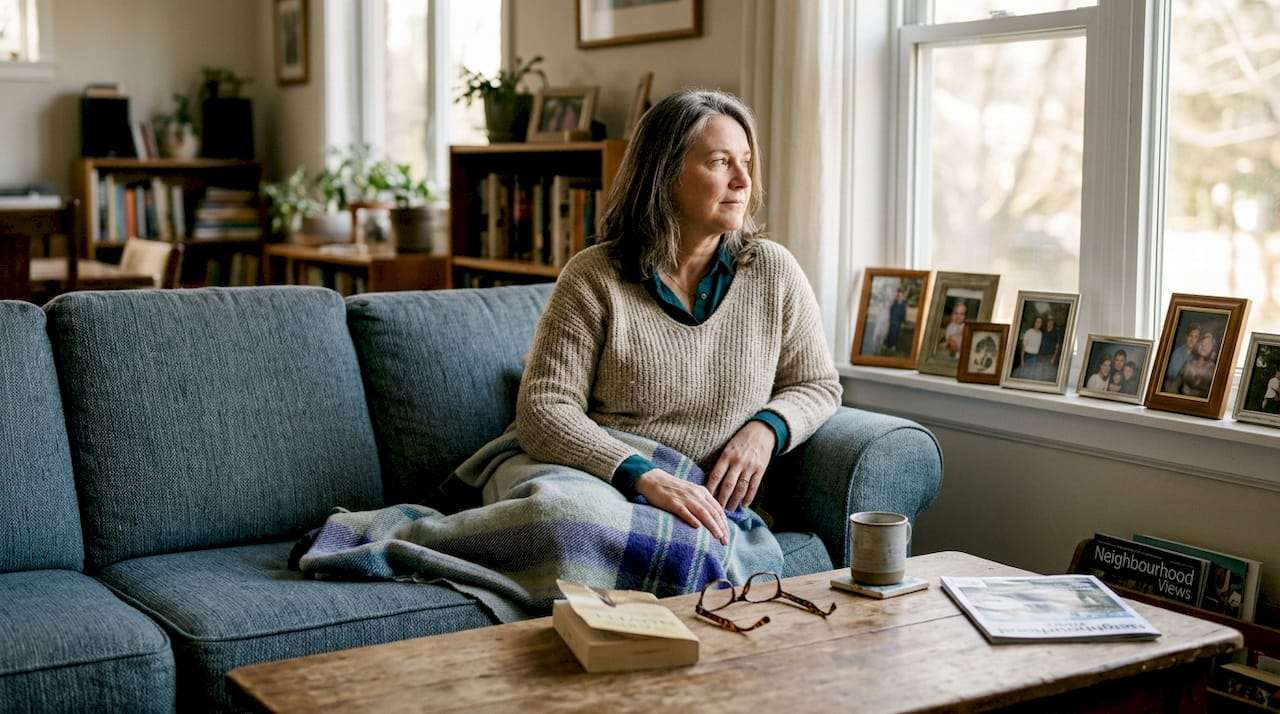
There’s a popular story about the empty nest: the kids leave, the parents breathe a sigh of relief, and a second honeymoon begins. For many Canadians, though, the reality feels nothing like that story. The house goes quiet, the routines that shaped your days for decades simply vanish, and a strange grief settles in. Understanding why this happens is the first step toward coping with the transition.
Parenthood isn’t just a role. For most people, it becomes a core part of their identity. When that role shifts dramatically, the psychological impact can be similar to any major loss. Your sense of purpose, your daily structure, and even your social connections were often built around your children. When they leave, all of that shifts at once.
“Empty nest syndrome is not a clinical diagnosis, but its emotional weight is very real. Many parents describe it as grieving someone who is still alive.”
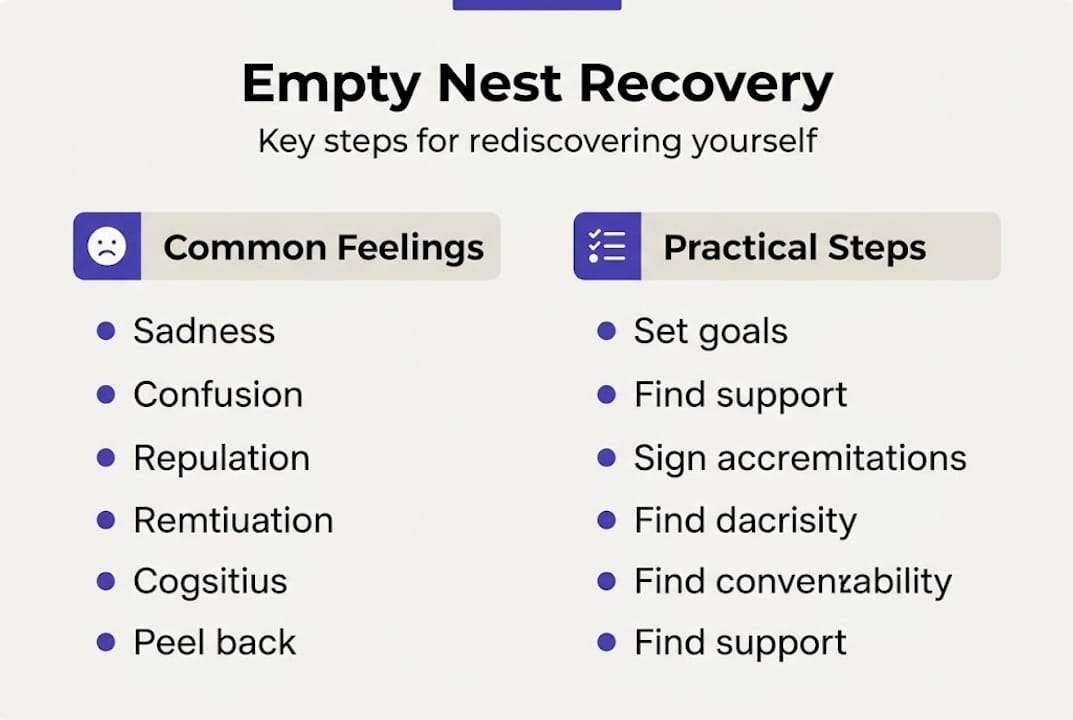
Research confirms this experience is widespread. Up to 43% of empty nesters experience depression, though for most people symptoms last less than two years. Common signs include:
- Persistent sadness or low mood
- Anxiety about your child’s safety or wellbeing
- Reduced sense of purpose or direction
- Withdrawal from social activities
- Difficulty sleeping or changes in appetite
- Feelings of irrelevance or reduced self-worth
These feelings are not a sign of weakness or failure. They are a natural response to a profound life change. Understanding empty nest syndrome as a form of grief, rather than a personal flaw, can itself be a source of relief. You are not broken. You are adjusting to a new chapter, and that takes time.
It’s also worth noting that the transition rarely happens overnight. Many parents report a gradual build-up of anxiety in the months before their child leaves, followed by a sharp emotional dip in the weeks after. Acknowledging this arc, rather than pushing through it, makes a real difference.
Who is most at risk: Recognising vulnerable groups
Knowing the emotional impact of the empty nest, it’s important to recognise whether you might be especially vulnerable. Not everyone experiences this transition in the same way, and some groups feel the weight of it far more intensely.
Research from Springer Social Issues identifies several groups who are at greater risk of significant emotional difficulty:
| Group | Why the risk is higher |
|---|---|
| Homemakers | Identity is most closely tied to the parenting role |
| Single parents | No partner to share the adjustment; greater isolation |
| Those with prior mental health history | Existing vulnerabilities are amplified by the transition |
| Fathers | Often experience routine loss and may lack emotional support networks |
| Families in collectivist cultures | Strong cultural expectations around family closeness intensify the sense of loss |
For Canadian families, cultural context matters. Indigenous families, recent immigrants, and those from collectivist cultural backgrounds may feel the shift even more acutely, given the central role family cohesion plays in their communities. The challenges for fathers are also worth noting, as men are less likely to seek help and may internalise their grief silently.
If you identify with one or more of these groups, here are some grounded first steps:
- Name what you’re feeling without judgement. Grief, confusion, and anxiety are all valid responses.
- Reach out to at least one trusted person in your life and share how you’re doing.
- Speak with your family doctor if symptoms feel persistent or overwhelming.
- Consider how relationship changes with your partner may also be surfacing at this time.
- Look into community resources, including local support groups for parents in transition.
Pro Tip: If you’ve historically struggled with depression or anxiety, don’t wait for symptoms to worsen before reaching out. Early support makes a measurable difference in how quickly you recover.
Rediscovering your identity: From confusion to clarity
Even if you’re in a vulnerable group, there are proven ways to find yourself again. The empty nest, as painful as it can feel, is also a genuine invitation to reconnect with who you are outside of parenthood.
The first step is simply taking stock. Sit with your emotions rather than rushing past them. Journalling, quiet reflection, or even a long walk can help you begin to hear your own inner voice again, often one that has been drowned out by the busyness of raising children.
From there, rebuilding identity is about small, consistent actions rather than grand gestures. Consider:
- Revisiting old interests you set aside during the parenting years, whether that’s painting, hiking, music, or cooking
- Trying something entirely new that has nothing to do with your previous roles
- Volunteering in your community, which offers both purpose and connection
- Establishing new daily routines that are built around your own needs and rhythms
- Reconnecting with friendships that may have faded during the busy parenting years
Goal-setting also plays a meaningful role here. Not ambitious, pressure-filled goals, but small, achievable ones that give each week a sense of direction. A morning walk three times a week. One new recipe per month. A phone call with a friend you’ve missed.
Recovery is genuinely possible for most people within two years, even when the initial symptoms feel overwhelming. Reduced self-esteem and anxiety do ease with time and intentional effort. The key is not to wait passively for things to improve, but to actively engage with the process of rebuilding.

Pro Tip: Think of this stage less as an ending and more as a second adolescence. Just as teenagers try on different identities to find themselves, you have permission to experiment with who you want to be now.
Useful depression coping strategies can support this process, especially when low mood makes it hard to take even small steps forward.
Seeking support: Mental health, resources, and what to expect
As you work on rediscovering yourself, knowing where to find help and what support can actually do for you is essential. Professional support is not a last resort. It is one of the most effective tools available.
Reduced self-esteem and emotional symptoms typically lessen within two years for most empty nesters, and professional support can meaningfully shorten that timeline. Here’s a practical overview of the types of support available:
| Type of support | What it offers | Best suited for |
|---|---|---|
| Individual counselling | Personalised exploration of identity, grief, and purpose | Anyone feeling lost or overwhelmed |
| Couples therapy | Navigating relationship shifts as a pair | Partners adjusting together |
| Group support | Shared experience and peer connection | Those feeling isolated |
| Peer networks | Informal community and validation | Early stages of adjustment |
What does recovery actually look like? Most people notice a gradual easing of symptoms over several months. Milestones often include:
- Feeling genuine interest in activities again
- Sleeping more consistently
- Reconnecting with friends or community
- Experiencing moments of excitement about the future
- Feeling less defined by the parenting role
Having honest conversations with a therapist, a trusted friend, or a partner can accelerate this process. You don’t need to have everything figured out before reaching out. In fact, depression counselling is most effective when you begin before symptoms become entrenched.
For those navigating grief and identity simultaneously, know that both can be held at once. Grief and growth are not opposites. They often travel together.
Why rediscovering yourself after the empty nest isn’t selfish: Our take
Here’s something we hear often from empty nesters: “I feel guilty focusing on myself when my child is just starting their life.” We understand that feeling. But we want to challenge it directly.
Investing in your own identity and wellbeing is not a distraction from loving your children. It is, in many ways, the most generous thing you can do for them. Children who watch their parents rebuild purposeful, joyful lives learn something invaluable about resilience and self-worth.
Self-discovery at this stage is an act of courage, not selfishness. It requires sitting with discomfort, asking hard questions, and being willing to change. That takes real strength. The counsellors we work with consistently observe that parents who do this inner work emerge with stronger relationships, clearer boundaries, and a renewed capacity to connect.
Approaching this transition with curiosity rather than guilt changes everything. You are not abandoning your role as a parent. You are growing into a fuller version of yourself.
Find support for your next chapter
If the quiet house has left you wondering who you are now, you don’t have to figure it out alone. At Interactive Counselling, we work with empty nesters across Canada, including in Kelowna, Vernon, Grande Prairie, and Penticton, as well as online nationwide. Our licensed therapists understand the unique emotional landscape of this transition and offer compassionate, non-judgmental support tailored to where you are right now. Whether you’re curious about types of counselling services or ready to explore a compassionate therapy approach, we’re here to help. Reach out today to book a session and take the first step toward your next chapter.
Frequently asked questions
How long do empty nest feelings usually last?
Symptoms like sadness or lost purpose typically improve within two years for most empty nesters, especially with active support and self-care.
Who is most likely to struggle after the kids move out?
Homemakers, single parents, and those with previous mental health challenges tend to experience the transition most intensely, though anyone can be affected.
Can talking to a therapist help with empty nest syndrome?
Yes. Counselling supports identity renewal and emotional healing, and is most effective when you begin before symptoms become deeply entrenched.
Are there differences in how men and women experience empty nest syndrome?
Fathers often struggle with routine loss and may be less likely to seek help, while cultural context can shape how both parents experience and express their grief.
Recommended
- Empty nest syndrome: grief, identity & new purpose
- Why the empty nest feels harder and how to cope
- Marriage after kids: maintain love and connection in 2026
- How divorce impacts children differently at each age – Interactive Counselling