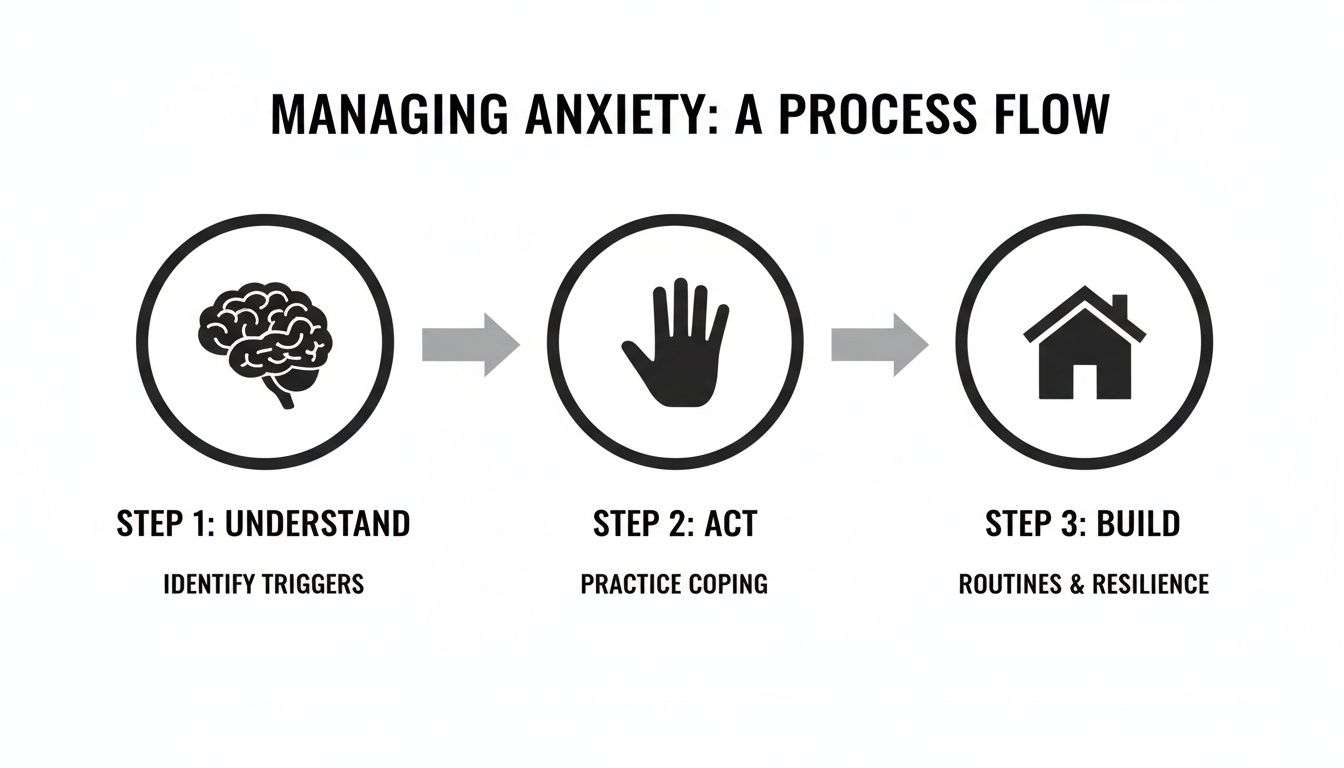
When you’re stuck in the grip of fear and anxiety, it can feel like you’re the only person in the world going through it. The idea of "overcoming" it can seem like being asked to climb an impossibly tall mountain. Where do you even start? It’s a journey made of small, manageable steps, and it starts with a little self-compassion. This guide is built on a simple, powerful truth: managing anxiety isn't about getting rid of the feeling forever, but about learning how to respond to it differently. It's about building a toolkit of practical skills that give you the power to navigate those tough moments with more confidence, instead of feeling like they're running the show. For more information, see our anxiety counselling.
"Overcoming fear and anxiety involves understanding your triggers, using immediate calming techniques, challenging unhelpful thoughts, gradually facing your fears, and building a lifestyle that supports your mental well-being."
Your First Real Step Toward Calmer Days
Let’s be honest—these feelings, as intensely uncomfortable as they are, are a natural part of being human. Our brains are hardwired with a pretty sophisticated alarm system designed to detect threats and keep us safe. The problem is, sometimes that system gets a little too sensitive. It starts sounding the alarm for things that aren’t actually dangerous.
Learning to work with this internal alarm system, rather than constantly fighting against it, is the real key to finding lasting relief. It's about understanding that your brain is trying to help, even if its methods are a bit misguided right now.
The Four Pillars of Your Journey
To make this path feel less overwhelming, we can break it down into four core areas. Think of these as the foundational pillars that will support you as you move forward. Each one tackles a different piece of the anxiety puzzle, from what to do in the heat of the moment to long-term strategies for building resilience.
Focusing on one small action in each of these areas helps turn the vague idea of "getting better" into a concrete, actionable plan. It shows you that change is not only possible but completely within your reach. This table gives you a simple roadmap of the core strategies we'll explore together.
The Four Pillars of Anxiety Management
| Pillar | What It Means for You | A Simple First Step to Try |
|---|---|---|
| Grounding Your Body | Learning techniques that quickly calm your physical symptoms of anxiety, like a racing heart or shortness of breath. | Take one slow, deep breath, focusing on the feeling of the air filling your lungs and then slowly leaving. |
| Working With Your Thoughts | Gently noticing and questioning the anxious thoughts that fuel your fear, without judgment or criticism. | The next time you feel anxious, just label the feeling: "This is anxiety," to create a little space from it. |
| Changing Your Actions | Gradually taking small steps toward the things you've been avoiding because of fear, rebuilding confidence along the way. | Choose one small, low-stakes task you've been putting off and spend just five minutes on it today. |
| Building a Supportive Lifestyle | Making small, consistent choices in your daily life (like with sleep or screen time) that help regulate your nervous system. | Try putting your phone away for the 30 minutes before you go to sleep tonight. |
Seeing it broken down like this can be a relief. It's not one big, scary problem—it's a series of smaller, more approachable skills you can build over time. And it all starts with that first, simple step.
Practical Techniques to Calm Your Mind and Body
When anxiety spikes, your body’s alarm system—the fight-or-flight response—kicks into high gear. Your heart races, your breathing gets shallow, and your thoughts can feel like they're spiralling out of control. In these moments, you don't need complex theories; you need simple, practical tools that work right now to tell your nervous system it's safe to stand down.
The good news is that you have a powerful, built-in tool for exactly this: your breath. By intentionally slowing down your breathing, you can directly influence your body’s physiological state. It’s one of the quickest ways to shift out of high alert and regain a sense of control when you feel completely overwhelmed.
Grounding Yourself in the Present Moment
Grounding techniques are designed to pull your attention away from the storm inside your head and anchor you firmly in the present. They work by reconnecting you to your physical body and the world around you, which is a fantastic way to interrupt the cycle of panic. One of the most effective and easy-to-remember methods is the 5-4-3-2-1 Grounding Technique. The best part is that it’s discreet enough to do anywhere.
Here’s how it works:
- See 5 things: Look for small details you might normally miss. The texture of the chair you're on, a specific colour on a book cover, the way light hits a plant’s leaf.
- Feel 4 things: Tune into physical sensations. This could be your feet flat on the floor, the texture of your clothing against your skin, or the cool surface of a table under your hand.
- Hear 3 things: Listen for sounds you usually tune out. The distant hum of a refrigerator, birds chirping outside, the gentle sound of your own breathing.
- Smell 2 things: This might be the faint scent of coffee or the soap on your hands. If you can't smell anything, just imagine two smells you really enjoy.
- Taste 1 thing: Maybe it’s the lingering taste of your morning toothpaste or a sip of water. You could also just notice the simple sensation of your tongue in your mouth.
This sensory exercise forces your brain to focus on the tangible world, making it much harder for those anxious thoughts to keep their grip.
Regulating Your Breath to Calm Your Nerves
Another powerhouse technique is Box Breathing, sometimes called four-square breathing. It's used by everyone from nurses to elite soldiers to stay calm under intense pressure because of its simple, rhythmic nature. The goal is to create a sense of balance and control by making each part of the breath cycle—inhale, hold, exhale, hold—equal in length. Just imagine tracing a square with your breath.
Here’s the simple pattern to follow:
- Breathe in slowly through your nose for a count of four.
- Hold your breath gently for a count of four.
- Breathe out slowly through your mouth for a count of four.
- Hold your breath again for a count of four.
Repeat this cycle four or five times, or until you feel your heart rate start to slow down. The key is to keep the counts slow and even. This deliberate pacing short-circuits the rapid, shallow breathing that fuels anxiety and sends a clear signal to your brain that the immediate threat has passed.
Reshaping Your Thoughts and Actions to Reduce Anxiety
Grounding techniques are fantastic for pulling you back from the edge in a high-anxiety moment. But for lasting change, we need to gently look at the patterns in how we think and what we do. This is where we can borrow some wisdom from Cognitive Behavioural Therapy (CBT).
CBT is a well-researched approach that helps us connect the dots between our thoughts, feelings, and behaviours. It’s not about toxic positivity or forcing yourself to "just think happy thoughts." It's about learning to hold your anxious thoughts a little more loosely and with a bit more flexibility.

The core idea is refreshingly simple: our thoughts are not always facts. When anxiety kicks in, our brains become master storytellers, spinning worst-case scenarios and presenting them as gospel truth. By learning to notice these stories and gently question them, we can loosen their grip.
Noticing Your Anxious Thoughts
The very first skill is just becoming aware of the narratives your mind creates when you feel anxious. You don't have to fight them or judge them. Just start by observing them. Anxiety often brings a few common thought patterns to the party, sometimes called "cognitive distortions" in CBT.
You might recognize a few of these:
- Catastrophizing: Your mind immediately leaps to the most extreme, terrible outcome. You make one small mistake at work and think, "That's it, I'm definitely getting fired."
- Black-and-White Thinking: Seeing everything in absolutes. If a project isn't perfect, it's a complete failure. There's no room for "good enough."
- Mind Reading: You assume you know what other people are thinking—and it's usually something negative about you. You walk into a room and think, "Everyone here thinks I'm so awkward."
Just being able to put a name to these patterns is incredibly empowering. It helps you see them as habits of thinking, not undeniable truths. The goal isn't to stop these thoughts from ever happening. The goal is to change your relationship with them so they no longer have the final say over how you feel and act. You can explore more practical CBT exercises for anxiety to help you get even better at reframing these thoughts.
Shifting Your Actions to Change Your Mood
Just as our thoughts shape our feelings, our actions have a massive impact on our mood. When we're anxious, the instinct to retreat and avoid scary things is powerful. While it might give you a moment of relief, in the long run, avoidance usually makes anxiety stronger.
The antidote is to take small, deliberate steps toward what you value, even with anxiety along for the ride. This is often called behavioural activation. It’s built on the idea that engaging in activities that feel rewarding or meaningful—no matter how small—can lift your mood and build positive momentum.
Here are a few simple ideas to get you started:
- Schedule one tiny, enjoyable activity each day. Maybe it's listening to a favourite song without doing anything else, or taking a 10-minute walk.
- Pick a task you've been putting off and work on it for just five minutes.
- Reach out to a friend for a quick chat, even if you don't really feel like being social.
These small actions send a powerful message back to your brain: "I can still do things that matter, even when I feel anxious." By taking small, manageable steps, you are teaching your brain that situations aren't the catastrophe it predicts. This is a form of gradual exposure, where you slowly and safely face your fears, building confidence with every single step. It’s all about choosing progress over perfection.
Building a Lifestyle That Supports Mental Wellness
Managing anxiety isn’t just about the tools you use in a moment of panic. It's about the foundation you build, day in and day out, through your habits. Think of it like a house: a well-built home can withstand a storm, and a supportive lifestyle can help you navigate anxiety with far greater resilience.
This doesn't mean you need to overhaul your entire life overnight. It’s about making small, intentional choices that, over time, create a powerful buffer against stress and fear.
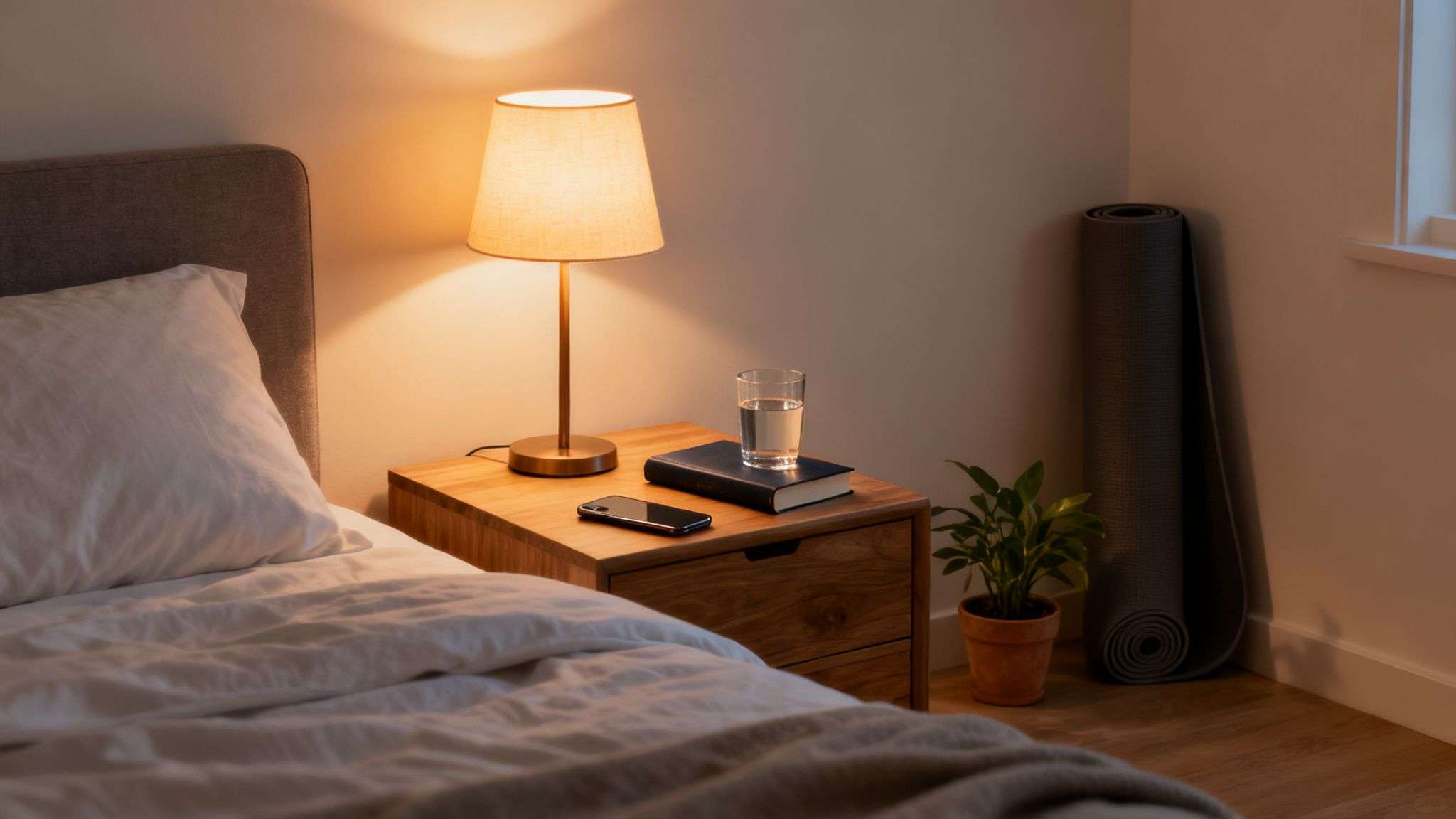
These daily practices—how you sleep, move, and connect with the world—work quietly in the background to regulate your nervous system. They help keep your baseline level of anxiety lower, making it less likely that small stressors will tip you into feeling overwhelmed.
The Power of Restorative Sleep
Sleep and anxiety are tangled in a frustrating knot. When you’re anxious, falling asleep feels impossible. But when you don't get enough sleep, you're more vulnerable to anxiety the next day. It’s a vicious cycle, but one you can gently interrupt by improving your sleep hygiene.
This just means creating a consistent, calming bedtime routine that sends a clear signal to your brain: it’s time to wind down. Small adjustments can make a huge difference.
- Stick to a schedule: Try to go to bed and wake up around the same time each day, even on weekends.
- Create a screen-free buffer: Put away phones, tablets, and laptops at least 30-60 minutes before you want to sleep. The blue light from these devices can interfere with melatonin, the hormone that helps you feel sleepy.
- Design a relaxing ritual: This could be reading a physical book, listening to calm music, doing a few gentle stretches, or taking a warm bath. What you do is less important than doing it consistently.
Mindful Movement for Anxiety Relief
Physical activity is one of the most powerful non-medical tools we have for managing anxiety. And no, you don't need to run a marathon to feel the benefits. The goal is simply to move your body in a way that feels good to you.
When you exercise, your body releases endorphins, which are basically natural mood elevators. It also helps your body process excess stress hormones, leaving you feeling calmer and more grounded. Gentle, rhythmic activities are particularly effective for soothing an agitated nervous system. Think about things like walking in nature, yoga, swimming, or even just dancing in your living room. A daily 20-minute walk will have a more profound, long-term impact on your anxiety levels than one intense workout a week. Consistency beats intensity, every time.
Balancing Your Digital Diet
In our constantly connected world, it's easy to forget how much screen time can rattle our mental state. The endless notifications, the doomscrolling, and the exposure to distressing news can all keep our nervous systems in a low-grade state of high alert. Setting gentle boundaries with technology is a non-negotiable act of self-care.
Research from Mental Health Research Canada found a stark connection: Canadians who spend six or more hours on personal screen time daily are three times more likely to report severe anxiety. You can explore the full findings about screen time and mental health to see the impact for yourself. This isn't about ditching technology completely. It's about using it with intention.
- Schedule "tech-free" time: Designate certain times of the day, like during meals or the first hour you're awake, where your phone is out of sight.
- Curate your feeds: Unfollow accounts that make you feel anxious, inadequate, or angry.
- Turn off non-essential notifications: Every buzz and ding pulls you out of the present moment. Take back control of your attention by silencing alerts from any app that isn’t truly urgent.
When to Consider Professional Support for Anxiety
The strategies and lifestyle shifts we've talked about are incredibly powerful tools for managing fear and anxiety. But it’s just as important to recognize and honour the times when self-help isn’t quite enough. Reaching out for professional support is not a sign of failure—it's a courageous act of self-advocacy and a clear sign of strength.
Recognizing When You Need More Support
Deciding to seek therapy is a deeply personal choice. That said, there are some common signs that suggest working with a counsellor could be a game-changing next step. If your anxiety is making it difficult to function in key areas of your life, it's worth considering.
You might notice that anxiety is:
- Interfering with daily tasks: Simple things like grocery shopping, making phone calls, or even just leaving the house feel monumental and overwhelming.
- Affecting your work or school performance: You're struggling to concentrate, missing deadlines, or passing up opportunities because of fear.
- Straining your relationships: Anxiety is causing you to pull away from loved ones, become more irritable, or dodge social situations you once enjoyed.
- Impacting your physical health: You're dealing with persistent issues like sleep problems, digestive upset, or chronic muscle tension that you suspect are linked to stress.
If any of these sound familiar, it simply means that anxiety has grown to a point where its impact is too significant to ignore, and a little extra guidance could make a world of difference.
What to Expect From Counselling
The idea of therapy can be intimidating if you've never been before. At its heart, counselling is a collaborative partnership. You and your therapist will work together in a safe, confidential space to explore the roots of your anxiety. It's a place to understand your triggers, learn new coping strategies, and practise the skills we've talked about with personalized guidance.
Think of a therapist as a guide who has a map of the territory you're trying to navigate. You are still the one walking the path, but they can point out shortcuts, help you avoid common pitfalls, and support you when the journey feels tough. It’s also crucial to remember that you are not alone. According to Statistics Canada, anxiety is a widespread challenge, especially for younger Canadians. You can read more about these mental health trends to better understand the context.
Virtual counselling has also made therapy more accessible than ever, allowing you to connect with a therapist from the comfort of your own home. If you're ready to explore what this support could look like, our guide on how to start therapy in Canada offers practical next steps.
Frequently Asked Questions About Overcoming Fear and Anxiety
As you start putting these ideas into practice, it’s completely normal for questions to pop up. This path is your own, and it's rarely a straight line. Here, we'll walk through some common concerns, offering straightforward, compassionate answers to help you keep moving forward.
How long does it take to feel better?
There’s no magic timeline for healing; it’s different for everyone. Some people notice small, positive shifts within a few weeks of consistently using new skills. For others, it’s a more gradual process over several months. Try to celebrate the small wins, like using a grounding technique or questioning an anxious thought. Those moments are progress.
What if these strategies don’t seem to be working?
First, give yourself credit for trying—that alone is a huge step. If you’re feeling stuck, check if you're being consistent, if the steps you're taking are small enough, or if you might need more support. A professional counsellor can help you customize these strategies to your unique situation and identify roadblocks. Working with a therapist through counselling provides that personalized support to get you unstuck.
Is it normal for anxiety to come back after improving?
Yes, absolutely. This is not only normal, it's an expected part of the process. Recovery is rarely a straight line. Having a setback where your anxiety flares up doesn't mean you've failed or that all your hard work is gone. Think of it as an opportunity to practice your new skills with more awareness than before.
Can I manage anxiety without medication?
Yes, many people successfully manage fear and anxiety using therapeutic strategies like CBT, lifestyle changes, and mindfulness. Therapy provides a structured, supportive space to master these skills. For some, however, medication can be a helpful tool, especially when anxiety is severe. It can lower symptoms enough to allow you to engage more fully in therapy. This is a personal decision that should always be made in conversation with a medical doctor.
If you feel ready to explore your next steps with compassionate, professional guidance, we invite you to learn more about our approach. Your well-being matters, and you don't have to navigate this journey alone.
Clinically Reviewed By
Amy Mosset, MCP, RCC-S
Amy Mosset is a Master Practitioner in Clinical Counselling, Clinical Supervisor, and the owner of Interactive Counselling. She provides trauma-informed, evidence-based care and clinical supervision to registered therapists, with a focus on ethical practice, client safety, and high-quality therapeutic outcomes.