Childhood should be a time of safety, discovery, and joy. For some children, however, difficult or frightening experiences can leave a lasting impact. This is often called childhood trauma, and its effects aren’t always as obvious as we might think. Trauma isn’t a sign of weakness; it’s a natural biological response to an overwhelming event. The brain and body adapt to survive, but those adaptations can persist long after the danger has passed, showing up in a child’s behaviour, emotions, and even physical health. For more information, see our trauma counselling.
Recognizing the signs of childhood trauma is the first step in providing the love and support a child needs. It allows us to look beyond challenging behaviours and see the underlying pain. This involves a compassionate shift in perspective—moving from asking, “What’s wrong with you?” to gently wondering, “What happened to you?” This guide is designed to help parents, caregivers, and educators understand what these signs may look like in children.
Our goal is to offer clarity and insight into what these signs mean and how you can respond in a way that promotes healing and resilience. This article explores 10 common indicators, from hypervigilance and emotional dysregulation to social withdrawal and attachment difficulties. This isn’t about diagnosing, but about understanding. By equipping you with this knowledge, we hope to help you provide the safe harbour every child deserves.
1. Hypervigilance and a Heightened Startle Response
One of the most common signs of childhood trauma is hypervigilance, a state where a child constantly scans their surroundings for potential threats. This isn’t just being “jumpy”; it’s a persistent state of high alert driven by a nervous system that has learned safety is not guaranteed. This constant threat assessment often leads to an exaggerated startle response, where a child reacts intensely to sudden noises, unexpected movements, or even gentle, unanticipated touch.
This response is a direct result of the brain’s survival mechanisms being stuck in the “on” position. For a child who has experienced trauma, their internal alarm system becomes overly sensitive, interpreting neutral situations as dangerous. The body remains flooded with stress hormones, ready to engage in a fight, flight, or freeze response at a moment’s notice. You can explore the underlying mechanics of these trauma responses to better understand how the nervous system adapts to perceived threats.
How to Support a Child Experiencing Hypervigilance
Creating a sense of safety is the primary goal. This involves building predictability and trust to help their nervous system recalibrate.
- Create Predictable Routines: Consistency is calming. When a child knows what to expect from their day, their brain can begin to relax its constant scanning for danger. Maintain consistent times for meals, homework, and bedtime.
- Provide Gentle Warnings: Announce transitions and changes in advance. Simple statements like, “In five minutes, we are going to get in the car,” or “I’m going to turn on the vacuum now,” can prevent a child’s system from being shocked by sudden changes.
- Use a Calm Demeanour: Speak in a soft, even tone and avoid sudden, large movements. When you can, approach the child from the front so they can see you coming.
- Teach Grounding Techniques: Help the child connect with the present moment. A simple exercise is the “5-4-3-2-1” method: name five things you can see, four you can feel, three you can hear, two you can smell, and one you can taste. This gently pulls their focus away from internal anxiety and into their immediate, safe environment.
2. Emotional Dysregulation and Overwhelming Emotions
Another significant sign of childhood trauma is emotional dysregulation, where a child struggles to manage their feelings in a way that is typical for their age. This can look like intense, explosive anger that seems wildly disproportionate to the trigger. For example, a simple request to tidy a room might provoke a level of fury that feels shocking and unpredictable. This isn’t a simple tantrum; it’s often a physiological response from a brain rewired for survival.
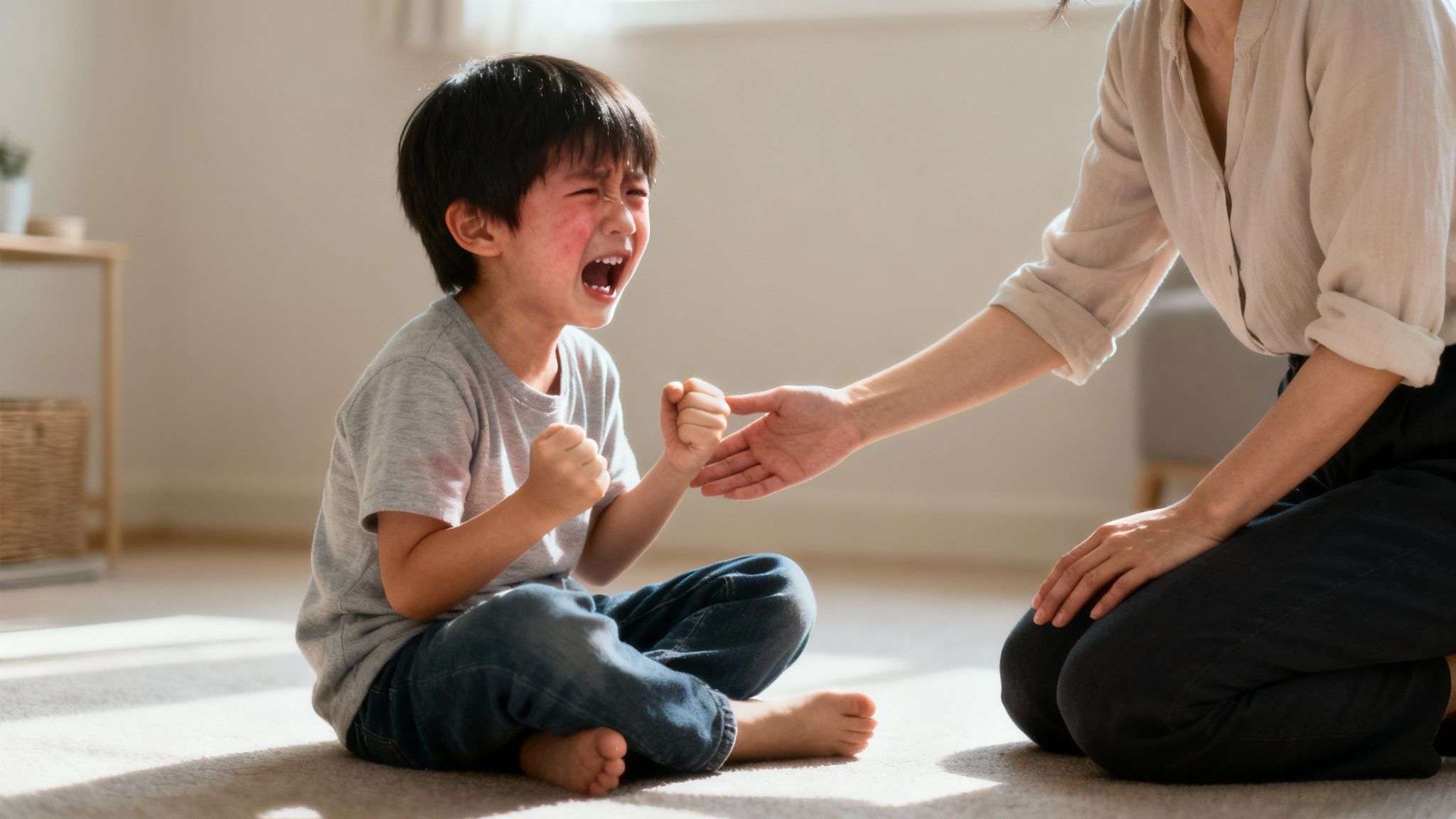
This reaction can happen because trauma may impair the development of the prefrontal cortex—the brain’s “control centre” for regulating emotions—while heightening the activity of the amygdala, the emotional processing centre. The child’s nervous system is primed to perceive threats, causing minor frustrations to feel like emergencies. As a result, they may have extreme difficulty calming down once triggered.
How to Support a Child Experiencing Emotional Dysregulation
Your goal is to co-regulate with the child, helping them feel safe enough for their logical brain to come back online. This requires patience and a focus on connection over correction.
- Remain Calm and Co-regulate: Your calm presence is the most powerful tool. Avoid taking the outburst personally or matching their intensity. Speak in a low, slow voice and model the calm you want them to feel.
- Prioritize Safety: During an intense episode, ensure the environment is safe. Gently remove any objects that could cause harm and create physical space if needed, while still letting them know you are there for them.
- Teach Emotional Literacy: When things are calm, help the child build a vocabulary for their feelings. You could say, “It sounds like you felt really angry when that happened.” This validates their experience without condoning the behaviour.
- Create a Calm-Down Corner: Designate a quiet, comforting space in your home where the child can go to feel safe and self-soothe. You could include items like a weighted blanket, soft pillows, or calming music to help them regulate their senses.
3. Nightmares, Night Terrors, and Sleep Disturbances
Trauma can profoundly disrupt sleep. This can include vivid nightmares that replay traumatic events, night terrors involving partial awakenings with intense fear, or a general resistance to bedtime. Sleep is a crucial time for the brain to process emotions and consolidate memories, but trauma can interrupt this vital function, leaving the nervous system on high alert even during rest.

This disruption occurs because the brain can remain stuck in survival mode, unable to down-regulate and achieve deep, restorative sleep. For example, a child who experienced neglect may refuse to sleep alone, fearing abandonment, while another may develop insomnia, unable to quiet their mind. These sleep disturbances are not a matter of defiance; they are the body’s attempt to stay safe. Learning more about understanding and enhancing sleep quality can provide valuable strategies.
How to Support a Child with Sleep Disturbances
The primary goal is to re-establish the bedroom as a place of safety and calm, helping the child’s brain and body learn that it is okay to rest.
- Establish a Calming Bedtime Routine: Consistency signals safety to the brain. Create a predictable sequence of soothing activities like a warm bath, reading a book together, or listening to quiet music.
- Optimize the Sleep Environment: Make the bedroom a sanctuary. Keep the room cool, dark, and quiet. A nightlight can offer comfort, and keeping the door ajar can reduce feelings of isolation.
- Use Grounding Comfort Items: The gentle pressure from a weighted blanket or a body pillow can have a calming effect on the nervous system, providing a sense of security.
- Minimize Triggers: Avoid screens for at least an hour before bed. A white noise machine can help mask sounds that might otherwise trigger a fear response.
- Validate Their Fears: Acknowledge their fear without amplifying it. Instead of saying, “There’s nothing to be scared of,” try, “I can see you’re feeling scared right now, and I am here to help you feel safe.”
4. Withdrawal and Social Isolation
Another common sign of childhood trauma is a marked withdrawal from social interactions. Children may begin to isolate themselves, seeing connection as a potential source of pain rather than comfort. This isn’t simple shyness; it is a protective retreat driven by the belief that the world is unsafe. This can manifest as refusing to participate in once-loved activities or a profound emotional detachment from family and friends.
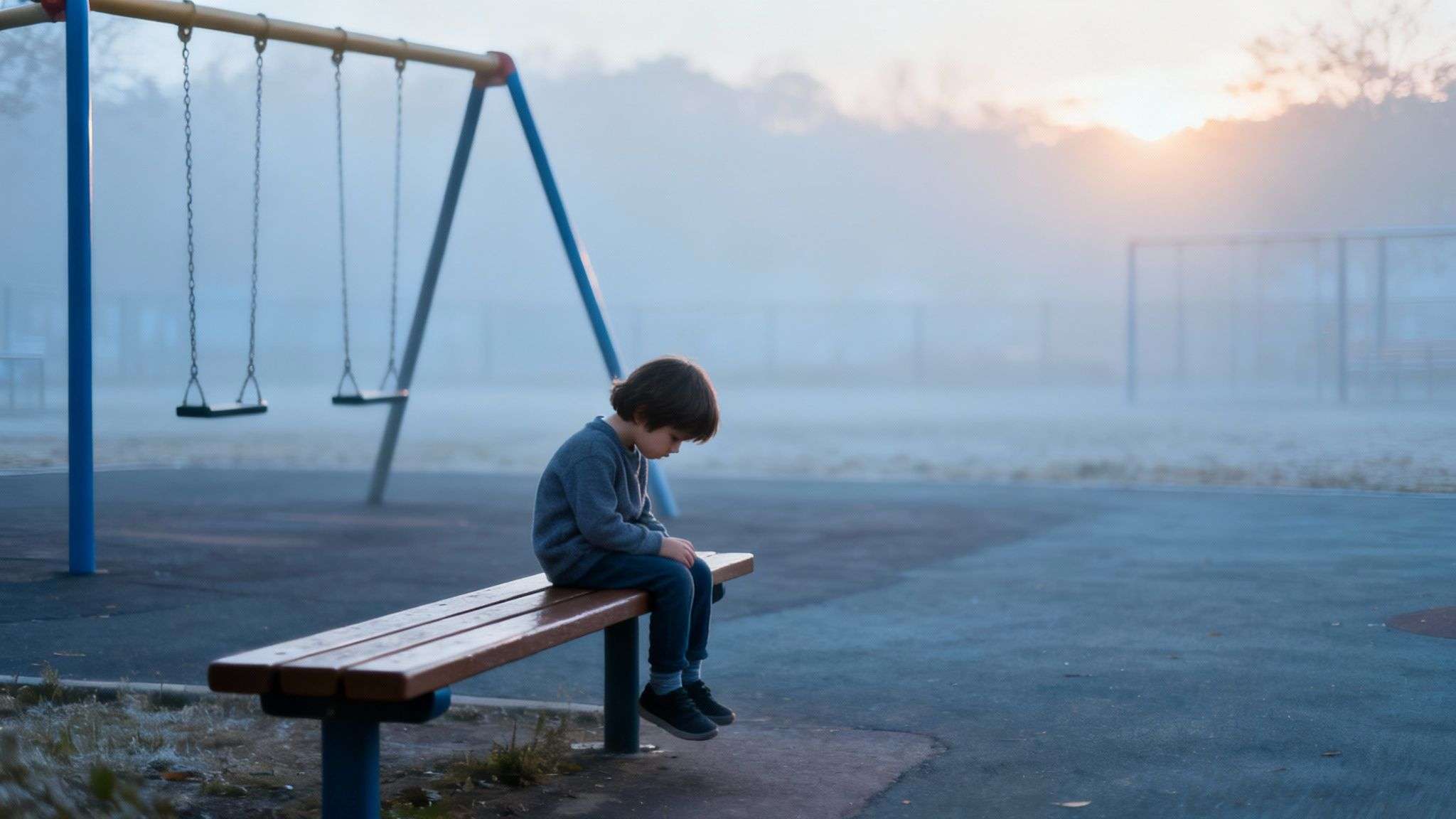
This behaviour stems from a nervous system that has learned to associate vulnerability with danger. For a child who has been hurt by others, pulling away can feel like the only way to prevent further harm. For example, a child who experienced bullying may refuse to go to school. This isolation can unfortunately deepen the trauma’s impact, hindering the development of crucial social skills and reinforcing a negative worldview.
How to Support a Child Experiencing Social Withdrawal
The goal is to gently rebuild the child’s sense of safety in relationships, allowing them to reconnect at their own pace.
- Invite, Don’t Force: Gently invite the child to participate in activities without demanding it. Saying, “We’re going to the park, and we’d love for you to come,” gives them a sense of control.
- Facilitate One-on-One Connections: Large groups can be overwhelming. Start by encouraging low-pressure, one-on-one time with a trusted family member or a single, calm friend.
- Validate Their Feelings: Acknowledge their reluctance as understandable. You might say, “I know it feels hard to be around a lot of people right now. That makes sense.”
- Create Safe Relational Spaces: Prioritize strengthening secure attachments at home. Engage in quiet, shared activities like reading a book together or doing a puzzle. These moments reinforce that connection can be safe and comforting.
5. Regression in Behaviour or Academics
When a child experiences trauma, one of the more confusing signs can be regression. This is when a child reverts to behaviours they had previously outgrown, such as thumb-sucking, bedwetting, or using “baby talk.” It can also manifest as a sudden decline in academic performance. This isn’t defiance; it’s an unconscious coping mechanism.
Regression is the nervous system’s attempt to return to an earlier developmental stage that felt safer. For example, a nine-year-old might start sucking their thumb after witnessing a scary event, seeking the comfort associated with infancy. Academically, the brain reallocates its resources from learning to threat detection. The cognitive energy required for schoolwork is redirected toward survival, making focus incredibly difficult.
How to Support a Child Experiencing Regression
Responding with patience and reassurance is crucial, as punishment can worsen the child’s sense of fear and shame.
- Offer Nurturing and Comfort: Instead of scolding the behaviour, address the underlying need. If a child becomes clingy, offer more hugs and one-on-one time to help them feel secure.
- Avoid Shaming: Never punish or draw peer attention to behaviours like bedwetting. Handle these situations discreetly and with compassion to protect the child’s self-esteem.
- Collaborate with Their School: Inform teachers about the situation so they can provide sensitive support. Academic accommodations like extended time on tests or breaking assignments into smaller chunks can reduce overwhelm.
- Celebrate Effort, Not Just Results: Shift the focus from grades to effort. Praise the child for trying, for completing a small part of their homework, or for staying focused for a few minutes. This helps rebuild their confidence.
6. Aggressive or Destructive Behaviour
Displays of aggression, destruction, or defiance can also be signs of childhood trauma. These behaviours can include hitting, destroying property, lashing out verbally, or consistently breaking rules. While it may look like willful misbehaviour, it is often a trauma response rooted in a dysregulated nervous system and an inability to verbalize overwhelming emotions like fear or helplessness.
This behaviour is a form of communication, signalling that the child is overwhelmed and lacks the skills to cope differently. The brain may perceive threats where none exist, triggering a fight response as a learned defence mechanism. For instance, a child might lash out at a teacher over a minor correction because it activated a deep-seated feeling of being powerless.
How to Support a Child Exhibiting Aggressive Behaviour
The key is to respond with calm, consistent boundaries that address the underlying emotion without condoning the harmful action.
- Prioritize Co-regulation: Instead of meeting aggression with anger, which only escalates the situation, model calmness. Speak in a low, steady voice and maintain a non-threatening posture.
- Validate Feelings, Set Boundaries on Actions: Clearly separate the emotion from the behaviour. You can say, “It’s okay to feel incredibly angry, but it is not okay to hit.”
- Teach Emotional Vocabulary: Help the child connect their big feelings to words. Label their emotions for them (“It looks like you are feeling really frustrated right now”) and encourage them to use “I feel…” statements as they learn.
- Provide Healthy Physical Outlets: Aggression often involves a build-up of intense physical energy. Proactively offer safe outlets, such as running, dancing, or punching a pillow in a designated safe space.
7. Attachment Difficulties
Childhood trauma, particularly from neglect or inconsistent caregiving, can deeply disrupt a child’s ability to form secure attachments. This often manifests in two opposite ways: intense clinginess or an indiscriminate friendliness toward strangers. A child might display extreme separation anxiety or, conversely, approach and interact with strangers with an inappropriate level of familiarity, showing little preference for their primary caregivers.
Both behaviours stem from confusion about safety and trust. The child’s internal model for relationships is broken; they may not have learned that a specific person provides consistent safety and comfort. As a result, they may desperately seek that connection from anyone. These early attachment struggles can have a lasting impact, influencing how they form relationships throughout their lives. You can explore the lasting effects of these dynamics here.
How to Support a Child with Attachment Difficulties
Building a secure attachment is a slow, patient process that focuses on proving your reliability and safety over and over again.
- Be Predictable and Consistent: Respond to the child’s needs promptly and reliably. This consistency teaches them that they can count on you, which is the foundation of secure attachment.
- Create Connection Rituals: Establish small, consistent rituals that signal care, like a special handshake when you say goodbye or a specific way you greet them after school.
- Teach and Model Boundaries: Gently educate the child about safe relationships. Use simple terms to explain the difference between family, friends, and strangers. Model healthy boundaries in your own interactions.
- Use Nurturing, Safe Touch: With their permission, use safe, comforting touch like hand-holding or a gentle hug. For children with a history of physical trauma, always ask first.
8. Physical Symptoms Without a Medical Cause
Childhood trauma often manifests in ways that are not purely emotional or behavioural; sometimes, the body keeps the score. One of the most misunderstood signs of childhood trauma is the emergence of persistent physical symptoms that have no clear medical explanation. These can include chronic stomachaches, headaches, or unexplained muscle pain.
This process occurs because a child’s nervous system can be overwhelmed by stress. When children lack the words to articulate their fear or anxiety, their bodies can take over. Stress hormones like cortisol can lead to genuine physical sensations of pain and discomfort. For example, a child who endured neglect might develop constant stomachaches because their digestive system was in a state of high alert. It is a physiological echo of their emotional suffering.
How to Support a Child Experiencing Physical Symptoms
The first step is always to rule out any underlying medical conditions with a healthcare provider. Once that is done, the focus can shift to addressing the mind-body connection.
- Validate Their Experience: It is crucial to acknowledge that their pain is real. Dismissing their symptoms as “all in their head” can feel invalidating. Say, “I know your tummy hurts a lot. Let’s figure this out together.”
- Teach Body Awareness: Help the child connect their feelings to their physical sensations. You can ask, “When you feel worried, where do you feel it in your body?”
- Encourage Gentle Movement: Activities like yoga or stretching can help release physical tension where trauma is stored. This helps the child feel more in control of their body.
- Introduce Calming Breathing: Teach simple breathing exercises, like “belly breathing.” This directly activates the part of the nervous system that tells the body it’s safe to relax, often alleviating physical symptoms.
9. Inappropriate Sexual Knowledge or Behaviours
Among the many potential signs of childhood trauma, this is one of the more specific indicators that a child may have experienced or been exposed to sexual abuse. Children who display sexual knowledge or behaviours far beyond their developmental stage are often reflecting experiences they cannot process. This can manifest as an unusual preoccupation with sexual topics, explicit drawings, using adult sexual language, or initiating sexualized play.
These behaviours are not a sign that the child is “bad”; they are often a traumatic re-enactment or an attempt to make sense of a confusing experience. A young child might touch other children’s genitals or use explicit language learned from an abuser, not from a place of malice, but from a deeply distorted understanding of interaction. Recognizing these behaviours as a cry for help is a critical first step.
How to Respond and Support the Child
An immediate, calm, and protective response is crucial. The primary goals are to ensure the child’s safety and provide support for healing.
- Stay Calm and Non-Judgmental: Your reaction is critical. Reacting with shock or anger can increase the child’s feelings of shame. Address the behaviour matter-of-factly. For example, “That’s a private part of our body, and we don’t touch others there.”
- Report Suspicions Immediately: In Canada, everyone has a legal and moral duty to report suspected child abuse. Contact your local child protective services or the police. They are trained to investigate these situations in a sensitive way.
- Educate on Body Safety: Teach the child about appropriate and inappropriate touch in simple, age-appropriate terms. Emphasize that their body belongs to them and they have the right to say “no.”
- Seek Specialized Therapy: It is essential to connect the child with a therapist who specializes in childhood trauma and sexual abuse.
- Reinforce They Are Not to Blame: Consistently reassure the child that what happened was not their fault. It is vital to help them understand that the responsibility lies entirely with the person who harmed them.
10. Difficulty with Trust and Authority Figures
When the people meant to protect a child are the source of their pain, a deep-seated distrust of authority is an understandable outcome. This sign of childhood trauma manifests as a persistent difficulty in trusting adults in positions of power, such as parents or teachers. It’s a protective shield built from experiences where authority was linked to harm or unpredictability. This isn’t simple defiance; it’s a survival strategy.
This behaviour stems from a shattered worldview. A child who has been harmed by a caregiver learns that vulnerability is dangerous. Consequently, they may challenge every rule or actively push away adults who try to offer guidance. For example, a youth might consistently break rules to test a caregiver’s reliability, fully expecting to be let down.
How to Support a Child Struggling with Trust
Rebuilding a child’s capacity to trust is a slow, delicate process that requires immense patience and consistency.
- Be Predictably Reliable: Words must always align with actions. If you make a promise, follow through, no matter how small. Consistency is the foundation upon which trust is rebuilt.
- Acknowledge Their Distrust: Validate their feelings without judgment. You could say, “It makes sense that you feel this way. You’ve learned from your past that adults can’t always be trusted.”
- Offer Choices and Agency: Trauma often strips a child of their sense of control. Restore their feeling of agency by offering small, appropriate choices throughout the day, such as, “Would you like to wear the blue shirt or the red one?”
- Maintain Transparency and Boundaries: Be open about the reasons behind rules. Clear, consistent boundaries also create a sense of safety, as they demonstrate that you are a stable and predictable authority figure.
Frequently Asked Questions (FAQ)
1. Can these signs also be part of typical child development?
Yes, some of these behaviours, like tantrums or shyness, can be a normal part of growing up. The key difference with trauma-related signs is their intensity, persistence, and the context in which they appear. Trauma responses are often more extreme and don’t resolve with typical parenting strategies. If you notice a cluster of these signs or a sudden, significant change in your child’s behaviour, it’s worth paying closer attention.
2. Is it possible for a child to have trauma without anyone knowing about a specific event?
Absolutely. Sometimes a child experiences something overwhelming that adults may not be aware of or didn’t perceive as traumatic. Events like a serious accident, a medical procedure, severe bullying, or the loss of a close friend can all be traumatic. The child’s internal experience, not the external event itself, is what defines trauma.
3. How can I talk to my child if I suspect they are showing signs of trauma?
Create a safe, quiet moment where you won’t be interrupted. You can start by saying something gentle like, “I’ve noticed you seem to have a lot on your mind lately, and I’m here for you if you want to talk.” Avoid direct, probing questions. Instead, focus on validating their feelings and letting them know you are a safe person to come to, whenever they are ready.
4. What is the difference between helping my child and seeking professional therapy?
Your role as a caregiver is to provide a safe, stable, and loving environment, which is the foundation for all healing. A professional therapist trained in childhood trauma can offer specialized, evidence-based techniques to help a child process their experiences in a structured way. Both roles are crucial and work together. Your support at home makes therapeutic work more effective.
A Gentle Path Forward
Recognizing the signs of childhood trauma is a profound act of care. It’s about looking beneath the surface of challenging behaviours to see a child who is hurting and trying to survive. Understanding these signs is not about labelling a child; it is about seeing their behaviour as communication—a signal that their internal world is in distress.
The journey toward healing is built on a foundation of safety, connection, and patience. Your consistent, calm, and attuned presence helps to rebuild a child’s sense of security. It is through these caring interactions that a child can begin to learn, on a deep level, that the world can be a safe and reliable place again. For some families, incorporating empowering self-esteem activities for children can provide vital support in countering the impact of trauma on a child’s self-perception.
If what you’ve read here resonates with your experience, know that you are not alone. Seeking guidance is a sign of strength and commitment to the child in your care. Healing is a journey, and with patience, compassion, and the right support, you can help a child navigate their past and build a hopeful, resilient future.
Navigating the complexities of childhood trauma often benefits from professional support. The therapists at Interactive Counselling offer compassionate, evidence-based care to help children and families process difficult experiences. If you feel that professional guidance could support your family, we invite you to learn more about the counselling services available.