Living with bipolar depression can feel like a heavy, profound sadness has settled over every part of your life. Activities you once loved may lose their appeal, and your sleep and energy levels can feel completely out of your control. This is the depressive phase of bipolar disorder, a complex mood condition defined by its relationship to periods of mania or hypomania. For more information, see our depression counselling.
Bipolar depression is the depressive phase of bipolar disorder, marked by persistent low mood, loss of pleasure, fatigue, and cognitive difficulties, occurring alongside a history of manic or hypomanic episodes.
What is Bipolar Depression?

Trying to understand mental health can sometimes feel like navigating through a thick fog. When you’re in the middle of a struggle, all the different terms and diagnoses can be overwhelming and even isolating. Think of this guide as a clear, compassionate starting point to help you make sense of bipolar depression.
It’s much more than a simple case of “the blues.” Bipolar depression is one half of bipolar disorder, a condition marked by intense shifts in mood, energy, and the ability to function. It’s like an emotional pendulum swinging between two powerful extremes: the high-energy states of mania or hypomania and the crushing lows of depression.
The Two Sides of Bipolar Disorder
Grasping this duality is key. While we’re focusing on the depressive episodes here, it’s crucial to remember they exist within that larger context. If you don’t account for the potential for those “up” periods, it’s all too easy for bipolar depression to be mistaken for other types of depression, which can unfortunately lead to the wrong treatment path.
The first and most empowering step you can take is learning to recognize the specific symptoms of bipolar depression. This knowledge gives you a framework to understand your own experiences and, just as importantly, helps you explain them clearly to a healthcare provider. It’s about learning to spot the patterns in your own life.
At its core, bipolar disorder is a condition of contrast. The challenge and the key to management lie in understanding that the lows of depression are intrinsically linked to the potential for highs, creating a unique emotional landscape that requires a specialized approach to care.
Why This Matters for You
Getting a handle on the specifics of bipolar depression helps demystify what can be a truly frightening experience. It’s a powerful validation that what you’re feeling isn’t a personal failing or character flaw, but a set of symptoms from a recognized medical condition. As we dive into the emotional, physical, and cognitive signs, remember this information is a tool for understanding, not for self-diagnosis. It’s also worth noting how lifestyle factors play a role; for instance, learning about the broader food-mood connection can provide another layer of insight into your overall well-being.
The Emotional and Cognitive Symptoms

Trying to explain what a bipolar depressive episode feels like on the inside can be incredibly difficult. It’s so much more than just feeling sad. It’s more like a heavy, weighted blanket has been thrown over you, muffling not just joy but every other emotion, leaving a profound and hollow emptiness. This isn’t a mood you can just shake off; it’s a persistent, draining state that colours your entire view of the world.
This overwhelming feeling is one of the core emotional symptoms. Many people describe it less as sadness and more as a complete absence of feeling—a grey, hollow state that makes it feel impossible to connect with anything or anyone. It’s an emotional numbness that can be profoundly isolating.
Imagine waking up every day to a thick fog that has settled over your life, making even the simplest tasks feel monumental. That’s the reality for many Canadians grappling with the depressive phase of bipolar disorder. A recent mental health survey on Statistics Canada’s website found that the prevalence of bipolar disorder has risen in recent years, highlighting how many people are navigating this challenge. For a diagnosis, these symptoms need to persist for at least two weeks, including a deep sadness and other signs we’ll explore.
Losing Touch with Joy
One of the most painful aspects of bipolar depression is something called anhedonia. It’s the clinical term for losing interest or pleasure in the things you once loved. Suddenly, your favourite hobby, spending time with friends, or even listening to music feels like a chore, completely stripped of the happiness it used to bring.
Anhedonia creates a deep sense of disconnection from yourself. You might look at your life and see things you know should make you happy, but the feeling just isn’t there. This can lead to a frustrating and lonely internal monologue where you start questioning who you are without the passions that once defined you.
The Weight of Worthlessness and Guilt
Bipolar depression often drags along intense and irrational feelings of worthlessness or misplaced guilt. Your mind might get stuck on minor past mistakes, blowing them way out of proportion until they feel like unforgivable character flaws. This isn’t a logical process; it’s a symptom that completely twists how you see yourself.
It is so important to understand that these feelings of worthlessness are a symptom, not a reflection of reality. They are the illness speaking, not the truth of who you are. Acknowledging this difference is a huge step toward self-compassion.
This relentless self-criticism can be a powerful barrier to getting help. When you feel worthless, it’s incredibly hard to believe you deserve support or that things could ever get better.
Navigating the Mental Fog
On the cognitive side, the symptoms of bipolar depression can be just as disabling. “Brain fog” is a common and incredibly frustrating experience that directly impacts your ability to think clearly.
This cognitive slowdown can show up in a few key ways:
- Difficulty concentrating: Trying to read a book, follow a conversation, or even watch a movie can feel impossible. Your focus just drifts away, and you find yourself constantly having to re-read things or ask people to repeat themselves.
- Memory problems: You might start forgetting appointments, conversations, or where you put your keys. This isn’t just carelessness; it’s a genuine impairment of your short-term memory caused by the depression.
- Indecisiveness: Even simple choices, like what to eat for breakfast or what to wear, can feel overwhelming. The mental energy it takes to weigh options and make a decision is completely gone, leaving you feeling paralyzed.
These cognitive symptoms can make everyday responsibilities feel crushing. Work, school, and even managing your household become monumental challenges when your mind feels like it’s working against you. Recognizing these issues as part of the illness—rather than as personal failings—is a vital part of the journey toward understanding and recovery.
The Physical and Behavioural Signs
The internal struggle of bipolar depression often spills over into the physical world. It shows up in ways we can see and measure, changing how a person moves, eats, and sleeps. Often, these are the first signs that friends and family notice—a shift in someone’s daily rhythm that signals something is wrong.
Think of it like this: when the mind is carrying such a heavy burden, the body starts to feel the weight, too. These physical and behavioural symptoms aren’t a matter of choice or a lack of willpower. They’re direct, physiological results of what’s happening in the brain during a depressive episode.
Disruptions in Sleep and Energy
Sleep is almost always one of the first things to go. But it’s not just about a few bad nights; it’s a profound shift that can pull you in one of two opposite directions.
- Insomnia: You might feel completely exhausted but lie awake for hours, your mind racing. Or you might wake up repeatedly throughout the night, unable to get back to the deep, restorative sleep you desperately need.
- Hypersomnia: On the flip side, you could feel an inescapable pull toward sleep, spending ten or more hours in bed and still waking up feeling groggy and unrefreshed. It’s a sleep that doesn’t seem to touch the sides of your exhaustion.
This leads directly to another hallmark symptom: a deep, persistent fatigue that feels like it’s settled into your bones. It’s not the kind of tiredness you can fix with a nap or a strong coffee. This is a complete shutdown of energy that makes simple tasks, like getting out of bed or taking a shower, feel monumental.
The fatigue of bipolar depression can be so profound that it feels like your body is made of lead. It’s a heavy, oppressive exhaustion that crushes motivation and makes it feel impossible to engage with life.
Changes in Appetite and Weight
Like sleep, your relationship with food can also swing to extremes. For some, appetite vanishes. Food loses all its appeal, and eating becomes a chore, which can lead to unintentional and often significant weight loss.
For others, the opposite happens. Depression can trigger intense cravings, usually for carbohydrates and comfort foods. This can lead to overeating and weight gain, which in turn can feed into a cycle of guilt and low self-worth. It’s important to remember these changes are driven by the depression itself, not by a failure of discipline.
Psychomotor Changes and Social Withdrawal
Another thing we often see are psychomotor changes—a clinical term for the link between your thoughts and physical movements. During a depressive episode, this connection can get scrambled.
- Psychomotor Agitation: This is a kind of restless, nervous energy. You might find yourself unable to sit still—pacing, fidgeting, or wringing your hands. It’s an outward expression of an inner turmoil.
- Psychomotor Retardation: This is the opposite. It’s as if you’re moving through molasses. Your speech might become slow and deliberate, your physical movements heavy, and your reaction time delayed.
These physical changes almost always lead to a major behavioural shift: pulling away from others. When you’re battling crushing fatigue, brain fog, and a total lack of interest, socializing can feel impossible. This causes many people to isolate themselves, cutting off contact with the very friends and family who could offer support.
Recognizing this withdrawal as a symptom—not a personal rejection—is so important. If you see these signs in yourself or someone you care about, exploring counselling can be a critical step toward breaking the cycle and finding your way back to connection.
How It Differs from Major Depression
One of the trickiest parts of diagnosing bipolar disorder is telling its depressive episodes apart from major depressive disorder (MDD), which you might also hear called unipolar depression. At first glance, they can look almost identical. The same heavy sadness, crushing fatigue, and complete loss of interest can be present in both.
But when you zoom out and look at the bigger picture of a person’s life, the story changes. The subtle differences and the overall pattern of someone’s mood reveal what’s really going on. It’s like trying to tell two types of evergreen trees apart in the middle of winter; they might look the same from a distance, but an expert knows to look at the needle patterns, the bark, and the shape of the branches.
The Defining Difference: The Manic or Hypomanic Episode
The one, single thing that separates bipolar disorder from major depression is the presence of at least one manic or hypomanic episode. Mania is a distinct period where your mood is unusually elevated or irritable, your energy is through the roof, and you’re intensely focused on goals in a way that’s a major shift from your usual self. Hypomania is just a less severe version of that.
Someone with MDD only experiences the depressive “lows.” In contrast, a person with bipolar disorder has both the lows of depression and the “highs” of mania or hypomania. Getting this diagnosis right is absolutely crucial. Common treatments for MDD, like certain antidepressants, can be ineffective or even trigger a dangerous manic episode in someone with bipolar disorder.
Subtle Clues Within the Depressive Episode
Even during the depressive phase itself, there are often subtle hints that point toward a bipolar diagnosis. While these aren’t definitive on their own, they are patterns that mental health professionals are trained to spot. For instance, bipolar depression is often more likely to present with atypical features.
These can include:
- Hypersomnia: While insomnia is common in depression, people experiencing bipolar depression often sleep excessively—sometimes more than ten hours a day—yet wake up feeling completely drained.
- Increased Appetite or Weight Gain: Instead of losing their appetite, many find themselves craving carbohydrates and overeating, which can lead to significant weight gain.
- Leaden Paralysis: This is a very specific physical feeling where your arms and legs feel incredibly heavy, as if they were made of lead. Every movement feels like a monumental effort.
- Rejection Sensitivity: This isn’t just about a single event, but a lifelong pattern of being extremely sensitive to any hint of criticism or rejection.
This infographic helps show some of the key physical signs that can be so powerful during a bipolar depressive episode.
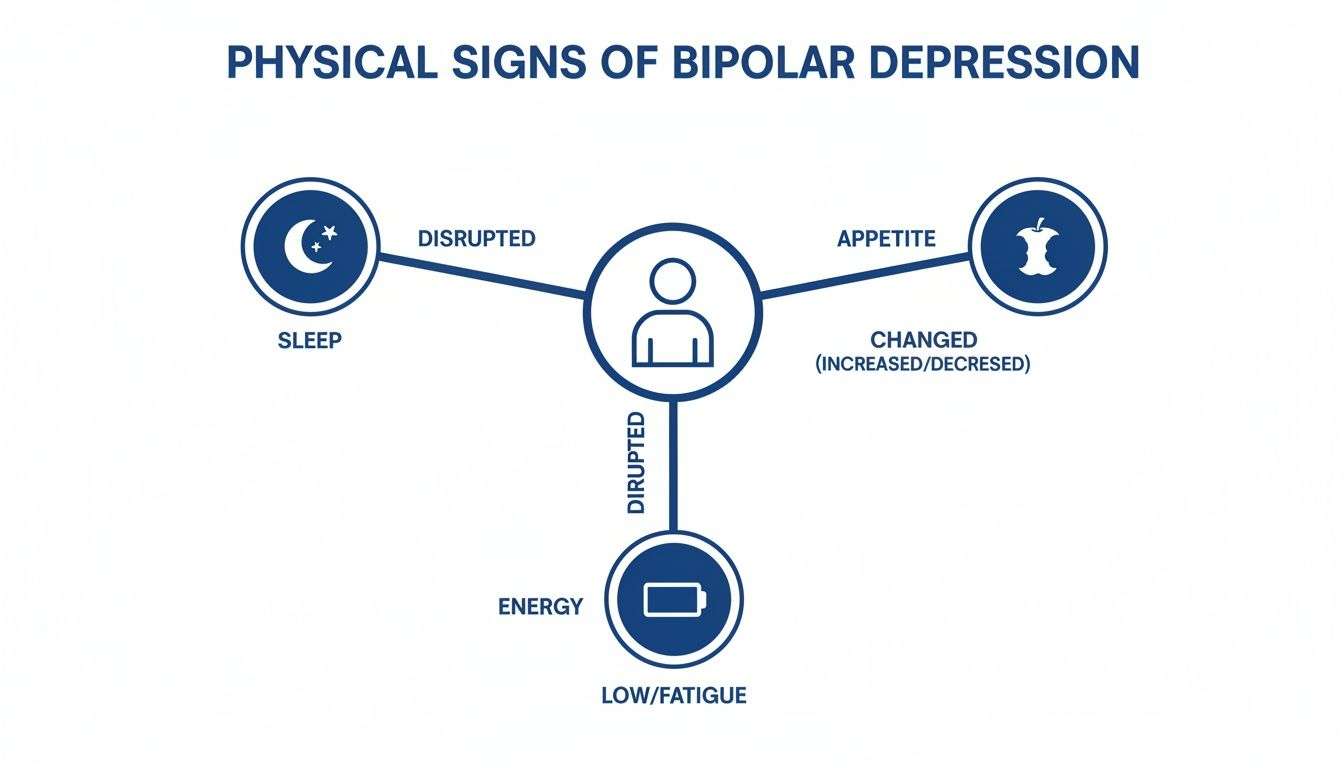
As you can see, the way sleep, appetite, and energy are all tangled together creates a physical experience that’s so much more than just feeling sad.
To make these distinctions clearer, here’s a breakdown of how the two conditions often compare during a depressive episode.
Bipolar Depression vs Major Depressive Disorder
| Feature | Bipolar Depression | Major Depressive Disorder (Unipolar Depression) |
|---|---|---|
| History of Mood | Includes at least one episode of mania or hypomania. | No history of manic or hypomanic episodes. |
| Sleep Patterns | Often involves hypersomnia (oversleeping). | More commonly associated with insomnia (difficulty sleeping). |
| Appetite | Frequently linked to increased appetite and weight gain. | Often involves decreased appetite and weight loss. |
| Energy Levels | Profound fatigue, often described as leaden paralysis. | General fatigue and low energy. |
| Episode Onset | Tends to have a more abrupt start. | Often has a more gradual onset. |
| Age of Onset | Typically begins earlier in life (late teens/early 20s). | Can begin at any age, but often later than bipolar disorder. |
| Family History | A family history of bipolar disorder is a strong indicator. | Family history may include depression but not bipolar disorder. |
While this table highlights common patterns, everyone’s experience is unique. The key is looking at the whole picture, not just one symptom.
Bipolar depression and major depression might share a similar address, but they live in entirely different neighbourhoods. Understanding the unique features of your experience is the first step toward getting the right map and finding the best route to feeling better.
Knowing these differences empowers you to share a more complete and accurate story with a healthcare provider. Talking about your entire mood history—especially any times you felt unusually energetic, productive, or irritable—is the key to unlocking an accurate diagnosis and a treatment plan that is both safe and effective.
Navigating a Diagnosis and Finding Support

Recognizing the patterns of bipolar depression in yourself or someone you care about is a courageous first step. The next part of the journey—seeking a diagnosis and getting support—can feel overwhelming, but this is where the path toward healing and stability really begins. Reaching out is an act of profound strength.
Getting a diagnosis isn’t like a quick online quiz. It’s a thoughtful, detailed conversation between you and a healthcare professional, like a family doctor, psychiatrist, or registered psychologist. Their main goal is to listen and truly understand your story so they can guide you toward the right kind of help.
What to Expect From a Professional Evaluation
When you meet with a professional, they’ll guide you through a gentle but thorough evaluation. Think of it as them helping you put together the puzzle pieces of your mental and physical health.
You can expect the conversation to cover a few key areas:
- Your Complete Mood History: They’ll ask you to describe your moods over time, paying close attention to the deep lows and any periods where you felt unusually energetic or irritable. Being as open as you can here is what leads to an accurate diagnosis.
- Personal and Family Health History: Bipolar disorder often has a genetic link, so understanding your family’s health history can provide important clues.
- Impact on Daily Life: They will want to know how your moods have affected your work, your relationships, and your ability to keep up with daily life.
This whole process is a partnership. Your lived experience is the most important piece of information, and your voice is central to finding the right diagnosis and, eventually, the right treatment plan.
The Power of Counselling in Your Journey
A diagnosis isn’t an endpoint or a label that defines you. It’s a starting point. It’s a map that opens the door to effective, specialized support. While medication is often a cornerstone of managing bipolar disorder, therapy is an equally vital part of long-term well-being.
A diagnosis does not define who you are. It is simply a tool that provides a framework for understanding your experiences and accessing the support that can help you build a life of balance and purpose.
Counselling offers a safe, non-judgmental space to work through the emotional weight of a diagnosis and learn practical skills to manage the condition day-to-day. In therapy, you can learn to:
- Identify Triggers: Pinpoint the situations, stressors, or lifestyle habits that might lead to a mood episode.
- Develop Coping Strategies: Build a personal toolkit of healthy ways to handle stress, regulate your emotions, and navigate the highs and lows.
- Establish Routines: Discover how powerful consistent sleep, nutrition, and daily schedules can be for maintaining mood stability.
- Rebuild Connections: Address the strain the disorder may have placed on your relationships with family and friends.
Exploring your options with a mental health counsellor can give you personalized strategies to build resilience and create meaningful change. Many people also find that adding small self-care practices into their day makes a big difference. For example, using tools like mindful affirmation cards can be a simple but powerful way to ground yourself and challenge negative thought patterns.
Your Questions Answered
As you learn more about bipolar depression, it’s only natural for questions to pop up. You might be trying to connect the dots in your own life or make sense of what a loved one is going through. Let’s walk through some of the most common questions we hear, providing clear, straightforward answers to help you on your journey.
Can I have bipolar depression without ever experiencing mania?
This is a great question, and it really gets to the heart of what makes a bipolar diagnosis different. To be diagnosed with bipolar disorder, a person must have experienced at least one episode of mania or its less intense cousin, hypomania. If someone only ever goes through depressive episodes, the diagnosis is usually major depressive disorder.
That said, it’s incredibly common for a person’s first brush with bipolar disorder to be a depressive episode. The mania or hypomania might not show up for months or even years. This is exactly why it’s so critical to have a thorough chat with a healthcare provider about your entire mood history—not just the lows, but also any times you felt unusually energetic, confident, or even irritable. Getting the full picture is key to getting the right diagnosis and the right support.
How do I support a loved one who shows these symptoms?
Supporting someone through a depressive episode takes a lot of patience and compassion. One of the most powerful things you can do is simply listen without passing judgment. Offer gentle encouragement, and remind them that you’re there for them. Your steady presence can be an anchor when they feel lost at sea.
It also helps to offer practical support for tasks that feel monumental to them right now. This could be anything from making a simple meal, helping with chores, or offering to schedule an appointment. You can also gently encourage them to seek professional help, framing it as a positive step towards feeling better.
Remember, your job is to be a supporter, not a therapist. The most loving and effective thing you can do is encourage them to connect with a professional. And don’t forget to look after yourself—set healthy boundaries and seek your own support if you need it.
Is the experience of bipolar depression the same for everyone?
Absolutely not. While the diagnostic manuals list a common set of symptoms, how bipolar depression feels on the inside is unique to each person. One person might feel restless and anxious, while another might feel weighed down and sluggish. The specific type of bipolar disorder, co-occurring conditions like anxiety, and your individual life circumstances all contribute to your unique experience. This is why a one-size-fits-all treatment plan just doesn’t work; care has to be shaped around your personal journey.
A Gentle Path Forward
We’ve covered a lot of ground together, walking through what can often feel like a heavy and confusing landscape: the symptoms of bipolar depression. Just by reading this and taking the time to understand, you’ve already taken a powerful first step. It’s a genuine act of courage.
Remember, managing bipolar disorder isn’t a race. It’s a process of learning your own unique rhythms, finding ways to adapt when challenges arise, and patiently discovering the right combination of support that works for you. There’s no perfect timeline and absolutely no pressure to have it all figured out overnight.
Finding Hope in the Journey
Stability and a life you love are real, achievable goals. The path will undoubtedly have its twists and turns, but every step you take with self-compassion is a step in the right direction. You have incredible strength within you, and you don’t have to do it by yourself.
Understanding what you’re experiencing is a game-changer. It takes the fear of the unknown and turns it into a clear sense of what’s happening, which is the foundation for all healing. A diagnosis doesn’t define you, but understanding it can absolutely empower you.
You Are Not Alone
It’s completely normal to feel uncertain about what to do next. Sometimes, just knowing that compassionate, professional help is out there can be a huge relief. When you feel ready, reaching out is a way of finding a knowledgeable guide to walk alongside you.
This journey is yours, but you never have to walk it alone.
If you’d like to learn more about how counselling can support you, please feel free to explore our services. Our team is here to offer practical, compassionate support that fits your life.