Waking up feeling weighed down or struggling to find meaning in everyday activities can leave many Canadians questioning if what they’re experiencing is more than just sadness. Understanding depression matters because it takes many forms, with symptoms that often disrupt relationships, work, and self-image in unique ways. This article sheds light on the complex nature of depression and clears up common misconceptions, offering clear explanations that support your search for compassionate, personal mental health care.
Table of Contents
- Defining Depression And Common Misconceptions
- How Depression Manifests In Different Individuals
- Age, Gender, And Cultural Differences In Symptoms
- Biological, Psychological, And Social Influences
- Risks Of Misdiagnosis And The Importance Of Personalized Care
Key Takeaways
| Point | Details |
|---|---|
| Understanding Depression | Depression is a complex psychological disorder influenced by genetic, environmental, and neurochemical factors, not merely a state of sadness. |
| Diverse Manifestations | Depression presents differently across individuals, influenced by age, gender, and cultural background, requiring personalized support. |
| Risks of Misdiagnosis | High rates of misdiagnosis in mental health underline the need for comprehensive assessments and tailored treatment strategies. |
| Holistic Perspective | Addressing depression involves a biopsychosocial approach, considering biological, psychological, and social influences on mental health. |
Defining Depression and Common Misconceptions
Depression is far more complex than simply feeling sad. Major Depressive Disorder represents a profound psychological experience that impacts millions of Canadians, affecting their cognitive processing, emotional regulation, and overall quality of life. Cognitive research reveals that depression involves intricate neurological patterns extending well beyond temporary emotional states.
Contrary to popular belief, depression is not a choice or a sign of personal weakness. The disorder encompasses a wide range of symptoms that significantly disrupt daily functioning:
- Persistent feelings of hopelessness
- Dramatic changes in sleep patterns
- Significant appetite fluctuations
- Reduced energy and motivation
- Difficulty concentrating
- Potential physical symptoms like unexplained pain
Many individuals misunderstand depression as simply feeling unhappy, which drastically oversimplifies this complex condition. Comprehensive studies demonstrate that depression is a multifaceted disorder influenced by genetic, environmental, and neurochemical factors.
Genetic predisposition plays a crucial role in depression, challenging the misconception that it results solely from external circumstances. Some individuals are more vulnerable due to inherited neurological characteristics that impact emotional processing and stress response.
Pro tip: If you’re experiencing persistent symptoms, seek professional support rather than attempting to diagnose yourself, as depression manifests uniquely for each person.
How Depression Manifests in Different Individuals
Depression is a deeply personal experience that looks different for every individual. Cognitive research highlights how neurological variations create unique symptom patterns, making each person’s experience distinct and complex.
Key manifestations of depression can vary dramatically across different populations:
- Young professionals might experience reduced workplace productivity
- Students may struggle with academic performance and motivation
- Parents could face challenges with emotional regulation and daily functioning
- Older adults might display more physical symptoms like chronic pain
- Some individuals experience increased irritability instead of sadness
Particularly for students, academic performance studies reveal that depressive symptoms impact goal orientation and subjective experiences differently. The psychological landscape of depression is not uniform but deeply intertwined with personal context, life stage, and individual cognitive processing.
Depression does not wear a single uniform – it adapts to each person’s unique psychological and neurological landscape.
Genetic predisposition, environmental factors, and personal coping mechanisms all contribute to how depression manifests. Some individuals might experience primarily emotional symptoms, while others struggle more with physical and cognitive challenges.

Pro tip: Recognizing that depression looks different for everyone is crucial in seeking appropriate, personalized support.
Age, Gender, and Cultural Differences in Symptoms
Depression does not present uniformly across different demographics, with significant variations emerging through age, gender, and cultural lenses. Gender research demonstrates how societal expectations dramatically shape the expression and perception of depressive symptoms.
Key variations in depression manifestation include:
- Women often report more emotional and somatic symptoms
- Men might express depression through anger or workplace challenges
- Teenagers frequently show different symptom patterns than adults
- Older adults may experience more physical health-related symptoms
- Cultural backgrounds significantly influence symptom reporting
Cultural variations reveal profound differences in how individuals from diverse backgrounds experience and communicate depression. For instance, individuals of Chinese heritage tend to emphasize physical symptoms over psychological complaints, reflecting deeply rooted cultural communication patterns.
Mental health symptoms are not universal – they are a complex interaction between individual experience and cultural context.
Age-related differences further complicate depression’s presentation. Younger individuals might struggle with academic and social performance, while older adults could experience more isolation-driven symptoms. Recognizing these nuanced differences is crucial for effective diagnosis and personalized treatment approaches.
Here is a summary of how depression symptoms can differ between various demographic groups:
| Group | Common Symptom Expression | Diagnostic Challenges | Unique Considerations |
|---|---|---|---|
| Women | Emotional, somatic complaints | Overlapping anxiety symptoms | Societal pressure to internalize emotions |
| Men | Anger, work difficulties | Underdiagnosis due to stigma | Cultural norms discourage vulnerability |
| Teenagers | Academic or social issues | Attribution to adolescence changes | Early intervention is critical |
| Older Adults | Physical health complaints | Mistaken for age-related conditions | May underreport emotional symptoms |
| Chinese Heritage | Physical symptoms emphasis | Underrecognition of psychological signs | Cultural belief in somatic explanations |
Pro tip: Approach depression symptoms with cultural sensitivity and individual context, understanding that no single narrative fits every experience.
Biological, Psychological, and Social Influences
Depression emerges from a complex interplay of interconnected factors that extend far beyond simple neurochemical imbalances. Biopsychosocial research demonstrates how biological, psychological, and social dimensions collectively shape an individual’s mental health experience.
Key influences on depression development include:
- Genetic predispositions
- Neurochemical variations
- Childhood experiences
- Current socioeconomic conditions
- Interpersonal relationship dynamics
- Personal coping mechanisms
- Stress exposure and resilience
Youth studies reveal intricate connections between psychological and social factors, highlighting how emotional experiences and interpersonal interactions profoundly influence mental health trajectories. Biological factors like hormonal changes interact dynamically with psychological and environmental elements.
Mental health is not determined by a single factor, but by a complex ecosystem of biological, psychological, and social interactions.
Psychological components such as cognitive processing, emotional regulation, and personal narrative significantly impact how biological vulnerabilities manifest. Social contexts like family dynamics, workplace environments, and cultural expectations further modulate an individual’s experience of depression.
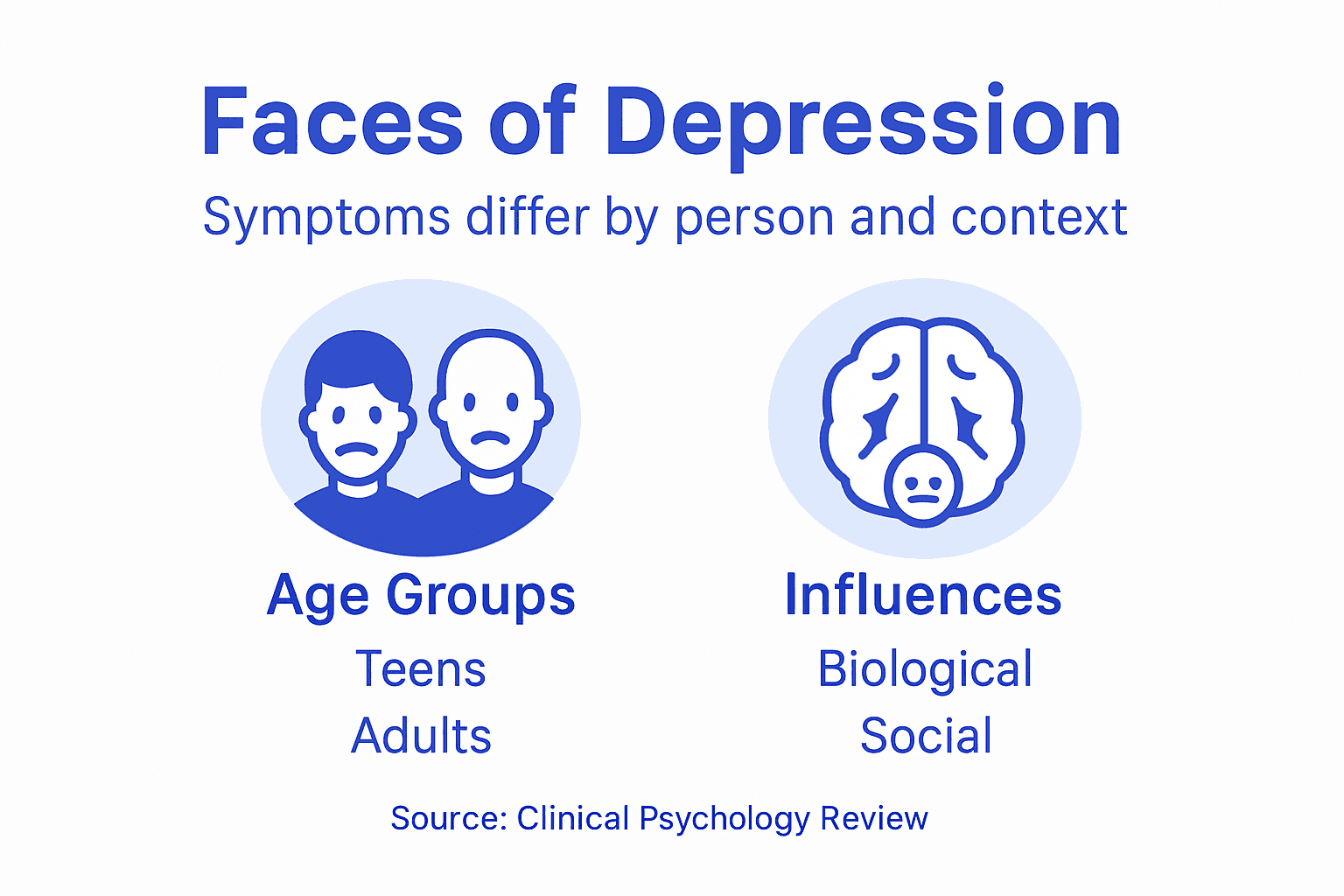
Below is an overview of the interplay between biological, psychological, and social factors in depression:
| Factor Type | Example Influence | Impact on Depression | Potential Interventions |
|---|---|---|---|
| Biological | Genetics, neurochemistry | Alters emotional resilience | Medication, lifestyle changes |
| Psychological | Thinking styles, coping | Shapes personal responses | Therapy, cognitive training |
| Social | Relationships, stress | Modifies symptom severity | Support groups, environment shifts |
Pro tip: Consider depression as a multifaceted experience requiring holistic understanding, not a single-dimensional medical condition.
Risks of Misdiagnosis and the Importance of Personalized Care
Depression is a nuanced condition that demands sophisticated diagnostic approaches. Mental health misdiagnosis research reveals alarming statistics suggesting diagnostic accuracy challenges across Canadian healthcare systems, with misdiagnosis rates ranging between 66% and 98%.
Key risks associated with misdiagnosis include:
- Inappropriate treatment protocols
- Prolonged psychological suffering
- Potential medication side effects
- Delayed access to effective interventions
- Erosion of patient trust in healthcare systems
- Increased long-term mental health complications
- Potential worsening of underlying condition
Neural circuit research demonstrates that depression manifests through diverse neurological pathways, underscoring the critical need for individualized diagnostic and treatment strategies. Each person’s neural circuitry presents unique variations, making standardized approaches potentially ineffective.
Accurate diagnosis is not a luxury – it’s a fundamental requirement for effective mental health treatment.
Personalized care requires comprehensive assessments that consider biological, psychological, and social factors. Healthcare professionals must look beyond symptomatic checklists and engage in deep, nuanced understanding of each individual’s unique experience with depression.
Pro tip: Advocate for yourself by seeking multiple professional opinions and maintaining detailed personal health documentation.
Understand Your Unique Experience with Depression and Find Support
Depression affects everyone differently as highlighted in the article “Depression’s Many Faces – Why Symptoms Vary Widely”. You may be facing persistent feelings, fluctuating symptoms, or challenges influenced by age, gender, or culture. These variations can make it difficult to find the right path forward. At Interactive Counselling, we recognize that depression is not a one-size-fits-all condition and offer personalized therapy solutions designed to meet your unique emotional and psychological needs.
Whether you prefer in-person sessions in Kelowna, Vernon, Grande Prairie, Penticton, or require the convenience of online therapy available nationwide, our diverse team of licensed professionals provides compassionate support tailored to your individual journey. Don’t wait for symptoms to worsen or hope it gets easier on its own. Visit Interactive Counselling today to explore how our services align with your experience and book an appointment that fits your schedule. Take the first step towards understanding and healing with personalized mental health care. Your unique story matters and we are here to help.
Frequently Asked Questions
What are the key symptoms of depression?
Depression can manifest through various symptoms, including persistent feelings of hopelessness, changes in sleep patterns, appetite fluctuations, reduced energy and motivation, difficulty concentrating, and potential physical symptoms like unexplained pain.
How does depression differ between individuals?
Depression is a deeply personal experience, and its symptoms can vary significantly based on factors such as age, gender, and individual context. For example, young professionals may face reduced workplace productivity, while older adults might experience more physical health-related issues.
Why is it important to consider biological, psychological, and social influences in depression?
Depression arises from the complex interplay of biological, psychological, and social factors. Understanding these interconnected influences can help create a more effective and personalized treatment approach for individuals suffering from depression.
What are the risks associated with misdiagnosing depression?
Misdiagnosing depression can lead to inappropriate treatment protocols, prolonged psychological suffering, potential medication side effects, and a loss of trust in healthcare systems. Accurate diagnosis is crucial for effective mental health care.
Recommended
- Understanding the Symptoms of Bipolar Depression
- Depression’s Hidden Toll on Motivation and Energy
- Depression Counselling | Interactive Counselling
- Signs of Depression in Teenagers: A Practical Guide for Parents and Guardians