Do you ever find yourself stuck in the same frustrating relationship patterns? Maybe it’s a constant fear that your partner will leave, an inability to truly trust someone, or a nagging feeling that you always need their approval to feel good about yourself. If this sounds familiar, you might be dealing with the lasting effects of a father wound. For more information, see our couples counselling.
This isn't a clinical diagnosis, but a real emotional imprint left by a father who was physically absent, emotionally unavailable, or consistently critical. These early experiences can subtly influence how you navigate relationships for years to come, long after you've left home. The first step toward building the healthy, secure connections you deserve is simply understanding where these patterns come from.
What Is a Father Wound?
The father wound is a term used to describe the emotional and psychological impact of growing up with a father who was physically absent, emotionally unavailable, or actively harmful. While it's not a formal diagnosis you'd find in a medical textbook, it's a powerful way to understand the effects of a broken or insecure attachment bond—the very connection that is meant to make a child feel safe, valued, and seen.
From a psychological perspective, a healthy paternal bond acts as an anchor. It provides a sense of stability and security that helps a child learn to navigate the world with confidence. When that anchor is missing, weak, or unreliable, it can leave you feeling emotionally adrift, constantly searching for that sense of security in your adult relationships. This underlying feeling of being unmoored can quietly shape your self-esteem, your choice of partners, and how you show up in your closest connections.
How Father Wounds Form
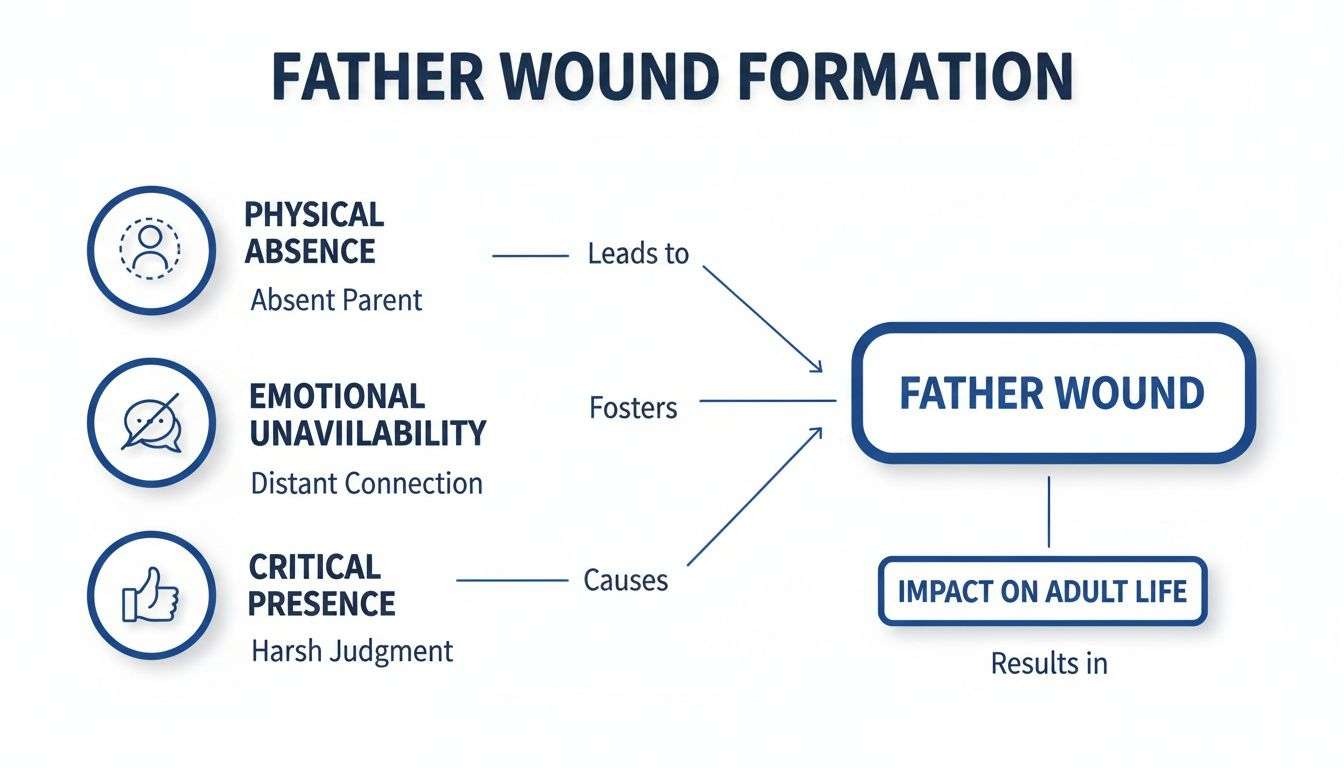
A father wound is rarely caused by a single event. More often, it's carved out over time through consistent, painful patterns. While every family story is unique, the wound typically develops in one of three primary ways. Seeing your own experience reflected here can be a powerful moment of clarity.
1. Physical Absence
This is the most straightforward cause. A father simply wasn't there due to divorce, death, abandonment, or incarceration. His absence leaves a void that a child's mind often fills with self-blame, internalizing questions about their own worth like, "If I were more lovable, he would have stayed." This can grow into a profound fear of abandonment in adulthood, making even minor emotional distance from a partner feel threatening.
2. Emotional Unavailability
This form is often more confusing because a father might be physically present but emotionally walled off. He might be consumed by work, uncomfortable with emotions, or simply incapable of offering warmth, validation, or a real connection. This sends the subtle but powerful message that your feelings don't matter, teaching you to suppress your own needs. As an adult, this can make true intimacy feel difficult, lead you to seek out emotionally distant partners, or make it hard to ask for support.
3. Critical or Abusive Presence
The most damaging wound often comes from a father who was actively harmful. This includes fathers who were relentlessly critical, controlling, demanding, or abusive (verbally, emotionally, or physically). In this environment, a child learns that love is conditional—something to be earned by being perfect and avoiding mistakes. This shatters self-worth and creates a blueprint where love and pain become intertwined. Adults with this background often battle a brutal inner critic, perfectionism, and may tolerate poor treatment from others because it feels familiar.
Signs in Childhood vs. Adulthood
The ways we cope with a father wound as children often look very different from how those same patterns show up in our adult lives. What started as a survival strategy can become a roadblock to healthy connection later on.
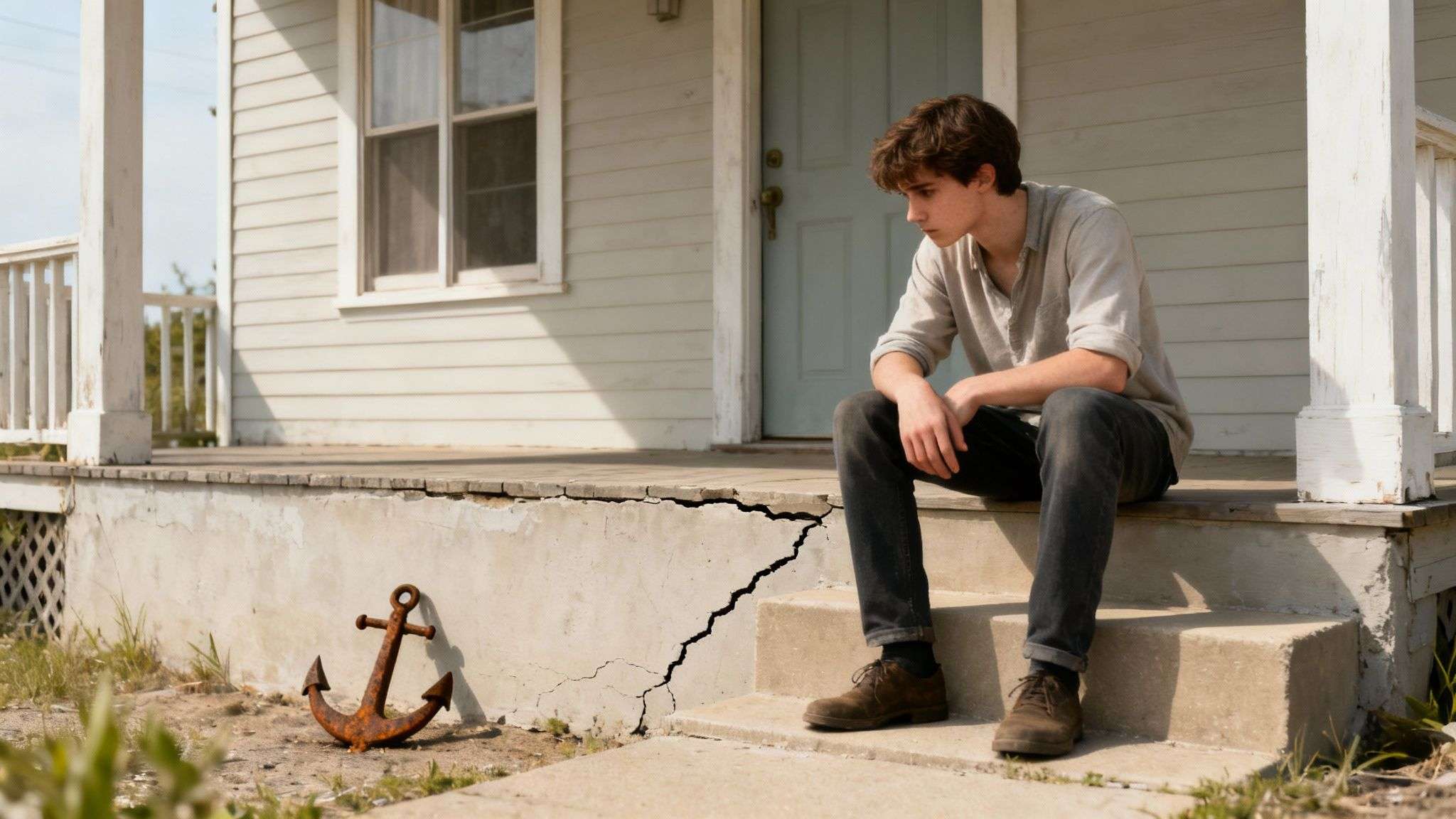
In childhood, these signs might appear as:
For boys: Often externalized behaviours like aggression, acting out in school, or difficulty with authority.
For girls: Often internalized behaviours like people-pleasing, perfectionism, or developing anxiety and low self-esteem.
As we grow, these coping mechanisms evolve. The child who had to be perfect to earn approval becomes the adult who can't relax in a relationship for fear of making a mistake. The child who felt abandoned learns to either cling tightly to partners or push them away to avoid being hurt first. Understanding how these early life experiences and coping styles develop is key to changing them.
Impact on Adult Relationships
The father wound quietly shapes the landscape of our adult connections, influencing everything from who we're attracted to, to how we handle conflict. The core impact often revolves around three key areas: self-esteem, trust, and boundaries.
Low Self-Esteem: A father's validation is a foundational piece of a child's self-worth. Without it, you might carry a persistent feeling of being "not good enough," constantly seeking external approval from partners to feel valuable.
Difficulty with Trust: If your first model of paternal love was unreliable, it's natural to struggle with trusting others. You might remain guarded, waiting for the other shoe to drop, or find it hard to be vulnerable for fear that your partner will eventually let you down or leave.
Porous Boundaries: Healthy boundaries are built on a foundation of self-respect. When that foundation is shaky, you might find yourself saying "yes" when you mean "no," tolerating disrespectful behaviour, or over-giving in relationships to the point of exhaustion.
Many clients we support in Kelowna, Vernon, Penticton, and Grande Prairie recognize these exact patterns in their adult relationships, and once they understand the roots of the wound, healing becomes far more possible.
Grief & Emotional Patterns in Father Wounds
A significant part of the father wound is a deep, often unspoken grief—not for someone who died, but for the relationship you needed and never received. This grief is for the loss of safety, guidance, and unconditional acceptance. Drawing from grief research, we can see how this loss cycles through familiar emotional patterns.
Denial: "It wasn't that bad," or "He did the best he could." This minimizes the pain to make it more bearable.
Anger: A simmering rage at your father, the world, or even yourself for "not being over it." This is often a sign that your needs were profoundly ignored.
Bargaining: "If I can just be the perfect partner, then I will finally feel loved and secure." This often manifests as perfectionism in relationships.
Sadness: A deep, persistent ache of emptiness or a feeling that something vital is missing from your life.
These emotional patterns can put your nervous system on high alert, making you more reactive in relationships. Understanding these trauma responses and their connection to your nervous system can help you see your reactions not as flaws, but as your body's attempt to protect you from being hurt again.
Evidence-Based Healing Steps
Recognizing these patterns is the first step toward healing. The goal isn't to erase the past but to reduce its power over your present. Healing is an active process of building the security and self-worth you may not have received in childhood.

Therapy Modalities:
Working with a qualified therapist provides a safe space to process these complex emotions. Evidence-based approaches are particularly helpful:
Attachment-Focused Therapy: Helps you understand your attachment style and works toward developing an "earned secure attachment," allowing you to build healthier, more secure bonds in adulthood.
Cognitive Behavioural Therapy (CBT): A practical approach to identifying and challenging the core negative beliefs you internalized (e.g., "I'm unlovable"), replacing them with more balanced and compassionate thoughts.
Somatic Therapies: Focuses on the mind-body connection, helping you release the physical tension and trauma held in your body.
Attachment Work & Self-Guided Practices:
Alongside professional support, you can actively work on healing through daily practices:
Journaling: Safely explore your feelings about your past and present relationships without judgment.
Self-Compassion: Practice treating yourself with the same kindness you would offer a friend. When you feel the sting of self-criticism, pause and offer yourself a moment of warmth and understanding.
Setting Boundaries: Start small by saying "no" to a minor request or stating a simple need. Each time you honour your own limits, you rebuild self-respect.
Resources for Support & Further Reading
Navigating this journey can be challenging, and it's important to have reliable sources of information and support. Here are some neutral, authoritative resources:
Research on Father Absence: For those interested in the academic side, this study from the U.S. National Institutes of Health offers a deep dive into research on how father absence affects developmental pathways.
Attachment Theory: Reading about attachment theory (pioneered by John Bowlby) can provide a powerful framework for understanding your relationship patterns. Look for resources from academic or clinical psychology websites.
Mindfulness and Self-Compassion: Organizations like the Centre for Mindful Self-Compassion offer guided practices and information to help you build these crucial inner skills.
Therapy & Next Steps
If you've recognized parts of your own story in this guide, that's a huge and often difficult first step. Give yourself credit for that. Simply seeing the pattern is a powerful act of self-awareness, and it's where all meaningful change begins.
Healing is a personal journey that takes time and self-compassion. The goal is not to erase the past, but to understand its influence so you can consciously build the secure and loving relationships you deserve. Reaching out for professional support is a sign of strength, providing you with a dedicated space to heal and grow.
FAQs: Healing the Father Wound
Can I heal my father wound if my father is no longer in my life?
Absolutely. Healing the father wound is an internal process. It’s about addressing the impact his absence or behaviour had on you—your beliefs, your emotional patterns, and your relationships. It does not require his participation, an apology, or reconciliation. The work focuses on you and your path forward.
How is a father wound different from a mother wound?
Both wounds stem from unmet needs in childhood, but they often manifest differently. The father wound is frequently associated with issues of self-worth, security, and confidence in the outside world. The mother wound is often linked to our internal world—our sense of nurturing, self-love, and emotional expression. Both can significantly impact adult relationships.
Is it possible to have a healthy relationship if I have a father wound?
Yes, it is entirely possible. Awareness is the first and most critical step. By understanding how your past affects your present, you can begin to make conscious choices rather than reacting from old pain. With self-compassion, new skills, and sometimes professional support, you can break the cycle and build the secure, loving partnership you deserve. Exploring options for counselling can be a powerful step in this journey.
If you recognize these patterns in your own life and you’re located in Kelowna, Vernon, Penticton, or Grande Prairie, our counsellors can help you work through the father wound with evidence-based support and compassionate guidance. You can book an in-person or online session whenever you’re ready.