More than half of Canadian adults say life transitions like divorce or switching careers have caused them ongoing stress and anxiety. For anyone in Canada facing major change, emotional challenges can feel overwhelming and unpredictable. Understanding how life transitions affect your mental health will help you spot risks, build resilience, and find support so you can move forward with confidence. For more information, see our anxiety counselling.
Table of Contents
- Understanding Life Transitions And Mental Health
- Types Of Life Transitions Canadians Face
- How Transitions Affect Brain And Behaviour
- Common Risks And Mental Health Challenges
- Practical Strategies For Managing Transitions
Key Takeaways
| Point | Details |
|---|---|
| Impact of Life Transitions | Life transitions can disrupt emotional stability, requiring individuals to recalibrate their identity and cope with change. |
| Types of Transitions | Canadians face both developmental and reactive transitions, each with unique emotional impacts and predictability. |
| Neurological Responses | Transitions activate stress responses in the brain, affecting emotional regulation and prompting various behavioural adaptations. |
| Mental Health Risks | Significant life changes can exacerbate mental health issues like anxiety and depression, making proactive support essential. |
Understanding Life Transitions and Mental Health
Life transitions are complex psychological experiences that profoundly impact mental health in ways many people do not anticipate. Factors influencing psychological adaptation reveal that these periods of change trigger intricate emotional responses beyond simple situational stress.
Psychological research demonstrates that life transitions—whether positive or negative—challenge our established coping mechanisms and sense of stability. Major transitions like career shifts, relationship changes, relocation, or significant personal milestones can disrupt emotional equilibrium, creating unexpected psychological strain. Each transition requires significant mental and emotional recalibration, forcing individuals to rebuild their sense of identity and purpose.
The human brain naturally resists change, interpreting transitions as potential threats to our psychological safety. This neurological response explains why even seemingly positive transitions can generate anxiety, uncertainty, and emotional vulnerability. Genetic predispositions, prior life experiences, social support systems, and individual resilience levels further modulate how we process and integrate these transformative periods.
Pro Tip: Create a structured transition journal to systematically track your emotional responses and develop proactive coping strategies during periods of significant life change.
Types of Life Transitions Canadians Face
Life transitions in Canada are diverse and complex, spanning multiple domains of personal and professional experience. Common life transition categories typically include developmental and reactive changes that significantly impact individual well-being and psychological functioning.
Developmental transitions represent predictable life stages that most Canadians experience, such as graduating from university, entering the workforce, getting married, becoming a parent, or transitioning into retirement. These transitions are often anticipated but still carry substantial emotional weight. In smaller communities like Vernon or Penticton, these changes can feel even more pronounced due to tighter social networks and more visible community dynamics.
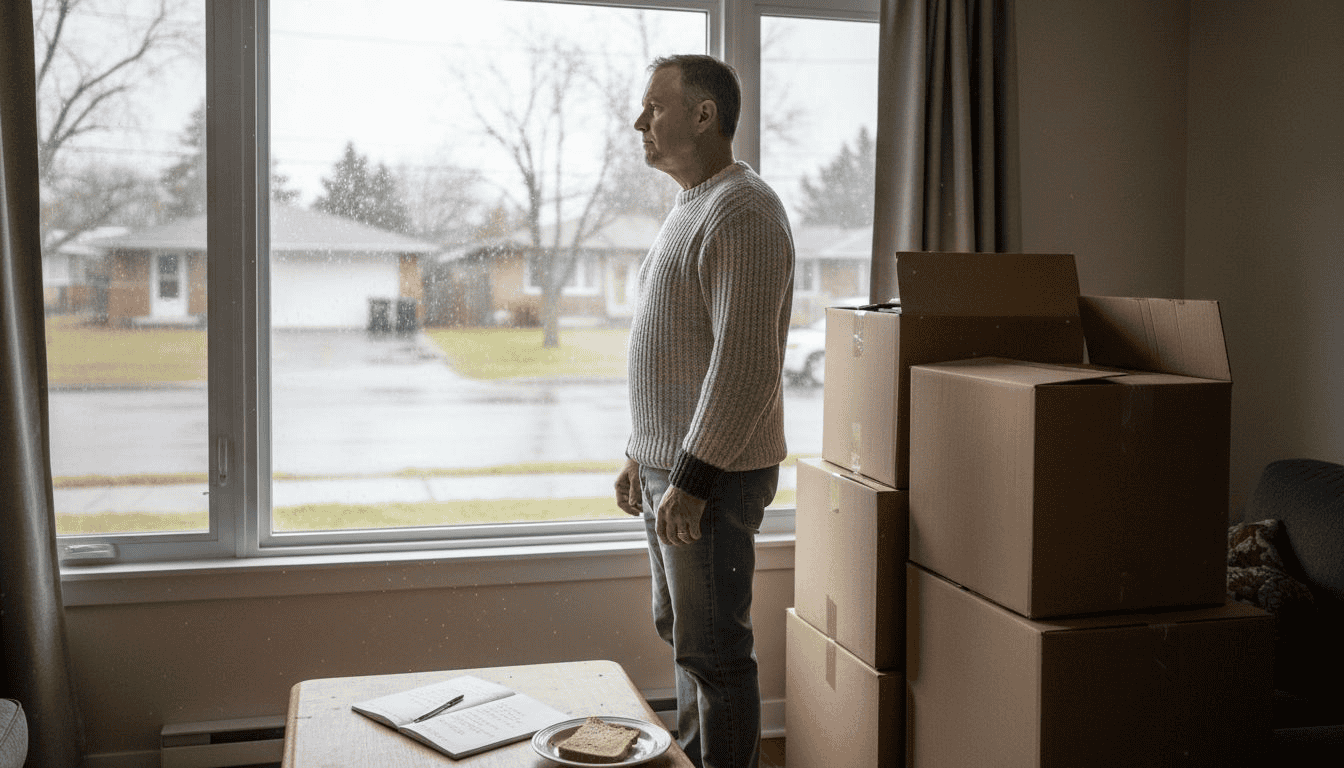
Reactive transitions, by contrast, are unexpected life events that emerge suddenly and demand immediate psychological adaptation. These might include job loss, relationship breakdown, health diagnoses, financial challenges, or geographic relocation. For many Canadians working in seasonal industries or regions with fluctuating economic landscapes, these reactive transitions can be particularly stressful and disruptive to personal stability.
Here is a comparison of developmental and reactive transitions faced by Canadians:
| Transition Type | Typical Examples | Predictability | Emotional Impact |
|---|---|---|---|
| Developmental | Graduation, parenthood, retirement | Generally anticipated | Mixed excitement and anxiety |
| Reactive | Job loss, illness, relocation | Occurs unexpectedly | Acute stress and uncertainty |
Pro Tip: Develop a personal resilience toolkit that includes emotional support networks, flexible coping strategies, and regular self-reflection to navigate life transitions more effectively.
How Transitions Affect Brain and Behaviour
The human brain responds to life transitions through complex neurological and psychological mechanisms that profoundly influence our emotional and behavioural responses. Brain functions during transitions involve intricate interactions between different brain regions, particularly impacting emotional regulation and adaptive capabilities.

Psychological transition stages demonstrate how our brain processes change through three distinct psychological phases. The first phase, termed the “Ending,” involves releasing previous psychological attachments and letting go of established identities. During the “Neutral Zone,” individuals experience heightened uncertainty and confusion as the brain recalibrates to new circumstances. The final “New Beginning” stage represents neurological adaptation, where the brain integrates new experiences and develops fresh behavioural patterns.
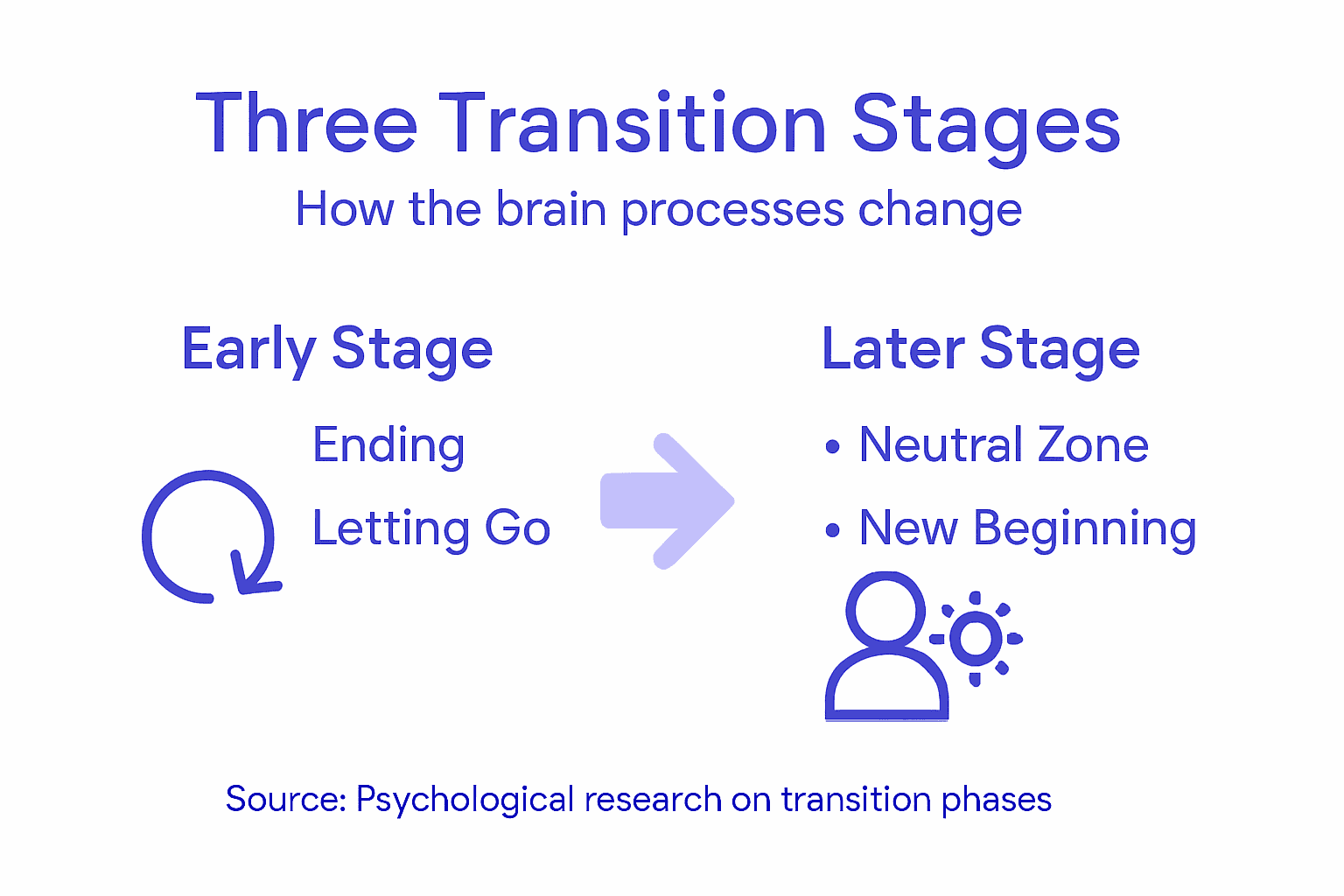
Neurologically, transitions trigger stress responses in the brain’s limbic system, activating the amygdala and hypothalamus. These regions generate emotional and physiological reactions that can manifest as anxiety, uncertainty, and heightened emotional sensitivity. The cerebral cortex simultaneously works to interpret these changes, attempting to reconstruct personal narratives and develop new coping strategies. This complex process explains why transitions can feel simultaneously overwhelming and transformative.
The stages of psychological transitions influence brain and behaviour in several ways:
| Stage Name | Cognitive Focus | Emotional Response | Adaptive Challenge |
|---|---|---|---|
| Ending | Letting go of old roles | Grief, loss, anxiety | Release of former identity |
| Neutral Zone | Navigating uncertainty | Confusion, low motivation | Tolerating ambiguity |
| New Beginning | Embracing new patterns | Renewed hope, increased energy | Building new self-concepts |
Pro Tip: Practice mindfulness meditation to help your brain process transitions more effectively by creating neurological space between emotional reactions and rational responses.
Common Risks and Mental Health Challenges
Mental health risks during life transitions represent complex psychological challenges that can profoundly impact an individual’s emotional well-being. Life transitions create unique vulnerabilities that can trigger or exacerbate existing mental health conditions, making these periods particularly sensitive for psychological stability.
Individuals experiencing significant life changes are susceptible to several critical mental health risks. Depression and anxiety frequently emerge during transitions, often manifesting through symptoms like persistent sadness, excessive worry, social withdrawal, and diminished motivation. Professional contexts such as career changes or workplace restructuring can intensify these psychological pressures, especially in smaller Canadian communities where social and professional networks are more interconnected.
Unique psychological challenges accompany different types of transitions. Career shifts might provoke imposter syndrome and professional identity uncertainty, while relationship changes can trigger profound emotional vulnerabilities. Geographical relocations can generate feelings of isolation and disconnection, challenging an individual’s sense of belonging. These psychological disruptions stem from the brain’s natural resistance to change and the emotional energy required to reconstruct personal narratives and adaptive strategies.
Pro Tip: Develop a structured emotional support system that includes professional counselling, peer support networks, and personal self-care practices to build psychological resilience during life transitions.
Practical Strategies for Managing Transitions
Navigating life transitions requires a deliberate and structured approach to maintaining emotional well-being. Developing personal resilience involves creating adaptive strategies that help individuals process change more effectively and maintain psychological stability during uncertain periods.
Practical management strategies include establishing consistent self-care routines, creating structured emotional processing mechanisms, and building robust support networks. Key techniques involve maintaining regular journaling practices to track emotional responses, developing flexible mindset approaches, and creating intentional boundaries that protect mental energy. Breaking larger transitions into smaller, manageable steps can help reduce overwhelming feelings and create a sense of incremental progress.
Professional support plays a crucial role in managing life transitions. Seeking counselling support can provide individuals with tailored strategies for navigating complex emotional landscapes. Professional therapists offer objective perspectives, evidence-based coping mechanisms, and personalized guidance that help individuals understand their unique transition challenges and develop targeted resilience-building approaches.
Pro Tip: Create a transition management toolkit that includes emotional tracking methods, self-care strategies, and a list of personal support contacts to help you navigate life changes more effectively.
Take Control of Your Mental Health During Life Transitions
Life transitions often disrupt your mental well-being in ways that feel overwhelming and unexpected. The complex emotional responses, the difficult “Neutral Zone” phase of uncertainty, and the challenge of rebuilding your identity can create headaches no one prepares you for. If you are facing a major change such as career shifts, relationship challenges, or relocation, it is vital to have personalized support that understands these unique psychological pressures.
Interactive Counselling provides compassionate, professional therapy tailored to help Canadians across Kelowna, Vernon, Grande Prairie, Penticton, and nationwide online. Our experienced team offers flexible therapy options during daytime and evening hours to fit your needs. Whether coping with anxiety, depression, or the stress of adapting to change, learn to build resilience with our expert guidance. Do not wait for symptoms to worsen. Visit Interactive Counselling today to explore how individualized counselling can help you find emotional balance through life’s transitions. Begin your journey with us now, because your mental health deserves immediate attention.
Frequently Asked Questions
How do life transitions impact mental health?
Life transitions can significantly impact mental health by triggering emotional responses that challenge established coping mechanisms. These changes often create uncertainty and anxiety, leading to psychological strain.
What are the common types of life transitions?
Common types of life transitions include developmental changes, such as graduating, getting married, or retiring, and reactive changes, such as job loss, health issues, or relocation. Each type carries unique emotional impacts.
What are the psychological stages during a life transition?
Life transitions can be understood through three psychological stages: the Ending, where individuals let go of past identities; the Neutral Zone, marked by uncertainty; and the New Beginning, where new patterns and identities emerge.
How can I manage mental health during significant life transitions?
Managing mental health during transitions involves developing a structured approach, including self-care routines, emotional support systems, and possibly seeking professional counselling to provide guidance and coping strategies.
Recommended
- Why Life Transitions Feel Heavier in Smaller Communities Like Vernon
- Coping with Covid 19 – Interactive Counselling
- How the Housing Market and Renovations Can Quietly Increase Stress
- Early Life Experiences – Shaping Adult Coping Styles