Over 60 percent of Canadian adults report struggling with anxiety or conflict in close relationships. For many, emotional regulation seems mysterious or misunderstood, especially with myths that controlling feelings means ignoring them. Learning how emotional regulation works unlocks pathways to healthier responses, better self-awareness, and more balanced connections. If you are searching for practical strategies and Canadian therapy options to strengthen your emotional skills, this guide will clarify what truly helps. For more information, see our couples counselling.
Table of Contents
- Defining Emotional Regulation And Common Myths
- Types Of Emotional Regulation Strategies
- How Emotional Regulation Shapes Mental Health
- Tools And Techniques For Better Self-Management
- Therapy And Community Resources In Canada
Key Takeaways
| Point | Details |
|---|---|
| Emotional Regulation Is Multifaceted | It involves managing emotions through understanding and expression, not suppression. |
| Diverse Strategies Are Essential | Effective emotional regulation uses cognitive, behavioural, and physiological techniques adaptable to individual needs. |
| Impact on Mental Health Is Significant | Adaptive regulation supports resilience, while maladaptive practices can contribute to mental health issues. |
| Utilize Community Resources | Canada offers various mental health services and support systems for emotional regulation and well-being. |
Defining Emotional Regulation and Common Myths
Emotional regulation is a sophisticated psychological process that enables individuals to effectively manage, influence, and respond to their emotional experiences. Scientific perspectives reveal emotional regulation as more than just controlling feelings – it involves understanding, experiencing, and appropriately expressing emotions across different contexts.
Contrary to popular misconceptions, emotional regulation is not about suppressing or denying emotions. It encompasses a complex range of strategies for navigating both positive and negative emotional states, including conscious and unconscious techniques. Some key strategies include cognitive reappraisal (reframing situations), mindful awareness, and targeted physiological responses that help modulate emotional intensity.
Common myths about emotional regulation can significantly hinder personal growth and emotional intelligence. Many people mistakenly believe that strong emotional regulation means never feeling intense emotions or always appearing calm. In reality, healthy emotional regulation involves acknowledging feelings, understanding their origins, and responding adaptively rather than reactively. This means recognizing when you’re experiencing anger, sadness, or anxiety, and developing constructive ways to process these emotions without being overwhelmed.
- Emotional regulation involves influencing emotions, not eliminating them
- Strategies can be conscious or unconscious
- Applies to both positive and negative emotional experiences
- Requires self-awareness and intentional practice
Pro tip: Start tracking your emotional patterns by keeping a simple journal that notes triggers, emotional responses, and your subsequent actions to build greater self-understanding.
Types of Emotional Regulation Strategies
Comprehensive research on emotional regulation strategies reveals a nuanced landscape of approaches individuals use to manage their emotional experiences. These strategies can be broadly categorized into cognitive, behavioural, and physiological techniques that help individuals navigate complex emotional landscapes with greater resilience and self-awareness.
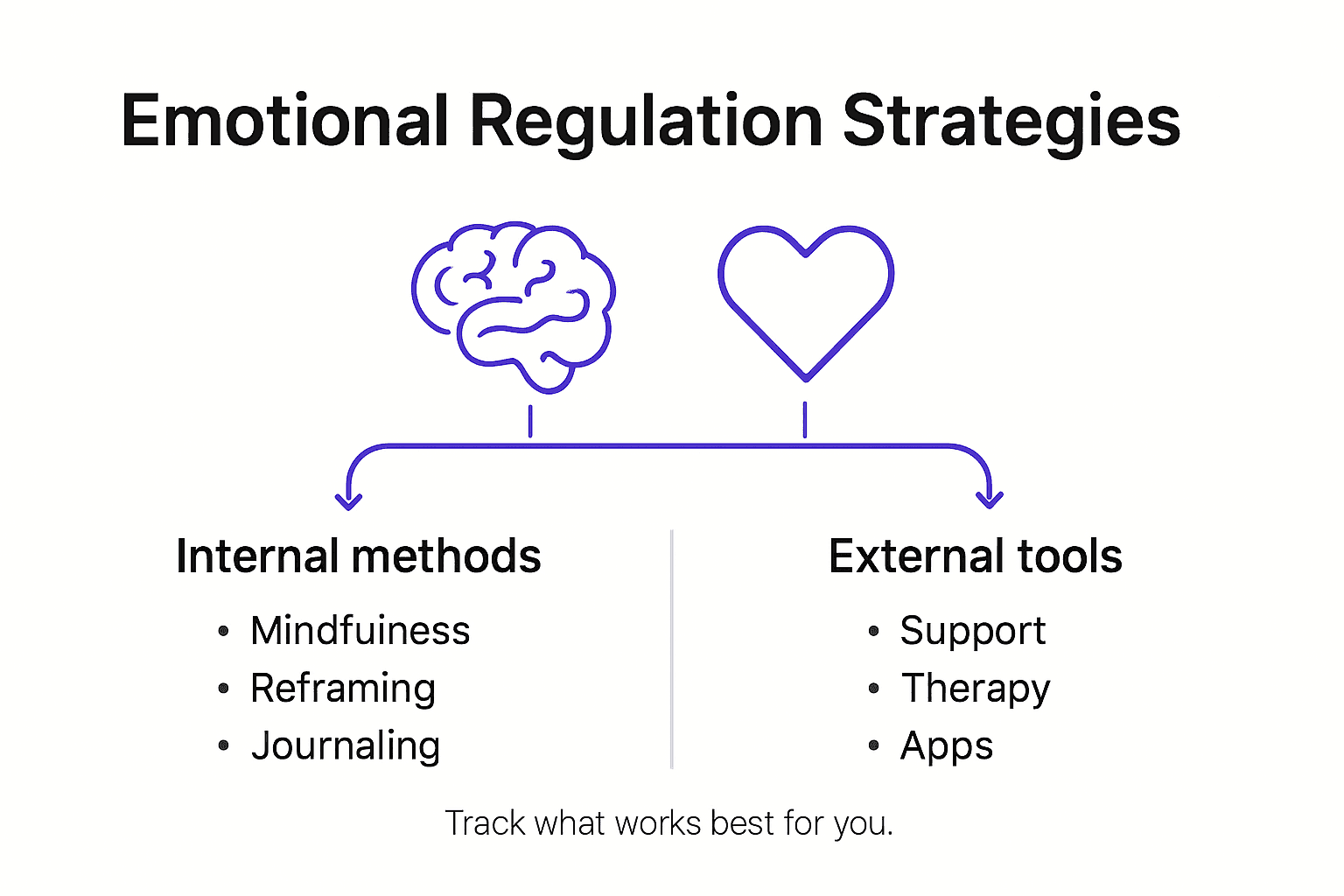
Cognitive strategies represent a primary approach to emotional regulation. Cognitive reappraisal, which involves reinterpreting emotional situations to change their psychological impact, stands out as a particularly effective technique. This approach allows individuals to transform potentially distressing scenarios by shifting their perspective and understanding. Other cognitive strategies include mindfulness, perspective-taking, and distraction techniques that help individuals modulate their emotional responses.
Behavioural and physiological strategies complement cognitive approaches, offering additional pathways for emotional management. These include:
- Acceptance strategies: Acknowledging emotions without judgment
- Suppression techniques: Temporarily reducing emotional expression
- Avoidance mechanisms: Minimizing exposure to emotional triggers
- Active coping: Directly addressing emotional challenges
- Physiological regulation: Using breathing techniques, physical exercise, and relaxation methods
Understanding these strategies is crucial because emotional regulation is not a one-size-fits-all process. Different situations and individual psychological profiles may require varied approaches. Some strategies work better in specific contexts, and developing a diverse emotional regulation toolkit allows for more flexible and effective emotional management.
Here’s a comparison of major emotional regulation strategy types and their ideal uses:
| Strategy Type | Key Methods | Best For |
|---|---|---|
| Cognitive | Reappraisal, mindfulness, distraction | Shifting perspective, reflection |
| Behavioural | Active coping, avoidance | Immediate stress response |
| Physiological | Breathing, exercise, relaxation | Calming physical symptoms |
Pro tip: Practice experimenting with different emotional regulation strategies in low-stress situations to discover which techniques resonate most effectively with your personal emotional landscape.
How Emotional Regulation Shapes Mental Health
Research exploring the intricate relationship between emotional regulation and mental health reveals a profound interconnection that significantly impacts psychological well-being. Emotional regulation serves as a critical mechanism through which individuals process, interpret, and respond to their internal experiences, ultimately determining their mental health resilience.
Adaptive emotional regulation strategies play a fundamental role in psychological functioning. Specific emotional regulation approaches directly influence mental health outcomes, with some strategies promoting psychological resilience while others potentially contributing to mental health challenges. Cognitive reappraisal, for instance, allows individuals to reframe potentially stressful situations, reducing their negative psychological impact and promoting more balanced emotional responses.
The mechanisms of emotional regulation extend beyond simple coping techniques. They represent complex psychological processes that shape how individuals interact with their internal emotional landscape. Different regulation strategies can either buffer against mental health challenges or inadvertently contribute to psychological distress. Key insights include:
- Adaptive strategies support psychological flexibility
- Maladaptive approaches can reinforce negative emotional patterns
- Cognitive reappraisal helps reduce emotional intensity
- Acceptance techniques promote psychological resilience
Individuals with robust emotional regulation skills typically demonstrate greater psychological flexibility, lower levels of anxiety and depression, and more effective stress management. This underscores the critical importance of developing and refining emotional regulation capabilities as a proactive approach to maintaining mental health.
Pro tip: Regularly practice mindful self-reflection to identify your current emotional regulation patterns and gradually develop more adaptive strategies for managing complex emotional experiences.
Tools and Techniques for Better Self-Management
Contemporary research on self-management strategies reveals a comprehensive toolkit for emotional well-being, offering individuals practical approaches to navigate complex emotional landscapes. These techniques go beyond traditional coping mechanisms, providing structured pathways for understanding and managing personal emotional experiences.

Evidence-based techniques encompass a range of cognitive and behavioural strategies designed to enhance emotional regulation and psychological resilience. Mindfulness practices, cognitive reappraisal, and structured reflection emerge as powerful tools for developing greater self-awareness and emotional flexibility. Specific approaches like Acceptance and Commitment Therapy (ACT) and Dialectical Behavior Therapy (DBT) offer systematic frameworks for transforming emotional responses and building psychological strength.
Practical self-management tools include:
- Emotion labeling: Identifying and naming emotional experiences precisely
- Structured breathing techniques: Regulating physiological stress responses
- Cognitive reframing: Challenging and restructuring negative thought patterns
- Journaling: Tracking emotional triggers and patterns
- Behavioral activation: Engaging in purposeful activities that support emotional balance
Digital health interventions and technology-supported strategies are increasingly complementing traditional therapeutic approaches, providing accessible and personalised tools for emotional self-management. These innovations offer individuals flexible, immediate support for developing more adaptive emotional regulation skills.
Pro tip: Create a personal emotional regulation toolkit by experimenting with different techniques and documenting which strategies most effectively help you navigate challenging emotional experiences.
Therapy and Community Resources in Canada
Canada offers a comprehensive network of mental health services designed to support individuals across diverse emotional and psychological needs. These resources span national and provincial platforms, providing accessible support through various channels including helplines, crisis intervention, and professional therapeutic services tailored to different demographic groups and specific mental health challenges.
The Mental Health Commission of Canada maintains an extensive directory of resources that addresses emotional regulation, resilience, and comprehensive mental health support. These resources encompass evidence-based programs, self-management tools, and community-driven initiatives that aim to provide holistic support for individuals seeking to improve their psychological well-being. Professional services include specialized therapy approaches such as Cognitive Behavioural Therapy (CBT), Dialectical Behaviour Therapy (DBT), and culturally sensitive counselling options.
Key community resources and support systems in Canada include:
- National helplines offering immediate crisis support
- Provincial mental health programs with targeted interventions
- Indigenous-specific counselling services
- Online therapy platforms
- Community wellness workshops
- Support groups for specific mental health challenges
Additionally, many Canadian provinces offer integrated online therapy sessions designed to increase accessibility and convenience for individuals seeking mental health support. These digital platforms ensure that geographical barriers do not prevent individuals from accessing professional therapeutic assistance, particularly in remote or underserved communities.
Here’s an overview of core therapy approaches available in Canada for emotional wellbeing:
| Therapy Approach | Primary Focus | Delivery Modes in Canada |
|---|---|---|
| Cognitive Behavioural | Thought restructuring | In-person, online sessions |
| Dialectical Behavioural | Emotional skills, acceptance | Group, individual, remote access |
| ACT (Acceptance & Comm.) | Values-based behaviour change | Counselling centres, teletherapy |
Pro tip: Research and compile a personal list of local and national mental health resources, including helpline numbers and online platforms, to create a readily accessible support network.
Strengthen Your Emotional Regulation Skills with Expert Support
Managing intense emotions and building resilience can be challenging without the right tools and guidance. This article sheds light on key emotional regulation strategies like cognitive reappraisal and mindful awareness that help you respond thoughtfully rather than react impulsively. If you find yourself struggling to navigate complex feelings such as anxiety, anger, or sadness, you are not alone. Developing effective emotional regulation involves self-awareness, intentional practice, and often professional support.
At Interactive Counselling, we specialize in personalized therapy solutions designed to empower you with adaptive emotional regulation skills. Whether you prefer in-person sessions in Kelowna, Vernon, Grande Prairie, or Penticton, or convenient online therapy anywhere in Canada, our licensed therapists provide compassionate, non-judgmental care tailored for individuals, couples, and families. Explore a variety of approaches including Cognitive Behavioural Therapy and Dialectical Behaviour Therapy to find what works best for your emotional well-being.
Discover more about how personalized mental health support can enhance your resilience at General – Interactive Counselling. Take the first step today by visiting our website and booking a session. Empower yourself to manage emotions adaptively and build lasting mental health.
Frequently Asked Questions
What is emotional regulation?
Emotional regulation is the psychological process that allows individuals to manage, influence, and respond to their emotional experiences effectively. It involves understanding, experiencing, and appropriately expressing emotions across various contexts.
How can I improve my emotional regulation skills?
Improving emotional regulation skills can be achieved through techniques such as cognitive reappraisal, mindfulness, and maintaining a journal to track emotional patterns and triggers. Experimenting with various strategies in low-stress situations can help identify which techniques work best for you.
What are some common strategies for emotional regulation?
Common emotional regulation strategies include cognitive reappraisal (reframing situations), mindfulness practices, acceptance strategies, and physiological methods like breathing exercises and physical activity. Each approach can help manage emotional experiences more effectively.
How does emotional regulation impact mental health?
Emotional regulation significantly affects mental health, as adaptive strategies can promote resilience and lower levels of anxiety and depression. Conversely, maladaptive approaches can reinforce negative emotional patterns, further affecting psychological well-being.
Recommended
- Mastering Workplace Relationships: Strategies for Stressful Situations
- A Guide to the Anger Problems Test
- Parents Crying In Front Of Kids – Interactive Counselling
- Back To School Preparation – Interactive Counselling