If you live in the South Okanagan, you know the feeling. It’s the sudden, profound silence that descends right after Labour Day, a quiet so complete you can almost hear it. After months of summer buzz, the abrupt stillness can be unnerving. If this annual shift leaves you feeling a bit lost or down, you're certainly not alone. For more information, see our Penticton depression counselling.
Surviving the post-tourist-season blues in the South Okanagan involves acknowledging the very real impact of this sudden quiet, and proactively building a personal toolkit of strategies that focus on light exposure, social connection, and self-compassion to navigate the darker, quieter months. For more information, see our counselling in Penticton.
This isn't just your standard end-of-summer sadness. It's a specific, localized phenomenon—what many of us have come to call the "post-season blues." The abrupt transition from a valley buzzing with tourists to one of echoing quiet is more than just a change of seasons; it's a social and economic shockwave. Acknowledging that this environmental shift has a real impact on our mental health is the first step to navigating it. For more information, see our depression counselling.
The Quiet After the Crowd: Why the Okanagan Shift Hits So Hard
For those of us who call this place home, the change from a sun-drenched, bustling summer to the quiet of autumn can feel like flipping a switch. One day, the streets of Penticton, Oliver, and Osoyoos are electric with visitors; the next, a noticeable calm settles over everything. This isn't just in your head—it's a real, tangible change that can take a genuine toll on your mood.
This is about more than just cooler weather. It's a social and economic downshift that echoes through our communities. The very energy that defines our summers—the packed farmers' markets, the lively restaurant patios, the crowded beaches—seems to evaporate overnight.
From Bustling to Bare
That contrast between the high-energy "on" season and the quiet "off" season can be jarring. What was a landscape of constant motion and social connection becomes a far more insular environment. It's no surprise that this dramatic shift can trigger some tough feelings:
- A Feeling of Isolation: The daily social interactions—even just the background noise of a full town—disappear, which can leave you feeling surprisingly lonely and disconnected.
- A Sense of Melancholy: For many, the quiet doesn't feel peaceful. It can feel empty. This can lead to a low-grade sadness that’s hard to shake.
- Financial Anxiety: Let's be honest—for a huge number of people here, the end of tourist season means a significant drop in income. The end of seasonal work adds a heavy layer of financial stress right when the mood is already low.
These feelings are a completely normal response to such a significant change in your environment. The economic reality behind the quiet is very real. For instance, tourism data from previous years has shown how dramatically hotel occupancy rates can drop after the summer peak. These figures aren't just statistics; they represent the empty streets and vanished seasonal jobs that once fueled the valley’s energy, a direct contributor to the post-season blues.
How to Recognize the Signs of Winter Depression and SAD
It’s a feeling many of us in the South Okanagan know well. As the last of the autumn leaves fall and the tourists head home, the energy of the valley shifts. The once-bustling streets of Penticton and Osoyoos grow quiet, and that quiet can sometimes feel a little too loud in our own heads.
For some, it's a simple case of the "winter blues"—a little slump in our mood. But for others, this shift marks the start of a more challenging, recurring pattern known as Seasonal Affective Disorder (SAD). Being able to tell the difference is the first, most important step in looking after yourself through the colder, darker months.
But what does that actually look like? It’s about paying attention to the quiet nudges—or loud alarms—your mind and body are sending. This isn't about slapping a label on your feelings, but about understanding what they're trying to tell you.
This infographic paints a clear picture of the dramatic shift we experience, contrasting the vibrant, social summer with the stark quiet of a South Okanagan winter.
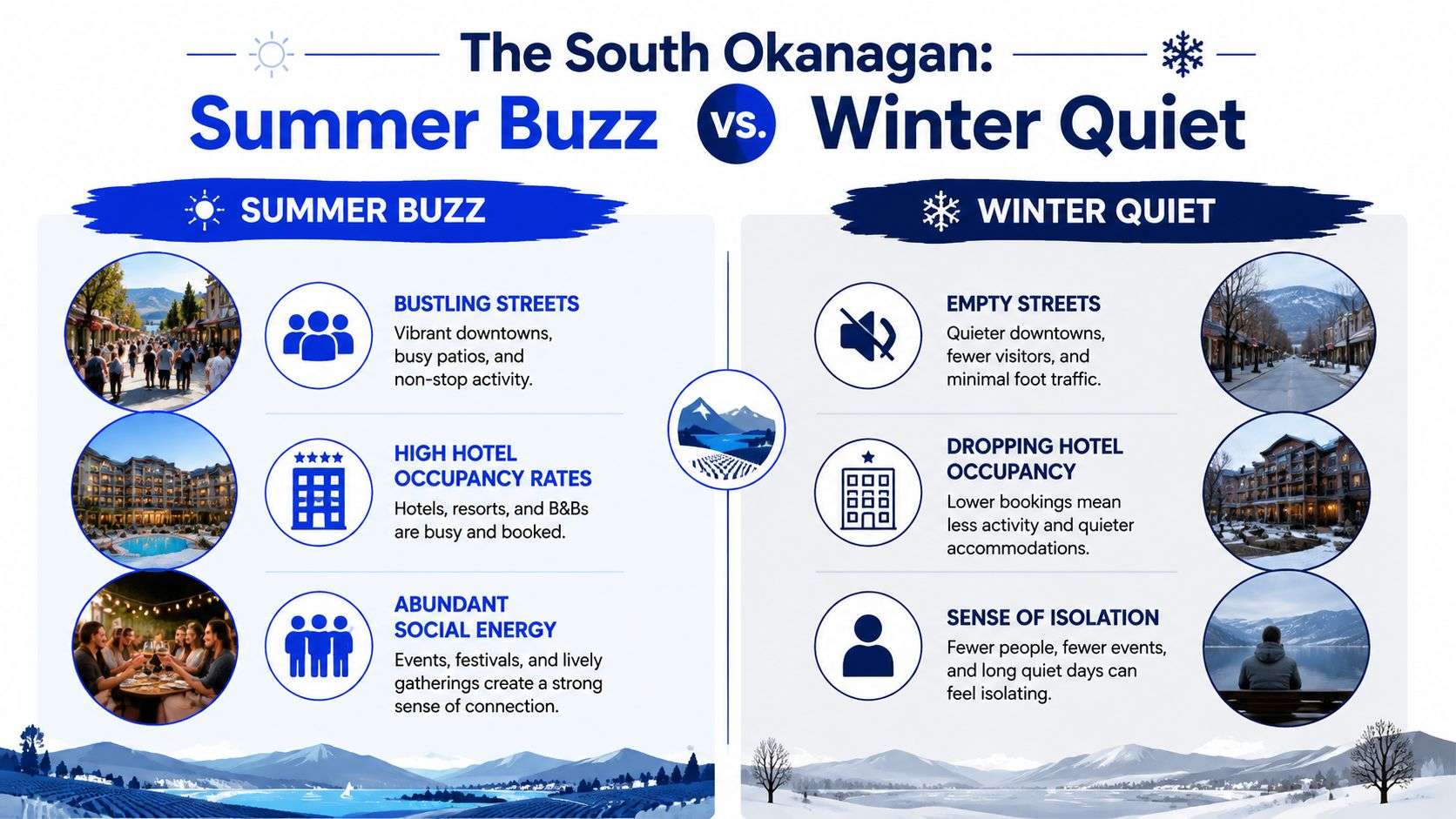
You can see how that sudden drop in social connection and economic buzz can directly feed into feelings of isolation, which often makes winter mood changes feel so much heavier here.
Common Symptoms to Watch For
The signs can creep in slowly or hit you all at once, and they exist on a spectrum. Whether it’s the winter blues or SAD, many of the core symptoms overlap.
Keep an eye out for these changes:
- A Persistent Low Mood: More than just a bad day. This is feeling down, irritable, or even empty most of the day, almost every day.
- Losing Your Spark: Things you used to love, whether it's hiking, meeting friends for coffee, or working on a hobby, just don't feel worth the effort anymore.
- Changes in Appetite: You might find yourself constantly reaching for carbs and comfort foods, which can often lead to weight gain.
- Deep-Seated Fatigue: This isn't just feeling tired. It's a bone-deep exhaustion that a full night's sleep doesn't seem to touch.
- Brain Fog: Struggling to concentrate, make simple decisions, or remember what you walked into a room to do.
If this sounds familiar, you're not alone. This is a recognized biological response to the change in seasons. In fact, Canadian research has shown that major depressive episodes often peak during the winter months. These are not just feelings; they are physiological shifts.
For a deeper dive into these seasonal patterns, you can read the full research about these seasonal patterns. It confirms what many of us in BC already know from experience.
Winter Blues vs. Seasonal Affective Disorder (SAD)
So, how do you know if it's a mild funk or something more serious? The key difference is intensity and impact. This table can help you distinguish between the common winter blues and the more clinically significant symptoms of SAD.
| Symptom | Mild Winter Blues | Seasonal Affective Disorder (SAD) |
|---|---|---|
| Mood | Feeling a bit down, melancholic, or sluggish. | Intense sadness, irritability, or feelings of hopelessness. |
| Energy | General lethargy; you feel like you need more rest. | Overwhelming fatigue that interferes with daily tasks. |
| Social Life | You might prefer a quiet night in over a big party. | Actively withdrawing from friends, family, and social events. |
| Function | You can still get through your work and home life. | Symptoms are severe enough to disrupt work, school, or relationships. |
| Duration | Comes and goes; you have good days and bad days. | Symptoms are persistent for most of the day, nearly every day. |
While the winter blues are a drag, they don't typically stop you from living your life. But when these symptoms become so severe that they're getting in the way of your job, your relationships, and your ability to function, it’s a strong sign you might be dealing with SAD.
Your Toolkit for the Okanagan Winter
Alright, you understand why the quiet season can feel so heavy. The sudden silence after the summer rush, the shorter days—it all adds up. Now, let’s talk about what you can actually do about it. This isn't about finding a single magic cure, but about building your own personal toolkit of strategies to lean on when the post-tourist-season blues start to set in.
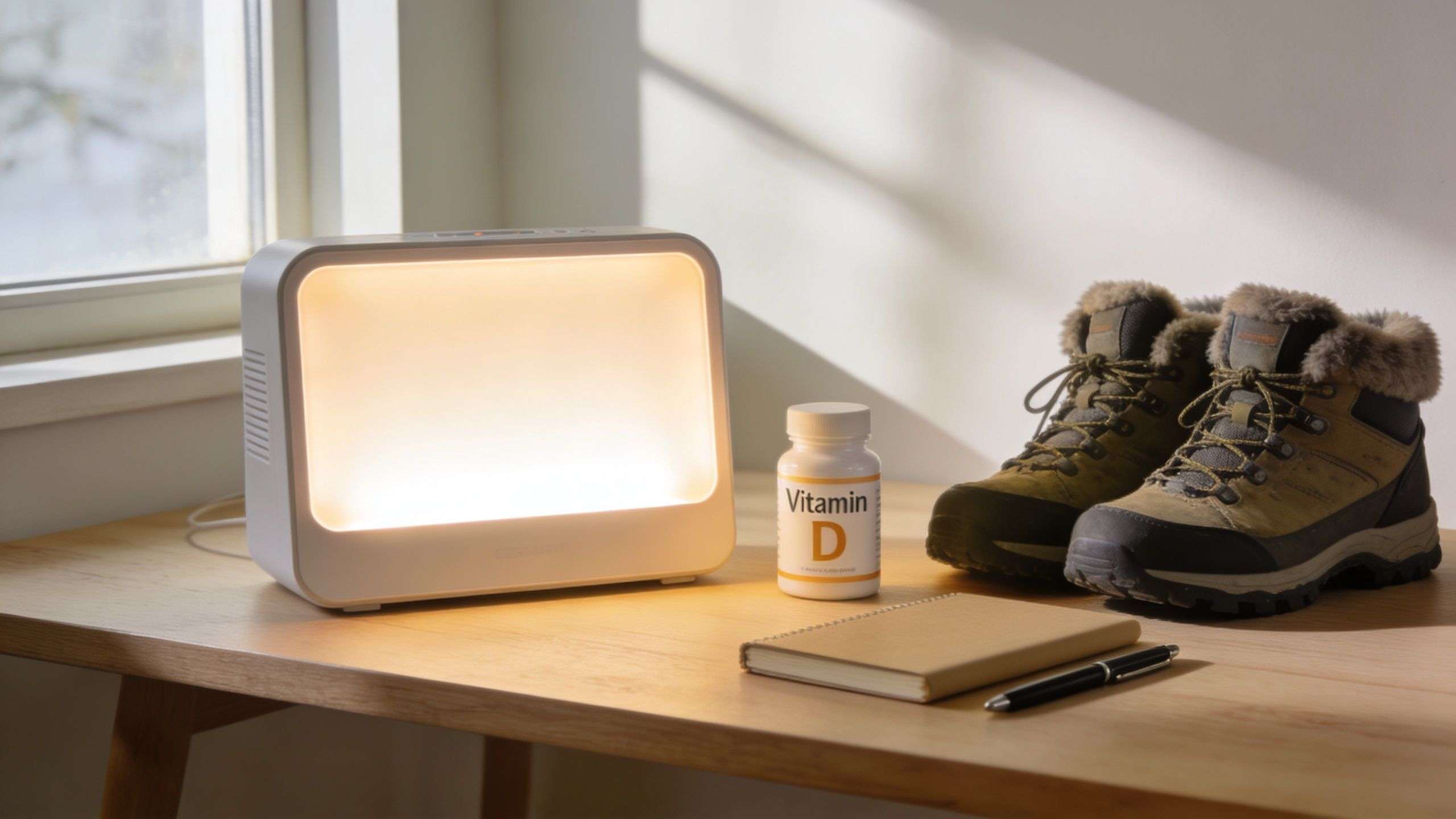
Think of it as your proactive defence. Having a few reliable tools ready to go makes all the difference when you start feeling that familiar dip in your mood and energy.
Let There Be (the Right Kind of) Light
One of the biggest culprits behind the winter blahs is the lack of light. It can disrupt our internal clocks (circadian rhythm) and serotonin levels, which directly impacts our mood. This is where light therapy can be a game-changer.
If you decide to get a light therapy box, here’s how to get the most out of it:
- Find a good one: Look for a lamp that provides an intensity of 10,000 lux and filters out most UV light.
- Make it a morning ritual: Sit in front of it for 20 to 30 minutes, ideally within the first hour after you wake up. It’s a powerful signal to your brain that the day has begun.
- Get the position right: Place the lamp about 16 to 24 inches from your face. Keep it off to the side, at eye level—you want the light to hit your eyes indirectly while you read, eat breakfast, or check emails. Never stare straight into it.
And don't forget about the real thing. Even on a grey Okanagan day, getting outside for a brisk walk along the lake or just moving your desk closer to a window can provide a noticeable boost. Every little bit helps.
Get Back to Basics with Sleep and Food
When you’re feeling low, sleep and nutrition are usually the first things to get thrown off course. This creates a vicious cycle that can be incredibly hard to break. The most foundational thing you can do is lock in a consistent sleep schedule. That means aiming for the same bedtime and wake-up time every single day—yes, even on weekends. It works wonders for stabilizing your body clock.
Food is the other side of that coin. It’s so easy to reach for sugary or carb-heavy comfort foods, but the temporary high is usually followed by a nasty energy crash. Instead, try to pack your diet with foods that genuinely support your brain and mood. Think salmon for its Omega-3s, and complex carbs like oatmeal or quinoa for slow-release, stable energy.
If you're trying to gauge how significant your symptoms are, healthcare professionals often use specific, validated screening tools. To get a sense of how these assessments work, you can check out this Orange Neurosciences BDI scoring guide for a bit more insight.
How to Stay Connected When the Valley Goes Quiet
When the last of the summer crowds heads home and the valley settles into its familiar winter hush, the silence can feel deafening. That buzzing social energy we all ride from May to September vanishes, and if you're not careful, a sense of isolation can start to set in. This is why getting ahead of the quiet season by actively nurturing your connections is one of the best things you can do for your mental health.

It’s all about shifting your mindset and tapping into the incredible, year-round community spirit that really makes the South Okanagan special. You just have to be a little more intentional about finding it.
Reaching Out and Reconnecting
Let's be honest: if you wait for invitations to magically appear in the off-season, you might be waiting a while. Taking the first step, no matter how small it feels, can completely change your perspective and chip away at that feeling of being alone. It doesn't need to be some big, elaborate party—it's the small, consistent efforts that truly count.
Here are a few ideas to get you started, with a local twist:
- Find Your Niche. Think about what you genuinely enjoy and look for a group centered around it. Maybe it’s a book club that meets in a cozy Penticton café, a winter hiking crew that tackles the snowy trails around Oliver, or even a board game night at one of the local breweries that stay lively all year.
- Volunteer for a Local Cause. The need for help doesn't take a winter break. Lending a hand at a local food bank, an animal shelter, or a community event is a fantastic way to meet people who share your values. Plus, it gives you an undeniable sense of purpose.
- Be the Catalyst for Small Gatherings. You’d be surprised how many people are feeling the same way you are. Send that text. Invite a neighbour for a walk along Skaha Lake, float the idea of a potluck with a few friends, or start a tradition of a weekly coffee meetup.
A strong social circle is one of your best defences against the loneliness that can creep in during the darker months. The key takeaway? Connection is something you do, not something you wait for.
While building community is crucial, it's also smart to support your body from the inside out. Understanding how nutrition impacts mood can be a game-changer. For a deeper dive into this, you might find some helpful VitzAI insights on stress and anxiety.
Knowing When to Seek Professional Support
Sometimes, you can do everything "right"—you’ve got the light box, you’re scheduling walks, you’re connecting with friends—and the heavy feeling just doesn't lift. If you've been putting in the work and still feel like you're wading through cement, please know that's incredibly common. It’s not a sign that your self-care efforts have failed; it's a sign that it might be time to bring in a professional.
Think of it this way: you wouldn't hesitate to see a specialist for a persistent injury that keeps you from your favourite hike. Your mental well-being deserves the same proactive care. Reaching out to a counsellor is simply adding an expert guide to your team, someone who can offer a map when you feel lost in the fog of the Okanagan's quiet season.
Therapy can sound intimidating, but really, it's just a confidential space to have a conversation. It’s a chance to get an outside perspective and learn practical, evidence-based tools from someone trained to help. The decision to talk to someone often comes down to how much your mood is getting in the way of your life. A little post-tourist-season slump is one thing. But when it starts to take over, that's your cue.
Clear Signs It's Time to Talk to Someone
It's one thing to feel a bit sluggish when the days get shorter, but it's another entirely when that feeling starts to dictate your life. Take a moment to honestly check in with yourself. It might be time for more support if you're noticing:
- Your feelings feel overwhelming: The sadness, low energy, or anxiety isn't just a fleeting mood. It’s a constant, heavy presence that dominates most of your days.
- Your daily life is suffering: Maybe you’re struggling to focus at work, you find yourself snapping at your partner or kids, or even just keeping up with laundry and groceries feels like a monumental task.
- Your self-care toolkit isn’t enough: Despite genuinely trying things like exercise, a healthy diet, and social plans, you either feel stuck in the same place or you feel like you're slipping further.
If any of this sounds familiar, it's a strong indicator that you could benefit from professional support. A therapist isn’t there to just listen; they’re there to equip you with strategies that work.
For instance, a highly effective approach for seasonal affective disorder (SAD) is Cognitive Behavioural Therapy (CBT). It gives you the skills to catch, challenge, and change the unhelpful thought patterns and behaviours that dig the ruts of winter depression even deeper. It's a practical approach that builds lasting resilience.
Finding the right person to talk to is the first step. You don't have to have it all figured out—just taking that initial step to find a local counsellor can provide the relief and direction you need to start feeling like yourself again.
Answering Your Questions About the Okanagan Winter Blues
When the quiet season settles in across the valley, it's natural for questions and a bit of uncertainty to bubble up. You're not alone in feeling this way. Here are some of the most common questions we hear, answered with clarity and compassion.
How do I know if it’s just a bad week or actual SAD?
That's a great question, and it's one many people ask. We all have off weeks, but the real difference between a temporary slump and Seasonal Affective Disorder (SAD) comes down to three things: duration, severity, and impact. A bad week might zap your motivation, but SAD often feels like a heavy, persistent blanket of sadness and exhaustion that just won't lift. If you find these feelings are seriously getting in the way of your work, your relationships, or your ability to enjoy the things you normally love for weeks on end, that's a strong signal you might be dealing with more than just a passing mood.
Can I really get enough sun in an Okanagan winter to make a difference?
It’s easy to be skeptical about the winter sun here, but yes, you absolutely can make it work for you. The trick is to be strategic about it. The most powerful time to soak up natural light is in the morning, ideally within the first hour after you wake up. Even on a grey, cloudy day, the light you get from a 20-minute walk along the lake or just sitting by a window is far more potent than any indoor bulb. It’s a crucial signal that helps reset your internal clock and gives your mood a much-needed boost. Think consistency over intensity—a little bit of natural light every single day makes a huge difference.
Is it normal for my relationships to feel strained during the winter?
Yes, this is incredibly common. When your energy is low, the thought of socializing can feel like climbing a mountain—completely overwhelming. This social withdrawal is a hallmark of winter depression. You might feel more irritable or just want to be left alone, which can understandably create a bit of friction with loved ones. It often helps to gently communicate what's going on. Something as simple as, "My energy is really low this winter, so I might be quieter than usual" can help others understand it’s not personal. It opens the door for support instead of misunderstanding.
What’s the first step I should take if I think I need help?
The single best first step you can take is to simply talk to someone. That could mean booking an appointment with your family doctor to rule out any other medical reasons for your symptoms. Or, it might look like reaching out to a counsellor to learn about professional support. Taking that step—sharing what you're going through and asking for guidance—is a huge and courageous move toward feeling better. You don’t need to have it all figured out. Just starting the conversation is the most important part. If you’re curious about how therapy might help, you are always welcome to learn more about our approach.
Clinically Reviewed By
Amy Mosset, MCP, RCC-S
Amy Mosset is a Master Practitioner in Clinical Counselling, Clinical Supervisor, and the owner of Interactive Counselling. She provides trauma-informed, evidence-based care and clinical supervision to registered therapists, with a focus on ethical practice, client safety, and high-quality therapeutic outcomes.