
When one partner constantly seeks closeness while the other retreats, relationships suffer deeply. This push-pull dynamic, known as the Pursuer-Withdrawer pattern, affects up to 70% of couples in therapy and creates painful emotional distance. Understanding the psychological roots of this cycle and applying targeted communication strategies can help you rebuild the connection you both want.
Table of Contents
- Introduction To The Pursuer-Withdrawer Pattern
- Psychological And Attachment Roots Of The Pursuer-Withdrawer Pattern
- Common Misconceptions About The Pursuer-Withdrawer Dynamic
- How The Pursuer-Withdrawer Cycle Escalates Conflict
- Evidence-Based Communication And Emotional Regulation Strategies
- Attachment-Based Framework For Understanding And Healing
- Role Of Therapy In Resolving The Pursuer-Withdrawer Pattern
- Practical Steps For Couples To Apply Today
- Get Support With Professional Therapy To Heal Your Relationship
- Frequently Asked Questions
Key Takeaways
| Point | Details |
|---|---|
| Pattern drivers | Conflicting attachment needs and emotional regulation challenges fuel the cycle between partners. |
| Shared responsibility | Both partners contribute to the dynamic; understanding this reduces blame and opens healing. |
| Attachment framework | Secure attachment styles show 30% fewer pursuit-withdrawal conflicts than insecure styles. |
| Communication strategies | Soft start-ups and self-soothing techniques effectively interrupt escalation patterns. |
| Therapy effectiveness | Professional intervention reduces cycle intensity by 45% after eight sessions on average. |
Introduction to the Pursuer-Withdrawer Pattern
The Pursuer-Withdrawer pattern describes a relationship dynamic where one partner consistently seeks connection, conversation, and closeness while the other pulls away, needs space, or shuts down emotionally. This cycle creates a feedback loop where pursuit triggers more withdrawal, and withdrawal intensifies pursuit.
Research shows that up to 70% of couples in therapy experience this pattern as a primary source of communication breakdowns. The pursuer typically feels abandoned and anxious, driving them to seek reassurance through increased contact. The withdrawer feels overwhelmed and needs emotional space to regulate their feelings.
This dynamic reflects opposing psychological needs rather than incompatibility:
- Pursuers desire emotional connection and fear abandonment
- Withdrawers need autonomy and fear emotional engulfment
- Both partners experience legitimate emotional needs
- Societal norms shape expression but underlying fears are universal
Understanding your emotional patterns and self-awareness helps identify which role you play and why. The study on cultural variations reveals that while expression differs across cultures, the core dynamic remains remarkably consistent.
The cycle functions as a feedback loop where each partner’s behavior reinforces the other’s fears. When the pursuer reaches out for connection, the withdrawer feels pressured and retreats further. This retreat confirms the pursuer’s abandonment fears, prompting more intense pursuit attempts.
Psychological and Attachment Roots of the Pursuer-Withdrawer Pattern
Attachment theory provides the foundation for understanding why this pattern emerges. Early relationships with caregivers shape how we approach intimacy and conflict as adults. Secure attachment creates confidence in emotional availability, while insecure styles generate anxiety or avoidance.
Research demonstrates that couples with secure attachment show 30% fewer conflict cycles involving pursuit and withdrawal. Understanding these attachment roots transforms how partners view their dynamic.
Pursuers often develop anxious attachment patterns rooted in:
- Fear of abandonment from inconsistent early caregiving
- Heightened sensitivity to emotional disconnection signals
- Belief that connection requires constant effort and vigilance
Withdrawers typically exhibit avoidant attachment driven by:
- Fear of engulfment or losing autonomy
- Early experiences where emotional expression led to criticism
- Learned self-reliance as a primary coping mechanism
“Attachment security provides the foundation for healthy conflict resolution. When partners feel emotionally safe, they can approach disagreements without triggering fear-based responses that fuel the Pursuer-Withdrawer cycle.”
Emotional regulation challenges compound these attachment patterns. Withdrawers often experience emotional flooding where stress hormones overwhelm their capacity to process feelings. Retreat becomes a biological necessity rather than rejection. Your emotional patterns and wellbeing depend on recognizing these automatic responses.
The attachment styles research reveals that healing begins when both partners understand their reactions as protective strategies rather than character flaws. This awareness creates space for compassion and intentional change.
Common Misconceptions About the Pursuer-Withdrawer Dynamic
Many couples struggle because they misunderstand what drives their partner’s behavior. These misconceptions fuel resentment and prevent healing.
Withdrawal rarely signals lack of love or care. Most withdrawers deeply value their relationships but need emotional space to process feelings without becoming overwhelmed. When they retreat, they are protecting themselves from flooding, not rejecting their partner.
Pursuit is not manipulation or neediness. Pursuers experience genuine anxiety about connection and use reaching out as their primary soothing strategy. Their behavior reflects fear rather than attempts to control.
Key misconceptions to correct:
- Believing one partner is entirely responsible for relationship problems
- Assuming withdrawal means indifference or lack of investment
- Interpreting pursuit as excessive dependency rather than anxiety
- Thinking the pattern will resolve without intentional change efforts
Pro Tip: Replace labels like “you always withdraw” or “you’re too clingy” with descriptions of the cycle itself. Say “we get caught in our pattern” instead of assigning blame.
Both partners contribute to maintaining the cycle. The pursuer’s anxiety triggers the withdrawer’s need for space, while withdrawal intensifies the pursuer’s fears. Understanding shared responsibility opens the door to collaborative solutions rather than ongoing blame.
Withdrawal often signals emotional overwhelm that requires validation rather than criticism. When the withdrawer hears “you never want to talk,” they feel attacked and retreat further. Recognition that they need processing time reduces defensiveness.
How the Pursuer-Withdrawer Cycle Escalates Conflict
The feedback loop between pursuit and withdrawal creates escalating tension that damages relationship satisfaction. Each partner’s reaction reinforces the other’s worst fears, intensifying the cycle over time.

| Pursuer Behavior | Withdrawer Response |
|---|---|
| Increases requests for conversation and reassurance | Experiences pressure and retreats further emotionally |
| Expresses frustration about lack of connection | Feels criticized and shuts down to avoid conflict |
| Pursues more intensely to get a response | Withdraws completely or becomes defensive |
| Interprets silence as rejection | Experiences pursuit as overwhelming demand |
This pattern erodes emotional safety in specific ways:
- Trust diminishes as each partner feels misunderstood
- Communication attempts feel futile and frustrating
- Emotional distance grows despite both partners wanting connection
- Resentment builds from repeated unsuccessful interactions
Recognizing early escalation signs prevents conflict spirals. Notice when you start feeling anxious about connection or overwhelmed by demands. These feelings signal the cycle is activating before it reaches full intensity.
The cycle impacts relationship stability because neither partner gets their core needs met. Pursuers feel chronically disconnected while withdrawers feel perpetually pressured. Over time, this mutual dissatisfaction threatens relationship viability.
Effective therapy for relationship issues helps couples interrupt this escalation by teaching both partners to recognize and respond differently to their triggers. Breaking the pattern requires awareness of how your behavior affects your partner’s emotional state.
Evidence-Based Communication and Emotional Regulation Strategies
Research-backed techniques can interrupt the Pursuer-Withdrawer cycle and restore connection. These strategies address both partners’ needs while reducing escalation triggers.
- Use soft start-up communication by expressing needs gently without criticism or blame
- Practice self-soothing techniques when anxiety or overwhelm rises before engaging
- Recognize your emotional triggers and pause before reacting automatically
- Validate your partner’s feelings even when you don’t share their perspective
- Set brief timeouts during conflicts with clear agreements to reconnect
- Express appreciation for small steps your partner takes toward change
Empathy transforms defensive reactions into connection opportunities. When the withdrawer hears “I miss feeling close to you” instead of “you never talk to me,” they feel invited rather than attacked. This small shift dramatically reduces defensive withdrawal.
Pro Tip: Practice self-soothing before difficult conversations by taking ten slow breaths, going for a walk, or journaling your feelings. This preparation helps you stay regulated during emotional discussions.
Studies show that couples therapy reduces cycle intensity by 45% after eight sessions on average. Professional support accelerates learning these skills because therapists guide practice and provide feedback.
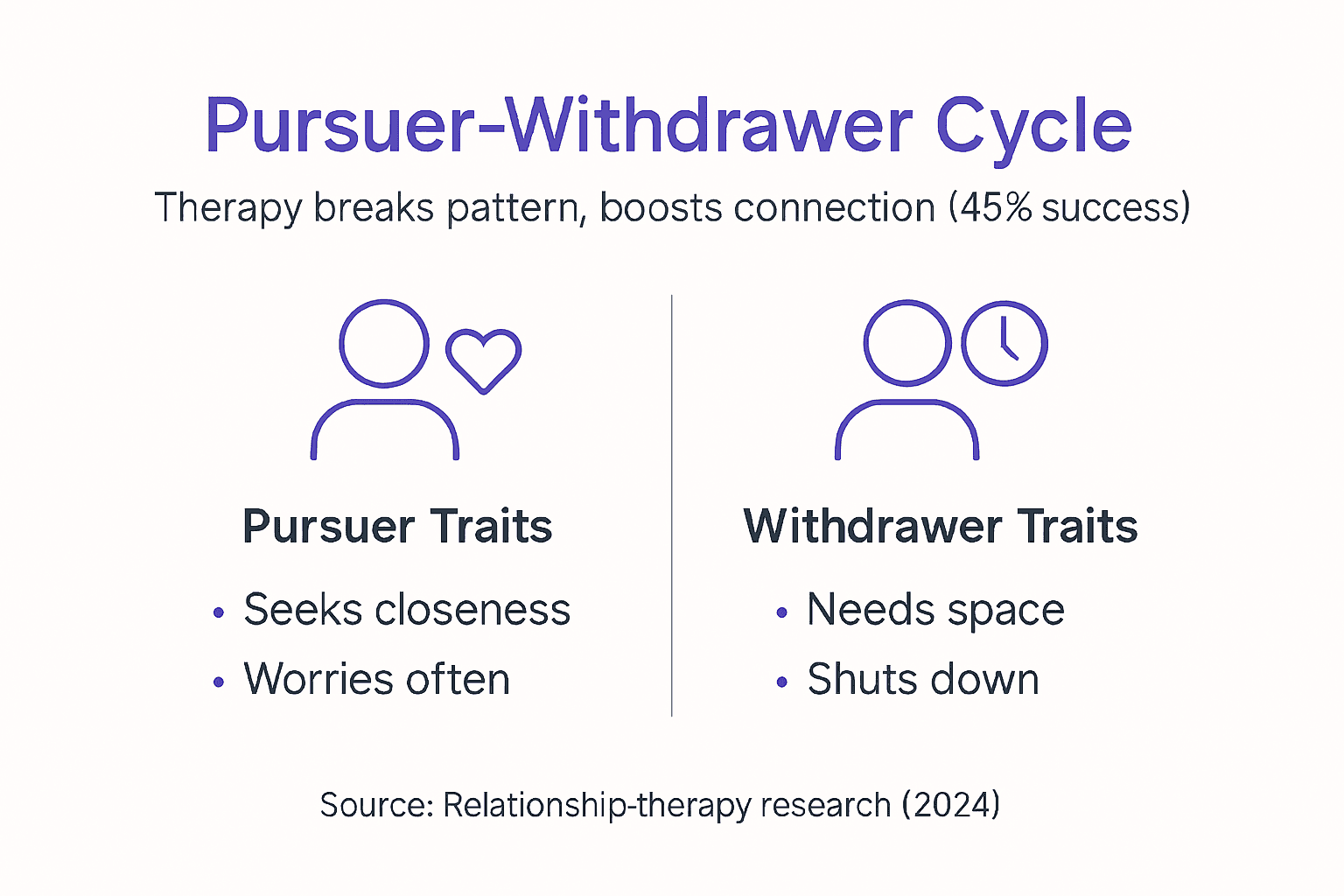
Building emotional self-awareness through therapy helps you notice when the cycle starts before it escalates. This early recognition creates intervention opportunities.
Consistent practice of these strategies rewires automatic responses over time. Your brain learns new patterns where connection feels safe rather than threatening. Guidance on relationship therapy provides structured support for implementing changes.
The research on therapy effectiveness demonstrates that couples who learn these communication skills show lasting improvements in relationship satisfaction and conflict resolution.
Attachment-Based Framework for Understanding and Healing
Attachment theory offers a roadmap for understanding and transforming the Pursuer-Withdrawer pattern. This framework helps couples see their dynamic as an interaction between attachment systems rather than personal failings.
| Attachment Style | Impact on Pursuit Behavior | Impact on Withdrawal Behavior |
|---|---|---|
| Secure | Seeks connection with confidence in availability | Can create space without fearing abandonment |
| Anxious | Pursues intensely due to abandonment fears | Rarely withdraws; fears distance |
| Avoidant | Minimal pursuit; values independence | Withdraws frequently to maintain autonomy |
| Disorganized | Alternates between pursuit and withdrawal | Unpredictable responses to connection needs |
Attachment awareness transforms reactive patterns into thoughtful responses. When you understand that your partner’s withdrawal reflects their attachment history rather than feelings about you, compassion replaces resentment.
“Secure attachment develops when partners consistently respond to each other’s bids for connection with warmth and availability. This emotional safety allows both pursuit and withdrawal patterns to soften naturally over time.”
Cultural and gender norms influence how pursuit and withdrawal manifest. Research finds that 40% of couples show cultural variation in expression, though the underlying attachment dynamics remain consistent. Traditional gender socialization often encourages women toward pursuit and men toward withdrawal, but these patterns appear across all gender combinations.
Using attachment understanding as a healing roadmap means recognizing that security develops through repeated experiences of safe emotional connection. Each successful conversation where both partners feel heard builds attachment security. The attachment styles research confirms that even insecure patterns can shift toward security with consistent, responsive interactions.
The cultural variations study emphasizes that healing strategies must respect cultural contexts while addressing universal attachment needs. Your cultural background shapes how you express emotions, but the need for emotional safety transcends culture.
Role of Therapy in Resolving the Pursuer-Withdrawer Pattern
Professional therapy provides structured support for couples trapped in the Pursuer-Withdrawer cycle. Emotion-Focused Therapy (EFT) specifically targets the attachment wounds underlying this pattern.
EFT therapy typically progresses through three stages. First, partners develop awareness of their cycle and how it protects them from deeper vulnerability. Second, they practice de-escalation by recognizing triggers before reacting. Third, they rebuild emotional connection through new patterns of reaching and responding.
Couples benefit most from professional support when:
- Communication attempts consistently trigger escalation rather than resolution
- Emotional distance persists despite self-help efforts
- One or both partners feel hopeless about relationship improvement
- The pattern has lasted more than six months without change
Therapy offers specific benefits that self-help cannot replicate:
- Neutral guidance that prevents blame and defensiveness
- Expert identification of subtle cycle triggers
- Structured practice of new communication skills
- Processing of attachment wounds in a safe environment
Research confirms that therapy reduces cycle intensity by 45% after eight sessions on average. This dramatic improvement reflects how professional intervention accelerates pattern change.
Therapy and emotional self-awareness work together as therapists help you recognize automatic reactions before they control your behavior. This awareness creates choice points where you can respond differently.
Accessing therapy for relationship issues provides tailored support for your specific situation. Different therapeutic approaches suit different couples, and professional matching ensures you find the right fit.
Exploring relationship therapy options helps you understand what to expect and how to prepare for the therapeutic process. The study on emotion-focused therapy demonstrates lasting improvements when couples complete treatment.
Practical Steps for Couples to Apply Today
You can begin interrupting the Pursuer-Withdrawer cycle immediately with concrete actions that address both partners’ needs.
- Increase self-awareness by tracking when you feel triggered toward pursuit or withdrawal throughout the day
- Practice soft start-up language by beginning difficult conversations with “I feel” rather than “you always”
- Develop personal self-soothing methods like deep breathing, brief walks, or listening to calming music
- Respond with empathy by acknowledging your partner’s feelings before defending your perspective
- Schedule weekly 20-minute check-ins to discuss relationship patterns when neither of you feels triggered
These steps work because they address the cycle from both sides simultaneously. The pursuer learns to self-soothe rather than seeking all comfort from their partner. The withdrawer practices staying present rather than automatically retreating.
Pro Tip: Schedule regular relationship check-ins on your calendar as recurring events. Consistent timing makes these conversations routine rather than crisis-driven, reducing anxiety for both partners.
Start small with one or two strategies rather than attempting everything at once. Sustainable change develops through consistent practice of manageable steps. Notice small improvements and celebrate them together.
Remember that breaking this pattern takes time and patience. You developed these responses over years, and creating new patterns requires repeated practice. Progress appears gradually through reduced conflict intensity and increased moments of successful connection.
Get Support with Professional Therapy to Heal Your Relationship
Professional therapy accelerates healing by providing expert guidance tailored to your unique relationship dynamic. Therapists help you identify cycle triggers, practice new communication skills, and process the attachment wounds fueling your pattern.
Exploring different types of couples therapy helps you understand which approach best suits your needs. Emotion-Focused Therapy, Gottman Method, and other evidence-based treatments offer different pathways to healing.
Finding a mental health counselor who specializes in relationship dynamics ensures you receive targeted support. The right therapeutic match makes a significant difference in treatment outcomes.
If you’re in the Victoria area, relationship therapy options provide accessible support. Early intervention prevents patterns from becoming more entrenched and accelerates your path to connection.
Pro Tip: Early therapy intervention can accelerate relationship healing and build lasting connection. Starting therapy before resentment becomes overwhelming improves treatment success rates.
Frequently Asked Questions
What is the Pursuer-Withdrawer Pattern in relationships?
The Pursuer-Withdrawer pattern describes a relationship dynamic where one partner seeks connection and conversation while the other needs space and pulls away emotionally. Research shows up to 70% of couples in therapy experience this as a primary conflict source. The pursuer typically fears abandonment and seeks reassurance, while the withdrawer fears engulfment and needs autonomy. Both partners experience legitimate emotional needs that drive their behaviors. Understanding emotional self-awareness helps identify which role you play and why the pattern persists.
How can I tell if we are stuck in a Pursuer-Withdrawer cycle?
Look for repeated patterns where one partner initiates connection attempts while the other consistently retreats or shuts down. Notice if conflicts escalate when one person seeks closeness and the other pulls away. Feelings of chronic frustration, emotional distance, and failed communication attempts signal this dynamic.
What are effective communication strategies for this dynamic?
Use soft start-up language that expresses needs without blame or criticism. Practice self-soothing techniques like deep breathing before engaging in difficult conversations to manage your anxiety. Respond with empathy and validate your partner’s feelings even when perspectives differ. Building emotional self-awareness helps you recognize triggers before reacting automatically.
When should couples seek professional help for the Pursuer-Withdrawer pattern?
Consider therapy when communication attempts consistently trigger escalation rather than resolution. Seek professional support if emotional distance persists despite self-help efforts or when hopelessness about improvement sets in. Therapy provides structured guidance to heal attachment wounds fueling the cycle. Explore couples therapy options to find the right approach for your relationship.
Recommended
- 7 Neurodiversity-Affirming Strategies for Demand Avoidance Autism
- Therapy and Emotional Patterns: Building Self-Awareness
- Anxiety Patterns: Why They Persist and What Helps
- Why Avoidance Fuels Anxiety – Patterns and Solutions