Relationship satisfaction doesn’t decline steadily with age as many assume. Research reveals a U-shaped curve with a pronounced dip around age 40, where couples face converging stressors from career demands, parenting responsibilities, and caregiving for ageing parents. This temporary dip surprises many who expect either constant happiness or inevitable decline. Understanding why these struggles peak during midlife and recognising evidence-backed strategies can transform how you navigate these challenging decades. The patterns are predictable, the solutions are actionable, and the potential for renewed connection after 50 is real. This guide explores the science behind midlife relationship challenges and offers practical approaches to strengthen your partnership during life’s most demanding years. For more information, see our couples counselling.
Table of Contents
- Key takeaways
- Why relationship struggles often peak in your 30s and 40s
- The role of communication and joint stress management in long-term relationship health
- Unique challenges and trends in relationships during your 50s and beyond
- Practical strategies to overcome relationship struggles in your 30s, 40s and 50s
- Explore professional counselling support tailored for you
- Frequently asked questions
Key Takeaways
| Point | Details |
|---|---|
| Midlife dip | Satisfaction often declines in the 40s due to concurrent career, parenting, and caregiving pressures creating a temporary dip. |
| Dyadic coping strengthens relationships | Treating stress as a shared challenge improves connection and predicts higher relationship satisfaction over time. |
| Positive communication grows trust | Positive communication skills such as clear expression, active listening, and validation help maintain emotional safety during tough periods. |
| Satisfaction can rebound after fifty | Satisfaction typically improves after 50 as children become independent and careers stabilise. |
Why relationship struggles often peak in your 30s and 40s
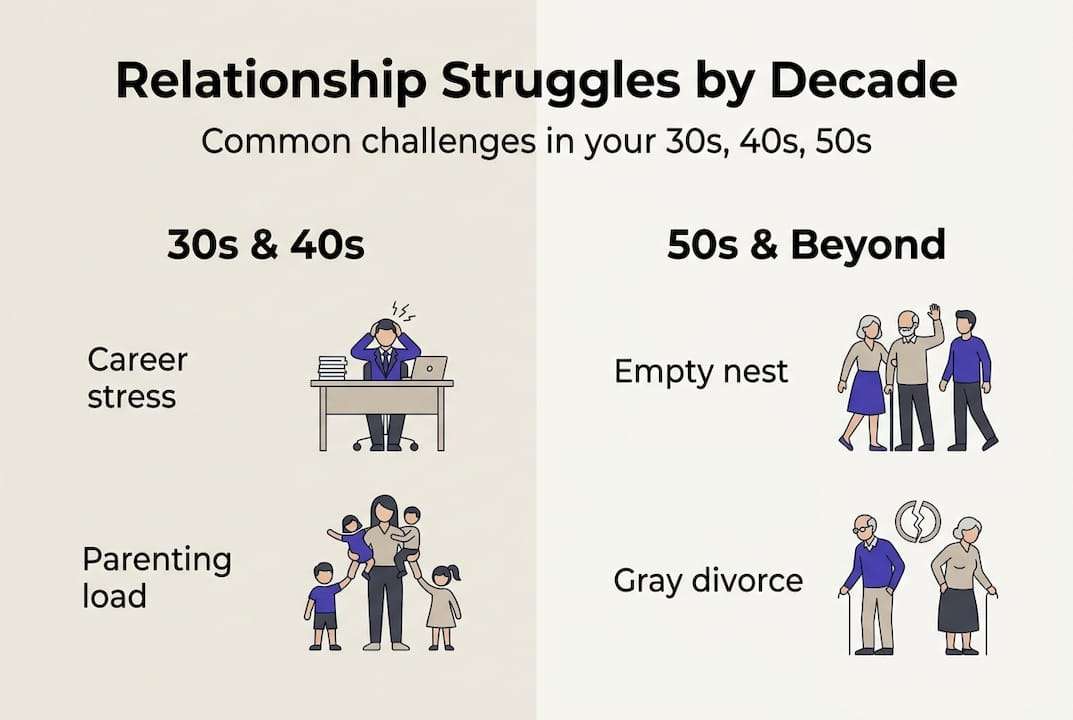
The decline in satisfaction from age 20 to 40 stems from multiple stressors hitting simultaneously rather than relationship failure. Career pressures intensify as professionals pursue advancement whilst managing financial responsibilities. Young children demand constant attention and energy, leaving little space for couple connection. Simultaneously, ageing parents require increasing care and emotional support, creating a sandwich generation squeeze.
These overlapping demands drain the emotional resources couples need to maintain intimacy. Partners become co-managers of household logistics rather than romantic companions. The life transitions during these decades fundamentally reshape identity and priorities, sometimes pulling couples in different directions.
Many people mistakenly believe relationship satisfaction declines steadily with age, leading to resignation rather than action. This misconception prevents couples from recognising the temporary nature of midlife challenges. The dip is not inevitable decline but a predictable phase with clear causes:
- Career demands peak as professionals reach senior positions requiring extensive time and mental energy
- Parenting young children creates sleep deprivation, financial strain, and reduced couple time
- Caregiving for ageing parents adds emotional burden and logistical complexity
- Identity transitions challenge individual sense of self and purpose
- Financial pressures from multiple dependents limit flexibility and create ongoing stress
“The convergence of career, parenting, and caregiving responsibilities creates a perfect storm for relationship dissatisfaction in the 40s, but this pattern reverses as children gain independence and careers stabilise.”
Understanding this U-shaped pattern provides hope. Satisfaction typically improves after 50 as children become independent, careers plateau, and couples rediscover shared interests. The key is surviving the dip without causing permanent damage through neglect or impulsive decisions.
The role of communication and joint stress management in long-term relationship health
Dyadic coping transforms how couples handle midlife pressures by treating stress as a shared challenge rather than individual burden. When one partner faces work pressure, the other provides emotional support and practical assistance. This collaborative approach predicts stable high satisfaction over 10 years far more reliably than initial attraction or compatibility.
Positive communication skills create the foundation for dyadic coping. Partners who express needs clearly, listen without defensiveness, and validate each other’s experiences maintain connection through difficult periods. These skills aren’t innate but learnable through practice and professional guidance. Improving communication patterns directly impacts relationship satisfaction by reducing misunderstandings and fostering emotional safety.
Declines in these protective factors predict relationship deterioration more accurately than external stressors. Couples who stop checking in emotionally, dismiss each other’s concerns, or handle stress independently drift apart even without major conflicts. The gradual erosion of connection feels less dramatic than infidelity or abuse but proves equally damaging over time.
Therapy interventions target these modifiable skills precisely because they buffer against midlife decline. Rather than accepting reduced satisfaction as inevitable, couples can actively strengthen their capacity to support each other. The benefits of professional counselling include structured skill-building and objective feedback on communication patterns.
Key communication practices that support long-term health include:
- Daily emotional check-ins lasting 10 to 15 minutes without distractions
- Expressing appreciation for specific actions rather than generic praise
- Using “I feel” statements instead of accusatory “you always” language
- Validating partner’s emotions before offering solutions or advice
- Scheduling regular relationship discussions separate from logistics
Pro Tip: Set a recurring calendar reminder for weekly stress syncs where you each share your top three pressures and identify one way to support each other. This simple practice builds dyadic coping habits that strengthen your partnership’s resilience during demanding periods.
Couples who maintain these practices through their 40s emerge with deeper connection and renewed appreciation. The investment in communication skills pays dividends not just in surviving midlife challenges but in creating a foundation for the satisfaction increase that typically follows.
Unique challenges and trends in relationships during your 50s and beyond
Gray divorce represents a dramatic shift in relationship patterns, with rates tripling for those 65+ since 1990 despite overall divorce rates declining. The median age for first divorce now sits at approximately 43 years, reflecting midlife reassessment of partnership satisfaction. These later-life separations carry distinct emotional and financial consequences compared to younger divorces.
| Age group | Divorce rate trend | Key factors |
|---|---|---|
| 50 to 64 | Doubled since 1990 | Empty nest transitions, career changes, renewed independence |
| 65+ | Tripled since 1990 | Longevity expectations, reduced stigma, financial independence |
| Under 50 | Declined overall | Delayed marriage, cohabitation screening, improved relationship education |
Hormonal and social triggers intensify during the 50s, creating unique relationship pressures. Women navigating menopause experience physical changes affecting intimacy and emotional regulation. Men face their own hormonal shifts alongside career plateaus and mortality awareness. These biological transitions intersect with social expectations about ageing and purpose.

Midlife crisis affects approximately 32.6% of adults, involving heightened mortality awareness and potential impulsive behaviours. This psychological phenomenon manifests differently than popular culture suggests. Rather than sports cars and affairs, many experience existential questioning about life direction and meaning. The crisis becomes problematic when individuals make sudden relationship decisions without processing underlying emotions.
Common manifestations include:
- Questioning long-held values and life choices without obvious trigger
- Sudden desire for dramatic career or lifestyle changes
- Increased risk-taking behaviour or pursuit of novelty
- Affairs or emotional connections outside the primary relationship
- Withdrawal from established social connections and responsibilities
Understanding these dynamics normalises experiences that might otherwise feel shameful or isolating. Partners can recognise midlife crisis symptoms as psychological processes requiring support rather than character flaws. The impact on families extends beyond the couple, affecting adult children and grandchildren who witness parental separation.
Pro Tip: If you’re experiencing intense questioning about your relationship or life direction, commit to six months of individual therapy before making major decisions. This pause allows you to distinguish genuine incompatibility from temporary existential distress, preventing impulsive choices you might later regret.
The rise in gray divorce also reflects positive social changes, including reduced stigma and greater financial independence for women. Longer life expectancies mean couples face the prospect of 30 or more years together after children leave, raising the stakes for partnership satisfaction. Some relationships that functioned adequately whilst focused on parenting reveal fundamental incompatibilities once that shared project ends.
Those considering separation benefit from structured decision-making processes that weigh practical realities alongside emotional factors. The financial implications of late-life divorce can be severe, affecting retirement security and estate planning. Yet staying in a deeply unsatisfying relationship carries its own costs to mental health and overall well-being.
Practical strategies to overcome relationship struggles in your 30s, 40s and 50s
Therapy targeting dyadic coping and communication skills provides structured support for couples navigating midlife challenges. Professional guidance helps partners identify negative patterns, practise new approaches in a safe environment, and receive objective feedback. Couples who seek help early prevent small issues from becoming entrenched problems requiring more intensive intervention.
Conscious relationship design involves intentionally structuring your partnership to balance autonomy and intimacy. This approach recognises that healthy relationships require both individual growth and couple connection. Partners discuss and negotiate expectations around time together, personal pursuits, financial decisions, and intimacy rather than assuming shared understanding.
Long-term couples emphasise maintaining individual identities whilst building shared life, a balance that becomes crucial in the 40s and 50s. As children leave home and careers stabilise, partners must rediscover each other as individuals rather than just parents or providers.
Individual reflection supports relationship health by increasing self-awareness about personal triggers, needs, and patterns. Understanding how your childhood experiences or past relationships influence current behaviour helps you take responsibility for your contributions to conflicts. This internal work complements couples therapy by ensuring both partners bring their best selves to the relationship.
Step-by-step strategies to strengthen your partnership:
- Schedule weekly relationship meetings lasting 30 to 45 minutes to discuss concerns, appreciate each other, and plan quality time together
- Identify your top three relationship values and discuss how current patterns align with those priorities
- Create individual and shared goals for the next year, ensuring both partners have space for personal growth
- Establish rituals for connection such as morning coffee together, evening walks, or monthly date nights without discussing logistics
- Practice vulnerability by sharing fears and insecurities rather than maintaining a strong facade
- Seek professional support at the first signs of persistent dissatisfaction rather than waiting for crisis
“The couples who thrive long-term don’t avoid conflict or challenges. They develop robust skills for navigating difficulties together and maintain commitment to the relationship even when feelings fluctuate.”
Rebuilding emotional intimacy after periods of disconnection requires intentional effort from both partners. Strategies for reconnection include increasing physical affection without sexual pressure, sharing daily experiences beyond logistics, and creating new shared experiences that generate positive memories.
The investment in relationship skills during your 30s and 40s creates the foundation for the satisfaction increase that typically emerges after 50. Couples who maintain connection through the midlife dip often report their strongest relationship satisfaction in their 60s and beyond, benefiting from decades of shared history and refined partnership skills.
Explore professional counselling support tailored for you
Navigating relationship struggles during midlife transitions becomes more manageable with professional guidance designed for your specific challenges. Interactive Counselling offers specialised therapy approaches addressing the unique pressures facing adults in their 30s, 40s, and 50s, from communication breakdowns to midlife crisis symptoms. Our experienced therapists understand the converging stressors of career demands, parenting responsibilities, and caregiving that strain even strong partnerships. Whether you’re seeking to strengthen dyadic coping skills, process individual midlife transitions, or prepare for productive couples sessions, our flexible in-person and online options across Canadian locations provide accessible support when you need it most. Working with a qualified mental health professional helps you distinguish temporary midlife challenges from deeper compatibility issues, empowering you to make informed decisions about your relationship’s future.
Frequently asked questions
What causes relationship satisfaction to dip in your 40s?
The convergence of career pressures, parenting demands, and caregiving for ageing parents creates competing priorities that drain emotional resources needed for partnership connection. This temporary dip reflects external stressors rather than fundamental relationship failure.
How can dyadic coping improve my relationship?
Treating stress as a shared challenge rather than individual burden strengthens partnership resilience. When you actively support each other through difficulties and collaborate on solutions, you build connection rather than allowing stress to drive you apart.
When should we seek couples therapy?
Seek professional support at the first signs of persistent dissatisfaction, communication breakdowns, or emotional disconnection rather than waiting for crisis. Early intervention prevents small issues from becoming entrenched patterns requiring more intensive treatment.
What is gray divorce and why is it increasing?
Gray divorce refers to separation among couples over 50, with rates tripling since 1990 for those 65 and older. Increased longevity, reduced stigma, greater financial independence, and empty nest transitions contribute to later-life relationship reassessment.
How do I know if I’m experiencing a midlife crisis?
Common signs include intense questioning of life direction without obvious trigger, sudden desire for dramatic changes, increased risk-taking, and withdrawal from established connections. Individual therapy helps you process these feelings before making impulsive relationship decisions you might regret.
Recommended
- When to separate vs when to work on it: a guide for couples
- Recognise signs your marriage is over and decide next steps
- How divorce impacts children differently at each age – Interactive Counselling
- What Emotional Maturity Really Looks Like in Adults
Whatever decade you’re in, our Kelowna couples counselling team can help you name the pattern and change it.