You're at home, staring at a half-finished cup of coffee, trying to remember when ordinary tasks started feeling so difficult. Your mood has been low, sleep may be unsettled, and motivation seems to disappear before the day has properly begun. You're wondering whether counselling could help, but you're also unsure how to find the right support, whether your symptoms are “serious enough,” and whether speaking to someone through a screen will feel personal enough. For more information, see our depression counselling.
Those questions are reasonable. Online depression counselling across Canada has become an important way to access support, but virtual care isn't automatically the right format for every person or every level of depression. The best choice depends on factors such as symptom severity, privacy at home, age, safety, the amount of therapist support needed, provincial registration, and available coverage.
Finding Support From Home
Consider someone who works irregular hours and cares for an aging parent. By evening, they have little energy left to travel to an office. Another person may live in a rural community where local counselling options are limited, while a university student may feel more comfortable beginning with a phone or video session from a familiar room. For each person, home-based counselling can remove a practical barrier that might otherwise delay support.
That doesn't mean hesitation disappears. Depression can make booking an appointment feel like an exhausting project. People often worry about stigma, cost, time away from work, being judged, or not knowing what to say first. Some wonder whether low mood, poor sleep, irritability, or loss of interest “counts” as depression. You don't need to settle that question alone before contacting a qualified counsellor.
Online counselling is a way of delivering therapy, not a lesser category of care. Sessions may take place by secure video or phone, and the therapist can still help you understand patterns, identify goals, practise skills, and decide whether additional support is needed. The format works well for some people, while others benefit from blended or in-person care.
A useful starting point: Don't ask only, “Is online therapy convenient?” Ask, “Can I participate safely, privately, and consistently in this format?”
Canadian use of virtual mental health care has grown, although it isn't universal. A 2024 Canadian Institute for Health Information report found that 1 in 9 Canadians, or 11%, had received virtual care from a mental health professional, and 72% of those users had a diagnosed mental health condition. Uptake was higher among younger adults at 19% and women at 14%, according to the Canadian evidence summary on virtual mental health counselling.
The decision becomes clearer when you understand how sessions work, which concerns are suited to virtual care, how privacy and safety are handled, and what to check about coverage. You can take those questions one at a time, without committing to a treatment plan before you've spoken with a counsellor.
How Online Depression Counselling Works
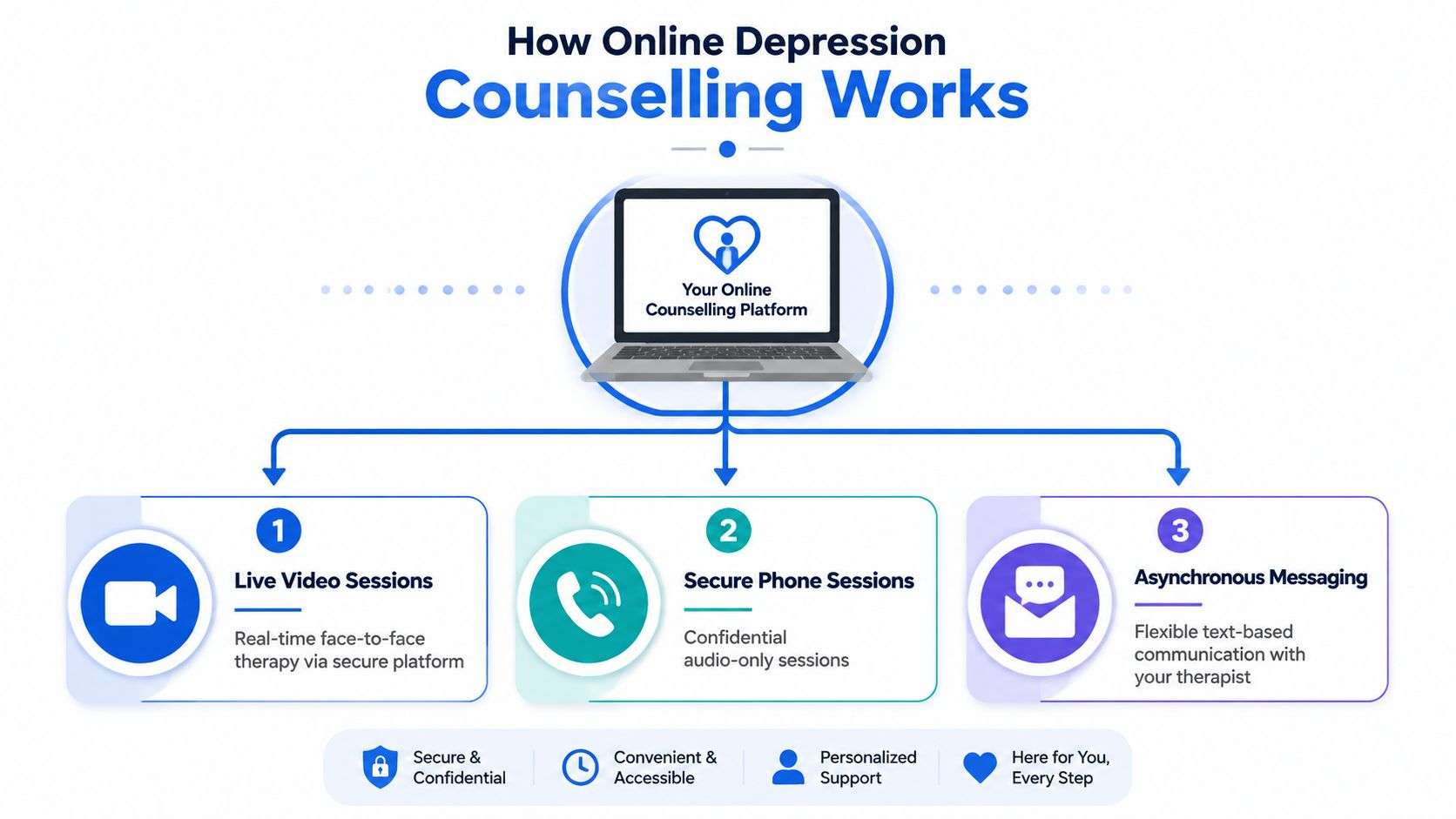
Online counselling usually follows a familiar clinical process, even though the meeting happens through a device. A regulated Canadian provider may offer live video sessions, secure phone sessions, or, where clinically appropriate, asynchronous messaging. The exact options depend on the provider, the platform, the therapist's registration, and the needs of the client.
Before the session
You'll generally complete intake information about your location, concerns, health history, goals, and current supports. The provider may ask where you'll be physically located during the appointment because a therapist needs to understand the relevant jurisdiction and how to respond if an urgent safety concern arises.
You'll also review consent information. This can include the limits of confidentiality, the platform being used, whether sessions are recorded, how information is stored, and what happens if the connection drops. A secure link, password-protected device, headphones, and a private internet connection can help reduce avoidable privacy problems.
During the session
The first appointment often focuses on understanding what has changed, how symptoms affect daily life, what you've already tried, and what you'd like to be different. A counsellor may ask about mood, sleep, appetite, concentration, energy, relationships, substance use, physical health, and safety.
Later sessions may include:
- Clinical check-ins: Reviewing changes in mood, functioning, sleep, and risk.
- Goal review: Connecting therapy to practical aims, such as returning to routines or communicating more clearly.
- Skills work: Learning and practising evidence-informed strategies that fit your situation.
- Between-session planning: Agreeing on a small, realistic step to try before the next appointment.
Sessions are often 50 to 60 minutes, with weekly appointments or another cadence agreed upon by you and the counsellor. A therapist may be working from a different province under their home regulator, so you should ask how their registration permits them to provide care where you are located.
After the session
The counsellor typically documents the session, confirms follow-up arrangements, and may send agreed resources or a plan for the next appointment. If risk has emerged, follow-up may include a safety plan, contact with a support person where appropriate and consented to, or referral to more intensive care.
The goal isn't to make technology the centre of therapy. It's to create a dependable clinical relationship through a method that allows you and the counsellor to work together safely.
Who Is Online Counselling Best Suited For
Virtual care fits best when the person's clinical needs and home circumstances support meaningful participation. Convenience matters, but it's only one part of the decision. Severity, safety, age, privacy, and support intensity carry at least as much weight.
For adults with mild to moderate depression, online counselling may suit someone who can attend regularly, speak privately, and remain engaged between sessions. A parent might join from a quiet room while a child is at school. A shift worker might use phone counselling before sleeping after work. Someone in a remote community might avoid a long journey without giving up therapist contact.
Canada's Drug Agency describes internet-delivered cognitive behavioural therapy as helpful for mild to moderate major depression compared with waitlist or usual care, with possible improvements in symptoms and quality of life. The evidence doesn't establish that internet-delivered CBT is superior to face-to-face CBT. Ontario administrative data also found larger symptom reductions with therapist-guided CBT than with minimally guided iCBT, approximately −4 PHQ-9 points compared with −2.3 points, as described in the Canadian assessment of internet-delivered CBT. The practical lesson is that therapist contact and support intensity matter.
| Situation | Virtual-only fit | Blended care fit | In-person preference |
|---|---|---|---|
| Adult with persistent low mood, reliable privacy, and manageable safety concerns | May be reasonable after assessment | Useful if extra community or primary care support is needed | Consider if symptoms worsen or engagement is difficult |
| Youth who prefers screen-based communication | Can work with age-appropriate structure and caregiver awareness | Helpful when family, school, or community supports are involved | Preferable if home sessions create distraction or safety concerns |
| Child aged 5 and up | Requires caregiver presence, suitable activities, and a platform that supports the child's development | Often useful alongside parent coaching or school supports | May be better when observation, play, or family involvement needs a physical setting |
| Severe depression, active suicidal ideation, or acute impairment | Usually not enough as the only support | May be part of a coordinated plan | Often preferred, with urgent assessment when safety is uncertain |
| Complex trauma, eating disorder needing medical monitoring, or limited private device access | May create significant limitations | Can add flexibility around other care | Often safer and more clinically appropriate |
Blended care can combine virtual counselling with periodic in-person appointments, a family doctor, psychiatric care, school support, or community services. It's particularly useful when a person can engage online but needs more observation, coordination, or practical help than virtual sessions alone can provide.
Virtual counselling also isn't automatically unsuitable for younger clients. Children aged 5 and up may participate when a caregiver can support the process and the therapist can use developmentally appropriate activities. The clinician should decide whether the platform, home environment, and level of caregiver involvement are appropriate.
Benefits and Limits of Virtual Counselling
A person with persistent low mood may find it easier to attend counselling from home, especially when depression has reduced their energy. Someone experiencing an active suicidal crisis, severe impairment, or a need for urgent psychiatric assessment may need emergency or in-person care instead. Both situations involve depression, but they call for different levels of support.
Access and connection
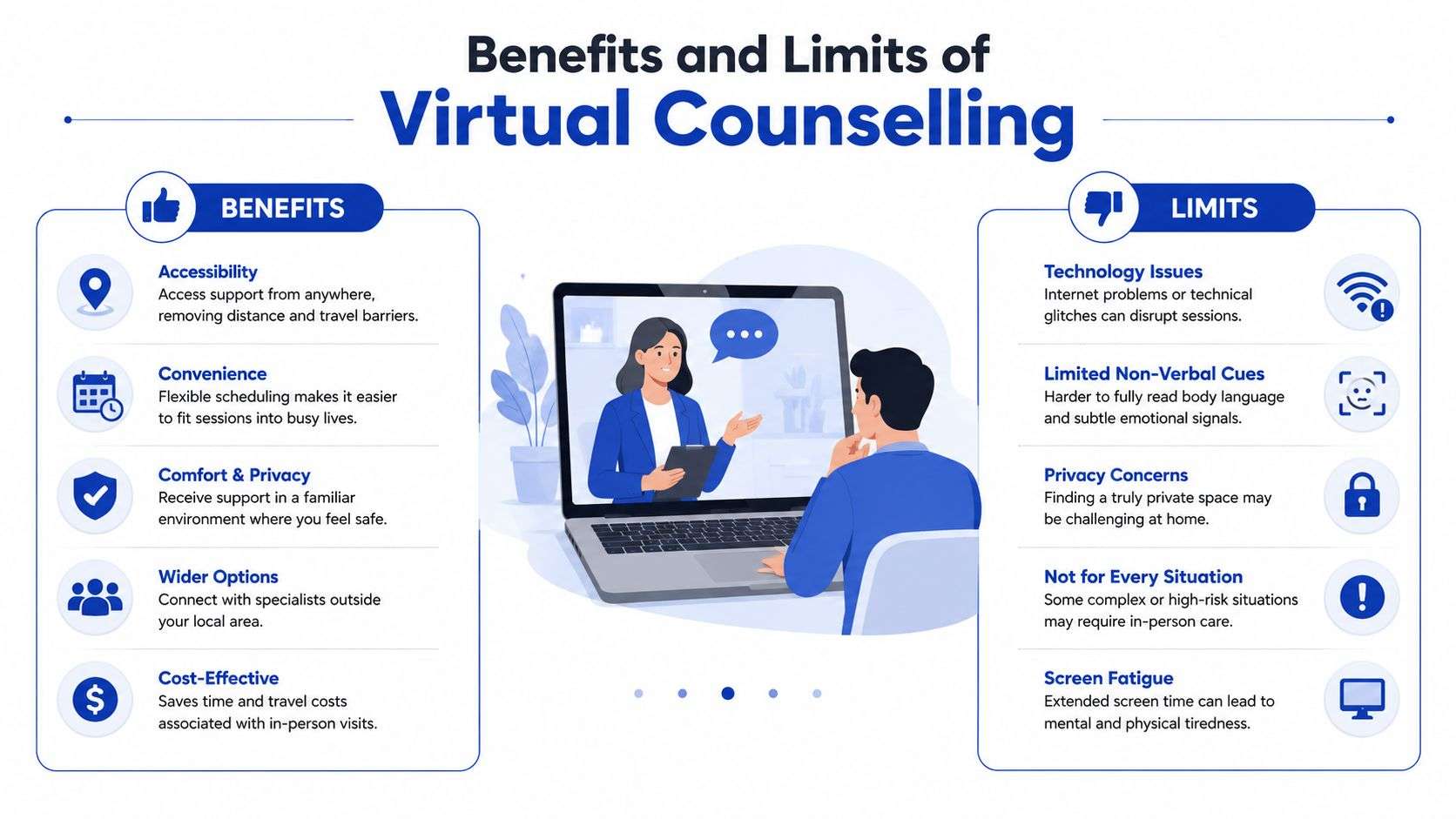
Virtual sessions remove travel time and may help rural residents, caregivers, people with mobility barriers, and shift workers participate more consistently. The home setting can also make it easier to practise changes where daily life happens, such as organising a morning routine or identifying a bedroom-related sleep barrier.
The therapeutic relationship can still develop online, but video has limits. A counsellor may find it harder to notice subtle body language, changes in the environment, or signs that someone is becoming less engaged. Phone sessions can improve access when video feels tiring, although they provide fewer visual cues.
Routines and technology
A scheduled appointment can anchor a week that has become unstructured. A person might pair counselling with a walk, a meal, a medication reminder, or a planned check-in with a trusted person. Those routines aren't a replacement for treatment, but they can make follow-through more realistic.
Technology can interrupt that process. A weak connection, poor audio, notifications, low battery, or a shared device may break concentration. Before beginning, decide how you'll reconnect if the call ends and keep the counsellor's office contact information available.
For practical ideas about reducing stress around screen use and daily habits, you can also review Lila's stress management recommendations. Use general resources as supplements, not substitutes for an assessment when depression is persistent or worsening.
Privacy and crisis response
A private room and headphones can help, but privacy may be difficult in a crowded home. A person might use a locked room, a trusted device, or a private location away from household interruptions. If you can't speak freely, tell the counsellor. They may be able to adapt the format or help you consider another option.
Virtual-only care isn't designed to replace emergency response. If someone is at immediate risk, can't stay safe, or needs urgent medical attention, call 911, contact a local crisis line, or go to an emergency department. A planned blend of virtual and in-person support can provide more continuity when risk or impairment increases.
Canadian Access, Coverage, and Cost Considerations
Funding for online depression counselling varies by province, provider designation, employer plan, and reason for treatment. Start by confirming who is providing the service and where they're registered, rather than assuming every therapist can practise virtually across Canada.
A Registered Clinical Counsellor in British Columbia, a Registered Psychotherapist in Ontario, and a psychologist or social worker in another province may be governed by different regulatory expectations. A provider located outside your province may not hold the registration required to serve you there. Ask the counsellor which regulator applies, whether they can legally provide virtual care to your location, and what designation will appear on your receipt.
Questions to ask before booking
- Provider status: What professional designation does the counsellor hold, and is it recognised by my plan?
- Billing process: Do you direct bill, issue receipts, or support assignment of benefits?
- Plan wording: Does my coverage include this provider category and virtual sessions?
- Payment details: What payment methods are accepted, and when is payment collected?
- Appointment policy: How much notice is needed to cancel or reschedule?
- Coordination: Can the provider communicate with my physician or another care professional with my written consent?
Extended health benefits may cover counselling through an eligible professional, but plan rules differ. Employee assistance programs can offer a separate route to short-term support. Indigenous health programs and veterans' programs may have their own eligibility and approval processes. If depression is connected to a motor vehicle collision in British Columbia, ask whether ICBC-funded counselling applies and what documentation or referral pathway is required.
| Pathway | Typical eligibility | What to confirm | Interactive Counselling fit |
|---|---|---|---|
| Extended health benefits | Depends on the plan and provider designation | Eligible profession, virtual coverage, annual limits, receipts | Provides receipts compatible with most plans |
| Employee assistance program | Usually linked to an employer or workplace plan | Session limits, referral steps, privacy, continuation options | Ask about coordinating EAP support with ongoing counselling |
| Indigenous health programs | Depends on program, community, or identity-based eligibility | Approval, culturally safe care, eligible provider, documentation | Confirm current program requirements before booking |
| Veterans' programs | Depends on service history and program rules | Authorisation, provider credentials, billing process | Ask which documentation is needed |
| ICBC-related counselling in British Columbia | Connected to a crash-related injury and claim pathway | Claim details, approval, covered provider, direct billing | Interactive Counselling provides ICBC-funded counselling |
Interactive Counselling can provide receipts compatible with most plans, and its team can be contacted for current provincial coverage details. Don't rely on a general statement from a website alone. Your insurer or funding program can tell you what your specific plan will recognise.
Privacy, Safety, and Clinical Effectiveness
Privacy, safety, and effectiveness support one another. A person who worries that a family member may overhear the session may hold back important information. A person who doesn't know what will happen if the connection fails may feel less secure. Clear expectations create the conditions for honest participation.
Ontario Health's guidance for virtual care in depression and anxiety recommends a safe, private location and discusses practical measures such as headphones, password-protected devices, a private and trusted internet connection, encryption, and consent about confidentiality risks.
Consent should be specific
At intake, ask what the platform protects, where records are stored, whether sessions are recorded, who can access notes, and what limits apply to confidentiality. Confidentiality has legal and clinical limits, particularly when there's a serious and immediate safety concern or when information must be shared to protect someone.
A reliable provider should also confirm your location at each appointment or keep current emergency contact details. This isn't meant to make therapy feel formal or alarming. It allows the counsellor to respond if you become unsafe or the session ends unexpectedly.
Assessment comes before format
A clinical assessment helps determine whether virtual care is suitable. The counsellor may explore symptom severity, suicidal thoughts, self-neglect, substance use, psychosis, medical concerns, trauma history, eating-related risks, social supports, and access to urgent care. The assessment can lead to virtual treatment, blended care, referral to a physician or psychiatrist, involvement of a trusted support person, or emergency help.
Routine symptom monitoring and safety planning are different. Monitoring tracks changes over time. A safety plan identifies warning signs, coping steps, people to contact, professional resources, and emergency actions. If you're unsure you can remain safe, 911, a local crisis line, or an emergency department is more appropriate than waiting for your next online appointment.
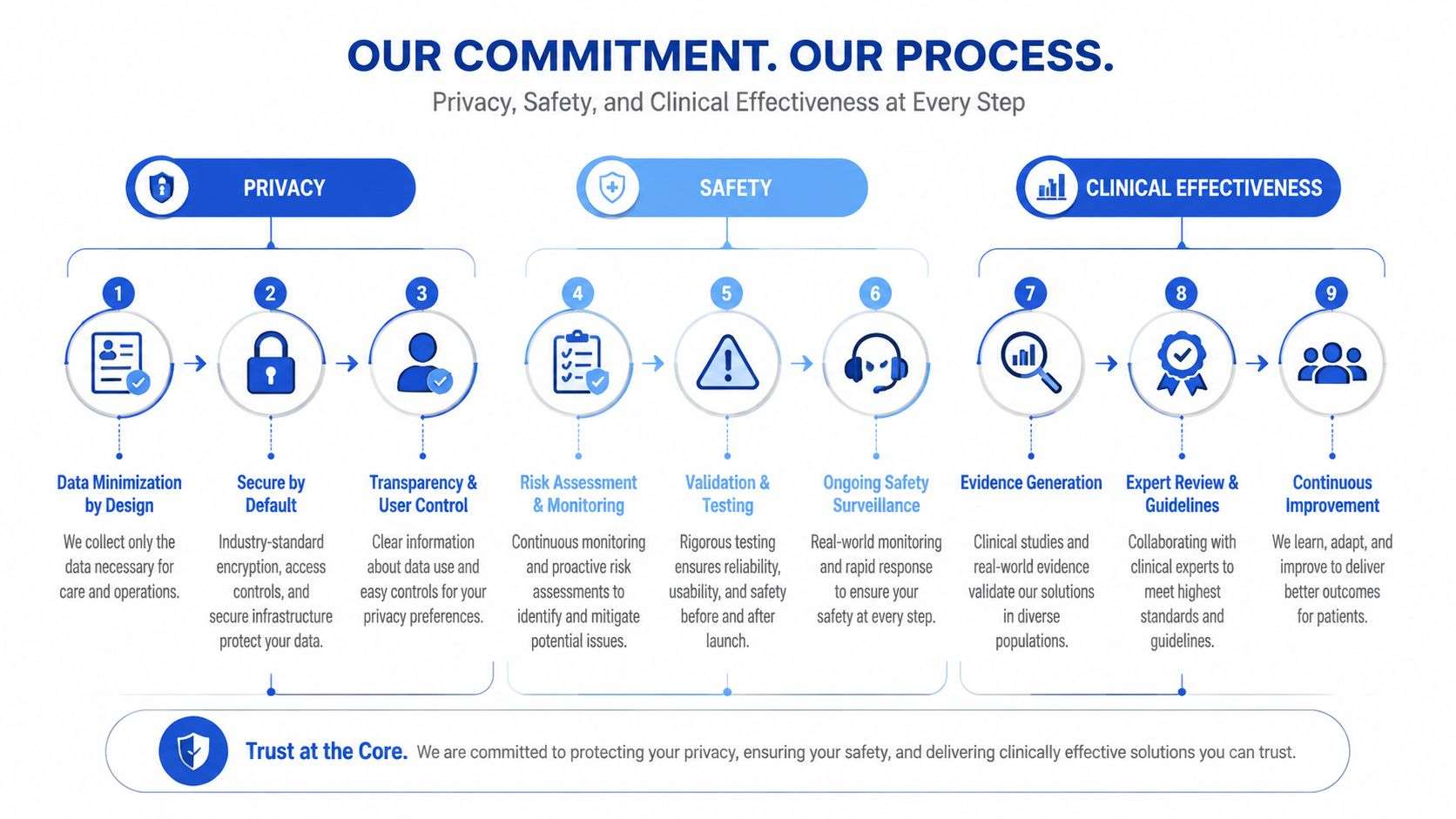
Clinical quality also depends on how information is prepared and reviewed. Educational material about depression should be reviewed by a qualified clinician for clinical accuracy, while personal treatment decisions belong in a confidential assessment with an appropriate professional.
Preparing for Counselling and Booking With Interactive Counselling
Your first online session doesn't need to be perfectly organised. A few practical preparations can make it easier to focus and help the counsellor understand what you need.
Choose a quiet place where you can speak without being overheard. Test your internet connection, microphone, and camera before the appointment. Keep water nearby, silence notifications, charge your device, and decide what you'll do if the connection fails.
A short note can be useful, especially if depression affects concentration. You might write down:
- Main changes: When did low mood, sleep disruption, loss of interest, or reduced motivation begin?
- Daily impact: Which tasks, relationships, or responsibilities feel harder?
- Health information: What medications, medical conditions, or previous treatments should the counsellor know about?
- Personal aims: What would tell you that counselling is becoming useful?
- Questions: What do you want to understand about privacy, approach, scheduling, or next steps?
Gather provincial health card details, referral notes, or insurance information if they're relevant to the service or coverage pathway. You don't need to disclose more than you're comfortable sharing in an initial booking form. You can ask why information is being collected and how it will be used.
What booking may involve
With Interactive Counselling, the process typically begins with an online inquiry and brief intake questions about your location and concerns. The team can then match you with a registered counsellor, confirm scheduling, provide a secure session link, and send consent forms. Ask for the current rescheduling policy before confirming an appointment.
The first session is usually an opportunity to discuss your history, goals, safety, and fit. You don't have to decide immediately that a particular therapist or format is right for you. It's reasonable to say that you're uncertain, ask questions, or discuss whether phone, video, blended, or in-person care makes more sense.
A first inquiry is an exploration, not a promise to continue. If you have questions about availability, location, privacy, or booking, you can reach out through the Interactive Counselling website and ask for information before taking the next step.
Frequently Asked Questions and Supportive Next Steps
How do I know whether virtual counselling suits my depression?
Ask whether you can participate privately, stay engaged for a session, and follow an agreed safety plan. Mild to moderate symptoms may be appropriate for virtual counselling after assessment, while severe impairment, active suicidal ideation, or urgent medical concerns may require in-person or emergency support.
How can a young person manage screen fatigue during sessions?
Keep the session space quiet, reduce notifications, use headphones when safe, and plan a short offline activity afterward. Canadian youth polling links extended screen use and negative online experiences with poorer mental health, and reports that people spending six or more hours a day on personal screen time were three times more likely to report severe anxiety and depression than those with lower screen use, according to the Mental Health Research Canada youth polling summary. A counsellor can help adapt session length, breaks, or format.
What privacy protections matter on shared devices or Wi-Fi?
Use a password-protected device, log out after the session, disable previews for messages, choose a private room, and use headphones. Ask the provider about encryption, recording, storage, access to records, and confidentiality limits before beginning.
What should I do if I'm in crisis and my counsellor isn't available?
Don't wait for a scheduled reply if you may not stay safe. Call 911, contact a local crisis line, or go to the nearest emergency department. You can also ask your counsellor in advance to document an escalation plan that includes trusted contacts and local urgent resources.
Uncertainty doesn't mean you're failing or overreacting. Start with one concrete step, such as writing down your symptoms, checking your privacy, or asking a provider whether virtual care fits your situation.
Clinically Reviewed By
Amy Mosset, MCP, RCC-S
Amy Mosset is a Master Practitioner in Clinical Counselling, Clinical Supervisor, and the owner of Interactive Counselling. She provides trauma-informed, evidence-based care and clinical supervision to registered therapists, with a focus on ethical practice, client safety, and high-quality therapeutic outcomes.
Interactive Counselling offers secure virtual, phone, and in-person counselling for depression and related concerns, with care adapted to your location, privacy, safety, and support needs. Visit Interactive Counselling to learn about available options, ask questions about provincial coverage or ICBC-related pathways, and decide whether an initial conversation feels like the right next step.