You're trying to keep everyone moving, the kids are still getting to school, work shifts don't stop, and the tension in the house keeps showing up at the worst times. In Grande Prairie and the surrounding North, families often carry a lot before they ask for help, because life here asks for flexibility, resilience, and a practical plan. Family Counselling in Grande Prairie can be that steady place where stress gets named, patterns get clearer, and the next step feels manageable. For more information, see our Grande Prairie family counselling.
Understanding Family Counselling in a Northern Context
A northern family often comes to counselling after months of trying to handle things the usual way. A parent may be doing shift work, someone else is driving kids across town in the dark, and a teenager is withdrawing while the adults keep saying, “We'll sort it out later.” That delay is common, and it isn't a sign of failure. It usually means the family has been doing its best with the tools it already had. For more information, see our counselling in Grande Prairie.
Family counselling is not about labelling a home as broken. It's a structured conversation space where communication, roles, stress, and safety can be addressed before patterns harden. In a place like the Peace Country, that matters because the pressures are practical as much as emotional, weather, distance, work schedules, and the pace of daily life all shape what a family can manage. For more information, see our family counselling.
Counselling fits northern life best when it respects daily realities
The families who do well in therapy usually aren't the ones with the least problems. They're the ones who can use support without feeling judged for needing it. In my view, that means counselling has to work with the rhythms of northern life, not against them.
Practical rule: If a family can't attend, can't talk openly, or can't keep the plan going between sessions, the format needs adjusting, not the family.
That's why counselling in this region often becomes a place to build small but durable skills, calmer conversations, clearer boundaries, and better repair after conflict. It can also make room for what families already do well, including leaning on grandparents, neighbours, and trusted friends. Professional support complements those networks, it doesn't replace them.
When families ask for help early, the work is usually gentler and more focused. When they wait until everything is on fire, counselling still helps, but the first task is often stabilising the situation enough for people to think clearly again.
How Northern Families Seek Support
In Grande Prairie, help-seeking often starts close to home. In the City of Grande Prairie's Integrated Coordinated Access report, 88% of respondents said they would turn to friends or family first, while 49% used internet search and 48% relied on a family doctor, which shows how strongly informal support networks shape the first step toward care. That pattern matters because family counselling often becomes the bridge between well-meant advice and structured change, especially when the problem keeps repeating.
Why the bridge matters
Friends and relatives usually offer care, reassurance, and perspective. That helps, but they can't always interrupt a cycle of criticism, panic, or avoidance inside the home. A counsellor does something different. They slow the pattern down, help each person hear what they're saying, and turn a heated argument into a solvable problem.
That's especially useful when families are split between concerns, one parent is worried about behaviour, another is focused on finances, and a child is reacting to all of it without words. Professional support doesn't erase the usefulness of informal advice; it adds structure, neutrality, and follow-through.
The local system also appears to be accessed through more than one doorway, which is common in regional communities. Some people start with a doctor. Others search online late at night after the kids are asleep. Some ask a sister, an aunt, or a friend who has been through a separation before. Family counselling works best when it respects all three pathways.
A family doesn't need to know exactly what kind of help they need before they begin. They need enough clarity to say, “This isn't working the way we hoped.”
For practical family communication strategies that can support day-to-day connection, a useful starting point is simple ways to bond as a family. It can help families think about routine, connection, and repair in a concrete way before or alongside therapy.
When the first step is online search, family doctor, or a trusted relative, the question becomes whether the next step is structured enough to create change. That's where counselling earns its place.
Core Services for Every Stage of Family Life
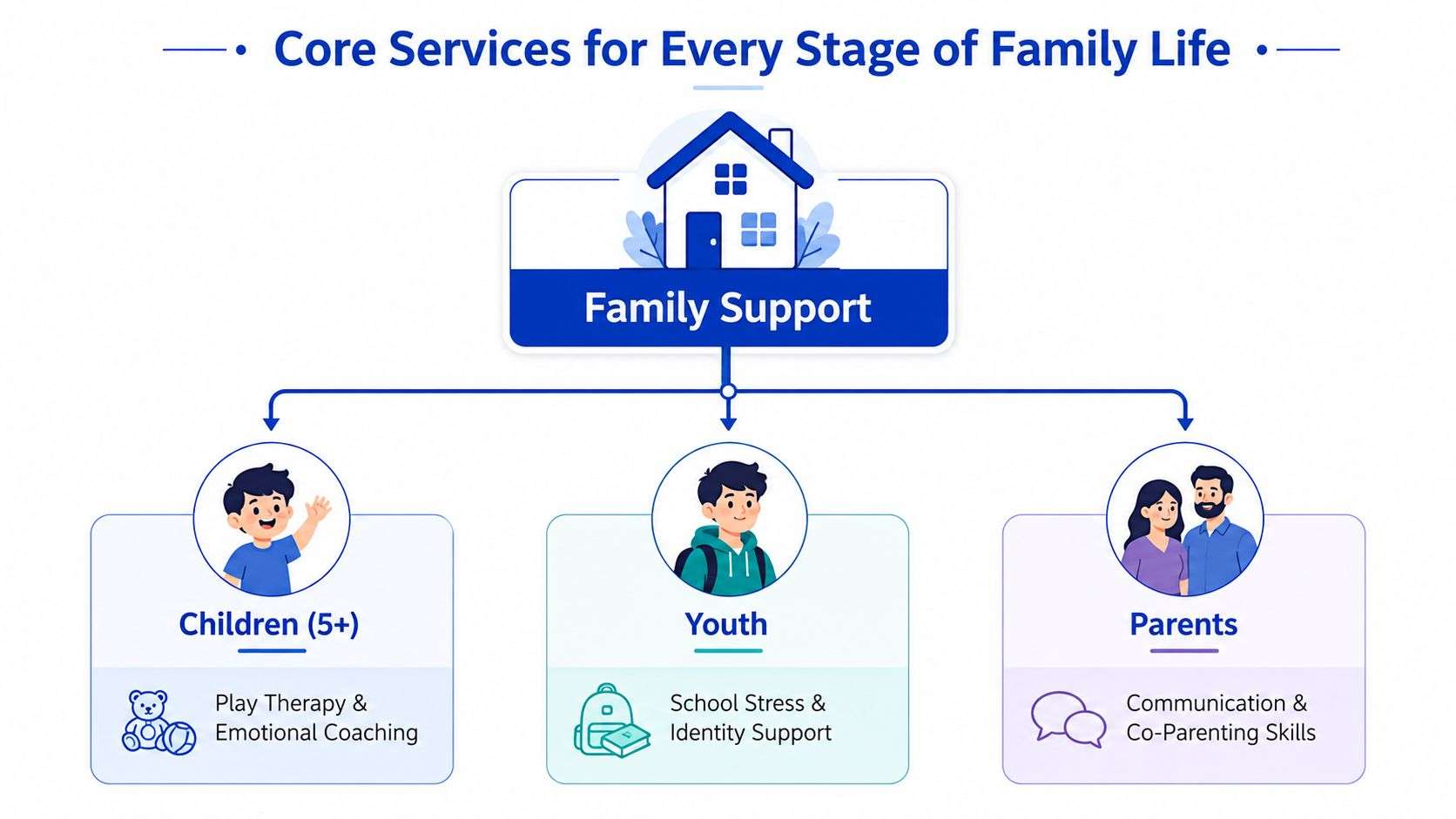
Family counselling in Grande Prairie isn't one generic service. Local options vary by age, format, and focus, which matters because a six-year-old, a teenager, and two separated parents do not need the same kind of support. The Grande Prairie Public School Division's counselling listing shows child and family supports for children as young as 3, 4, 5, and 6 years old, while some services are free and virtual-only. That age spread is more than an administrative detail, it's a sign that care has to be matched carefully to development and family context.
What children, youth, and parents usually need
A young child often needs help expressing feelings through play, routines, and simple emotional language. A teenager usually needs more privacy, more autonomy, and a therapist who can talk about school stress, identity, family tension, and friendships without sounding patronising. Parents need a place to sort through discipline, boundaries, co-parenting, step-parenting, and the strain of trying to hold a household together while managing their own emotions.
The right service depends on the actual pressure point. A child acting out after a move may need different support than parents trying to reduce conflict during separation. A teen who shuts down at home may need a separate process from the adults who are arguing about rules. Good counselling keeps those distinctions clear.
Some families also need trauma-informed care. That matters when the issue isn't just disagreement, but fear, hypervigilance, or a history of unsafe dynamics. Trauma-informed work keeps the pace manageable and avoids pushing for disclosure before trust is there.
Family counselling can also support:
- Co-parenting: creating a workable routine, reducing conflict, and keeping children out of the middle.
- Step-parenting: easing role confusion and loyalty tension.
- Behavioural concerns: helping parents respond consistently without escalating every interaction.
- Transition stress: managing separation, relocation, blended-family changes, or grief.
For families who want a broader relationship resource alongside therapy, browse mental health awareness info can be useful for normalising conversations about emotional wellbeing and family support.
The best family counselling plans are age-aware and role-aware. A six-year-old, a sixteen-year-old, and two parents in conflict should never be treated like interchangeable parts of the same problem.
Overcoming Geographic and Schedule Barriers
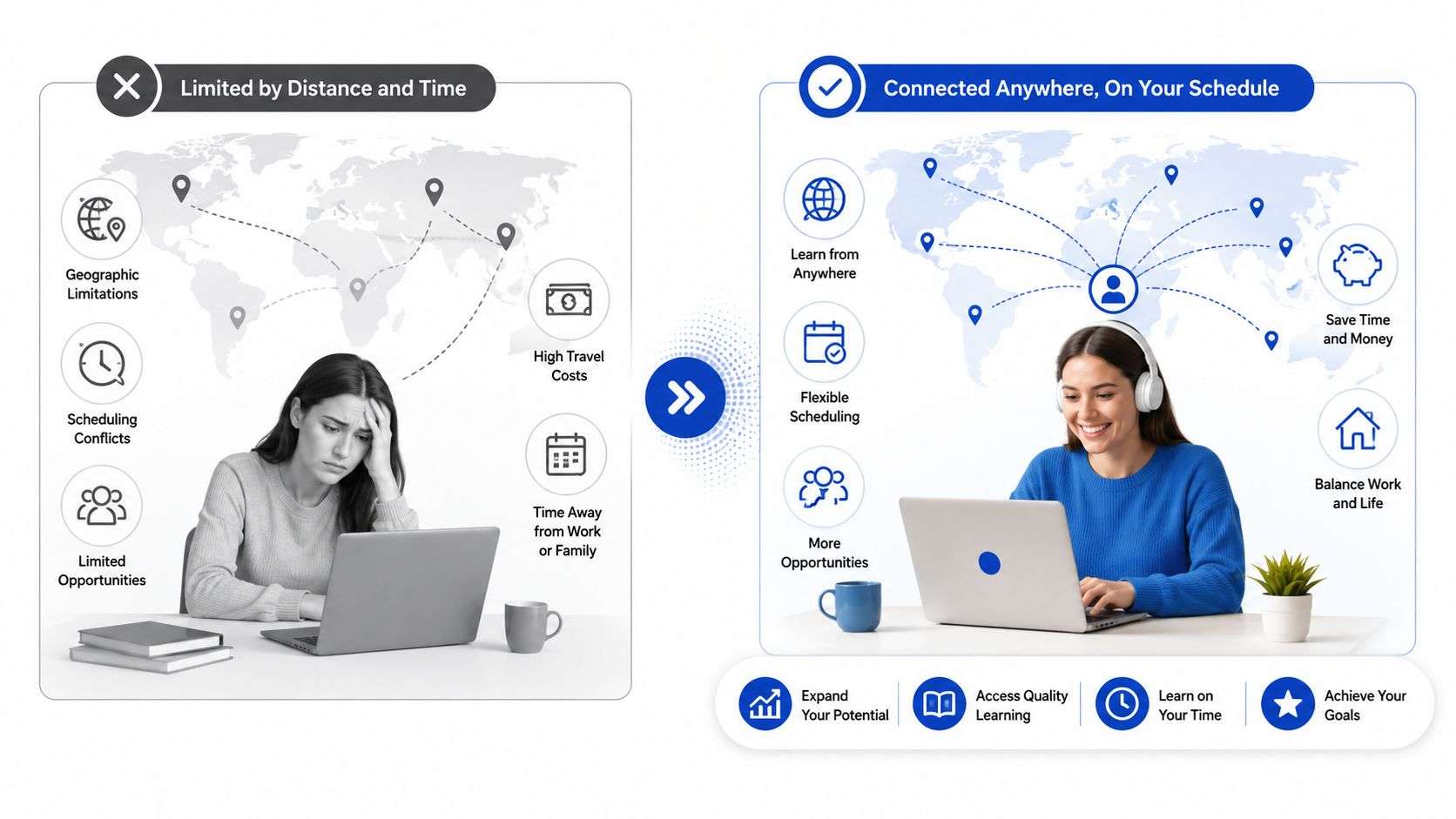
A Grande Prairie family often decides on counselling in the same breath as they decide how to make it fit between shift work, school pickups, weather, childcare, and privacy. In a northern city, those details are not side issues, they determine whether support is usable. Publicly listed AHS options in the city include weekday walk-in and phone-based counselling during daytime hours, while other local providers add evening or weekend flexibility, which changes who can stay in treatment long enough for it to help.
Choosing the format that fits the family
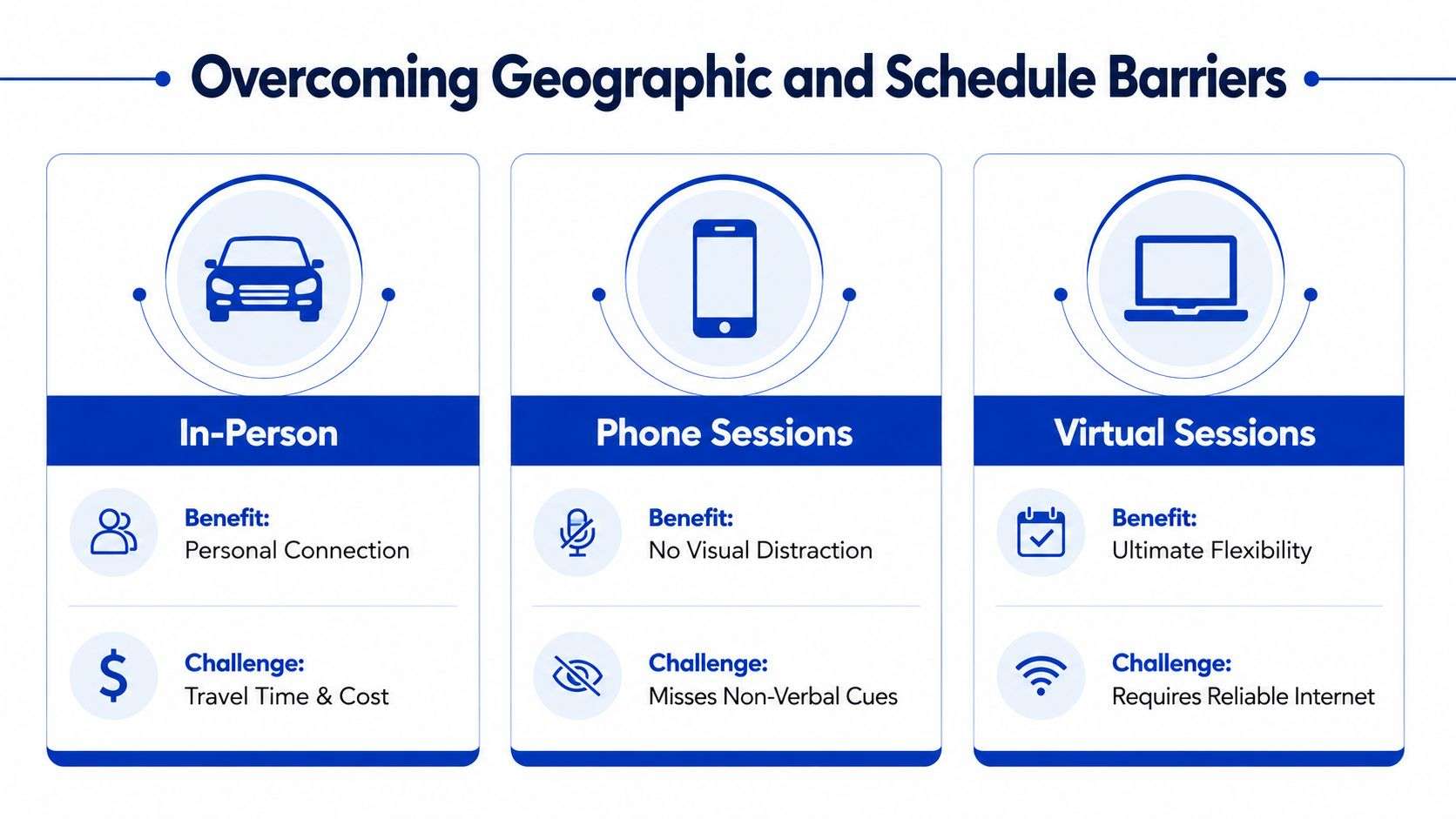
In-person sessions work well when a family wants the structure of being in the room with a counsellor. They can be especially useful when conflict escalates quickly or when younger children need a more hands-on approach. The trade-off is straightforward, getting there, parking, childcare, and keeping the appointment when roads or work schedules are difficult.
Phone sessions reduce visual pressure and can be easier when someone wants privacy or has a packed day. They also work for some parents who cannot easily leave home. The trade-off is that the counsellor loses facial expression, posture, and other non-verbal cues that often matter in family work.
Virtual sessions are often the most flexible option, especially for families outside the city core. They can help people stay consistent when they are balancing shift work, school pickups, or rural distance. The downside is that they depend on reliable internet and a private space, and those are not guaranteed in every household.
Best fit usually comes down to continuity, not preference alone. A format that a family can repeat consistently is usually more useful than a format that sounds ideal but falls apart after two sessions.
Interactive Counselling offers in-person, online, and phone sessions with evening and some weekend availability, which matters in a region where publicly listed AHS walk-in counselling is mainly weekday daytime. That kind of flexibility helps families use treatment in real life, not just on paper.
Families in Grande Prairie are often choosing between availability and privacy, convenience and depth, or speed and continuity. The strongest choice is usually the one that protects all three as much as possible.
Navigating Separation and High-Conflict Transitions
Some family problems are emotional first and legal second, but the two are never fully separate. Grande Prairie's legal-mapping research found that residents identified family law, family violence, and child protection as common unmet needs, and specifically pointed to a lack of options for legal advice or representation, plus a lack of alternatives to going to court. That tells us something important. Many families aren't just looking for better communication, they're looking for a safer and less combative way to move through a transition.
Counselling can help when separation brings anger, grief, guilt, or confusion into every conversation. It can also help parents keep children out of adult conflict, set rules for handovers, and reduce the emotional temperature long enough for practical decisions to be made. What it cannot do is replace legal advice, emergency protection, or child-protection intervention when those are needed.
A useful way to think about this is simple. Counselling supports the relationship and the emotional system. Legal supports formal rights, responsibilities, and agreements. Mediation can sit somewhere in between, depending on the situation and willingness of both adults to participate. When safety is in doubt, the emotional work has to run alongside the right protective or legal pathway.
Families often need both stability and clarity at the same time. That's why a non-court alternative is so valuable when it's appropriate, but it's not a universal answer. High-conflict separation sometimes needs a coordinated approach, one adult may need therapy, another may need mediation, and a child may need separate support to process change without becoming the messenger.
For families comparing support pathways, Montgomery County divorce mediation offers a useful external example of how mediation is often discussed as a parallel process rather than a substitute for therapy. The larger point is local and practical, counselling should help a family think more clearly about what kind of help belongs where.
Choosing the Right Counsellor for Your Family
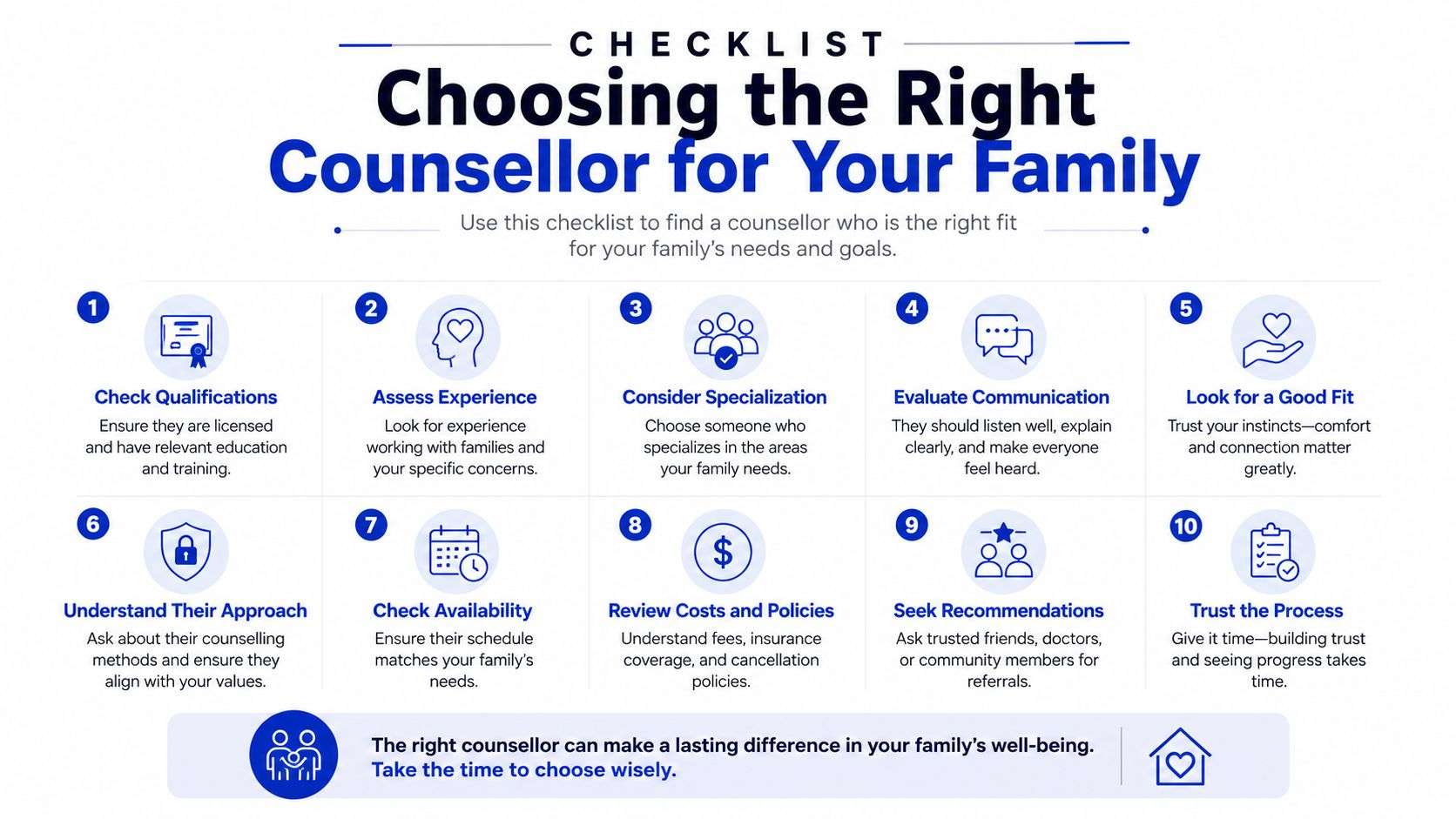
Good family counselling starts with a fit, not with a fancy title. Credentials matter, and so does the practitioner's ability to work safely with children, parents, and conflict. In practice, families should look for a counsellor who can explain their approach plainly, adapt to age differences, and hold boundaries without becoming rigid.
What to ask before booking
Start with practical questions. What ages do they work with? Do they support parents only, the full family, or children separately? Can they handle co-parenting, step-parenting, or trauma-related concerns without widening the conflict?
Then ask about format. In a northern context, this matters as much as clinical style. A counsellor who offers phone or virtual options may be a better fit if childcare, travel, or shift work is part of the picture. If a family has been affected by a motor vehicle accident, some local care pathways may also involve ICBC-funded counselling, so it's worth asking about booking and eligibility rather than assuming the process.
A strong first consultation should answer three things:
- How they work: the methods and the pace they use.
- Who they serve: children, parents, couples, or entire family systems.
- What happens first: intake, consent, safety screening, and goals.
Trauma-informed care matters here too. A good practitioner doesn't force a child to talk before trust is there, and they don't push parents into a perfect solution on the first visit. They watch for regulation, pacing, and emotional safety.
One local option that offers this kind of family-focused service is Interactive Counselling, which provides family counselling, parenting and co-parenting support, and in-person, phone, and secure virtual sessions. The important part is not the brand name, it's knowing what type of support fits the family and how to access it without guesswork.
Common Questions About Family Support
A parent who's never done therapy before usually has the same quiet worries, whether they say them out loud or not. Will this be private? Will my child be upset? How long does this take? Those are fair questions, and they deserve direct answers, not vague reassurance.
If you're looking for more background on mental health topics while you decide, browse mental health awareness info can be a gentle place to start. It won't replace counselling, but it can make the first conversation feel less intimidating.
Does family counselling mean something is wrong with us?
No. It usually means the family is under strain and wants help before the strain becomes a bigger rupture.
Will my child have to talk about everything right away?
No. A thoughtful counsellor will pace the work to match the child's age, comfort, and ability to express themselves.
How do we know if counselling is enough, or if we need legal or safety supports too?
If there are custody disputes, violence, child-protection concerns, or urgent safety issues, counselling should sit alongside the appropriate legal or protective pathway.
Families in Grande Prairie don't need to have the perfect plan before they reach out. They just need a place to start.
If your family is trying to manage conflict, separation, parenting stress, or the pressure of life in northern Alberta, Interactive Counselling offers family counselling, parenting and co-parenting support, and flexible in-person, phone, and secure virtual sessions that fit real schedules. Visit Interactive Counselling to learn more about support that can meet your family where it is and help you move forward with clarity and steadiness.
Clinically Reviewed By
Amy Mosset, MCP, RCC-S
Amy Mosset is a Master Practitioner in Clinical Counselling, Clinical Supervisor, and the owner of Interactive Counselling. She provides trauma-informed, evidence-based care and clinical supervision to registered therapists, with a focus on ethical practice, client safety, and high-quality therapeutic outcomes.