When depression has been weighing on you for a while, getting support can be one of the most practical next steps. In British Columbia, only 53% of people diagnosed with depression receive the minimum baseline of treatment recommended by clinical guidelines (CBC reporting on UBC findings), which means many people are trying to cope without enough help. For more information, see our Vernon depression counselling.
You might be reading this while sitting in your car before work, lying awake after everyone else has gone to bed, or staring at a task you used to do easily and wondering why everything feels so hard now. Depression often doesn't announce itself dramatically. Sometimes it arrives as exhaustion, numbness, irritability, tears that come too quickly, or the strange feeling that you're present but not really living your life. If that sounds familiar, you're not failing. You may be carrying more than your mind and body can manage alone. For more information, see our counselling in Vernon.
"Depression counselling in Vernon is a supportive, collaborative process where a trained therapist helps you understand your experiences, develop healthy coping strategies, and move toward feeling more like yourself again." For more information, see our depression counselling.
Taking the First Step When You Feel Weighed Down
It is 11:40 p.m. You are tired, but not resting. A tab about counselling is open on your phone, and part of you wants to close it because even reading feels like one more task. Another part of you is internally asking, “What if I need help?”
That moment counts.
The first step toward depression counselling is often far smaller than people expect. It is rarely a polished phone call where you explain your whole life clearly. More often, it begins with noticing that your days have been harder for longer than you want to admit, or that the ways you usually cope are no longer carrying you.
Depression has a way of making ordinary decisions feel as heavy as wet clothes. A simple email can feel like a mountain. Choosing a therapist in Vernon can feel impossible if getting through breakfast already takes effort. That does not mean you are lazy, dramatic, or doing this wrong. It means depression can shrink your energy and your sense of possibility at the same time.
What the first step often looks like
For many people, it looks quiet and hesitant:
- Reading about counselling late at night because speaking out loud still feels too exposed.
- Saving a therapist's number and stopping there for now.
- Telling one safe person that something has felt off.
- Looking for details about what happens in session so the unknown feels less intimidating.
You do not need to be “bad enough” to deserve support.
That is significant because depression often teaches people to downplay their own pain. It whispers that other people are struggling more, that you should be able to push through, or that one more week of waiting will somehow fix everything. Those thoughts can sound convincing. They also keep people alone.
A more helpful question is not “Do I qualify for help?” It is “Would support make this easier to carry?”
Why knowing what happens in the room can make reaching out easier
Many people do not avoid counselling because they do not care. They avoid it because they cannot picture what will happen once they get there.
Unknowns grow in the dark. Once you can see the outline, the next step often feels less overwhelming.
Inside a therapy room, you are not expected to perform, arrive with perfect insight, or tell your story in the right order. A therapist will usually help you slow things down, put words to what has felt tangled, and decide where to begin together. In early sessions, that may mean talking about sleep, appetite, motivation, stress, numbness, or the simple fact that life has started to feel flat or painfully hard. If words are hard to find, that is workable too. “I'm not doing well” is enough to open the door.
What helps when you feel frozen
If you feel stuck, make the next action small enough that your nervous system can handle it.
- Pick one task only. Read one profile, send one inquiry, or write down one question.
- Use plain language. You do not need a perfect description. “I've been feeling low and I'm not coping well” is enough.
- Let mixed feelings come along. Fear, relief, doubt, and hope often show up together.
- Focus on the first appointment, not the whole journey. You are only choosing one conversation.
Some people also look at counselling options outside their region while they are deciding what kind of help fits best, such as THERAPSY's depression services in Italy. Sometimes comparing services makes the process feel more concrete and less mysterious.
You do not have to solve your whole life before asking for support. You only need one manageable next step.
What Depression Counselling Really Is
Counselling is often misunderstood as either deep emotional excavation or casual conversation. In practice, it's usually neither. It's a structured, human process where you meet with a trained professional in a confidential setting and work together on what's getting in the way of your life.

It's a partnership, not a performance
You do not need to arrive organised, insightful, or emotionally composed. Many people come in saying things like, “I don't even know where to start,” or “I'm not sure this counts as depression, but something is wrong.” That is completely workable.
A helpful way to think about counselling is this. If depression feels like trying to find your way through thick fog, a therapist isn't someone who walks ahead and drags you. They walk beside you, help you slow down, notice patterns, and test safer, steadier ways forward.
That can include:
- Making sense of symptoms such as low motivation, guilt, numbness, or hopelessness
- Learning practical skills for difficult thoughts, poor sleep, avoidance, and overwhelm
- Identifying patterns in relationships, stress, burnout, grief, or trauma that may be feeding depression
- Creating a plan that fits your actual life, not an ideal version of it
How it differs from talking to friends
Friends can offer comfort, care, and perspective. That support matters. Therapy adds something different.
A therapist is trained to listen for patterns, track what maintains depression, and respond in ways that are intentional rather than reactive. They're also not part of your day-to-day life, which can make it easier to be honest about resentment, shame, numbness, or thoughts you haven't said aloud before.
Practical rule: Good therapy doesn't pressure you to “look on the bright side.” It helps you understand what's happening and build a steadier path through it.
Counselling also isn't one-size-fits-all. Some people want skills and structure. Others need space to process loss, relationship pain, or long-standing emotional wounds. The right therapist adjusts the work to the person in front of them.
If you're supporting a loved one in another country, it can help to understand how services may look in different systems too. For example, THERAPSY's depression services in Italy offer a useful reference point for how people access depression-focused therapy in a different context while still relying on the same core therapeutic principles.
What counselling often feels like
In a good session, people often feel some mix of these experiences:
- Relief because they don't have to hide how hard things have been
- Clarity because confusing emotions start to make more sense
- Discomfort when painful material comes close to the surface
- Hope because problems begin to feel more workable
That mix is normal. Therapy doesn't ask you to pretend things are fine. It gives you a place where you don't have to do that anymore.
For readers who want a broader overview of depression counselling, it can help to see counselling not as a last resort, but as a guided, evidence-informed form of support for a very treatable human struggle.
Evidence-Informed Therapy Approaches That Help
Not all therapy for depression looks the same. That's a good thing. Depression can grow from many sources, including stress, loss, trauma, harsh self-criticism, isolation, or relationship strain. Effective counselling usually matches the approach to the person, rather than forcing the person into one model.
Four approaches you may hear about
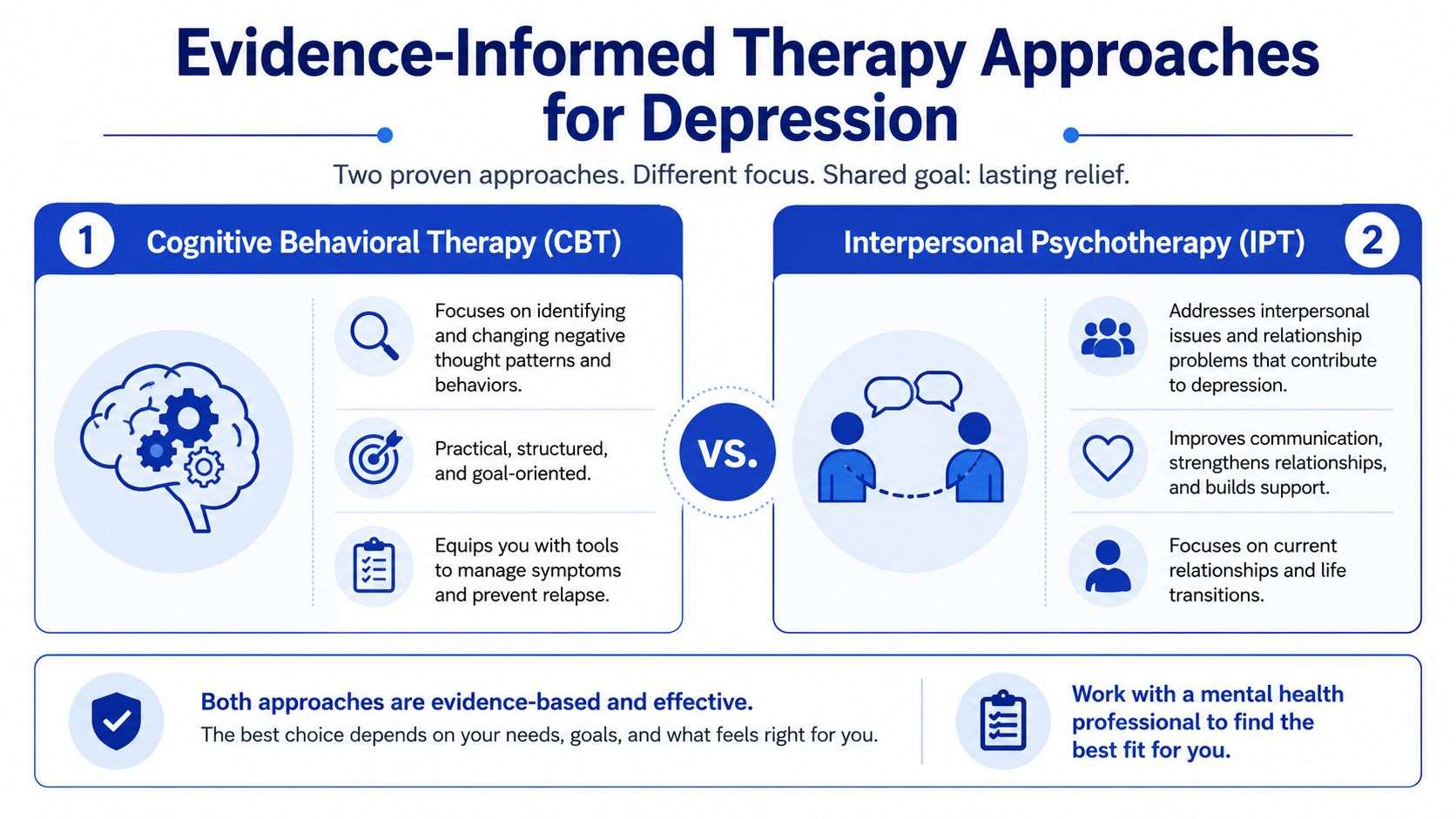
Cognitive Behavioural Therapy (CBT) helps people notice how thoughts, emotions, and actions interact. When someone is depressed, their mind often generates automatic messages like “nothing will change,” “I'm a burden,” or “there's no point.” CBT helps test those patterns and build more balanced responses. It also works on behaviour, because depression often shrinks a person's world.
One practical CBT-related strategy is behavioural activation. That means taking small, planned actions before motivation returns, rather than waiting to feel ready.
Acceptance and Commitment Therapy (ACT) takes a slightly different angle. Instead of trying to eliminate every painful thought, ACT helps people change their relationship with those thoughts. The focus is on making room for difficult feelings, stepping back from harsh internal stories, and taking action that lines up with personal values.
Interpersonal Therapy (IPT) looks closely at relationships and life roles. Depression often deepens during conflict, grief, major transitions, or loneliness. IPT helps people understand those connection points and develop healthier ways of relating and coping.
Trauma-informed care is less a single technique and more a way of practising. It recognises that some depression is tightly linked with past or ongoing experiences of overwhelm, fear, neglect, or harm. A trauma-informed therapist pays close attention to emotional safety, pacing, choice, and collaboration.
A simple comparison
| Approach | Main focus | What it may sound like in session |
|---|---|---|
| CBT | Thoughts, behaviours, and daily patterns | “What happens right before your mood drops?” |
| ACT | Acceptance, values, and psychological flexibility | “What matters to you, even in the middle of pain?” |
| IPT | Relationships, grief, conflict, and role changes | “When did this start changing between you and others?” |
| Trauma-informed care | Safety, pacing, nervous system awareness, and trust | “Let's slow this down so it feels manageable.” |
What “evidence-informed” actually means
People often hear that phrase and wonder whether it just means “professional-sounding.” It doesn't. Evidence-informed therapy means the therapist uses approaches that are grounded in established clinical knowledge, while also adapting to your needs, history, and pace.
That matters because depression is not identical from person to person. One person may need help with self-critical thinking. Another may be grieving. Another may feel shut down after trauma. Another may be functioning at work while privately falling apart. Effective therapy pays attention to those differences.
The best approach is rarely the most impressive-sounding one. It's the one that fits your symptoms, your history, and what helps you engage.
Therapy is structured, even when it feels natural
Good depression counselling usually includes both conversation and direction. Sessions may explore patterns, teach coping tools, review what happened during the week, or gently challenge the habits that keep depression in place.
Common pieces of the work can include:
- Tracking mood patterns to notice what worsens or eases symptoms
- Building routines around sleep, food, movement, and social contact
- Testing depressive predictions such as “If I try, I'll fail anyway”
- Making room for grief or trauma without rushing disclosure
- Reconnecting with values when life has started to feel flat or meaningless
If you've worried that therapy is just talking in circles, this is often the missing picture. Strong counselling is thoughtful, collaborative, and grounded in approaches that have a clear purpose.
What to Expect in Your Counselling Sessions
For many people, the hardest part is not the emotional work itself. It's the unknown. Not knowing what the first session will be like can make booking feel bigger than it is.
In Vernon, depression is a common reason people seek therapy. Depression is the second most commonly treated issue among clients in Vernon, BC, with 70% of therapy sessions in the region addressing depression-related concerns. If you're considering counselling, many of your neighbours are walking a similar path.
The first session is usually gentler than people expect
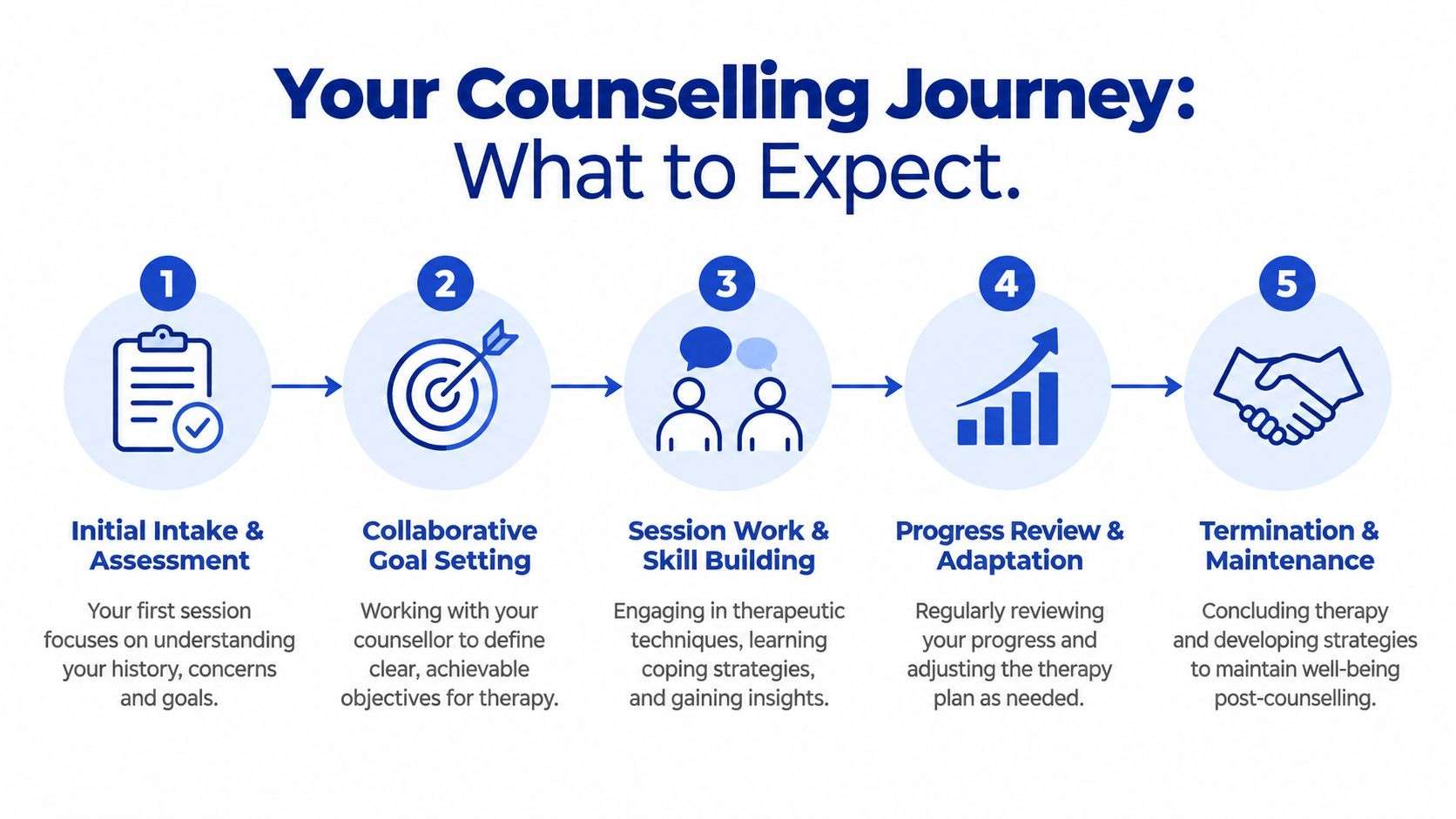
The opening session often focuses on understanding what brings you in, how long things have felt difficult, what symptoms you've noticed, and what support you already have. You may also be asked about sleep, stress, relationships, medical history, safety, and any past counselling experiences.
You won't be expected to tell your entire life story in perfect order.
Most therapists are trying to answer a few basic questions early on:
- What hurts right now
- What might be contributing to it
- What would feeling better look like for you
- What pace feels safe and realistic
What happens after intake
Once the therapist has a clearer picture, sessions often become more focused. You might work on coping tools, identifying triggers, understanding emotional patterns, or changing the routines that depression has narrowed.
A few examples can make this less abstract:
- If getting out of bed feels impossible, a session might focus on reducing the task to one small action and identifying what happens in your thoughts at that exact moment.
- If you cry unexpectedly and feel ashamed after, the therapist might help you slow down the sequence and notice what need or pressure sits underneath the tears.
- If you feel numb rather than sad, the work may centre on reconnection, safety, and gently re-entering parts of life that have gone flat.
Not knowing what to say is not a problem in therapy. Silence, confusion, and “I don't know” are all things a skilled therapist knows how to work with.
The relationship matters
People sometimes assume progress comes only from techniques. Techniques matter, but so does the quality of the therapeutic relationship. You should feel respected, not judged. Challenged at times, yes. Shamed, no.
A good fit often feels like this:
- You can be honest, even when what you're saying feels messy
- The therapist listens carefully rather than forcing a script
- The pace feels manageable
- There is a sense of direction, even when the work is difficult
If a therapist's style doesn't feel right, that doesn't mean counselling won't help. It may just mean the fit isn't there yet. That's a normal part of the process, not a personal failure.
How to Find the Right Support in Vernon
You may be sitting with your phone in your hand, reading therapist profiles and feeling more stuck with each one. That is a common place to start. Depression can make even simple choices feel heavy, so the first job is not to find a perfect therapist. It is to make the next decision small enough to carry.
A useful way to begin is to sort your options by the kind of support you need right now. Some people are looking for short-term help to steady themselves. Some need ongoing therapy because depression has been present for a long time or is tied to grief, trauma, burnout, or relationship strain. Some want virtual sessions because leaving home feels like too much. Others do better with an in-person office because the trip itself helps mark the hour as protected space.
One point that confuses many people is how long therapy should last. Brief counselling can help with triage, structure, and immediate coping. It is often a good starting place. If your depression feels tangled into older pain or keeps returning, longer-term work may be a better fit.
In-person or virtual
Both can be effective. The stronger option is usually the one you can attend consistently and with the least strain.
In-person sessions may fit better if:
- Leaving home helps you shift gears and focus
- Privacy is limited at home
- You feel steadier face-to-face
Virtual sessions may fit better if:
- Energy is low and travel takes too much out of you
- Your schedule is tight
- Being in your own space makes it easier to talk openly
What to look for in a therapist
Many people search as if they are trying to solve a puzzle with one correct answer. A better approach is to look for a therapist whose way of working feels understandable and manageable.
As you read profiles or have a consultation, ask yourself:
- Do they work with depression regularly?
- Can they explain their approach in plain language?
- Do they describe sessions in a way that feels clear rather than vague?
- Do they seem collaborative, respectful, and calm?
- Can you picture yourself saying, “I'm not sure where to start,” and being met well?
That last question matters. Inside the therapy room, good depression counselling usually feels less mysterious than people expect. You might start by naming one hard moment from the week. The therapist helps slow it down, asks a few careful questions, and works with you to find one pattern, one pressure point, or one next step. It is less like giving a perfect speech and more like turning on a lamp in a dim room, one corner at a time.
If depression is connected to a motor vehicle accident, ask whether the therapist offers ICBC-funded counselling. That practical detail can shape what is available to you and how quickly you can begin.
When you need more than short-term support
Short-term counselling can help with stabilising, planning, and getting started. For some people, that is enough. Others need more time because the depression is chronic, layered, or linked with loss, trauma, or difficult relationship histories.
This distinction matters. Some people leave brief therapy believing it failed them, when the actual issue was that they needed a different level of care.
If it helps to compare how clinics talk about treatment, support for depression at Cedar Hill offers one example of how another practice explains depression therapy. Reading a few thoughtful descriptions can make your own preferences clearer. You may notice that one therapist sounds too structured, another too open-ended, and a third feels like a pace you could tolerate. That is useful information. It helps you choose with more confidence, even if you still feel uncertain.
Immediate Self-Help Tools and Crisis Support
When depression is heavy, the goal is not to fix everything today. The goal is to reduce the next hour of suffering and increase safety. Small actions can matter, especially when they lower emotional intensity enough for you to reach for more support.
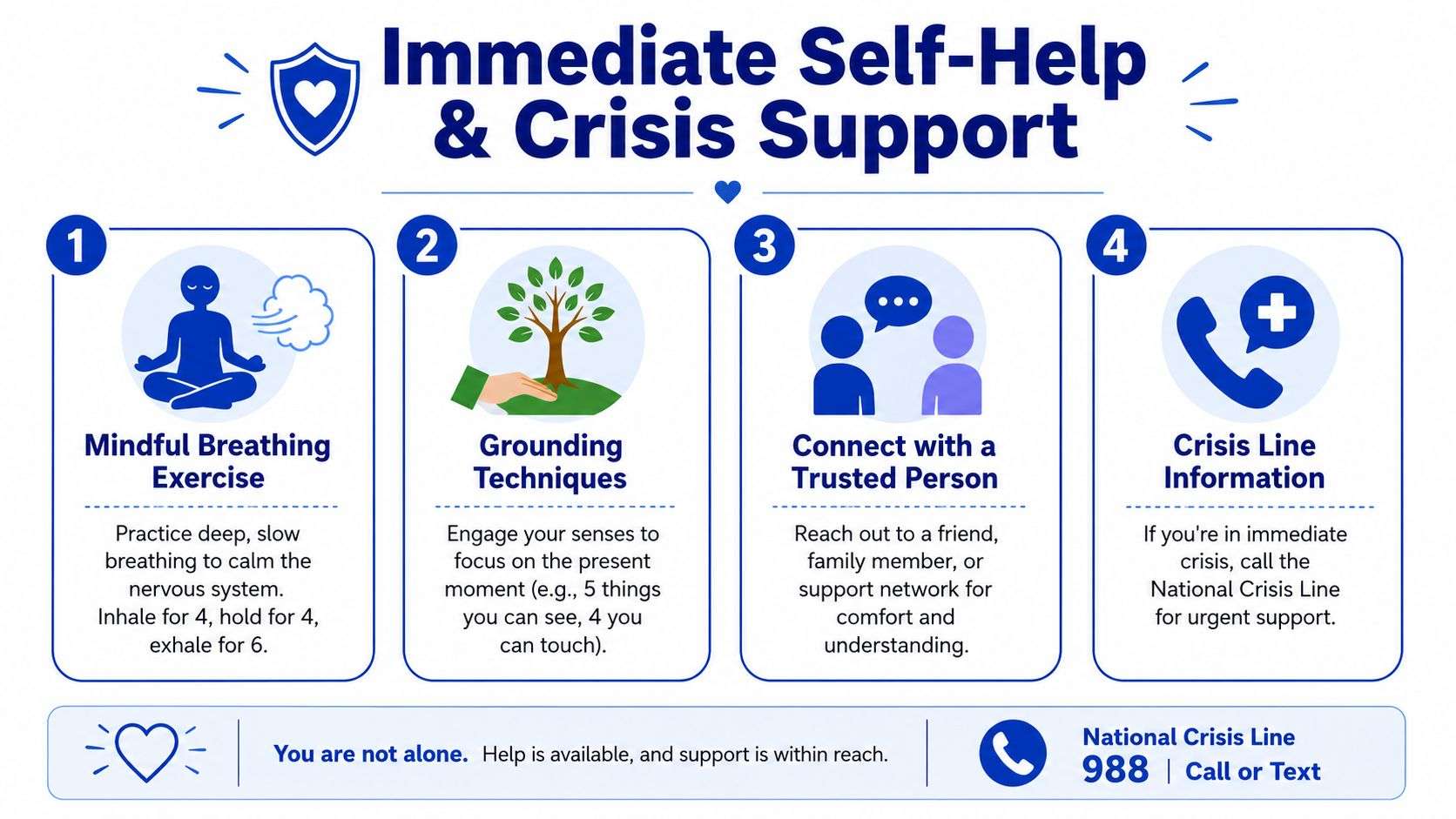
A few tools for the next ten minutes
- Slow your breathing. Try inhaling for 4, holding for 4, and exhaling for 6. Longer exhales can help your body shift out of alarm.
- Ground through your senses. Name 5 things you can see, 4 you can touch, 3 you can hear, 2 you can smell, and 1 you can taste.
- Reduce the size of the task. If “clean the kitchen” feels impossible, wash one mug. If “go for a walk” feels too big, stand outside for one minute.
- Text one safe person. You don't need a polished message. “I'm having a hard time and could use some company” is enough.
When depression is loud, make the next step smaller, not more ambitious.
Local crisis support in Vernon
If you are in immediate distress and need local mental health support, the Vernon Mental Health and Substance Use intake service provides direct intervention. Self-referrals can be made by calling 250-549-5737 Monday to Friday, 9:00 am to 4:30 pm (Vernon MHSU intake information PDF).
If you feel that you may act on thoughts of harming yourself, seek urgent help right away. Contact emergency services or go to the nearest emergency department. If speaking feels hard, ask someone to stay with you and help make the call.
Reaching out in a crisis is not overreacting. It is using support exactly as it is meant to be used.
Frequently Asked Questions About Depression Therapy
How do I know if what I'm feeling is serious enough for counselling
A good rule is this. If your mood, energy, thinking, sleep, relationships, or daily functioning have changed in a way that concerns you, counselling is reasonable. You do not need to wait until things become unbearable.
People often seek therapy when they're still functioning outwardly but feel flat, exhausted, disconnected, or unlike themselves inside. That counts. Early support can make it easier to interrupt the cycle before it deepens.
Is everything I say in therapy confidential
In general, therapy is a confidential space, and that privacy is one reason people find it easier to speak openly. Your counsellor should explain confidentiality clearly at the start, including any legal and ethical limits. Those limits usually relate to safety concerns or specific legal requirements.
If confidentiality feels important to ask about, that's a strong question to bring into the first session. You deserve a clear answer in plain language.
How long does depression counselling usually take
There isn't one fixed timeline. Some people come for focused, short-term work. Others need longer support because the depression has been present for a long time or is connected to trauma, grief, or ongoing life stress.
What matters most is whether therapy is helping you understand your patterns, build skills, and move toward steadier functioning. Good therapy is not about keeping you in sessions forever. It's about helping you get what you need.
What if I'm not ready for full counselling yet
That's okay. Not everyone starts with regular therapy. In Vernon, one local option is Bounce Back, a free phone-based program for ages 13+ that teaches coping skills and can be a helpful first step or a support alongside counselling.
You can also start by writing down your symptoms, talking with your doctor, or asking a prospective therapist what a first appointment is like. Readiness often grows after the first small action, not before it.
What if I cry, freeze, or can't explain myself well
That happens often, and it doesn't make you a difficult client. Many people cry in therapy. Many go blank. Many say, “I've been thinking about this all week and now I can't find the words.”
A skilled therapist won't expect a polished explanation. They'll help you slow down, notice what is happening in the moment, and find a way forward from there.
If you'd like to learn more about getting support, Interactive Counselling offers information about depression, trauma, grief, anxiety, and other concerns in a clear, approachable way. For many people, understanding what help can look like is enough to make the next step feel a little less heavy.
Clinically Reviewed By
Amy Mosset, MCP, RCC-S
Amy Mosset is a Master Practitioner in Clinical Counselling, Clinical Supervisor, and the owner of Interactive Counselling. She provides trauma-informed, evidence-based care and clinical supervision to registered therapists, with a focus on ethical practice, client safety, and high-quality therapeutic outcomes.