When an oilfield death happens in Peace Country, families are often thrown into two crises at once. The grief is immediate and devastating, and the practical fallout starts just as fast. Phones ring, children ask questions, meals go untouched, paperwork appears, and a home can feel both crowded and unbearably empty at the same time. For more information, see our grief counselling.
"Grief support for Peace Country families after an oilfield loss works best when it helps with both traumatic sorrow and the sudden disruption of daily family life."
This kind of loss has its own texture. In a region tied closely to oil and gas, many families know the work, the schedules, the camps, the road conditions, the equipment, and the risks. That means the loss is not abstract. It lands in the body, in the family routine, in the budget, in the community, and in the future you thought you were building together. What helps most is steady, structured support that makes room for shock, anger, exhaustion, practical decisions, and the fact that each person in the home may grieve differently.
Introduction Navigating Unthinkable Loss
It is 6:30 in the morning. A phone has already rung too many times. One child needs breakfast. Another is watching your face to figure out whether life is still safe. Someone from work may be asking questions you cannot absorb yet, and the house already feels unfamiliar because one person is missing from every ordinary moment.
That first stretch after an oilfield loss can feel unreal and brutally practical at the same time. Families in Peace Country are often hit by grief and instability together. Alongside shock, there may be immediate worries about camp schedules, missed income, benefits, travel, child care, or how much to say in a small community where word travels fast and everyone knows the site, the road, or the crew.
None of that means you are grieving the wrong way.
In the first days, many people notice that their mind does not work as usual. Simple choices can feel impossible. You may lose track of time, forget who called, feel suddenly angry, or go numb when you expected tears. A spouse may be trying to answer practical questions while barely sleeping. A teenager may shut their door. A younger child may ask the same question over and over because they are trying to understand something that does not make sense.
What presses on families right away
The pressure is not only emotional. It often comes from several directions at once:
- Children need simple, honest information before adults have had time to catch their breath.
- Relatives, neighbours, and co-workers reach out quickly, and support can feel comforting one minute and overwhelming the next.
- Employers, benefit providers, and insurers may contact the family early, which can feel harsh even when the questions are routine.
- Community visibility is high in Peace Country, especially when the worksite, company, or family is well known.
- Daily functioning often drops fast, including sleep, appetite, memory, concentration, and patience.
You do not need to have perspective right now. You need enough steadiness to get through the next conversation, the next form, or the next bedtime.
A steadier way through
Useful grief support after an oilfield death needs to do more than make space for sorrow. It helps families handle shock, make decisions they did not ask to make, and reduce the pressure that builds when practical demands keep arriving. In my work, early support often matters most when it is concrete. Who will sit with the children. Who will screen calls. Which questions can wait until tomorrow. Which paperwork needs attention first, and which does not.
That kind of help can lower the strain inside a home. It also respects a hard truth about traumatic loss in resource communities. The same event that breaks a family open can also threaten routine, income, housing plans, and a sense of place in the community.
For many households, the first relief comes when someone helps bring a little order to the day. One clear plan. One protected hour. One person who understands that grief in Peace Country often arrives with mud on its boots, a stack of forms on the counter, and children still needing supper.
Why This Grief Feels Different
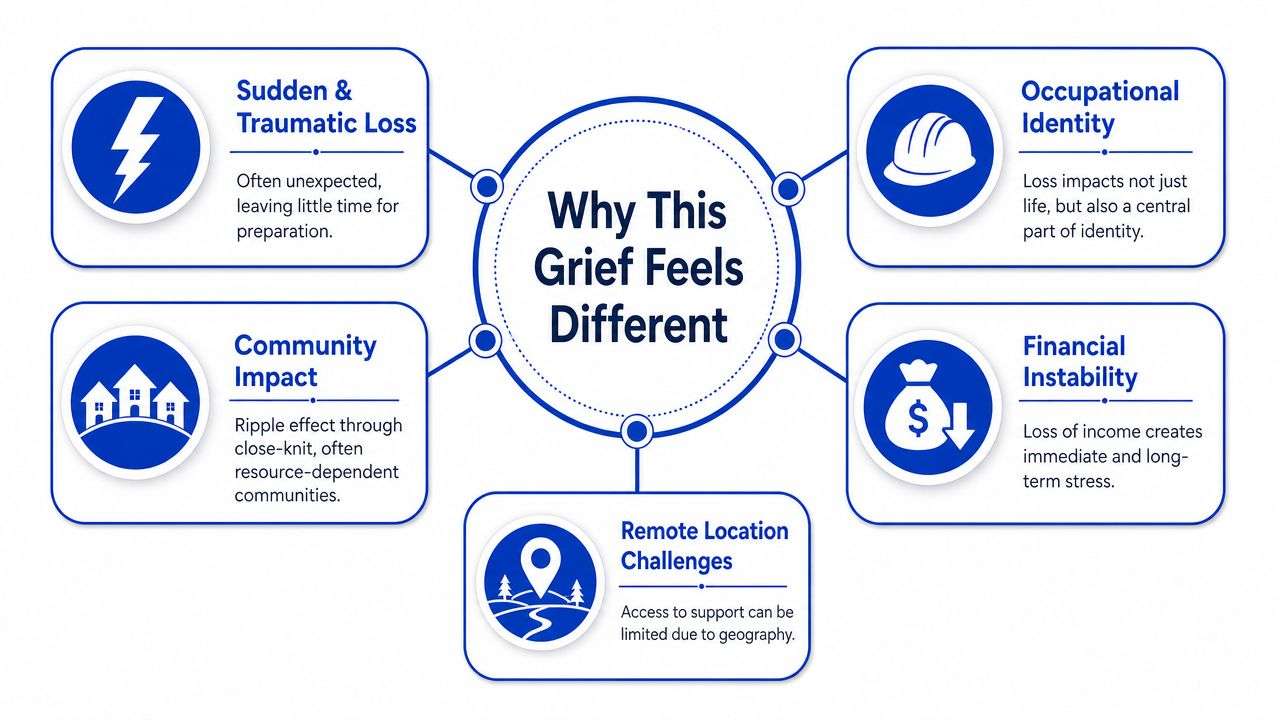
After an oilfield death, families are often carrying two shocks at once. One is the loss of the person. The other is the sudden collapse of the life that was organized around that person's work, income, schedule, and place in the community. In Peace Country, those two shocks often hit at the same time.
An oilfield loss can also carry trauma. There may be suddenness, incomplete information, disturbing mental images, anger about what might have been prevented, or a sharp sense that life has split into before and after. In a region where oilfield work is tied to identity, this kind of death can shake pride, belonging, routine, and financial security in the same week.
Grief is not only emotional
Some people expect grief to look like crying, sadness, and missing the person. Those are parts of it, but not the whole picture. SAMHSA notes that grief can include a significant decrease in functioning, and that persistent symptoms in adults lasting more than one year may indicate prolonged grief disorder. After an oilfield loss, daily functioning often drops because grief is mixed with traumatic stress, disrupted routines, isolation, pressure about housing or relocation, and fear about money.
Families often notice this in ordinary moments first. A spouse reads the same email five times and cannot take it in. A parent forgets a school pickup. Someone walks into the grocery store and leaves without half the list because the noise, choices, and small talk are suddenly too much.
| What people expect | What often happens instead |
|---|---|
| Sadness | Numbness, agitation, anger, or mental fog |
| Tears at obvious times | Sudden crying during routine tasks like driving or shopping |
| Needing comfort | Pulling away from others and wanting silence |
| Thinking about the person | Replaying details of the death or getting stuck on unanswered questions |
| Temporary disruption | Ongoing trouble sleeping, parenting, working, or making decisions |
Community can comfort and strain at the same time
Peace Country communities often show up fast. Meals arrive. Co-workers check in. Neighbours help with kids, animals, or a driveway after snowfall. That support matters, especially in the first stretch when a household is running on shock.
It can also feel exposing. In small communities, people usually know the site, the company, or the family name. Questions come early. Rumours can start before facts are clear. Families may feel pressure to answer, stay gracious, protect the worker's reputation, and shield children from details they are not ready to hear.
Silence can be hard too. People may care a great deal and still say very little because they are worried about saying the wrong thing. I see this often after sudden work deaths. A family can be surrounded by decent people and still feel painfully alone because practical help, emotional steadiness, and informed grief support are not the same thing.
Why families often feel unsteady for longer than expected
A work-related death does not remove one person from a household. It can remove the person who covered bills, fixed equipment, drove long distances, kept the family calendar in their head, or brought a sense of calm home after a hard day. The loss reaches into the structure of the home.
That is why this grief often lasts longer and feels more disorganizing than relatives expect. Families are grieving the person, the future they were building, and the stability that work once provided. In resource communities, those losses are tightly connected. If your family is struggling to sleep, eat, focus, manage school, keep up with paperwork, or make ordinary decisions, that belongs inside grief care. It is not separate from it.
Your First Steps Through the Fog
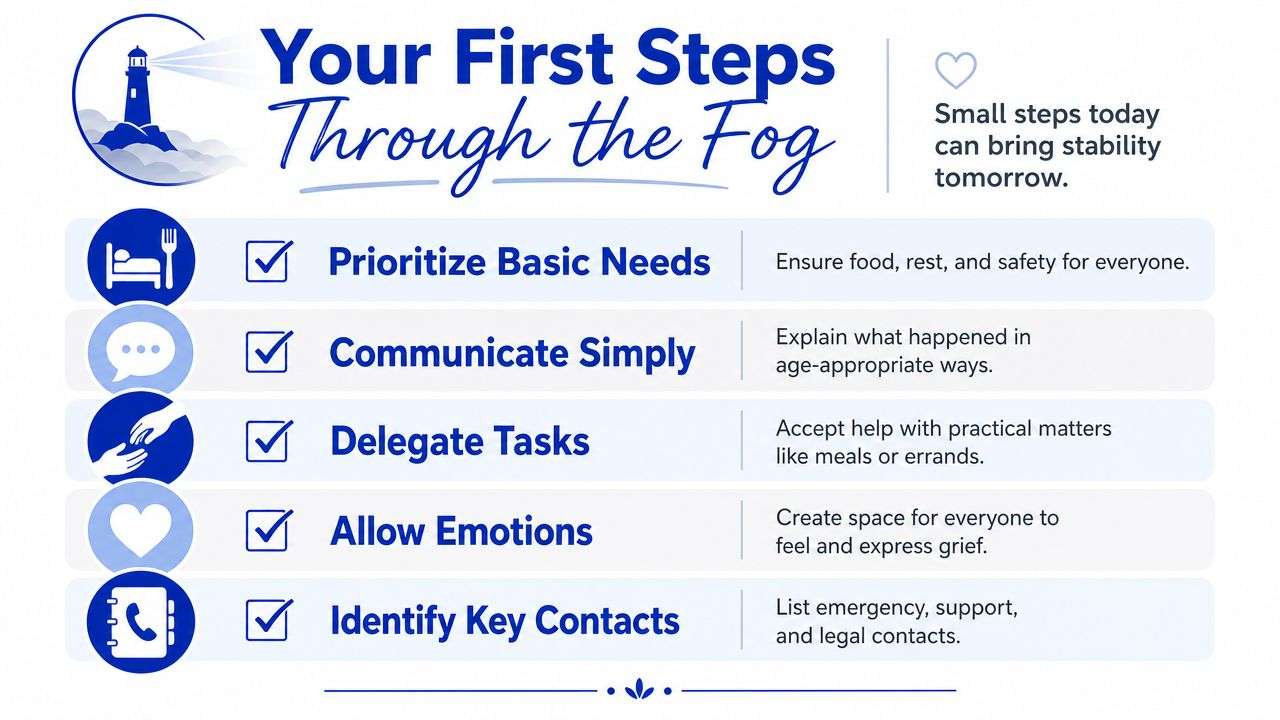
The first few days don't need a perfect plan. They need a short list. When families are in shock, the most useful approach is simple and concrete. In Alberta, oil and gas extraction is identified as a key high-risk industry, and provincial frameworks direct surviving families toward compensation and fatality investigation pathways, which supports a dual-track response of immediate stabilization plus benefits navigation.
What to do first
Start with the body and the home. Shock makes everything harder.
Protect sleep and food
Keep water nearby. Eat small, plain meals if full meals feel impossible. Let someone else bring groceries or ready-made food.Reduce decision load
Pick one family point person for updates. Let that person respond to messages, coordinate visitors, and answer practical questions where possible.Write down names and numbers
Keep a paper list. Include employer contacts, close relatives, school contacts, and anyone helping with transportation or child care.Tell children directly
Use direct language. Avoid vague phrases that can confuse younger children. If you don't know all the details, say that plainly.Delay what can wait
Not every call must happen today. Immediate safety, care of children, and key official contacts come first.
What families often need to accept
Many people in Peace Country are used to carrying their own load. After a death, that instinct can make the first days harder.
- Let meals be dropped off
This is not a burden to others. It is one concrete way people can care for you. - Let someone drive
Concentration may be poor, even if you think you're fine. - Let a trusted person sit with the children
Even a short break to shower or lie down matters. - Let one person track paperwork
Grief and forms are a hard combination.
In the first seventy-two hours, support should make life smaller, quieter, and more manageable. If it adds pressure, it's not the right support for right now.
What can wait a little
A few things feel urgent because they're painful, not because they are time-sensitive.
| Can happen now | Can often wait briefly |
|---|---|
| Arranging care for children | Replying to every message |
| Contacting key official supports | Cleaning the whole house |
| Identifying documents and contacts | Making big financial decisions |
| Asking for practical help | Explaining everything to everyone |
If you're supporting someone else, don't ask, "Let me know if you need anything." Offer one specific task. Pick up prescriptions. Stay with the kids during the meeting. Handle supper. Shovel the walk. Real grief support for Peace Country families after an oilfield loss is often built from ordinary help done consistently.
Holding Your Family Together
Families rarely grieve in sync. One person wants to talk. Another shuts down. A child may play one minute and cry the next. A teen may look irritated when they're overwhelmed. A spouse may focus on tasks because doing something feels safer than feeling everything. These differences can create tension unless someone names them for what they are.

Supporting a spouse or partner
A grieving partner doesn't always need answers. They often need steadiness.
Try these approaches:
- Name what you notice
"You haven't slept much." "I can see this morning is hard." Simple observations feel gentler than pushing for a big conversation. - Ask smaller questions
"Do you want company or quiet?" works better than "How are you doing?" - Don't compare grief styles
Crying more doesn't mean loving more. Staying busy doesn't mean avoiding the loss forever. - Protect a few daily anchors
Tea in the morning. A short walk. Sitting together after the kids are asleep. Familiar rhythm helps the nervous system settle.
Helping children and teens
Evidence-based bereavement resources emphasise keeping communication open and using child-focused grief models such as the Dougy Center approach, which helps children and teens process death through developmentally appropriate expression rather than abstract discussion alone, as described in this bereavement resource. Children often process grief through play, drawing, movement, repetition, and practical questions.
That means you don't have to force a long emotional talk.
What tends to help by age and stage
- Young children
Use clear words. Repeat the same explanation as needed. Expect questions to come in bits and pieces. - School-age children
Give truthful information in manageable amounts. Let them draw, build, move, or ask practical questions about what changes next. - Teenagers
Offer privacy without disappearing. Some teens talk while driving, walking, gaming, or doing chores, not face-to-face on command.
A child can be deeply grieving and still ask for a snack, laugh at a joke, or want to play. That doesn't mean they're unaffected. It means children move in and out of grief differently than adults.
Practical ways to keep connection alive
Some families want concrete rituals because words feel too hard. That can help.
Consider:
- A memory box with photos, notes, ticket stubs, or small personal items
- A candle or quiet corner where children can sit when feelings rise
- A simple routine for hard dates like birthdays, work anniversaries, or holidays
- A tangible gesture from others, such as a handwritten card or a thoughtful sympathy package. Some families appreciate practical options like Online Gifts Canada for sympathy when friends or relatives want to send care from a distance.
The aim isn't to keep everyone composed. It's to keep everyone connected.
Navigating Practical Financial and Legal Realities
The paperwork after a workplace death can feel harsh. Families are grieving, and at the same time they may need to answer questions about employment, compensation, insurance, banking, housing, and benefits. Many people feel guilty for focusing on these things too soon. They shouldn't. Practical stabilization is part of care.
The 2023 federal Bereavement and Grief Services Report highlights that effective support is not only emotional check-ins but structured, multi-service care, including referrals and crisis intervention, often available through Employee Assistance Programs for employees and immediate family members. In real life, that means support should help a family function, not just express sorrow.
What to gather without trying to solve everything
Start by collecting information in one place. Don't try to complete every form at once.
A manageable first pass usually includes:
- Employment documents
Contact details, benefit information, and any paperwork provided by the employer - Identification and legal records
Personal ID, marriage certificate if relevant, and any existing will or estate documents - Insurance information
Life insurance policies, group benefits, and any other coverage that may apply - Household essentials
Mortgage or rent information, account access details, monthly bills, and school or child care contacts
For families who need a practical starting point, a simple guide on how to compile important family records can reduce the mental load of figuring out what belongs together.
A gentle order of operations
Not every practical task has equal urgency. This rough sequence often helps:
| Start with | Then move to |
|---|---|
| Immediate income and benefit questions | Longer-term estate and account changes |
| Essential bills and housing | Detailed paperwork organisation |
| School and child care arrangements | Broader future planning |
| Support from EAP or official pathways | Reviewing what still feels unclear |
If possible, ask one trusted person to sit with you during calls or meetings and take notes. Grief affects memory. Families often leave an important conversation unable to recall half of what was said.
What not to do in the first wave
Try to avoid making major long-term decisions while you are still in heavy shock, unless safety or basic survival requires it. People often feel pushed to clear out belongings, move, or settle every open question quickly. Slower is usually kinder.
The practical side of grief support for Peace Country families after an oilfield loss works best when it is organised, paced, and shared. You don't have to carry every file, form, and phone call alone.
Finding Professional Support That Understands
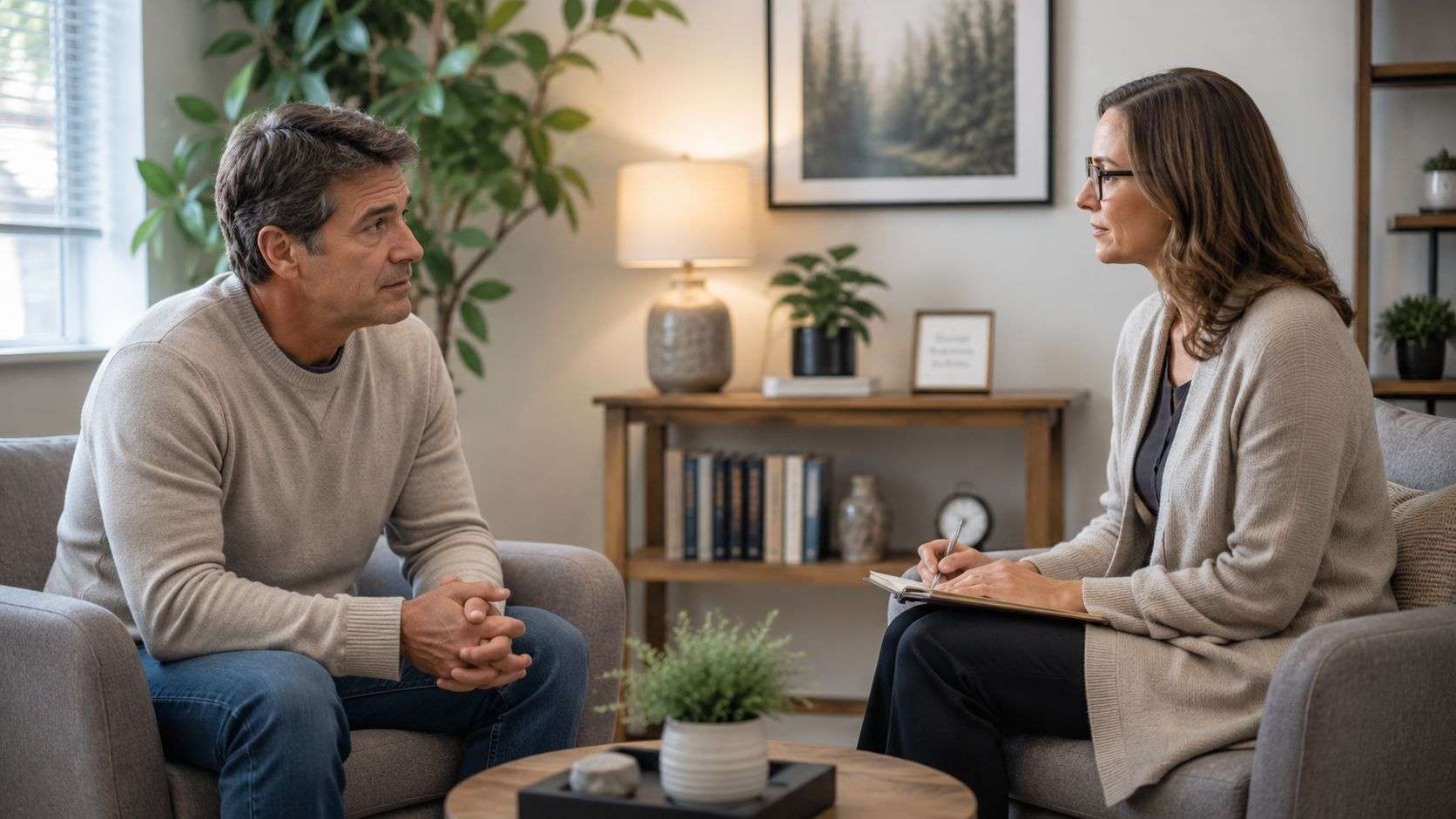
Good community support matters. So do casseroles, texts, and neighbours who show up. But traumatic grief often needs something more structured. Families may need help with panic, intrusive images, sleep disruption, conflict at home, guilt, or a sense that life no longer feels real. Professional grief counselling creates a place where those reactions can be named and worked with carefully.
Why counselling can help when loved ones can't
In one study of bereaved individuals, 41% to 43% were dissatisfied with support from family and community, while counsellors or therapists were among the few sources rated good or excellent by more than 50% of respondents, supporting the role of professional grief counselling in this bereavement research. That fits what many families already sense. Friends can care a great deal and still feel out of their depth.
A counsellor's role is different. They can help a person:
- recognise trauma responses without shame
- sort grief from guilt, anger, or fear
- find language for conversations with children
- rebuild routines when functioning has dropped
- make room for both mourning and ordinary life
Signs it may be time to reach out
Some families seek support early. Others wait until the first wave passes and they realise they still can't settle. Both are valid.
Counselling may be worth considering if you notice:
- sleep problems that don't ease
- persistent anger or blame that is taking over daily life
- a child whose behaviour changes sharply
- a teenager who withdraws completely or becomes harder to reach
- ongoing trouble working, parenting, or managing basic tasks
- distressing mental replay of how the death happened
For rural families, phone and secure virtual sessions can make support more accessible when distance, weather, work schedules, or child care get in the way. If you're looking at options, learning more about counselling options can help you see what family, grief, and trauma support may look like in practice. Interactive Counselling offers support for individuals, children, youth, couples, and families through in-person, phone, and secure virtual sessions.
Support can include practical coordination too
Sometimes the most compassionate care removes one hard task from the family altogether. In situations involving traumatic death scenes or unsafe environments, families may also need help understanding what happens next in the home itself. Resources on understanding family support from biohazard cleanup can clarify one part of that burden when people are already overwhelmed.
Seeking professional help is not a sign that your family is falling apart. It often means your family is trying to heal without carrying the full weight alone.
Frequently Asked Questions About Grief and Healing
Is it normal to feel angry as well as heartbroken
Yes. Anger is common after a sudden workplace loss. You may feel angry at the company, the system, the conditions, the unanswered questions, or even at people who keep telling you to stay strong. Anger doesn't cancel love. It often rises when grief collides with shock and helplessness.
Try to give anger a safe outlet. Talk with a counsellor, write things down, walk, breathe, or set limits with people who keep pressing for details. Anger becomes harder when it has nowhere to go.
What if my teenager won't talk about it
Many teens don't want direct sit-down conversations, especially early on. That doesn't always mean they aren't grieving. It may mean they don't have words yet, or they don't feel safe becoming emotional in front of others.
Look for side-door connection. Car rides, chores, gaming, shooting hoops, or walking the dog can create less pressure. Keep the invitation open and simple. "You don't have to talk, but I'm here." If the shutdown is prolonged or daily functioning drops sharply, professional support may help.
How do we handle grief in a small community where everyone knows
Choose your privacy boundary early. A short prepared sentence helps. Something like, "We're not ready to talk about the details, but we appreciate your care." Give that line to relatives too, so they don't feel forced to explain more than they want.
It can also help to appoint one spokesperson for practical updates. That protects the immediate family from retelling painful details over and over. In a close community, kindness and intrusion can arrive together. You are allowed to accept one and limit the other.
How long is grief supposed to last
Grief doesn't move on a clean schedule. The early shock may ease, then surge again on ordinary days, after official processes begin, or when routines change. Some people feel more emotional months later, once the practical urgency dies down and the silence gets louder.
If intense symptoms continue and daily functioning remains significantly affected, extra support is worth considering. Needing help later on doesn't mean you've gone backwards. It means grief has changed shape.
What do I say to a young child who keeps asking the same question
Repeat the same truthful answer calmly and clearly. Young children learn through repetition. They may ask again because they're trying to understand, not because they didn't listen.
You don't need a perfect script. You need clarity, warmth, and consistency. Short answers are often best. Then let them play, draw, cuddle, or return later with another question.
If this article meets you in a hard moment, you don't have to figure everything out today. Some families need a place to process traumatic grief. Others need support with parenting through loss, family communication, or getting daily life working again. Interactive Counselling offers information about counselling support for individuals, children, youth, couples, and families when you're ready to learn more.
Clinically Reviewed By
Amy Mosset, MCP, RCC-S
Amy Mosset is a Master Practitioner in Clinical Counselling, Clinical Supervisor, and the owner of Interactive Counselling. She provides trauma-informed, evidence-based care and clinical supervision to registered therapists, with a focus on ethical practice, client safety, and high-quality therapeutic outcomes.