Summerland anxiety counselling can offer confidential, evidence-based support that fits the realities of wine work, from harvest pressure to job uncertainty. In the drinks trade, 55% of surveyed professionals reported stress or anxiety difficulties while only 17% reported using available support, which helps explain why accessible counselling matters so much for workers who keep pushing through. For more information, see our Penticton anxiety counselling.
If you're reading this after a long shift, you might still feel like your body is at work even though you've gone home. Your shoulders are tight. Your mind is replaying tomorrow's weather, staffing gaps, customer demands, or that one conversation you can't stop thinking about. For more information, see our counselling in Penticton.
"Summerland anxiety counselling helps wine industry workers manage seasonal stress, workload pressure, uncertainty, and the emotional strain that can come with life in the Okanagan wine sector."
In a place like Summerland, anxiety often doesn't look dramatic from the outside. It can look like getting through the day, smiling at guests, finishing the cellar work, then lying awake at night with your mind still racing. The good news is that anxiety is understandable, treatable, and something you do not have to handle alone.
The Unique Pressures of the Summerland Wine Industry
Work in wine country can look beautiful from the outside. Vineyards, tasting rooms, events, tourists, and seasonal energy can create the impression that it's all scenery and lifestyle. But anyone working inside the industry knows there is another side to it.
Canada's wine and grape industry has been described by the Canadian Vintners Association as supporting more than 31,000 direct jobs and contributing about C$9 billion in annual economic activity, which helps explain why worker mental health matters in wine regions and why strain in this sector can affect many people and families in communities connected to production and tourism.
Why Summerland work can feel intense
In British Columbia's Okanagan wine region, the workforce model combines seasonal vineyard work, cellar operations, and tourism-facing roles, and that mix increases anxiety risk because workload, income, and job security can change sharply across the growing season, harvest, and tasting-room peaks (Okanagan wine region workforce context).
That matters in everyday life. It means your stress may not come from one single problem. It may come from layers of pressure happening at once.
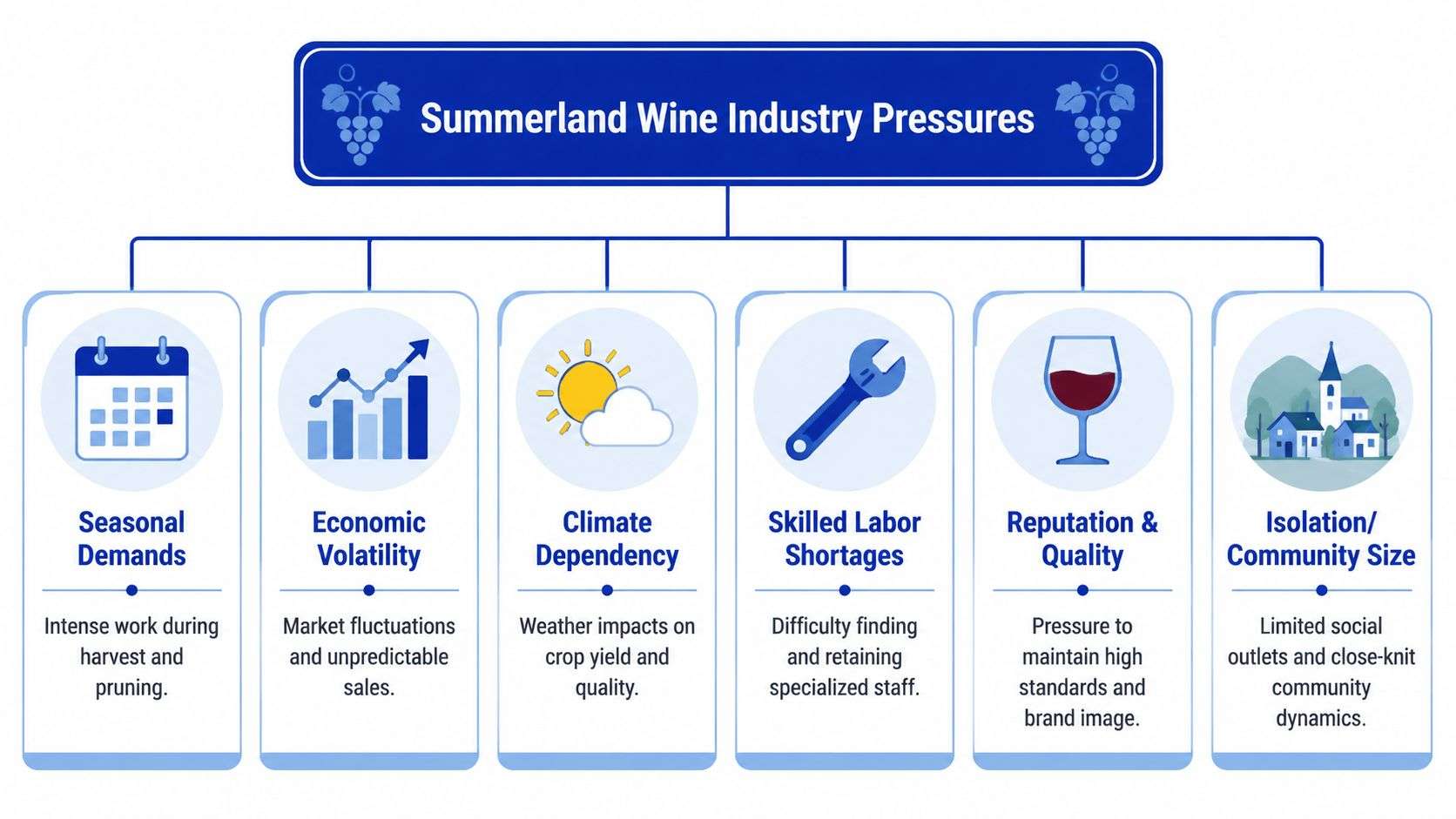
Here are some of the pressures workers often carry:
- Seasonal intensity: During harvest or peak tourism periods, the pace can jump quickly. Long days, physical fatigue, and constant adjustments can keep your nervous system in a state of high alert.
- Income uncertainty: If your hours shift with the season, stress doesn't end when work ends. It follows you home into budgeting, planning, and worrying about the next stretch of time.
- Public-facing pressure: Tasting room and hospitality roles can require warmth, patience, and performance even when you're exhausted or struggling.
- Weather and timing stress: A forecast can change the workday, the week, or the whole emotional tone of a season.
- Small-community dynamics: In a place where people know each other, it can feel harder to admit you're overwhelmed.
Practical rule: If your stress rises and falls with harvest timing, visitor surges, staffing shortages, or forecast changes, that doesn't mean you're "bad at coping." It means your nervous system is responding to real demands.
Stress is not just personal
A lot of people blame themselves for feeling on edge. They assume they should be more organised, tougher, or less emotional. But in the wine industry, anxiety often grows in environments that are unstable and demanding.
Business volatility is part of that picture too. If you've watched layoffs, restructuring, or closures in the broader wine world, anxiety can become more than day-to-day stress. It can turn into fear about your future, your identity, and whether the work you've built your life around is still secure.
Managers and owners can also benefit from workplace thinking that reduces unnecessary strain. Some readers may find this guide for leaders on mental health useful for understanding how workplace culture can affect whether people seek support early or stay silent until things get worse.
Summerland also sits within a local wine cluster with specialised agricultural infrastructure, including the Pacific Agri-Food Research Centre in Summerland. That local context matters. Anxiety support works better when it understands the rhythm of this community, rather than offering generic advice that could apply to any office job anywhere.
Recognizing How Anxiety Shows Up in Your Daily Life
Anxiety doesn't always announce itself clearly. Many people expect panic, obvious fear, or constant worry. Sometimes it looks more ordinary than that.
It can look like waking up tired even after sleeping. It can sound like your mind running through a list before your feet hit the floor. It can feel like being irritable with people you care about, then feeling guilty afterward.
Common signs at work and after work
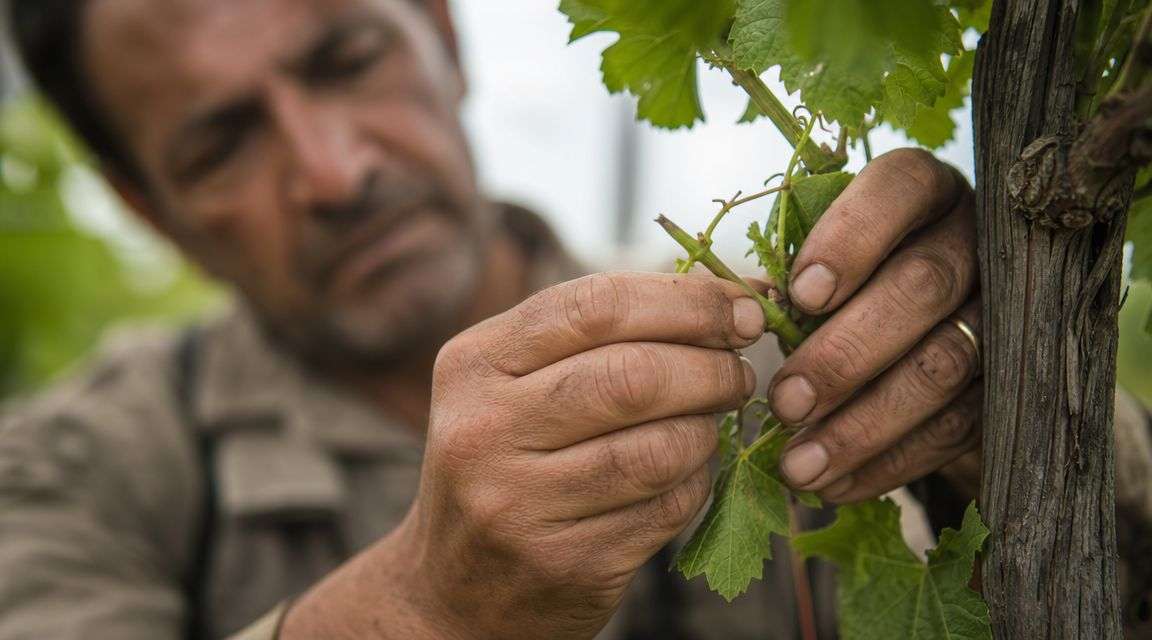
A vineyard worker might notice anxiety as a constant sense of rushing, even when moving efficiently. A cellar worker might find it hard to come down after a demanding shift, with their heart still feeling fast at bedtime. Someone in a tasting room may start dreading crowds, difficult customer interactions, or the pressure to stay polished when they feel depleted.
The signs often fall into a few broad areas:
| Area | What it may look like |
|---|---|
| Body | Tight jaw, headaches, stomach upset, fatigue, shallow breathing, muscle tension |
| Mind | Racing thoughts, overthinking, dread, second-guessing, trouble focusing |
| Emotions | Irritability, feeling on edge, shame about struggling, sudden waves of fear |
| Behaviour | Avoiding messages, cancelling plans, snapping at others, working nonstop to avoid feeling |
Some people also notice a delayed reaction. They hold it together at work, then unravel once they get home. That can be confusing because it makes it seem as if home is the problem, when often home is the first place your body feels safe enough to show the strain.
When anxiety is tied to job loss or identity
For some workers, the hardest anxiety isn't about a busy shift. It's about what happens when work disappears or changes overnight.
A recent local report said Summerland Wine Brands laid off or furloughed all but about 40 employees and planned to liquidate equipment, highlighting how workers can face sudden income loss, uncertainty, and grief over career identity at the same time.
That kind of stress can sound like this:
- "I don't know who I am without this work."
- "I should be handling this better."
- "I can't sleep because I keep thinking about what happens next."
- "I'm embarrassed to tell people what's going on."
Anxiety after job disruption often includes grief. You're not only reacting to uncertainty. You may also be mourning routine, community, confidence, and a version of your future you expected to keep.
A pattern people often miss
Some workers don't recognise anxiety because they stay productive. They keep showing up. They still get things done. But they may be paying for that with insomnia, stomach tension, angry outbursts, emotional numbness, or a growing dependence on habits that help them shut off after work.
If you relate to that, it doesn't mean you're failing. It may mean you've become very skilled at functioning while distressed. Counselling can help you notice the cost of that pattern before it gets heavier.
How Evidence-Informed Counselling Can Help
A lot of wine industry workers picture counselling as one more thing to squeeze into an already packed week. In practice, good anxiety counselling is much more like learning how to read your own warning lights earlier, before your system runs hot for too long.
That matters in Summerland. Stress here often has a rhythm. Long harvest days, unpredictable weather, tasting room pressure, physical fatigue, shift changes, and quiet-season money worries can all pull on the same nervous system. Counselling helps you make sense of that pattern so anxiety feels less mysterious and less in charge.
What evidence-informed counselling actually does
Evidence-informed approaches use methods that have been studied and shown to help with anxiety. The goal is practical change. You learn what is happening in your body, what thoughts keep the alarm switched on, and what actions help settle it.
One common approach is Cognitive Behavioural Therapy, or CBT. CBT works a bit like tracing a drip in a winery pipe back to its source. You do not only mop the floor. You look at where the pressure is building and what keeps the cycle going.
For a wine industry worker, that cycle might look like this:
- a last-minute staffing problem, equipment issue, or forecast change sparks worry
- your body tightens and shifts into urgency
- your mind starts scanning for everything else that could go wrong
- you skip breaks, sleep lightly, and wake up already braced for the next problem
Counselling helps slow that sequence down. You learn to catch the pattern earlier, question thoughts that fuel panic, and respond with more choice.
Another helpful area is mindfulness and grounding. These skills are often misunderstood. The point is not to clear your mind or force yourself to feel calm. The point is to bring your attention back to the present moment so your body is not stuck preparing for ten possible disasters at once.
What sessions may focus on
The work is often concrete and specific to daily life in and around the vineyard, cellar, tasting room, or office.
You might use counselling to work on:
- spotting triggers linked to harvest, weekend rushes, staffing shortages, or slow sales periods
- noticing how anxiety shows up in your body before it becomes overwhelm
- managing racing thoughts during breaks, commute time, or the hour before sleep
- reducing self-criticism after mistakes, conflict, or customer pressure
- rebuilding steadiness after a layoff, reduced hours, role change, or burnout
- creating routines that work with shift work and changing seasonal demands
Some people also need support around work conditions that add extra strain, including sensory overload, communication fatigue, or attention differences. Resources on ADHD and Autism workplace support can help put those pressures into words alongside counselling.
You do not need to wait until anxiety becomes a crisis. Counselling is often most helpful when you start noticing the pattern and want to change where it leads.
Why fit matters in a small-town work culture
Generic stress advice can miss the realities of wine industry life. It may assume a fixed schedule, regular income, privacy at work, and lots of recovery time after busy periods. Many Summerland workers do not have those conditions.
Helpful counselling takes the job seriously. It accounts for early starts, split shifts, harvest intensity, public-facing roles, and the fact that in a small community, work stress can follow you into the grocery store, school pickup, or a local event. That kind of support is not about becoming a different person. It is about helping your nervous system stop treating every hard season like an emergency with no end.
Practical Coping Strategies You Can Use Today
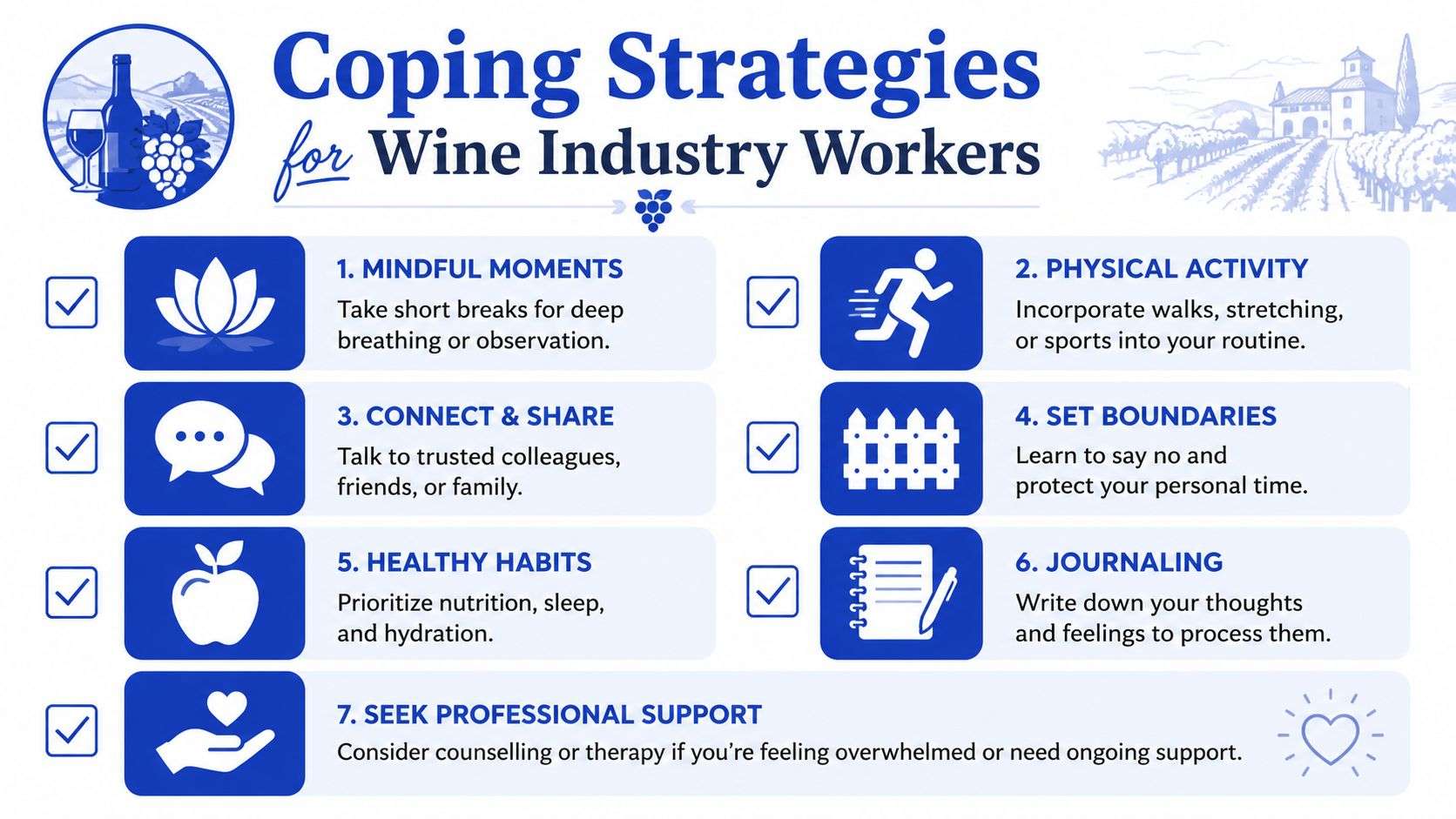
These strategies are not a replacement for counselling. But they can lower the temperature in your body and mind enough to make the day more manageable.
If anxiety has been building for a while, start small. The point is not to do everything perfectly. The point is to interrupt the accumulation of stress.
The five-minute reset
When your body is activated, reasoning with yourself usually isn't the first step. Regulation comes first.
Try this:
- Put both feet on the floor.
- Exhale longer than you inhale.
- Name five things you can see.
- Drop your shoulders.
- Unclench your jaw.
- Ask, "What is the next task, not the whole week?"
This works because anxiety often drags your attention into the future. Grounding brings you back to the next manageable moment.
Build tiny transitions
A lot of workers leave the job physically but not mentally. One of the simplest ways to help is to create a repeatable transition between work mode and home mode.
You might try:
- Change one sensory cue: Wash your hands slowly, change your shirt, or step outside for two minutes before driving home.
- Use one sentence: "Work is done for today. I can return to this tomorrow."
- Make the drive quieter: Turn off stimulating audio for part of the trip so your nervous system has room to settle.
These seem small, but small rituals tell your body the emergency has ended.
Reduce anticipatory anxiety
Many people suffer most before the busy period starts. They imagine everything at once and feel overwhelmed before the actual demand arrives.
A better approach is to break preparation into categories:
| Category | Helpful question |
|---|---|
| Workload | What part of the week is actually predictable? |
| Body | What tends to happen to my sleep, eating, or tension when stress rises? |
| Support | Who can I check in with before I hit my limit? |
This can be especially important if you are also neurodivergent or already managing workplace stress patterns that overlap with anxiety. Some readers may find this resource on ADHD and Autism workplace support helpful as a general workplace-stress reference.
Helpful reminder: Coping skills are not supposed to erase pressure. They are meant to stop pressure from stacking so high that your body never gets a reset.
Watch your coping habits without judging yourself
In wine and hospitality settings, alcohol can be both part of the culture and an easy way to soften the edge after work. If you notice that your usual "wind down" habit is becoming your main anxiety strategy, pause and get curious rather than harsh.
Questions that can help:
- Am I using this to enjoy, or mainly to stop feeling?
- Do I have other ways to come down?
- Do I feel more anxious the next day?
- Have I started hiding how stressed I am?
Gentle honesty is more useful than self-criticism.
Finding and Accessing Supportive Counselling in Summerland
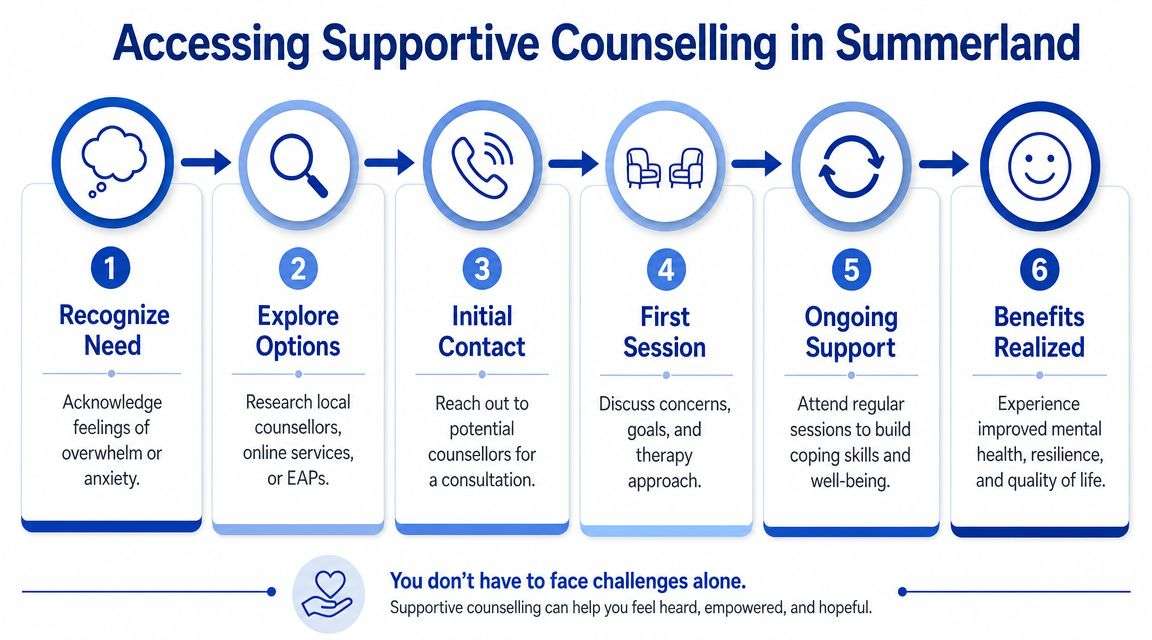
It is 9:30 at night after a long tasting-room shift, or 5:00 in the morning before fruit comes in, and that is the moment you finally admit something feels off. Your chest is tight, your mind will not settle, and the usual ways of pushing through are not working as well anymore. That is often when people start looking for help.
In Summerland, getting support is not only about deciding to go. It is also about whether counselling can fit around harvest hours, weekend traffic, cellar work, family demands, and the fact that small-town privacy can feel personal.
Why access matters in a wine-industry town
A trade survey found that stress and anxiety were common among drinks professionals, while far fewer reported using available support. That gap makes sense if help is only available at the exact hours you are pouring, hosting, lifting, selling, or trying to catch up on sleep.
For wine industry workers, access works a bit like irrigation timing. Support may be available in theory, but if it does not reach you at the right time and in a usable way, it does not help much in practice.
What to look for
A good fit is not only about credentials. It is also about whether the support matches the shape of your life.
Helpful things to look for include:
- Scheduling that reflects real work hours: Evening, weekend, phone, or virtual sessions can make therapy possible during tourism season or harvest.
- Clear privacy practices: In a community where people recognize each other at the grocery store, it helps to know confidentiality is part of professional care.
- A practical approach to anxiety: Useful counselling usually includes concrete strategies for sleep, spiralling thoughts, panic, tension, and burnout patterns.
- Understanding of local stressors: Seasonal income swings, physical fatigue, customer-facing pressure, and the overlap between wine culture and after-work drinking should not need a long explanation.
If you are comparing options, exploring counselling support for anxiety can help you get a sense of what services, session formats, and approaches are available.
What the first contact is usually like
The first step is often simpler than people expect.
You usually do not need to tell your whole story in one message. A brief note such as "I have been on edge for months," "harvest season hits me hard," or "my sleep and anxiety are affecting work" is enough to begin. The early conversations are there to sort out fit, not to test whether your struggle is serious enough.
In the first session, a counsellor will often ask how anxiety shows up in daily life. They may ask about work patterns, sleep, relationships, alcohol use, physical symptoms, and what tends to make things worse during busy seasons. The goal is to get a clear map. Once you can see the pattern, it becomes easier to choose the right tools.
In-person or virtual
Both can work well.
In-person sessions can feel steadier for people who want a private space away from home or work. Virtual sessions can be easier if your schedule changes week to week, if travel time is hard to manage, or if being seen entering an office adds stress.
The better option is usually the one you can attend consistently. Regular support helps in the same way regular pruning helps a vine. Small, timely adjustments are often more useful than waiting until strain has built up too far.
Answering Your Questions About Counselling for Anxiety
My life is hectic during harvest. What if I can't commit to weekly sessions?
That's common, and it doesn't mean counselling isn't for you. Many people start with a rhythm that matches the season they're in, then adjust as work changes. The key is to be honest about your schedule so support can be realistic rather than idealised.
A counsellor can also help you focus on short, high-yield strategies you can use between sessions when life gets intense.
I'm worried people will find out. Is counselling private in a small town?
Yes. Confidentiality is a core part of professional counselling. In a smaller community, that concern is understandable, but ethical practice is built around protecting your privacy.
If you're anxious about being seen entering an office, virtual or phone sessions may feel easier.
How do I know if my after-work drinking is relaxing or coping?
That question matters, especially in wine and hospitality work. Industry guidance for beverage and hospitality professionals warns against "numbing" stress with alcohol and encourages connection and professional support instead.
A few signs it may be leaning into coping rather than simple enjoyment:
- You rely on it to calm down: It feels like the only reliable off-switch.
- Your anxiety rebounds: The next day you feel more tense, low, or unsettled.
- You hide the pattern: You minimise it, justify it quickly, or feel defensive when thinking about it.
- It replaces other supports: Sleep routines, connection, rest, and reflection start shrinking.
You do not need to wait until a habit becomes severe to talk about it in counselling.
What if I don't have a big crisis? I just feel constantly on edge.
That is enough. In fact, support is often most helpful before anxiety reaches a breaking point. Ongoing dread, rumination, tension, poor sleep, or feeling like you're always bracing for something are meaningful signs.
You don't need a perfect explanation. "I can't seem to settle" is a good place to start.
Can counselling help if my anxiety is tied to layoffs, role changes, or losing my place in the industry?
Yes. Anxiety related to work loss often includes grief, shame, uncertainty, and identity disruption. Counselling can help with all of those.
That support can include processing the shock itself, rebuilding routine, managing panic or insomnia, and making space for the question many workers internally carry: who am I if this job changes or disappears?
If any part of this felt familiar, it may help to learn more about the support available through Interactive Counselling. Reaching out doesn't have to be a big leap. It can be one steady next step toward feeling more grounded, more supported, and less alone in what you're carrying.
Clinically Reviewed By
Amy Mosset, MCP, RCC-S
Amy Mosset is a Master Practitioner in Clinical Counselling, Clinical Supervisor, and the owner of Interactive Counselling. She provides trauma-informed, evidence-based care and clinical supervision to registered therapists, with a focus on ethical practice, client safety, and high-quality therapeutic outcomes.