You walk through downtown in early September and something feels off. The lake is still there, the hills have not gone anywhere, and the weather may even be pleasant. Yet your body and mood can react as if a familiar source of energy has been switched off. For more information, see our Penticton counselling.
In Penticton, that reaction often has more than one cause. Less daylight can affect sleep, energy, and mood. At the same time, the town itself changes quickly after an intense summer. The crowds thin out, seasonal jobs may slow, routines tighten, and the social buzz that carries many people through July and August gets quieter almost all at once.
That fast shift can feel a bit like stepping out of a brightly lit, noisy room into a dimmer, quieter one. Your eyes adjust. Your nervous system has to adjust too. For some residents, that adjustment brings relief. For others, it brings sadness, irritability, fatigue, or a sense that life suddenly feels smaller.
If you feel low when the season turns, there is nothing strange about that. It does not mean you are ungrateful or doing fall the wrong way. It means your mind and body are responding to a real change in light, routine, connection, and local economic pace. If you want more context on how people in this community handle these changes, this guide can help you handle off-season slowdowns in Penticton.
This article looks at why that post-summer slump can hit especially hard here, and why Penticton's mix of seasonal biology, community rhythm, and tourism-driven whiplash deserves a closer look.
The September Shift The Feeling After Summer in Penticton
On a September evening in Penticton, you can feel the change before you fully name it. The beach is still there, the hills are still beautiful, and some days still carry summer warmth. But the town sounds different. Patios empty earlier. Seasonal signs come down. Streets that felt bright and busy in August can suddenly feel quieter, almost overnight.

For many residents, that shift lands in the body before it becomes a clear thought. You may feel heavier getting out of bed, less interested in making plans, or more emotional at small disappointments. Some people notice a dull flatness. Others feel irritable, restless, or oddly lonely, even when nothing is obviously wrong.
That reaction is understandable in a place like Penticton. Here, summer is not only a weather pattern. It is a whole rhythm. Long evenings, visitors, events, fuller work schedules, more spontaneous connection, and more time outside can all act like a steady current carrying people along. When that current slows, the change can feel like stepping off a moving walkway. You are still in the same place, but everything suddenly requires more effort.
This is one reason the post-summer slump here can feel sharper than generic articles about seasonal mood changes suggest. In Penticton, the loss of light often arrives alongside a social and economic drop in pace. For some people, there is less structure after summer work ends. For others, there is financial stress, fewer invitations, or a sense that the town has folded inward for the season. Biology, community rhythm, and local work patterns can all press on mood at the same time.
If this hits you, it does not mean you are weak, ungrateful, or "bad at fall." It usually means your system is responding to a real environmental shift.
Even changes in indoor light can affect how a space feels during darker months, which is part of why some people pay closer attention to daylight at home. Vivid Skylights' health insights offer a practical example of how natural light supports wellbeing in everyday settings.
If you notice your motivation dipping as the town settles into the off-season, it can help to read more about how people handle off-season slowdowns in Penticton with more self-understanding and less self-blame.
The Science Behind the Seasonal Slump
When people feel low in autumn, they often blame themselves first. They think they're being lazy, negative, or unmotivated. But the body responds to seasonal light changes in very real ways.
Your brain notices the loss of light
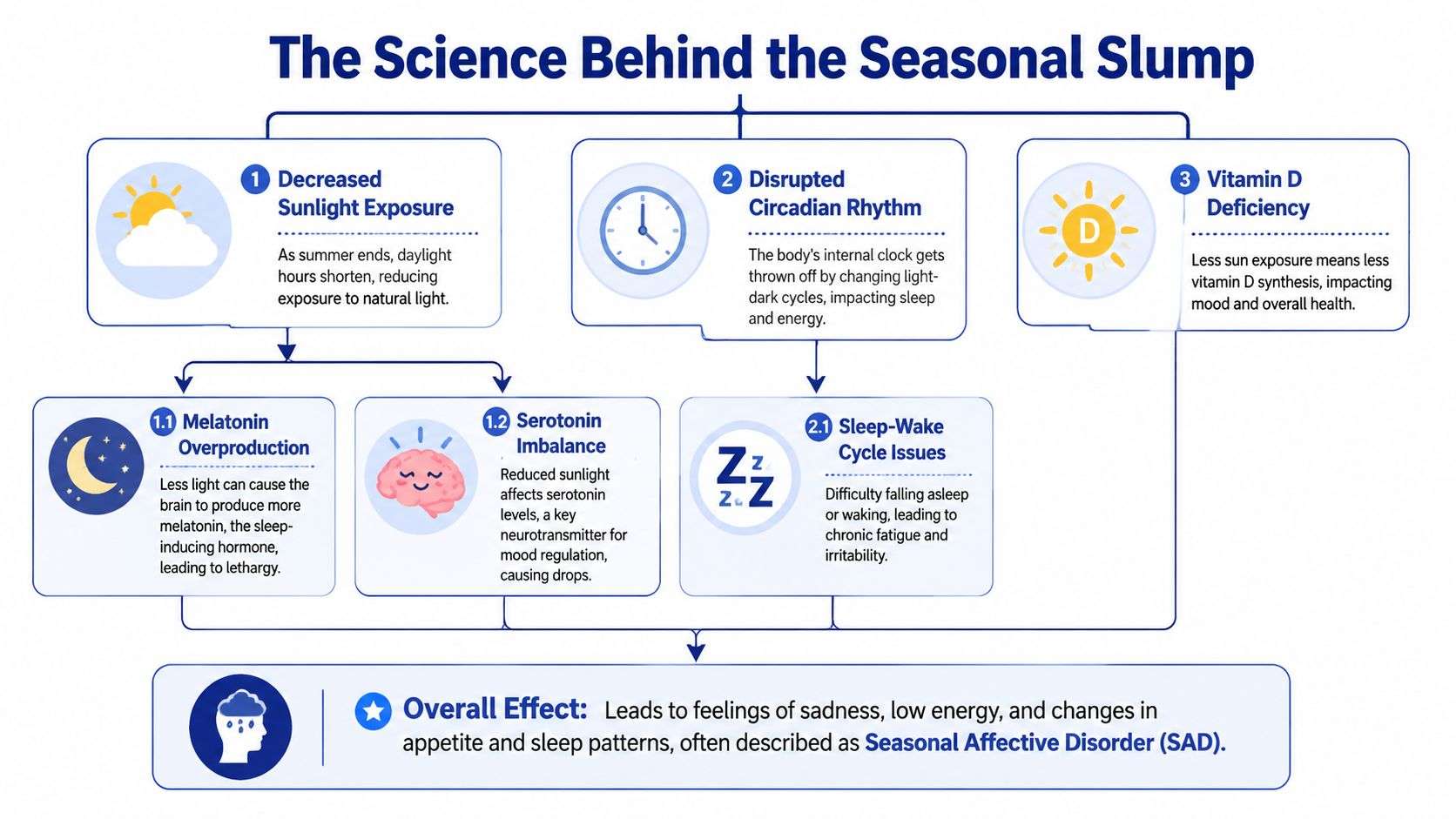
In Penticton, the move from summer to fall means losing 3 to 4 hours of daily daylight in about eight weeks, and that rapid change can disrupt circadian rhythm and contribute to a drop in serotonin (Mayo Clinic on seasonal changes and mood). Circadian rhythm is your internal clock. It helps regulate sleep, alertness, appetite, and energy.
A simple way to think about it is this. Your mood system is partly light-sensitive. During summer, long bright days give your brain strong signals about when to wake, when to feel alert, and when to wind down. In fall, those signals shrink quickly. Some people adjust smoothly. Others feel as if their internal timing gets scrambled.
Why energy can drop so fast
Reduced light exposure can affect serotonin, a neurotransmitter tied to mood regulation. It can also affect melatonin, which helps regulate sleep. When these systems shift, people may notice:
- Morning fogginess that feels harder to shake
- More sleep or less restful sleep
- Lower motivation for ordinary tasks
- A heavier mood that arrives without a single obvious cause
This is one reason autumn sadness can feel confusing. You may still care about your life, your family, or your work. You just don't feel like yourself.
Practical rule: If your mood drops around the same time each year, pay attention to the season instead of assuming it's a character flaw.
Some people also find it helpful to make their homes brighter and more open to daylight where possible. Articles such as Vivid Skylights' health insights can be useful for thinking about how light exposure affects daily wellbeing at home, even though home changes alone won't treat depression.
Seasonal depression isn't "made up"
When this pattern repeats seasonally, some people may meet criteria for seasonal affective disorder, often called SAD. Others may not have SAD specifically, but still feel a real seasonal slump. Both experiences matter.
If you've noticed that your energy changes with the seasons across the valley, this broader pattern of Okanagan climate and energy may help put your own experience into context.
More Than Just Darker Days Psychological and Social Shifts
Biology is only part of the story. The end of summer also changes how life feels.
In Penticton, summer often brings a looser rhythm. People spend more time outside, run into neighbours more often, and say yes to things more spontaneously. There are more reasons to leave the house, more daylight to do it in, and more shared energy in the community. When that disappears, many people don't just lose sunshine. They lose momentum.
Routine disruption can hit harder than people expect
The end of summer often stacks several changes at once. School starts. Work rhythms change. Some households shift from flexible days to tightly scheduled ones almost overnight. Research noted that even minor routine changes can affect mental health, and that overlapping schedule disruptions can contribute to social withdrawal and loss of motivation (seasonal routine disruption and mental health).
That helps explain why September can feel emotionally crowded. A parent may be managing school forms, earlier mornings, and family stress all at once. A teen may be grieving the freedom of summer while trying to adjust socially and academically. Someone without children may still feel the city's pace tightening around them.
The loss of your summer self
Many people have a "summer version" of themselves. Maybe you're outdoors more, seeing friends more often, moving your body naturally, or feeling more hopeful. When that version fades, it can feel personal. People often think, Why can't I stay like that all year?
Usually, the answer isn't lack of discipline. It's context. Humans are greatly affected by environment, structure, and social contact.
A few common thoughts show up in this season:
- "I don't know what's wrong with me." Often, nothing is wrong in a moral sense. Your mind and body may be reacting to multiple changes at once.
- "I should be used to this by now." Predictable stress can still hurt, even when it's familiar.
- "I'm withdrawing, and I don't know why." Low energy and overthinking often feed each other. Some readers find it helpful to understand why overthinking causes anxiety when their mind gets busier as the season gets darker.
Sometimes the hardest part of autumn isn't sadness itself. It's how quickly people start judging themselves for having it.
Penticton's Unique Challenge The Post-Tourism Whiplash
Penticton has an added layer that many general articles miss. This isn't only a story about shorter days. It's also a story about a town that changes tempo dramatically after summer.
When the whole town shifts gears
During peak season, the city feels fuller. There are more visitors, more movement, more activity, and often more work connected to that energy. Then the season ends, and the contrast can feel abrupt. For some residents, the emotional drop mirrors the economic one.
There's a real gap in the research here. General information on seasonal mood changes doesn't fully capture what happens in resort and tourism-dependent communities. The idea sometimes described as economic whiplash reflects a combination of disappearing social buzz and financial stress as seasonal work slows down (research gap on post-summer stress in resort towns).
Why this can feel so personal
If your summer income is tied to tourism, fall may bring more than a mood shift. It may bring uncertainty. Even for people who aren't seasonal workers themselves, a partner's schedule may change, household finances may tighten, or the whole community may feel less lively.
That can create a layered emotional response:
- Loss of stimulation because the town feels quieter
- Loss of connection because casual social contact decreases
- Loss of structure after a high-demand season ends
- Financial worry as work opportunities narrow
Some people describe this as feeling "flat" after a busy summer. Others feel guilty for not enjoying the slowdown. But a sudden drop in demand, noise, contact, and income can leave people feeling unsteady.
If summer burnout turns into autumn emptiness, some people find it useful to compare that pattern with Interactive Counselling burnout tips, especially when the body swings from overdrive into exhaustion.
A local grief people don't always name
There can also be a quiet kind of grief in this transition. Not grief in the formal sense, but grief for the loss of ease, warmth, busyness, identity, and possibility. Penticton residents often don't just miss summer weather. They miss what summer allowed them to be.
That missing deserves language. When people can name the shift, they're often less likely to assume they're failing to cope.
Signs to Gently Watch For in Yourself and Loved Ones
These feelings are common enough across the Pacific Northwest that 59% of residents in a similar regional climate reported being affected by seasonal depression. That doesn't mean every rough week is depression. It does mean it's worth noticing patterns early and gently.

Emotional signs
Ask yourself:
- Has your mood stayed low for more days than not?
- Are you more irritable or tearful than usual?
- Do small tasks feel emotionally heavier than they did a month ago?
Physical and mental changes
You might also notice:
- Sleep shifts, such as sleeping more, wanting to stay in bed, or feeling unrested
- Concentration problems that make work, school, or parenting feel harder
- Low energy that doesn't improve much with rest
Behavioural clues
Sometimes the clearest signs are behavioural:
- Pulling back from people you usually like spending time with
- Losing interest in activities that normally help you feel grounded
- Going through the motions while feeling empty inside
If you're still functioning but feel numb, detached, or emotionally shut down, don't dismiss that just because you're keeping up appearances.
For some people, this can overlap with what many describe as high-functioning depression and emptiness. You can be managing work, parenting, or errands and still be struggling.
Practical Ways to Brighten the Darker Months
You can't stop the seasons from changing, but you can respond in ways that make the transition less punishing. The goal isn't to force yourself to feel cheerful. It's to support your nervous system, your routines, and your relationships so the darker months feel more manageable.
Build a fall rhythm on purpose
Summer often provides structure naturally. Fall usually doesn't. That means you may need to create more intentional anchors.
Try choosing a few fixed points in your day:
- A consistent wake time even on weekends
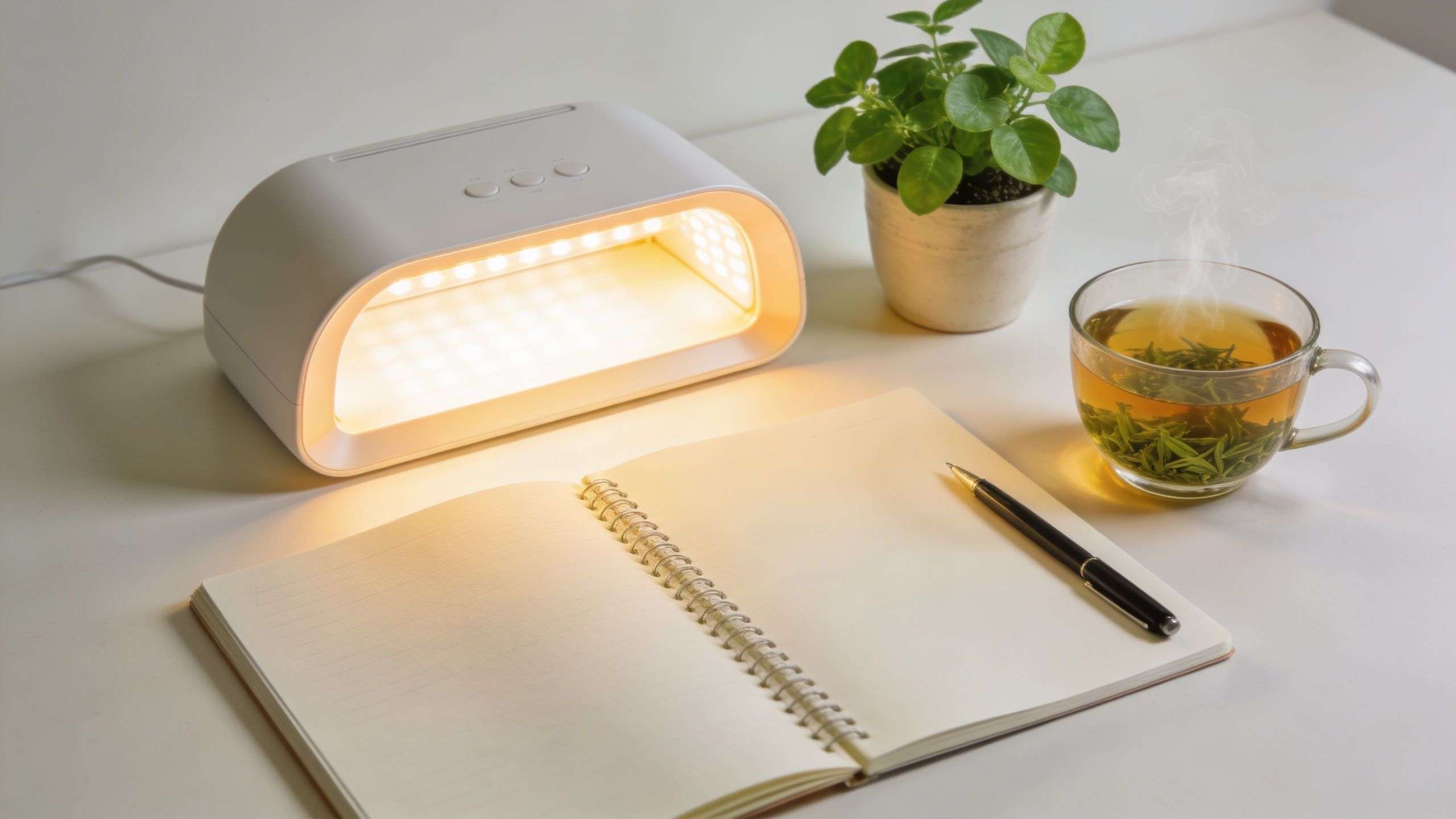
- A morning light routine such as opening blinds right away, sitting near a bright window, or using a SAD lamp if appropriate for you
- Regular meals so your body isn't running on stress and caffeine alone
A simple rhythm can reduce the sense that life is slipping out of your hands.
Protect daylight like it matters
For many people, it does matter. If possible, get outside during daylight hours, especially earlier in the day. That might mean a short walk, coffee on the porch, walking a child to school, or running one errand on foot.
If your days are packed, think small. Ten intentional minutes outdoors can be easier to sustain than a plan that depends on perfect motivation.
Small shift: Don't wait to "feel like it" before seeking light, movement, or connection. Those actions often come before the mood improvement, not after.
Replace lost spontaneity with planned connection
One hidden part of summer is how social contact happens almost accidentally. In fall, if you don't plan it, it may not happen.
Consider:
- Booking a weekly coffee date with one friend
- Joining an indoor class or group that meets regularly
- Making family routines warmer, such as soup night, game night, or an evening walk
This isn't about forcing yourself to be busy. It's about preventing isolation from taking over.
Work with your body, not against it
When motivation drops, people often become harsher with themselves. They set unrealistic exercise goals, cut themselves off socially, or judge their tiredness as laziness. A better approach is to reduce friction.
Here are a few examples:
| Situation | Lower-friction response |
|---|---|
| You don't want to exercise | Put on shoes and walk around one block |
| Evenings feel bleak | Turn on lamps earlier and play music while making dinner |
| Mornings feel impossible | Set out clothes, breakfast items, or work materials the night before |
| You keep cancelling plans | Make shorter plans with easier exits |
Use support before things get severe
Self-care can help, and sometimes it isn't enough on its own. One option is talking with a counsellor who understands anxiety, depression, life transitions, and seasonal stress. Interactive Counselling offers in-person, phone, and secure virtual counselling for people navigating these concerns, along with support for children, youth, couples, and families.
The healthiest goal for fall and winter usually isn't perfection. It's steadiness.
When and How to Reach Out for Professional Support
A lot of people assume they should only seek help if things become unbearable. That belief keeps many people struggling longer than they need to.
Counselling doesn't have to be a last resort. It can be a practical response to a predictable pattern. If you notice that every autumn brings the same drop in mood, energy, patience, or connection, that's already enough reason to talk to someone.
Signs it may be time
Professional support may be worth considering if:
- Your mood has stayed low for weeks
- Daily functioning is getting harder, including work, school, parenting, or relationships
- You're withdrawing more and more
- Your usual coping tools aren't helping enough
- You dread this season every year
What support can look like
Counselling for post-summer sadness often focuses on understanding patterns, reducing self-blame, building routines that fit real life, and learning ways to manage the seasonal shift before it deepens.
It can also help if this time of year touches older grief, trauma, burnout, or relationship strain. Sometimes autumn doesn't create the problem. It removes the distractions that were keeping the problem at bay.
Reaching out early isn't overreacting. It's often the most grounded thing you can do.
If you're thinking about support, learning more about choosing a therapist in Penticton can be a calm next step.
Frequently Asked Questions About Post-Summer Sadness
Is this real depression, or am I just being dramatic?
If the change feels real to you, it matters. Not every difficult autumn means clinical depression, but recurring low mood, fatigue, withdrawal, and loss of interest deserve attention. You don't need to minimise your experience to be reasonable.
Why does this happen after summer, when summer is supposed to be the "good" season?
That timing makes sense for many Penticton residents. The end of summer can bring loss of light, loss of routine, loss of social energy, and sometimes financial or family stress all at once. The contrast itself can be part of what hurts.
How is this different from ordinary sadness?
Ordinary sadness usually has a clearer trigger and tends to move through more naturally. Seasonal depression or post-summer slump often feels more persistent. It can affect sleep, energy, motivation, concentration, and interest in daily life.
What if I'm worried about my child or teenager?
Pay attention to changes in sleep, irritability, school engagement, social withdrawal, and loss of interest in things they usually enjoy. Young people don't always say "I feel depressed." Sometimes they show it through shutdown, frustration, or increased sensitivity.
Can these feelings go away on their own?
Sometimes they ease as people adapt to the season. Sometimes they linger or deepen without support. If the pattern keeps returning, or if this year feels harder than usual, it's okay to get help rather than wait it out.
If this article helped you feel more understood, you can learn more about Interactive Counselling and the kinds of support available for seasonal changes, depression, anxiety, and life transitions. You don't have to be in crisis to want steadier footing through the darker months.
Clinically Reviewed By
Amy Mosset, MCP, RCC-S
Amy Mosset is a Master Practitioner in Clinical Counselling, Clinical Supervisor, and the owner of Interactive Counselling. She provides trauma-informed, evidence-based care and clinical supervision to registered therapists, with a focus on ethical practice, client safety, and high-quality therapeutic outcomes.