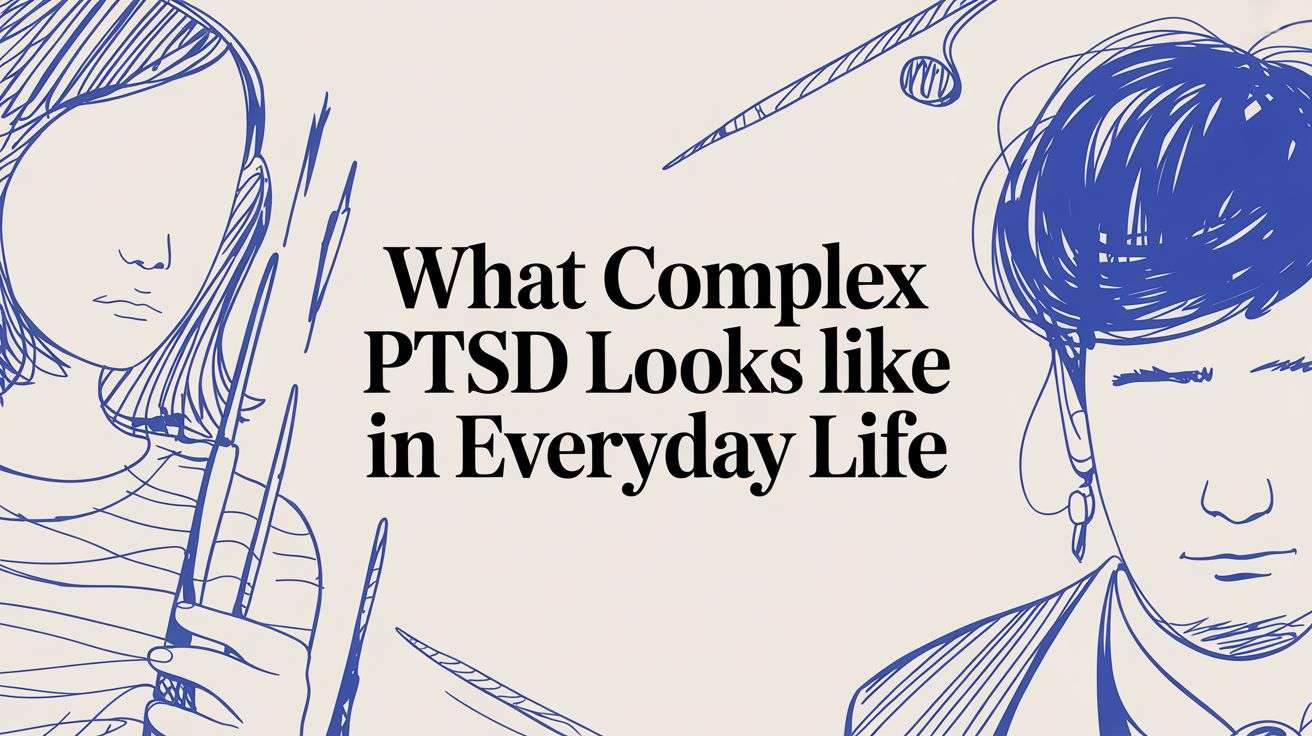
Complex PTSD can look less like dramatic flashbacks and more like an ongoing sense of unsafety, intense emotional pain, relationship confusion, and a harsh inner critic that doesn’t switch off. Nearly 70% of PTSD/CPTSD patients rate emotional pain as more impairing to daily life than fear itself, which helps explain why so many people feel overwhelmed in ordinary moments without understanding why. For more information, see our trauma counselling.
Living with an Invisible Weight
You snap at your partner because they sounded slightly impatient. Then the shame hits. Or your boss sends a short email, and your body reacts as if something terrible is about to happen. Maybe a friend takes longer than usual to text back, and suddenly you feel panicked, numb, or convinced you’ve done something wrong.
"In everyday life, Complex PTSD looks like a persistent feeling of being unsafe, struggling with relationships and self-worth, and experiencing overwhelming emotions that seem out of proportion to the current situation, all stemming from prolonged trauma."
For many people, this experience is confusing because it doesn’t always look like what they think trauma is supposed to look like. They may not have clear flashbacks. They may seem capable, responsible, and high-functioning on the outside. Inside, though, they feel braced, exhausted, ashamed, and alone.
Complex PTSD, often shortened to C-PTSD, can offer a map for understanding this pattern. It isn’t a sign that you’re broken. It’s one way of describing what can happen when a person lives through prolonged trauma, especially trauma that happens in relationships where they should have been safe.
If this sounds familiar, it can also help to explore support for your judging voice. Many people with C-PTSD carry an inner commentary that is far harsher than anything they would ever say to someone they love.
Why it feels so hard to explain
Part of the pain of C-PTSD is that much of it is invisible.
Other people may only see:
- The reaction: Tears, withdrawal, irritability, shutting down
- The behaviour: Overthinking, people-pleasing, perfectionism, avoiding conflict
- The aftermath: Apologising, isolation, exhaustion, self-blame
They usually don’t see the internal flood underneath. They don’t see how a small present-day event can light up an old survival response.
Sometimes the most painful part is not knowing that your reactions make sense in the context of what you lived through.
Understanding Complex PTSD and Its Roots
A person can grow up, build a life, go to work, answer texts, and still carry a nervous system that never fully learned, "I am safe now." That is part of what makes C-PTSD so hard to recognise. The struggle is often less about dramatic memories and more about the quiet ways danger keeps shaping daily life from the inside.
C-PTSD usually develops after prolonged trauma, especially trauma that happens in relationships where safety should have existed, such as childhood abuse, neglect, coercive control, domestic violence, trafficking, captivity, or repeated violation. PTSD can follow a single overwhelming event. Complex PTSD tends to form when the stress is repeated, inescapable, or woven into everyday life over time, as described by the World Health Organization’s ICD-11 description of complex PTSD.
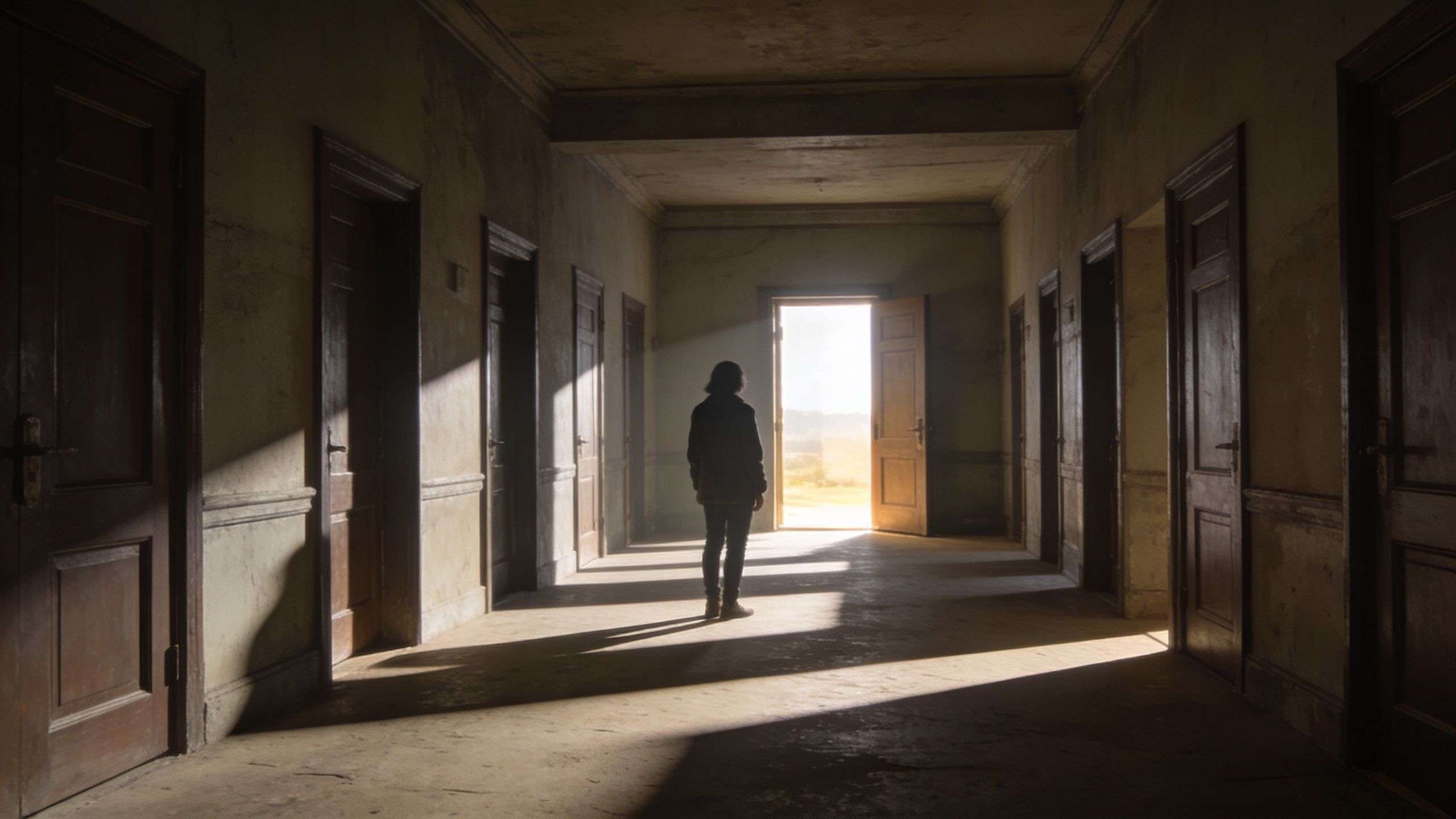
When danger was repeated, the body adapts
The body is built to protect you. If home, school, or a relationship felt unpredictable, your system may have learned to scan constantly, stay small, please quickly, or disconnect fast. Those were not overreactions at the time. They were survival skills.
A smoke alarm is useful during a real fire. If it becomes so sensitive that steam from the kettle sets it off, life starts revolving around the alarm. That is one way prolonged trauma can affect the nervous system. The body begins reacting to cues that resemble earlier danger, even when the present moment is different.
This helps explain a point many articles blur together. Emotional pain and fear are not the same thing. Emotional pain says, "this hurts." Fear says, "something bad is about to happen." In C-PTSD, ordinary disappointment, conflict, distance, or criticism can trigger fear, not just sadness. A delayed reply may feel less like annoyance and more like impending rejection, exposure, or harm.
Why relationships can feel both comforting and unsafe
Relationships are often where the invisible effects show up most clearly.
If the people you depended on were also frightening, inconsistent, invasive, or unavailable, closeness itself can start to feel complicated. Part of you may long for care. Another part may brace for betrayal, engulfment, shame, or loss of control. Researchers at the International Society for Traumatic Stress Studies describe complex trauma as affecting emotion regulation, relationships, attention, and sense of self in ways that reach far beyond memory symptoms alone (ISTSS overview of complex trauma).
That can show up in ordinary moments:
- You want reassurance, then feel exposed when someone gets close
- You care a great deal about people, yet assume kindness comes with a cost
- You miss others, but feel exhausted by being emotionally known
- You feel hurt, then quickly switch into alarm, apology, or shutdown
These patterns can be confusing because they often look like personality. They are often learned protection.
If you’re starting to connect present-day reactions with early experiences, guidance on childhood trauma signs can help put words to patterns that once felt ordinary.
What often gets misunderstood
Many people assume trauma always looks like fear during a flashback. Sometimes it does. With C-PTSD, it can also look like a person who is capable on the outside and profoundly unsafe on the inside.
Grief can overlap with trauma in ways that intensify this inner strain, especially after painful or complicated losses. The Evermore Directory on complicated grief offers a useful overview of how prolonged loss can keep the nervous system stuck in distress.
A simple comparison can make these invisible experiences easier to spot:
| Experience | How it may look from the outside | What it may feel like inside |
|---|---|---|
| Hypervigilance | Overprepared, tense, easily startled | “I keep waiting for something to go wrong.” |
| Dissociation | Spacey, forgetful, detached | “I’m here, but I can’t fully connect.” |
| Trust difficulty | Guarded, avoidant, inconsistent | “I want closeness, but closeness does not feel safe.” |
| Emotional flooding | “Too sensitive” or “too reactive” | “This got big inside me very fast.” |
C-PTSD often lives in that gap between what others see and what your body is experiencing. Once that gap has language, people often feel less confused and less ashamed.
The Three Core Struggles of Complex PTSD
A lot of people expect trauma to show up as obvious fear. In complex PTSD, it often manifests more subtly. The outside may look functional, calm, even high-achieving. Inside, the person may be working very hard just to stay steady.
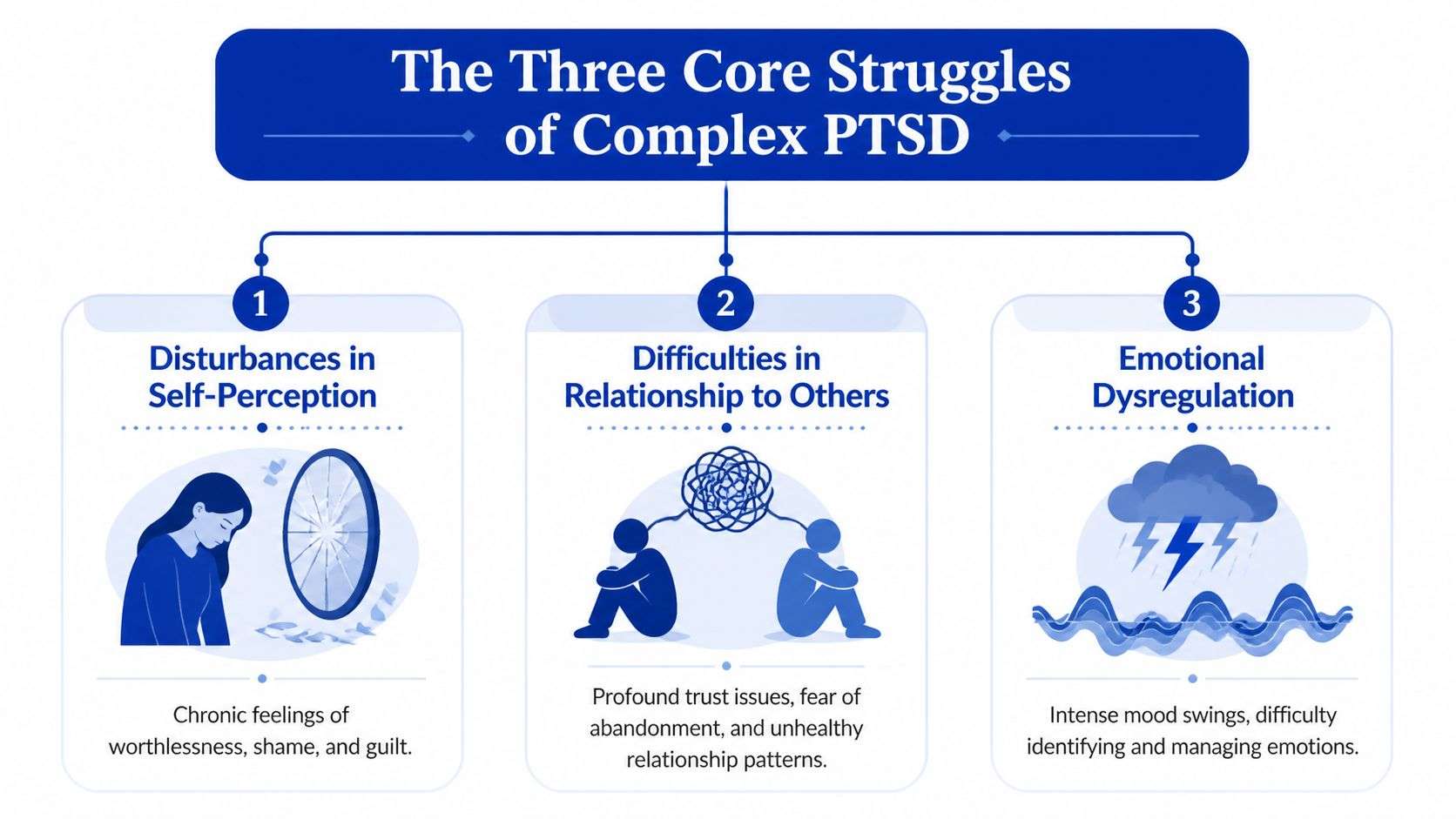
These struggles usually gather around three areas. Emotions become hard to regulate. Your view of yourself grows harsh and distorted. Relationships stop feeling simple or safe. They are connected parts of the same survival system.
Emotional storms, shutdown, and the difference between pain and fear
The first struggle is often misunderstood because people use the word "triggered" for many different experiences. Emotional pain and fear are not the same thing, even though they can arrive together.
Emotional pain says, "This hurt." Fear says, "I am not safe." In C-PTSD, the nervous system can treat a painful moment as a danger signal. A cancelled plan may register as abandonment. Mild feedback may feel like exposure. A tense morning can leave your whole body braced for the rest of the day.
That is why reactions can seem sudden or confusing. One person gets flooded with shame, panic, anger, or grief. Another goes numb, foggy, or far away inside. Both responses can come from the same place. A system that learned long ago that strong feeling and danger often traveled together.
A helpful way to picture it is a smoke alarm that has become too sensitive. Burnt toast and a house fire both set it off. The alarm is trying to protect you, but it cannot always tell present stress from old threat.
A painful view of the self
The second struggle lives in self-perception.
Many people with C-PTSD do not walk around thinking, "I have a trauma symptom." The thought sounds more like truth. "I ruin things." "I am too much." "I should need less." "If someone is upset, it must be my fault." These beliefs often formed in environments where blame, unpredictability, criticism, neglect, or role reversal were common.
Over time, the mind can absorb those conditions like a child absorbing weather. If the weather is cold every day, you stop asking whether it is cold. You assume cold is normal. In the same way, chronic trauma can teach a person to experience shame as identity rather than injury.
This part is largely invisible. Other people may see competence, kindness, or resilience. The person living it may feel defective while doing ordinary things like answering a text, asking for help, or making a small mistake.
Loss can intensify this self-blame. Grief often presses on old beliefs about worth, abandonment, and emotional need. If that overlap feels familiar, the Evermore Directory on complicated grief offers a useful explanation of how mourning can become more tangled when earlier wounds are already active.
The push and pull of closeness
The third struggle shows up in relationships, but it goes deeper than being bad at trust.
For many people with C-PTSD, connection feels like wanting warmth while expecting burns. Part of you reaches for closeness. Another part braces for disappointment, engulfment, rejection, or betrayal. That inner conflict can create patterns that look inconsistent from the outside but make sense through a trauma lens.
Someone might:
- feel strongly attached, then suddenly pull away
- stay in unhealthy relationships because chaos feels familiar
- read neutral silence as rejection
- apologize quickly to prevent conflict
- struggle to set limits without guilt or panic
- test whether others will stay, then feel ashamed for testing
These patterns often confuse partners and friends. The person with C-PTSD may feel confused too. They may care greatly and still shut down, cling, hide, or lash out when closeness starts to feel risky. For couples trying to make sense of this cycle, understanding attachment for couples therapy can offer useful language for what is happening underneath.
Why these three struggles often arrive together
These difficulties are linked because the nervous system does not separate emotion, identity, and relationship safety as neatly as people often assume.
A short exchange with a partner can activate all three at once. Their tone stings. Your body reacts before you can think. Then the inner critic joins in and says you are the problem. A few seconds later, you are shutting down, arguing, or asking for reassurance with a level of urgency that surprises even you.
That sequence is one reason C-PTSD can feel so invisible and so exhausting. The present moment gets filtered through old learning at high speed. Once you can see that pattern clearly, the reactions start to make more sense, and shame begins to loosen.
What Complex PTSD Looks Like in Everyday Life
For many people, the clearest answer to what complex ptsd looks like in everyday life isn’t found in diagnostic language. It’s found in the moments that keep repeating. The meeting you dread all morning. The kind comment you can’t believe. The parenting moment that leaves you shaking long after your child has moved on.

At work
At work, C-PTSD may look like being highly capable and very unsettled at the same time.
You might be the person who never misses a detail because your body is always scanning. Other people praise your thoroughness, but they don’t see the cost. You reread messages repeatedly. You overprepare for meetings. A vague comment from a supervisor can stay in your body for the rest of the day.
Sometimes it shows up as perfectionism. Not the polished kind people admire, but the frightened kind that says, “If I make a mistake, something bad will happen.” A simple request for revisions can feel less like collaboration and more like exposure.
Other times it looks like avoidance. You freeze before sending the email. You procrastinate on tasks you could do well because being seen feels risky. The issue isn’t laziness. It’s threat.
In romantic relationships
In intimate relationships, C-PTSD often creates a confusing mix of closeness and fear.
Your partner says, “You seem quiet. Are you okay?” and your body hears accusation. Or they need time alone, and you instantly feel rejected. You may know logically that they care about you, yet another part of you is preparing for abandonment, betrayal, or criticism.
A lot of people expect trauma to show up mostly as fear. But research from Yale School of Medicine found that nearly 70% of PTSD/CPTSD patients rate emotional pain as more impairing to daily life than fear itself. That matters because many people with C-PTSD aren’t only dealing with fear responses. They are also living with profound emotional pain, disconnection, and difficulty tolerating intense feelings during ordinary life (Yale School of Medicine on emotional pain in PTSD).
That emotional pain can look like:
- Feeling devastated by a small misunderstanding
- Going numb during conflict, then feeling guilty afterwards
- Needing reassurance but struggling to receive it
- Assuming the worst when communication changes even slightly
A partner may see “overreacting.” The person living with C-PTSD often feels an old wound being opened in real time.
As a parent
Parenting can activate C-PTSD in especially tender ways.
A child’s crying may create a level of internal alarm that feels hard to explain. A messy room, sibling conflict, whining, or backtalk can trigger overwhelm that seems disproportionate to the moment. Afterwards, the parent may feel flooded with guilt and wonder, “Why did that hit me so hard?”
For some parents, the hardest part is not anger. It’s helplessness. Their child’s distress awakens their own old distress. They may shut down emotionally, become overly controlling in the name of safety, or swing between intense involvement and exhaustion.
C-PTSD can also affect trust in your own instincts. A parent may second-guess every decision, fear repeating the past, or feel intense shame after ordinary ruptures that could otherwise be repaired.
In friendships and everyday social life
Social life can become subtly exhausting.
You might replay conversations afterwards and look for signs you were too much, too awkward, too needy, too distant. You may keep people at arm’s length, not because you don’t care, but because being known feels dangerous. Or you may overextend yourself, constantly available to others while having no clear sense of your own limits.
A common pattern is misreading safety. Unsafe people may feel familiar. Safe people may feel boring, suspicious, or hard to trust. That can make friendship and community feel confusing instead of nourishing.
In the body and in quiet moments
C-PTSD doesn’t only appear in relationships. It also shows up in the body.
A person may feel tired even after sleep because their system rarely settles fully. They may startle easily, struggle to fall asleep, lose time when overwhelmed, or feel disconnected from their body in stressful moments. Quiet can feel uncomfortable because the body uses stillness to scan for what might go wrong next.
These patterns are easy to minimise because they become normal. Many people don’t realise how much energy it takes to live in this state until they begin to experience moments of genuine regulation.
Finding Solid Ground When You Feel Unsafe
When your nervous system is activated, insight alone usually isn’t enough. You may understand that you’re safe and still feel unsafe. That’s why grounding matters. It helps your body catch up to the present.

Start with the five senses
Grounding works best when it is simple enough to use under stress.
Try one of these:
- Sight: Name five things you can see. Be literal. “Blue mug. Window frame. Lamp.”
- Touch: Hold something textured, cold, or solid. A smooth stone, ice cube, blanket, or mug can help.
- Sound: Listen for the farthest sound you can hear, then the nearest.
- Smell: Use hand cream, tea, soap, or another scent that feels steady and familiar.
- Movement: Press both feet into the floor and notice the support underneath you.
This isn’t about forcing yourself to calm down. It’s about giving your body evidence that it is here, now.
Use short phrases that reduce threat
When people are overwhelmed, long affirmations often don’t land. Short, believable phrases tend to work better.
Try:
- “I’m having a response.”
- “This feeling is real, and it will pass.”
- “I am in the present.”
- “I don’t have to solve everything right now.”
These phrases are most effective when paired with a physical action such as exhaling slowly, touching a chair, or looking around the room.
“Safety often begins with small repetition, not one big breakthrough.”
Build a small menu before you need it
It helps to prepare a personal grounding list while you are relatively calm. You can keep it in your phone or on a card in your wallet.
A basic menu might include:
- One body action: unclench jaw, lower shoulders, press feet down
- One sensory tool: mint, lotion, textured object
- One supportive phrase: “I’m safe enough in this moment”
- One connection option: text a trusted person, step outside, ask for space
People who want a fuller picture of why these tools help may find understanding nervous system dysregulation useful.
Gentle boundaries can be grounding too
Sometimes the most regulating thing you can do is reduce the incoming stress.
A few examples:
- “I need a minute before I answer.”
- “I want to continue this conversation later.”
- “I’m at capacity today.”
- “That doesn’t work for me.”
If these phrases feel frightening, that’s understandable. For many trauma survivors, boundaries were not respected, or were punished. Start small. A delayed reply, a shorter visit, or one honest sentence can be enough to begin.
The Path to Healing When and How to Get Help
Self-understanding can bring enormous relief. It can also reach a limit. C-PTSD usually affects the body, emotions, identity, and relationships all at once, which is why many people need more than self-help tools.
A major complication in Canada is that C-PTSD is recognised in the ICD-11 but absent from the DSM, which contributes to a provider knowledge gap. Research discussed in 2025 also notes that most clinicians need specialised training to diagnose and treat C-PTSD effectively, and that this condition often requires “intensive and wide-ranging types of intervention” rather than generic PTSD care (research on the provider training gap and C-PTSD treatment needs).
What trauma-informed help should feel like
Good trauma therapy usually doesn’t begin by pushing you into the hardest memories.
It starts with:
- Safety: You’re not pressured to disclose before you’re ready.
- Pacing: The work moves at a speed your system can tolerate.
- Collaboration: You’re not being “done to.” Your voice matters.
- Skills first: Many people need stabilisation before deeper trauma processing.
C-PTSD's slower response to standard trauma-focused approaches, compared to single-incident PTSD, is an important factor to acknowledge. If therapy has felt too fast, too exposing, or unhelpful in the past, that doesn’t mean you failed therapy. It may mean the approach wasn’t matched to the kind of trauma you’ve lived through.
What support may include
Depending on the therapist and the person, treatment may involve a mix of bottom-up and top-down work. That can include grounding, body awareness, emotional regulation, attachment-focused work, grief support, and eventually trauma processing when enough safety is in place.
Some people also want to learn about broader models of holistic PTSD care so they can better understand the range of supports that may complement therapy. The key is not to chase every method. It’s to find care that is steady, informed, and appropriately paced.
If you’re looking for local support, exploring Penticton therapy options may help you start narrowing down what kind of therapist and setting feel right for you.
Signs it may be time to reach out
You don’t need to wait for a crisis.
Consider reaching out if:
- Daily life feels organised around avoiding triggers
- Relationships keep repeating painful patterns
- You feel ashamed of reactions you don’t understand
- You’re exhausted from staying “fine” on the outside
- Past therapy didn’t help and you want a more trauma-informed fit
Seeking help is not an overreaction. For many people with C-PTSD, it’s the first time their survival strategies are met with understanding instead of judgment.
Frequently Asked Questions About Complex PTSD
Is Complex PTSD a formal diagnosis in Canada
It can be recognised clinically through the ICD-11, which includes C-PTSD. At the same time, it is not included in the DSM, which many North American clinicians still rely on. That difference can create confusion for clients who clearly relate to C-PTSD but have only heard the term PTSD in healthcare settings.
The practical takeaway is simple. If the label matters to you, ask a therapist how they understand and assess prolonged trauma, not only single-incident trauma.
Can C-PTSD be healed
Many people can heal significantly, but healing usually means more than symptom reduction. It often involves building a steadier relationship with your body, your emotions, your boundaries, and other people.
For some, the word “cure” creates pressure. A gentler and more accurate frame is that the nervous system can learn new patterns. Reactions can become less intense, less frequent, and less controlling. Life can feel wider again.
How is C-PTSD different from BPD
People ask this because there can be overlap in emotional intensity, relationship instability, and fear of abandonment. The difference is that C-PTSD is understood as a trauma-related condition shaped by prolonged harm, especially interpersonal trauma.
That doesn’t mean only one explanation is ever relevant, and it doesn’t mean labels should be assigned casually online. It does mean trauma history matters. If you’ve been given a diagnosis that doesn’t fully fit, it’s reasonable to ask whether complex trauma has been carefully considered.
How can I support someone who may have C-PTSD
Support usually helps most when it increases safety rather than pressure.
Helpful approaches include:
- Be consistent: Follow through when you can.
- Don’t force disclosure: Let them choose when and how to talk.
- Stay regulated: A calm tone often helps more than perfect words.
- Respect boundaries: Even if you don’t fully understand them.
- Encourage informed help: Gently, without pushing.
If someone you care about is also navigating trauma and grief together, resources on related care can help you understand the broader picture. For example, some readers may find it useful to compare approaches to addressing PTSD in Orange County with the trauma-informed principles discussed here, especially when looking at what supportive care can include.
What if I’m not sure whether this is C-PTSD or “just me”
This may be the most important question of all.
If you repeatedly feel unsafe in safe moments, struggle to trust your own worth, or react strongly in ways that make no sense to you afterwards, that deserves compassion and attention. You do not need to prove that your past was bad enough. You do not need certainty before seeking support.
A good trauma-informed therapist won’t rush to label you. They’ll help you understand the pattern, reduce shame, and build safety from there.
If this article felt familiar, you don’t have to sort through it alone. Interactive Counselling offers compassionate, trauma-informed support for individuals, couples, parents, and families who want help making sense of overwhelming reactions, relationship pain, and the lasting effects of trauma.
Clinically Reviewed By
Amy Mosset, MCP, RCC-S
Amy Mosset is a Master Practitioner in Clinical Counselling, Clinical Supervisor, and the owner of Interactive Counselling. She provides trauma-informed, evidence-based care and clinical supervision to registered therapists, with a focus on ethical practice, client safety, and high-quality therapeutic outcomes.
Living with complex PTSD is exhausting — and healing is possible with the right support. Our trauma counselling in Kelowna includes EMDR and somatic approaches designed for exactly these patterns.