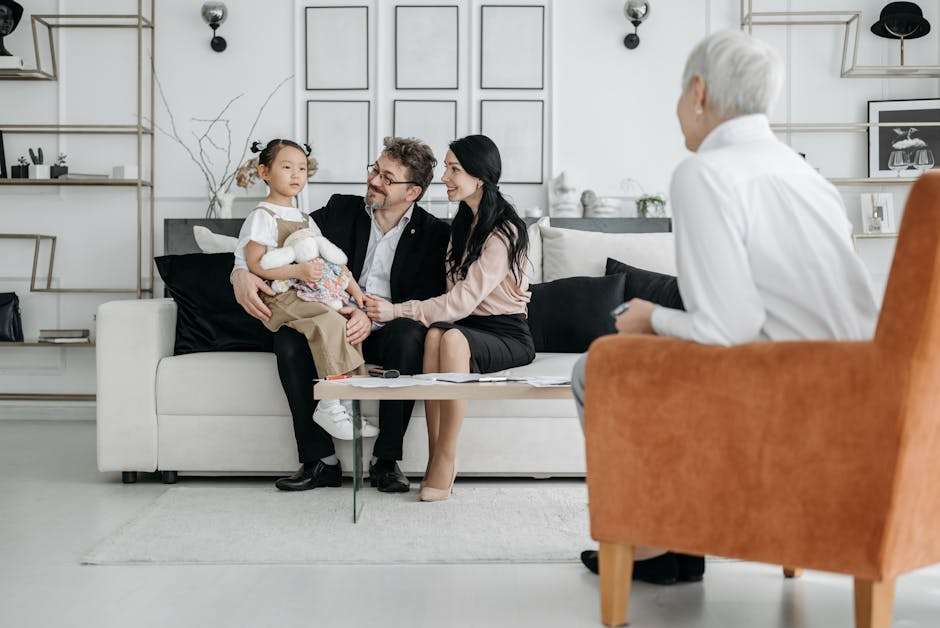
You’re excited about the wedding, the shared home, the plans, the tiny practical decisions, and the big emotional ones. You may also have a quiet question in the background. How do we make sure we’re preparing for a marriage, not just a wedding? That’s where premarital counselling can feel less like a scary idea and more like a grounded, caring step forward. For more information, see our couples counselling.
"Premarital counselling is a structured, proactive way for couples to strengthen communication, prepare for conflict, and build a healthier foundation for marriage, and for many couples it is absolutely worth it."
Building a Foundation Before You Say 'I Do'
Premarital counselling is often misunderstood. Many couples assume it’s only for relationships in trouble, or that it means someone has doubts. In practice, it’s usually the opposite.
It’s a way to slow down and ask better questions before life gets busier. You’re not waiting for problems to pile up. You’re learning how to work as a team before stress, family pressures, money decisions, or major transitions test the relationship.

What premarital counselling actually is
Premarital counselling is a structured form of couples therapy designed for people who are planning a long-term commitment, often engagement or marriage.
You sit down with a trained counsellor and explore the building blocks of a shared life, such as:
- Communication patterns
- Conflict habits
- Money values
- Family expectations
- Intimacy and affection
- Roles and responsibilities
- Future goals
This process resembles drawing up a blueprint before building a house. A blueprint doesn’t guarantee there will never be repairs. It helps you understand the structure, spot weak points early, and build on purpose.
Premarital counselling doesn’t ask, “Are you perfect together?” It asks, “How will you care for this relationship when life gets complicated?”
That distinction matters.
Many couples are already having some of these conversations on their own, but often only at the surface level. You may know your partner wants children, for example. You may not yet know what each of you believes discipline, work-life balance, or family involvement should look like in practice.
Why couples often feel hesitant
A lot of the apprehension comes from not knowing what therapy will be like. People worry they’ll be judged, pressured, or told whether they should get married.
A good counsellor doesn’t act like a judge. They help you understand your patterns and make thoughtful decisions together.
Sometimes the uncertainty around marriage shows up in smaller questions too. Couples often spend time discussing rituals, timing, names, families, and even symbolic details like wedding ring placement traditions, because those practical conversations often lead into deeper ones about values, culture, and expectations.
If you’re also navigating a shared home, this guide on what to discuss before living together can help you start some of those conversations early.
What Really Happens in a Premarital Counselling Session
For many couples, the biggest fear is the unknown. They picture awkward silence, a therapist taking sides, or a long emotional interrogation.
Most sessions feel much more practical than that.
The first meeting
The first session usually focuses on context. The counsellor wants to understand who you are as a couple, how long you’ve been together, what’s going well, and what you want support with.
They may ask questions like:
- How did you meet?
- What first drew you to each other?
- What tends to create tension between you?
- What are you hoping to gain from these conversations?
- Are there any topics you’ve been avoiding?
This isn’t about finding fault. It’s about mapping the relationship clearly.
Some counsellors use structured questionnaires or relationship inventories. Others rely more on guided conversation. Both approaches can work well when they help the couple feel seen and understood.
What the counsellor is doing
A premarital counsellor is usually doing three things at once.
| Counsellor role | What it looks like in session | Why it helps |
|---|---|---|
| Observer | Notices patterns in how you speak, react, interrupt, or withdraw | Helps bring hidden dynamics into the open |
| Guide | Asks deeper questions and keeps the conversation focused | Moves you beyond surface-level answers |
| Coach | Teaches practical skills for listening, repair, and conflict | Gives you tools you can use at home |
That’s why I often compare premarital counselling to coaching more than refereeing. The counsellor isn’t there to blow a whistle and assign blame. They’re there to help you build skills.
Practical rule: If a session leaves both partners feeling more understood, more honest, and more equipped, it’s usually doing what it should.
A sample session outline
Every counsellor works a little differently, but many premarital counselling processes follow a rhythm like this.
Session one and two
You explore your relationship story, current strengths, and the topics that feel important before marriage.
A couple might realise, for example, that they’re excellent at affection and support, but tend to avoid hard conversations about debt, family boundaries, or future caregiving responsibilities.
Middle sessions
Here, the work becomes more concrete. You might practise communication exercises, unpack a recurring disagreement, or compare assumptions about married life.
One partner may say, “I thought saving aggressively meant being responsible.”
The other might say, “I hear that as fear and scarcity.”
That’s a valuable moment. Not because someone is right, but because both partners start understanding the meaning beneath the behaviour.
Final sessions
The focus often shifts toward integration. You review what you’ve learned, identify pressure points, and create agreements for how you want to handle future strain.
You may leave with a clearer shared plan for:
- How to pause an argument before it escalates
- How to revisit money decisions
- How to protect couple time
- How to handle extended family stress
- How to ask for support sooner rather than later
For a broader overview of the therapy process itself, this explanation of what to expect in couples therapy can make the experience feel less mysterious.
What it feels like from the couple’s side
Most couples don’t leave saying, “That was intense therapy.” They leave saying something more like, “We finally talked about that properly.”
That matters.
Premarital counselling often gives couples a calm, structured space to have conversations they’ve wanted to have, but haven’t known how to begin. And because the setting is preventive rather than crisis-driven, there’s often more emotional room for curiosity, humour, and teamwork.
The Evidence-Backed Benefits of Preparing for Marriage
If you’re asking what is pre-marital counselling and is it worth it, evidence matters. Reassurance is helpful, but couples also want to know whether this kind of preparation changes outcomes.
The research suggests that it does.
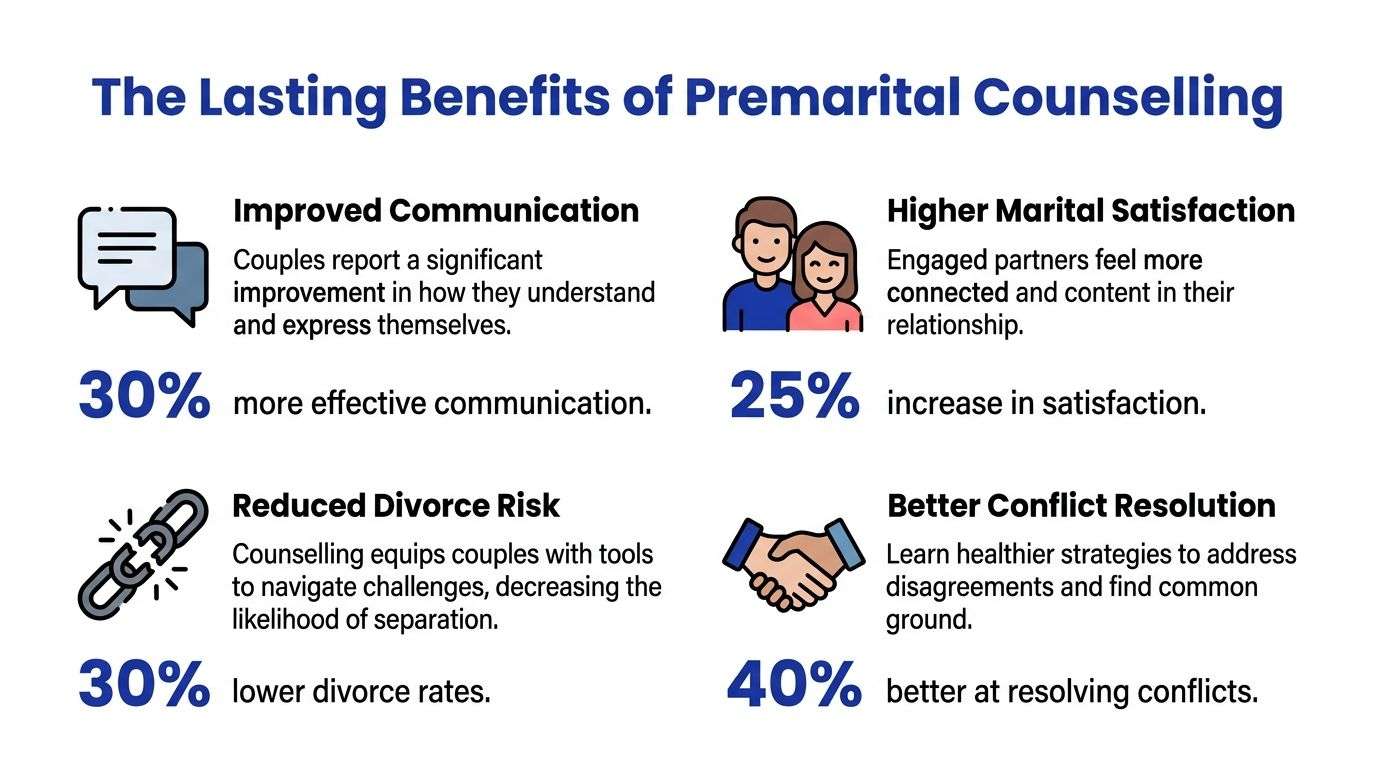
What the data shows
That’s a meaningful finding because it points to two different outcomes. Not only staying together more often, but also experiencing the relationship as better.
Another key point from that same research area is that how couples manage conflict is the most significant predictor of marital success. Structured programs such as PREP showed statistically significant improvements in this area, including a reduction in negative perfectionism with an effect size of η² =.601 (p <.01) in Canadian family therapy research adapting PREP-based models.
Why these benefits make sense in real life
Premarital counselling works best when you think of it as skill-building.
If two people care about each other but don’t know how to repair after conflict, discuss money calmly, or speak about needs without defensiveness, love alone may not be enough. Skills matter.
This is similar to other forms of thoughtful preparation. When couples debate whether custom choices are worthwhile for a major life event, they’re often weighing long-term fit over short-term convenience. That’s part of the same reasoning behind pieces like Are bespoke suits worth it?. A customized foundation often serves you better than a rushed, one-size-fits-all approach.
Benefits couples often notice first
The research is important, but couples usually feel the benefits in everyday moments first.
They may notice:
- Arguments become clearer because they’re discussing the underlying issue instead of the trigger.
- Misunderstandings resolve faster because each person has better language for feelings and needs.
- Differences feel less threatening because they’ve already talked through values and expectations.
- Help-seeking becomes easier because therapy feels familiar rather than frightening.
A useful summary appears in this overview of the benefits of marriage counseling for stronger relationships, especially for couples trying to understand the long-term value of preventive support.
Good premarital counselling doesn’t promise a conflict-free marriage. It helps couples have more honest, less damaging conflict.
The hidden value of preparation
There’s another reason premarital counselling can be worth it. It shifts the timeline.
Instead of discovering major differences after vows, shared debt, children, caregiving strain, or years of resentment, you learn sooner. You build sooner. You repair sooner.
That’s often what makes the process feel relieving. Not because every answer becomes simple, but because uncertainty becomes discussable.
Key Topics You Will Explore Together
Most couples want to know what they’ll talk about. The answer is both practical and highly personal.
Premarital counselling usually covers the areas where couples most often carry unspoken assumptions. These assumptions aren’t bad. They’re just powerful, and they need language.

Communication and conflict
This is usually one of the first areas explored because it affects everything else.
A counsellor may help you notice patterns such as:
- One partner pushes for immediate resolution
- The other needs time and goes quiet
- One uses logic first
- The other needs emotional reassurance first
Neither style is automatically wrong. Trouble starts when each person interprets the other’s style personally.
A simple disagreement about dinner, plans, or chores can quickly become, “You never listen,” or, “Nothing I do is enough,” if the deeper pattern isn’t understood.
You may be asked questions like:
- When you’re upset, do you want closeness or space?
- What makes you feel heard?
- What does a good apology sound like to you?
Money and shared responsibilities
Money is rarely just money. It often represents security, freedom, identity, generosity, or control.
Premarital counselling can help couples talk about:
- Spending and saving habits
- Debt and financial stress
- Joint versus separate accounts
- Household labour
- Career priorities
- What “fair” means
Some couples split bills evenly and still feel resentment because invisible work isn’t being acknowledged. Others have very different risk tolerance around spending and saving.
If financial tension is already part of your relationship, this resource on financial conflict in marriage and resolution strategies offers a helpful starting point.
Family, culture, and expectations
Marriage doesn’t happen in isolation. Two histories, and often two family systems, are coming into contact.
Topics may include:
| Area | Questions that often come up |
|---|---|
| Extended family | How involved do we want parents or relatives to be? |
| Holidays and traditions | Whose traditions matter most, and how will we decide? |
| Boundaries | What stays private between us? |
| Roles | What did marriage look like in your family growing up? |
These conversations can be surprisingly emotional. People often discover they’ve absorbed strong beliefs without realising it.
One partner may assume family drop-ins are a sign of warmth. The other may experience them as a lack of privacy. Both perspectives can make sense.
Intimacy, affection, and emotional safety
This isn’t only about sex. It also includes closeness, reassurance, affection, playfulness, and how each partner experiences connection.
A counsellor might explore:
- How do you each show love?
- When do you feel most connected?
- What makes emotional vulnerability easier or harder?
- How do stress, fatigue, or anxiety affect intimacy?
These conversations can feel vulnerable, but they often bring relief. Many couples care about each other and still haven’t found comfortable language for talking about needs without embarrassment or defensiveness.
The healthiest conversations about intimacy are usually the ones that make both partners feel safer, not smaller.
Trauma, grief, and more complex histories
Standard premarital frameworks can be very effective, but some couples need a more individualized approach.
Research notes that couples where one or both partners have a history of trauma, PTSD, or significant grief may need counselling that adapts to those realities, because past experiences shape present relationship dynamics. The goal is not just skill-building, but building a future that honours both partners’ full life stories, as discussed in this PMC article on relationship education and complexity.
This matters for couples navigating:
- Previous betrayal or abandonment
- Loss of a parent or child
- Military or first responder trauma
- Step-family integration
- Co-parenting stress from earlier relationships
In those situations, premarital counselling isn’t less relevant. It’s often more important. The conversations just need to move at a pace that respects safety and emotional readiness.
Is Premarital Counselling Right for Your Relationship
Some couples know immediately that they want this support. Others wonder whether they’re “the kind of couple” who needs it.
That’s usually the wrong question.
A better question is whether a structured space for honest conversation would help you make a clearer, calmer, more informed commitment.
A practical self-assessment
If you’re unsure, sit together and reflect on the questions below. You don’t need perfect answers. You’re looking for honesty.
How do we handle tension
- When conflict shows up, do we repair well or avoid it?
- Do small disagreements escalate quickly?
- Do either of us shut down, get sharp, or become defensive under stress?
How aligned are we on future decisions
- Have we talked concretely about children, caregiving, work, and lifestyle?
- Do we understand each other’s financial values, not just financial facts?
- Have we discussed boundaries with extended family?
Are there topics we keep postponing
- Are we avoiding certain conversations because they feel too loaded?
- Do we assume love will solve differences we haven’t worked through?
- Is one of us more certain about the future than the other?
If several of those questions stir discomfort, premarital counselling may be very worthwhile.
It’s not only about strengthening the relationship
Sometimes the most loving outcome is clarity.
Research suggests that while premarital counselling decreases divorce likelihood by about 50% for couples who marry, it also helps some couples recognise when they shouldn’t move forward. Notably, 10 to 15% of couples who engage in premarital counselling decide not to proceed with the engagement, according to this report summarising findings on the clarifying role of premarital counseling.
That can sound unsettling at first, but I see it differently. Clarity before marriage is not failure. It’s wisdom.
Signs it may be especially useful
Premarital counselling tends to be particularly helpful when:
- You love each other but communicate very differently
- You’re joining families, households, or parenting roles
- One or both of you carry trauma, grief, or trust wounds
- Wedding planning has exposed stress you didn’t expect
- You want to enter marriage with intention rather than assumption
A strong relationship isn’t one that never needs support. It’s one where both people are willing to learn.
If you’re still asking whether it’s worth it for us, that question alone may be a sign that thoughtful preparation would help. The point isn’t to prove your relationship is broken. It’s to give it the best conditions to grow.
How to Find the Right Premarital Counsellor
Finding the right counsellor matters almost as much as deciding to go. A skilled therapist can help both of you feel safe, respected, and engaged. A poor fit can make the process feel stiff or unhelpful.

What to look for first
Start with the basics.
Look for someone who:
- Has appropriate professional credentials
- Works with couples regularly
- Uses an evidence-informed approach
- Can explain their process clearly
- Makes room for both partners equally
In British Columbia, many couples look for a registered clinical counsellor. If you’re beginning your search, this page about working with a registered clinical counsellor may help you understand what to look for.
Fit matters more than polish
A counsellor does not need to sound impressive. They need to help both of you feel able to speak openly.
Notice whether the therapist:
| Good signs | Concerning signs |
|---|---|
| Welcomes both perspectives | Seems to align with one partner too quickly |
| Explains confidentiality and structure clearly | Stays vague about how sessions work |
| Handles tension calmly | Looks uncomfortable with disagreement |
| Respects culture, identity, and family context | Makes assumptions about how marriage should look |
Questions to ask a potential counsellor
You’re allowed to interview a therapist. That’s not rude. It’s wise.
Consider asking:
- What experience do you have with premarital counselling specifically?
- How do you structure the process?
- How do you handle situations where one partner is more hesitant than the other?
- Do you use a particular model for couples work?
- How do you support couples dealing with trauma, grief, or step-family dynamics?
- What should we expect from the first session?
- How do you make sure both partners feel heard?
A simple way to assess the first session
After meeting a counsellor, each partner can answer these three questions privately and then compare notes:
- Did I feel respected?
- Did I feel safe being honest?
- Did this person help us understand ourselves more clearly?
If the answer is yes for both of you, that’s a strong sign.
If one of you felt dismissed, confused, or pushed, it may not be the right fit. That doesn’t mean premarital counselling isn’t for you. It may mean you need a different counsellor.
Frequently Asked Questions About Premarital Counselling
Is premarital counselling only for religious couples
No. Many religious communities offer premarital education, but premarital counselling itself is not limited to a faith setting.
Plenty of couples choose a secular, evidence-informed approach focused on communication, conflict, money, intimacy, and shared expectations. The heart of the process is preparation, not doctrine.
Does our relationship have to be in trouble to benefit
Not at all.
Premarital counselling is most helpful when used proactively. It’s designed to help couples build skills before patterns become entrenched. In that sense, it’s less like emergency repair and more like preventative care.
What if my partner is hesitant
That’s common.
A hesitant partner is often worried about being blamed, analysed, or pushed into uncomfortable conversations too fast. It can help to frame counselling accurately. You’re not going because the relationship is failing. You’re going because the relationship matters.
Try saying something simple and non-accusatory, such as: “I don’t want us to wait until something feels hard to learn how to handle it together.”
How many sessions does premarital counselling usually take
A common misconception is that it has to be long and open-ended. In Canada, 65.6% of couples therapy cases are resolved within 20 sessions, and premarital counselling is often shorter because it is preventive rather than crisis-focused. It typically ranges from 4 to 8 sessions, according to this overview on what percentage of marriages survive after counseling.
For many couples, that makes it feel much more manageable than they expected.
What if counselling brings up difficult truths
That can happen, and it’s part of why the process can be so valuable.
Sometimes difficult truths lead to growth, better communication, and a stronger commitment. Sometimes they reveal serious incompatibilities that were being minimised. Either outcome is more workable when it happens before a legal, financial, and emotional commitment becomes harder to untangle.
The goal isn’t to force a particular outcome. It’s to help you make one with open eyes.
Your Next Chapter Starts Today
A healthy marriage doesn’t begin with having all the right answers. It begins with a willingness to ask honest questions, listen well, and keep learning each other over time.
Premarital counselling can offer exactly that. It gives couples a steadier place to talk about the topics that shape daily life and long-term partnership. For many people, that makes it one of the most caring investments they can make before marriage.
If you’re curious, uncertain, or ready to prepare with more intention, that curiosity is worth respecting. Support doesn’t mean something is wrong. Often, it means you’re taking the relationship seriously in the best possible way.
If you’d like to learn more about relationship support, Interactive Counselling offers evidence-informed counselling for couples and families in a compassionate, practical, non-judgmental setting.
Clinically Reviewed By
Amy Mosset, MCP, RCC-S
Amy Mosset is a Master Practitioner in Clinical Counselling, Clinical Supervisor, and the owner of Interactive Counselling. She provides trauma-informed, evidence-based care and clinical supervision to registered therapists, with a focus on ethical practice, client safety, and high-quality therapeutic outcomes.