If you’ve spent what feels like a lifetime struggling with focus, wrestling with your emotions, or feeling chronically behind, you’re far from alone. For so many adults, the path to understanding Attention-Deficit/Hyperactivity Disorder (ADHD) starts with that nagging feeling—a sense that something is fundamentally off, but without a name for it.
"Many people are diagnosed with ADHD later in life because the classic childhood symptoms, like visible hyperactivity, often transform into less obvious adult struggles such as internal restlessness, chronic disorganization, and emotional intensity, which are frequently misdiagnosed or masked by coping strategies."
The Journey to an Adult ADHD Diagnosis

Discovering you might have ADHD as an adult often feels like finding the missing piece to a puzzle you never even knew you were solving. For decades, the public understanding of ADHD was stuck on the stereotype of a hyperactive young boy who couldn’t sit still in class.
This narrow view meant that countless others—especially girls and those with inattentive symptoms—were overlooked. If you were quiet, performed well academically, or simply got very good at hiding your struggles, your challenges were likely dismissed as personality quirks or mislabelled entirely.
This guide is meant to be a compassionate resource on that journey. While it isn't a tool for self-diagnosis, it is designed to help you make sense of your own experiences. We'll explore why ADHD is so often missed in childhood and look at how its symptoms can show up in completely different ways in adulthood.
What This Guide Will Cover
We’ll walk through the core aspects of the adult ADHD experience, using evidence-based information to help you connect the dots. Here's what you can expect to learn:
- The Hidden Reasons for Late Diagnosis: We'll dive into why so many adults live for years without answers. This includes everything from the evolution of diagnostic criteria to the exhaustive effort of "masking" symptoms to fit in.
- Adult ADHD Symptoms in the Real World: Forget dry clinical checklists. We’ll use relatable, everyday examples to show how challenges with executive function, emotional regulation, and restlessness actually appear in adult life.
- Navigating an Assessment: You’ll get a clear, practical roadmap for seeking a formal assessment in Canada. Our goal is to demystify the process and empower you to take the next step with confidence.
- Life After Diagnosis: A diagnosis isn't an endpoint; it's a new beginning. We'll talk about finding your footing, building supportive strategies, and embracing self-understanding with a new sense of compassion.
Since many neurodevelopmental conditions share overlapping traits, you might also find our article on autism in adults offers some helpful perspectives.
Why Is Adult ADHD So Often Missed?
If you've ever found yourself thinking, "How could I possibly have ADHD? Surely someone would have noticed," you're not alone. You’ve actually stumbled upon one of the biggest reasons for late diagnosis. For decades, our collective understanding of ADHD was shaped by a very narrow and specific image: the hyperactive young boy who couldn't sit still in class.
This stereotype became the default filter for diagnosis. Because everyone—teachers, doctors, and even parents—was looking for that classic, disruptive behaviour, countless others were simply overlooked. Girls, who often present with quieter, inattentive symptoms like daydreaming or disorganization, flew completely under the radar. The same went for bright kids who did well in school; their academic success was seen as proof that they couldn't possibly be struggling internally.
It’s no wonder, then, that so many adults are only now connecting the dots and realizing that the lifelong challenges they've faced actually have a name. The diagnostic criteria have thankfully started to catch up, expanding to recognize that ADHD doesn't just vanish after childhood and can look entirely different in adulthood.
The Exhausting Art of Masking
For many who went undiagnosed as kids, getting by meant learning to hide their struggles. We call this masking, and it's an exhausting, full-time job. Think of it like being an actor who never gets to leave the stage or take off their costume. You pour an incredible amount of mental energy into appearing "normal"—forcing yourself to stay focused in long meetings, building complex webs of reminders to avoid forgetting things, and physically suppressing the urge to fidget.
This constant performance is draining. High-achievers, in particular, often become masters of masking. They might have developed sophisticated coping strategies that let them excel at work, but behind the curtain, they're running on empty, trying to manage a brain that feels fundamentally chaotic. If this sounds familiar, our guide on masking neurodivergent traits offers more insight into this experience.
Masking isn't just "trying hard." It's an active, conscious effort to suppress natural ADHD traits to meet societal expectations, often at a significant cost to one's own mental well-being.
The relentless effort to keep up this facade often leads to burnout, anxiety, and a deep-seated feeling of being an imposter. You might live with a constant fear that you're just one mistake away from everyone discovering you're not as put-together as you seem.
Misdiagnosis and Overlapping Conditions
Another huge piece of the puzzle is misdiagnosis. The symptoms of adult ADHD frequently overlap with other mental health conditions, making it easy to mistake for something else. That internal sense of restlessness, the intense emotional swings, and the feeling of being constantly overwhelmed can look a lot like an anxiety disorder. Likewise, years of frustration and self-criticism can easily be diagnosed as depression.
When this happens, you can spend years in treatment for anxiety or depression that never quite seems to work. That’s because it doesn't address the underlying neurological cause. It's like trying to fix a faulty electrical system by just changing the lightbulbs; the real problem remains untouched. This can be an incredibly invalidating experience, leaving you feeling like you're somehow "failing" at therapy, too. For many, the moment they realize ADHD might be the root issue is a revelation—a moment of profound clarity. You can find a detailed breakdown of these challenges in this report from the U.S. Department of Health and Human Services.
How ADHD Symptoms Appear in Adulthood
We’ve talked about why so many people with ADHD don’t get diagnosed until later in life, but what does it actually look like day-to-day? The stereotypical image of a hyperactive kid who can’t sit still is a far cry from the adult reality. That restless energy doesn't just vanish; it often turns inward, creating a whole new set of challenges that are much harder for others to see.
For many adults, hyperactivity isn’t about running around a classroom anymore. It's a persistent internal restlessness. It can feel like your brain has a dozen browser tabs open at once, all playing different videos. Or it might be a constant, buzzing feeling that makes it nearly impossible to truly relax. You might find yourself fidgeting constantly, tapping a foot, or compulsively jumping from one task to another without ever getting to the finish line.
The Brain's Air Traffic Controller
One of the biggest, and often most frustrating, ways ADHD shows up in adults is through what we call executive dysfunction. The best way to picture this is to think of your brain’s executive functions as its own air traffic controller—the system responsible for organizing, prioritizing, and managing every thought and task. In an ADHD brain, that control tower often feels understaffed, overwhelmed, and like all the planes are trying to land at once.
This is exactly why many adults with ADHD struggle so much with things that seem simple to others. It’s not about being lazy or undisciplined. It's about a neurological challenge that shows up in very real ways:
- Chronic Procrastination: You put off important tasks until the last possible minute, not because you want to, but because the very act of starting feels like trying to push a car uphill.
- Time Blindness: You have a hard time accurately gauging how long things will take. This can lead to being constantly late or missing deadlines, even when you have the best intentions. Time just seems to slip away.
- Clutter and Disorganization: Your desk, your home, or even your computer’s desktop might be a constant mess. It's not that you like living in chaos; it’s that the mental energy required to sort, organize, and put things away feels monumental.
- Emotional Dysregulation: You might experience sudden, intense emotional reactions that feel completely out of proportion to the situation. A minor frustration can feel like a catastrophe, or a small criticism can trigger a wave of shame and despair.
The following diagram really brings home the main reasons ADHD is missed, which directly influences how these symptoms present in adulthood.
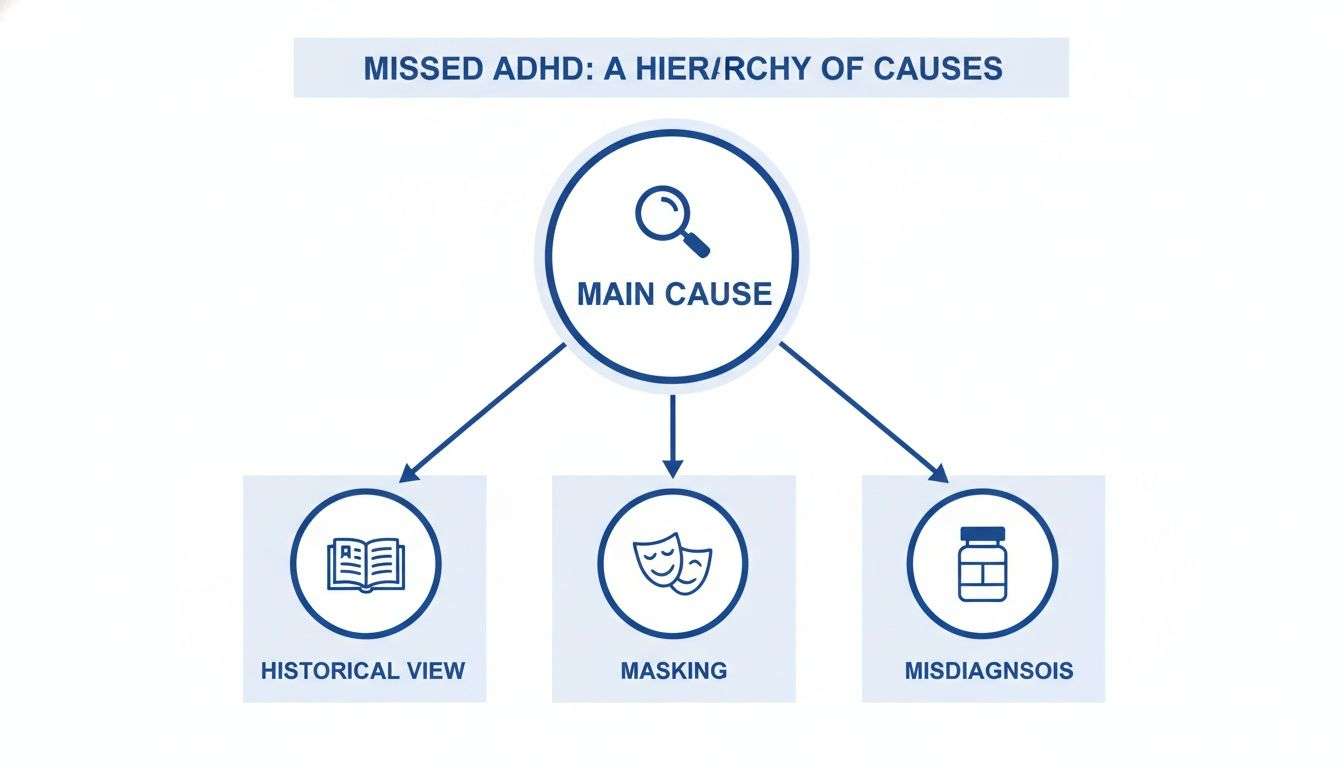
As you can see, outdated perspectives, misdiagnosis, and the learned habit of masking all play a part in why ADHD can stay hidden for so long. Learning to spot these patterns in your own life is often the first real step toward understanding what’s going on. For a more detailed breakdown, you can learn more about the signs of ADHD in adults in our comprehensive guide.
From Childhood Stereotypes To Adult Realities
That disconnect between the childhood stereotype and the adult experience is one of the biggest hurdles to getting help. So many people tell themselves, "I wasn't a hyperactive kid, so I can't have ADHD." The truth is, the core traits just evolve.
To really see the difference, it helps to compare the classic childhood presentation of ADHD with how it often shows up in adults.
ADHD Symptoms Childhood vs Adulthood Presentation
| Core ADHD Trait | Common Childhood Presentation | Common Adult Presentation |
|---|---|---|
| Hyperactivity | Constant running, climbing, and inability to sit still in class. | Internal restlessness, a mind that "never shuts off," fidgeting, or needing to stay busy all the time. |
| Impulsivity | Blurting out answers in class or interrupting others frequently. | Making impulsive purchases, abruptly quitting jobs, or making major life decisions without thinking them through. |
| Inattention | Daydreaming in class, losing homework, or making careless mistakes. | Difficulty focusing in meetings, zoning out during conversations, or struggling to complete boring but necessary tasks. |
This shift from visible, external behaviours to more subtle, internal struggles is precisely why so many adults spend years feeling like something is fundamentally wrong with them, never once guessing it could be ADHD. It’s not a failure of willpower; it’s a difference in brain wiring.
The Unique Challenges for Women With ADHD
The path to an adult ADHD diagnosis is rarely straightforward, but for women, it's often a particularly tangled and frustrating journey. For decades, the classic picture of ADHD was a little boy bouncing off the walls. This narrow view meant that generations of girls who didn't fit that mould were completely missed.
Societal pressure on girls to be agreeable, organized, and quiet creates a perfect storm. Instead of acting out, they learn to turn their struggles inward, becoming experts at hiding the chaos they feel inside. This is a critical piece of the puzzle in understanding women's mental health, as many spend their lives feeling like something is deeply wrong with them, never realizing their challenges have a name.
The Inattentive Presentation
One of the biggest reasons women are overlooked is that they’re more likely to have predominantly inattentive ADHD. These symptoms are quiet, internal, and easy for others to miss—a stark contrast to the more disruptive, external hyperactivity seen in boys.
It often looks like this:
- Appearing "spacey" or lost in their own world: They might zone out in the middle of a conversation or get lost in daydreams.
- Struggling with detailed instructions: Careless mistakes pop up at work or school, not from a lack of intelligence, but from missing a key step.
- Chronic disorganization: A constant battle to keep track of keys, appointments, and deadlines, feeling like their purse or home is a black hole.
- Everyday forgetfulness: Simple things like returning a phone call or paying a bill on time can feel like monumental tasks.
Because these behaviours don't disrupt a classroom, they’re often misinterpreted as personality flaws. A girl isn't seen as having a neurodevelopmental condition; she's just labelled "ditzy," "a dreamer," or told she simply needs to "try harder."
Misinterpreted Symptoms and Hormonal Influences
Even when a woman's struggles are more obvious, they're frequently misunderstood. The intense emotional reactivity and feelings of overwhelm that come with ADHD are often brushed off as anxiety, depression, or a woman just being "too sensitive." After a lifetime of this, it's no surprise that many women do develop secondary anxiety and depression, making a clear diagnosis even trickier.
On top of that, hormonal shifts play a huge role. The fluctuations during puberty, monthly cycles, pregnancy, and perimenopause can throw ADHD symptoms into overdrive. Estrogen helps regulate dopamine, a key neurotransmitter involved in ADHD, so when estrogen levels dip, focus and emotional regulation can plummet. All too often, these very real struggles are dismissed as "just hormones."
The result is a profound, soul-deep exhaustion. Women spend decades trying to keep it all together—juggling a career, family, and home—all while fighting an invisible battle inside their own minds, leading to burnout and an overwhelming sense of failure.
This gender bias has very real consequences. The historical focus on hyperactive boys created a massive diagnostic gap, with many women not getting an answer until their mid-30s or even later. You can read more on these findings from the National Library of Medicine. For many, finally getting that diagnosis is the first step toward self-compassion and finding the support they’ve always needed.
Navigating the Path to an ADHD Assessment
If you’re starting to wonder if you might have ADHD, the idea of getting an assessment can bring up a mix of relief and anxiety. Where do you even start? Just taking that first step is a huge move, and knowing what to expect can make the whole process feel less intimidating.
Your family doctor is usually the best place to begin. This is your chance to talk about the symptoms you're experiencing, share how they're affecting you, and ask for a referral to a specialist. Walking into that appointment prepared makes a massive difference.
Before you go, try to jot down specific examples of your struggles. Think about the challenges you face at work, in your relationships, or even just managing your home. Having real-life scenarios ready helps your doctor see the full picture, not just a generic list of symptoms.
Understanding the Assessment Process
Once you're referred, it's good to know that a proper assessment is thorough. It's not a quick quiz or a simple checklist; it's a deep dive meant to understand how your brain is wired. This formal evaluation is done by a qualified professional, like a psychologist or a psychiatrist.
The assessment itself usually includes a few different parts:
- Clinical Interviews: You’ll have detailed conversations about your symptoms, your history right back to childhood, and the real-world impact these challenges have on your life.
- Self-Report Questionnaires: You, and often someone close to you like a partner or parent, will fill out standardized rating scales. These are used to measure the frequency and severity of your ADHD symptoms.
- Review of Personal History: The specialist will likely want to look at old report cards, performance reviews from work, or other documents. These can provide powerful clues about lifelong patterns of inattention or hyperactivity.
Potential Hurdles and How to Prepare
It helps to be realistic about the roadblocks you might face. Here in Canada, one of the biggest challenges can be a knowledge gap among primary care providers. Many family doctors don't feel confident diagnosing adult ADHD, which can mean you’re left waiting a long time for a specialist referral. It's not uncommon for adults to have their symptoms brushed off as just stress or anxiety. To dig deeper, you can read the full research about these diagnostic barriers.
A comprehensive assessment is about more than just identifying deficits. It's about building a complete picture of your strengths, challenges, and personal history to create a roadmap for moving forward with clarity and support.
Wait times for a psychiatrist in the public health system can also be incredibly long. Because of these issues, some people decide to seek a private assessment with a psychologist, which is often faster.
Navigating the system—and the emotions that come with it—is tough. This is where professional support can be a game-changer. Talking through your options with a counsellor gives you a safe space to manage the stress of the process and get ready for whatever comes next. If you're looking for that kind of support, you can learn more about professional counselling services. Arming yourself with knowledge and support makes the path a whole lot easier to walk.
Life After a Late Diagnosis: Finding Your Footing

Getting an ADHD diagnosis in adulthood can feel like a tidal wave of emotions. At first, there’s often a huge sense of relief. Finally, there's a name for a lifetime of struggles. You start to realise you weren't lazy, undisciplined, or a failure—you were just living with an unmanaged neurological condition.
That validation is incredibly powerful. But right behind it often comes a more complicated mix of feelings. You might grieve for the person you could have been with earlier support. You might feel angry at the systems and people who mislabelled or dismissed your challenges for so long.
Take a breath. All of these feelings are completely normal and part of the process. Giving yourself the grace to sit with this emotional whirlwind is the first real step toward finding your footing on a new path.
A Roadmap, Not a Label
It’s so important to reframe what this diagnosis means. It’s not a life sentence or a limiting label. Think of it more like a roadmap—the instruction manual for your unique brain that you never got. It's the key that finally unlocks a new level of self-understanding and, most importantly, self-compassion.
Instead of constantly fighting against your own mind, you can start working with it. This is where the real work—and the real healing—begins. The question finally shifts from, "What's wrong with me?" to, "What do I need to thrive?"
Evidence-Informed Next Steps
Moving forward is all about building a personalized toolkit. There's no one-size-fits-all solution for ADHD, but a strong foundation usually combines a few key approaches:
- Psychoeducation: This just means learning everything you can about your ADHD brain. When you understand the neuroscience behind why you struggle with executive functions, emotional regulation, or time blindness, it takes the mystery out of it. It’s empowering.
- Practical Strategies: This is where you build systems that actually support your brain. It could be as simple as using visual timers to make time feel more concrete, finding a "body double" (a friend or partner who just sits with you) to get through boring chores, or creating a "launch pad" by the front door so your keys, wallet, and phone always have a home.
- Therapy for Adult ADHD: Finding a therapist who truly gets adult ADHD can be a game-changer. It's not just about symptom management; it's a safe space to unpack the emotional baggage of a late diagnosis and build healthier ways of thinking and behaving. A great first step is learning more about how counselling can help you navigate this new chapter.
A diagnosis offers you the chance to stop blaming yourself for challenges that were never your fault. It is the beginning of a new relationship with yourself, one built on understanding, accommodation, and self-compassion.
For many, this journey also involves revisiting education or career paths. Knowing your rights and the tools available is key. Resources on support for Special Educational Needs and Disabilities (SEND) can offer valuable guidance for navigating academic environments.
Ultimately, this new chapter is about hope. It's an opportunity to rebuild your life in a way that truly honours your needs and celebrates your unique strengths. If you're exploring what support might look like for you, we invite you to learn more. Understanding your options is a powerful and gentle first step.
Frequently Asked Questions About Adult ADHD
If you’re starting to wonder about adult ADHD, you probably have a lot of questions. That’s completely normal. The journey toward understanding yourself better can feel a bit confusing, so let's clear up some of the most common things people ask.
Is it worth getting an ADHD diagnosis as an adult?
Without a doubt, yes. For so many adults, finally getting a diagnosis is a deeply validating experience. It's not about getting a label; it's about getting an explanation. It helps you understand that the challenges you've faced your whole life weren't because you were "lazy" or "just not trying hard enough."
Think of a diagnosis as the key that unlocks a new level of self-awareness. It gives you a framework for your experiences and opens the door to effective treatments, coping strategies, and support tailored to how your brain actually works. Most importantly, it allows you to start treating yourself with a lot more compassion.
What's the difference between being disorganized and having ADHD?
Everyone has moments of disorganization. We all misplace our keys, forget an appointment, or let our desks get messy, especially when life gets stressful. That’s just part of being human.
The difference with ADHD is a matter of degree and impact. The disorganization is chronic, pervasive, and genuinely gets in the way of your life—at work, at home, and in your relationships. It isn't a choice or a lack of desire to be tidy. It’s a direct result of challenges with executive functions, which are your brain's project managers for planning, starting tasks, and staying on track.
How can I get diagnosed with ADHD as an adult?
The best first step is usually to speak with your family doctor. They can listen to your concerns and provide a referral to a specialist, such as a psychiatrist or psychologist, who is qualified to conduct a formal assessment. Before your appointment, it’s helpful to write down specific examples of how your symptoms affect your daily life. A thorough assessment typically involves detailed interviews about your history, standardized questionnaires, and a review of past records like school reports.
How can counselling help if I think I have ADHD?
Whether you have a diagnosis or are just starting to put the pieces together, counselling offers a safe space to figure things out. A therapist who understands ADHD can help in a few key ways.
First, they can help you sort through the powerful emotions—grief for the past, frustration, or even relief—that often come with a late-in-life realization. They can also get right to work with you on practical strategies for managing things like procrastination, emotional overwhelm, and "time blindness." Finally, a counsellor can be an invaluable guide through the assessment process itself, helping you decide what comes next. It’s a place to be heard, build skills, and truly feel understood.
Clinically Reviewed By
Amy Mosset, MCP, RCC-S
Amy Mosset is a Master Practitioner in Clinical Counselling, Clinical Supervisor, and the owner of Interactive Counselling. She provides trauma-informed, evidence-based care and clinical supervision to registered therapists, with a focus on ethical practice, client safety, and high-quality therapeutic outcomes.