For many adults with ADHD, hiding symptoms isn't a choice—it's a reflex developed over years to fit in, sidestep judgment, and navigate a world that wasn't built for a neurodivergent brain. This behaviour, known as masking, is a deeply ingrained survival skill, but it often comes with a significant hidden cost to one's mental health and sense of self.
"Many adults hide their ADHD symptoms through a learned behaviour called masking, which involves consciously or subconsciously suppressing ADHD traits to meet social, professional, and personal expectations, driven by a deep need to belong and avoid stigma."
Why Masking Becomes a Survival Skill
If you’ve ever felt like you're putting on a performance just to get through a regular day, you’re not alone. That feeling is the very essence of ADHD masking—the conscious or subconscious effort to hide or overcompensate for ADHD traits. It's an attempt to appear "neurotypical" to avoid criticism, meet expectations, and feel like you belong.
Imagine you're an actor in a play where everyone else seems to have memorized their lines, but you're improvising every single moment. That’s what masking can feel like. This isn't about being deceptive. It’s a protective shield forged from years of subtle (and not-so-subtle) social feedback. At its core, masking is a brilliant, though utterly exhausting, adaptation designed for survival—socially, professionally, and emotionally.
To truly understand why masking is so common, it helps to break down the powerful forces that drive it. The table below outlines the core reasons why someone might feel compelled to hide their ADHD symptoms.
Why Masking Happens: The Underlying Reasons
| The Driving Force | What It Looks Like in Practice | The Underlying Fear or Goal |
|---|---|---|
| Social & Relational Pressure | Suppressing the urge to fidget, forcing eye contact, or scripting conversations to avoid interrupting. | To be liked and accepted. The goal is to avoid being seen as "weird," rude, or uninterested in social situations. |
| Professional & Academic Demands | Working double the hours to stay organized, creating complex systems of reminders, and staying quiet in meetings to avoid blurting things out. | To keep a job or pass a course. It’s about meeting expectations of focus and consistency in environments that value neurotypical performance. |
| Internalized Stigma & Shame | Hiding difficulties with deadlines or organization, and downplaying struggles by saying "I'm just a bit forgetful." | To avoid being seen as incompetent or lazy. This comes from believing the negative stereotypes about ADHD are personal character flaws. |
These motivations are rooted in real-life experiences. The drive to mask often stems from the sting of being called “lazy” or “ditzy” as a child, the fear of losing a job over a missed deadline, or the simple human desire to connect with others without feeling like an outsider. These experiences teach you, often from a very young age, that showing your authentic ADHD self isn't always safe.
A deeper exploration into the condition itself can offer much-needed clarity. For a solid foundation in understanding adult ADHD, many find that self-education is the first real step toward self-compassion.
Ultimately, masking is an attempt to close the gap between how your brain works and how the world expects you to behave. While it can feel necessary for survival, the constant energy it demands often leads to burnout, anxiety, and a persistent feeling of being an imposter in your own life. Recognizing these patterns is the first step toward finding more sustainable ways to live. Exploring the signs, challenges, and support for ADHD in adults can be an empowering next step on your journey.
The Hidden Signs of ADHD Masking in Daily Life
Masking ADHD isn't about hiding one or two obvious symptoms. It's a complex, often subconscious set of behaviours woven into the fabric of your daily life. These aren't character flaws or personal quirks; they are brilliant, though utterly draining, survival strategies you’ve likely developed over a lifetime.
Recognizing these hidden signs is the first real step toward understanding the immense effort it takes to navigate a world that wasn’t built for a neurodivergent brain. These coping mechanisms can become so ingrained that you might not even realize you’re doing them, often showing up as intense perfectionism, social anxiety, or what others see as extreme organization.
The Over-Compensators and Social Chameleons
Many adults with ADHD fall into a pattern of over-compensation. They're the coworker who never misses a deadline but secretly works all weekend to pull it off. They’re the friend who remembers every single birthday, but only because they have a dozen alarms and three separate calendars to make it happen.
Other common signs are more social. You might become a "social chameleon," constantly shifting your personality to match the expectations of the room. This can look like:
- Obsessively Rehearsing Conversations: Mentally scripting what you’re going to say in a meeting or on a phone call to stop yourself from interrupting or blurting something out.
- Suppressing Fidgeting: Forcing your body to sit perfectly still through long meetings, even when every part of you is screaming for movement. This can mean clenching muscles, digging nails into your palm, or just wiggling your toes inside your shoes.
- Mirroring Others: Subconsciously copying the gestures, tone of voice, or phrases of the person you're speaking with to make sure you appear engaged and "normal."
- Forcing Eye Contact: Consciously reminding yourself to maintain eye contact—so much so that it becomes a distracting side-task, making it harder to actually listen.
This isn't just "being polite." It's a constant, exhausting performance driven by a deep need to be accepted and avoid judgment. It’s an attempt to manage how others see your inner world. If any of this feels familiar, please know you’re not alone. These are widely recognized masking behaviours.
The Price of Hypervigilance and Rigid Routines
Another key sign of masking is creating incredibly rigid systems and routines. While structure helps everyone, for someone masking ADHD, it becomes an essential—but fragile—defence against chaos. A missed alarm or an unexpected change of plans isn't just a small inconvenience. It feels like a threat that could make the entire day's carefully built scaffolding come crashing down.
This hypervigilance goes beyond schedules. It’s re-reading an email ten times to check for typos before you dare hit send, or arriving everywhere 30 minutes early because of an intense fear of being late.
The infographic below really gets to the heart of why we develop these protective, yet taxing, behaviours.

These masking strategies are rooted in deep-seated fears of rejection and failure, which only get louder in structured places like work or school. Research shows that while only 21% of adults with ADHD feel the need to mask around their neurodivergent peers, that number jumps to 57% with family and a staggering 83% at school or work. Learn more about the research into ADHD camouflaging behaviours.
Realizing that these aren't personality defects but survival tactics is a monumental shift. It reframes the story from one of personal failure to one of incredible resilience. Recognizing these signs is the first step toward untangling the mask from your true self and starting the journey to regain control from ADHD challenges.
The Emotional Toll of Constantly Wearing a Mask
Think about what it’s like to hold your breath underwater. For a few seconds, it’s fine. After a minute, your lungs start to burn. Eventually, the need for air is all-consuming. Long-term ADHD masking can feel similar—it's a constant, exhausting effort to suppress your natural instincts just to stay afloat.
This relentless performance isn't just tiring; it takes a serious toll on your mind and spirit. It’s the completely predictable, human response to spending an incredible amount of energy trying to be someone you’re not.
Burnout, Anxiety, and a Fading Sense of Self
When you're constantly monitoring your words, reining in your impulses, and trying to read the room, you're essentially working a second, invisible full-time job. It’s a job you can never clock out of, and the chronic stress often shows up as serious mental health struggles. It's no surprise that so many adults who mask their ADHD also grapple with anxiety, depression, and a bone-deep exhaustion that sleep never seems to touch.
The psychological cost is real. Research consistently shows that ADHD masking is a major contributor to generalized anxiety, depression, and social anxiety. Many people don't even realise the extent to which they're masking because the behaviours have become so ingrained. Yet the signs are there: feeling completely drained after social gatherings, mentally rehearsing conversations over and over, and going through life feeling like you’re always on stage.
The link between masking and burnout, in particular, is undeniable. When you pour all your energy into simply appearing neurotypical, you have very little left for your work, your passions, or the people you love. For more on this, you can read our resource on ADHD burnout that explains why this crash is so common.
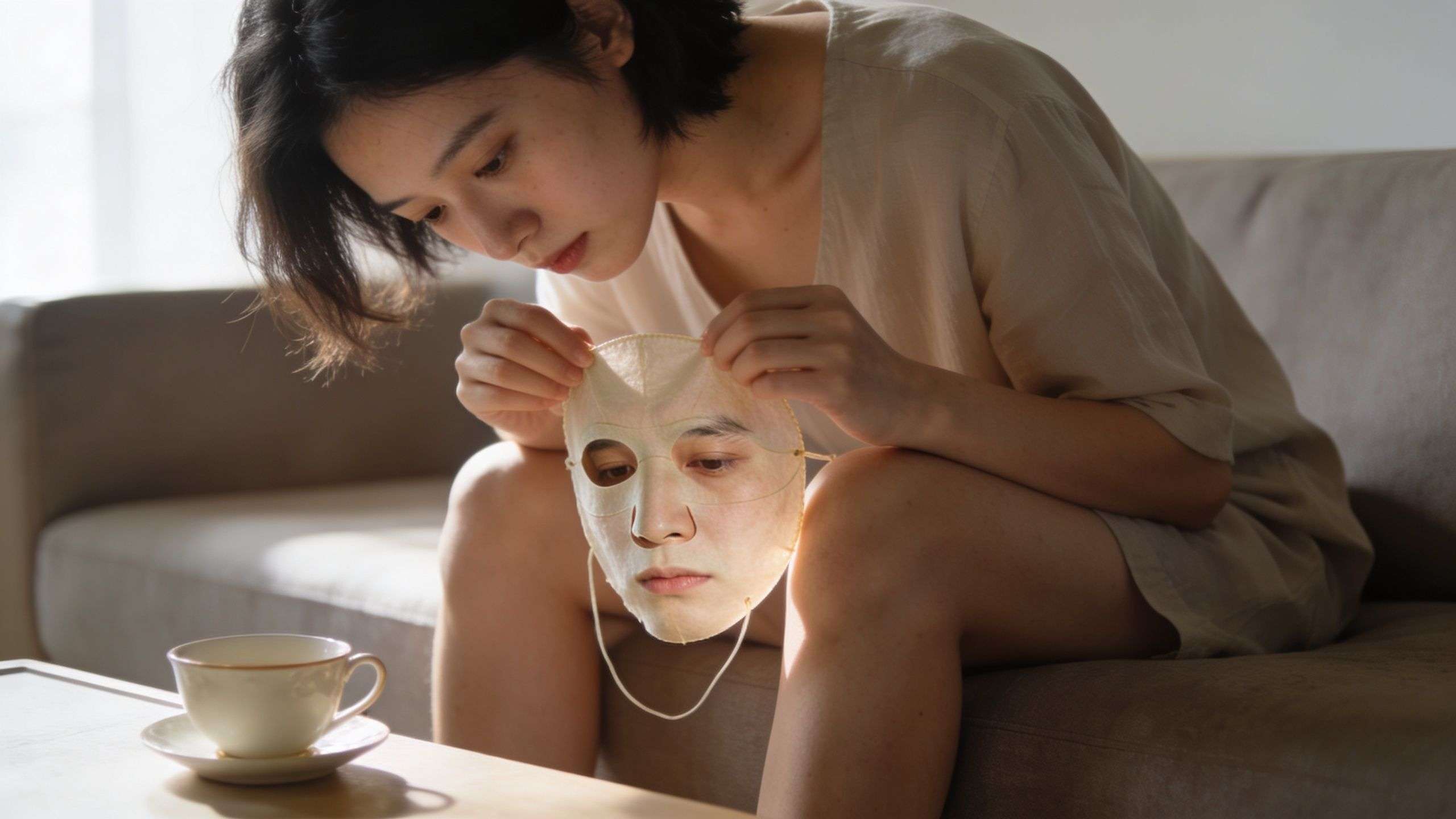
The Imposter in the Mirror
Perhaps the most painful cost of masking is how it erodes your sense of self. After years, or even decades, of playing a part, it becomes incredibly difficult to connect with the person you are underneath it all. You can start to lose track of what you genuinely think, feel, and want.
The mask can become so fused to your identity that you might look in the mirror and feel like a fraud in your own life, wondering who you’d be if you could just stop pretending.
This feeling of being an "imposter" is incredibly isolating. You might be surrounded by friends and family who care about you, but there’s a nagging voice that insists, "They only like the version of me I show them. If they saw the real me, they'd run." This fear builds an invisible wall, leaving you feeling utterly alone, even in a room full of people.
That crushing fatigue you feel after a long day at work or a party isn't just "social exhaustion." It's the cumulative weight of the mask, the performance, and the effort of hiding the vibrant, messy, and wonderful person you truly are. Acknowledging this toll is the first, kindest step you can take toward finally setting that weight down.
Why So Many Women with ADHD Are Diagnosed Late
For decades, the classic picture of ADHD was a young boy who couldn’t sit still in his classroom chair. That stereotypical image has left countless girls and women out of the conversation, forcing them to navigate life without understanding the root of their struggles. The result? A whole generation of women are now getting diagnosed in their 30s, 40s, or even later, finally putting a name to a lifetime of feeling overwhelmed and out of sync.
This isn’t some new “trend”—it’s a long-overdue correction of a massive diagnostic blind spot. The recent spike in adult ADHD diagnoses shows just how many people, especially women, have been masking their symptoms for years, often unknowingly.
The Problem with Gendered Expectations
From a very young age, girls are often socialized to be agreeable, organized, and emotionally composed. A boy who’s energetic and can't sit still might be seen as just "being a boy," but a girl with the same traits is more likely to be called "disruptive," "too much," or "unladylike."
This social pressure often forces girls to turn their symptoms inward. Instead of obvious, physical hyperactivity, their ADHD might show up as:
- Internal restlessness: A brain that feels like it has too many tabs open and never shuts off.
- Excessive talking: Often written off as just being a "chatterbox" or "social butterfly."
- Intense daydreaming: Leading to labels like "spacey" or "having her head in the clouds."
Because these signs don't disrupt a classroom the way bouncing off the walls does, they’re easily missed by parents and teachers. The girl who is struggling quietly is seen as far less of a problem than the boy who is making his struggles visible.
Inattentive Symptoms vs. Personality Traits
While ADHD looks different for everyone, women are more likely to present with inattentive symptoms. This means their challenges are less about external hyperactivity and more about internal battles with focus, organization, and memory.
For so many women, these symptoms aren't seen as a neurodevelopmental condition. Instead, they're misinterpreted as personal failings or quirky personality traits. Difficulty starting a project becomes "procrastination," a messy home is chalked up to "laziness," and intense emotional reactions are dismissed as being "too dramatic."
It’s incredibly common for ADHD symptoms in women to be mistaken for other mental health conditions, which is a major reason for delayed diagnosis and prolonged masking.
Without the right diagnosis, many women end up being treated for anxiety or depression while their underlying executive function challenges go completely unaddressed. This cycle is not only frustrating but can be incredibly damaging to a person’s self-worth. Exploring the challenges of adult ADHD diagnosis helps shine a light on why this journey is so common. For countless women, getting a diagnosis later in life isn't just about getting a label; it's a moment of profound validation.
Gentle Steps Toward Unmasking and Authenticity
That moment of realization—when you first learn about ADHD masking—can feel like a seismic shift. For many, it's a profound mix of relief ("So that's what I’ve been doing all this time!") and a deep sense of grief for the years spent hiding parts of yourself. If you're just starting to think about what unmasking might look like for you, please remember this: the goal isn't to suddenly drop every defence you've ever built. It's about slowly and safely creating pockets of space for your real self to breathe.
This is a marathon, not a sprint. The masks you wear are a form of armour, carefully constructed over a lifetime to keep you safe. Tearing it all off at once would leave you feeling raw and exposed. The real path forward involves starting small, being incredibly kind to yourself, and celebrating every little step toward a life that feels more like your own.
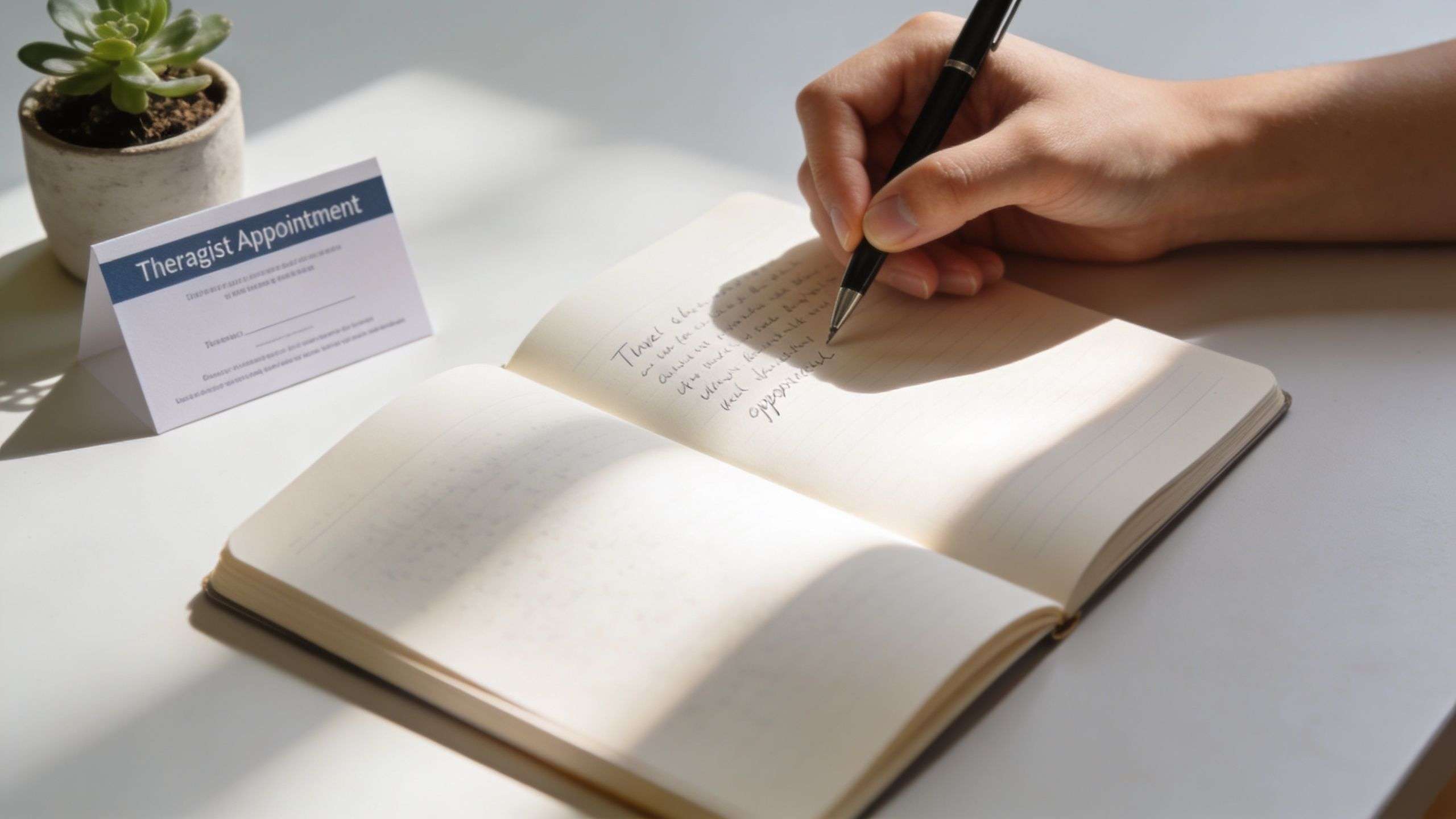
Begin with Gentle Observation
Before you can change anything, you have to truly see it. The first step is to simply notice your masking behaviours as they happen, without any judgment attached. Think of yourself as a kind, curious researcher studying your own experiences.
A journal is a fantastic tool for this. You don’t need to write essays; just jot down a few notes when you feel that all-too-familiar exhaustion after a social gathering or a big work meeting.
Try asking yourself some gentle questions:
- Where did I feel like I was "performing" today?
- What situation left me feeling totally drained, and what exactly was I doing?
- What was I afraid might happen if I didn't act that way?
This isn’t about self-criticism. It’s about data collection. Over time, you’ll begin to notice clear patterns—the specific people, places, or pressures that trigger your masking instincts. This awareness is the solid ground you'll build everything else on.
Practice Self-Compassion and Self-Validation
For so many people with ADHD, the inner critic is loud and relentless. After a lifetime of feeling like you're "too much" or "not enough," it's natural to internalize those harsh messages. A huge part of unmasking is learning to consciously push back against that voice with intentional self-compassion.
When you catch yourself masking, try to reframe it. Instead of thinking, "Ugh, why am I so fake?" try telling yourself, "This was a strategy I created to protect myself. It helped me get through." This small shift honours your past struggles while giving you permission to choose a different way forward now.
Getting a professional diagnosis can be one of the most powerful acts of self-validation you can undertake. It provides external confirmation that your challenges are real, that they have a name, and that you are not lazy, broken, or flawed. It can completely reframe your life story, giving you a new lens of understanding and compassion for yourself.
Experiment with Authenticity in Safe Spaces
Unmasking doesn’t mean you have to suddenly reveal your unfiltered self to your boss, your in-laws, and everyone in the grocery store line. The key is to start small and test the waters with your "safe" people—the friends, family members, or partner who have already earned your trust and shown you unconditional support.
Start with small, low-risk experiments:
- Let yourself fidget. If you’re on the phone with a close friend, let yourself pace, doodle, or use a fidget toy without trying to hide it.
- Share a real struggle. Instead of the automatic "I'm fine," try saying, "Honestly, I'm having a really hard time focusing today."
- Don't apologize for your interests. Talk about your latest hyperfixation with all the excitement you feel, without downplaying it.
Every time you do this and the world doesn't fall apart—in fact, the other person often connects with you more deeply—you're gathering crucial evidence that it's safe to be you. Working with a therapist provides an ideal, confidential space to explore these patterns, like those who provide support in Penticton. These small acts of courage build the confidence you need to live more authentically in every part of your life.
Your Questions About ADHD Masking Answered
As people start to learn about ADHD masking, a lot of questions tend to bubble up. It's a deeply personal topic, and it's completely natural to feel a mix of relief, confusion, and maybe even a little grief as you start to connect the dots. Let's walk through some of the most common questions with the clarity and compassion they deserve.
Is it ever okay to mask my ADHD symptoms?
Absolutely. It’s important to remember that masking often starts as a necessary survival skill. In certain situations—like a high-stakes job interview or an important meeting—consciously choosing to manage your symptoms can be a strategic and helpful choice.
The real issue isn't the occasional, deliberate use of a mask. It’s when the mask becomes fused to your identity and you can’t take it off. Constant, unconscious masking is what leads to burnout, anxiety, and a lost sense of self. The goal isn’t to abandon every coping strategy you have, but to reduce the exhausting, non-stop performance so you can live more authentically.
How do I know if I am masking or just being polite?
This is a great question, as the line can feel blurry. The clearest distinction usually comes down to two things: energy and intention.
Being polite is typically a conscious, low-effort choice to follow social norms and show respect. It doesn't usually leave you feeling depleted, phony, or disconnected from yourself.
Masking, on the other hand, is almost always driven by fear—fear of being judged, misunderstood, or rejected. It involves actively suppressing your natural way of being, which is incredibly draining. If an interaction feels like an intense performance that leaves you exhausted, you’re likely well into masking territory.
What is my first step if I think I’m masking?
Simply realizing that masking might be part of your story is a massive, courageous step. Before anything else, the most important thing is to offer yourself some kindness. You’ve been doing what you felt you needed to do to get by.
A gentle starting point is simple self-observation. Without judgment, just start to notice when you feel the most drained or like you’re putting on a show for others. For many, this process of self-discovery leads to wondering if their experiences point to ADHD. Pursuing a professional ADHD assessment for adults can be a powerful next step, offering the validation and clarity needed to build a path toward authentic living.
Can I get help for masking without a formal diagnosis?
Yes, you absolutely can. You don't need an official diagnosis to seek support for the very real consequences of chronic masking—such as anxiety, burnout, identity confusion, and relentless perfectionism.
Working with a counsellor provides a safe space to unpack these patterns and their emotional toll. Therapy can help you build self-awareness and find compassionate ways to lower the mask, regardless of whether you have a formal diagnosis or not.
If you're ready to explore these patterns in a supportive environment, learning more about how counselling can help is a gentle next step.
Clinically Reviewed By
Amy Mosset, MCP, RCC-S
Amy Mosset is a Master Practitioner in Clinical Counselling, Clinical Supervisor, and the owner of Interactive Counselling. She provides trauma-informed, evidence-based care and clinical supervision to registered therapists, with a focus on ethical practice, client safety, and high-quality therapeutic outcomes.