
If you're a parent in Vernon, does it feel like you're constantly spinning plates, just hoping none of them come crashing down? That feeling of being stretched in a dozen different directions isn't just in your head. It’s a very real, shared experience for so many families here in our community. For more information, see our Vernon anxiety counselling.
"Vernon parents feel pulled in too many directions because of a unique combination of logistical challenges like limited childcare, demanding school and sports schedules, and the emotional toll of supporting children in a high-pressure environment." For more information, see our counselling in Vernon.
The Unspoken Pressures on Vernon Parents
Living in the Okanagan is something we all cherish, but for parents, that beautiful lifestyle can come with a set of pressures that we rarely talk about. It’s that low-level hum of anxiety running under the surface of a packed day, the mental gymnastics of just getting through the week, and the nagging feeling that you're always one crisis away from dropping a ball. For more information, see our anxiety counselling.
This isn't about not trying hard enough or loving your kids any less. It's the natural result of trying to navigate a web of demands that are uniquely challenging right here in Vernon.
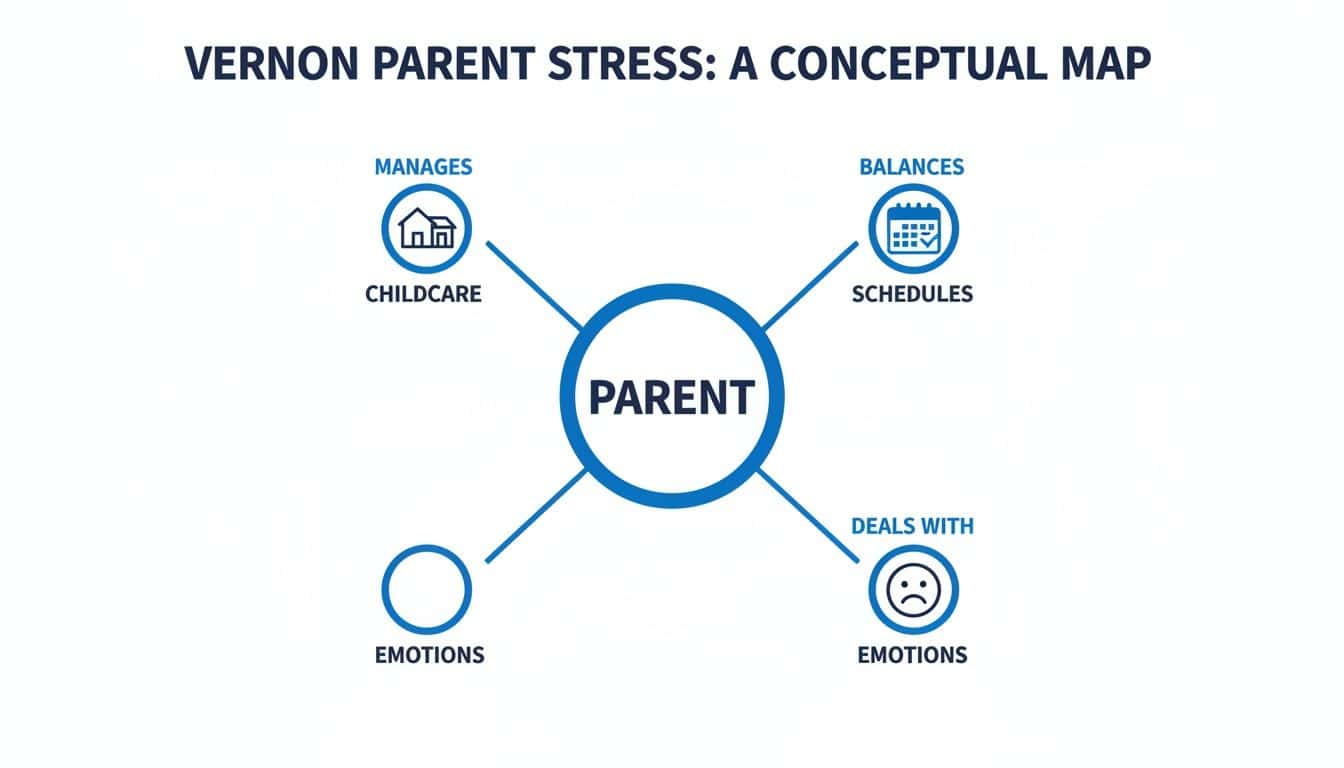
At its heart, parenting is a balancing act. You're constantly pulled between the practical details of childcare, the endless puzzle of schedules, and the heavy emotional weight of it all.
A Familiar Local Story
Does this sound familiar? Your alarm goes off before the sun, and the morning rush begins—packing lunches, getting kids dressed, and mentally mapping out the day. Your son’s school starts at 8:15 AM, but your daughter’s doesn't start until 9:00 AM, and it's on the other side of town.
After the drop-off relay, you commute out of town for work, all while texting your partner to figure out who’s picking up which kid from hockey practice. All the while, you're still on a waitlist for one of the few available childcare spots, adding a whole other layer of stress to the mix. By the time everyone’s home, fed, and finished with homework, you’re completely spent. There’s just nothing left for yourself, let alone your partner.
This isn't a worst-case scenario; for so many Vernon parents, it’s just Tuesday. These daily logistics are layered on top of unspoken community expectations that can shape family life in powerful, often stressful, ways.
Navigating Vernon's Logistical Maze

It’s one thing to be busy. It’s something else entirely to feel like the sole air-traffic controller for a family with a flight plan that changes by the minute. For so many parents in Vernon, this isn’t just a feeling—it's the daily grind. The unique way our community is structured creates a very specific set of challenges that go way beyond the usual parenting juggle.
These aren't vague pressures you can just brush off. They are real, time-devouring obstacles that dictate the rhythm of your entire day. This constant mental load of figuring out who needs to be where, when, and with what equipment is a massive reason why Vernon parents feel stretched so thin.
The Daily Schedule Puzzle
It often starts with the school day itself. Staggered start and end times between different schools, or even just different grades, can make drop-off and pick-up feel like a frantic relay race against the clock. Then you have to factor in the frequent Pro-D days that rarely line up with your own work schedule, and the puzzle gets even more complicated.
And once the school day is done? That’s when the real fun begins. Vernon is a wonderfully active community, but that vibrancy brings its own set of demands.
- Intense Sports Schedules: Your child's passion for hockey, soccer, or dance can mean multiple practices a week. On top of that, weekend games often involve driving to Kelowna, Salmon Arm, or Penticton.
- Commuting for Work and Activities: Many of us commute to other Okanagan towns for work, which eats into those precious few hours you have with family in the evenings.
- Specialized Appointments: Getting to a specific medical specialist or a unique class might mean another trip down the highway, adding one more layer of planning and travel to an already overflowing week.
It’s no wonder parents often feel more like strategic planners than caregivers, constantly rerouting their day to get everyone where they need to go. If this sounds familiar, resources for managing a child's sports schedule can offer some helpful, practical tips.
The Childcare Crunch
For many local families, however, the single biggest logistical nightmare is the critical shortage of accessible and affordable childcare. Just finding a spot can feel like winning the lottery, and the search leaves parents in a perpetual state of stress.
This isn't just an inconvenience; it's a foundational stressor that affects every other part of your life. When childcare is uncertain, it impacts your ability to work, your financial stability, and your mental well-being.
The desperate scramble for reliable care—whether that means sitting on year-long waitlists, trying to piece together a network of babysitters, or leaning heavily on grandparents—adds a tremendous burden. That constant uncertainty is draining, and it's what pushes so many parents to their breaking point.
These logistical knots aren't just in your head. They are real, demanding, and a shared struggle for countless parents in our community. You can learn more about how these challenges influence family life by exploring our article on how Vernon's daily routines affect families.
The Ripple Effect on Children and Family Well-Being

When parents are stretched to their limits, that stress never stays put. It has a way of rippling outwards, touching everyone in the family, especially the kids. They are so tuned in to the emotional weather at home. This isn't about placing blame; it's about acknowledging a simple truth of family life: your well-being and your child's are deeply intertwined.
Think of it like this: your parental energy is the family’s emotional wifi signal. When your signal is strong, your kids connect easily, feeling secure and supported. But when you’re being pulled in a dozen different directions, that signal can get weak or staticky, making it tough for them to get the consistent, steady connection they need to thrive.
It’s so important to understand that their reactions are a completely normal response to a high-stress environment, not a mark against your parenting. If you can see these behaviours as signals—not problems—you can start to shift from a place of frustration to one of compassion.
How Children Respond to Parental Stress
Kids are like little emotional barometers, incredibly sensitive to the pressures around them. When they sense their parents are overwhelmed, they usually don't have the words to say, "Hey, I can tell you're stressed." Instead, their big feelings and puzzling behaviours become the main outlet for all that family tension.
You might start noticing changes that seem to come out of the blue:
- Emotional Outbursts: A child who was once pretty easygoing might suddenly start having bigger or more frequent tantrums over seemingly small things. This is often just their way of releasing the tension they feel but can't yet name.
- Difficulty Following Directions: It's hard for a child to focus and listen when their world feels unpredictable because of parental stress. It's not defiance for the sake of it; it's a brain that's struggling to find its footing.
- Challenges in Social Situations: Stress at home can make it harder for kids to navigate friendships at school. Their own capacity for patience and cooperation gets used up just trying to cope with the tension they're absorbing.
These aren't signs of failure on your part. They are simply signs that your child is feeling the effects of a family system under a lot of strain. And this is a common experience here in Vernon. The 2021 CHEQ District Report for School District 22 found that a significant number of local parents expressed concerns about their child's emotional maturity and social skills. You can see the complete child well-being findings in the full local report.
A Sign of Strength, Not Weakness
Recognising these patterns can feel heavy, I know. But it’s also where your power lies. It means that taking small steps to manage your own stress is one of the most loving and effective things you can do for your children.
And when these challenges feel too big to tackle on your own, reaching out for extra support for families isn't giving up—it's a sign of profound strength. It shows you're committed to building a healthier, more balanced environment for everyone you love.
When Teenage Pressures Amplify Parental Stress
Just when you think you've finally hit your parenting stride, the teenage years arrive and flip the script entirely. The shift from parenting a child to parenting an adolescent can be jarring, adding layers of emotional complexity and logistical chaos that can leave you feeling completely depleted.
This isn't just about dealing with mood swings or later curfews. It’s a fundamental change in your job description. Suddenly, you're not only a caregiver; you're also an academic advisor, an amateur therapist, a social mediator, and a career counsellor. The pressures your teenager is drowning in—school, social life, and their own anxieties about the future—quickly become your pressures, too.
The Weight of Teen Stress
The world feels incredibly intense for many teens today, and that stress rarely stays confined to just them. When your teenager is struggling, you feel it right alongside them. This is a shared experience for so many families right here in our community.
The 2023 BC Adolescent Health Survey revealed that many Okanagan teens reported high levels of stress from school and significant mental health challenges. You can read more about these local teen well-being statistics to see the full picture. These aren't just abstract numbers; they represent countless parents in Vernon who are now grappling with new, all-consuming support roles, from late-night homework help to navigating difficult emotional conversations.
When your teenager's stress becomes a constant presence in your home, it's like having another full-time job dropped onto your plate—one with incredibly high emotional stakes and no instruction manual.
Becoming a Full-Time Advocate
This new role often means you have to become an advocate for your child within systems that can feel confusing and overwhelming. Whether you're trying to get accommodations at school, find accessible mental health services, or just get on the same page with a teacher, the entire process can be exhausting. It demands a level of time, energy, and sheer persistence that most parents, already stretched thin, simply don't have.
This advocacy work piles on the pressure for a few key reasons:
- It almost always has to be done during your own workday, forcing you to juggle professional duties with urgent appointments and phone calls.
- It can create tension at home, particularly if you and your co-parent have different approaches to supporting your teen.
- It adds a heavy emotional load. You’re carrying the weight of your child’s struggles while desperately trying to find a solution.
Guiding a teenager through the gauntlet of modern pressures takes a different kind of stamina and a whole new set of skills. If you're looking for more support on this front, our guide to parenting through high school pressure in Vernon offers more specific insights.
Feeling overwhelmed by it all isn't a sign you're failing. It’s a sign that the job of parenting has become more complex than ever.
Finding Breathing Room: Practical Steps for Vernon Parents

It’s one thing to understand why you feel completely stretched thin, but it's another thing entirely to figure out what to do about it. So let's talk about the how. How can you carve out just a little space to breathe when it feels like there isn't a second to spare?
This isn't about adding another impossible task to your already overflowing plate. It’s about finding small, realistic ways to lighten your load, one step at a time. The most powerful changes don’t come from a dramatic life overhaul; they start with small adjustments that respect your limits and put your well-being back on the map.
Embrace "Good Enough" Parenting
The pressure to be a perfect parent is an incredibly heavy weight to carry. It’s also an impossible standard that pretty much guarantees you’ll feel like you're failing. But here’s the truth: your kids don't need a perfect parent. They just need a present and loving one.
Embracing "good enough" parenting is about letting go of the small stuff. It’s giving yourself permission to order pizza for dinner, letting the kids have a bit of extra screen time so you can have a quiet moment, and knowing that your best effort is always more than enough.
When you give yourself permission to be imperfect, you’re not just doing yourself a favour. You’re modelling self-compassion for your children and creating a home where everyone feels safe enough to just be human.
Simplify Your Family Schedule
A jam-packed schedule is a fast track to burnout. Between school runs, sports practices, music lessons, and social commitments, the family calendar can quickly become a source of major anxiety. You have permission to say no.
Take a hard look at your weekly schedule and ask a few honest questions:
- Is this essential? Does this activity truly add value to our lives, or is it just another obligation we feel we should be doing?
- Does this bring us joy? Is it something you or your kids genuinely look forward to, or does it feel more like a chore?
- Can we make this simpler? Could you carpool with another family? Is there a similar activity closer to home that would cut down on travel time?
Protecting your family’s time and energy isn't selfish—it's absolutely essential for everyone's mental health. For some great, down-to-earth advice on this, check out how one family used simple tools to ease the daily grind in How Everblog Made Parenting Less Stressful.
Even with the best strategies, there are times when the pressure can still feel like too much to handle alone. Knowing when to ask for help is a sign of incredible strength, not weakness. Seeking extra support for families can give you new tools and a confidential space to recharge, helping you find the strength to be there for the people who matter most.
Your Questions, Answered with Care
When you're feeling stretched to your limit, it's natural for a million questions and doubts to start swirling. We've gathered some of the most common concerns we hear from parents right here in Vernon, and our hope is to offer some clarity and validation. You're not alone in this.
Is It Normal to Feel Like I'm Failing When I'm So Stretched Thin?
Yes, it is completely and utterly normal. In fact, feeling like you’re failing is one of the most painful—and common—hallmarks of a parent who is simply juggling too much. It’s crucial to see that feeling for what it really is: a sign that your circumstances have become overwhelming, not a reflection of your love or ability as a parent. When you’re caught in a whirlwind of school runs, work deadlines, sports practices, and the endless search for childcare, your capacity is going to be maxed out. That feeling of failure isn't a personal flaw; it’s a natural response to an unsustainable workload.
How Can I Tell If My Own Stress Is Affecting My Kids?
Children are like little emotional barometers, keenly aware of the climate at home. This isn't about blaming yourself for being stressed—it’s about recognising how that stress might be showing up in your kids’ behaviour so you can respond with connection. You might notice small (or not-so-small) shifts, such as more irritability, struggles with transitions, changes in sleep or eating, or needing more reassurance. Seeing these signs isn't about finding fault. Think of it as an invitation to view their behaviour through a different lens—as a signal that the entire family system could use a bit more calm and a chance to reconnect.
When Is the Right Time to Consider Professional Support?
Reaching out for help isn’t a last resort; it’s a courageous and proactive step toward looking after your family’s well-being. It’s a sign of strength that shows you’re ready to find solutions that will actually last. It might be time to think about professional guidance if the feeling of being overwhelmed is persistent, stress is fraying your relationships, you feel like you’ve tried everything, or you’ve noticed significant and lasting emotional or behavioural changes in your kids. Professional support can be a safe space to learn new coping skills and find your footing again before challenges feel insurmountable.
Moving Forward with Self-Compassion
If you've made it this far, the goal isn't to leave you feeling judged—it's to help you feel understood. The feeling of being stretched thin is a genuine, shared experience for so many parents in Vernon. But knowing that doesn't have to be the end of the story. The single most powerful first step you can take is turning that deep compassion you have for your kids inward, toward yourself.
Remember that small, intentional changes can create significant shifts toward more balance and joy. You have the strength to navigate this, and support is available when you need it.
Learning to be kind to yourself isn't a personality trait; it’s a skill you can build, and it's one of the most resilient tools in your parenting toolkit. For a practical starting point, our guide on how to quiet your inner critic offers strategies that can make a real difference.
Each small act of self-kindness helps to refill your own cup, giving you the energy to show up as the parent you want to be, for both your family and yourself. If you feel that learning more could be helpful, we invite you to explore our services further. Our team is here to provide a safe, non-judgmental space to help you find more balance and well-being for your entire family.
Clinically Reviewed By
Amy Mosset, MCP, RCC-S
Amy Mosset is a Master Practitioner in Clinical Counselling, Clinical Supervisor, and the owner of Interactive Counselling. She provides trauma-informed, evidence-based care and clinical supervision to registered therapists, with a focus on ethical practice, client safety, and high-quality therapeutic outcomes.