TL;DR: For more information, see our couples counselling.
- Premarital counselling enhances emotional clarity and communication before signing a prenup. Combining both processes builds trust, reduces conflicts, and aligns legal and personal goals. Legally, a prenup requires full disclosure and independent advice, with counselling supporting voluntary and informed consent.
Most Canadian couples treat a prenup and premarital counselling as two completely separate decisions. One belongs to the lawyer’s office, the other to the therapist’s couch. But here’s what surprises many couples: the two processes are most powerful when they happen together. Skipping counselling before signing a prenup is a bit like building a house without checking the foundation first. You might get through it, but you’re leaving a lot to chance. This article walks you through why combining both steps matters, how they complement each other legally and emotionally, and what Canadian law actually requires before your agreement holds up.
Table of Contents
- Why talk about counselling before your prenup?
- How premarital counselling and prenups work together
- What Canadian law requires for a valid prenup
- Addressing concerns: tension, stigma, and what couples miss
- A different take: why counselling is even more valuable than people realise
- Take the next step for your relationship
- Frequently asked questions
Key Takeaways
| Point | Details |
|---|---|
| Counselling fosters openness | Premarital counselling creates a safe space for tough conversations before legal agreements. |
| Legal process needs clarity | Canadian prenups require clear disclosure and voluntary consent—counselling supports both. |
| Risks of skipping steps | Avoiding either counselling or legal prep can lead to future conflict or unenforceable agreements. |
| Combined approach is best | Couples benefit most when they do both premarital counselling and prenup planning together. |
Why talk about counselling before your prenup?
Many people don’t realise the link between emotional readiness and legal agreements. A prenup is, at its core, a conversation about money, values, and what each partner expects from the marriage. Those aren’t just legal topics. They’re deeply personal ones. And without a safe space to explore them honestly, the legal process can feel cold, transactional, or even threatening.
Premarital counselling is recommended before signing a prenup in Canada precisely because it creates that safe space. It allows both partners to talk openly about finances, expectations, and long-term goals before a lawyer drafts anything. This matters more than most couples expect.
Think of it this way: a prenup negotiation without prior counselling is like sitting down to a difficult conversation when you’ve never practised having difficult conversations together. The stakes are high, emotions run close to the surface, and misunderstandings are easy. Counselling builds the communication muscles you’ll need.
Here’s what premarital counselling specifically helps with before a prenup:
- Clarifying individual financial values so both partners understand what money means to each of them
- Identifying hidden assumptions about property, debt, and spending that often surface during legal discussions
- Reducing defensiveness so that prenup conversations feel collaborative rather than adversarial
- Building trust in the process, which makes the final agreement feel genuinely mutual
- Addressing financial conflict in marriage before it becomes entrenched
“Empirical data shows premarital counselling reduces divorce risk by 31%, improves communication, and increases relationship satisfaction.” This is especially relevant in Canada, where roughly 40% of marriages end in divorce.
The benefits of marriage counselling extend well beyond the prenup itself. Couples who invest in this step report feeling more confident, more aligned, and more prepared for the legal process ahead. That’s not a coincidence. It’s the result of doing the emotional groundwork first.
Pro Tip: Schedule at least two or three counselling sessions before your first meeting with a family lawyer. This gives you time to process what you’ve discussed and arrive at that legal meeting with clarity rather than anxiety.
For couples exploring couples counselling in Canada, starting before the prenup process is almost always the better choice.
How premarital counselling and prenups work together
Understanding the why, let’s get practical on exactly how counselling and prenups interact. They aren’t competing processes. They’re complementary ones, each filling gaps the other leaves open.
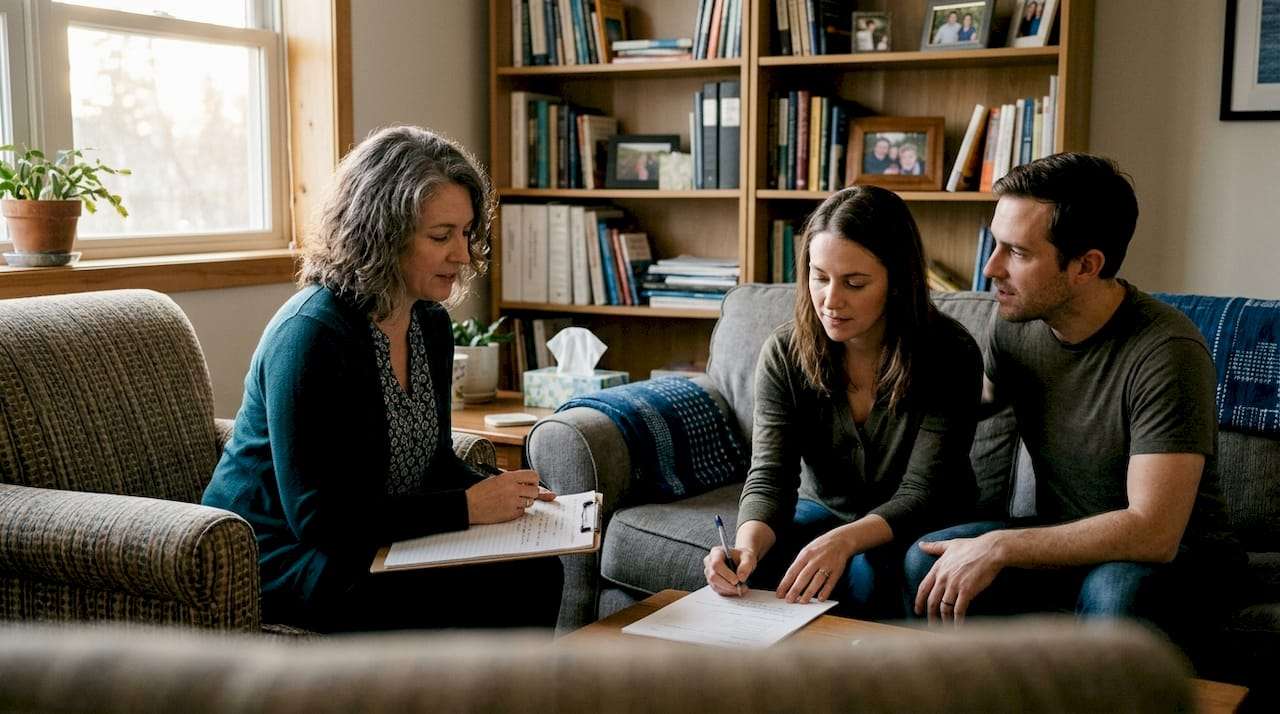
A prenup, legally speaking, is a contract. It requires full financial disclosure from both parties, independent legal advice for each partner, and a clear, voluntary agreement. What it doesn’t require, and what it can’t provide on its own, is emotional clarity. That’s where counselling steps in.
| Prenuptial agreement | Premarital counselling | |
|---|---|---|
| Primary focus | Legal and financial protection | Emotional and relational health |
| Who leads it | Family lawyer | Licensed counsellor |
| What it surfaces | Assets, debts, property rights | Values, fears, expectations |
| Outcome | Legally binding contract | Stronger communication skills |
| Timeline | Weeks to months | Ongoing, ideally before prenup |
According to family law guidance on Ontario prenuptial agreements, the process involves full financial disclosure and independent legal advice (ILA). Counselling complements this by handling the emotional and relational side, ensuring that both partners feel genuinely heard and not pressured.
Here’s where the real value shows up. A prenup can surface financial details that feel surprising or even unsettling, such as a significant debt one partner hasn’t fully disclosed, or a family inheritance with conditions attached. Without counselling, these revelations can feel like betrayals. With counselling, couples have already practised navigating difficult disclosures together.
Key ways the two processes reinforce each other:
- Counselling creates psychological safety before legal negotiations begin
- The prenup process reveals financial realities that counselling can then help process
- Both processes encourage honesty, which deepens trust in the relationship
- Planning your marriage with prenups becomes less about fear and more about intentional partnership
This is especially true in situations like second marriages, blended families, or significant asset disparity between partners. In these cases, the emotional complexity is higher, and the need for both legal and therapeutic support is greater. Counselling helps couples navigate marriage uncertainty with more confidence and less resentment.
If you’re wondering how to get started, learning how to prepare for couples counselling is a practical first step before either process begins.
What Canadian law requires for a valid prenup
With their strengths combined, what does the law actually say about prenups, and where does counselling fit in? The legal requirements are clear, but they leave room for emotional preparedness that only counselling can provide.
In Ontario and across much of Canada, a valid prenuptial agreement (called a marriage contract in Ontario) must meet specific criteria. The requirements for a valid prenup include:
- Full financial disclosure: Both partners must honestly disclose all assets, debts, and liabilities before signing.
- Independent legal advice (ILA): Each partner must have their own lawyer review the agreement separately.
- Voluntary signing: The agreement must be signed without any pressure, coercion, or duress.
- Written and signed: Verbal agreements are not enforceable. Everything must be documented.
- Capacity: Both partners must be of legal age and mentally capable of understanding the agreement.
Pro Tip: Use a prenup checklist for Ontario to make sure you’ve covered every legal requirement before your signing date.
Here’s where counselling fits into the legal picture. The requirement for voluntary signing is about more than just not being forced. It’s about genuinely understanding what you’re agreeing to and feeling comfortable with it. Counselling helps ensure that both partners arrive at the signing table with that kind of informed, settled confidence.
| Legal requirement | How counselling supports it |
|---|---|
| Full financial disclosure | Reduces shame and fear around sharing financial details |
| Independent legal advice | Counselling ensures each partner has processed the terms emotionally |
| Voluntary consent | Addresses any subtle pressure or people-pleasing tendencies |
| Written agreement | Counselling clarifies what each partner actually wants included |
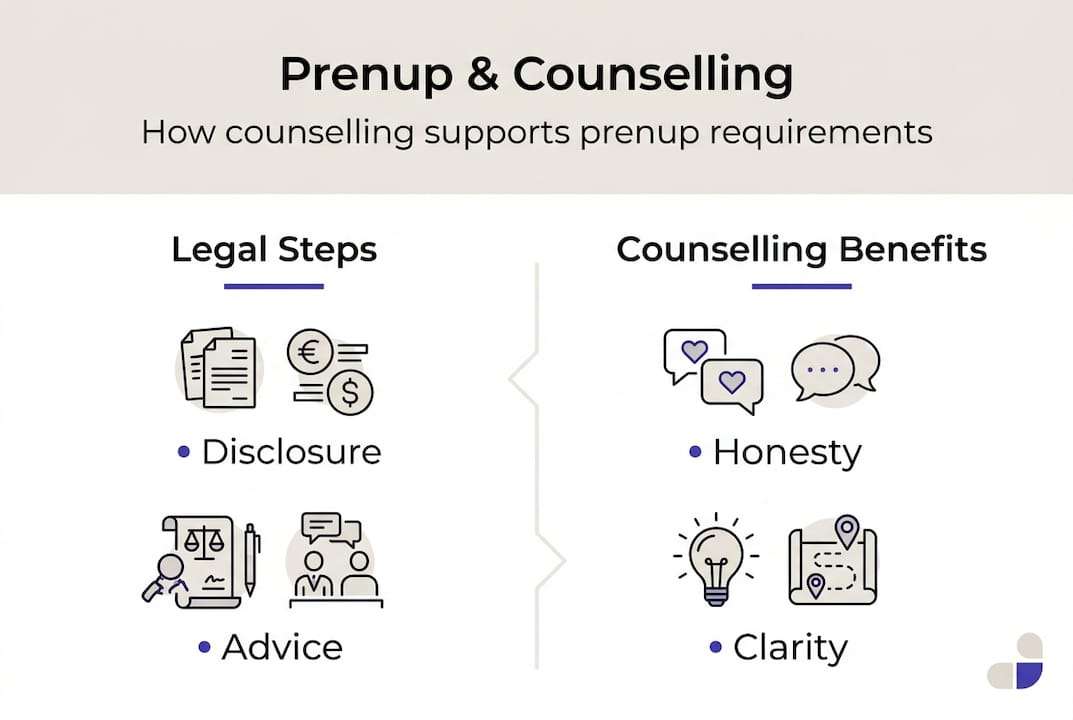
For couples in British Columbia, the timeline and specific wording may differ slightly from Ontario, but the core principles remain consistent. If you’re based in the Okanagan, connecting with Kelowna marriage counselling services before your legal consultations is a practical and accessible option.
Addressing concerns: tension, stigma, and what couples miss
Even knowing the rules, some couples hesitate. Why is that, and does it really matter?
The hesitation is real and understandable. Bringing up a prenup can feel like saying “I don’t fully trust you” or “I’m already planning for this to fail.” Suggesting counselling can feel like admitting the relationship has problems. Neither of those assumptions is accurate, but the feelings are valid.
Research tells a striking story here. Only 5 to 10% of Canadian couples have prenups, despite a 40% divorce rate and 61% of Canadians viewing prenups positively. That gap between attitude and action is largely driven by discomfort, not ignorance.
Counselling directly addresses this discomfort. Here’s how:
- It normalises money conversations, making them feel less loaded
- It helps couples separate the legal process from the emotional meaning they attach to it
- It gives both partners language to express concerns without blame
- It reduces the sense that bringing up a prenup is an act of distrust
“The pros and cons of prenups in Canada are well documented, but the emotional barrier to starting the conversation is what stops most couples.”
What many couples miss is that going through both processes together, counselling and prenup discussions, often brings them closer. The shared experience of being honest about finances and fears, and coming out the other side with a plan, is genuinely bonding. It’s not a sign of doubt. It’s a sign of maturity.
If you’re feeling uncertain about where to start, exploring resources on dealing with marriage uncertainty can help you and your partner approach these conversations with more ease.
A different take: why counselling is even more valuable than people realise
After considering the statistics and concerns, here’s a perspective many miss. The mainstream message is that counselling “reduces divorce risk.” That’s true, and it’s a useful headline. But it undersells what counselling actually does.
Counselling doesn’t just lower your odds of splitting up. It builds a relationship skill set that outlasts the prenup conversation entirely. Couples who go through this dual process aren’t just protecting assets. They’re practising the kind of honest, regulated communication that will carry them through job losses, health challenges, parenting conflicts, and the thousand ordinary stresses of a shared life.
There’s also something subtler happening. Counselling helps couples distinguish between discomfort worth sitting with and genuine dealbreakers. Not every financial disagreement signals incompatibility. Sometimes it signals a difference in upbringing that can be bridged. Preparing for couples counselling with that mindset changes the entire experience. It makes the prenup feel less like a legal formality and more like a genuine expression of who you both are and what you’re building together.
Take the next step for your relationship
If you’re ready to address both the legal and emotional side of starting your life together, expert support is closer than you think. At Interactive Counselling, we work with couples across Canada, whether you’re in Kelowna, Grande Prairie, Penticton, or anywhere in between, to help you approach major decisions like prenups with clarity and confidence. Our licensed counsellors offer in-person, phone, and online sessions to fit your schedule. Explore our counselling services for couples to find the right fit, or review our online relationship counselling comparison if you prefer a virtual option. Booking a session is a simple, meaningful first step.
Frequently asked questions
Is premarital counselling required by law before signing a prenup in Canada?
No, counselling is not legally required, but it is strongly recommended to avoid misunderstandings and to support genuinely voluntary consent from both partners.
How does premarital counselling help with the prenup process?
It helps couples discuss finances, values, and expectations openly before legal negotiations begin, which research shows reduces divorce risk by 31% and improves overall relationship satisfaction.
What makes a Canadian prenup legally valid?
A prenup must include full financial disclosure, independent legal advice for both parties, and a voluntary signature free from any pressure or coercion.
Can doing both counselling and a prenup actually strengthen our relationship?
Yes. Research shows 83% of couples felt closer after going through an open, honest prenup process, which mirrors the relational benefits of premarital counselling.
Recommended
- Unsure about marriage? Navigate uncertainty together
- Should we get a divorce? a clear guide for Canadians
- How to Prepare for Couples Counseling for Lasting Change – Interactive Counselling
- Navigating religious differences in marriage: harmony tips
Alongside the legal groundwork, our Kelowna premarital counselling helps you have the money and expectation conversations a prenup can’t.