
In Grande Prairie, working around the clock is more than just a job—it's woven into the fabric of life for so many of us. Maybe you're on a two-week rotation in the oil and gas sector, a nurse pulling a long stretch of nights at the hospital, or a tradesperson on-site before the sun comes up. Whatever your role, that schedule dictates everything. This constant shuffle between days, evenings, and overnights does more than just mess with your sleep. It seeps into your health, strains your relationships, and can leave you feeling disconnected from the 9-to-5 world buzzing around you. For more information, see our Grande Prairie family counselling.
"Shift work in Grande Prairie affects daily life by disrupting the body's natural sleep-wake cycle, leading to physical fatigue, mental fog, and significant social disconnection from family and community." For more information, see our counselling in Grande Prairie.

The Reality of Shift Work in Grande Prairie
Living and working here often means embracing the demands of industries that simply don't shut down. As a major economic hub for Alberta, Grande Prairie offers careers built on unconventional hours. Whether it's the 12-hour rotating shifts common in oil and gas, the demanding night rotations in healthcare, or the early starts for tradespeople, this lifestyle comes with unique challenges that can feel isolating. However, it’s a reality you share with many others in our community.
The energy sector is a massive driver in our region, and its round-the-clock operations are the norm. This economic strength is great for the region, but it places a real strain on individual well-being and family life.
The Ripple Effect on Daily Life
At the heart of the problem is the clash between shift work and our body's natural circadian rhythm. Think of this as your internal 24-hour clock, which is hardwired by evidence-based science to tell you when to sleep and when to be alert. Forcing your body to work overnight or on a constantly changing schedule is like trying to wind that clock backward every few days.
This ongoing struggle creates a ripple effect that touches every part of your life. You might recognize some of these feelings:
- Persistent Fatigue: A deep-seated exhaustion that a full day's sleep just can’t seem to shake.
- Mental Fog: Trouble focusing or just feeling a bit "off," even on your days away from work.
- Social Disconnection: You’re wide awake while your family and friends are sleeping, leading to missed dinners, conversations, and inside jokes.
- Strained Relationships: The stress and exhaustion from an irregular schedule can easily lead to friction with your partner and kids.
The disruption to family routine disruption is often the toughest part. Missing out on bedtime stories, school concerts, or simple weekend routines can create an emotional distance that puts a heavy weight on everyone. Acknowledging these difficulties is the first, compassionate step toward finding solutions. For a broader look at local life, our guide to Grande Prairie neighbourhoods and daily life offers more context.
Many local families are navigating this same reality. With awareness and the right strategies, it's absolutely possible to manage the demands of your job while protecting your well-being and staying connected to the people who matter most.
Understanding the Physical Toll of Working Around the Clock
When you’re working against the clock, your body knows. For anyone in Grande Prairie working rotations in healthcare or pulling long shifts on a rig, that feeling of exhaustion goes way beyond simply being tired. It’s your body’s physical protest against having its internal clock—its circadian rhythm—constantly reset.

It’s like trying to live on a phone that never gets to 100%. A typical 9-to-5 schedule lets you charge fully overnight and then use that energy through the day. As a shift worker, you’re constantly unplugging at 60% and trying to make it last, never quite feeling fully charged before you have to do it all over again.
This state of chronic under-rest is the core of shift work sleep disorder. It’s a very real condition that happens when your job’s demands are out of sync with your body’s natural sleep-wake cycle. The result isn't just feeling drowsy; it’s a full-body exhaustion.
The Science Behind the Strain
This ongoing fight with your body’s internal clock triggers a chain reaction of physical symptoms. Your system is essentially working overtime just to keep up, and that strain often shows up in a few key ways:
- Chronic Fatigue: This isn't the kind of tired that a weekend sleep-in can solve. It’s a deep, persistent exhaustion that can make even simple daily tasks feel overwhelming.
- Digestive Issues: Your digestive system follows a daily rhythm, too. Eating at odd hours—like a big meal at 3 a.m.—can throw it for a loop, leading to indigestion, stomach pain, and other gut problems.
- Weakened Immune Response: Without enough deep, restorative sleep, your immune system doesn’t get the chance to recharge. You might notice you’re catching every cold that goes around or taking longer to recover.
One of the biggest hurdles is the persistent poor sleep quality, and it’s critical to fix poor sleep quality and reclaim restful nights. This isn't just about feeling groggy; the disruption has real, measurable health consequences.
In Grande Prairie's demanding energy sector, for example, the 24/7 nature of operations means that chronic fatigue is a well-known risk. This kind of physical drain is directly linked to other health issues, showing just how deeply shift work can affect daily life here. You can find more insights into our region's labour trends from Statistics Canada's reporting.
It's important to remember that these physical symptoms aren’t a personal failing—they are a completely normal biological response to an abnormal schedule. Knowing this is the first step toward giving yourself some grace and looking for ways to lighten the load. If this sounds all too familiar, you might find it helpful to read our article on why burnout is common in Grande Prairie's workforce. Acknowledging the physical price of shift work is key to finding a healthier balance.
The Mental and Emotional Toll of an Unsynced Life
The physical exhaustion from shift work is just one piece of the puzzle. What often hits harder is the mental and emotional fallout from constantly fighting your body's internal clock. If you're working shifts in Grande Prairie, whether in healthcare or out on the oil patch, you know this feeling all too well. It's more than just being tired—it’s a deep disconnect that can cast a shadow over your entire life.
Let's be clear: this isn't a personal weakness. It's a completely normal biological reaction to living an abnormal schedule. When your brain is starved of consistent, quality sleep, its ability to manage moods and process information starts to break down.
Brain Fog and a Short Fuse
One of the first things people notice is the "brain fog." It’s that frustrating mental sludge where concentrating feels impossible, simple decisions feel monumental, and even holding a conversation takes effort. Think of it like a computer with too many tabs open—your brain's processing power slows to a crawl because it hasn't had the chance to shut down and reboot properly with deep, restorative sleep.
This mental slowdown often walks hand-in-hand with a much shorter fuse. You might snap at your partner, get unreasonably frustrated by traffic, or just feel perpetually on edge. This happens because the parts of your brain that act as your emotional brakes—the amygdala and prefrontal cortex—are extremely sensitive to sleep deprivation. Without enough rest, that braking system gets weaker and weaker.
The mental and emotional toll is a direct biological consequence of circadian disruption. Feeling isolated, foggy, or irritable isn't a personal flaw—it’s your body and mind reacting to being out of sync with their natural programming.
The Weight of Social Isolation
Living on a schedule opposite to the rest of the world can be incredibly isolating. While your friends and family are unwinding for the evening, you’re just starting your "day." By the time you’re awake and ready to connect, they’re in the middle of their workday.
This constant "social jetlag" often leads to:
- Feeling Left Out: Missing out on weekend barbecues, kids' hockey games, and simple family dinners can make you feel like a spectator in your own life.
- Strained Relationships: It takes real work to maintain friendships and family bonds when your free time rarely lines up. This disruption is a massive source of stress for many couples and families.
- Intense Loneliness: The quiet, solitary hours of a night shift can make you feel profoundly alone, even if you’re technically surrounded by coworkers.
Recognizing that these feelings are real, valid consequences of your job is the first, most important step. It helps you shift your mindset from "What's wrong with me?" to "Okay, how can I support myself through this?" For those days when the stress feels overwhelming, having some solid tools for how to cope with anxiety can make a world of difference. Acknowledging the challenge is how you start to find your balance again.
How Shift Work Reshapes Family and Social Life
Beyond the physical toll and mental fog, perhaps the toughest part of shift work is what it does to your relationships. In a place like Grande Prairie, where our economy is powered by industries that never sleep—oil and gas, healthcare, trades—this impact hits close to home. You might be just hitting your stride when your partner and kids are winding down for bed, creating a constant and frustrating gap.
This feeling has a name: social jetlag. It’s the chronic sense of being out of sync with the social rhythms of everyone around you. You’re essentially living in a different time zone than your own family, right under the same roof. The result isn't just missing big events; it's the erosion of small, everyday moments of connection that our relationships are built on.
The mental strain of an unsynchronized schedule often makes this social disconnect even worse.
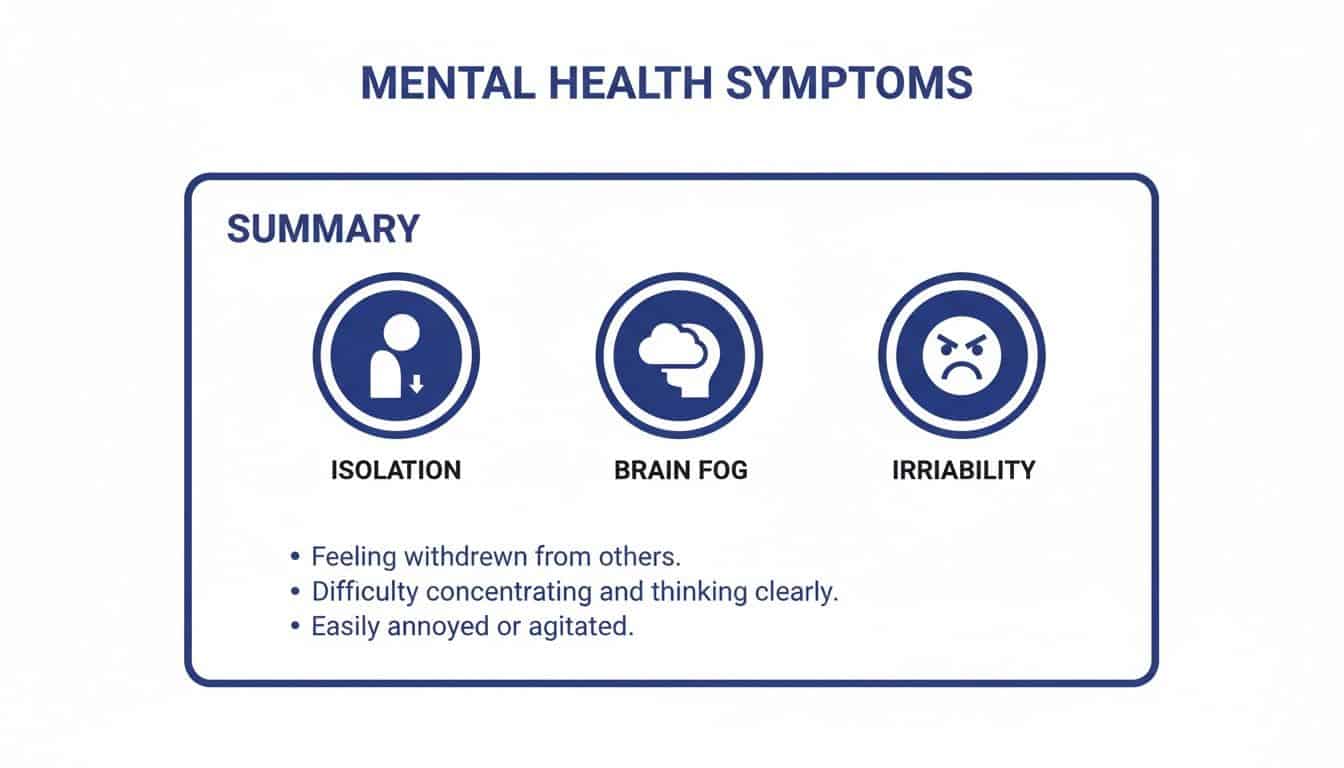
As you can see, the isolation, brain fog, and irritability that come with shift work are major hurdles to connecting meaningfully with the people you care about most.
The Strain on Family Routines
For families, the disruption is immediate and obvious. You start missing school concerts, family dinners, and weekend camping trips. While any one of these might not feel like a big deal, the cumulative effect can create a powerful sense of absence and put a real strain on everyone. It’s particularly challenging for kids, who thrive on predictable routines that shift work constantly upends.
This can put immense pressure on a partnership. The partner working a standard schedule can feel like a single parent, juggling household chores and childcare alone, especially during a long two-week rotation out at a camp common in the oil and gas sector. Over time, this can build resentment and lead to a feeling of living parallel lives. Meanwhile, the shift worker often battles guilt and a feeling of being disconnected from the very home they’re working so hard to support.
To see how this plays out in real life, let’s compare a typical day for a 9-to-5 family versus one navigating a common rotating shift schedule here in the Peace Region.
Shift Work's Impact on Daily Routines
| Activity | Typical 9-to-5 Schedule | Common 12-Hour Rotating Shift Schedule |
|---|---|---|
| Morning Routine | Family breakfast, getting kids ready for school together. | One parent is either leaving before anyone wakes up or sleeping after a night shift. |
| After-School | Help with homework, drive to sports, hear about their day. | Often missed. The shift worker may be asleep or just heading out the door for their shift. |
| Family Dinner | Shared mealtime to connect and talk about the day. | Rarely happens on workdays. The shift worker eats at a different time, often alone. |
| Evening/Bedtime | Bedtime stories, tucking kids in, quiet time with a partner. | The shift worker is at work or trying to decompress alone after a long day. |
| Weekends | Shared days off for family activities, errands, and social events. | "Weekend" might fall on a Tuesday. Social plans with friends are hard to maintain. |
This table highlights the fundamental disconnect. It's not just about being busy; it’s about operating on a completely different clock from the rest of your world.
Navigating Social Disconnection
It’s not just family life that takes a hit. Social jetlag can make you feel like a ghost in your own community. Your days off are Tuesday and Wednesday, while your friends are all at work. You decline so many invitations to weekend BBQs or evening get-togethers that eventually, the invitations might stop coming.
This slow drift away from your social circle can lead to profound loneliness. Those quiet, solitary hours after a night shift, when the entire city is dark and silent, can feel incredibly isolating. It's a common struggle for many in Grande Prairie, but it's one you can manage.
Acknowledging these challenges isn't about blaming your job. It's about being honest about the real-world impact of a 24/7 work schedule. Once you see the patterns, you can start getting creative and intentional about protecting your most important connections. It’s about learning to make the most of the moments you do have, even if they don't fit a conventional 9-to-5 mold.
Practical Strategies for a Healthier Shift Work Life
Knowing the challenges of shift work is one thing, but figuring out how to actually manage them day-to-day is another. Here in Grande Prairie, with so many of us in demanding fields, building a life that works with your schedule—not against it—is crucial. The key isn’t finding one magic bullet. It’s about layering small, sustainable changes that add up to a big impact on your well-being.
This isn’t about a massive, instant life renovation. It’s about giving yourself some grace and focusing on what you can realistically do, starting today. So, where do you begin? Let's dig into some practical ways to bring a little more balance back into your life.
Create a Sleep Sanctuary
When you’re working against the clock, sleep has to become your top priority. This is especially true when you're trying to rest while the rest of the world is wide awake. The goal is to essentially trick your body into thinking it’s the middle of the night, which means your bedroom needs to be as dark, quiet, and cool as you can possibly make it.
Here’s how to build your personal sleep sanctuary:
- Embrace Total Darkness: Invest in a good set of blackout curtains. They’re a non-negotiable for daytime sleepers. Even a sliver of daylight can disrupt your body's melatonin production, keeping you from getting truly deep, restorative sleep. A quality eye mask is another great tool to have in your arsenal.
- Silence the Outside World: Your neighbourhood doesn’t stop just because you need to sleep. A white noise machine, a simple fan, or a good pair of earplugs can be lifesavers for drowning out daytime traffic, barking dogs, and the neighbour's lawnmower.
- Keep Your Cool: Your body’s core temperature naturally drops when it's preparing for sleep. You can help this process along by setting your thermostat a few degrees cooler than usual. It’s a simple, evidence-based cue that tells your body it’s time to wind down.
Master Your Nutrition and Napping
Irregular hours often throw our eating habits into chaos. It’s all too easy to reach for unhealthy convenience foods or eat a huge meal right before bed, which can disrupt both your digestion and your sleep quality. What and when you eat has a massive effect on your energy.
Try to stick to a fairly consistent eating schedule, even on your days off, as this helps keep your internal clock on track. Have a balanced, satisfying meal before your shift starts, pack healthy snacks like fruit, nuts, or yogurt, and do your best to avoid heavy, greasy foods before you need to sleep. Staying hydrated is vital, but it’s a good idea to cut back on caffeine and other fluids for a few hours before you hit the sack.
Strategic napping can also be a game-changer. A quick 20-30 minute nap before a night shift can do wonders for your alertness and focus. Even a 10-minute power nap on a long break can give you a much-needed boost. The trick is to avoid long naps too close to your main sleep time, as they can leave you wide awake when you actually want to be sleeping.
Stay Connected With Your Loved Ones
The "social jetlag" that comes with shift work is real, and it can put a strain on your most important relationships. Thankfully, a little intentional planning goes a long way in bridging that gap. You can't leave connection to chance; you have to be deliberate about creating it.
A shared digital calendar might sound simple, but it's an incredibly powerful tool. By blocking out your shifts, your sleep schedule, and your days off, your family can see your availability at a glance. It helps manage everyone's expectations and makes it so much easier to carve out time for a date night, family dinner, or even just a quick phone call.
The stress of an unpredictable schedule can build up, so developing solid coping mechanisms is also essential. This practical guide to managing stress is a great resource, offering real techniques to build a personal toolkit for those tough days. For those of us on longer rotations away from home, having dedicated support is vital. Many families find that getting support for managing long rotations gives them the strategies they need to stay connected and resilient, even when they’re apart.
Your Questions on Shift Work Answered
Living the shift work life, especially in a place like Grande Prairie, comes with its own unique set of questions and challenges. It's only natural to wonder how to manage the ups and downs. In that spirit of compassion and education, let's tackle some of the most common questions we hear, because feeling understood is the first step toward finding solutions.
Is it possible to ever fully adapt to night shifts?
This is a common and important question for anyone working through the night. From a biological standpoint, true, 100% adaptation is incredibly rare. Our bodies are hardwired by an internal 24-hour clock that expects sleep at night and activity during the day.
A more effective and kinder approach is to build rock-solid coping strategies that buffer the negative effects. This means creating a strict and protected "day" for yourself to sleep, even when the sun is up. It’s about being disciplined with your sleep routine, making smart food choices that don't disrupt your system, and fiercely guarding your downtime. Just as important is being compassionate with yourself on the days you feel completely out of sync—that’s part of the process, not a failure.
How can I explain the impact of my shifts to family who don't understand?
Feeling misunderstood by the people you love is one of the toughest parts of working shifts. To bridge that gap, try using simple, relatable analogies. Explaining that after a string of nights you feel a constant, nagging jet lag—like you've just flown halfway around the world—can make the experience more tangible for them.
Using "I" statements is also incredibly helpful. For example, "When I have to flip back to a day schedule, I feel physically drained and my patience is really thin. I need total quiet and darkness to recover." This clearly states your needs without placing blame. Proactively planning connection time on your days off also goes a long way in showing them they're still a priority, even when your schedule is gruelling.
When should I seek professional help for shift work stress?
It’s one thing to feel tired when you work odd hours; it’s another thing entirely when that exhaustion becomes chronic and starts to impact your mental health. There are definite signs that it's time to bring in professional support. A major red flag is if you feel constantly fatigued and never truly rested, even after a few days off.
Other signs to watch for include:
- A persistent low mood, sadness, or feelings of hopelessness
- Overwhelming anxiety or a mind that won’t stop worrying
- A total loss of interest in hobbies or activities you used to love
- Severe sleep problems that you can't seem to manage on your own
- Noticing that stress is creating serious conflict in your key relationships
If you find yourself leaning on unhealthy coping habits just to get by, reaching out for help is a sign of incredible strength. It can give you personalized strategies and dedicated support for managing long rotations, helping you find a healthier and more sustainable way forward.
We get it. Juggling the demands of shift work while trying to maintain a full, connected life is a constant balancing act. The fatigue, the isolation, the stress—those feelings are real and completely valid. You don’t have to figure it all out alone.
If you feel like the weight of your schedule is becoming too heavy to carry, please know that real, practical support is available. To learn more about how to navigate these challenges with professional guidance, we invite you to explore the services and resources available that can help.
Clinically Reviewed By
Amy Mosset, MCP, RCC-S
Amy Mosset is a Master Practitioner in Clinical Counselling, Clinical Supervisor, and the owner of Interactive Counselling. She provides trauma-informed, evidence-based care and clinical supervision to registered therapists, with a focus on ethical practice, client safety, and high-quality therapeutic outcomes.