Marriage counselling in kelowna: finding your path to relationship healing
When your marriage feels stuck in patterns of conflict, distance, or misunderstanding, it can feel isolating—especially when you’re surrounded by what appears to be happy couples everywhere. Perhaps you and your partner have tried talking things through countless times, only to end up in the same arguments. Maybe intimacy has become rare, communication feels impossible, or you’re questioning whether your relationship can survive current challenges. For more information, see our Kelowna couples counselling.
The decision to seek marriage counselling often comes after months or years of struggling alone. It takes courage to acknowledge that professional support might help, and even more courage to take that first step. If you’re reading this from Kelowna or the surrounding Okanagan Valley, you’re already demonstrating that courage by seeking information about how marriage counselling might help your relationship. For more information, see our counselling in Kelowna.
Understanding Marriage Counselling: What It Is and Why Relationships Struggle
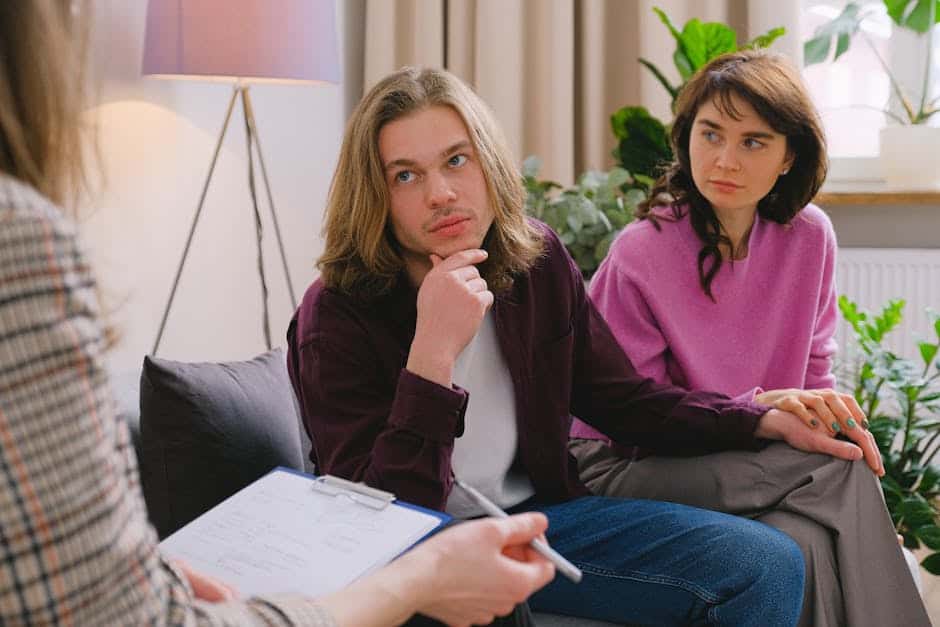
Marriage counselling, also known as couples therapy, provides a structured, supportive environment where partners can explore their relationship dynamics with the guidance of a trained professional. Unlike casual conversations with friends or family, marriage counselling offers evidence-based techniques and neutral facilitation to help couples identify patterns, improve communication, and develop healthier ways of relating to each other. For more information, see our couples counselling.

Relationships face challenges for numerous interconnected reasons. Research shows that common underlying factors include:
- Communication breakdowns: Partners often develop negative communication patterns over time, including criticism, defensiveness, contempt, and stonewalling
- Unresolved conflicts: When disagreements never reach satisfactory resolution, resentment builds and trust erodes
- Life transitions: Major changes like parenthood, career shifts, illness, or loss can strain even strong relationships
- Different attachment styles: How we learned to connect in childhood affects how we approach intimacy as adults
- External stressors: Financial pressure, work demands, family obligations, and social challenges impact relationship dynamics
- Unmet emotional needs: When partners feel unseen, unheard, or unvalued, emotional distance naturally develops
It’s important to understand that relationship struggles don’t necessarily indicate fundamental incompatibility or personal failure. Most relationship challenges develop gradually through accumulated misunderstandings and ineffective coping strategies. Marriage counselling helps couples recognize these patterns and develop more effective approaches to connection and conflict resolution.
Recognizing When Your Marriage Might Benefit from Professional Support
Many couples wait until their relationship reaches a crisis point before considering counselling, but early intervention often leads to more positive outcomes. Here are signs that professional support could be beneficial:
Communication Warning Signs
- Conversations frequently escalate into arguments or shut down completely
- You or your partner use criticism, name-calling, or contemptuous language during disagreements
- Important topics feel too dangerous to discuss
- One or both partners withdraw emotionally or physically during conflicts
- You feel misunderstood even when trying to communicate clearly
Emotional Distance Indicators
- Physical intimacy has significantly decreased or disappeared
- You feel more like roommates than romantic partners
- Sharing daily experiences or feelings has become rare
- You find yourself confiding in others instead of your spouse
- Resentment overshadows positive feelings toward your partner
Trust and Respect Issues
- Betrayals have occurred (emotional affairs, financial dishonesty, broken promises)
- You question your partner’s commitment to the relationship
- Respect has eroded through repeated hurtful interactions
- You’re considering separation or have discussed divorce
- Children are being affected by relationship tension
Real-Life Examples
Sarah and James found themselves in counselling after years of arguing about household responsibilities. What seemed like simple disagreements about chores actually revealed deeper issues about feeling valued and supported. Through counselling, they learned that Sarah’s requests for help felt like criticism to James, while James’s defensive responses left Sarah feeling unheard and unimportant.
Another couple, Maria and David, sought help after David’s job loss created significant financial stress. Their arguments about money intensified existing communication problems and created a cycle of blame and withdrawal. Marriage counselling helped them address both the practical challenges and the emotional impact of their situation.
What to Expect in Marriage Counselling
Understanding the counselling process can help reduce anxiety about taking this important step. Here’s what typically happens in marriage counselling:

Initial Assessment
Your counsellor will want to understand your relationship history, current challenges, and goals for therapy. This might involve individual sessions with each partner as well as joint sessions. The assessment helps identify patterns, strengths, and areas needing attention.
Establishing Safety and Structure
Effective marriage counselling creates a safe space where both partners can express themselves without fear of judgment or escalation. Your counsellor will establish ground rules for communication and help manage conflicts that arise during sessions.
Skill Building
Much of marriage counselling involves learning and practicing new communication and relationship skills. This might include:
- Active listening techniques
- Expressing needs and feelings constructively
- Managing conflict without damaging the relationship
- Rebuilding intimacy and connection
- Problem-solving strategies for ongoing challenges
Processing Past Hurts
Many couples need support in addressing past injuries and building forgiveness. This process takes time and requires commitment from both partners to healing rather than perpetuating harm.
Practical Strategies You Can Try Before or Alongside Counselling
While professional support is often necessary for significant relationship challenges, there are steps you can take to begin improving your marriage immediately:
Improve Daily Connection
- Create device-free time together: Spend at least 20 minutes daily talking without distractions
- Practice appreciation: Notice and verbally acknowledge positive things your partner does
- Ask meaningful questions: Show interest in your partner’s thoughts, feelings, and experiences
- Physical affection: Increase non-sexual physical touch like hugging, hand-holding, or gentle touches
Manage Conflict More Effectively
- Take breaks: If discussions become heated, agree to pause and return when emotions have cooled
- Use “I” statements: Express your feelings without blaming or criticizing your partner
- Focus on specific behaviors: Address particular actions rather than character traits
- Listen to understand: Try to genuinely hear your partner’s perspective before responding
Address Individual Stress
- Manage your own emotional state: Practice stress reduction techniques like deep breathing or mindfulness
- Maintain individual friendships and interests: A healthy relationship includes healthy individuals
- Address personal issues: Consider individual counselling for anxiety, depression, or trauma that affects your relationship
- Practice self-care: Ensure you’re meeting your basic needs for rest, nutrition, and emotional support
When Professional Marriage Counselling Becomes Essential
While self-help strategies can be valuable, certain situations require professional intervention:
- Safety concerns: Any form of abuse—physical, emotional, or psychological—requires immediate professional support
- Addiction issues: Substance abuse or behavioral addictions significantly impact relationship dynamics
- Major betrayals: Affairs or significant breaches of trust typically require structured therapeutic support to heal
- Mental health challenges: Depression, anxiety, or trauma affecting one or both partners
- Repeated patterns: When the same conflicts arise repeatedly without resolution
- Considering separation: Professional guidance can help determine whether the relationship can be repaired or how to separate respectfully
Interactive Counselling offers specialized support for couples facing these challenges, providing evidence-based approaches tailored to each couple’s unique situation. The therapeutic process addresses not just surface-level conflicts but underlying patterns and individual factors contributing to relationship distress.
Different Types of Marriage Counselling Approaches
Several therapeutic approaches have proven effective for couples:
- Emotionally Focused Therapy (EFT): Focuses on attachment bonds and emotional connection between partners
- Gottman Method: Based on extensive research about what makes relationships succeed or fail
- Cognitive Behavioral Therapy (CBT): Addresses thought patterns and behaviors that negatively impact the relationship
- Narrative Therapy: Helps couples rewrite their relationship story in more positive ways
Your counsellor will determine which approach best fits your specific needs and preferences.
Making Marriage Counselling Work: Commitment and Realistic Expectations
Successful marriage counselling requires commitment from both partners and realistic expectations about the process. Change takes time, and progress isn’t always linear. Some couples see improvements within a few sessions, while others require months of consistent work.
Research from the American Association for Marriage and Family Therapy indicates that marriage counselling helps approximately 70% of couples who participate actively in the process. However, success depends on factors including:
- Both partners’ willingness to participate honestly
- Timing of intervention (earlier is generally better)
- Severity of relationship damage
- Individual mental health factors
- Commitment to implementing changes outside sessions
It’s also important to understand that not all relationships can or should be saved. Sometimes, counselling helps couples recognize that separation is the healthiest choice, and it can guide this process with dignity and minimal harm, especially when children are involved.
Frequently Asked Questions About Marriage Counselling
How long does marriage counselling typically take?
Most couples attend counselling for 12-20 sessions, though this varies significantly based on individual circumstances. Some couples benefit from brief solution-focused work, while others require longer-term support to address complex patterns and past traumas.
What if my partner refuses to attend counselling?
While couples counselling is most effective with both partners participating, individual therapy can still benefit the relationship. Working on your own communication skills, emotional regulation, and relationship patterns can create positive changes that influence the dynamic.
Will our counsellor take sides or judge us?
Professional marriage counsellors maintain neutrality and avoid taking sides. The therapeutic process focuses on understanding both perspectives and improving overall relationship dynamics rather than determining who is “right” or “wrong.”
How do we choose the right marriage counsellor?
Look for licensed therapists with specific training in couples work. Consider factors like therapeutic approach, experience with issues similar to yours, and whether you both feel comfortable with their style. Many counsellors offer brief consultation calls to help determine fit.
What if counselling reveals that our marriage can’t be saved?
Sometimes counselling helps couples recognize that their relationship has reached its end. In these cases, therapy can facilitate a respectful separation process, help with co-parenting arrangements if children are involved, and provide support during the transition.
Marriage counselling represents hope—hope that relationships can heal, that communication can improve, and that love can be rekindled even after difficult periods. Whether you’re dealing with minor communication issues or major relationship crises, professional support can provide the tools and guidance needed to move forward constructively.
If you’re in Kelowna and considering marriage counselling, remember that seeking help demonstrates strength and commitment to your relationship. The challenges you’re facing are temporary, but the skills you learn in counselling can benefit your relationship for years to come. Taking that first step toward professional support might be exactly what your marriage needs to begin healing and growing stronger.
For more information about marriage counselling services and to learn how professional support can help your relationship, consider reaching out to explore what options might work best for your unique situation.