If you live in Kelowna, you know the feeling. The boundless energy of a perfect July day on the lake feels like a world away from the quiet, heavy feeling of a dark January afternoon. This isn't just in your head; it's a rhythm deeply connected to the unique and beautiful seasons of the Okanagan. For more information, see our Kelowna counselling.
"Seasonal changes impact energy levels in Kelowna primarily through variations in daylight, which affect our internal body clocks, and through lifestyle shifts dictated by the region's distinct outdoor-driven culture."

Understanding Kelowna's Seasonal Energy Rhythm
It’s completely normal to feel your internal energy ebb and flow with the changing scenery outside your window. When the seasons shift, it’s natural for your mood, motivation, and physical stamina to shift right along with them.
Our focus here isn't on fighting your body's response, but on understanding it. By learning to work with these natural cycles, you can navigate them more smoothly and compassionately. We’ll look at how Kelowna’s specific environment is wired directly into our internal biology.
What Shapes Our Energy in the Okanagan?
The seasonal experience in Kelowna is distinct, shaped by factors that are lived realities for everyone in the valley. These aren't just abstract ideas; they have a real, tangible impact on how we feel day-to-day.
Here’s what many of us experience:
- Short Winter Daylight: The early sunsets and limited sun exposure in Kelowna have a powerful effect, triggering our desire to retreat and conserve energy.
- Long, Bright Summers: Those endless Okanagan summer days are invigorating, but they can also be disruptive, sometimes making it harder to stick to a regular sleep schedule.
- Smoky Summer Skies: Even on a warm day, wildfire smoke can ground our outdoor-driven routines, casting a literal and figurative haze over our mood and energy.
- Unpredictable Shoulder Seasons: Spring and fall’s wild swings in weather can leave our energy levels feeling just as unsettled and up-and-down.
When you start to see your energy shifts as a normal response to the world around you, it’s easier to let go of any judgment or pressure. It's a powerful first step toward finding more balance throughout the year, and it's a phenomenon felt across the region—you may find it helpful to see how these off-season slowdowns affect motivation in other Okanagan communities.
The Science of Your Internal Body Clock
Ever wondered why the short, dark days of a Kelowna winter can leave you feeling so drained, while the long, bright days of summer have you buzzing with energy? It’s not just your imagination—there’s some powerful biology at play.
It all comes down to what scientists call your circadian rhythm, which is essentially your body’s own internal, 24-hour clock. This master clock is tucked away deep inside your brain, and its main job is to manage your energy, sleep, and even your mood. Its most important cue? Light.
Think of it like this: when sunlight enters your eyes, it sends a direct signal to a tiny part of your brain called the suprachiasmatic nucleus (SCN). This is your body's control centre. It takes that light information and uses it to sync up your internal schedule with the world outside, keeping everything running on time.
The Hormonal Seesaw of Light and Dark
So how does the clock actually work? It pulls the levers on two key hormones: melatonin and serotonin. Their delicate balance is the secret behind how you feel from one season to the next.
Melatonin: This is often called the 'hormone of darkness' for a good reason. When the sun goes down and your world gets dark, your brain gets the signal to start producing melatonin. It’s what makes you feel drowsy and gets your body ready for a night of rest.
Serotonin: On the flip side, bright light—especially that wonderful morning sun—triggers a boost in serotonin. This is the 'feel-good' neurotransmitter that helps you feel alert, focused, and motivated. It’s your brain’s natural wake-up call.
During a Kelowna winter, this whole system gets thrown for a loop. The sun rises later and sets much earlier, which means your brain spends more time making melatonin. That can leave you feeling groggy and sluggish. At the same time, less daylight means less serotonin, which can put a real dent in your energy and drive.
How Kelowna's Seasons Challenge Your Clock
This sensitive hormonal balance gets put to the test every year by our distinct seasons here in the Okanagan. In winter, with less sun exposure, your 'sleepy' hormone works overtime while your 'wakeful' one takes a backseat. This biological shift is a major reason so many of us get hit with that heavy, lethargic feeling often called the 'winter blues.'
But the intensely long days of a Kelowna summer can bring their own set of challenges. With the sun setting so late, your body’s natural release of melatonin can be delayed, making it tough to wind down and fall asleep at your usual bedtime. You might feel energized all day, but your sleep quality can suffer.
Just knowing that these feelings are rooted in your body's biology can be a huge relief. If you find the seasonal shift is hitting you particularly hard, remember there is support when energy drops. Understanding the science is the first step toward working with your body’s natural rhythms instead of fighting against them, no matter the season.
How Kelowna’s Unique Climate Shapes Your Energy
Anyone who lives in the Okanagan knows we experience four truly distinct seasons, and each one brings its own unique energy. We’ve already touched on the science behind our internal clocks, but Kelowna’s specific environment adds another important layer. These local patterns play a huge role in how you feel from one day to the next.
Let’s start with winter. It’s no secret that the short, dark days can feel like a slog. When the sun dips below the horizon before 4:30 PM, it’s not just in your head that you feel tired—your brain is actively ramping up its production of melatonin. It’s a completely natural, biological response to less light, not a personal weakness.
This simple diagram shows just how powerful that connection is between sunlight, sleep, and mood.
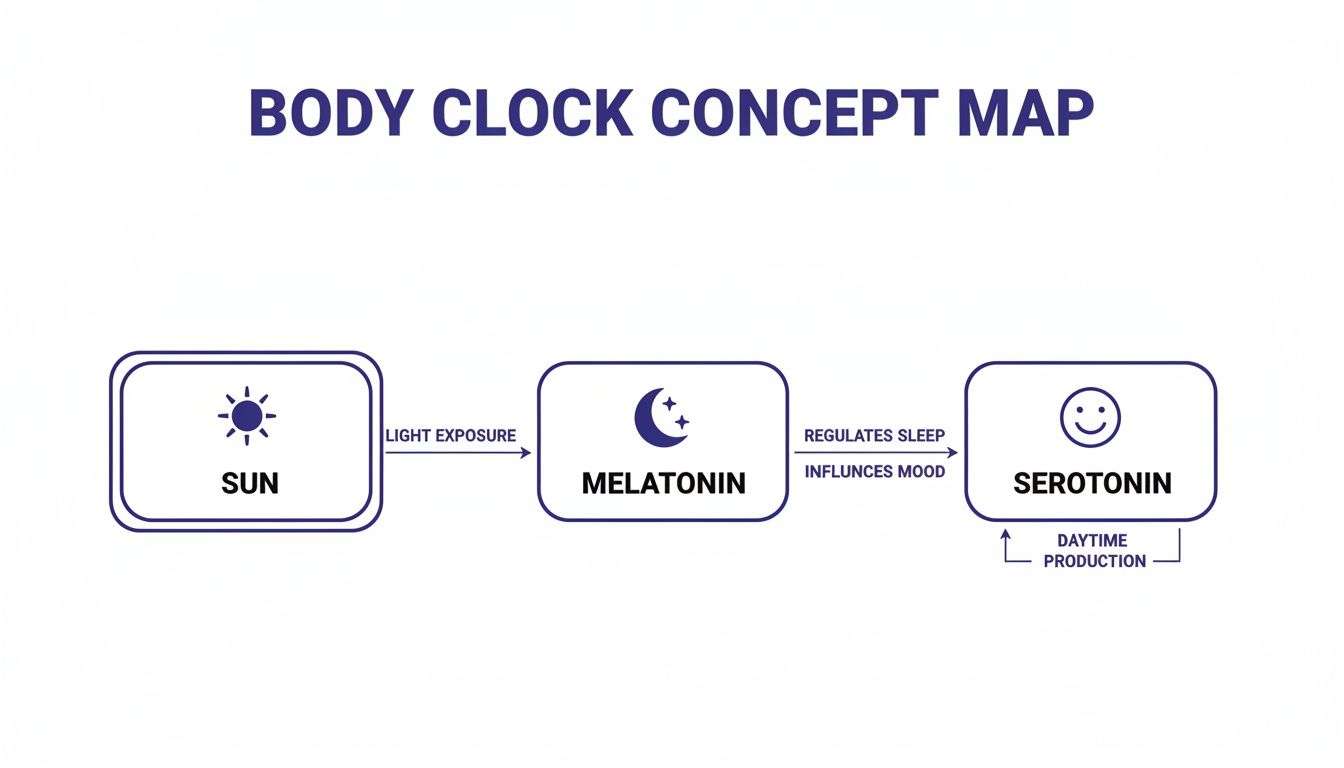
As you can see, light exposure acts like a switch. It turns down melatonin (the sleep hormone) while turning up serotonin (a key player in mood and energy). It’s a core reason why winter’s limited daylight can feel so heavy.
Summer Smoke and Unpredictable Shoulders
Then we swing into summer, which is supposed to be all about long, sun-drenched days and an active, outdoor lifestyle. But in recent years, wildfire smoke has thrown a wrench in the works. Smoky skies can trap us indoors, keeping us from the very lake days and mountain hikes that are meant to recharge us. This can easily lead to feelings of frustration and lethargy, casting a literal and figurative haze over our summer.
Spring and fall—our "shoulder seasons"—bring their own brand of chaos. The weather can be all over the place, swinging from gorgeous and sunny one day to grey and chilly the next. It’s tough for your body to find any kind of rhythm when the world outside can’t seem to make up its mind.
It's incredibly common to feel a disconnect when your internal energy doesn't match the external "go-go-go" vibe of Kelowna's culture. Feeling exhausted on a perfect bluebird ski day or drained during a beautiful summer evening is a valid experience that many people here share.
Kelowna's Climate Extremes
Kelowna's climate is one of dramatic contrasts, and that shapes everything from our weekend plans to our internal energy reserves. Just think about the massive temperature swings we see throughout the year.
The intense summer heat, which hit a record-breaking 45.7°C back in 2021, forces many of us to retreat indoors for cooler, less active days. On the flip side, our significant winter heating costs are a clear sign of how much time we spend inside, away from what little natural light there is.
These seasonal extremes don't just affect our energy bills; they tax our emotional and physical energy, too. It's a common theme for people seeking support when energy drops. This constant need to adapt to our environment is a huge part of understanding the seasonal shifts we feel. If you're interested in the data, you can explore more about its climate history to see the patterns for yourself.
Practical Ways to Adapt to Kelowna's Seasons
Understanding why your energy shifts with the seasons is one thing; knowing what to do about it is another. The goal isn't to fight your body's natural rhythms or force summertime energy on a dark winter day. It’s about learning to work with the seasons, making small, supportive choices that honour how you feel.
Think of it as building a toolkit of gentle strategies you can pull from all year long. These aren't rigid rules, just simple ways to care for yourself through Kelowna’s distinct seasonal shifts.

Winter: The Art of Leaning In
When winter settles over the valley, bringing short days and a definite chill, our natural instinct is to slow down and conserve energy. Instead of resisting that urge, try embracing this quieter, more restorative time of year.
- Soak Up Morning Light: The moment you wake up, try to get at least 15 minutes of natural light. Even just sipping your coffee by a bright window or stepping outside for a few minutes can do wonders for telling your internal clock it’s time to start the day.
- Find Joy in Indoor Movement: A gruelling workout might feel like too much, and that’s okay. Gentle movement like stretching, living-room yoga, or even just putting on some music and dancing can lift your spirits and get your blood flowing without feeling like a chore.
- Eat Nourishing Foods: Lean into warm, comforting foods. Think hearty soups, rich stews, and roasted root vegetables. These meals feel grounding and deeply satisfying during the colder months.
Summer: Staying Balanced Amid the Buzz
Kelowna summers are incredible—vibrant, social, and full of life. But the endless daylight and the very real possibility of smoky skies demand a mindful approach to managing your energy. The key is to enjoy the season without running yourself into the ground.
Sometimes, even with the best intentions, the seasonal blues can persist or even show up unexpectedly in summer. If you find yourself consistently struggling, it might be helpful to seek support when energy drops and explore what’s going on in a safe, professional space.
It's so easy to feel pressure to be "on" all summer, enjoying every sunny moment. Give yourself permission to have quiet days, especially when the smoke rolls in. Protecting your energy and your lungs is just as important as soaking up the sun.
Protecting Your Summer Sleep
Those long, light-filled evenings can make it tough for your brain to switch off. A solid wind-down routine is your best friend for signalling that it's time to rest.
- Create Your Own "Sunset": An hour or two before bed, make your home darker and cooler. Use blackout curtains to block out the lingering daylight and dim the lights to encourage your body’s natural melatonin production.
- Adapt to Smoky Days: When the air quality takes a dive, pivot. Instead of that hike, maybe you check out a local gallery, try a new cafe, or have friends over. This keeps you connected without putting your respiratory health at risk.
- Stay Cool and Hydrated: The Okanagan heat can be draining. Make a conscious effort to drink water all day long and find a cool, shady spot to rest during the hottest parts of the afternoon.
Spring and Autumn: Adapting with Grace
The "shoulder seasons" in the Okanagan are notoriously unpredictable. One day feels like summer, the next feels like winter. This is the time to practice flexibility and give yourself a little grace.
If you wake up to wild weather and your energy is all over the place, the kindest thing you can do is adjust your expectations. Maybe that big hike up Knox Mountain becomes a gentle walk along the waterfront, or that ambitious project gets swapped for a good book.
Beyond just adjusting to the day's conditions, simple habits to improve overall sleep quality provide a powerful foundation for stable energy, no matter what the calendar—or the weather forecast—says.
Here is a quick summary of gentle, practical tips to help support your energy and well-being through Kelowna's distinct seasons.
Seasonal Strategies for Kelowna Living
| Season | Focus Area | Gentle Strategy Examples |
|---|---|---|
| Winter | Rest & Restoration | Prioritize morning light, enjoy warm/nourishing foods, embrace cozy indoor activities, and allow for more rest. |
| Spring | Flexibility | Dress in layers, adjust plans based on weather, and be patient with fluctuating energy levels as daylight increases. |
| Summer | Energy Management | Stay hydrated, seek shade during peak heat, create a dark sleep environment, and have indoor plans for smoky days. |
| Autumn | Grounding & Prep | Enjoy the harvest, gradually adjust sleep schedules as days shorten, and mindfully transition from high to low energy. |
These small adjustments aren’t about overhauling your life. They’re about making simple, conscious choices that help you feel more balanced and in sync with the beautiful, ever-changing environment we call home.
Knowing When You Need More Support
We all know what a grey Kelowna winter can feel like—a little sluggish, a bit unmotivated. That's normal. But what happens when that feeling of being stuck in a heavy fog doesn’t lift, even when the sun comes back out? The tips we've talked about are great for managing the usual seasonal ebb and flow, but sometimes, the shifts we experience go much deeper.
The most important thing you can do is to check in with yourself, honestly. It’s about noticing when a seasonal slump feels less like a temporary dip and more like a persistent weight, without any judgment. If you’re feeling drained all the time, no matter the season, it’s also smart to look at the physical side of things. Simple things like checking for Key Vitamin Deficiency Signs can sometimes point to an easy-to-fix cause for constant fatigue.
When a low mood, a sense of being overwhelmed, or a total lack of energy becomes your new baseline, it's easy to feel like you're completely alone in it. That’s usually the point where getting a different kind of support is the most powerful thing you can do for yourself.
Gentle Cues It Might Be Time to Talk
Figuring out when you need more help isn't about giving yourself a diagnosis. It’s simply about listening to what your body and mind are telling you. If any of these patterns hang around for more than a couple of weeks, it might be a sign that a conversation with a professional could make a real difference.
- A Persistent Low Mood: You feel sad, down, or just empty most of the day, almost every day. Even good news doesn’t seem to break through it.
- Loss of Interest or Joy: Hobbies and activities you used to love, like a walk along the lake or meeting friends for coffee, now feel like a chore or bring you no pleasure at all.
- Major Shifts in Sleep or Appetite: You’re either sleeping way more than usual but still feel exhausted, or you’re battling insomnia. Your appetite might have vanished, or you might be eating much more than normal.
- Feeling Overwhelmed by Daily Life: Everyday tasks that you used to handle just fine now feel massive and impossible. You’re struggling to keep up with your normal responsibilities.
Acknowledging these feelings is the brave first step. It's a quiet signal that you deserve more than just "powering through." You deserve to feel well.
If this sounds like what you're going through, please know you don't have to figure it out on your own. Counselling provides a confidential, non-judgmental space to unpack what’s happening. It’s a place to get personalized support when energy drops and develop strategies that actually work for you. Asking for help isn't a sign of failure; it’s a courageous move toward reclaiming your well-being.
Frequently Asked Questions About Seasonal Energy
It’s completely normal to have questions when you notice your own energy and mood shifting with Kelowna's distinct seasons. Feeling your internal world change with the world outside can be confusing, but rest assured, your experiences are valid.
Here are a few of the most common questions we hear, along with some answers to help you find your footing.
Is it normal for my energy to be low in winter even if I don't feel sad?
Yes, absolutely. This is something many people in the Okanagan experience. Think of it less as an emotional issue and more as your body's physical response to the shorter, darker days. Less sunlight signals your brain to produce more melatonin—the hormone that makes you feel sleepy. This can lead to that sluggish, tired feeling, a kind of "winter slowdown" that’s purely physical and separate from your mood.
Why do I feel more anxious or tired during smoky summer months?
This is a very real and shared experience here. The smoky summers we've been having can be incredibly stressful, and the anxiety or fatigue you feel is a perfectly understandable reaction. On a physical level, poor air quality can leave you feeling unwell and drained. Emotionally, being forced indoors during a season we all associate with sunshine and outdoor adventure can stir up intense feelings of frustration, restlessness, and even a sense of being trapped.
What’s the difference between the ‘winter blues’ and something more?
This is a great question. The ‘winter blues’ usually feels like a milder form of fatigue or a dip in your mood that gets better as the days get longer. You might feel more like hibernating and less social, but you can still get through your day and find moments of joy. It might be time to consider professional support if you notice a deep, persistent sadness that lasts for more than a few weeks, losing interest in almost everything you used to enjoy, or overwhelming feelings of hopelessness or worthlessness. These can be signs of something more serious than just the blues. Talking to a professional at Kelowna’s award-winning counselling clinic can offer a safe, confidential space to explore what’s going on.
Can small lifestyle changes really improve my energy levels?
Without a doubt. In fact, it’s the small, consistent habits that often make the biggest difference in the long run. Things like sticking to a regular sleep schedule, getting just 15 minutes of morning sunlight, eating nourishing foods, and moving your body gently are all powerful ways to help regulate your body's internal clock. The goal isn't a dramatic, stressful overhaul—it's about finding small, kind practices that support you through every season.
Trying to manage these feelings on your own can feel isolating. Please know that you don’t have to. The compassionate team at Interactive Counselling is here to listen and help you find personalized strategies to feel more balanced, no matter the season.
If you think a little extra support could help, we invite you to learn more about our approach to mental wellness.
Clinically Reviewed By
Amy Mosset, MCP, RCC-S
Amy Mosset is a Master Practitioner in Clinical Counselling, Clinical Supervisor, and the owner of Interactive Counselling. She provides trauma-informed, evidence-based care and clinical supervision to registered therapists, with a focus on ethical practice, client safety, and high-quality therapeutic outcomes.