Emotional intimacy drives nearly 65% of renewed attraction in long-term couples, far outweighing physical chemistry alone. Many Canadian couples experience fading connection over time, yet attraction can be rebuilt through evidence-based strategies. This guide explores how to restore emotional and physical attraction by addressing root causes, improving communication, and implementing practical exercises that strengthen your bond.
Table of Contents
- Introduction To Rekindling Attraction
- Causes Of Declining Attraction
- Emotional And Physical Intimacy: Understanding The Core Of Attraction
- Common Misconceptions About Rekindling Attraction
- Therapeutic Interventions And Communication Strategies
- Practical Exercises To Rekindle Attraction
- Stages And Timeframes In Rekindling Attraction
- Find Support To Rekindle Your Relationship
- Frequently Asked Questions
Key takeaways
| Point | Details |
|---|---|
| Emotional disconnect drives declining attraction | 80% of couples reported emotional disconnect as the primary reason for waning attraction. |
| Emotional intimacy matters most | Emotional intimacy accounts for 65% of renewed attraction in long-term relationships. |
| Therapy and communication rebuild connection | Emotion-focused therapy, communication training, and behavioural couples therapy all improve relationship satisfaction. |
| Daily practices strengthen attraction | Gratitude expressions, shared activities, and physical touch boost attraction by 25%. |
| Progress takes consistent effort | Rekindling attraction typically requires 3-6 months of sustained work with noticeable milestones along the way. |
Introduction to rekindling attraction
Rekindling attraction means restoring both emotional and physical connection in a committed relationship. Many long-term Canadian couples face challenges when attraction fades, often feeling uncertain about whether they can recapture what they once shared. Understanding the difference between emotional attraction (feeling understood, valued, and emotionally close) and physical attraction (chemistry, desire, and affectionate touch) helps couples address both dimensions effectively.
Research shows that both types of attraction matter, but they interact in ways most couples don’t expect. Emotional connection typically drives physical desire more powerfully than the reverse. When couples prioritise rebuilding emotional intimacy, physical attraction often follows naturally.
Addressing attraction decline improves relationship satisfaction, reduces conflict, and strengthens long-term commitment. Key elements include:
- Recognising that attraction naturally fluctuates in committed relationships
- Identifying specific emotional and physical disconnection patterns
- Committing to intentional reconnection efforts
- Understanding that both partners play active roles in restoration
Causes of declining attraction
Emotional disconnect is the primary reason when attraction wanes in committed relationships. Partners who feel emotionally distant report significantly lower physical attraction, regardless of how strong their initial chemistry was. This disconnect often develops gradually through accumulated small hurts, unmet needs, and communication breakdowns.
Negative communication patterns accelerate attraction decline. Criticism, defensiveness, contempt, and stonewalling create emotional distance that erodes both connection and desire. When conversations become battlegrounds rather than opportunities for understanding, partners withdraw to protect themselves.
Unmet emotional needs harm intimacy more profoundly than physical issues alone. Partners who don’t feel heard, valued, or understood gradually lose interest in physical closeness. Common unmet needs include:
- Feeling appreciated and recognised for contributions
- Receiving emotional support during stressful periods
- Experiencing genuine curiosity about thoughts and feelings
- Sharing quality time without distractions
Physical attraction typically declines as the emotional bond weakens. Partners who feel emotionally disconnected find it difficult to feel physically drawn to each other, creating a cycle where both types of intimacy suffer. Breaking this cycle requires addressing emotional needs first.
Emotional and physical intimacy: understanding the core of attraction
Emotional intimacy accounts for approximately 65% of renewed attraction in couples working to restore their connection. This finding surprises many partners who assume physical chemistry matters most. When you feel emotionally safe, understood, and valued, physical desire naturally increases.
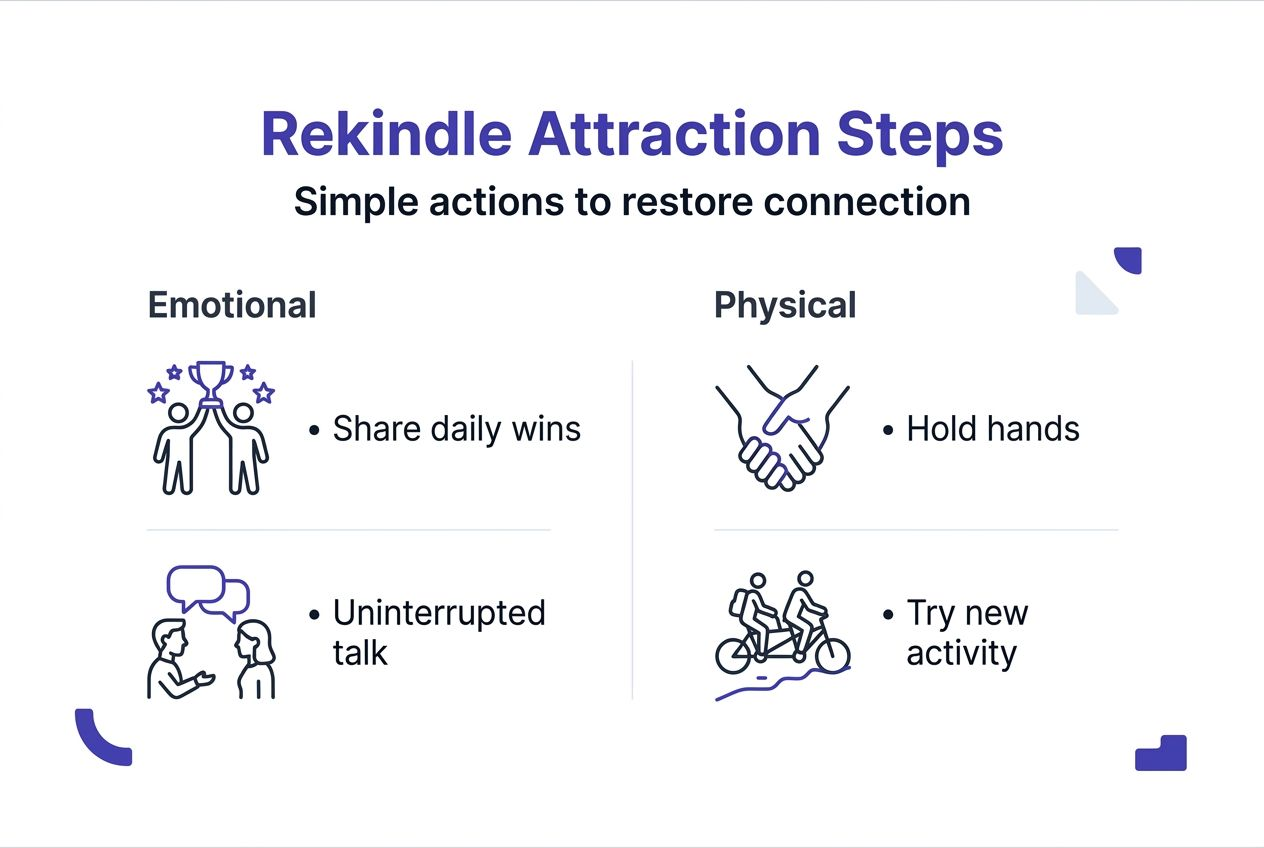
Daily brief physical touch improved attraction scores by 25% in intervention trials. Simple gestures like hand-holding, hugs, and shoulder touches create positive feedback loops between emotional closeness and physical connection. These small moments of affection signal care and availability.

Attachment styles influence how easily couples reconnect. Partners with secure attachment styles typically navigate reconnection more smoothly, whilst those with anxious or avoidant patterns may need additional support. Understanding your attachment style helps you recognise obstacles and work around them.
| Intimacy type | Primary impact | Time to effect | Sustainability |
|---|---|---|---|
| Emotional intimacy | Trust, safety, understanding | 2-4 weeks | High with maintenance |
| Physical intimacy | Desire, closeness, bonding | Immediate to 1 week | Moderate without emotional base |
| Combined approach | Comprehensive attraction renewal | 3-6 months | Very high |
Key factors that strengthen both types of intimacy include:
- Vulnerability: sharing fears, hopes, and authentic feelings
- Responsiveness: actively listening and validating partner experiences
- Consistency: maintaining connection rituals even during busy periods
- Novelty: introducing new experiences that create shared excitement
Pro Tip: Schedule 10 minutes of uninterrupted conversation daily where you share something meaningful about your day, focusing entirely on each other without phones or distractions.
Common misconceptions about rekindling attraction
Physical attraction alone cannot sustain a troubled relationship. Many couples mistakenly believe that if they just improve their physical intimacy, emotional distance will resolve itself. Research consistently shows the opposite: emotional connection must be restored first for physical attraction to flourish sustainably.
Rekindling attraction is a gradual process, not an instant transformation. Partners often feel discouraged when they don’t see immediate results, but meaningful change takes consistent effort over months. Expecting overnight improvement sets couples up for disappointment and premature abandonment of effective strategies.
Communication’s importance is frequently underestimated. Couples may assume they communicate well enough, yet subtle patterns of dismissiveness, interruption, or topic avoidance create significant barriers. Improving communication quality often produces the fastest gains in emotional connection. Common misconceptions include:
- Believing that long-term couples naturally understand each other without explicit communication
- Assuming that conflict indicates incompatibility rather than communication skill gaps
- Thinking that attraction should feel effortless if partners are truly compatible
- Expecting therapy to fix problems without active participation between sessions
Pro Tip: Embrace patience with yourselves and the process, celebrating small improvements rather than fixating on how far you still need to go. Progress compounds over time.
Therapeutic interventions and communication strategies
Three evidence-based therapy approaches effectively address attraction challenges in committed relationships. Each offers distinct benefits depending on your specific needs and relationship patterns. Understanding these options helps you choose the most suitable path.
Emotion-focused therapy (EFT) addresses emotional distance and attachment injuries. This approach helps partners identify underlying emotional needs and express them safely. EFT works particularly well for couples struggling with trust issues or past hurts that block connection.
Communication training therapy improves conflict handling and increases positive interactions. You learn specific skills for active listening, non-defensive responses, and constructive problem-solving. This approach suits couples whose main challenge involves communication patterns rather than deeper emotional wounds.
Behavioural couples therapy (BCT) focuses on practical behaviour changes and affectionate routines. You identify specific actions that increase relationship satisfaction and implement them systematically. BCT offers clear structure and measurable progress markers.
| Therapy type | Primary focus | Typical session length | Key benefits |
|---|---|---|---|
| Emotion-focused therapy | Attachment and emotional safety | 12-20 sessions | Deep emotional healing, secure bond |
| Communication training | Skills and interaction patterns | 8-16 sessions | Better conflict resolution, clearer expression |
| Behavioural couples therapy | Action and routine changes | 10-18 sessions | Concrete improvements, measurable progress |
Exploring different types of couples therapy helps you understand which approach aligns with your goals. Preparing for couples counselling increases the likelihood of positive outcomes. Understanding the benefits of marriage counselling motivates commitment to the process.
Effective communication strategies include:
- Active listening: focusing completely on your partner without planning your response
- Validation: acknowledging feelings even when you disagree with perspectives
- I-statements: expressing needs without blaming or criticising
- Timeout agreements: pausing heated discussions before they escalate
Practical exercises to rekindle attraction
Daily gratitude expressions increase appreciation and positive regard. Each evening, share three specific things you appreciated about your partner that day. This simple practice shifts focus from frustrations to positive qualities and actions.
Engaging in new shared activities builds novelty and excitement. Novel experiences trigger dopamine release, which enhances attraction and bonding. Choose activities neither of you has tried before to create equal footing and shared discovery.
Increasing intentional physical affection strengthens both emotional and physical connection. Brief touches throughout the day maintain physical awareness and warmth without pressure for sexual intimacy.
Follow these steps to implement attraction-building practices:
- Choose one exercise from this section to start, avoiding overwhelm from trying everything simultaneously.
- Schedule specific times for your chosen practice, treating it as a non-negotiable appointment.
- Track your progress for two weeks, noting changes in how you feel toward each other.
- Add a second exercise once the first becomes habitual, gradually building your relationship routine.
- Review together monthly to assess what’s working and adjust your approach as needed.
You can explore structured couples therapy exercises for emotional intimacy and practical relationship advice for couples to expand your toolkit.
Behaviours that strengthen attraction include:
- Maintaining eye contact during conversations to signal full attention
- Asking open-ended questions about feelings, thoughts, and experiences
- Expressing physical affection without expectation of sexual activity
- Creating weekly date experiences, even simple at-home activities
- Sending midday messages of appreciation or affection
Pro Tip: Small consistent actions often have outsized effects over time, so prioritise regularity over grand gestures. Five minutes of genuine connection daily outperforms occasional elaborate dates.
Stages and timeframes in rekindling attraction
Typical timeframe for noticeable change is three to six months when couples engage consistently in evidence-based practices. Some improvements appear within weeks, whilst deeper transformation requires sustained effort. Understanding this timeline prevents premature discouragement.
The early stage involves assessing current attraction levels and identifying specific disconnection patterns. You and your partner openly discuss what’s changed, what you miss, and what you want to rebuild. This stage requires honesty and vulnerability.
The mid stage focuses on improving communication and practising new behaviours. You implement exercises, attend therapy sessions, and consciously change interaction patterns. Progress feels incremental but becomes more visible as weeks pass.
The later stage consolidates emotional and physical reconnection gains. New patterns become habitual, requiring less conscious effort. You experience more spontaneous positive interactions and renewed desire.
Important factors throughout include:
- Consistency: maintaining practices even when motivation fluctuates
- Adjustment: modifying approaches based on what works for your unique relationship
- Professional support: accessing therapy when self-guided efforts plateau
- Patience: allowing sufficient time for meaningful change
Celebrating small wins maintains motivation during the challenging middle period. Notice when conversations feel warmer, when touch increases naturally, or when you look forward to time together. These markers indicate real progress.
Find support to rekindle your relationship
Professional counselling provides structured support for couples working to restore attraction and deepen connection. Trained therapists offer objective perspectives, evidence-based techniques, and personalised guidance tailored to your specific relationship dynamics and challenges.
Interactive Counselling offers various therapy approaches across multiple Canadian locations and online, providing flexible access to qualified relationship professionals. Whether you’re exploring options, ready to begin therapy, or seeking to enhance current efforts, professional support accelerates progress and prevents common pitfalls.
Exploring available counselling services helps you understand what’s possible for your relationship. Learning about different types of couples therapy ensures you choose the approach that fits your needs. Taking time for preparing for couples counselling maximises your investment in therapy.
Taking the next step toward relationship well-being demonstrates commitment to your partnership and your own happiness. Professional guidance provides accountability, expertise, and hope during challenging periods.
Frequently asked questions
How long does it usually take to rekindle attraction in a relationship?
Rekindling attraction generally takes three to six months with consistent effort and professional support when needed. Early improvements in emotional connection often appear within weeks, whilst deeper physical and emotional intimacy develops more gradually. Patience is crucial as progress happens incrementally rather than overnight.
Can therapy really help restore attraction between partners?
Research demonstrates that therapy significantly improves emotional intimacy and communication quality, which directly enhances attraction between partners. Different therapy types offer tailored approaches to suit specific couple needs, from attachment-focused work to practical communication skills. Success depends on both partners’ willingness to engage actively in the process.
What daily habits can couples adopt to strengthen their attraction?
Daily gratitude expressions, intentional physical touch, and shared activities are amongst the most effective habits for building attraction. Even brief practices like 10-minute conversations, holding hands whilst walking, or expressing appreciation create meaningful connection. Consistency in practising these behaviours builds emotional and physical closeness over time.
Is it normal for attraction to fade in long-term relationships?
Attraction naturally fluctuates in committed relationships due to life stressors, routine, and changing circumstances. What matters most is recognising when attraction has declined significantly and taking proactive steps to restore connection. Many couples successfully rekindle attraction by addressing underlying emotional needs and communication patterns.
Recommended
- Rebuilding emotional intimacy in couples: a 2026 guide
- When Love Languages Don’t Match: How to Reconnect When You Feel Out of Sync
- How to Prepare for Couples Counseling for Lasting Change – Interactive Counselling
- How to Save a Marriage: A Guide to Rebuilding Your Connection