Welcoming a new baby is one of life's most profound experiences, but it often comes with a messy, unpredictable mix of emotions that can leave you feeling completely overwhelmed. It's easy to think it's supposed to be all joy and bliss, so when feelings of sadness, anxiety, or even just intense irritability pop up, it can be really confusing and isolating. You need to know that you are absolutely not alone, and paying attention to your emotional health during this time is a sign of incredible strength. For more information, see our depression counselling.
"The key difference between postpartum depression and the baby blues lies in the timing, intensity, and impact of the symptoms; the baby blues are a brief, mild emotional dip lasting about two weeks, while postpartum depression is a more severe, persistent medical condition that interferes with your ability to care for yourself and your baby."
Your Emotional Journey After Childbirth
The shift into parenthood is a massive adjustment. Your body is healing, your hormones are on a rollercoaster, and sleep suddenly feels like a luxury you can't afford. In the middle of all that, it's perfectly normal to feel a whole spectrum of powerful, conflicting emotions. Just acknowledging that reality is the first step toward treating yourself with some much-needed compassion.
On top of everything else, you're navigating new challenges that can be incredibly draining, like figuring out how to soothe a crying baby. Finding little strategies that work can make a huge difference in managing your own stress levels.
Think of this guide as a gentle, supportive resource. It’s not here to scare you, but to give you clear, reliable information so you feel more empowered. By learning to tell the difference between the extremely common "baby blues" and the more serious condition of postpartum depression (PPD), you can better understand what you're experiencing and recognize when it's time to reach out for a little extra support. Prioritizing your own mental wellness is one of the most important things you can do for your new family.
A Quick Look at the Key Differences
To get a clearer picture right away, here’s a straightforward comparison. We’ll dive much deeper into each of these points as we go.
| Characteristic | The Baby Blues | Postpartum Depression (PPD) |
|---|---|---|
| When It Starts | Usually within 2-3 days after birth | Can begin anytime in the first year |
| How Long It Lasts | Fades on its own within 2 weeks | Lasts longer than 2 weeks |
| Symptom Severity | Mild mood swings, tearfulness, irritability | Intense sadness, anxiety, hopelessness |
| Impact on Daily Life | Does not stop you from caring for your baby | Can make it hard to function or bond with baby |
Learning more about your emotional well-being helps you feel more in control during this new chapter. Remember, understanding these distinctions is a powerful tool for advocating for yourself and making sure your whole family can thrive.
Understanding the Common Experience of the Baby Blues
If you’ve found yourself bursting into tears for no reason or feeling completely overwhelmed in the days after giving birth, know this: you are not alone. Not even close. This emotional rollercoaster is known as the "baby blues," and it's a remarkably common pitstop on the journey into parenthood. It’s not a reflection of your ability as a parent, but rather your body and mind working overtime to adapt to one of life’s biggest changes.
The baby blues are largely triggered by the massive hormonal plunge that happens after you deliver, coupled with the sudden reality of sleep deprivation and the weight of your new responsibilities. It’s your system recalibrating after the marathon of pregnancy and childbirth. These feelings are temporary and considered a completely normal part of the adjustment.
What Do the Baby Blues Feel Like?
The experience can be disorienting because the emotions often hit you out of nowhere. One minute, you’re gazing lovingly at your newborn; the next, you’re sobbing over a TV commercial or feeling a flash of intense frustration.
Common feelings associated with the baby blues include:
- Sudden mood swings: Shifting from happy to sad without any obvious trigger.
- Feeling weepy or tearful: Crying much more easily and frequently than you normally would.
- Irritability and impatience: Getting easily annoyed with your partner, other children, or even yourself.
- Anxiety and worry: Feeling restless or having nagging worries about your baby's well-being.
- Feeling overwhelmed: The day-to-day tasks of caring for a newborn can feel like an insurmountable mountain.
It’s important to note that even though these feelings are uncomfortable, they don't typically get in the way of you caring for your baby. You’re still able to manage feedings, diaper changes, and cuddles, even while feeling emotionally fragile. This is a critical distinction when we start comparing the baby blues to postpartum depression.
Timing is Everything
The most defining characteristic of the baby blues is the timeline. The symptoms usually pop up within two to three days after birth, often hitting their peak around day four or five. This is when hormonal shifts are at their most dramatic and the initial adrenaline rush starts to fade, replaced by the reality of 24/7 care.
The key thing to remember about the baby blues is that they don’t stick around. These feelings are expected to fade and resolve on their own within about two weeks of starting. That two-week mark is a crucial benchmark to keep in mind as you monitor how you're feeling.
This experience is incredibly widespread. The 'baby blues' affect a large majority of new birthing parents, but they resolve on their own without intervention. In Canada, this holds true, with most new parents experiencing these fleeting mood shifts a few days after birth. Only a smaller percentage go on to develop the more persistent and serious symptoms of postpartum depression.
Gentle Ways to Care for Yourself
Getting through the baby blues isn't about "fixing" anything. It's about giving yourself plenty of grace and support as your body and mind adjust. Being kind to yourself is paramount.
Try these gentle strategies to support yourself during this tender time:
- Prioritize Rest: I know it sounds impossible, but try to sleep when the baby sleeps. Let the laundry and dishes pile up. Your recovery is the top priority.
- Accept Help: When friends or family offer to bring food, hold the baby so you can shower, or run an errand—say yes! Accepting help is a sign of strength, not weakness.
- Stay Nourished and Hydrated: Keep simple, healthy snacks and a big water bottle within arm's reach. What you eat and drink has a direct line to your mood and energy.
- Connect with Others: Talk to your partner, a trusted friend, or another new parent about what you're going through. Just voicing your feelings can lift a huge weight.
Navigating this new chapter is a massive adjustment. Learning how to manage life transitions with self-compassion can make a world of difference. By understanding that this is a normal experience, you can move through it with patience, knowing it’s a temporary—and very common—part of becoming a parent.
Recognizing the Signs of Postpartum Depression
While the baby blues are a temporary hurdle, postpartum depression (PPD) is different. It isn’t something you can just "get over" with a good night's sleep or a change in attitude. PPD is a serious but treatable medical condition that requires professional, compassionate support. It’s caused by a complex mix of hormonal, emotional, genetic, and social factors—and it is never your fault.
The key differences between PPD and the baby blues come down to severity, duration, and impact. The signs of PPD are far more intense, they stick around for much longer than two weeks, and they can genuinely get in the way of caring for yourself and your baby. Knowing what to look for is the first step toward getting the help you deserve.
Core Emotional and Psychological Signs
Unlike the fleeting sadness that comes with the baby blues, the emotional weight of PPD is persistent and can feel completely crushing. It often casts a shadow over your entire day, making it hard to find joy even in moments you feel you "should" be happy.
Common emotional flags include:
- Persistent Sadness and Hopelessness: A deep, unshakable sadness that just won't lift, often paired with frequent crying spells or feeling totally numb.
- Intense Anxiety or Panic Attacks: Overwhelming worry that feels out of your control, sometimes showing up as physical symptoms like a racing heart, shortness of breath, or dizziness.
- Loss of Interest: No longer finding pleasure in things you once loved, whether it's your hobbies, time with your partner, or even bonding with your baby. This often feels like you're detached or just going through the motions.
- Feelings of Guilt or Worthlessness: A powerful belief that you are a bad parent or a failure, or blaming yourself for everything that goes wrong. These feelings are often completely out of proportion with reality.
Behavioural and Physical Changes to Note
Postpartum depression doesn't just stay in your head; it has a profound impact on your body and your actions. These physical and behavioural shifts are often the most obvious signs to you and those around you that something more serious is going on.

Keep an eye out for changes in your daily patterns, such as:
- Changes in Sleep or Appetite: You might find yourself unable to sleep even when the baby is sleeping (insomnia) or feel an overwhelming need to sleep all the time (hypersomnia). Your appetite could disappear, or you might find yourself overeating for comfort.
- Difficulty Concentrating: Trouble focusing, making simple decisions, or remembering things. Everyday tasks can start to feel completely overwhelming.
- Withdrawal: Pulling away from your partner, friends, and family because you feel too exhausted or ashamed to reach out and connect.
- Extreme Irritability or Anger: Experiencing intense anger or rage that feels totally out of character and difficult to control.
If you're struggling, learning about new coping strategies for depression can be a gentle way to start feeling more in control again.
Understanding Intrusive Thoughts
One of the most frightening and misunderstood symptoms of postpartum depression is having intrusive thoughts. These are unwanted, often disturbing thoughts or mental images that can pop into your head without warning. They might be fears of accidentally or even intentionally harming your baby or yourself.
It is absolutely crucial to understand this: Having these thoughts is a symptom of PPD. It does not make you a bad person or a dangerous parent. These thoughts are so scary precisely because they are the opposite of what you truly feel and believe.
Sharing these thoughts can feel terrifying because of the shame and fear of being judged, but it's a vital step toward getting the right support. A trained therapist knows these are symptoms of an illness, not a reflection of your character or your love for your child. Recognizing them as a sign of PPD is an act of courage that opens the door to healing.
Comparing Baby Blues and PPD Side-By-Side
Navigating your emotions after having a baby can feel like a rollercoaster, especially when your feelings are all over the place. To help you make sense of it all, let's break down the key differences between the baby blues and postpartum depression (PPD). A direct comparison can really help clarify what you or a loved one might be going through.
Seeing the distinctions laid out clearly can make a world of difference. This table breaks down the two conditions across the most critical factors: when they typically show up, how long they stick around, how intense they feel, and their impact on your day-to-day life.
Quick Comparison: Baby Blues vs. Postpartum Depression (PPD)
| Characteristic | Baby Blues | Postpartum Depression (PPD) |
|---|---|---|
| Onset | Appears suddenly, typically within 2-3 days after giving birth. | Can develop anytime within the first year after birth, often more gradually. |
| Duration | Is temporary and fades on its own, lasting no more than two weeks. | Is persistent, lasting longer than two weeks and often worsening without support. |
| Symptom Intensity | Involves mild mood swings, tearfulness, and irritability that come and go. | Involves severe and constant feelings of sadness, anxiety, hopelessness, or numbness. |
| Impact on Functioning | Does not prevent you from caring for your baby or managing daily tasks. | Significantly interferes with your ability to care for yourself, your baby, and your home. |
While this table gives you a great snapshot, real life is rarely so black and white. Let's dig a little deeper into these differences with some real-world context.
The Feel of the Feelings
The emotional quality of the baby blues is miles apart from that of PPD. Think of the baby blues like a sudden, light rain shower on an otherwise okay day—it’s unexpected and a bit dampening, but you know the sun will come out again. You might find yourself crying over a sappy commercial or getting frustrated when the baby won’t settle, but you can still experience moments of genuine joy and connection.
PPD, on the other hand, is more like a thick, heavy fog that rolls in and just won't lift. The sadness is a deep, bone-aching kind that can make it hard to find pleasure in anything at all. A parent with PPD might not even feel weepy; instead, they might feel completely numb and disconnected from their baby and everything they used to love.
A key differentiator is the ability to be soothed or cheered up. With the baby blues, a reassuring hug, a nap, or a kind word can often provide temporary relief. With PPD, that deep sadness and hopelessness don't typically budge, no matter how much external support you receive.
How It Affects Your Daily Life
Perhaps the most practical distinction between the baby blues and PPD is how much it impacts your ability to function. With the baby blues, you’ll probably feel overwhelmed and exhausted, but you're still able to get through the day. You can feed, change, and comfort your baby, even if you feel emotionally fragile while doing it. Your bond with your little one is still there.
PPD, however, can make the smallest tasks feel like climbing a mountain. It can create a sense of detachment that makes bonding with your newborn incredibly difficult—not because you don't love your baby, but because it's a symptom of the illness. You might struggle to get out of bed, make a simple decision, or even find the energy to shower.
This level of impairment is a clear sign that you’re dealing with more than the baby blues and that professional support could be a game-changer. When you feel ready, exploring different counselling approaches can be a gentle first step. Knowing the difference isn’t about diagnosing yourself; it’s about empowering yourself with the language and knowledge to get the right kind of help when you need it most.
Knowing When and How to Seek Professional Help
Deciding to reach out for support is one of the most powerful and loving things you can do for yourself and your new family. It’s a sign of strength and self-awareness, not a sign of weakness. If you've been keeping an eye on how you're feeling and things just aren't getting better, it’s time to listen to that instinct. This is how you start to take back control.
A good rule of thumb is the two-week rule. If your feelings of sadness, anxiety, or being completely overwhelmed haven't started to lift after two weeks postpartum, that's a clear signal to talk to someone. The baby blues usually fade on their own, but PPD symptoms are persistent and can get worse without support.
The First Steps to Getting Support in Canada
Knowing you need help is one thing, but figuring out where to go can feel like a huge task when you’re already exhausted. The good news is that in Canada, your primary care network is often the best and easiest place to start the conversation. You have several trusted options.
Your first points of contact can be:
- Your Family Doctor: They are well-equipped to screen for postpartum depression, discuss what you're experiencing in confidence, and connect you with local mental health resources.
- Your Midwife or Obstetrician: As experts in postpartum health, your maternity care providers can offer immediate guidance and referrals. They really understand what you're going through.
- A Public Health Nurse: These nurses often visit you at home after the baby arrives and are an incredible resource for your and your baby’s well-being, including your mental health.
Just taking that first step to book an appointment can bring a huge sense of relief. You don't have to have all the answers—you just have to start the conversation.
Trust your gut. If you feel like something is wrong, something is wrong. You know yourself better than anyone, and advocating for your well-being is the most important job you have as a new parent, right alongside caring for your little one.
This infographic gives a great visual summary of the key differences we’ve talked about between the baby blues and PPD.
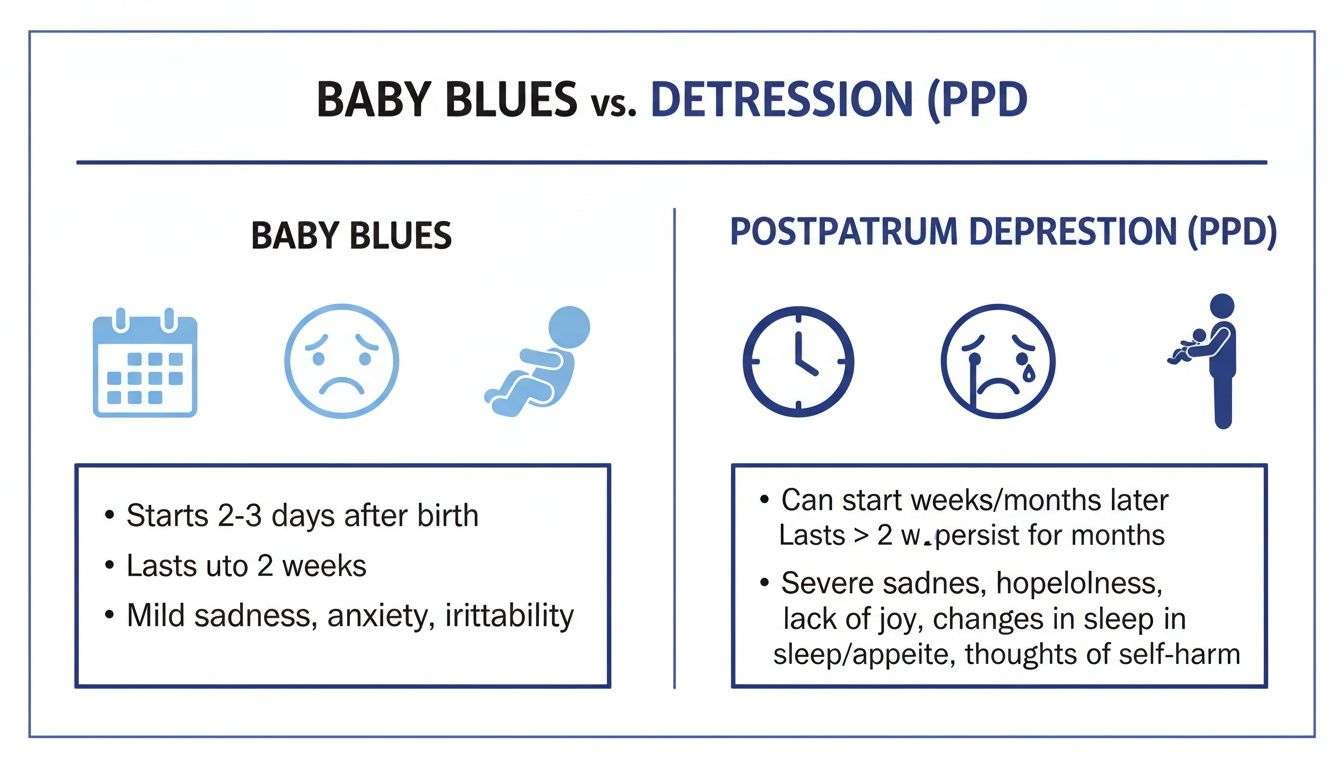
You can see how the temporary, milder nature of the baby blues stands in sharp contrast to the persistent, more intense symptoms of postpartum depression, which really drives home why seeking help for PPD is so critical.
When to Seek Immediate Help
While most PPD symptoms tend to build over time, there are certain red flags that need urgent attention. Your safety and your baby's safety are the absolute priorities.
If you are having thoughts of harming yourself or your baby, this is a medical emergency. Please seek help immediately by:
- Calling 9-1-1 or your local emergency number.
- Going to the nearest hospital emergency room.
These thoughts are a severe symptom of postpartum illness, and you need immediate, compassionate care. You will be met with support, not judgment.
How Counselling Can Help
Once you connect with a healthcare provider, they’ll likely talk to you about treatment options, which often include therapy. Counselling provides a safe, confidential space where you can speak openly about your fears, frustrations, and sadness without any judgment.
A trained therapist can help you unpack these complex emotions and develop practical coping strategies. You’ll learn to challenge feelings of guilt, manage anxiety, and find ways to reconnect with yourself and your baby. If you're looking for practical strategies, these five tips for coping with postpartum depression can be a good starting point.
Therapy isn't about "fixing" you—because you aren't broken. It's about giving you the tools and support to navigate this challenging transition so you can feel like yourself again. Understanding how to find a therapist you connect with is a key part of the healing process. Remember, getting professional help is a positive, proactive step for the well-being of your entire family.
How to Support a Partner or Loved One Through Postpartum Challenges
It’s incredibly tough watching someone you care about struggle after the arrival of a new baby. You can feel helpless and unsure of what to do or say, but your support is one of the most important factors in their recovery. Learning how to help in a meaningful way can make all the difference.

Your role isn't to "fix" the problem. It's to build a safe, stable environment where your partner feels seen, heard, and cared for. That foundation is absolutely essential for healing to begin.
Listen Without Judgment
Sometimes, the most powerful thing you can do is simply listen. When your partner shares their sadness, fears, or frustrations, try to resist the urge to jump in with solutions or comments like, "You should be so happy right now."
Instead, validate what they're feeling. A simple, "That sounds so hard," or "I'm here for you," lets them know they aren't alone. Creating a judgment-free space for them to be honest without fear of being dismissed can lift a huge weight off their shoulders.
Provide Practical, Hands-On Help
Postpartum depression can make even the smallest daily tasks feel overwhelming. A vague offer like, "Let me know if you need anything," can actually add to the pressure. It’s far better to offer specific, practical support that genuinely lightens their load.
Here are a few actionable ways to step in:
- Take over baby care: Give your partner a guaranteed, uninterrupted block of time to sleep, shower, or just have a moment to themselves. Even four to five hours of solid sleep can be a game-changer.
- Manage household chores: Take initiative with meals, laundry, or cleaning without waiting to be asked. This removes both a mental and physical burden.
- Handle night feedings: If it works for your family, take a shift with the baby at night so your partner can get a longer, restorative stretch of sleep.
- Screen visitors: Be the gatekeeper. Make sure visits are short and supportive, not draining, to protect your partner's limited energy and peace.
This kind of hands-on help offers tangible relief and sends a clear message: you are an active, reliable partner in getting through this. You can find more ideas on how to provide meaningful assistance to a partner with depression in our detailed guide.
Encourage Professional Support Gently
Bringing up the idea of getting professional help requires a delicate touch. It’s crucial to approach the conversation from a place of love and concern, not frustration or criticism.
You could try saying something like, "I've noticed you've been having a really tough time, and it hurts me to see you struggling. I've been reading about how common this is, and it seems like talking to a professional could really help. What if we looked for someone together? I can make the calls."
Offering to handle the logistics can make a huge difference, as finding a therapist and booking an appointment can feel like climbing a mountain. Your involvement shows that you see this as a proactive, positive step—not a sign of weakness. Reassure them often that they are a wonderful parent and that PPD is a treatable illness, not a personal failing.
Your Questions on Postpartum Mental Health Answered
Bringing a baby home is a life-changing event, and it’s completely normal to have questions about the emotional ups and downs that come with it. Let’s tackle some of the most common concerns new parents have.
Can Fathers and Partners Get Postpartum Depression?
Yes, they absolutely can. Postpartum depression isn’t exclusive to the person who gave birth. We now recognize that paternal postpartum depression is a very real condition affecting many new fathers and non-birthing partners.
For partners, the symptoms can show up differently. Instead of profound sadness, you might see more irritability, frustration, or even anger. Some partners pull away from family life, while others might engage in more impulsive behaviours. The sleepless nights, the new pressures, and the sheer scale of the change impact everyone in the family, making it essential for every parent to have their mental health supported.
If I Have the Baby Blues, Does That Mean I Will Get PPD?
Not at all. Think of the baby blues as a very common, temporary phase. A large majority of new birthing parents experience them, and they usually fade away on their own within a couple of weeks without any intervention. Having the baby blues doesn't mean you're destined for postpartum depression.
That said, if you have a history of depression or if your baby blues feel particularly intense, it's worth paying closer attention. The key is to watch how you're feeling over time. If things aren't getting better after that two-week mark, or if you feel like you're sinking deeper, that's your cue to reach out for professional support.
What Type of Therapy Helps With Postpartum Depression?
There are a few therapeutic approaches that have proven to be incredibly helpful for postpartum depression. Two of the most effective are Cognitive Behavioural Therapy (CBT) and Interpersonal Therapy (IPT).
These therapies are designed to give you a safe, confidential space to work through what you’re experiencing. A therapist can help you:
- Develop real, practical skills for managing overwhelming thoughts and emotions.
- Find healthy ways to cope with the stress and anxiety of new parenthood.
- Work through the shifts and changes in your relationships.
Counselling provides targeted support to help you get back to feeling like yourself. It’s all about equipping you with the tools you need to manage your symptoms now and build emotional resilience for the road ahead.
Your emotional health is just as important as your physical health, and it’s a cornerstone of your family’s well-being. By understanding the difference between the baby blues and postpartum depression, you are better equipped to navigate this new chapter with compassion for yourself and your loved ones. You are not alone in this. Learn more about our approach to counselling.
Clinically Reviewed By
Amy Mosset, MCP, RCC-S
Amy Mosset is a Master Practitioner in Clinical Counselling, Clinical Supervisor, and the owner of Interactive Counselling. She provides trauma-informed, evidence-based care and clinical supervision to registered therapists, with a focus on ethical practice, client safety, and high-quality therapeutic outcomes.