Over 90% of divorces are predicted by four destructive communication patterns including stonewalling, defensiveness, and criticism. Canadian couples facing these behaviors often feel trapped in conflict cycles that erode emotional intimacy and relationship satisfaction. This article explains how the Gottman model identifies these harmful patterns, explores their psychological roots, and provides practical communication tools to help you rebuild connection and break free from destructive cycles.
Table of Contents
- Introduction To The Gottman Model And Communication Challenges
- Understanding The Core Communication Behaviors In The Gottman Model
- Psychological And Physiological Mechanisms Behind These Behaviors
- Common Misconceptions And Clarifications
- Gottman Model Interventions To Reverse Negative Patterns
- Cultural And Regional Relevance For Canadian Couples
- Impact And Benefits Of Applying Gottman Strategies
- Conclusion And Practical Steps For Couples
- Improve Your Relationship With Trusted Gottman Therapy In Canada
Key Takeaways
| Point | Details |
|---|---|
| Definition | Stonewalling is emotional withdrawal, defensiveness is self-protection, and criticism attacks character rather than addressing specific behaviors. |
| Physiological Triggers | High arousal exceeding 100 bpm triggers stonewalling as an involuntary self-soothing response during overwhelming conflict. |
| Gottman Interventions | Gentle startup communication, timed breaks for self-soothing, and repair attempts effectively reduce these patterns and restore connection. |
| Canadian Access | Couples across Canada access Gottman-informed therapy through local clinics and online platforms for flexible support. |
| Outcome Benefits | Applying these strategies increases relationship satisfaction and reduces conflict escalation within six months of consistent practice. |
Introduction to the Gottman Model and Communication Challenges
The Gottman model identifies stonewalling, defensiveness, and criticism as core predictors of relationship collapse. Developed through decades of research observing thousands of couples, this framework focuses on communication patterns that either strengthen or destroy relationships. The model emphasizes that how you talk to each other matters more than what you argue about.
The Four Horsemen concept labels stonewalling, defensiveness, criticism, and contempt as the most toxic communication behaviors. These patterns create self-reinforcing cycles where one partner’s withdrawal triggers the other’s attack, escalating conflict and destroying trust. Canadian couples experiencing relationship distress frequently exhibit at least one of these patterns during disagreements.
Common communication challenges include:
- Emotional shutdown during heated discussions
- Automatic self-justification when receiving feedback
- Blaming language that attacks character rather than addressing actions
- Inability to repair after arguments
- Feeling misunderstood or dismissed by your partner
Understanding these behaviors through the Gottman lens helps you recognize destructive patterns early. Research shows couples who identify and address these communication styles significantly improve their relationship outcomes. For those seeking professional guidance, couples counselling in Canada offers structured support based on these evidence-based principles. Exploring Gottman research on communication reveals how small changes in how you speak and listen can transform relationship dynamics.
Understanding the Core Communication Behaviors in the Gottman Model
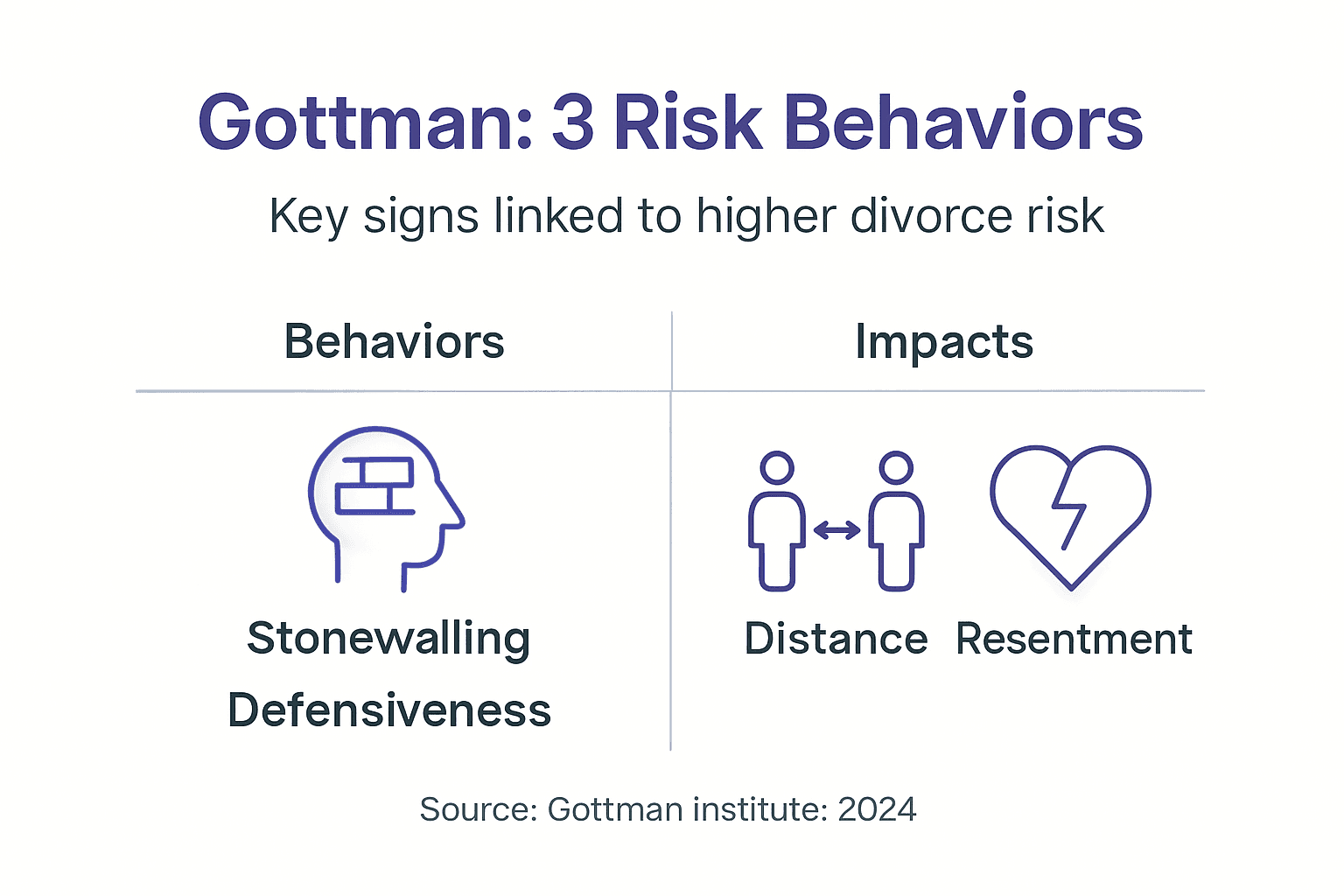
Stonewalling occurs when you emotionally withdraw during conflict, shutting down communication through silence or distraction. This isn’t simply taking space; it’s a complete disengagement where you stop responding to your partner’s attempts at connection. You might turn away, avoid eye contact, or busy yourself with tasks to escape the conversation.

Defensiveness manifests as verbal self-protection when you perceive criticism or blame. Instead of listening to your partner’s concern, you immediately counter with excuses, reverse accusations, or justifications. This blocks genuine dialogue and prevents you from hearing valid complaints that could improve the relationship.
Criticism attacks partner’s character; complaints focus on specific behaviors with ‘I’ statements reducing conflict. The distinction matters enormously for relationship health:
| Behavior Type | Example Statement | Impact on Partner |
|---|---|---|
| Criticism | “You never think about anyone but yourself” | Feels attacked, shame, defensiveness |
| Complaint | “I felt hurt when you forgot our dinner plans” | Understands specific issue, can respond constructively |
| Criticism | “You’re so lazy and irresponsible” | Character attack, hopelessness |
| Complaint | “I need help with household tasks on weekends” | Clear request, opportunity for collaboration |
These behaviors reduce emotional intimacy by creating walls between partners. When you stonewall, your partner feels abandoned and unimportant. Defensiveness communicates that their feelings don’t matter as much as protecting yourself. Criticism makes your partner feel fundamentally flawed rather than capable of change.
Identifying these patterns breaks negative cycles because awareness precedes change. You can’t modify communication you don’t recognize. Many couples normalize these behaviors, assuming all relationships involve such conflict. Learning relationship advice for couples based on Gottman principles reveals healthier alternatives. Understanding Gottman research on criticism provides the foundation for transforming how you express frustration into productive dialogue.
Psychological and Physiological Mechanisms Behind These Behaviors
Stonewalling is triggered by physiological arousal exceeding 100 bpm heart rate causing withdrawal. Your body enters fight-or-flight mode during intense conflict, flooding your system with stress hormones. This overwhelming sensation makes continued engagement feel impossible, so you shut down to self-soothe. It’s not stubbornness; it’s survival.
Defensiveness emerges as a protective emotional reaction when you feel attacked or misunderstood. Your brain interprets criticism as a threat to your self-worth, activating automatic defenses before conscious thought. This happens so quickly you may not realize you’re being defensive until the conversation has already escalated.
Research shows men stonewall more frequently than women due to different physiological responses to conflict. Male nervous systems become flooded more easily, taking longer to return to baseline. This gender pattern isn’t absolute, but understanding it helps couples navigate withdrawal with more empathy.
Cognitive distortions fuel both criticism and defensiveness:
- Mind reading: assuming you know your partner’s intentions
- Catastrophizing: viewing small issues as relationship-ending problems
- All-or-nothing thinking: using words like “always” and “never”
- Personalization: taking everything as a personal attack
Pro Tip: Notice early physical signals like muscle tension, rapid heartbeat, or shallow breathing before full stonewalling sets in. These bodily cues give you a window to request a break before emotional flooding makes productive conversation impossible.
Recognizing that these responses have biological roots reduces blame. Your partner isn’t trying to hurt you by withdrawing or defending; their nervous system is reacting to perceived danger. Learning how to start therapy in Canada can provide guided support for managing these automatic responses. Exploring the physiology of stonewalling reveals why breaks and calming techniques work better than pushing through overwhelming emotions.
Common Misconceptions and Clarifications
Many people believe defensiveness reflects stubbornness or unwillingness to change. In reality, it’s an emotional protective response triggered by feeling criticized or blamed. Your partner isn’t choosing to be difficult; they’re instinctively shielding themselves from perceived attack. Understanding this reframes defensiveness from character flaw to manageable communication pattern.
Stonewalling often gets mistaken for intentional punishment or silent treatment. While both involve withdrawal, stonewalling is involuntary self-soothing during physiological overwhelm. Your partner isn’t strategically withholding communication to manipulate you; they’re flooded and need time to regulate before reconnecting. The distinction matters for how you respond.
People frequently confuse criticism with honest feedback or problem-solving complaints. Criticism globalizes issues, attacking who your partner is rather than what they did. Complaints remain specific and use I-statements to express needs. This confusion leads couples to avoid all negative feedback, fearing it counts as criticism when specific complaints actually strengthen relationships.
Misunderstanding these patterns causes conflict escalation:
- Pursuing a stonewalling partner intensifies their overwhelm
- Labeling defensiveness as stubbornness increases shame and resistance
- Confusing complaints with criticism makes partners afraid to voice needs
- Assuming intentional harm creates cycles of retaliation
Empathy-based interventions reduce defensiveness by 50% in clinical settings. When you approach your partner’s defensive reactions with curiosity rather than frustration, they feel safer lowering their guard. Asking “What did you hear me say?” instead of repeating your point helps identify misunderstandings driving defensive responses.
Pro Tip: Practice empathy by asking yourself what fear might be driving your partner’s reaction. Defensiveness often masks vulnerability about feeling inadequate or unloved. Addressing the underlying fear rather than the defensive behavior itself opens pathways to genuine connection.
Accessing relationship advice for couples helps distinguish these patterns from intentional harm. Learning about empathy interventions effectiveness provides concrete strategies for responding to these behaviors with understanding rather than escalation.
Gottman Model Interventions to Reverse Negative Patterns
Gentle startup communication reduces criticism and conflict escalation effectively. Instead of attacking character, you state your feelings and needs using specific, soft language. This approach makes your partner more receptive because they don’t immediately feel defensive.
Physiological self-soothing techniques involve taking timed breaks when you notice flooding symptoms. These breaks aren’t avoidance; they’re strategic pauses allowing your nervous system to calm so you can engage productively. A minimum 20-minute break gives your heart rate time to drop below the arousal threshold.
Repair attempts are small gestures during conflict that prevent escalation and restore connection. These might be humor, affection, or acknowledging your partner’s perspective. Successful couples make and accept repair attempts frequently, stopping negative spirals before they cause lasting damage.
Here’s how to practice each strategy:
- Replace criticism with gentle startup by describing the situation objectively, expressing how you feel, stating what you need positively, and showing appreciation when possible.
- Implement self-soothing breaks by recognizing physical flooding signals, communicating you need a break without blaming, engaging in calming activities alone, and returning within the agreed timeframe to continue discussion.
- Use repair attempts by inserting humor carefully to lighten tension, taking responsibility for your part in the conflict, expressing affection even while disagreeing, and validating your partner’s feelings before explaining your perspective.
- Practice complaints instead of criticism by focusing on specific behaviors rather than character traits, using I-statements to own your feelings, making direct requests for what you need, and avoiding words like “always” or “never.”
Pro Tip: Schedule breaks before escalation peaks by setting a signal with your partner indicating someone needs space. Agreeing on this system in calm moments maximizes effectiveness when emotions run high.
These interventions require consistent practice but yield measurable improvements. Exploring couples therapy exercises provides structured practice opportunities. Understanding Gottman model interventions reveals the research validating these approaches across diverse couples.
Cultural and Regional Relevance for Canadian Couples
Canadian couples increasingly access Gottman-informed couples therapy via online platforms like Interactive Counselling. This growth reflects both rising relationship stress and greater awareness of evidence-based support options. Geography no longer limits access, with therapists serving couples from Vancouver to Halifax through secure video sessions.
Canadian-specific data shows relationship distress intensified during 2025, with conflict-related therapy requests increasing by 30%. Economic pressures, isolation, and changing family dynamics contributed to communication breakdowns. These patterns mirror broader trends but include uniquely Canadian factors like seasonal affective disorder impacting northern communities.
Couples therapy informed by the Gottman model is available throughout Canada:
- Major cities offer in-person sessions with certified Gottman therapists
- Rural and remote areas access support through telehealth platforms
- Bilingual services accommodate English and French-speaking couples
- Evening and weekend appointments fit busy work schedules
- Sliding scale fees make therapy accessible across income levels
Interactive Counselling serves couples across British Columbia and beyond, offering flexible scheduling and both online and in-person options. Their therapists integrate Gottman principles with trauma-informed care, recognizing diverse relationship needs. This combination addresses not just communication patterns but underlying attachment wounds affecting conflict responses.
Cultural nuances matter for Canadian couples. Indigenous communities may integrate traditional healing practices with Gottman strategies. Immigrant couples might navigate cultural expectations around conflict expression while learning Western therapy models. LGBTQ+ couples need affirming spaces addressing unique relationship stressors.
Learning how to start therapy in Canada demystifies the process and reduces barriers. Exploring online therapy sessions for Canadians reveals how virtual support maintains effectiveness while increasing convenience and privacy.
Impact and Benefits of Applying Gottman Strategies
Couples using Gottman strategies report increased satisfaction and fewer conflict escalations over 6 months. Quantitative research shows these improvements persist long-term when couples practice consistently. The strategies work because they address root communication patterns rather than surface-level symptoms.
Key outcome metrics demonstrate measurable change:
| Metric | Before Intervention | After 6 Months | Improvement |
|---|---|---|---|
| Weekly conflict escalations | 5.2 episodes | 1.8 episodes | 65% reduction |
| Successful repair attempts | 22% | 71% | 223% increase |
| Relationship satisfaction score | 4.1/10 | 7.8/10 | 90% increase |
| Stonewalling frequency | 68% of conflicts | 19% of conflicts | 72% reduction |
Canadian couples working with Interactive Counselling show similar patterns. One couple from Kelowna reduced criticism by 80% within three months by consistently using gentle startup. Another couple in Grande Prairie eliminated stonewalling by implementing 20-minute breaks, allowing both partners to self-regulate before continuing difficult conversations.
Long-term benefits extend beyond reduced conflict:
- Deeper emotional intimacy as partners feel safer being vulnerable
- Increased trust from experiencing reliable repair and reconnection
- Better co-parenting when couples apply skills to parenting conflicts
- Improved individual mental health as relationship stress decreases
- Stronger friendship foundation supporting the relationship through challenges
These transformations happen because you’re changing fundamental interaction patterns. Each successful gentle startup reinforces new neural pathways. Every accepted repair attempt builds confidence in your relationship’s resilience. Over time, healthy communication becomes your default rather than requiring conscious effort.
Accessing couples counselling in Canada accelerates this learning with professional guidance. Reviewing Gottman outcomes research reveals how evidence-based approaches consistently outperform generic relationship advice.
Conclusion and Practical Steps for Couples
Stonewalling, defensiveness, and criticism undermine relationships by creating emotional distance and conflict cycles that feel impossible to break. These behaviors predict divorce with remarkable accuracy because they destroy the foundation of trust and safety couples need to navigate life’s challenges together. Understanding them through the Gottman model gives you a roadmap for transformation.
Key strategies covered include:
- Gentle startup communication replacing criticism with specific complaints
- Physiological self-soothing through timed breaks during flooding
- Repair attempts that stop escalation and restore connection
- Distinguishing complaints from criticism for productive feedback
- Recognizing involuntary nature of stonewalling and defensiveness
Take a stepwise approach: recognize these patterns in your relationship, understand their psychological roots, apply Gottman interventions consistently, and seek professional help when needed. Small daily changes compound into major relationship shifts. You don’t need perfect communication; you need willingness to repair when things go wrong.
Proactively improving communication prevents small issues from becoming relationship-ending crises. Start by choosing one strategy, perhaps gentle startup, and practice it for two weeks. Notice what changes. Celebrate small wins like one conversation that didn’t escalate. Consider couples therapy exercises for structured practice supporting your growth.
Improve Your Relationship with Trusted Gottman Therapy in Canada
Expert Gottman couples therapy is available throughout Canada, offering the professional support you need to transform communication patterns. Interactive Counselling provides both online and in-person sessions, giving you flexibility to access evidence-based care from wherever you are. Their therapists specialize in helping couples break destructive cycles and rebuild emotional intimacy using proven Gottman strategies.
Explore types of couples therapy to understand which approach fits your needs. Read the comprehensive couples counselling in Canada guide for detailed information about what to expect. Book your first session with Interactive Counselling today to start improving your communication and strengthening your relationship with trusted professional guidance.
FAQ
What is the difference between criticism and complaints in relationships?
Criticism attacks your partner’s personality or character using global statements like “you always” or “you never.” Complaints address specific actions with concrete examples and I-statements like “I felt hurt when you cancelled our plans.” Using complaints instead of criticism reduces defensiveness and promotes problem-solving because your partner can address specific behaviors rather than feeling fundamentally flawed.
How can Canadian couples access Gottman-based therapy?
Research local Gottman-informed therapists through professional directories or clinic websites listing specializations. Use guides on how to start therapy in Canada to prepare questions and schedule initial consultations. Consider platforms like Interactive Counselling offering flexible online therapy sessions for Canadians with licensed therapists across multiple provinces.
What are effective ways to reduce stonewalling during conflict?
Recognize early physical signs of overwhelm like rapid heartbeat, muscle tension, or difficulty processing words. Take a timed break of at least 20 minutes to self-soothe and lower your heart rate through deep breathing or walking. Return to the discussion with calmness and openness, communicating that you needed space to regulate rather than abandoning the conversation. Practice mindfulness techniques daily to build capacity for staying present during difficult emotions.
How long does it take to change destructive communication patterns?
Most couples notice initial improvements within 4-6 weeks of consistently practicing Gottman strategies like gentle startup and repair attempts. Significant, lasting change typically requires 3-6 months of regular practice and may benefit from professional guidance. The timeline varies based on relationship history, severity of patterns, and commitment from both partners to applying new skills daily.
Can these strategies work if only one partner is committed to change?
One partner changing communication approaches can positively shift relationship dynamics because interaction patterns are reciprocal. Your consistent use of gentle startup reduces your partner’s need for defensiveness over time. However, lasting transformation happens more quickly and effectively when both partners engage. Individual therapy can help you maintain healthy communication regardless of your partner’s participation while modeling the change you hope to see.
Recommended
- Emotional Flooding in Arguments: 60% Recognize Signs in 2026
- Healthy vs Toxic Conflict: 90% Divorce Predictor Guide
- Pursuer-Withdrawer Pattern: 45% Therapy Success Rate
- 6 Practical Ways to Improve Communication in Marriage