If you're a parent going through a separation or divorce, your first thought is almost always about your children. It's the question that keeps you up at night: "Will my kids be okay?" While divorce is a massive change for any family, decades of research and real-world experience show us something incredibly hopeful: long-term negative impacts aren't a given. In fact, most children are resilient, adapt well over time, and continue to lead happy, healthy lives. For more information, see our anxiety counselling.
The most critical factor in a child's adjustment to divorce is not the separation itself, but the level of conflict they are exposed to before, during, and after the process.
How Divorce Really Affects Children
Going through a divorce can feel like you're captaining a ship through a sudden, violent storm. The familiar map is gone, the waters are rough, and your top priority is getting your precious cargo—your children—to a safe harbour. It's natural to worry about how the journey will affect them, but it’s crucial to remember that you are still the one steering the ship.

The way you and your co-parent handle this transition matters far more than the divorce itself. Think of this guide as your compass—a tool to offer you reliable insights and practical, compassionate strategies to support your children through the choppy waters ahead.
What You Will Learn in This Guide
Our goal is to give you both knowledge and reassurance. In this guide, we'll walk through:
- The Emotional Journey: We’ll look at the common mix of feelings children experience—like grief, confusion, and anger—and how they might show up in their behaviour.
- Age-Specific Needs: A toddler's experience is very different from a teenager's. We’ll cover how to provide tailored support for each developmental stage.
- Building Resilience: We will focus on the protective factors that are proven to help children thrive, such as low parental conflict and stable routines.
- Effective Co-Parenting: You'll find practical tips for creating a united front and communicating with respect for the sake of your child’s well-being.
- When to Seek Help: We'll help you recognise the signs that suggest your family could benefit from professional support.
This is a big journey, but you don't have to go it alone. By focusing on low-conflict co-parenting and surrounding your kids with consistent love, you can steer your family toward a future where everyone feels secure and supported.
Your Child's Emotional and Behavioural Journey
When a family goes through a divorce, it's like a child is suddenly handed a new rulebook for a game they thought they knew by heart. The world that felt safe and predictable is now full of question marks. The emotional and behavioural shifts you're seeing aren't ‘problems’—they're your child’s very real and honest attempts to figure out their new reality.
It’s completely normal for kids to be flooded with a whole mix of powerful emotions. The first, most important step is to see these feelings as a natural part of their experience, not as signs of trouble. Your empathy becomes their anchor in these choppy waters.
Decoding Your Child's Feelings
A child's inner world during a divorce is often a tangle of confusing and contradictory emotions. Since they might not have the words to explain what's happening inside, their feelings often spill out through their actions. Understanding the 'why' behind their behaviour is the key to shifting your own response from frustration to compassion.
Some of the most common feelings include:
- Grief and Sadness: Your child is mourning a profound loss—the family they knew and the everyday presence of both parents. This sadness might show up as withdrawal, frequent crying, or losing interest in things they used to love.
- Confusion and Guilt: Younger children, especially, have a tendency to think they are the cause of the divorce. Their internal monologue might sound like, "If I had just been quieter," or "If I had cleaned my room, this wouldn't have happened."
- Anger and Frustration: Feeling powerless often turns into anger. That anger might be aimed at you, your co-parent, or even explode sideways at friends, teachers, or themselves.
- Anxiety and Fear: The future suddenly feels very uncertain. Kids worry about practical things like, "Where will I live?" and much deeper fears like, "If you can stop loving each other, will you stop loving me, too?"
- Loyalty Conflicts: Being caught in the middle is an incredibly stressful position for a child. They often feel like they have to pick a side, which brings on a crushing sense of guilt no matter what they do.
Understanding Common Behavioural Shifts
When children can't find the words for their big feelings, their behaviour often does the talking for them. These changes are signals that they need more support, stability, and reassurance from you. You’ll likely notice these shifts pop up in different parts of their life, from home to the classroom.
For instance, you might see a dip in their academic performance. The tension in a home can affect a child’s ability to focus even before the separation is official, and these disruptions can impact their schoolwork.
Your child's behaviour is their language. A tantrum might be shouting, "I'm scared and I don't know what's happening!" Withdrawing into a shell might be a quiet whisper of, "This is all too much for me to handle."
Other common behavioural changes you might observe are:
- Regression: It's not at all unusual for kids to go back to earlier behaviours, like thumb-sucking, bedwetting, or suddenly needing to sleep with a parent. This is simply a search for comfort and a way to return to a time when they felt safer.
- Social Withdrawal or Clinginess: Some children pull away from their friends and family, while others might become unusually clingy, terrified of being left behind.
- Changes in Sleep or Eating Patterns: Trouble falling asleep, nightmares, or a noticeable change in appetite are often physical signs of their emotional stress.
The key is to see these behaviours as a call for connection, not an act of defiance. They are a normal part of your child’s journey through this big life change. Responding with patience and understanding helps them learn to process their feelings in a healthy way. To give them even better support, you might find it helpful to read our guide on helping children cope with big emotions.
Age-Specific Reactions to Divorce and How to Help
A child's world changes dramatically as they grow, and their view of divorce is no different. A toddler simply can’t make sense of it the way a teenager can. Because of this, the best support you can offer is the kind that’s shaped around their specific age and developmental needs. As you learn how to protect your children through this major life change, it’s crucial to tailor your approach.
Getting a handle on your child's perspective is the first step toward giving them the right kind of comfort and stability. When you meet them where they are, you help them feel safe, seen, and understood—and that makes all the difference in their ability to cope.
Infants and Toddlers (Ages 0-3)
Even the littlest ones are incredibly sensitive to shifts in their world. While they don't understand the word "divorce," they are deeply in tune with their parents' emotional states and any disruptions to their daily lives.
Their entire world is built on predictability and routine. They feel a parent’s stress, sadness, or anger, even if they can't name it. This often shows up in noticeable behavioural changes.
Common reactions include:
- Increased Irritability: They might get fussier, cry more, or become much harder to soothe.
- Regression: It's common for toddlers to take a step back in milestones they’ve already hit, like sleep training or using the potty.
- Clinginess and Separation Anxiety: They may become intensely attached to one parent, terrified of being left alone.
How to Help: Your focus should be on consistency and comfort. Stick to familiar routines for feeding, naps, and bedtime as much as you possibly can. Offer extra cuddles, reassurance, and physical affection to help them feel secure while their world is changing. For children this young, understanding how play-based counselling helps younger children express emotions can offer some really valuable strategies.
Preschoolers (Ages 3-5)
At this age, children see the world through a lens of magical thinking, but it’s also a very self-centred view. They often believe their thoughts and actions directly cause what happens around them, which can lead to a heavy, misplaced burden of self-blame during a divorce.
They might genuinely worry they did something "bad" to make a parent leave. Their explanations are simple and often heartbreakingly wrong, like "Daddy left because I was too loud."
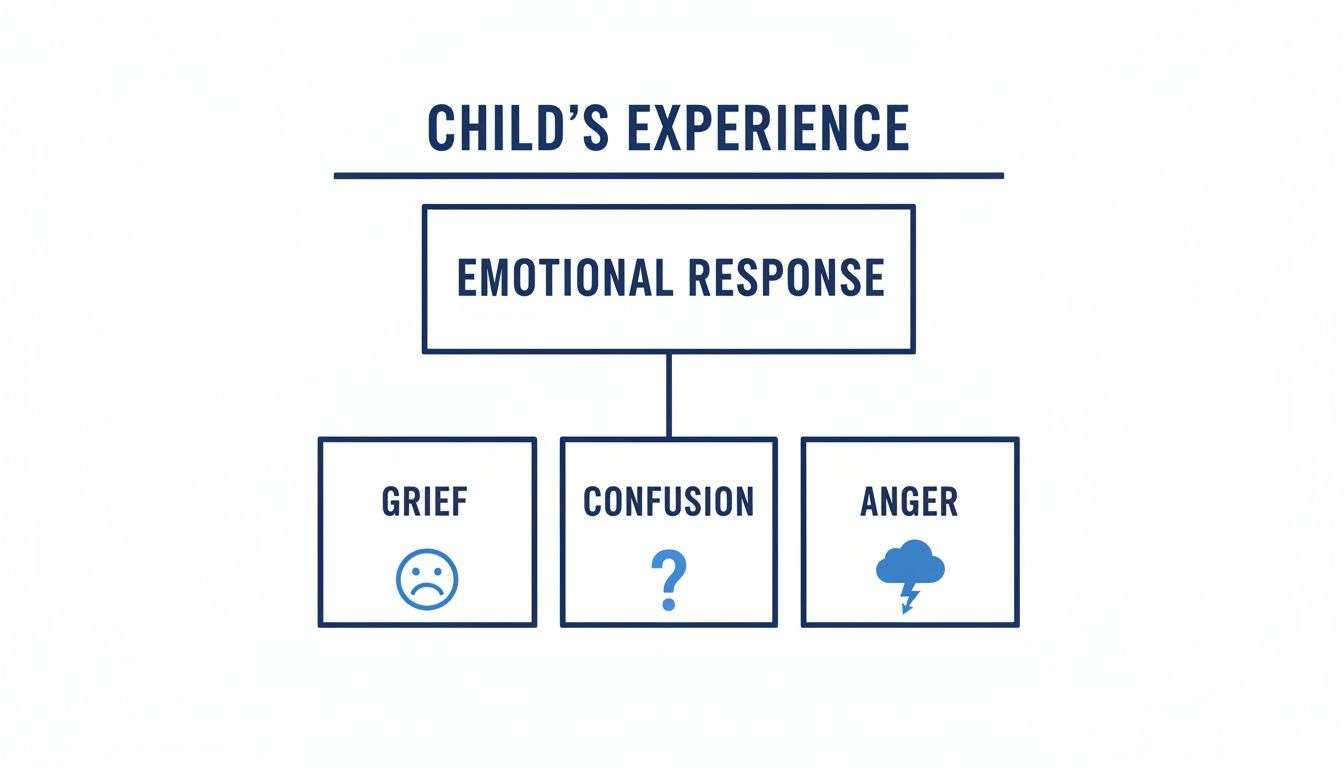
These feelings—grief, confusion, and anger—are common threads across all age groups. But how they show up depends entirely on a child’s stage of development.
School-Aged Children (Ages 6-12)
Kids in this age bracket have a more concrete grasp of what divorce means, but that doesn't stop them from holding onto fantasies of their parents getting back together. They are acutely aware of loss and may openly grieve the family unit they once knew.
Their reactions can be more complex and often involve:
- Intense Sadness and Crying: They may mourn the changes and deeply miss the parent who no longer lives with them.
- Anger and Blame: It's common for them to point fingers, directing anger at one or both parents for "ruining" the family.
- Loyalty Conflicts: They often feel caught in the middle, worrying that loving one parent is a betrayal of the other.
- Physical Symptoms: Stress can easily show up as real physical pain, like frequent headaches or stomach aches.
Parenting Tip: Use simple, clear, and consistent language. Reassure them over and over again that the divorce is an adult problem and it is not their fault. Finding books about families with two homes can be a fantastic tool to help them process.
Teenagers (Ages 13-18)
Adolescents can understand the complex reasons behind a divorce, but that knowledge doesn’t make it any easier to live through. They might feel a confusing mix of anger, embarrassment, and deep resentment, all while feeling pressure to act more "adult" than they're ready for.
A divorce can shake a teenager's sense of stability right when they're trying to figure out who they are. They might act out, pull away from the family, or even try to step into a parental role to care for a struggling parent or younger sibling. Their reactions are often intense and can seem wildly contradictory.
- Acting Out: This can range from a sudden drop in school performance to more serious risk-taking behaviours.
- Feigned Indifference: Some teens put up a wall, acting like they don't care as a defence mechanism to hide how much they're hurting.
- Intense Anger: They may resent the massive disruption to their life and blame their parents for being selfish.
How to Help: Try to respect their growing need for independence while keeping the lines of communication wide open. Listen without judgment, validate their anger and sadness, and—this is a big one—avoid leaning on them for your own emotional support. Most importantly, continue to be their parent. Maintaining rules and boundaries provides the structure they secretly crave and desperately need.
The table below provides a quick summary of these developmental stages, common reactions, and the most effective ways you can offer support.
Supporting Children Through Divorce by Age Group
| Age Group | Common Reactions | Supportive Strategies |
|---|---|---|
| 0–3 years | Increased irritability, regression (e.g., toilet training), clinginess, separation anxiety. | Maintain routines, offer extra physical comfort and cuddles, use a calm tone of voice. |
| 3–5 years | Self-blame, confusion, anxiety, nightmares, insecurity. | Use simple, clear language; repeatedly reassure them it's not their fault; use books about different family structures. |
| 6–12 years | Sadness, anger at parents, loyalty conflicts, fantasies of reconciliation, physical complaints (headaches, stomach aches). | Encourage open expression of feelings, avoid putting them in the middle, maintain consistent rules between homes. |
| 13–18 years | Anger, resentment, acting out, withdrawal, taking on adult roles, anxiety about their own future relationships. | Keep communication lines open, respect their feelings without judgment, maintain parental roles and boundaries, avoid leaning on them for support. |
While every child's journey is unique, understanding these age-based patterns can empower you to provide the stability and reassurance they need to navigate this difficult transition successfully.
Learning about how divorce can affect kids can be pretty daunting, maybe even a little scary. It's completely natural to feel a wave of worry about what the future holds. But now, we're going to pivot from that fear and focus on empowerment. The most powerful and reassuring truth is this: your actions as a parent can profoundly shape your child's future for the better.
Divorce certainly brings its share of challenges, but it absolutely does not have to be the defining chapter of your child's life. Think of a protective factor as the opposite of a risk factor—and this is where you have real influence. These are the concrete things you can do to build a shield of resilience around your child, helping them not just get through this, but thrive and grow into strong, well-adjusted adults.
The Most Important Protective Factor: Shielding Your Child from Conflict
If there's one single takeaway from this entire guide, let it be this one: the greatest gift you can give your child during and after a divorce is a peaceful home, free from parental conflict. Researchers, therapists, and counsellors all agree—ongoing, intense hostility between parents is far more damaging to a child's well-being than the separation itself.
Imagine what it's like for a child constantly exposed to arguments, silent tension, or negativity. They are basically forced to live in a state of high alert. That chronic stress is mentally and physically exhausting, often leading to anxiety, depression, and behavioural problems. They can feel trapped in the middle, creating painful loyalty conflicts that no child should have to navigate.
Protecting your child from conflict is an active choice you make every single day. It means handling disagreements with your ex-partner privately and speaking about them with respect, at least when your child is around. It’s about consciously shifting your mindset from a failed romantic relationship to a new, functional co-parenting partnership.
Other Powerful Ways to Build Resilience
Shielding your child from conflict is the cornerstone, but several other key actions work together to build a solid foundation of stability and love. These strategies reinforce your child’s sense of security and show them, through what you do, that they are safe and deeply loved.
You can actively build your child's resilience by:
- Maintaining a Strong Parent-Child Bond: Your consistent, loving presence is your child’s anchor in the storm. Carve out dedicated one-on-one time, listen to their worries without jumping in to "fix" everything, and tell them often that your love for them is unconditional and will never, ever change.
- Creating Predictable Routines: Divorce can make a child's world feel chaotic and unpredictable. Sticking to predictable routines—like regular mealtimes, bedtimes, and school schedules across both homes—creates a powerful sense of normalcy and safety.
- Fostering a Stable Home Environment: Beyond just routines, aim for emotional stability. A calm, organised home where your child knows what to expect helps lower their stress. It gives them the space to relax and just be a kid.
The long-term effects of divorce aren’t set in stone; they are heavily influenced by the environment that comes after the split. Research from sources like the U.S. Census Bureau shows that instability following a separation can have lasting consequences.
The point of this isn't to cause more worry, but to underscore just how vital your efforts to create stability truly are. By focusing on these protective factors, you actively push back against the risks and help pave the way for a healthier, brighter future. You’re showing your child that even when life's big things change, the most important things—your love and support—will always remain constant.
Practical Strategies for Effective Co-Parenting
After a divorce, learning to co-parent effectively is one of the most powerful and loving things you can do for your child. It's a conscious decision to shift from being romantic partners to becoming a functional, child-focused team. It’s not always easy, but it’s absolutely possible with the right approach.

Think of it like running a business where the sole mission is raising a happy, healthy child. This new "business partnership" thrives on clear communication, shared goals, and mutual respect—even when you don't see eye to eye. The goal is to build a system that reduces conflict, creates consistency, and helps your child feel secure and loved by both parents.
Create a Clear and Detailed Parenting Plan
A solid parenting plan is your shared roadmap. It’s not about winning or losing; it’s about giving your child a predictable world they can count on. The more you can agree on upfront, the fewer conflicts you’ll have to navigate later on.
This plan should be a living document that you can both refer back to, covering all the essentials:
- Custody Schedules: Get specific. Map out exactly which days and times your child will be with each parent, and be sure to include holidays, birthdays, and school breaks.
- Communication Rules: Decide how you’ll handle logistics. A shared app? A dedicated email address for parenting matters? A weekly phone call? Choose a method that works for both of you.
- Decision-Making: Clarify how you'll make major decisions about your child's education, health care, and extracurriculars. Will you decide together, or will one parent have the final say in certain areas?
Understanding your financial obligations is also key to your child's stability. For parents in some regions, this includes handling extra costs like childcare, orthodontics, or specialized tutoring, sometimes referred to as special expenses. For example, some jurisdictions have specific rules about Section 7 expenses in Ontario. Ironing out these details in writing can prevent a world of future misunderstandings.
Establish Respectful Communication Boundaries
It's completely normal for leftover emotions from the marriage to creep into co-parenting discussions. That's why setting firm communication boundaries is one of the most important things you can do. The aim is to keep your conversations focused, respectful, and always child-centred.
Your child should never be your messenger, confidant, or spy. All communication about schedules, finances, or parenting disagreements must happen directly between the parents, away from little ears.
This means committing to a business-like tone. Keep texts and emails brief and to the point—stick to logistics. If a conversation gets heated, have a pre-agreed plan to hit pause and come back to it when you’ve both cooled down. This not only protects your child from emotional fallout but also models how to handle disagreements respectfully. For those navigating high-conflict separations, knowing the difference between co-parenting and other strategies can be a game-changer. You may find our guide on parallel parenting vs co-parenting helpful.
Present a United Front
Even if you fundamentally disagree with your ex on a parenting issue, it is vital to present a united front to your children. Take your disagreements behind closed doors and work through them privately. When kids see that their parents are still a team, it reinforces their sense of security and stability.
This consistency isn't just about bedtimes and screen time rules. It’s about showing your child that both parents are still in charge and have their best interests at heart. Building a strong co-parenting relationship is a skill that develops with time and effort. It takes patience, a lot of practice, and an unwavering commitment to putting your child's needs above all else.
Knowing When to Seek Professional Support
Going through a divorce is tough, no two ways about it. As a parent, you’re already juggling so much while trying to build a new sense of normal for your kids. It’s only natural to feel overwhelmed. While you’re focused on keeping things stable, it’s just as crucial to monitor your child’s emotional health—and your own.
Reaching out for professional help isn't a sign that you’ve failed. Far from it. It's a sign of incredible strength and a deep commitment to your family's well-being. It’s about giving everyone the right tools to move forward in a healthy way.
Making that call is a proactive choice. It provides a neutral, compassionate space where your child can unpack their feelings without worrying about taking sides, and where you can find new ways to support them. If you feel your child or family could benefit from guidance, you may wish to learn more about the counselling process.
Signs Your Child Could Benefit from Support
Every child’s reaction to divorce is unique. A period of adjustment with some emotional ups and downs is completely normal. The key is to watch for signs that your child is stuck and struggling more than they can handle alone.
If you notice any of the following behaviours lasting for several weeks or more, it might be time to consider professional guidance:
- Prolonged Sadness or Depression: This is more than just a few bad days. It looks like a constant low mood, frequent tearfulness, or a noticeable loss of interest in things that used to bring them joy.
- Significant Social Withdrawal: Your child might start pulling away from their friends, avoiding family get-togethers, or dropping out of clubs and sports they once loved.
- A Sharp Decline in School Performance: A sudden, significant drop in grades, difficulty concentrating in class, or a new disinterest in schoolwork can be a major red flag.
- Intense and Persistent Anger: Some anger is expected, but look out for frequent, explosive outbursts, ongoing defiance, or a constant undercurrent of hostility that feels out of character.
- Expressions of Hopelessness or Self-Blame: Pay close attention if your child repeatedly says things like, “This is all my fault,” or expresses a belief that things will never get better.
How Counselling Can Help Your Family
For a child, therapy can feel like a safe harbour in a storm. It gives them a confidential space to explore confusing feelings—like anger, guilt, and divided loyalties—without the fear of upsetting either parent.
For parents, counselling offers a roadmap for developing stronger communication habits and effective co-parenting strategies. A therapist can provide guidance tailored specifically to your family's needs, whether you're seeking support for your child, for yourself, or for the whole family unit as you navigate this new chapter.
Your Questions About Divorce and Children Answered
Going through a divorce is overwhelming, and when kids are involved, the questions and worries can feel endless. You're not alone. Here, we'll walk through some of the most common concerns parents have, offering clear, practical answers to help you feel more confident as you guide your family through this transition.
How do we tell the children we are getting a divorce?
The best approach is to tackle this as a team. Find a quiet, private moment where no one is rushed. Sit down with your children together and explain what’s happening in a way they can understand, based on their age. The single most important message you can deliver is that it is not their fault. Make it crystal clear that this is a decision made by the adults. Reassure them that while you won’t be married anymore, you will both always be their parents. You will always love them, and you will always be there for them. How you handle this first conversation really sets the tone for everything that follows, so aim for calm and reassurance.
Is it better to stay in an unhappy marriage for the kids?
This is a tough, soul-searching question for any parent. While there's no one-size-fits-all answer, decades of research point to one conclusion: children are more negatively affected by ongoing, high-level conflict than by the separation itself. Living in a home simmering with tension, arguments, or just cold silence can be incredibly stressful and harmful to a child’s well-being. The dream of keeping the family unit together is a powerful one, but a peaceful, separated environment is almost always healthier for a child than a high-conflict one. It’s the emotional climate at home that matters most, not the family's physical structure.
How can I help my child if my ex-partner is uncooperative?
This is one of the most frustrating and draining parts of a separation. When you can’t count on your co-parent to work with you, the key is to shift your focus to what you can control. You can’t force them to change, but you can control your own actions and create a safe haven for your child. Double down on these three things: provide consistency in your home, model respectful communication by never speaking badly about your ex-partner in front of your child, and seek professional support like mediation or counselling if needed.
Will my child blame themselves and how can I prevent that?
It’s completely normal for children, particularly younger ones, to think the divorce is their fault. Their world naturally revolves around them, so it's easy for them to connect a fight they witnessed or something they did with the much bigger event of their parents splitting up. The only way to counter this is with direct, clear, and repeated reassurance. You need to tell them, and then show them, that this is an adult problem that has absolutely nothing to do with them. Use simple, concrete language, and be prepared to repeat this message often. They’ll need to hear it many times before it truly sinks in.
This journey is challenging, but you have the power to steer your family toward a hopeful future. By focusing on low-conflict co-parenting, consistent love, and open communication, you provide the stability your children need to thrive. Remember, you don't have to navigate this alone. If you're looking for guidance, we invite you to learn more about how professional support can help your family heal and grow.
Clinically Reviewed By
Amy Mosset, MCP, RCC-S
Amy Mosset is a Master Practitioner in Clinical Counselling, Clinical Supervisor, and the owner of Interactive Counselling. She provides trauma-informed, evidence-based care and clinical supervision to registered therapists, with a focus on ethical practice, client safety, and high-quality therapeutic outcomes.