As the days grow shorter and that familiar chill settles over Alberta, it’s completely normal to feel a shift in your energy and mood. For many of us, though, this is more than just the ‘winter blues.’ It's a predictable, recurring pattern of emotional change known as seasonal depression, or Seasonal Affective Disorder (SAD). What you’re feeling is a real and valid response to the dramatic seasonal shifts we experience here in our province. For more information, see our depression counselling.
"Understanding seasonal depression in Alberta means recognizing that the significant drop in winter daylight can directly disrupt your brain's chemistry, leading to recurring changes in mood, energy, and your overall sense of well-being."
What Is Seasonal Depression?
Seasonal Affective Disorder is a type of depression that shows up like clockwork, typically starting in the fall and sticking around through the winter months. It’s not a personal failing or a sign of weakness; it’s a recognized mental health condition directly linked to our environment.
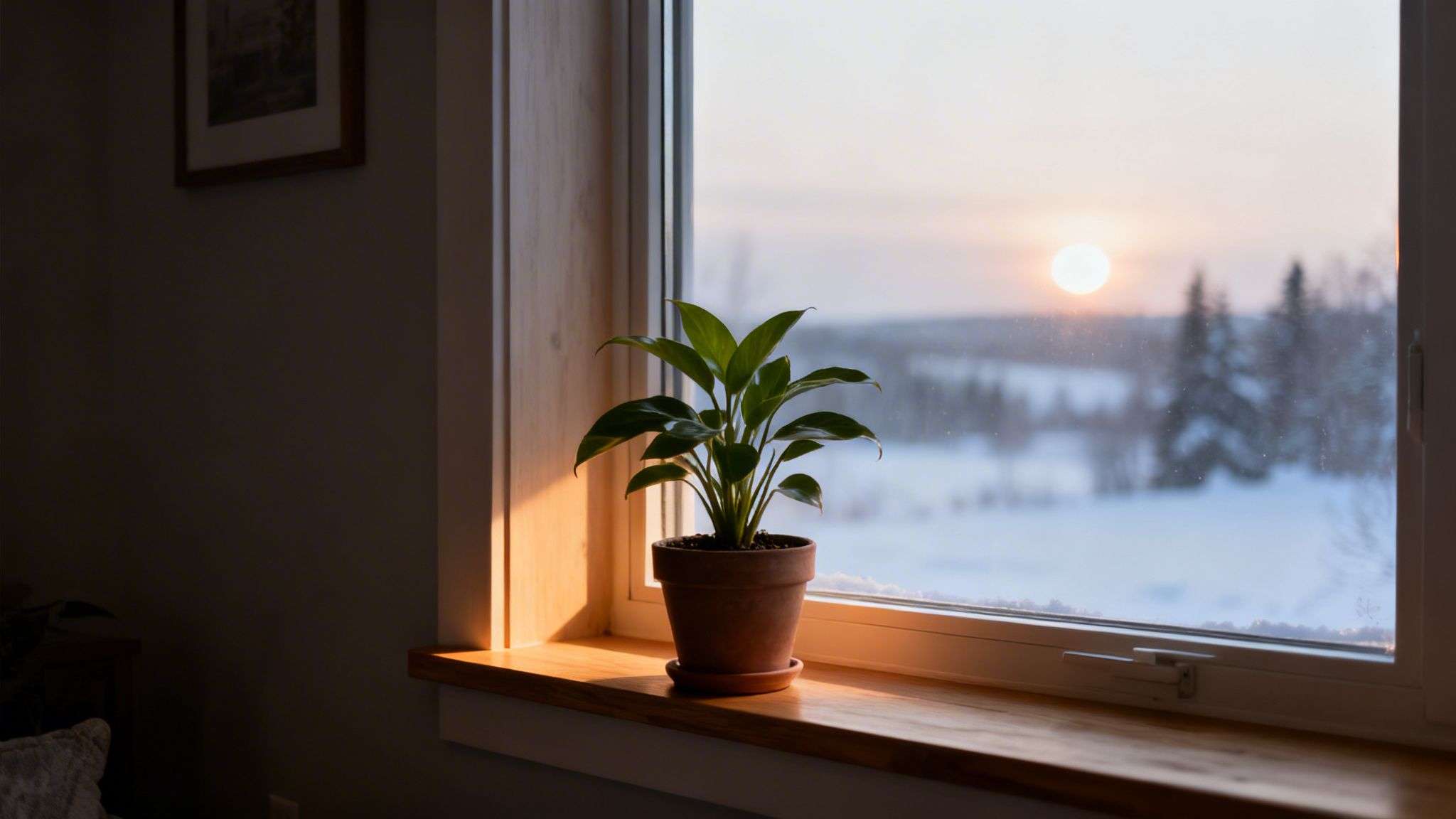
Think of it like a houseplant. In the summer, with plenty of sunlight, it flourishes. But as the light fades in winter, that same plant might start to wilt and lose its vitality. Our bodies and minds are very similar—we're deeply connected to the natural cycles of light and dark.
The lack of sunlight during an Alberta winter can throw our internal body clock (our circadian rhythm) out of whack. This disruption often causes a dip in serotonin, a key brain chemical that helps regulate our mood. At the same time, the increased darkness can trigger the brain to produce too much melatonin—the hormone that makes us sleepy—leaving you feeling groggy and sluggish all day.
Why Alberta's Environment Plays a Key Role
Living in Alberta means we get some of the most extreme shifts in daylight in all of Canada. Our northern latitude gives us those long, glorious summer days, but the flip side is painfully short and dark winter days. This dramatic reduction in natural light is a primary trigger for SAD.
It's estimated that around 15% of Canadians experience a milder form of the winter blues, while SAD itself may be responsible for a significant portion of all depression diagnoses across the country. Learn more about how shorter winters might affect Albertans.
It's More Than Just Feeling Down
It’s so important to draw a line between the 'winter blues' and true SAD. A lot of people feel a bit more tired or subdued when it’s cold and dark, and that’s normal. SAD, however, involves much more persistent and heavy symptoms that get in the way of your daily life.
The feelings of sadness, fatigue, and lack of interest are profound. They can impact your work, strain your relationships, and fundamentally change how you feel about yourself.
Understanding these factors is the first real step toward managing them. Simply recognizing that your feelings are a natural response to a powerful environmental trigger can be incredibly validating. It helps shift the focus from "What's wrong with me?" to "What can I do to support myself through this season?"
From here, the journey is a hopeful one. By learning about what's happening inside your brain and body, you can start exploring effective strategies and building a toolkit to help you navigate the winter with more ease and well-being.
Recognizing the Signs of Winter Mood Changes
It’s one thing to feel a little sluggish on a dark winter morning, but it’s another thing entirely when that feeling settles in for the entire season. Knowing the signs of seasonal mood changes isn't about ticking boxes on a checklist; it's about recognizing the real, lived experience behind the symptoms. Often, these changes creep in so slowly that it’s tough to pinpoint exactly when the shift began.
The fatigue that comes with SAD, for instance, isn't just about feeling tired. It can be a profound, bone-deep exhaustion that no amount of sleep seems to fix. You might wake up feeling like you haven’t rested at all, turning the simple act of getting through the day into a monumental struggle.
Emotional and Mental Shifts
One of the most telling signs is a persistent low mood or sadness you just can't seem to shake. It’s far more than a bad day; it’s a heavy feeling that colours your whole world for weeks or even months on end. You might also notice:
- Loss of Interest: Hobbies and activities that usually bring you joy—like grabbing a coffee with friends or digging into a personal project—suddenly feel like a chore. The spark is just gone.
- Feelings of Hopelessness: A deep-seated pessimism can take hold, making it hard to feel optimistic or motivated about anything in the future.
- Increased Irritability: You might find your fuse is much shorter. Small, everyday frustrations can feel completely overwhelming, causing you to snap at loved ones or colleagues.
Physical and Behavioural Changes
The shifts aren't just in your head—they show up in your body and your actions, too. Your daily habits and even your physical sensations can change in very noticeable ways.
For many, this means intense cravings for carbohydrates and sugary foods, which can often lead to weight gain. You might also find yourself pulling back from your social life, cancelling plans and choosing to be alone instead. It’s not that you don’t care about your friends; it’s that the energy it takes to socialize feels completely out of reach.
The experience of the 'winter blues' is so common that the third Monday in January has been dubbed 'Blue Monday,' a day that seems to capture that collective slump we feel from the post-holiday letdown and the long, dark days. Discover more insights about our collective winter mood from CMHA Alberta.
Winter Blues vs. Seasonal Affective Disorder (SAD)
So, how do you know if you're dealing with a standard case of the winter blues or something more serious? It’s crucial to tell them apart, because while they share some common ground, their impact on your ability to live your life is vastly different. Understanding the distinction is the first step toward figuring out if you might need more support.
The table below breaks down the key differences.
| Symptom Area | Mild 'Winter Blues' | Seasonal Affective Disorder (SAD) |
|---|---|---|
| Mood | Feeling a bit down or glum; mood can lift with positive events. | A persistent and pervasive low mood or feelings of depression. |
| Energy Levels | Feeling slightly more tired or sluggish than usual. | Overwhelming fatigue and lethargy that interferes with daily tasks. |
| Social Life | You might prefer a quiet night in but can still enjoy social events. | Actively withdrawing from friends, family, and social gatherings. |
| Daily Functioning | You can generally keep up with work, school, and home life. | Significant difficulty concentrating, meeting responsibilities, and functioning. |
While the winter blues can make life feel a bit tougher, SAD can make it feel impossible. If your symptoms are leaning more toward the right-hand column, it's a clear signal that reaching out for professional guidance is a good next step.
Why Alberta's Winters Can Feel So Tough
If you live in Alberta and find yourself struggling as the days get shorter and colder, you're in good company. Our unique northern climate, with its long, dark winters, creates the perfect conditions for seasonal mood shifts. This isn't about being weak or not "tough enough" for winter; it's a very real, very human response to a dramatic environmental change.
The biggest culprit? The drastic drop in sunlight. Here in Alberta, our high latitude means the winter tilt away from the sun robs us of daylight in a big way. It’s more than just an inconvenience; that lack of light is a powerful biological signal that can knock our internal systems sideways.
Think of your body's master clock—its circadian rhythm—as being hardwired to sync up with the sun. When darkness falls at 4:30 p.m., that internal clock gets confused. This confusion disrupts everything from your sleep patterns to the production of key brain chemicals like serotonin, which is crucial for keeping your mood stable.
The Science Behind the Slump
It all comes down to brain chemistry. When we get less sun, our serotonin levels can dip, often triggering feelings of sadness, irritability, and fatigue. At the same time, the extended darkness tells our brains to produce more melatonin, the hormone that makes us sleepy. This one-two punch leaves you feeling perpetually groggy and unmotivated, even if you’re getting plenty of sleep.
This isn't just a feeling; it's a measurable trend. Across Canada, major depressive episodes spike in the winter. Research shows a sharp increase from December to February, suggesting that other winter pressures, like holiday stress, might also be at play. You can read the full research about these seasonal patterns to learn more.
The infographic below helps draw a line between the common "winter blues" and the more severe experience of SAD.
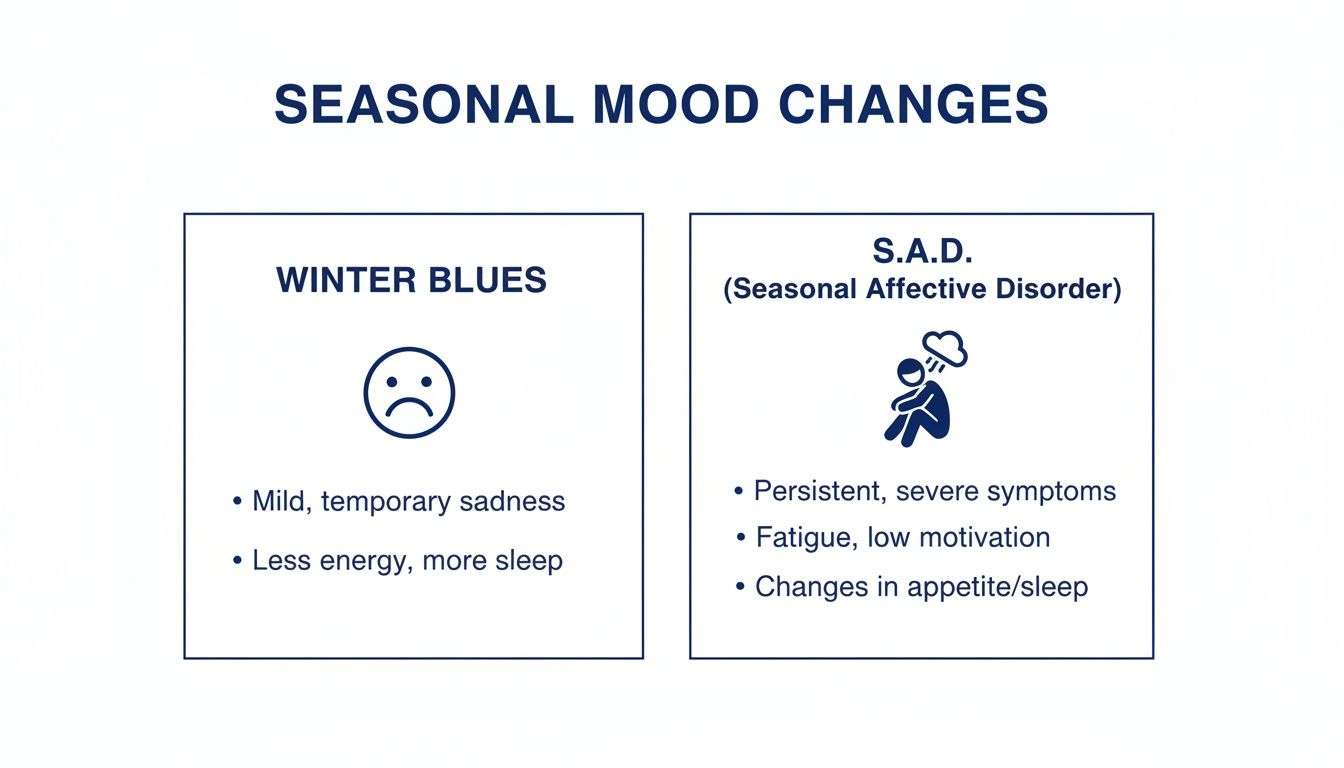
As you can see, while lots of us feel a bit down in the winter, SAD involves a cluster of symptoms that are more intense and can get in the way of your daily life.
More Than Just Darkness: The Social Impact
On top of the biological changes, Alberta winters present another huge challenge: social isolation. The bone-chilling temperatures and heavy snow often keep us indoors, cutting us off from the everyday social connections that protect our mental health.
That "cooped up" feeling is a real psychological stressor. When it's too cold to meet a friend for a walk or head to a community event, we miss out on the interactions that help buffer us from loneliness and low moods.
This can easily become a vicious cycle. The low energy from SAD makes it tough to reach out and make plans, but that very lack of social connection can make you feel even worse. It's no wonder people start to feel disconnected when their world shrinks to the four walls of their home.
Understanding how the lack of light, shifts in brain chemistry, and social isolation all feed into each other is key. It shows that what you're feeling is a valid, shared Albertan experience, deeply rooted in our environment. Acknowledging that this is a predictable challenge—not a personal failing—is the first real step toward finding strategies that actually help.
Proven Ways to Manage SAD

When you're living with seasonal depression, facing another long Alberta winter can feel completely overwhelming. But there's real hope. We now have effective, evidence-based treatments that can make a massive difference in how you feel, helping you manage your symptoms and get back on solid ground.
These strategies aren't about just "powering through." They are practical, proven tools designed to support your mind and body during the darker months. Getting to know your options is the first step toward building a personalized plan that actually works for you. From harnessing the power of light to changing the way you think about winter, you have more control than you might think.
Light Therapy: Sunshine in a Box
One of the most effective and well-researched treatments for SAD is light therapy, also known as phototherapy. The concept is brilliantly simple: it’s designed to replace the sunlight your body craves during the winter.
Think of it as your personal "sunshine in a box." The therapy involves sitting in front of a specialized lamp for a short time each day, usually first thing in the morning. This bright light mimics natural sunlight, helping to reset your body's internal clock (your circadian rhythm). This simple act can boost serotonin (the "feel-good" chemical) and reduce the overproduction of melatonin (the sleep hormone), leaving you feeling more alert, energized, and positive.
When you're looking for a light therapy lamp, a few key features are non-negotiable for it to be both safe and effective:
- Intensity: The lamp needs to provide an intensity of 10,000 lux. This is the clinical standard for treating SAD.
- UV Filtering: Make sure the lamp filters out almost all harmful ultraviolet (UV) light. This is crucial for protecting your eyes and skin.
- Usage: A typical session is just 20 to 30 minutes each morning, sitting about 16 to 24 inches away from the light.
For many Albertans struggling with seasonal depression, this small daily ritual can be a total game-changer, helping to regulate their mood and energy all day long.
Cognitive Behavioural Therapy for SAD
Another powerful tool is a specific kind of counselling called Cognitive Behavioural Therapy for SAD (CBT-SAD). This approach isn't just about managing symptoms—it gets to the root of the issue by helping you change the underlying thoughts and behaviours that make winter so tough.
Instead of just accepting those heavy feelings about the season, CBT-SAD teaches you how to actively challenge them. It works on two key things:
- Reframing Negative Thoughts: A therapist will help you catch those automatic negative thoughts about winter—like "I can't do anything fun until spring" or "This darkness is just unbearable." From there, you learn how to question them and replace them with more balanced, helpful perspectives.
- Building Positive Routines: This is all about behavioural activation. It means finding and scheduling enjoyable, engaging activities to do during the winter, even when you have zero motivation. This directly counters the natural urge to withdraw and isolate yourself.
Working with a therapist provides the personalized guidance you need to build these skills. Exploring different ways to manage your depression with a professional can help you create a sustainable plan for feeling well all winter.
Other Supportive Strategies
Beyond light therapy and CBT, a few other strategies can round out a complete wellness plan.
Many people with SAD also benefit from a Vitamin D supplement. Because our sun exposure is so limited, it's a good idea to speak with a healthcare provider about Vitamin D deficiency testing to find out the right dosage for you.
For some, especially those with more severe symptoms, a doctor might recommend antidepressant medication. These can be incredibly effective at regulating brain chemistry and lifting the crushing weight of depression, which in turn makes it easier to engage with therapy and other coping strategies.
The most important thing to remember is that you are not alone, and you don't have to figure this out by yourself. A combination of these proven strategies, tailored just for you, can help you not just get through the Alberta winter, but actually find ways to feel good and stay connected within it.
Practical Strategies for a Brighter Winter

It’s one thing to know that seasonal depression is a real, biological response to Alberta’s long winters. It’s another thing entirely to take back control. The good news is that you don't need a massive life overhaul to start feeling better.
Building resilience against the winter blues is all about weaving small, intentional habits into your daily life. Think of these strategies as your personal toolkit for navigating the darker months with more energy, stability, and hope.
Enhance Your Daily Routine
When the sun goes down early and rises late, it's easy for your internal clock to get completely thrown off. A structured daily routine acts as a powerful anchor, giving you a sense of predictability and control when the environment feels chaotic.
Just a few small tweaks can make a surprisingly big difference:
- Soak Up the Morning Light: First thing when you wake up, throw open the curtains. Even the weak, grey light of an overcast morning helps signal to your brain that the day has started, kickstarting your circadian rhythm and giving your mood a gentle lift.
- Keep Your Sleep Schedule Consistent: Try to go to bed and wake up around the same time every day—yes, even on weekends. This simple discipline reinforces your body's natural sleep-wake cycle, which SAD loves to disrupt, leading to better rest and more stable energy.
- Create a "Wind-Down" Ritual: An hour before you plan to sleep, put the screens away. Swap scrolling for reading a book, listening to calm music, or doing some light stretches. This helps your body and mind prepare for deep, restorative sleep.
Nurture Your Body and Mind
The link between how you move, what you eat, and how you feel becomes incredibly clear in the winter. Your body is fighting fatigue and often dealing with intense cravings, so giving it the right fuel and movement is essential.
Many people with SAD find themselves craving carbs and sugary snacks. It can be a real help to learn how to overcome food cravings and instead focus on balanced meals packed with whole foods to keep your blood sugar and mood stable.
Movement is also a game-changer, but it doesn't have to be intense. The goal is to find something you actually enjoy.
Think of gentle movement as a conversation with your body, not a demand. A short walk on a bright day, a cozy indoor yoga session, or even just stretching for ten minutes can provide a much-needed mental and physical boost.
Stay Connected with Others
When SAD takes hold, the instinct is often to pull away, cancel plans, and hibernate. While that urge is understandable, social connection is one of the most powerful shields we have against depression. You have to be intentional about fighting the urge to isolate.
It’s not about forcing yourself to go to big parties. Small, meaningful interactions are often far more powerful.
- Plan Low-Key Gatherings: Invite a friend over for tea, start a book club, or have a weekly board game night. Creating warm, low-pressure social events gives you something positive to look forward to.
- Get Outside Together: Bundle up and lean into the season. A crisp walk in a snowy park, a skate at a local rink, or even just grabbing a coffee with someone can break the monotony of being stuck indoors.
- Schedule Regular Check-ins: If meeting in person feels like too much of a hurdle, book regular phone or video calls with the people you care about. Just hearing a friendly voice can make you feel less alone and keep those vital connections strong.
How to Know When to Seek Professional Support
Making that first call to a professional is a deeply personal decision, but it's also one of the most powerful steps you can take for yourself. So many people get caught in the trap of wondering if their struggles are "bad enough" for therapy, but there's really no such thing.
If the winter blues are casting a shadow over your life and keeping you from feeling like yourself, that's more than enough reason to seek support.
Honestly, it often boils down to one simple question: Are these feelings getting in the way of the life you want to live? If the answer is yes, then reaching out is a courageous and proactive choice.
Key Indicators It's Time to Talk to Someone
While everyone's journey is different, there are a few common signs that professional support could make a real difference. Think of these less as a checklist and more as gentle nudges that it might be time to get some backup.
Consider reaching out if you're noticing that you are:
- Struggling with Daily Responsibilities: Is getting out of bed feeling like a monumental effort? Is it impossible to focus at work or just to keep up with the basics at home? This is a clear sign your symptoms are becoming too much to manage alone.
- Withdrawing from Your Relationships: If you find yourself consistently dodging calls from friends, turning down invitations, or feeling like there's a wall between you and your family, that isolation can make everything feel worse. Therapy can be a bridge back to connection.
- No Longer Enjoying Your Interests: This is a classic sign of depression. When the hobbies and activities you once loved start to feel like a chore, it’s a strong signal that your mood is taking a serious toll.
- Relying on Unhealthy Coping Mechanisms: Are you turning to food, alcohol, or other substances to numb out or just get through the day? A therapist can help you build healthier, more effective strategies that actually work in the long run.
What to Expect from Counselling
The idea of starting therapy can be nerve-wracking, but the reality is often far more welcoming and down-to-earth than people imagine. A good counsellor isn't there to judge you or give you advice. Their job is to create a safe, confidential space for you to untangle what you're feeling and develop practical tools for change.
Therapy is a collaboration. That first session is really just a conversation—a chance for you to share what’s on your mind and for the therapist to listen with empathy. It's all about building a connection and making sure you feel heard and understood.
From there, you’ll work together to spot the patterns in your thoughts and behaviours that are fueling those winter mood changes. For so many Albertans dealing with seasonal depression, learning new ways of thinking and creating a personalized toolbox of coping strategies is incredibly empowering. Exploring counselling services means you don't have to navigate this alone; you'll have a dedicated partner on your journey toward a brighter winter.
Remember, asking for help isn't a sign of weakness. It's a sign of strength—a sign that you're ready to invest in yourself and your well-being.
Frequently Asked Questions About SAD in Alberta
When you're dealing with seasonal depression in Alberta, a lot of questions can pop up. Let's walk through some of the most common ones with clear, compassionate answers to give you a bit more clarity and reassurance.
Can I prevent seasonal depression from happening each year?
While you might not be able to stop SAD entirely, you can absolutely take proactive steps to lessen its impact. The key is to start in the early fall, before symptoms usually set in. Think of it like preparing your home for winter—you don't wait for the first blizzard to put on the storm windows. This could mean pulling out your light therapy lamp, getting serious about a consistent sleep schedule, and scheduling cozy social events to look forward to.
Is light therapy safe and does it really work?
Yes, for most people, light therapy is both safe and remarkably effective. The key is to use a lamp specifically designed for SAD that provides a 10,000 lux intensity and filters out harmful UV light. A typical session is just 20-30 minutes each morning. It’s always a good idea to chat with your doctor before you start, especially if you have sensitive skin, any eye conditions, or are taking medications that increase light sensitivity.
How can I support a partner or family member?
Supporting someone you love through SAD begins with empathy. Just acknowledging that what they're feeling is real—and not simply a case of the "winter blues"—can make a huge difference. You can also encourage them to do things that are known to help, like joining them for a short walk outside when the sun is out. Your quiet presence can be one of the most meaningful forms of support. Above all, listen without trying to "fix" it, and gently encourage them to seek professional support if needed.
Do children and teenagers get seasonal depression too?
They absolutely do. For younger people, the symptoms can look a bit different. You might notice they're more irritable or withdrawn, having trouble at school, or their grades suddenly take a dive. If you spot a pattern of these behaviours cropping up every fall and winter, it’s definitely worth a conversation with your family doctor or a youth counsellor. Getting on top of it early can make a world of difference.
It's natural to feel overwhelmed by the long Alberta winter, but you don't have to face it alone. Understanding what's happening in your mind and body is the first step toward finding relief. With the right tools and support, it is entirely possible to navigate the darker months with more ease and find your way back to feeling like yourself again.
If you're ready to learn more about personalized strategies for managing winter mood changes in a supportive space, we invite you to explore our counselling services.
Clinically Reviewed By
Amy Mosset, MCP, RCC-S
Amy Mosset is a Master Practitioner in Clinical Counselling, Clinical Supervisor, and the owner of Interactive Counselling. She provides trauma-informed, evidence-based care and clinical supervision to registered therapists, with a focus on ethical practice, client safety, and high-quality therapeutic outcomes.