
Deciding between online counselling and traditional face-to-face therapy can feel overwhelming when you’re dealing with anxiety or depression. The appeal of having support from home, while being free from travel and time constraints, is changing how Canadians access care. This guide breaks down the differences between online counselling and in-person therapy, helping you find the option that meets your comfort level, lifestyle, and mental health needs.
Table of Contents
- Understanding Online Counselling And In-Person Therapy
- Key Differences Between Online And In-Person Sessions
- What Research Says About Effectiveness In Canada
- Benefits And Accessibility For Canadian Clients
- Limitations And When In-Person May Be Needed
- Choosing The Right Therapy Format For Your Needs
Key Takeaways
| Point | Details |
|---|---|
| Access and Convenience | Online counselling provides greater accessibility, especially for individuals in remote areas or with mobility challenges. |
| Interaction Dynamics | In-person therapy allows for more nuanced non-verbal communication, which can enhance therapeutic engagement. |
| Effectiveness | Both online and in-person modalities can be equally effective, with the therapist-client relationship being a crucial factor. |
| Choosing the Right Format | Consider personal comfort, technological capabilities, and specific mental health needs when selecting a counselling format. |
Understanding Online Counselling and In-Person Therapy
Online counselling and in-person therapy represent two primary approaches to mental health support, each offering distinct experiences for individuals seeking professional psychological assistance. While traditional face-to-face counselling has long been the standard method, digital platforms have revolutionised how people access therapeutic services.
The core difference between online and in-person counselling lies in the method of interaction. In-person therapy involves direct, physical meetings between a client and therapist in a dedicated counselling space, allowing for immediate, non-verbal communication and a controlled environment. Online counselling, by contrast, utilises digital platforms to provide therapeutic support through video calls, messaging, or phone consultations.
Key differences between these modalities include:
- Accessibility: Online counselling options provide greater flexibility for individuals with mobility challenges, busy schedules, or those living in remote areas
- Comfort Level: Some clients feel more at ease discussing personal issues from their own environment
- Technology Requirements: Online sessions demand stable internet connection and basic digital literacy
- Interaction Quality: In-person therapy offers more nuanced non-verbal communication
Research suggests that both approaches can be equally effective for many mental health concerns, with the primary determinant being the therapeutic relationship and practitioner’s skill. The choice between online and in-person counselling often depends on individual preferences, specific mental health needs, and personal comfort levels.
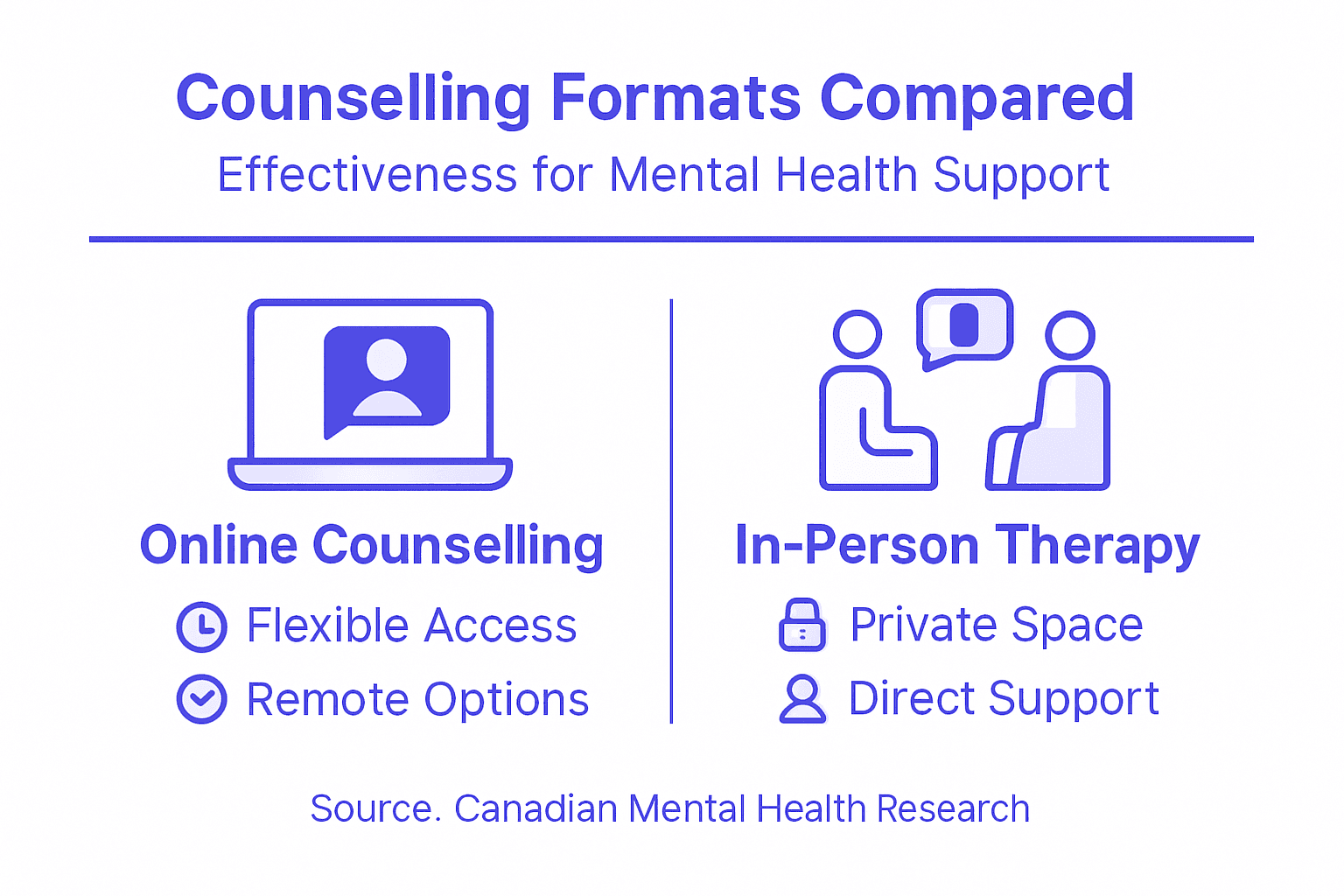
Pro tip: Consider your personal comfort, technological access, and specific therapeutic goals when selecting between online and in-person counselling approaches.
Clinically Reviewed By Amy Mosset, MCP, RCC-S
Amy Mosset is a Master Practitioner in Clinical Counselling, Clinical Supervisor, and the owner of Interactive Counselling. She provides trauma-informed, evidence-based care and clinical supervision to registered therapists, with a focus on ethical practice, client safety, and high-quality therapeutic outcomes.
Here’s a concise comparison of online counselling and in-person therapy methods:
| Aspect | Online Counselling | In-Person Therapy |
|---|---|---|
| Setting | Client’s preferred location | Therapist’s office |
| Communication Style | Digital, mostly verbal | Face-to-face, includes non-verbal cues |
| Accessibility | Available across Canada | Limited to local area |
| Technological Need | Internet and device needed | Minimal tech requirements |
| Privacy & Security | Needs digital safeguards | Therapist provides private setting |
Key Differences Between Online and In-Person Sessions
Online and in-person counselling sessions differ significantly in their approach, delivery, and interaction dynamics. While both methods aim to provide comprehensive mental health support, the mechanisms of therapeutic engagement vary considerably. Online therapy options for Canadians have expanded dramatically, offering new pathways for individuals seeking mental health support.

Communication Modalities represent the most fundamental distinction between these two therapeutic approaches. In-person sessions allow for direct, face-to-face interaction with immediate non-verbal communication cues like body language, facial expressions, and subtle emotional signals. Online sessions, by contrast, rely primarily on verbal and visual communication through digital platforms, which can sometimes limit the depth of interpersonal connection.
Key structural differences include:
Environment Control:
- In-person: Therapist manages a professional, controlled therapeutic space
- Online: Client creates their own therapy environment
Technical Requirements:
- In-person: Minimal technological preparation needed
- Online: Requires stable internet, compatible devices, and basic digital literacy
Accessibility Factors:
- In-person: Limited by geographical proximity to therapist’s office
- Online: Eliminates geographical barriers, enables connection with professionals across different regions
Privacy and Confidentiality also differ between these modalities. In-person sessions guarantee a controlled, private environment, while online sessions require additional technological safeguards to ensure client confidentiality.
Pro tip: Evaluate your personal comfort, technological capabilities, and specific therapeutic needs when choosing between online and in-person counselling approaches.
Clinically Reviewed By Amy Mosset, MCP, RCC-S
Amy Mosset is a Master Practitioner in Clinical Counselling, Clinical Supervisor, and the owner of Interactive Counselling. She provides trauma-informed, evidence-based care and clinical supervision to registered therapists, with a focus on ethical practice, client safety, and high-quality therapeutic outcomes.
What Research Says About Effectiveness in Canada
Canadian mental health research has increasingly focused on evaluating the effectiveness of online counselling as a viable alternative to traditional in-person therapy. Foundational mental health research indicates that therapeutic outcomes are more closely tied to the quality of the therapeutic relationship than the delivery method.
Emerging Research Trends suggest that online counselling can be remarkably effective for many mental health conditions. Studies conducted across Canadian universities and healthcare institutions have demonstrated comparable outcomes between online and in-person therapeutic interventions, particularly for conditions like anxiety, depression, and stress management.
Key research findings highlight several important dimensions:
Therapeutic Alliance:
- Online sessions can develop equally strong therapeutic relationships
- Rapport-building remains possible through digital platforms
Treatment Effectiveness:
- Comparable recovery rates for mild to moderate mental health conditions
- Potential advantages for individuals with accessibility challenges
Client Satisfaction:
- High reported satisfaction rates with online counselling
- Increased comfort for clients who prefer remote interactions
The adaptability of online counselling has been particularly evident during recent global health challenges, demonstrating its resilience and potential as a primary therapeutic intervention. Technological Advancements have significantly enhanced the quality of digital therapeutic interactions, making them more immersive and responsive to client needs.
Online counselling represents a scientifically validated approach to mental health support, offering flexibility without compromising therapeutic effectiveness.
Pro tip: Request evidence-based outcome metrics from your therapist to understand the potential effectiveness of online counselling for your specific mental health needs.
Clinically Reviewed By Amy Mosset, MCP, RCC-S
Amy Mosset is a Master Practitioner in Clinical Counselling, Clinical Supervisor, and the owner of Interactive Counselling. She provides trauma-informed, evidence-based care and clinical supervision to registered therapists, with a focus on ethical practice, client safety, and high-quality therapeutic outcomes.
Benefits and Accessibility for Canadian Clients
Online counselling has transformed mental health accessibility across Canada, particularly for individuals facing geographical, time, or mobility constraints. Why try online therapy reveals numerous advantages that make mental health support more inclusive and convenient for diverse Canadian populations.
Geographic Accessibility is perhaps the most significant benefit for Canadian clients. Given Canada’s vast landscape and rural regions, online counselling eliminates traditional barriers of distance. Clients in remote communities, small towns, and northern regions can now connect with qualified mental health professionals without extensive travel, reducing both financial and logistical challenges.
Key accessibility benefits include:
Convenience Factors:
- Eliminates travel time and transportation costs
- Enables sessions from home or preferred private location
- Supports scheduling flexibility
Demographic Inclusivity:
- Supports individuals with mobility limitations
- Provides access for those in rural or isolated communities
- Reduces barriers for parents, shift workers, and caregivers
Privacy and Comfort:
- Enhanced sense of personal security
- Reduced social anxiety associated with in-person interactions
- Control over therapeutic environment
Online counselling represents a transformative approach to mental health support, breaking down traditional barriers and creating more accessible therapeutic experiences.
Technological advancements have further enhanced the quality and reliability of online counselling, with secure platforms ensuring client confidentiality and smooth communication. Technological Integration allows for seamless, professional therapeutic interactions that closely mirror in-person experiences.
Pro tip: Verify your internet connection and prepare a quiet, private space before your online counselling session to maximize therapeutic effectiveness.
Clinically Reviewed By Amy Mosset, MCP, RCC-S
Amy Mosset is a Master Practitioner in Clinical Counselling, Clinical Supervisor, and the owner of Interactive Counselling. She provides trauma-informed, evidence-based care and clinical supervision to registered therapists, with a focus on ethical practice, client safety, and high-quality therapeutic outcomes.
Limitations and When In-Person May Be Needed
While online counselling offers remarkable flexibility, it is not universally suitable for all mental health scenarios. How to start therapy requires careful consideration of individual therapeutic needs and potential limitations of digital platforms.
Complex Therapeutic Scenarios often necessitate in-person interventions. Certain mental health conditions demand nuanced, immediate non-verbal communication and physical presence that online platforms cannot fully replicate. These include acute trauma responses, severe psychiatric conditions, and situations requiring comprehensive psychological assessment.
Specific scenarios where in-person therapy might be recommended:
Clinical Complexity:
- Severe depression with suicide risk
- Active psychosis
- Complex trauma requiring intensive intervention
Physical and Neurological Considerations:
- Clients with significant communication challenges
- Individuals requiring extensive non-verbal observation
- Neurological conditions affecting digital interaction
Technological Barriers:
- Limited internet access
- Insufficient digital literacy
- Unreliable technology infrastructure
Some therapeutic interventions require direct, immediate physical and emotional presence that digital platforms cannot fully capture.
Additionally, Therapeutic Assessment plays a crucial role in determining the most appropriate counselling approach. Not all clients are equally comfortable with or capable of engaging effectively in online therapeutic environments. Factors like age, technological comfort, personal communication preferences, and specific mental health needs significantly influence the most suitable therapy delivery method.
Pro tip: Consult with a mental health professional to comprehensively assess whether online or in-person counselling best suits your specific therapeutic requirements.
Clinically Reviewed By Amy Mosset, MCP, RCC-S
Amy Mosset is a Master Practitioner in Clinical Counselling, Clinical Supervisor, and the owner of Interactive Counselling. She provides trauma-informed, evidence-based care and clinical supervision to registered therapists, with a focus on ethical practice, client safety, and high-quality therapeutic outcomes.
Choosing the Right Therapy Format for Your Needs
Selecting the most appropriate therapy format requires careful self-reflection and understanding of your unique mental health requirements. Types of therapy approaches can vary significantly, making the selection process crucial for effective treatment.
Personal Assessment plays a fundamental role in determining the most suitable therapeutic approach. Individuals must consider multiple factors beyond simply choosing between online and in-person counselling, including their comfort level, specific mental health challenges, technological capabilities, and personal communication preferences.
Key considerations for selecting the right therapy format include:
Personal Communication Style:
- Preference for face-to-face interaction
- Comfort with digital communication platforms
- Ability to express emotions effectively
Practical Constraints:
- Geographic location
- Work and family responsibilities
- Transportation availability
Mental Health Complexity:
- Severity of mental health condition
- Need for immediate intervention
- Complexity of therapeutic goals
The most effective therapy format is one that makes you feel safe, understood, and supported in your healing journey.
Professional guidance becomes invaluable in navigating these choices. Therapeutic Matching involves collaborating with a mental health professional who can help assess your specific needs, recommend the most appropriate format, and potentially suggest a hybrid approach that combines online and in-person elements.
Pro tip: Schedule an initial consultation to discuss your specific needs and explore which therapy format might provide the most comfortable and effective therapeutic experience.
Clinically Reviewed By Amy Mosset, MCP, RCC-S
Amy Mosset is a Master Practitioner in Clinical Counselling, Clinical Supervisor, and the owner of Interactive Counselling. She provides trauma-informed, evidence-based care and clinical supervision to registered therapists, with a focus on ethical practice, client safety, and high-quality therapeutic outcomes.
The following table summarises key factors for choosing the right counselling format:
| Factor | Online Format Benefit | In-Person Format Benefit |
|---|---|---|
| Comfort Level | Home environment reduces anxiety | Therapist presence offers reassurance |
| Flexibility | Easy scheduling, no travel | Consistent routine, fewer distractions |
| Suitability | Ideal for mild conditions | Better for complex concerns |
| Assessment | Guided by digital tools | Comprehensive in-person review |
Discover Effective Mental Health Support That Fits Your Life
Choosing between online counselling and in-person therapy can feel overwhelming when you want the best care that truly meets your needs. This article explores key challenges such as comfort with digital platforms, the need for personal connection, and accessibility concerns that might influence your decision. If you have felt uncertain about whether online counselling offers the same therapeutic quality or worry about finding convenient options that fit your busy schedule, you are not alone.
At Interactive Counselling, we understand these concerns and specialise in providing compassionate, personalised therapy options across Canada. Whether you prefer the flexibility of online therapy or the familiarity of in-person sessions in Kelowna, Vernon, Grande Prairie, or Penticton, our licensed therapists are here to support your mental health journey. Learn more about how we prioritise your comfort and effectiveness in treatment by visiting our General – Interactive Counselling page.
Take the next step today by exploring tailored therapy solutions with us at Interactive Counselling. Don’t wait to find the professional care that matches your unique goals and lifestyle. Your path to healing and growth starts here.
Frequently Asked Questions
Is online counselling as effective as in-person therapy?
Research shows that online counselling can be just as effective as in-person therapy for many mental health concerns, with the strength of the therapeutic relationship being the key factor in effectiveness.
What are the main advantages of online counselling?
Online counselling offers greater accessibility, convenience, and comfort. It allows individuals to connect with therapists from their own environment, eliminating travel and geographical barriers.
Are there any limitations to online counselling?
Yes, certain complex mental health conditions may require in-person therapy for effective treatment. Scenarios involving severe symptoms, acute trauma, or significant communication challenges typically benefit from direct physical interaction.
How should I choose between online and in-person counselling?
Consider your personal communication style, mental health complexity, comfort level with technology, and practical constraints like travel and scheduling when deciding which therapy format is right for you.
Recommended
- Why Try Online Therapy: Complete Guide to Benefits – Interactive Counselling
- How to Access Online Counselling: Step-by-Step Guide – Interactive Counselling
- 7 Key Advantages of Online Therapy for Couples – Interactive Counselling
- 7 Types of Counselling Services Explained for Your Needs – Interactive Counselling