Every relationship experiences moments where honest reflection uncovers recurring patterns of stress or emotional disconnect. For couples in British Columbia hoping to rebuild trust or strengthen communication, choosing the right marriage counsellor can set the stage for real change. This guide walks you through the steps to assess your relationship needs, research qualified professionals, and recognise which therapeutic approach best supports your shared goals for growth and understanding. For more information, see our couples counselling.
Table of Contents
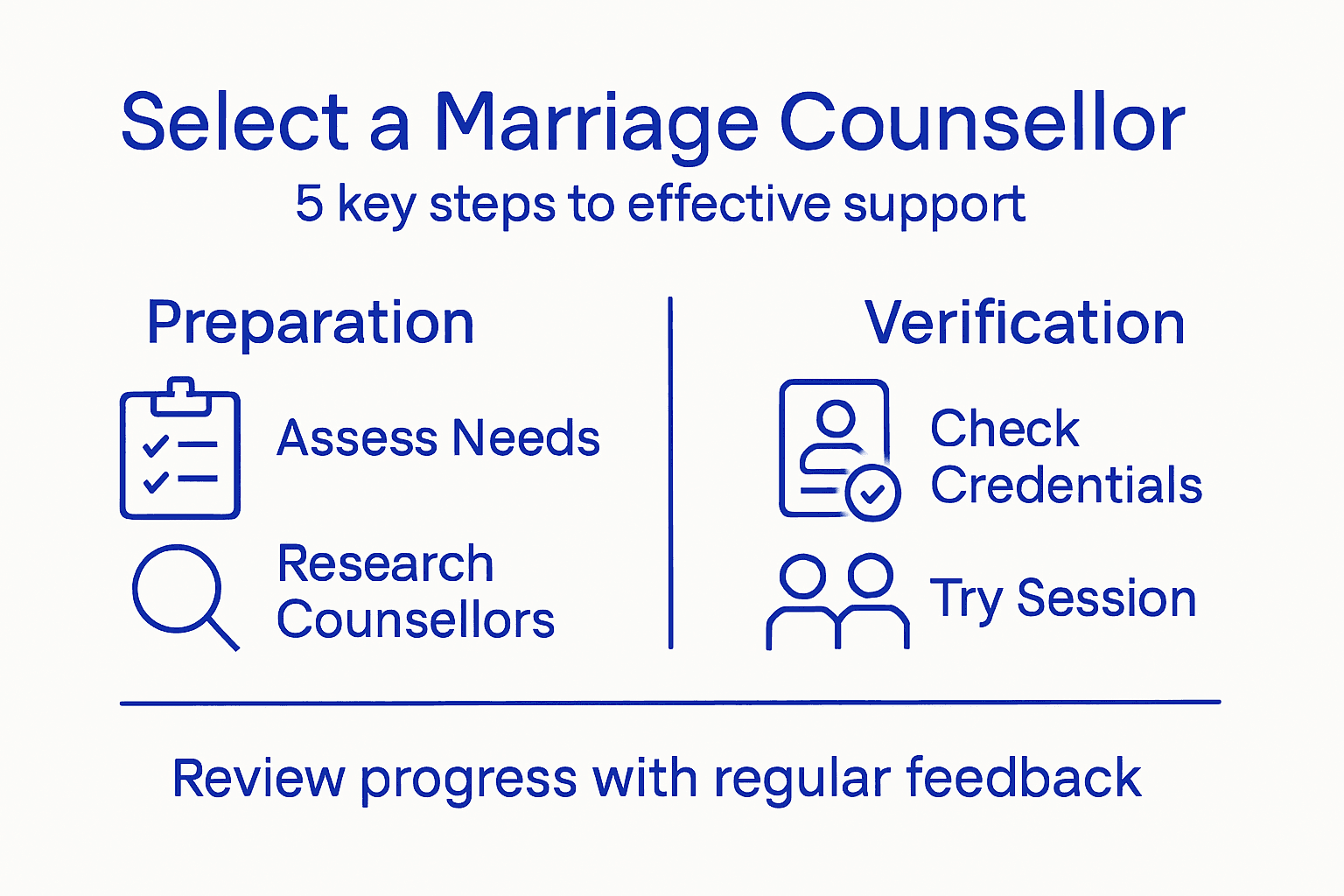
- Step 1: Assess Your Relationship Needs
- Step 2: Research Local And Online Counsellors
- Step 3: Review Credentials And Experience
- Step 4: Evaluate Counselling Approaches
- Step 5: Verify Fit With An Initial Session
Quick Summary
| Essential Insight | Clarification |
|—————————|——————————-|
| 1. Assess Your Relationship Needs | Reflect on communication, trust, and intimacy to identify key areas for improvement before seeking help. |
| 2. Research Counsellors Carefully | Utilize directories and testimonials to find a counsellor with the right qualifications and experience for your needs. |
| 3. Review Counsellor Credentials | Check educational background, licensing, and experience to ensure they are qualified to support your relationship. |
| 4. Evaluate Counselling Approaches | Understand different therapeutic methods and select one that aligns with your relationship dynamics and communication style. |
| 5. Verify Fit in Initial Sessions | Use initial consultations to assess comfort levels and compatibility with the counsellor’s communication style and approach. |
Step 1: Assess your relationship needs
Understanding your relationship’s unique dynamics is crucial before seeking marriage counselling. This initial assessment helps you identify underlying challenges and clarify what support you genuinely need.
Begin by conducting an honest, compassionate self-reflection about your relationship’s current state. Identifying relationship health involves recognizing key emotional and communication patterns. Consider examining these critical areas:
- Communication quality between you and your partner
- Emotional connection and intimacy levels
- Trust and respect in your interactions
- Conflict resolution strategies
- Individual and shared goals
Careful assessment helps pinpoint specific areas requiring professional guidance. Some couples might need help rebuilding trust, while others seek improved communication techniques. Pay attention to recurring challenges that feel unresolvable or create persistent tension.
Recognizing when professional support becomes necessary demonstrates relationship maturity and commitment to mutual growth.
By thoroughly understanding your relationship’s strengths and challenges, you create a solid foundation for selecting the most appropriate marriage counsellor who can effectively address your unique needs.
Professional recommendation: Approach your relationship assessment with compassion, avoiding blame and focusing on collaborative improvement.
Step 2: Research local and online counsellors
Researching marriage counsellors requires a strategic approach to find the right professional who matches your specific relationship needs. Your goal is to discover qualified counsellors who can provide effective, personalised support for your unique situation.
Start by exploring Canadian Certified Counsellor directories that offer comprehensive search options. These professional resources allow you to filter potential counsellors based on critical criteria:
- Geographic location (local in-person or online options)
- Specialisation in marriage and relationship counselling
- Professional credentials and certification
- Areas of expertise matching your specific challenges
- Communication style and therapeutic approach
Consider investigating multiple research channels to broaden your options. Job Bank Canada provides insights into counselling professionals working across various settings, including private practices, government agencies, and counselling centres.
Comprehensive research helps you find a counsellor who not only has professional qualifications but also feels like a good personal match for your relationship dynamics.
Evaluate potential counsellors by reviewing their professional backgrounds, reading client testimonials, and checking their specific experience with couples therapy. Many professionals offer brief consultations that can help you assess their compatibility with your needs.

Professional recommendation: Schedule initial consultations with 2-3 counsellors to compare their approaches and find the most comfortable therapeutic relationship.
Step 3: Review credentials and experience
Understanding a marriage counsellor’s professional background is crucial in determining their ability to effectively support your relationship challenges. Your goal is to thoroughly evaluate the counsellor’s qualifications and ensure they possess the expertise needed for your specific situation.
Canadian counsellors’ professional qualifications involve comprehensive training and specific competencies in family therapy. When reviewing credentials, pay close attention to these critical elements:
- Educational background in counselling or psychology
- Professional licensing and certification status
- Specialised training in marriage and couples therapy
- Years of practical experience working with couples
- Professional memberships in recognized counselling associations
Look beyond basic credentials by investigating the counsellor’s specific approach to therapy. This involves examining their therapeutic philosophy, understanding of relationship dynamics, and demonstrated success in helping couples navigate complex challenges.
A counsellor’s credentials are more than just academic qualifications – they represent a commitment to professional growth and effective therapeutic practice.
During your review, request detailed information about their experience, approach to couples counselling, and specific techniques they employ. Many professionals are willing to provide a brief overview of their therapeutic methodology during initial consultations.
Professional recommendation: Request documentation of professional credentials and verify them with relevant professional associations before making your final selection.
Use this reference table to quickly verify a counsellor’s qualifications in Canada:
| Credential Type | Importance | Verification Method |
|---|---|---|
| Graduate degree (MA/MSW) | Ensures formal training | Ask for diploma or transcript |
| Provincial licence | Confirms legal practice status | Search regulatory board database |
| Continuing education certificates | Indicates updated skills | Request course certificates |
| Association membership (e.g., CCPA) | Supports professional standards | Check online member registry |
Step 4: Evaluate counselling approaches
Selecting the right counselling approach is essential for effective relationship therapy. Your goal is to understand different therapeutic methods and determine which best matches your unique relationship dynamics and personal communication styles.
Collaborative counselling approaches emphasize creating a respectful, dialogic therapeutic environment where both partners feel heard and valued. When evaluating potential approaches, consider these key dimensions:
- Communication style of the therapeutic method
- Theoretical foundation of the counselling approach
- Evidence-based intervention techniques
- Flexibility in addressing relationship challenges
- Potential for long-term relationship improvement
Research demonstrates that different couples benefit from varied therapeutic strategies. Some approaches focus on behavioural patterns, while others prioritize emotional connection and communication skills. Understanding these nuanced differences can help you select a counsellor whose method resonates with your relationship’s specific needs.
The most effective counselling approach is one that creates a safe, collaborative space for honest dialogue and mutual understanding.
During initial consultations, ask specific questions about the counsellor’s therapeutic methodology, their experience with couples similar to you, and how they adapt their approach to individual relationship dynamics.
Here’s a summary of common marriage counselling approaches and their main benefits:
| Counselling Approach | Focus Area | Key Benefit |
|---|---|---|
| Emotionally Focused Therapy | Deepen emotional bonds | Enhances connection and empathy |
| Cognitive Behavioural Therapy | Change negative thought patterns | Improves communication skills |
| Solution-Focused Therapy | Identify strengths and solutions | Promotes practical goal-setting |
| Narrative Therapy | Reshape relationship stories | Supports personal and shared growth |
Professional recommendation: Request a brief explanation of the counsellor’s primary therapeutic approach and how they believe it can specifically benefit your relationship.
Step 5: Verify fit with an initial session
An initial counselling session serves as a critical opportunity to assess your potential therapeutic relationship. Your goal is to evaluate the counsellor’s approach, communication style, and potential for helping you navigate your relationship challenges.
Canadian Certified Counsellors recommend using the first consultation as a compatibility assessment. During this session, focus on exploring these key aspects:
- Comfort level with the counsellor’s communication style
- Therapist’s ability to understand your unique relationship dynamics
- Professional listening skills and empathetic response
- Clarity of proposed therapeutic approach
- Personal connection and sense of trust
Prepare thoughtful questions that help you gauge the counsellor’s expertise and approach. Be transparent about your relationship goals, communication challenges, and expectations for therapy. Pay attention to how the counsellor responds, their level of engagement, and whether they provide insights that resonate with your situation.
A successful initial session should leave you feeling heard, understood, and hopeful about potential therapeutic progress.
Remember that finding the right counsellor is a collaborative process. If something feels off during the first meeting, it is perfectly acceptable to continue exploring other options until you find the right professional match.
Professional recommendation: Trust your instincts and prioritise finding a counsellor who creates a safe, supportive environment for open and honest communication.
Find the Right Support for Your Relationship Today
Choosing an effective marriage counsellor starts with understanding your unique relationship needs and finding a professional who aligns with your goals and communication style. If you are facing challenges like communication struggles, rebuilding trust, or seeking strategies for long-term connection, it is essential to connect with a counsellor who offers the right therapeutic approach. At Interactive Counselling, we understand how important it is to feel heard and supported during this process.
Our team of licensed therapists across Canadian locations including Kelowna, Vernon, Grande Prairie, and Penticton provides compassionate, personalised therapy options. Whether you prefer in-person sessions or flexible online support, you can explore services tailored to couples’ needs through General – Interactive Counselling. Don’t wait until tension grows—take the first step to healing your relationship by booking a session at Interactive Counselling today. Experience supportive care designed to restore connection and foster mutual growth.
Frequently Asked Questions
How can I assess my relationship needs before seeking a marriage counsellor?
Start by conducting an honest self-reflection about your relationship’s current state. Identify key areas such as communication quality, emotional connection, and trust levels that may need professional guidance.
What should I look for when researching local and online marriage counsellors?
Focus on qualifications such as geographic location, specialisation in marriage counselling, and professional credentials. Create a shortlist of potential counsellors based on these criteria to ensure a good fit for your relationship dynamics.
How do I review a marriage counsellor’s credentials and experience effectively?
Examine the counsellor’s educational background, professional licensing, and years of experience working with couples. Request detailed information about their approach to therapy and success in addressing challenges similar to yours.
What counselling approaches should I consider for my relationship?
Research various counselling methods like Emotionally Focused Therapy or Cognitive Behavioural Therapy to find one that matches your needs. Discuss these options with potential counsellors to see how they align with your relationship dynamics.
How can I determine if a marriage counsellor is the right fit during the initial session?
Evaluate your comfort level with the counsellor’s communication style and their understanding of your relationship. Prepare questions, and assess whether you feel heard and understood during the initial meeting to confirm a positive connection.
What should I do if I don’t feel comfortable with the counsellor after the first session?
Trust your instincts and prioritise finding a counsellor who makes you feel safe and supported. If something feels off, continue searching for other professionals who better align with your needs.
Recommended
- 7 Key Benefits of Marriage Counseling for Stronger Relationships – Interactive Counselling
- Kelowna Marriage Counselling – Interactive Counselling
- Marriage Counselling: How Couples Repair Conflict and Rebuild Connection
- What Is Couples Counseling? Complete Relationship Guide – Interactive Counselling