Taking the first step toward getting support is a courageous act, and by reading this, you are already on your way. This guide is here to gently walk you through what it means to work with a trauma-informed therapist, clarifying what to expect and answering your questions with compassion. For more information, see our trauma counselling.
A trauma-informed therapist is a mental health professional who understands the deep and lasting impact that traumatic experiences can have, creating a safe and collaborative environment for healing.
A trauma-informed therapist is a mental health professional trained to recognize how trauma impacts the nervous system and to create a safe, collaborative space for healing.
Understanding the Path to Healing
Imagine you're navigating a difficult, unfamiliar trail. A trauma-informed therapist is like a skilled guide who knows the terrain inside and out. They don't rush you or tell you which way to go; instead, they walk alongside you, making sure you feel secure and in charge of your own journey.
This approach isn't about trying to erase the past. It’s about building the resilience to manage its impact, helping you move forward with a renewed sense of well-being and control.

As we go, we’ll explore the core principles that make this kind of care so different, what you can actually expect in a session, and how to find the right person to support you.
Why This Approach Matters
Trauma isn't something that happens to a select few; it can affect anyone, regardless of their age, background, or life experience. Its impact is far more common than many of us realize, quietly shaping how we see the world, connect with others, and handle stress. It's not a sign of weakness—it's a perfectly normal reaction to overwhelming events.
This reality highlights just how vital it is to have therapists who are trained to see and respond to the effects of trauma with both skill and heart. Recent data from Statistics Canada brings this into sharp focus, revealing that nearly two-thirds of Canadian adults—63%—have been exposed to at least one potentially traumatic event. This widespread experience creates a critical need for trauma-informed therapists who can foster genuine recovery. Read more about these findings on trauma prevalence in Canada.
Shifting the Focus to "What Happened to You"
The most fundamental difference in trauma-informed care is the question it asks. Instead of focusing on symptoms with a "What's wrong with you?" mindset, a trauma-informed therapist gently explores, "What happened to you?". This simple but profound shift changes everything.
This question validates your experiences and acknowledges that your responses—no matter what they look like—are normal reactions to abnormal events. It creates a foundation of understanding and compassion, which is where real healing can finally begin.
This perspective is powerful for a few key reasons:
It lifts the burden of blame and shame. Realizing your struggles are tied to past events can free you from heavy self-criticism.
It builds trust. When you feel understood instead of judged, it becomes much easier to form a strong, safe therapeutic relationship.
It empowers you. The focus moves to your innate strengths and resilience, positioning you as an active partner in your own recovery.
A big piece of this work involves understanding how your experiences have shaped your nervous system. Getting to know your body's responses can give both you and your therapist a clearer roadmap for the path forward. For a deeper dive, you can explore our guide on understanding trauma responses in the nervous system.
The Guiding Principles of Trauma-Informed Care
What really sets a trauma-informed approach apart is a fundamental shift in perspective. It moves away from asking, "What's wrong with you?" and instead gently asks, "What happened to you?" This isn't just a kinder question; it’s a completely different way of seeing things, built on core principles that promise your therapy experience will feel safe, respectful, and empowering.
These aren't just clinical guidelines pulled from a textbook. Think of them as the values that a trauma-informed therapist lives and breathes in every session. They form the very bedrock of the therapeutic relationship, creating an environment where real healing can finally begin.

To make these ideas less abstract, let’s look at what these core principles actually look like in practice. This table breaks down the professional term and what it truly means for you, sitting in the therapist’s office.
Key Principles of Trauma-Informed Therapy in Practice
| Principle | What It Means for You |
|---|---|
| Safety | Your therapist's #1 job is to create a space where you feel completely safe—not just physically, but emotionally. This means moving at your pace, never pushing you, and building a foundation of psychological safety where you can be vulnerable without fear. |
| Trustworthiness & Transparency | They earn your trust by being completely open and honest. Your therapist will explain their methods and the "why" behind them, so there are no surprises. This builds a clear, predictable relationship where you always know where you stand. |
| Collaboration & Mutuality | Therapy is something you do with your therapist, not something that is done to you. You are seen as the expert on your own life. Your insights, goals, and feedback are essential, making you an equal partner in the process. |
| Empowerment, Voice & Choice | Trauma often takes away your sense of control. This principle is all about giving it back. Your therapist will highlight your strengths and resilience. Every decision, from the topics you discuss to the pace you set, is yours to make. |
| Cultural & Historical Humility | Your unique background—your culture, identity, and life experiences—is respected and honoured. Your therapist approaches your story with genuine curiosity, seeking to understand your world without making assumptions. This ensures your care is relevant to you as a whole person. |
Each of these principles works together to create a therapeutic space that is fundamentally different. It’s a space designed not just to treat symptoms, but to foster deep, lasting healing by addressing the core impact of what you’ve been through. Let’s dive a little deeper into what each one feels like.
Safety First and Foremost
The absolute top priority in trauma-informed care is creating a space where you feel safe, both physically and emotionally. This is about so much more than a locked door; it's about building a powerful sense of psychological safety in healing.
This means you feel seen, heard, and accepted exactly as you are, without judgment. Your therapist will consistently check in with you, move at a pace that feels comfortable, and will never, ever push you to talk about something you aren't ready for. This unwavering commitment to your safety builds the trust needed for you to be vulnerable in a way that feels contained and fully supported.
Trustworthiness and Transparency
For many people who have lived through trauma, trust doesn't come easily. A trauma-informed therapist gets this on a deep level and actively works to build that trust through honesty, consistency, and absolute clarity.
Your therapist will be transparent about the entire process, explaining the methods they use and why they're suggesting them. There are no secrets or hidden agendas. It's like being handed a clear map for your journey—you always know where you're headed and the path you're taking together.
This openness helps to balance the power dynamic that can sometimes exist in healthcare. You are an equal, respected partner in your own healing.
Collaboration and Mutuality
In this approach, you are the expert on your own life. Therapy is a partnership where decisions are made together, and the relationship is built on mutual respect.
Your therapist works alongside you, valuing your insights and input at every single step.
Shared goals: You decide together what you want to work on.
Open dialogue: Your feedback isn't just welcomed; it's considered essential.
Equal partnership: The process honours your knowledge and wisdom.
This collaborative spirit is incredibly powerful. It constantly reinforces your agency and control over your own healing journey.
Empowerment, Voice, and Choice
Traumatic experiences can strip people of their sense of power and control. A core goal of trauma-informed care is to help you reclaim that power.
Your therapist will consistently help you see your own strengths and resilience, recognizing the skills you already possess to survive. Every decision, from scheduling to the topics you explore in a session, is made with your full and enthusiastic consent. You are always in the driver’s seat. This focus isn’t just encouraging; it's a vital part of reversing the effects of trauma.
Cultural and Historical Humility
Finally, a trauma-informed therapist understands that every part of you—your culture, your history, your gender identity, and your unique life experiences—shapes how you experience both trauma and healing. They approach your story with respect, curiosity, and a genuine humility.
This means they are committed to understanding your individual context without making assumptions or generalizations. They acknowledge the real-world impact of historical and systemic issues, ensuring that the care you receive is not only compassionate but also culturally sensitive and relevant to you as a whole person.
What a Session with a Trauma-Informed Therapist Looks Like
It’s one thing to talk about principles, but it’s another to see how they come to life in the therapy room. So, what can you actually expect when you sit down with a trauma-informed therapist? The experience is thoughtfully designed to help you heal without ever making you feel overwhelmed or pushed past your limits.
You are always in the driver’s seat. The session moves at your pace, on your terms.
This isn’t about a therapist following a rigid script. It’s about creating a responsive, flexible space that’s built around you—whether you’re an individual navigating anxiety, a couple working to rebuild trust, or a family healing together. The focus is always on your safety, your voice, and your well-being.
Pacing and Building Safety
A huge part of any session is the careful management of pace. Trauma can make the world feel dangerously fast and unpredictable, so your therapist will intentionally slow things right down. They’ll check in with you constantly, asking gentle questions like, “How does that feel to talk about?” or “Would you like to continue, or should we pause here?”
This isn’t just being polite; it’s a clinical skill. By giving you complete control over the speed and depth of the conversation, they’re actively helping you rebuild your sense of agency. The session becomes a safe container where you can explore difficult feelings without the risk of being flooded by them.
Teaching Practical Grounding Techniques
Your therapist will also give you practical tools to manage intense emotions, both during your sessions and in your daily life. These are often called grounding techniques—simple but powerful strategies that help you stay present and calm your nervous system when you feel activated.
These might include:
Sensory awareness exercises, like the 5-4-3-2-1 method: notice five things you can see, four you can touch, three you can hear, two you can smell, and one you can taste.
Breathing exercises that regulate your heart rate and send a signal to your body that you are safe.
Mindful movement, like gently stretching or pressing your feet firmly into the floor to feel connected to the ground.
These tools are yours to keep. They empower you to handle tough moments in your day-to-day life, helping you build resilience right from your very first session.
Adapting Therapeutic Methods
A trauma-informed therapist understands how trauma impacts the brain and body, and they draw from a range of proven, evidence-based therapies. You might hear them mention approaches like Cognitive Behavioural Therapy (CBT), Eye Movement Desensitization and Reprocessing (EMDR), or Emotionally Focused Therapy (EFT).
But they’ll always explain these methods in simple, clear terms. The focus is never on the jargon; it’s on the goal. Maybe that’s gently challenging unhelpful thought patterns, helping your brain reprocess difficult memories, or strengthening your emotional connections with loved ones.
The key difference is that a trauma-informed therapist applies these techniques through a lens of safety and empowerment. They will adapt any method to fit your needs, ensuring the process itself is healing rather than re-traumatizing.
This adaptability is crucial because it acknowledges just how widespread trauma really is. The Public Health Agency of Canada has highlighted the deep-rooted realities of childhood abuse and other adversities, which allows a therapist to provide compassionate, relevant care that truly meets you where you are. Learn more about trauma-informed approaches in policy and practice.
Focusing on Strengths and Resilience
Finally, a session with a trauma-informed therapist isn’t just about what happened to you; it's also about recognizing the incredible strength you've shown in surviving it. They will consistently highlight your resilience, your coping skills, and your inherent capacity to heal.
By focusing on your strengths, therapy becomes a process of remembering your own power. It’s a collaborative journey that ensures you leave sessions feeling not drained, but a little more hopeful, capable, and connected to your own inner resources. The goal is to help you move forward, weaving your experiences into your life story in a way that fosters lasting well-being and peace.
How to Find the Right Therapist for Your Healing Journey
Finding a therapist who just gets it is one of the most personal and vital parts of starting to heal. This whole process can feel overwhelming, so think of this as a practical guide to make the search less intimidating. We want to give you real tools and, most importantly, encourage you to trust your gut as you look for compassionate, professional support.
This visual guide can help you map out the core components of trauma therapy. It all starts with you, moves to building a sense of safety, and only then does the deeper work of healing begin.
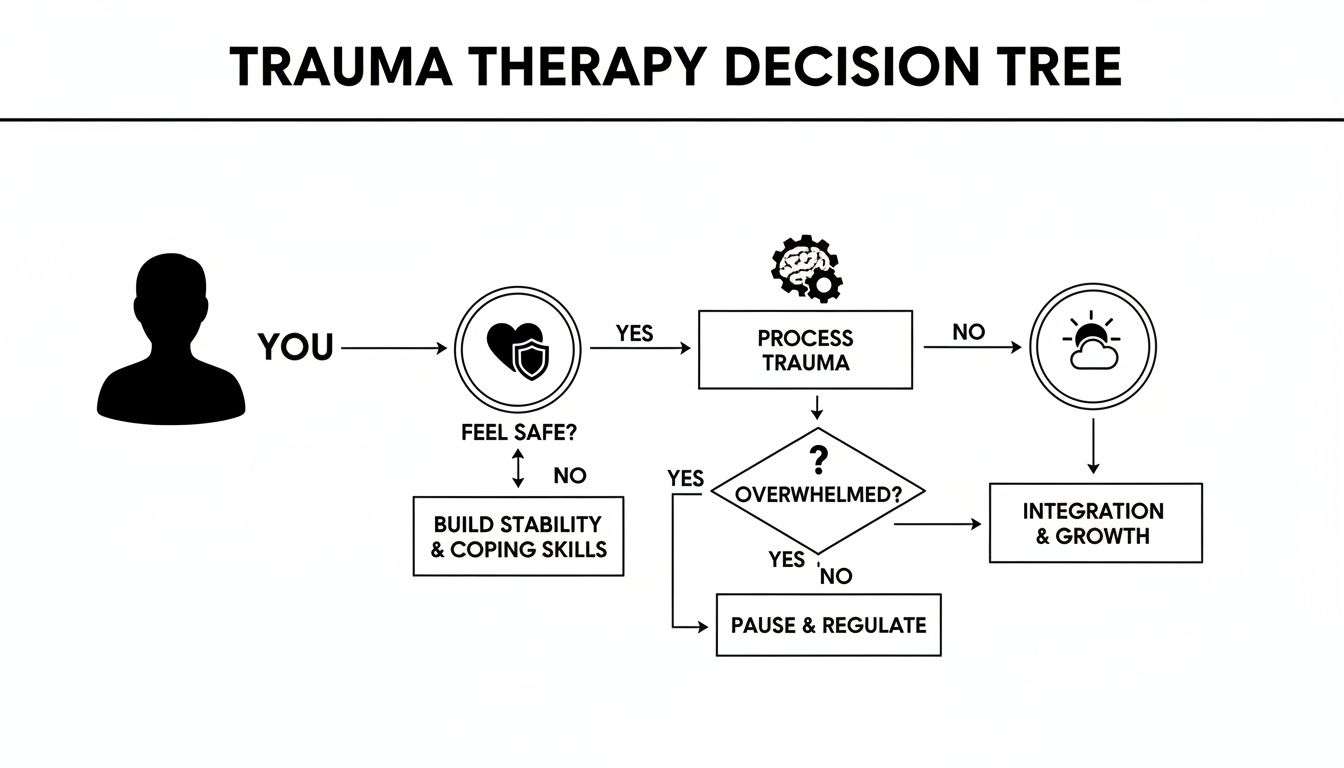
As the flowchart shows, the journey always begins with you and is centred on feeling safe. That feeling of safety is the non-negotiable first step before anything else can happen.
Questions to Ask a Potential Therapist
An initial consultation is a two-way street. It's your chance to interview a potential therapist just as much as it is for them to learn about you. You have every right to ask questions to see if they're a good fit—remember, there are no "wrong" questions when it comes to your well-being.
Here are a few gentle but empowering questions you can ask to get a better sense of their approach:
About Their Trauma Training: "Can you tell me a bit about your specific training or experience in trauma-informed care?" This helps you understand their qualifications beyond a general counselling degree.
On Creating Safety: "How do you help clients feel safe and comfortable in your sessions?" Their answer will reveal a lot about their philosophy on creating a secure therapeutic space.
Regarding Collaboration: "What does collaboration look like in your practice? How do you involve clients in their own healing process?" This question helps you see if they view you as an active partner in your own care.
On Pacing: "How do you approach the pace of therapy, especially when we might be dealing with difficult topics?" This shows their commitment to never pushing you beyond what feels manageable.
The answers to these questions are important, but so is how you feel during the conversation. Do you feel heard and respected? Does their communication style put you at ease? Trust your gut instinct.
Understanding Credentials and Connection
In Canada, and specifically here in British Columbia, you’ll often see credentials like Registered Clinical Counsellor (RCC). This designation means the therapist has met rigorous educational and ethical standards set by a professional governing body, ensuring they are qualified and accountable. You can learn more about the different types of licensed therapists and what they mean for your needs in our detailed guide.
But while credentials are a crucial sign of professional competence, the connection you feel with the therapist is just as vital.
That relationship—often called the therapeutic alliance—is one of the strongest predictors of successful outcomes in therapy. It’s that sense of trust, rapport, and mutual respect that allows you to be vulnerable and do the deep, meaningful work of healing. You deserve to work with someone who makes you feel genuinely seen, understood, and supported.
Trusting Your Intuition
As you search for the right person, remember that this is your journey. It's perfectly okay to speak with more than one therapist before you land on someone who feels like the right guide for you.
The goal isn't just to find a professional with the right skills and training. It's to find a space where you can finally feel secure enough to begin. Taking the time to find this fit is a powerful act of self-care, setting the stage for a healing process built on a solid foundation of safety, trust, and genuine human connection. You are absolutely worthy of that support.
What to Expect as Your Therapy Unfolds
Healing from trauma is a deeply personal journey, not a race with a finish line. Stepping into therapy can feel uncertain, so let's pull back the curtain and give you a gentle, realistic picture of what your path might look like over time.
Think of it like tending to a garden. Some seasons are for carefully preparing the soil, others for gently addressing the weeds, and some are simply for enjoying the new growth.

This process rarely follows a straight line. Your trauma-informed therapist is there to walk alongside you, equipping you with the right tools to navigate whatever comes up. Progress isn’t measured by forgetting what happened, but by feeling a greater sense of peace, control, and connection in your life today.
The Foundational First Stage: Building Safety and Trust
Your initial sessions are all about creating a safe and stable foundation. Before any deep work can even begin, your therapist’s number one priority is building a trusting relationship with you. This is the "preparing the soil" phase in our garden analogy.
During this time, your therapist will:
Move at your pace, never pushing you to share more than feels right.
Explain the therapy process clearly, so you always know what to expect.
Teach you practical grounding techniques to help manage difficult emotions when they surface.
Listen with genuine empathy and without judgment, validating your experiences.
This stage is absolutely crucial because it helps your nervous system learn that therapy is a safe place. It’s here that you build the resources and trust you’ll need for the deeper work ahead.
The Middle Stage: Processing and Skill-Building
Once you feel secure and have a strong relationship with your therapist, you may move into a phase of gently processing your experiences. This is where you might begin to "address the weeds," but only when you feel ready and equipped to do so. A trauma-informed therapist will ensure this is done carefully to avoid feeling overwhelmed.
This stage often involves:
Learning new coping skills to manage triggers and emotional responses.
Exploring thought patterns that might be linked to past events.
Connecting with your emotions in a safe, contained way.
Gently processing memories, if and when you choose to, using techniques that put your well-being first.
Remember, the goal is not to relive trauma but to reduce its power over your present life. Your therapist will guide you in integrating these experiences so they no longer feel like open wounds. This phase is about building resilience and reclaiming your sense of self.
This work is so important, as the impact of trauma is more widespread than many realize. One Canadian study found that 76.1% of adults have been exposed to at least one event capable of triggering PTSD. This shows that your experience is not unusual and that effective, evidence-based care from trauma-informed therapists is vital. Discover more insights from this Canadian mental health study.
The Final Stage: Integration and Moving Forward
The later stages of therapy are focused on integration—this is where you get to "enjoy the new growth." It's all about taking the insights, skills, and healing you've cultivated in your sessions and weaving them into the fabric of your daily life.
This might look like feeling more confident in your relationships, picking up old hobbies with renewed interest, or simply feeling more at peace within yourself. The goal is to solidify your progress so you can carry it forward long after therapy ends.
It's about moving from surviving to truly thriving, equipped with a deeper understanding of yourself and the tools to navigate life's future challenges with strength and resilience.
Common Questions About Trauma-Informed Therapy
It’s completely normal to have questions when you're thinking about starting therapy. Taking this step is a huge act of self-care, and feeling prepared can make the whole process feel much more approachable.
We’ve put together some clear, compassionate answers to the questions we hear most often. We hope this brings a bit of clarity and helps you feel more confident as you consider your path forward. Remember, when it comes to your well-being, there are no silly questions.
Will I have to relive my trauma in detail?
This is often the biggest fear people have, and the answer is a firm no—especially not before you feel completely ready. A core promise of trauma-informed therapy is your emotional and psychological safety. You are always in the driver's seat.
Many powerful and effective techniques focus on managing the symptoms of trauma—like anxiety, flashbacks, or relationship struggles—without needing a play-by-play of the events themselves. The first priority is always to build your coping skills and sense of stability.
How is this different from regular talk therapy?
While it almost always involves talking, trauma-informed therapy is built on a deep understanding of how traumatic experiences impact the brain, body, and nervous system. It’s not just about the conversation; it’s about creating an environment that feels fundamentally safe.
A trauma-informed therapist knows that healing can't happen when you feel unsafe. They use their specialized knowledge to make sure the process itself is healing and actively avoids anything that could feel overwhelming or re-traumatizing.
Think of it this way: traditional talk therapy might focus on the story, while trauma-informed therapy focuses on how that story is still living in your body and nervous system today. The work is about actively building resilience, regulating your nervous system, and restoring your sense of empowerment.
How long does trauma therapy usually take?
There is no universal timeline for healing, because your journey is entirely your own. A trauma-informed therapist focuses on your unique needs and goals rather than sticking to a rigid schedule or a fixed number of sessions.
It’s less like a treatment with a set end date and more like a supportive partnership. Progress isn’t measured by the calendar but by your growing sense of well-being, control, and your ability to engage more fully and joyfully with your life. You and your therapist will check in on your goals together, every step of the way.
Can trauma-informed care help my relationship or family?
Absolutely. Trauma doesn't just affect one person; its ripples can be felt throughout relationships and entire family systems. It can show up as communication breakdowns, difficulty with trust, or cycles of conflict that are hard to understand.
Trauma-informed couples or family therapy creates a safe container for everyone to learn how past events might be influencing present-day connections. It helps build mutual compassion and gives everyone a shared language for understanding one another's experiences. This process can strengthen bonds, improve communication, and foster collective healing for the whole family.
Your Path Forward
Deciding to start this journey is a profound act of compassion for yourself. Remember, healing isn't a race; it's a process that unfolds one step at a time, and you are always the one setting the pace.
When you choose a trauma-informed approach, you're choosing a path that respects your story and puts your safety, your voice, and your well-being first. This kind of care isn't about trying to erase what happened. Instead, it’s about building resilience, learning to manage the lingering effects, and moving toward a future with a renewed sense of peace. It's a true partnership, where your own strengths become the foundation for healing.
We hope this guide has brought some clarity and reassurance as you think about what’s next. Taking the time to find the right support from skilled trauma informed therapists is one of the most worthwhile investments you can make in your future. The very fact that you’re exploring this path toward a calmer, more connected life is a testament to your strength.
Finding a therapeutic relationship built on trust and genuine understanding can make all the difference. You are absolutely worthy of support that feels right for you. If you feel ready to see what your options look like, learning more about professional counselling can be a gentle next step. This journey is yours, and you don’t have to walk it alone.
Clinically Reviewed By
Amy Mosset, MCP, RCC-S
Amy Mosset is a Master Practitioner in Clinical Counselling, Clinical Supervisor, and the owner of Interactive Counselling. She provides trauma-informed, evidence-based care and clinical supervision to registered therapists, with a focus on ethical practice, client safety, and high-quality therapeutic outcomes.