Taking the first step to seek support is a profound act of self-care and courage. If you’re looking for a therapist in Kelowna, it’s completely normal to feel a bit overwhelmed by the options. This guide is here to walk you through the process with warmth and clarity, step by step. You don’t have to figure this out alone. For more information, see our Kelowna counselling.
"To find therapy in Kelowna, you should know how to identify your needs, understand the different types of therapy available, and feel empowered to find a therapist and session format that feels right for you."
Your Guide to Starting Therapy in Kelowna
Making the decision to look for a therapist is a powerful one. It’s a clear sign you’re ready to invest in your own well-being and find new ways to navigate life's challenges. Whether you're feeling stuck, overwhelmed, or simply curious about how counselling can help, our goal is to provide clear, straightforward answers to support you on your journey.
Why Seeking Support in Kelowna Matters
Life in the beautiful Okanagan isn’t always as serene as the landscape, and it’s completely normal to need support. If you’ve been feeling the strain of modern life, you are certainly not alone. The need for accessible mental health care in our community is real and deeply felt by many.
This guide is designed to cut through the noise and give you a clear map. We’ll cover:
- What different therapy styles are in simple, understandable terms.
- How to figure out which therapist might be the right fit for you.
- The practical details of getting started with counselling.
Think of therapy not as a last resort, but as a proactive tool for building a more resilient and fulfilling life. It’s a confidential, non-judgmental space where you can feel heard and understood while receiving guidance from a trained professional. As you read on, our intention is to help you feel confident and informed. Exploring your options for Kelowna counselling is a genuinely positive and hopeful step forward.
Understanding Different Types of Therapy and Who They Help
When you start looking for a therapist in Kelowna, you'll quickly encounter a lot of new terminology. Phrases like “trauma-informed care,” “evidence-based practice,” and a variety of acronyms can feel intimidating, almost like learning a new language.
The good news? You don’t need to be an expert. Think of it like this: you wouldn't use a hammer to turn a screw. Different therapeutic approaches are simply different tools designed for specific purposes—some are excellent for managing anxiety, others are designed to help with relationship conflicts, and some are geared toward broader personal growth and self-discovery.
How Therapy Is Tailored for You
One of the most important things to understand about counselling is that it’s never one-size-fits-all. A great therapist knows that what works for one person might not be the right fit for another, even if their struggles seem similar on the surface. They are trained in a variety of methods so they can adapt their approach to your unique personality, background, and what you hope to achieve.
Then there’s trauma-informed care, which isn't a single technique but a core philosophy. It means your counsellor understands the deep and varied impact trauma can have and is committed to creating an environment that feels fundamentally safe, respectful, and empowering.
If you're wondering whether therapy is the right next step for you, this simple flowchart can help bring some clarity.
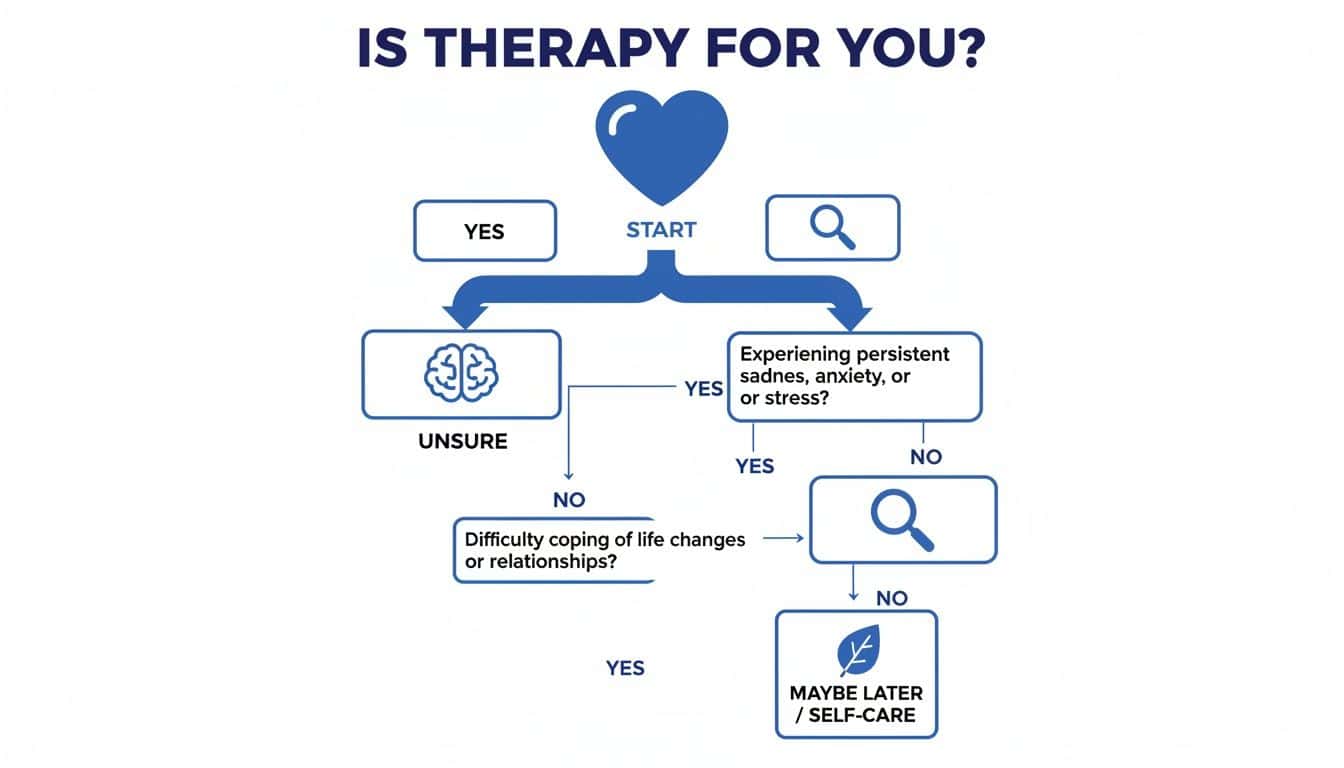
Sometimes, just seeing these questions laid out visually can make the decision-making process feel a little less daunting and give you a better sense of your own needs at this moment.
Finding the Right Therapeutic Support for Your Needs
To make things even clearer, here’s a quick breakdown of how different types of therapy can help with common life challenges.
| If You Are Experiencing… | You Might Benefit From… | What It Focuses On |
|---|---|---|
| Personal struggles with anxiety, depression, stress, or self-esteem. | Individual Therapy | One-on-one sessions to explore your thoughts and feelings, build self-awareness, and develop healthy coping strategies. |
| Communication breakdowns, recurring arguments, or a feeling of disconnect with your partner. | Couples Counselling | Improving communication, resolving conflicts, and strengthening the relational bond with the guidance of a neutral third party. |
| Conflict between family members, parenting challenges, or navigating a major life event together (like grief or illness). | Family Counselling | Improving the dynamics of the entire family unit, fostering healthier communication patterns, and working through issues collectively. |
This table is just a starting point, of course. Many people find that their needs evolve and that a combination of approaches may be helpful over time.
Individual, Couples, and Family Counselling
Therapy isn't just a solo journey. It can be an incredibly powerful tool for couples and families looking to communicate better, navigate conflict, or heal from shared difficulties.
Individual Therapy: This is your space. It's a confidential, one-on-one setting where the focus is entirely on you—your thoughts, your feelings, and your goals. It’s perfect for working through personal issues like anxiety, depression, grief, or figuring out your next steps during a big life change.
Couples Counselling: Here, the "client" is the relationship itself. A therapist acts as a neutral facilitator, helping you and your partner understand each other’s perspectives, learn to communicate more effectively, and find constructive ways forward together. It can be helpful at any stage of a relationship, not just during a crisis.
Family Counselling: This approach brings multiple family members into the room to work together. The goal is to improve how the family functions as a system, addressing conflicts and building healthier, more supportive ways of interacting with one another.
There’s a lot more to explore when it comes to evidence-informed therapy tailored to real-life needs, where you can dive deeper into these different methods.
The goal of any therapy is to provide you with a safe, supportive space to gain clarity and develop practical tools. The right approach is simply the one that resonates with you and helps you move toward your goals.
Ultimately, the best type of therapy is the one you feel comfortable with. It all comes down to the connection you build with your counsellor and the sense that you are truly being heard, respected, and understood. A good therapist will work with you to find a path that feels right.
Specialized Support for Children, Youth, and Families
Families are wonderfully complex systems. They're our first team, our home base. But like any team, sometimes the dynamics get tangled, communication breaks down, or the pressures of life become overwhelming.
Deciding to seek therapy for your child, teen, or the whole family isn't an admission of failure—quite the opposite. It’s a powerful, loving step toward building a healthier, more connected home environment. It's an investment in the well-being of the people you care about most.

So, what does family or youth counselling actually look like? The primary goal is to create a safe space where every person feels heard and understood, all guided by a professional who appreciates the intricacies of family dynamics. It’s about helping you work through those tough spots, navigate big life changes, and give everyone better tools to relate to one another with empathy and respect.
Counselling for Children and Youth
The mental health challenges facing young people in Kelowna and across Canada are significant and deserve our attention. National data from sources like the Canadian Mental Health Association consistently shows that young people are among the most vulnerable to experiencing mental health struggles. This isn't just a statistic; it represents the real, daily difficulties our kids are navigating.
Seeking therapy for a child or teen provides them with their own confidential ally—a neutral, trusted adult who can help them make sense of big feelings and complex situations without judgment.
Good therapy for young people isn't just a smaller version of adult therapy; it's tailored to their developmental stage. A skilled youth counsellor will use different, age-appropriate approaches to help them open up and learn new skills.
- For Children (Ages 5+): Therapy often looks a lot like play. Using art, stories, and games helps younger kids express feelings they might not have the words for yet. It's a natural and effective way to teach them about managing anxiety, handling big emotions, and navigating challenges at school or home.
- For Youth and Teens: For teenagers, counselling offers a private space to unpack everything from peer pressure and academic stress to questions about identity and self-worth. A therapist can help them build resilience and find healthier ways to cope as they navigate the often-rocky road to adulthood.
Support for Parents and the Whole Family
Let's be honest: parenting is one of the most challenging and rewarding roles in the world, and it definitely doesn't come with an instruction manual. Family counselling isn't about finding someone to blame. It’s about getting the whole family to work together as a team again.
This kind of support can be a game-changer for:
- Improving Family Communication: Learning to truly listen and speak to one another without conversations escalating into arguments.
- Navigating Life Transitions: Adjusting to big changes like a move, blending families, separation, or divorce in a supportive way.
- Co-Parenting and Step-Parenting: Finding common ground and creating effective, collaborative strategies that put the children’s well-being first.
Think of a family therapist as a coach. They have an outside perspective and can see the team’s dynamics in a new light, offering a fresh playbook to help your family function more smoothly and strengthen your bonds.
If you’d like to see what this looks like in practice, you can find more information about Kelowna youth counselling and the kinds of support available. Taking this step is one of the most powerful ways to show your family that their well-being is your top priority.
Making Therapy Fit Your Life: The Practical Stuff

Okay, so you’ve decided to look into therapy. That’s a huge step. But now come the practical questions: How will I find the time? What if I can’t make it to an office? What about costs or coverage? It's easy to get bogged down by the logistics before you even begin.
Let's break that down. When you're already juggling a lot, the last thing you need is for scheduling to be another source of stress. The good news is that modern therapy has become incredibly flexible, with options designed to fit into real life in Kelowna. If you have extended health benefits, it can be helpful to get a basic handle on how health insurance works. A little knowledge here can go a long way in understanding your coverage for counselling services.
Finding a Session Format That Works for You
One of the best developments in mental health care is the move away from a one-size-fits-all model. You are no longer tied to a traditional, in-office appointment if that doesn't work for you. This makes it so much easier to find a way to connect that fits your schedule, comfort level, and unique needs.
The goal is to find a format that makes you feel safe and comfortable, and that slots into your life with the least amount of friction. Whether you choose to meet in person, over video, or on the phone, the quality of care and the therapeutic connection remain the priority.
Let's look at the pros and cons of each to help you figure out what feels right for you.
Choosing Your Therapy Session Format
This table compares the different ways you can attend therapy, helping you decide which format best suits your lifestyle, comfort level, and personal needs.
| Session Format | Best For… | Key Considerations |
|---|---|---|
| In-Person Sessions | Those who feel most comfortable with a classic, face-to-face connection and appreciate having a dedicated space away from home or work for their sessions. | You’ll need to factor in travel time and transportation. For some, getting out of their usual environment is a key part of the process, helping them focus completely on the session. |
| Virtual (Video) Sessions | Anyone with a packed schedule, mobility challenges, or people who simply prefer the comfort and privacy of their own home. It’s also great for those living in more remote parts of the Okanagan. | A stable internet connection and a quiet, private space are essential. It offers incredible flexibility and accessibility from virtually anywhere. |
| Phone Sessions | People who feel a bit self-conscious on camera, have unreliable internet, or need to fit a session into a tight window, like a lunch break from the car. | Without visual cues, some find it less intimidating and easier to open up. This format offers maximum convenience and can feel very private. |
After you've thought about how you'd like to meet, it's also worth considering the other practical realities of scheduling.
ICBC-Funded Counselling and Flexible Hours
Life rarely sticks to a simple 9-to-5 schedule, and unexpected events like a car accident can throw everything off course. It’s important to know that support is available for these specific situations.
ICBC-Funded Counselling: If you’ve been in a motor vehicle accident in B.C. and have an active ICBC claim, you are often pre-approved for counselling sessions. This is designed to help you recover from the psychological impact and stress of the accident. Many clinics can bill ICBC directly, simplifying the process for you.
Flexible Scheduling: A full life requires flexibility. Juggling work, family, and other commitments is demanding. That's why many practices now offer daytime, evening, and weekend appointments. This kind of adaptability is what makes therapy a sustainable and supportive part of your routine, rather than another stressor.
Understanding these options is a big step toward making therapy feel truly accessible. If you’re curious about how to get started, you can learn more about the process for scheduling therapy sessions. The right support should fit into your world, not complicate it.
How to Prepare for Your First Therapy Appointment
That feeling you get before a first therapy appointment is a real mix of emotions—a little bit of hope, some curiosity, and almost always, a healthy dose of nerves. That’s completely normal. Taking the first step to open up to someone new is a brave thing to do, so it's perfectly okay to feel a bit uncertain about it all.
Try to think of this first session less like a test and more like a simple, introductory conversation. It's a chance for you and your potential counsellor to meet and see if you feel a connection. Their main role at the beginning is to create a safe, welcoming space where you can feel comfortable just being yourself.
What to Expect During the Intake Session
Your first meeting is usually called an intake session. It’s really just a guided conversation where your counsellor can get a sense of who you are, what brought you to therapy, and what you’re hoping to achieve. You are always in control—you decide what you want to share and how much detail feels right for you.
Your counsellor will gently guide the chat, likely with some open-ended questions. They’ll be curious about things like:
- What’s on your mind? What challenges or feelings led you to seek support right now?
- A bit about your story: This might touch on your background, relationships, or significant life events, but only what you’re comfortable sharing.
- Your hopes for counselling: What would you like to see change? If therapy is successful, what would that look and feel like for you?
- Any past therapy experiences: What has helped before? What didn't quite work?
Don't forget, this is a two-way street. It’s just as much your opportunity to get a feel for them as it is for them to learn about you.
Gentle Tips for Preparing Yourself
You really don't need to do extensive preparation, but a little self-reflection can help you feel more grounded and make the most of that first hour. Here are a few gentle ideas.
Think About Your "Why": Take a quiet moment to consider what prompted you to search for therapy in Kelowna. Is it a persistent feeling, like anxiety or a low mood? A difficult situation at work or home? You don’t need a perfect answer, just a starting point.
Jot Down Notes (If It Helps): If you're worried you might get nervous and forget what you wanted to say, feel free to bring in a few notes. It could be a list of feelings, key events you want to mention, or even just questions you have for the counsellor.
Give Yourself Permission to Be Nervous: It’s okay to be anxious! Acknowledge the feeling without judging it. It just means you’re stepping outside your comfort zone, and that's often where growth begins. Your counsellor will absolutely understand and expect this.
Manage Expectations: Real, meaningful change takes time. The first session is about building a foundation of trust and understanding. You won’t solve everything in one session, and that is perfectly okay.
The most important thing you can bring to your first appointment is yourself—just as you are. There's no need to pretend you're doing better than you are or to have all the answers. Honesty, even about your uncertainty, is the best place to start.
If you’re opting for a virtual appointment, a little extra prep can make a big difference in how smoothly it runs. For some helpful tips on this, you might want to read our guide on how to prepare for online therapy in Canada. It’s all about creating a private, focused space for yourself.
In the end, the goal is simple: just show up with an open mind. Your therapist will guide you from there.
Your Next Steps on the Path to Wellness
If you’ve made it this far, please take a moment to acknowledge that. It takes real courage to explore the idea of therapy, and by simply reading this guide, you’ve taken a significant and meaningful step toward prioritizing your well-being.
Deciding to look for a counsellor in Kelowna is a powerful statement. It's you telling yourself that a more peaceful, connected, and fulfilling life isn't just a dream—it's something you deserve and are ready to move toward. You are right.
What to Remember as You Move Forward
We’ve covered a lot of ground, from understanding different approaches to the practicalities of scheduling. If you only take away a few things, let them be these:
- There’s no one-size-fits-all solution. Your life is unique, and your therapy should be too. From individual sessions and couples counselling to in-person meetings or virtual calls, support can be shaped to fit your actual circumstances.
- You don’t need to have it all figured out. Many people worry they need to have their problems perfectly defined before they start. The truth is, your only job is to show up. A good therapist will help you find clarity.
- This is a partnership. Therapy isn't something that's done to you. It’s a collaborative process where you and a trained professional work together, at your pace, to build resilience and find your way forward.
Reaching out isn’t a sign of weakness—it’s a profound act of strength. It’s an investment in yourself, your relationships, and the future you want to create.
No matter where you are on your journey, please know that meaningful change is always possible. We hope this guide has helped demystify the process, ease any anxieties, and leave you feeling hopeful about what’s next. Your path is your own, and professional support is here for you whenever you feel ready to learn more.
Frequently Asked Questions About Starting Therapy
It's natural to have questions when you’re thinking about starting therapy. Taking that first step is a big decision, and you deserve clear, reassuring answers. Here are a few of the most common questions we hear, answered with warmth and honesty.
How do I know if therapy is right for me?
This is a very common and important question. The simplest answer is this: if you're asking the question, it's probably worth exploring. A frequent misconception is that therapy is only for a crisis. In truth, it’s a powerful tool for anyone who wants to understand themselves better, manage their emotions more effectively, or navigate life's ups and downs with greater confidence and skill. Therapy might be a good fit if you're feeling overwhelmed or stuck, going through a major life transition, dealing with persistent feelings of sadness or anxiety, or simply wanting to improve your relationships. There’s no "right" or "wrong" reason—curiosity about yourself is more than enough.
Is everything I say in therapy confidential?
Yes, absolutely. Confidentiality is the cornerstone of a trusting therapeutic relationship. Everything you discuss with your registered counsellor is kept strictly private as a matter of professional ethics and legal requirement. Therapists work diligently to create a space where you can feel safe enough to be completely open without fear of judgment or your privacy being compromised. There are a few rare and specific exceptions, which are required by law to protect safety. Your counsellor will review these with you in your very first session so you have a clear understanding from the start.
What if I don’t “click” with my first therapist?
This is such an important question because the connection you have with your counsellor—often called the therapeutic alliance—is one of the most significant factors in whether therapy feels helpful. It is perfectly okay if the first person you meet doesn’t feel like the right fit for you. Therapy is deeply personal, and feeling comfortable, safe, and truly understood is non-negotiable. Think of it like finding a good friend or mentor; sometimes you have to meet a few people before you find the one that feels right. A professional and ethical practice will always understand and support you in finding a different counsellor. The goal is to help you find the support that works best for you.
We hope this guide has helped you on your journey. When you are ready to take the next step, we invite you to learn more about how Interactive Counselling can support you.
Clinically Reviewed By
Amy Mosset, MCP, RCC-S
Amy Mosset is a Master Practitioner in Clinical Counselling, Clinical Supervisor, and the owner of Interactive Counselling. She provides trauma-informed, evidence-based care and clinical supervision to registered therapists, with a focus on ethical practice, client safety, and high-quality therapeutic outcomes.