When a panic attack hits, it can feel like your entire world is collapsing in on itself. It’s an incredibly intense and isolating storm, but you are not alone in this, and you can learn to navigate it. It often comes out of nowhere—a sudden, overwhelming wave of fear that brings with it a racing heart, the terrifying feeling that you can't breathe, and a dizzying sense that you're completely losing control. This isn't just 'being stressed'; it's your body's survival system kicking into overdrive at the wrong time. For more information, see our anxiety counselling.
"To manage a panic attack, you must first understand it is your body's temporary false alarm; you can navigate through it using grounding techniques to anchor yourself in the present, gentle thoughts to reassure your mind, and supportive strategies to build long-term resilience."
Understanding What a Panic Attack Really Feels Like
A panic attack is so much more than a moment of high anxiety; it's an all-consuming physical and psychological event. It feels like your body's "fight-or-flight" switch has been flipped, but there’s no visible threat in sight. Imagine your internal alarm system, the one designed to protect you from actual danger, suddenly starts blaring for no reason at all. This sudden rush of intense fear brings on severe physical reactions, even when you're perfectly safe. The experience can be so frightening that it makes you feel like you're losing control, having a heart attack, or even dying.
The Physical and Emotional Onslaught
During an attack, your body is flooded with adrenaline. This biological surge is what causes the very real and terrifying symptoms people experience. Recognizing these symptoms is the first step toward understanding whats happening and knowing that you aren't in physical danger.
Common physical symptoms include:
- A rapid, pounding heartbeat or palpitations that can feel incredibly alarming.
- Shortness of breath or a sensation of being smothered or choked.
- Chest pain or discomfort, which is often mistaken for a heart attack.
- Sweating, trembling, or shaking uncontrollably.
- Dizziness, light-headedness, or feeling faint.
- Numbness or tingling sensations (paresthesia), often in your hands or feet.
Emotionally, the experience is just as powerful. You might feel a sudden, intense fear of dying or losing control. This can be paired with a sense of detachment from yourself or your surroundings, almost like you're watching a movie of your own life.
You Are Not Alone in This Experience
If this sounds familiar, it's so important to know how common it truly is. These experiences are particularly prevalent among younger Canadians. In British Columbia, for instance, the rate of diagnosed mood and anxiety disorders among youth and young adults climbed significantly from 12.4% in 2015 to 20.3% in 2021. This highlights a growing need for accessible, effective strategies to manage panic attacks and related anxiety. This guide is here to give you those strategies, helping you move from a place of fear to one of empowerment and control.
Grounding Techniques for In-The-Moment Relief
When a panic attack hits, it can feel like your mind is caught in a high-speed storm. The single most powerful thing you can do in that moment is to pull your focus out of that internal chaos and anchor it to the solid, real world around you. This is what grounding is all about, and it's a skill you can learn and rely on. These are practical, in-the-moment tools designed to short-circuit the panic cycle by giving your brain something concrete to focus on besides the spiralling fear. Think of them as a lifeline, pulling you back to the present moment where you are genuinely safe.
This simple flowchart shows how a panic attack often plays out—it starts with a warning, kicks your body into overdrive, and then—this is the most important part—it ends.
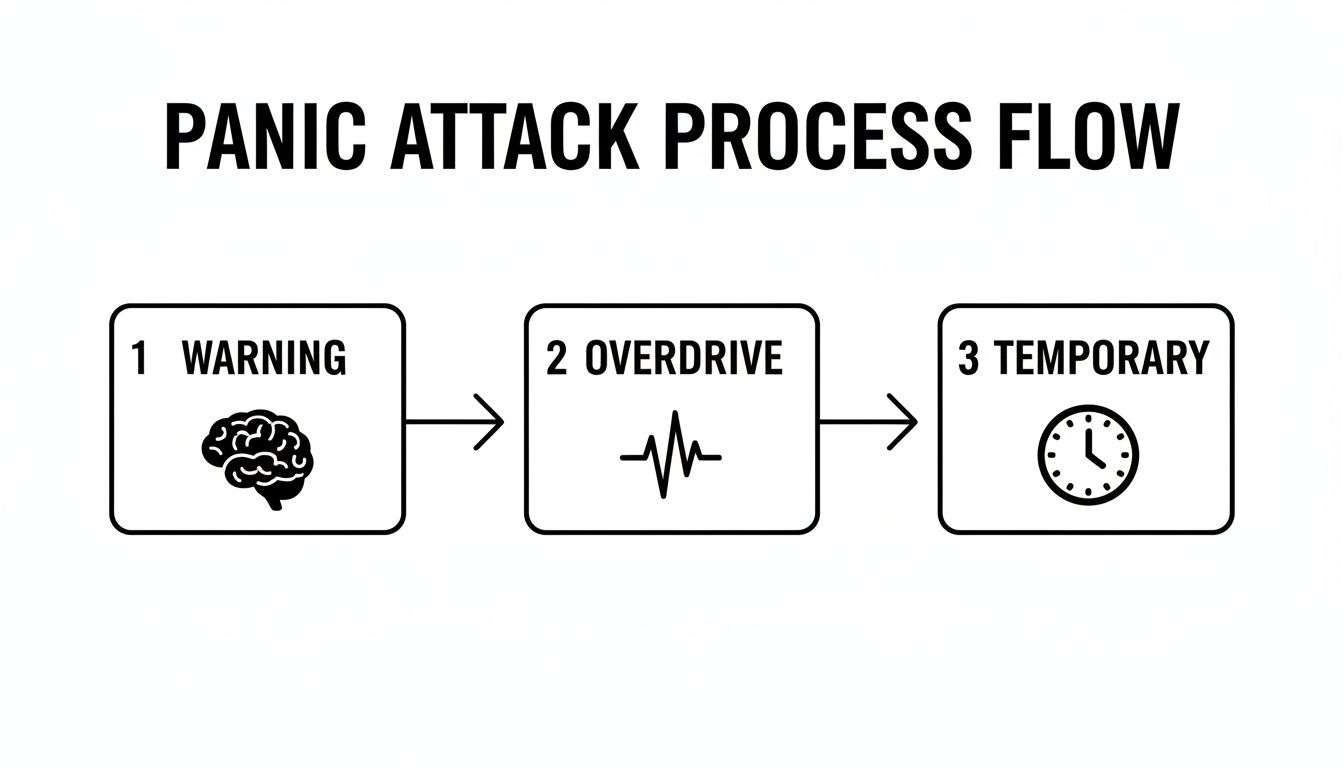
This visual is a crucial reminder that while the experience is incredibly intense, it's a temporary process. It has a beginning, a middle, and an end.
Use Your Senses to Anchor Yourself
One of the quickest and most effective grounding methods is the 5-4-3-2-1 technique. It works by forcing you to shift your attention to your five senses, pulling your brain out of catastrophic thinking and into your immediate, physical surroundings. You can do it anywhere, anytime.
When you feel that wave of panic rising, pause and:
- Acknowledge 5 things you can see. Look around and mentally name five objects. Really see them. "I see the blue pen on my desk, the green leaves on that plant, and the crack in the ceiling."
- Acknowledge 4 things you can feel. Tune into the physical sensation of touch. Notice "the soft fabric of my sweater, the smooth table under my fingertips, and the solid pressure of my feet on the floor."
- Acknowledge 3 things you can hear. Listen for sounds you might normally ignore. Maybe you can hear "the low hum of the refrigerator, a distant car, and the sound of my own breathing."
- Acknowledge 2 things you can smell. This one can take more focus. Can you smell the faint scent of coffee? The soap on your hands? Even a faint smell counts.
- Acknowledge 1 thing you can taste. What do you taste right now? It could be the lingering flavour of your tea, or just the neutral taste of your own tongue.
By the time you get to one, you'll likely notice your breathing has started to slow, and the intensity of the panic has dialled back. You’ve successfully steered your brain away from the fearful thoughts and back to reality.
Grounding Techniques for Immediate Relief
| Technique | How It Works | When to Use It |
|---|---|---|
| Temperature Change | Holding ice cubes or splashing cold water on your face creates a strong physical sensation that "shocks" your nervous system out of the panic loop. | When you feel dizzy or detached and need a quick, sharp anchor to the present. |
| Object Focus | Pick up a nearby object (keys, a stone, your phone) and focus intently on it. Notice its weight, texture, colour, and temperature. | Great for discreetly grounding yourself in public, like on a bus or in a meeting. |
| Body Scan | Slowly bring your attention to each part of your body, from your toes to your head. Wiggle your toes, feel them in your shoes. Clench and release your fists. | Useful when you're lying down or sitting, especially if you feel disconnected from your body. |
Remember, the goal of these techniques isn't to make the panic disappear instantly, but to stop it from escalating. They give you a sense of control when you feel like you have none.
Regulate Your Breathing to Calm Your Nervous System
During a panic attack, it's common to breathe very quickly and shallowly (hyperventilate). This throws off the oxygen and carbon dioxide balance in your blood, leading to dizziness and tingling—which just adds more fuel to the fire. Intentionally slowing your breath is one of the fastest ways to send a powerful "all-clear" signal to your nervous system. The 4-7-8 breathing method is a simple but incredibly effective way to do this.
- Breathe out completely through your mouth with a whoosh sound.
- Close your mouth and inhale quietly through your nose for a mental count of four.
- Hold your breath for a count of seven.
- Exhale completely through your mouth, making that whoosh sound again, for a count of eight.
Repeat this cycle three or four times. The long exhale is the key—it activates your parasympathetic nervous system, your body's built-in relaxation response. You can learn more about how this works by exploring the nervous system's role in trauma responses. These techniques are skills. Try them out when you're feeling calm so they become second nature. Having a reliable set of actions to turn to can change your relationship with panic, replacing dread with preparedness and control.
How to Reframe Your Thoughts During Panic
A panic attack isn't just a physical storm; it's a mental one, too. The intense physical sensations are often fueled by a terrifying inner monologue filled with catastrophic thoughts. Learning how to gently interrupt and reframe this narrative is a cornerstone of managing panic effectively, giving you a powerful sense of control when you feel you have none.
This approach is rooted in Cognitive Behavioural Therapy (CBT), but you don’t need to be a therapy expert to use it. At its heart, it’s about recognizing a crucial truth: thoughts are not facts. Just because you think, "I'm losing control," doesn't make it true. It’s a thought generated by fear, and you can learn to respond to it with reason and compassion. This isn’t about forcing yourself to "think positive." It's about introducing a calmer, more realistic voice into the conversation happening in your head—one that acknowledges the fear without letting it hijack the situation.
Identify the Panicked Thoughts
The first step is simply to notice the specific thoughts that show up when panic begins. These are often automatic and feel completely, undeniably real in the moment. They tend to fall into a few common themes.
Do any of these sound familiar?
- Thoughts of losing control: "I'm going to go crazy," "I'm going to embarrass myself," or "I can't handle this."
- Thoughts of physical catastrophe: "I'm having a heart attack," "I'm going to stop breathing," or "I'm going to faint."
- Thoughts of being trapped: "I need to get out of here right now," or "There's no escape from this feeling."
Just noticing these thoughts without judgment is a huge step. By identifying them, you create a small but vital space between you and the thought itself. You can start to see them as symptoms of panic—just like a racing heart—rather than as objective truths. Learning to track these patterns can be incredibly insightful, and using a cognitive therapy thought record can help with this process.
Gently Challenge and Reframe
Once you can spot a panicked thought, you can begin to gently question it. The goal is to introduce a more balanced, reality-based perspective. You're not arguing with yourself; you're simply reminding your brain of what you know to be true when you're not in a state of high alert.
This is a dialogue of reassurance. You are offering your frightened mind a more compassionate and realistic alternative, acknowledging the feeling while challenging the catastrophic conclusion.
For example, if the thought is "I can't breathe," you can challenge it with a counter-statement like:
- "My throat feels tight, but I know I am getting enough air. This feeling is a classic symptom of panic and it will pass."
If the thought is "I'm losing control," try reframing it with:
- "This feeling is overwhelming, but it is not dangerous. I have felt this before and I have always gotten through it. This time is no different."
This process is about shifting from certainty ("This is happening") to possibility ("This feels like it's happening, but…"). It weakens the thought's power over you.
Develop Your Own Anchoring Statements
While the examples above are helpful, the most powerful reframes are the ones that resonate personally with you. Think of these as personal mantras or anchoring statements you can prepare ahead of time. When you’re feeling calm, take a moment to write down a few phrases that feel true and comforting.
Here are some ideas to get you started:
- "This feeling is just a surge of adrenaline. It's uncomfortable, but not harmful."
- "My body is having a strong reaction, but I am safe right here, right now."
- "This will pass. It always does. I just need to ride it out."
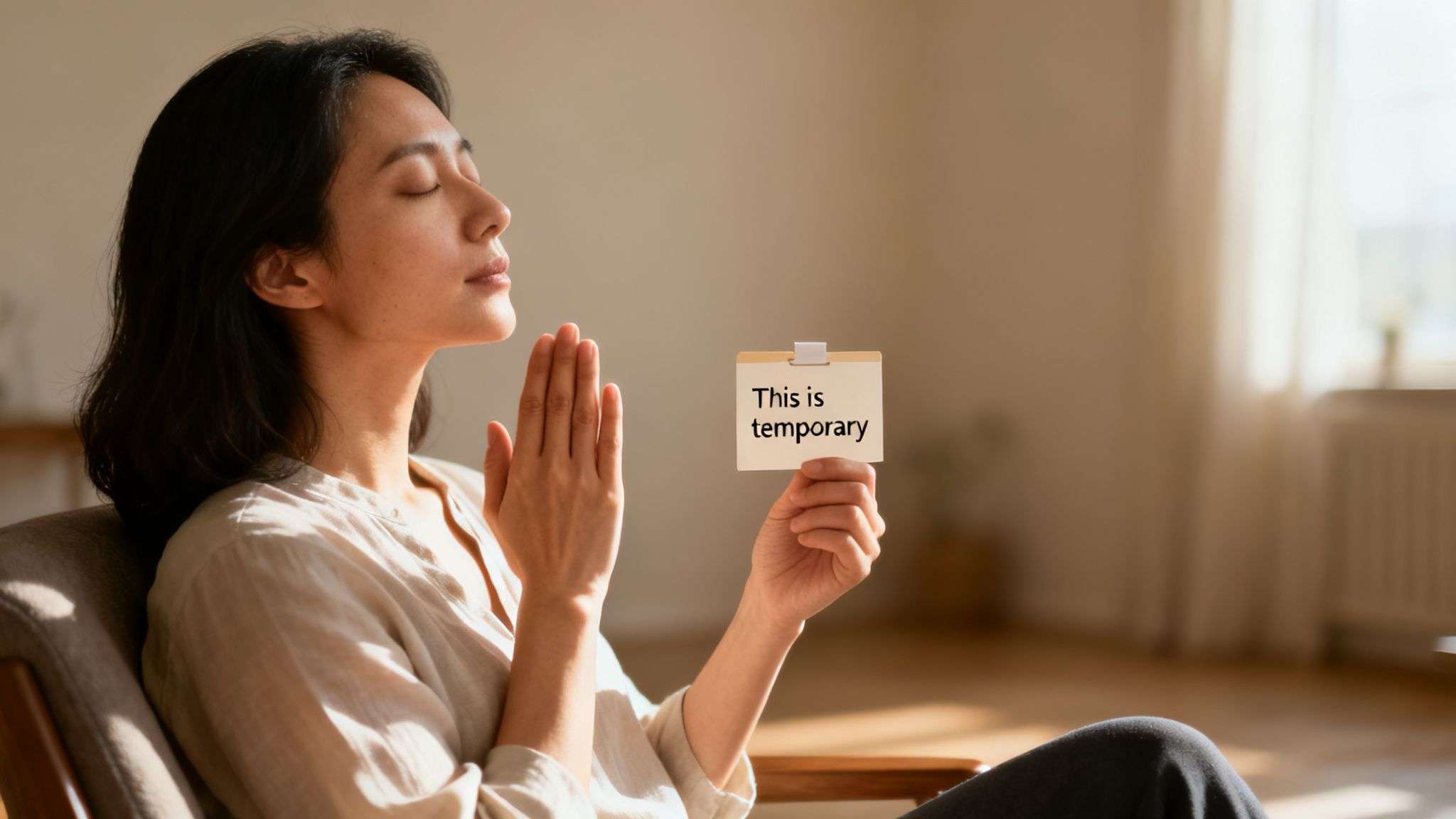
Keep these phrases on a note in your phone or on a small card in your wallet. When a panic attack starts, reading them can be an incredibly grounding act. With practice, these reframed thoughts will become more automatic, serving as an immediate cognitive tool to manage panic attacks before they escalate.
Building Long-Term Resilience to Panic
Managing panic attacks in the heat of the moment is crucial, but building a life where they're less likely to happen in the first place is where the real power lies. Think of it like building a house on solid ground versus shifting sand. A stronger foundation makes you far less vulnerable when storms roll in. This part is all about the proactive, long-term adjustments that create that solid ground, helping you feel more stable and less susceptible to panic.

It’s about making small, empowering choices that consistently support your mental health. By gently nurturing your body and mind, you create an internal environment that’s naturally calmer and better equipped to handle stress when it arrives.
Nourish Your Nervous System Through Movement
When you live with the possibility of panic, it’s easy to start viewing your body as something that might betray you. Gentle, regular movement is a powerful way to heal that relationship. It proves that your body can also be a source of calm and strength. Regular physical activity is one of the most effective ways to regulate your nervous system. It helps burn off excess adrenaline, releases endorphins, and improves your overall stress tolerance. The key is to find something you enjoy.
Consider these gentle starting points:
- A 10-minute walk around your block, focusing on the rhythm of your feet.
- A short, guided yoga or stretching video in your living room.
- Putting on a favourite song and just dancing for a few minutes.
The goal is consistency, not intensity. A short walk every day is far more beneficial for long-term anxiety management than a gruelling workout once a week. It teaches your body to handle an increased heart rate in a safe, controlled context, which can make the physical sensations of panic feel less frightening over time.
The Mind-Gut Connection: Your Diet and Anxiety
What you eat and drink can have a surprisingly direct impact on your anxiety levels. Certain substances act as stimulants, putting your nervous system on high alert and making it easier for panic to take hold. Two of the biggest culprits are caffeine and sugar. The jitters from caffeine can feel eerily similar to the first signs of an anxiety attack, creating a cycle of fear. Likewise, a sugary snack can cause a rapid spike and then a crash in blood sugar, leaving you feeling shaky and on edge.
This isn’t about eliminating these things entirely. The goal is mindful reduction. Try swapping one of your daily coffees for herbal tea, or choosing a protein-rich snack instead of a sugary one. You might be surprised at the difference these small adjustments can make to your baseline anxiety.
Prioritize Restorative Sleep
Sleep is when your brain and body repair and reset. When you’re sleep-deprived, your ability to regulate emotions is one of the first things to go. You become more sensitive to stress, your thoughts are more likely to spiral, and your nervous system is already operating on high alert. Creating a consistent sleep routine is a non-negotiable part of building resilience to panic.
Here are a few ways to improve your sleep hygiene:
- Establish a consistent bedtime and wake-up time, even on weekends.
- Create a relaxing pre-sleep ritual, like reading a book (not on a screen), listening to calm music, or taking a warm bath.
- Make your bedroom a sanctuary for sleep. Keep it cool, dark, and quiet. Avoid working or scrolling on your phone in bed.
Research highlights the profound impact lifestyle choices have on our mental health. For instance, reports from the Canadian Institute for Health Information show a clear link between screen time and anxiety, underscoring how crucial managing daily habits is for long-term well-being. You can learn more about the unmet mental health needs across Canada.
Externalize Your Worries and Protect Your Energy
Finally, proactive stress management is key. This means finding healthy outlets for your worries and learning to set boundaries that protect your emotional energy. Journaling is a simple yet incredibly powerful tool. By writing down your fears, you move them from a chaotic loop inside your head onto a piece of paper. This simple act of externalization creates distance, making the worries feel more manageable.
Setting boundaries is just as important. This might mean saying "no" to a social event when you feel drained or limiting your exposure to stressful news cycles. Each boundary you set is an act of self-care that preserves your capacity to cope with life's inevitable stressors.
Knowing When to Seek Professional Support
The self-management skills we've covered are genuinely powerful. They can give you a profound sense of agency over your own well-being. But sometimes, navigating the complexities of panic requires a guide. Knowing when to ask for professional support isn't a sign of weakness; it’s a courageous act of self-awareness and a powerful step toward lasting healing.
If you find that panic attacks are starting to shrink your world—making you avoid places, people, or activities you once loved—it might be time to reach out. The same is true if the fear of having another attack has become a constant companion. Professional guidance can make all the difference.
How Therapy Can Help
Therapy offers a structured, safe, and confidential space to explore the roots of your panic with someone trained to help. A therapist acts as a compassionate partner, helping you understand your unique triggers and build coping strategies that go far beyond just managing in the moment.
Two of the most effective, evidence-based approaches for panic are:
- Cognitive Behavioural Therapy (CBT): This approach helps you get to the heart of the panic cycle by identifying, challenging, and reframing the deep-seated thought patterns that keep it going.
- Exposure Therapy: Done gently and collaboratively with a therapist, this involves gradually and safely re-engaging with situations or physical sensations you've been avoiding. This process helps your brain re-learn that these triggers aren't truly dangerous.
Exploring counselling services is about finding a supportive ally who can help you untangle the underlying causes of panic and build unshakable confidence in your ability to handle it.
Overcoming the Hesitation to Reach Out
It’s completely normal to feel hesitant about seeking support. Unfortunately, many people who could benefit from care never receive it. Recent Canadian data shows that about half of those with mood or anxiety disorders—which often include panic attacks—haven't accessed professional care in the past year. This gap is especially concerning for young people. According to Statistics Canada, while 38.5% of girls and young women aged 15-29 met the criteria for a mental health or substance use disorder in 2022, a staggering 54.6% of them reported that their needs for support went unmet. You can learn more about these mental health findings in Canada.
Reaching out for help is an investment in your own peace and freedom. It's a declaration that you deserve to live a life that isn't dictated by fear. This data highlights just how critical it is to bridge that gap between needing help and getting it. A therapist can offer a perspective you haven't considered and provide strategies built on years of clinical experience. Taking that first step is often the hardest part, but it's a profound move toward reclaiming your life from panic.
Common Questions About Panic Attacks Answered
It's completely normal for a few questions to still be swirling around after exploring how to manage panic. Feeling informed is a big part of feeling prepared. Here are some clear, compassionate answers to some of the most common concerns.
Can a panic attack actually harm me?
This is the number one fear during an attack, and it makes perfect sense. The physical feelings are terrifyingly real. But here’s the reassuring truth: a panic attack itself is not physically dangerous. It’s your body's "fight or flight" alarm system going off by mistake—a false alarm. The feelings are incredibly intense and overwhelming, but they are temporary and will pass without causing you physical harm. Remembering this fact can be a powerful anchor in the middle of the storm.
How can I tell a panic attack from a heart attack?
The overlap in symptoms is one of the scariest parts of having a panic attack. While you should always seek immediate medical care if you have any doubt, there are some general differences. Panic attacks usually come on suddenly and peak within about 10 minutes before fading. Heart attack symptoms often start more slowly and persist or worsen. The chest pain from panic is often described as sharp or stabbing, while heart attack pain is more typically a crushing, squeezing pressure that might spread into your arm or jaw. It is always better to be safe than sorry, so please never hesitate to get symptoms checked by a doctor.
Will I have panic attacks for the rest of my life?
When you're in the thick of it, it can feel like a life sentence. But the empowering truth is that panic attacks are highly treatable. This is not a permanent state. By learning and consistently practising grounding techniques and cognitive tools, you can dramatically reduce both their frequency and intensity. The goal is to build your skills and confidence to a point where you feel completely equipped to handle the initial flicker of panic without it escalating.
What should I do if someone near me is having a panic attack?
Watching someone go through a panic attack can make you feel helpless, but your calm presence is a powerful tool. Speak in a quiet, reassuring voice. Remind them that they are safe and that this feeling will pass. Avoid phrases like "just calm down," which can feel dismissive. Instead, offer quiet solidarity. A simple, "I'm here, and I'll stay with you until this passes," can make all the difference. Your non-judgmental support is an incredible gift.
Living with panic is challenging, but it doesn't have to run your life. With the right strategies and support, you can regain a sense of control and move forward with confidence. If you feel that professional guidance could help you on this journey, we invite you to learn more.
Clinically Reviewed By
Amy Mosset, MCP, RCC-S
Amy Mosset is a Master Practitioner in Clinical Counselling, Clinical Supervisor, and the owner of Interactive Counselling. She provides trauma-informed, evidence-based care and clinical supervision to registered therapists, with a focus on ethical practice, client safety, and high-quality therapeutic outcomes.