Nearly one in five Canadian adults reports struggling with the emotional fallout of major life changes. Urban professionals and parents often face sudden pressures at work or home, yet adjustment stress remains surrounded by confusion and outdated ideas. Addressing these misconceptions opens opportunities for accessible online therapy, helping Canadians spot early warning signs and build effective coping strategies to protect their mental well-being.
Table of Contents
- Defining Adjustment Stress And Common Myths
- How Adjustment Stress Shows Up In Daily Life
- Who Is Most Vulnerable To Adjustment Stress
- Physical And Emotional Warning Signs To Know
- Coping Strategies And When Therapy Helps
Key Takeaways
| Point | Details |
|---|---|
| Understanding Adjustment Stress | Adjustment stress is a complex psychological reaction that involves intense emotional and behavioural responses to life changes, requiring professional support for effective management. |
| Common Myths | It is a misconception that adjustment stress is merely sadness or that individuals can easily overcome it; in reality, it is a clinically recognized condition. |
| Vulnerability Factors | Certain populations, especially children and adolescents, are more vulnerable to adjustment stress due to developmental factors and the absence of effective coping mechanisms. |
| Coping Strategies | Implementing practical coping strategies such as mindfulness, consistent routines, and social support can significantly alleviate the impact of adjustment stress. |
Defining Adjustment Stress and Common Myths
Adjustment stress represents an often misunderstood psychological response to significant life changes. Adjustment disorders involve excessive reactions to stress that disrupt normal daily functioning, creating emotional and behavioural challenges beyond typical stress responses.
Contrary to popular belief, adjustment stress is not simply feeling sad or overwhelmed. It is a clinically recognizable condition where individuals experience intense emotional and behavioural reactions that extend beyond expected responses to stressful situations. These reactions typically emerge within three months of a triggering event and can significantly impact work performance, personal relationships, and overall mental well-being.
The most common misconceptions about adjustment stress include:
- Believing it’s just normal sadness that will pass
- Thinking people can simply “snap out” of their emotional state
- Assuming only major life events can trigger adjustment disorders
- Dismissing the condition as a sign of personal weakness
In reality, adjustment stress represents a complex psychological response that requires understanding, professional support, and targeted intervention strategies. Recognizing the nuanced nature of this condition is the first step towards effective management and recovery.
Pro tip: If you’re experiencing persistent emotional difficulties following a significant life change, consider consulting a mental health professional who can provide personalized guidance and support.
How Adjustment Stress Shows Up in Daily Life
Adjustment stress infiltrates everyday experiences in subtle yet profound ways, disrupting personal and professional functioning. Symptoms manifest differently across various life domains, creating complex challenges that extend beyond typical emotional responses.
In professional settings, adjustment stress can dramatically impact workplace performance. Employees might struggle with concentration, experience increased irritability, or find themselves overwhelmed by routine tasks that previously seemed manageable. Stressful life events trigger emotional and behavioural reactions within three months, potentially leading to decreased productivity, missed deadlines, and strained workplace relationships.
The manifestation of adjustment stress varies significantly across different life stages and personal contexts:
- Sudden changes in work responsibilities
- Significant relationship transitions
- Unexpected financial pressures
- Geographic relocations
- Major health diagnoses
Parents and professionals often experience these challenges most intensely, with symptoms ranging from persistent anxiety to unexpected emotional volatility. Understanding these nuanced expressions helps individuals recognize when they might need additional support and intervention.
Here is a comparison of adjustment stress across key life situations:
| Life Situation | Common Adjustment Challenges | Possible Long-Term Impact |
|---|---|---|
| Career transitions | Difficulty focusing at work | Reduced job satisfaction |
| Relationship changes | Heightened emotional sensitivity | Strained personal connections |
| Relocation | Social isolation, homesickness | Lower sense of belonging |
| Health diagnoses | Fear and uncertainty | Prolonged anxiety symptoms |
| Financial pressures | Persistent worry and tension | Risk of chronic stress disorders |
Pro tip: Track your emotional responses during significant life transitions, and don’t hesitate to seek professional guidance if you notice persistent changes in your mood or behaviour.
Who Is Most Vulnerable to Adjustment Stress
Adjustment stress does not discriminate, but certain individuals are more susceptible to its profound psychological impacts. Vulnerability depends on multiple interconnected factors, including personality traits, past experiences, and available support systems.
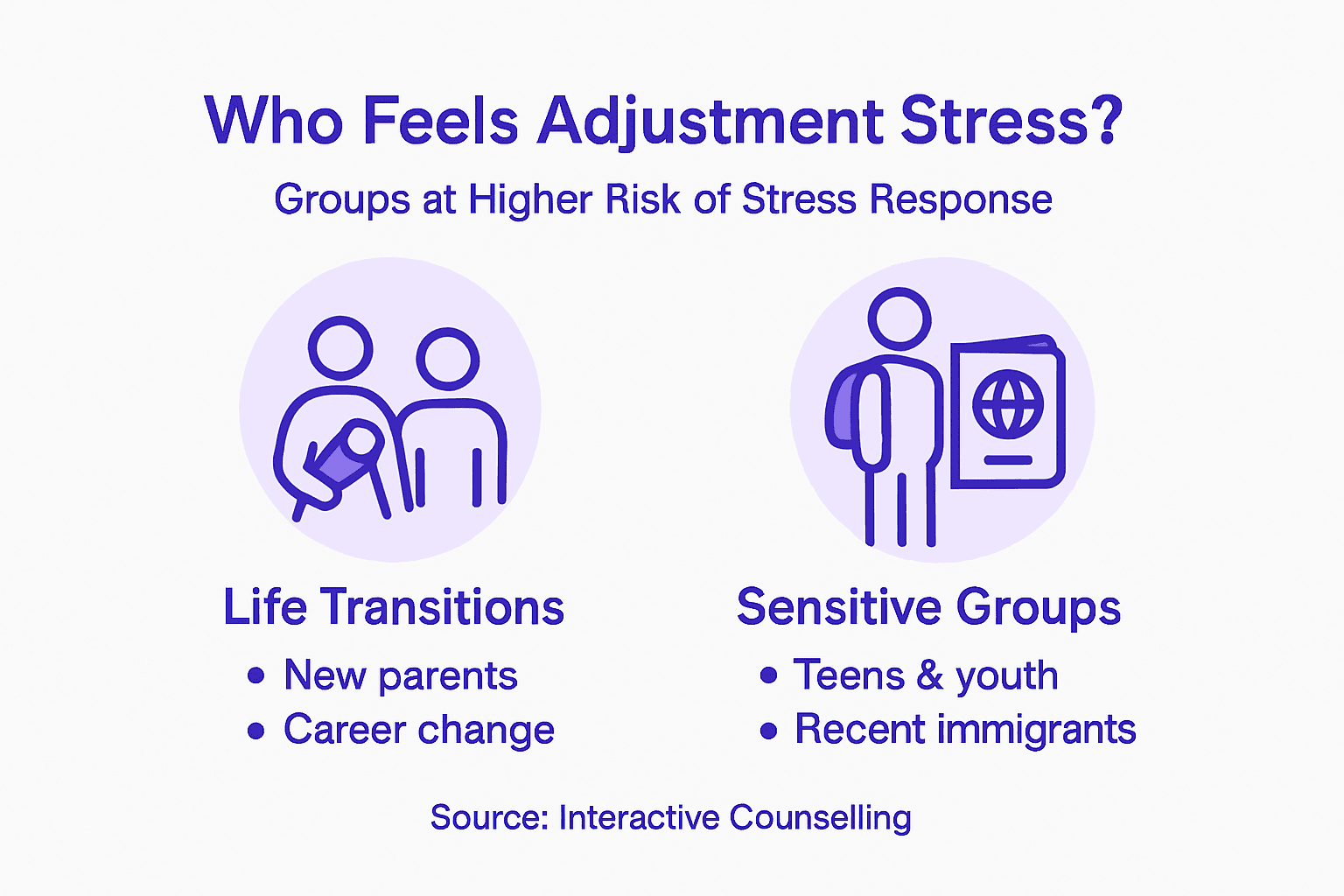
Children and adolescents stand out as particularly vulnerable populations. Their developmental stage significantly influences their ability to manage stressful transitions, making them more prone to experiencing intense emotional and behavioural reactions. Younger individuals often lack sophisticated coping mechanisms and may struggle to articulate their internal experiences, which can compound their vulnerability.
Key risk factors that increase susceptibility to adjustment stress include:
- Chronic exposure to stressful environments
- Limited social support networks
- Previous history of mental health challenges
- Low emotional resilience
- Significant life transitions or unexpected changes
- Genetic predisposition to anxiety or mood disorders
Professionals experiencing career transitions, new parents navigating parenthood, and individuals undergoing major life changes are especially at risk. The combination of external pressures and internal emotional processing can create a perfect storm for adjustment stress, making self-awareness and proactive mental health support crucial.
Pro tip: Develop a personal resilience toolkit that includes stress management techniques, regular self-reflection, and a supportive network to help buffer against potential adjustment stress.
Physical and Emotional Warning Signs to Know
Adjustment stress manifests through a complex array of physical and emotional signals that can significantly disrupt daily functioning. Warning signs encompass a range of symptoms that extend beyond typical stress responses, creating a nuanced landscape of psychological and physiological indicators.

Emotional warning signs are often the first and most noticeable manifestations. Individuals might experience persistent feelings of sadness, overwhelming anxiety, uncharacteristic irritability, and a pervasive sense of hopelessness. Physical symptoms can include unexpected bodily responses like heart palpitations, chronic headaches, and digestive disturbances, which signal the deep interconnection between mental and physical well-being.
Key warning signs to monitor include:
Emotional Indicators:
- Persistent feelings of sadness or emptiness
- Increased anxiety and restlessness
- Difficulty concentrating
- Emotional numbness or detachment
- Sudden mood swings
Physical Symptoms:
- Sleep disruptions
- Changes in appetite
- Unexplained muscle tension
- Frequent headaches
- Digestive issues
- Rapid heartbeat
These symptoms often interplay, creating a complex web of psychological distress that can feel overwhelming and isolating. Recognizing these signs early allows individuals to seek appropriate support and develop effective coping strategies before the adjustment stress becomes more entrenched.
This summary contrasts physical and emotional signals of adjustment stress:
| Type of Symptom | Typical Signs | Why Recognition Matters |
|---|---|---|
| Emotional | Irritability, mood changes, detachment | Early intervention is more effective |
| Physical | Headaches, sleep issues, muscle tension | Prevents escalation to chronic issues |
Pro tip: Create a personal symptom tracking journal to document emotional and physical changes, helping you identify patterns and communicate effectively with mental health professionals.
Coping Strategies and When Therapy Helps
Adjustment stress requires a multifaceted approach to management, with coping strategies serving as critical tools for emotional resilience. Effective coping techniques can significantly reduce the impact of psychological distress, empowering individuals to navigate challenging life transitions more successfully.
Building robust support systems and developing adaptive strategies are essential for managing stress responses. Practical coping strategies include:
- Maintaining consistent daily routines
- Practicing mindfulness and relaxation techniques
- Engaging in regular physical exercise
- Establishing healthy sleep patterns
- Cultivating supportive social connections
- Journaling emotional experiences
Recognizing when professional therapy becomes necessary is crucial. Warning signs indicating the need for professional intervention include:
- Symptoms persisting beyond six months
- Significant impairment in work or personal functioning
- Inability to manage daily responsibilities
- Increased risk of depression or anxiety
- Recurring negative thought patterns
- Difficulty implementing self-help strategies
Professional therapists can provide tailored cognitive-behavioural interventions, helping individuals develop more effective stress management skills and emotional regulation techniques.
Pro tip: Create a personal wellness action plan that includes specific coping strategies, emergency contact information, and self-care benchmarks to proactively manage potential adjustment stress.
Find Support to Ease Adjustment Stress
Adjustment stress can feel overwhelming when life changes disrupt your daily routine and emotional balance. If you are struggling with persistent anxiety, mood swings, or difficulty coping after a significant transition, know you are not alone. This article highlights how adjustment stress affects your mental and physical wellbeing and why professional guidance can make a vital difference.
At Interactive Counselling, we understand the challenges that come with navigating major life changes. Our licensed therapists across Kelowna, Vernon, Grande Prairie, Penticton, and nationwide online are ready to provide personalized strategies to manage adjustment stress effectively. Whether you prefer in-person or virtual sessions, daytime or evening appointments, we offer flexible options tailored to your unique needs.
Take the first step toward reclaiming your emotional wellness. Discover how our therapy offerings can support you during this critical time. Visit us today and book your appointment to start your journey to recovery with compassionate, professional care.
Frequently Asked Questions
What is adjustment stress?
Adjustment stress is a psychological response to significant life changes, resulting in excessive emotional and behavioural reactions that disrupt daily functioning.
What are common symptoms of adjustment stress?
Common symptoms include persistent feelings of sadness, increased anxiety, difficulty concentrating, physical issues like headaches and digestive disturbances, and sudden mood swings.
Who is most vulnerable to adjustment stress?
Individuals such as children, adolescents, new parents, and professionals undergoing career changes are particularly vulnerable due to limited coping mechanisms and existing stressors.
When should someone consider professional therapy for adjustment stress?
Consider seeking professional therapy if symptoms persist beyond six months, significantly impair daily functioning, or if there is an inability to manage responsibilities and increasing risk of depression or anxiety.
Recommended
- Why Life Transitions Disrupt Mental Health More Than Expected
- How the Housing Market and Renovations Can Quietly Increase Stress
- Change Is Hard – Interactive Counselling
- The Hidden Emotional Stress of Home Building and Renovations