
Nearly half of Canadian adults say they struggle to understand their own emotional patterns while dealing with anxiety or depression. Finding real psychological insight matters because it can be the difference between repeating old cycles and genuine personal change. Discover how deeper self-understanding, gained through professional therapy, empowers Canadian individuals to move beyond surface-level coping and unlock paths for lasting emotional growth. For more information, see our depression counselling.
Table of Contents
- Defining Psychological Insight In Mental Health
- Types Of Psychological Insight In Therapy
- How Insight Develops And Leads To Change
- Therapeutic Approaches For Fostering Insight
- Risks, Limitations, And Common Mistakes
Key Takeaways
| Point | Details |
|---|---|
| Psychological Insight Importance | Psychological insight is critical for personal growth, helping individuals understand their internal processes and emotional patterns. |
| Types of Insight in Therapy | Various insights, including cognitive, emotional, and behavioural, enable deeper self-understanding and facilitate change. |
| Insight Development Process | Developing psychological insight involves intentional self-exploration and navigating ambivalence in a supportive therapeutic environment. |
| Risks and Best Practices | Understanding the potential risks, such as symptom exacerbation, is essential; maintaining open communication with therapists enhances therapeutic outcomes. |
Defining psychological insight in mental health
Psychological insight represents an individual’s capacity for self-understanding and recognition of their internal mental processes, emotional patterns, and behavioural dynamics. In the context of mental health, this concept goes far beyond simple self-awareness, encompassing a nuanced comprehension of how personal experiences, thoughts, and reactions interconnect to shape one’s psychological landscape.
Traditionally, psychological insight has been understood through a medical lens, where recognition of mental health challenges becomes the primary metric. However, contemporary perspectives recognize it as a more complex, multidimensional construct. It involves not just acknowledging the existence of psychological challenges, but developing a deep, compassionate understanding of their origins, manifestations, and potential pathways for personal growth and healing.
In professional therapeutic settings, psychological insight serves as a critical catalyst for meaningful change. It enables individuals to move beyond surface-level symptom management, encouraging a more profound exploration of underlying emotional patterns, defence mechanisms, and unconscious narratives that influence behaviour. By cultivating this deeper self-understanding, individuals can develop more adaptive coping strategies, enhance emotional regulation, and create sustainable personal transformation.
Pro tip: Begin developing psychological insight by regularly practicing self-reflection through journaling, meditation, or guided therapy sessions, which can help you uncover deeper patterns and motivations behind your emotional experiences.
Types of psychological insight in therapy
Psychological insight is not a monolithic concept but a nuanced framework with multiple dimensions that emerge through different therapeutic approaches. Therapeutic approaches reveal distinct insight types, ranging from cognitive recognition to emotional exploration, each offering unique pathways to self-understanding and personal growth.
Traditionally, psychological insight has been categorized into several key types. Cognitive insight involves recognizing and understanding one’s thought patterns, identifying distorted thinking, and developing more balanced perspectives. Emotional insight delves deeper, helping individuals connect with and process underlying feelings, understanding the emotional roots of their behaviours and reactions. Behavioural insight focuses on recognizing recurring patterns of action, examining how habitual responses might be hindering personal development or maintaining psychological challenges.
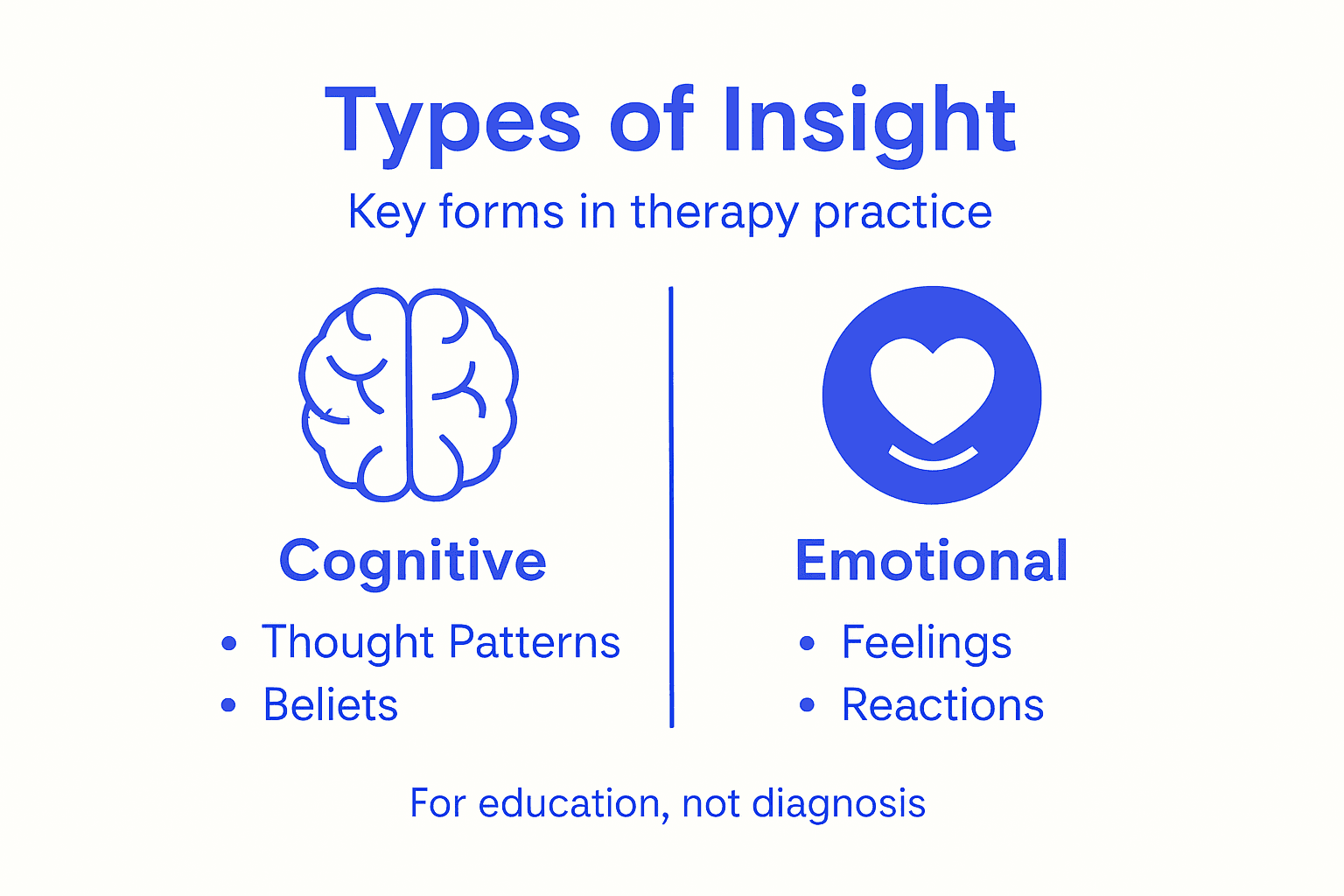
Moreover, psychiatric insight research highlights additional nuanced dimensions, including awareness of illness, acceptance of treatment needs, and comprehension of potential consequences. These insights are particularly crucial in therapeutic settings, where understanding goes beyond surface-level symptoms to explore the complex interplay between thoughts, emotions, and behaviours. By integrating these various types of insight, individuals can develop a more holistic understanding of themselves, facilitating more meaningful and sustainable personal transformation.
Pro tip: Practice observing your thoughts and emotions without judgment, creating a curious and compassionate internal dialogue that allows deeper psychological insights to emerge naturally.
Here’s a comparison of different types of psychological insight encountered in therapy:
| Type of Insight | Focus Area | Typical Therapeutic Benefit |
|---|---|---|
| Cognitive Insight | Thought patterns and beliefs | Clearer, rational decision-making |
| Emotional Insight | Underlying emotions and feelings | Enhanced emotional regulation |
| Behavioural Insight | Habitual actions and responses | Improved coping and behaviour change |
| Illness Awareness | Recognition of symptoms/illness | Increased treatment adherence |
How insight develops and leads to change
Psychological insight is a dynamic process that emerges through intentional self-exploration and supportive therapeutic interventions. Motivational interviewing techniques reveal that insight development is not a linear progression, but a complex interplay of internal motivation, readiness for change, and therapeutic guidance.

Ambivalence plays a crucial role in this transformative journey. Individuals often experience conflicting emotions and thoughts about personal change, creating a natural resistance that can initially impede insight. Skilled therapists help clients navigate this ambivalence by creating a safe, non-judgmental environment that allows for genuine self-reflection. This process involves exploring underlying beliefs, challenging existing thought patterns, and gradually building the internal motivation necessary for meaningful psychological transformation.
The development of insight follows a nuanced trajectory, where self-awareness gradually transforms into actionable change. Clients move through stages of recognition, understanding, acceptance, and ultimately, intentional behaviour modification. This progression is not about quick fixes, but about developing a profound comprehension of one’s psychological landscape, understanding the intricate connections between thoughts, emotions, and behaviours that have previously been unconscious or misunderstood.
Pro tip: Embrace curiosity about your inner experiences, viewing your psychological journey as an exploration rather than a problem to be solved, allowing insights to emerge naturally and compassionately.
Therapeutic approaches for fostering insight
Psychotherapy approaches offer diverse strategies for developing psychological insight, each providing unique pathways to understanding the complex inner workings of human experience. These approaches are not one-size-fits-all solutions, but carefully crafted methodologies designed to support individuals in their journey of self-discovery and personal transformation.
Different therapeutic modalities employ distinct techniques for fostering insight. Psychodynamic therapy delves into unconscious conflicts, exploring how past experiences shape current behaviours and emotional responses. Cognitive-behavioural therapy focuses on identifying and challenging distorted thought patterns, helping clients recognize and modify beliefs that may be limiting their personal growth. Humanistic therapies emphasize personal meaning, self-actualization, and creating a supportive environment that encourages genuine self-exploration and authentic emotional expression.
Motivational interviewing represents a particularly powerful approach in insight development. This collaborative method helps clients resolve psychological ambivalence, creating a compassionate space where individuals can explore their internal motivations and barriers to change. By emphasizing empathy and non-judgmental dialogue, therapists guide clients towards deeper self-understanding, helping them bridge the gap between insight and meaningful personal transformation.
Pro tip: Approach your therapeutic journey with openness and curiosity, understanding that insight is a gradual process of self-discovery that requires patience and compassionate self-reflection.
Risks, limitations, and common mistakes
Psychological insight work is a nuanced process with potential pitfalls that can significantly impact therapeutic effectiveness. Psychotherapy approaches involve inherent risks that require careful navigation, understanding, and professional management to ensure client well-being and meaningful therapeutic progress.
One critical risk involves the potential for symptom exacerbation. Exploring deep psychological material can temporarily intensify emotional distress, potentially triggering heightened anxiety or temporary emotional instability. This phenomenon underscores the importance of working with trained professionals who can provide appropriate support and containment during challenging therapeutic moments. Another significant limitation emerges from potential therapeutic mismatches, where a client’s specific needs do not align perfectly with a particular therapeutic approach, potentially hindering insight development and personal growth.
Non-expert therapeutic approaches present additional complexities that can compromise therapeutic effectiveness. Common mistakes include inadequate assessment, premature treatment termination, and insufficient attention to individual client preferences. Therapists must maintain a delicate balance between providing structured guidance and allowing client autonomy, ensuring that insight-based interventions remain collaborative, respectful, and responsive to each individual’s unique psychological landscape.
The following table outlines potential risks involved with psychological insight work, along with recommended professional strategies:
| Risk | Typical Outcome | Professional Strategy |
|---|---|---|
| Symptom exacerbation | Temporary emotional distress | Provide close therapeutic support |
| Therapeutic mismatches | Hindered personal development | Customise therapy to client needs |
| Inadequate assessment | Reduced intervention success | Conduct thorough client evaluation |
| Premature termination | Lack of sustained progress | Set clear therapy goals and timelines |
Pro tip: Maintain open communication with your therapist about your comfort level, emotional responses, and any concerns that arise during the therapeutic process, creating a transparent and collaborative healing environment.
Discover Lasting Change Through Psychological Insight and Compassionate Therapy
Understanding your inner thoughts, emotions, and behaviours as described in the article is the first step in sparking real change in your mental health journey. If you find yourself struggling to decode complex feelings or facing ambivalence about personal growth, you are not alone. Psychological insight, including cognitive, emotional, and behavioural awareness, offers a powerful foundation for healing and meaningful transformation. Yet navigating this process can be challenging without support.
At Interactive Counselling, our diverse team of licensed therapists across Kelowna, Vernon, Grande Prairie, and Penticton are dedicated to guiding you with personalized and non-judgmental care. We offer flexible therapy options including in-person, phone, and online sessions tailored to meet your unique needs. Whether you want to explore deeper self-understanding, resolve ambivalence, or find effective coping strategies, our expert therapists can help turn psychological insight into real progress.
Take the first step today. Visit Interactive Counselling to explore our therapy options and team and book your appointment. Embrace compassionate support that transforms insight into meaningful change now.
Frequently Asked Questions
What is psychological insight in mental health?
Psychological insight refers to an individual’s ability to understand their internal mental processes, emotional patterns, and behavioral dynamics. It encompasses a deep comprehension of how experiences, thoughts, and reactions interconnect, facilitating personal growth and healing.
How can psychological insight facilitate change during therapy?
Psychological insight serves as a catalyst for meaningful change by encouraging individuals to explore deeper emotional patterns and unconscious narratives, allowing them to develop adaptive coping strategies and enhance emotional regulation, leading to sustainable transformation.
What are the different types of psychological insight?
The main types of psychological insight include cognitive insight (understanding thought patterns), emotional insight (connecting with underlying feelings), and behavioral insight (recognizing habitual actions). These insights help individuals navigate their psychological landscape more effectively.
What therapeutic approaches are effective for fostering psychological insight?
Psychodynamic therapy, cognitive-behavioral therapy, humanistic therapies, and motivational interviewing are effective approaches for fostering psychological insight. Each method offers unique strategies to help individuals explore their inner experiences and promote personal transformation.
Recommended
- Change Is Hard – Interactive Counselling
- Therapy and Emotional Patterns: Building Self-Awareness
- 7 Types of Couples Therapy and How They Can Help Relationships – Interactive Counselling
- 7 Types of Therapy Explained for Better Mental Health – Interactive Counselling