
More than half of Canadian parents admit feeling unsure about how to support their children’s emotional growth. Understanding a child’s emotions goes beyond quick fixes or dismissive reassurances. The way caregivers respond can shape long-term confidence, resilience, and emotional intelligence. This guide clarifies what emotional development truly means and why validation far outweighs simply trying to make difficult feelings disappear.
Table of Contents
- Defining Emotional Development In Children
- Types Of Emotional Responses And Regulation
- Validation Versus “Fixing” Children’s Feelings
- Practical Strategies For Emotional Support
- Common Missteps To Avoid And Their Impact
Key Takeaways
| Point | Details |
|---|---|
| Emotional Development Stages | Children progress through emotional stages, starting with basic emotions and advancing to self-conscious feelings through support from caregivers. |
| Importance of Emotional Regulation | Teaching children emotional regulation techniques enables them to manage their feelings effectively and build resilience. |
| Value of Emotional Validation | Validating a child’s emotions fosters a safe environment, promoting emotional intelligence and a strong sense of self. |
| Common Missteps to Avoid | Caregivers should avoid dismissing feelings or rushing to solve problems, as these actions can hinder emotional growth and understanding. |
Defining Emotional Development in Children
Emotional development represents a profound journey of understanding, experiencing, and navigating feelings that children undergo from infancy through childhood. Research from the Center on Social and Emotional Foundations indicates this process involves complex interactions between biological maturation, social experiences, and individual cognitive processing.
Children’s emotional development unfolds through distinct stages, beginning with basic emotional expressions like happiness, sadness, and fear. As they grow, these initial responses transform into more nuanced emotional competencies. Emotional attachment research reveals that infants initially demonstrate fundamental emotional reactions, gradually developing self-conscious emotions such as pride, shame, and guilt by early childhood.
The progression of emotional development involves several critical components:
- Recognizing and naming emotions
- Understanding the cause of different feelings
- Developing strategies to regulate emotional responses
- Learning appropriate ways to express emotions
- Building empathy and understanding others’ emotional experiences
As children navigate these developmental milestones, they learn to interpret social cues, manage interpersonal relationships, and develop resilience through emotional intelligence. This intricate process requires consistent support, validation, and guidance from caregivers who can help children understand and process their evolving emotional landscape.
Pro tip: Create a daily emotion-checking routine with your child, using simple language and visual aids to help them identify and discuss their feelings effectively.
Types of Emotional Responses and Regulation
Emotional responses represent a complex spectrum of psychological and physiological reactions that children experience and learn to manage throughout their developmental journey. Research on self-regulation mechanisms reveals that emotional regulation is a critical skill involving cognitive control, impulse management, and adaptive problem-solving strategies.
Children typically exhibit several distinct types of emotional responses, which evolve with age and experience. Basic emotions like happiness, sadness, fear, and anger emerge early, while more sophisticated self-conscious emotions such as pride, shame, and guilt develop later. Emotional regulation strategies involve techniques that help children identify, process, and express their feelings in healthy, constructive ways.
The primary categories of emotional responses include:
- Reactive responses (immediate emotional reactions)
- Regulated responses (controlled and purposeful emotional expressions)
- Adaptive responses (flexible emotional adjustments to different situations)
- Suppressive responses (intentionally minimizing emotional display)
- Expressive responses (openly communicating emotional states)
Successful emotional regulation depends on multiple factors, including neurological development, environmental support, and individual temperament. Parents and caregivers play a crucial role in helping children develop these essential emotional skills by providing consistent, empathetic guidance and modeling effective emotional management techniques.
Pro tip: Create a visual emotion tracking chart with your child to help them recognize and categorize their feelings more effectively.
Validation Versus “Fixing” Children’s Feelings
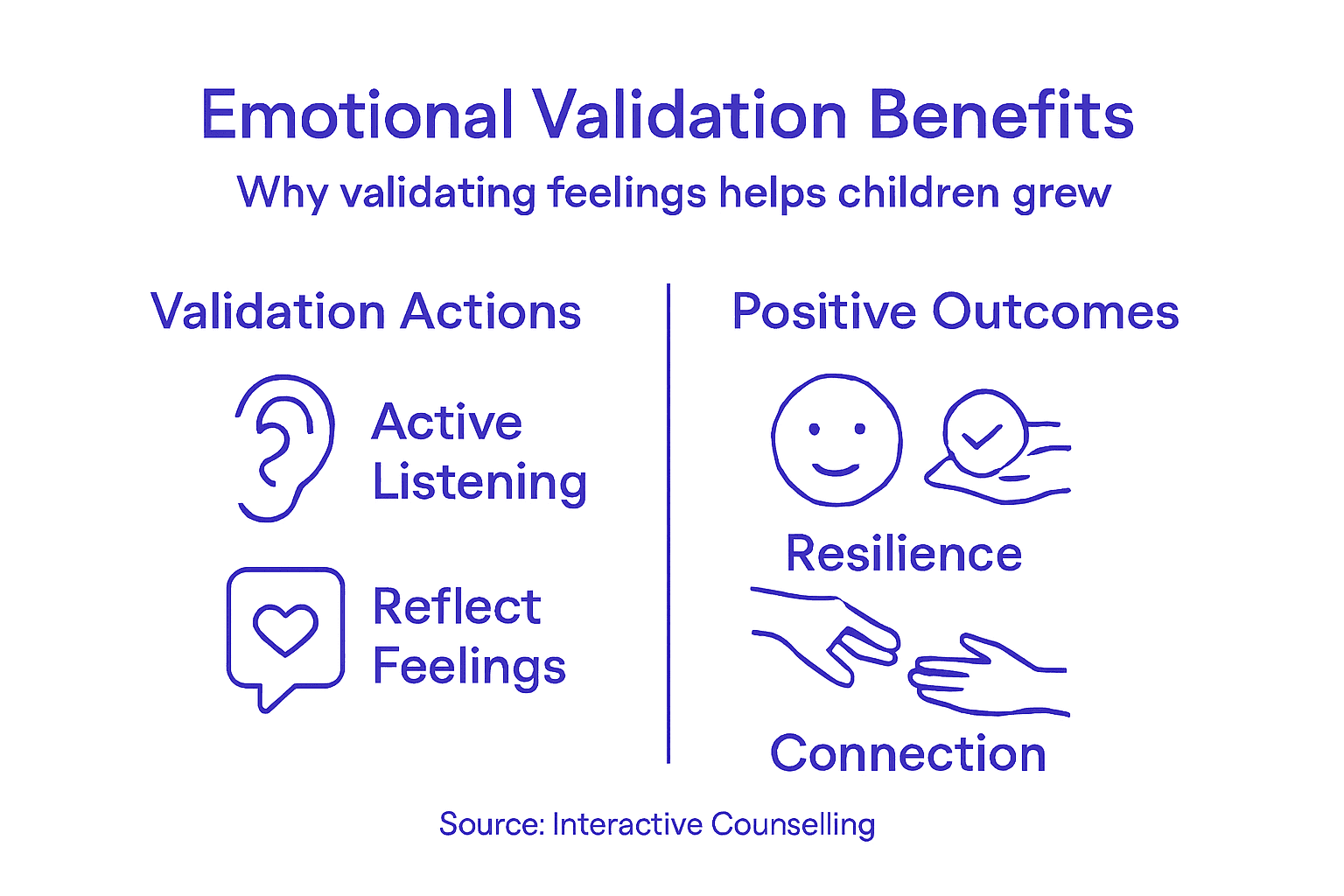
Emotional validation represents a fundamental approach to supporting children’s psychological well-being that differs dramatically from the traditional impulse to immediately solve or minimise their feelings. Research on emotional validation mechanisms demonstrates that truly understanding a child’s emotional experience requires active listening and genuine acknowledgment rather than quick problem-solving.
When parents attempt to “fix” their children’s feelings, they inadvertently communicate that certain emotions are unacceptable or need immediate correction. Co-regulation strategies suggest a more nuanced approach where caregivers create a supportive environment that helps children process emotions naturally. The key differences between validation and fixing include:
- Listening without judgment
- Acknowledging feelings as valid
- Allowing children to experience emotions fully
- Supporting emotional exploration
- Helping children develop self-regulation skills
Validation transforms emotional interactions from transactional problem-solving to meaningful connection. By demonstrating that all feelings are acceptable and understandable, parents help children develop emotional intelligence, self-awareness, and resilience. This approach doesn’t mean tolerating inappropriate behaviours, but rather creating a safe emotional landscape where children learn to understand and manage their internal experiences.

Here is a comparison of emotional validation versus “fixing” children’s feelings to clarify their impacts on development:
| Approach | Interaction Style | Child Outcome | Long-Term Impact |
|---|---|---|---|
| Emotional Validation | Active listening, empathy | Builds confidence, trust | Strong emotional intelligence |
| “Fixing” Feelings | Immediate solutions, dismissal | Can cause self-doubt, frustration | Reduced emotional awareness |
Pro tip: Practice reflective listening by repeating your child’s emotional statements back to them, using phrases like “It sounds like you’re feeling…” to demonstrate understanding.
Practical Strategies for Emotional Support
Effective emotional support requires a deliberate and compassionate approach that helps children develop resilience and self-understanding. Emotional wellness strategies emphasize creating an environment where children feel safe exploring and expressing their feelings without fear of judgment or immediate correction.
Successful emotional support involves multiple interconnected techniques that foster emotional intelligence and healthy psychological development. Emotional wellness resources recommend a holistic approach that combines active listening, empathetic communication, and targeted emotional regulation techniques.
Key practical strategies for supporting children’s emotional growth include:
- Creating a judgment-free emotional dialogue
- Teaching emotion identification and labelling
- Modeling healthy emotional expression
- Developing consistent communication routines
- Providing age-appropriate coping mechanisms
- Encouraging self-reflection and emotional awareness
Parents and caregivers play a crucial role in helping children understand their emotional landscape. By demonstrating patience, offering consistent support, and creating a nurturing environment, they can help children develop the emotional skills necessary for long-term psychological well-being and resilience.
The following table summarises effective strategies for supporting children’s emotional growth and the specific benefits of each:
| Strategy | Key Benefit | Example Practice |
|---|---|---|
| Judgement-free dialogue | Increases openness | Daily feelings conversations |
| Modelling healthy expression | Provides behavioural template | Parent shares their feelings |
| Age-appropriate coping tools | Fosters resilience | Breathing exercises, art |
| Encouraging self-reflection | Boosts self-understanding | Journalling, emotion cards |
Pro tip: Establish a daily “feelings check-in” routine where your child can share their emotions without pressure, using simple language and visual aids to facilitate communication.
Common Missteps to Avoid and Their Impact
Parents and caregivers often unintentionally create emotional barriers through well-meaning but counterproductive approaches to supporting children’s emotional growth. Academic emotion research reveals that focusing exclusively on problem-solving without first validating emotional experiences can significantly undermine a child’s ability to process and understand their feelings.
Certain communication patterns and responses can dramatically impact a child’s emotional development and psychological resilience. Understanding academic stress mechanisms demonstrates how mishandling emotional responses can lead to long-term challenges such as increased anxiety, diminished self-confidence, and reduced emotional intelligence.
Common missteps that can negatively affect emotional development include:
- Dismissing or minimizing children’s emotional experiences
- Rushing to provide solutions before listening
- Using phrases that invalidate feelings (“You’re overreacting”)
- Comparing children’s experiences to others
- Showing impatience with emotional expressions
- Failing to model healthy emotional regulation
Recognizing these potential pitfalls allows parents to create more supportive, empathetic environments that nurture emotional growth. By understanding the profound impact of their communication strategies, caregivers can transform potentially damaging interactions into opportunities for emotional learning and connection.
Pro tip: Pause and listen actively before responding to your child’s emotional expressions, focusing on understanding their feelings rather than immediately trying to solve their problems.
Support Your Child’s Emotional Growth Through Validation
Understanding the importance of emotional validation is the first step toward nurturing your child’s emotional intelligence and resilience. This article highlights how recognizing and empathizing with your child’s feelings, rather than immediately trying to fix them, fosters trust and long-term emotional well-being. If you are facing challenges supporting your child’s emotional development or want guidance on fostering a judgment-free dialogue, you are not alone.
Interactive Counselling offers personalized therapy solutions designed to support children, youth, and families navigating emotional challenges. Our experienced therapists emphasize compassionate, non-judgmental care that aligns with the evidence-based strategies described here. Whether you prefer online sessions across Canada or in-person support in Kelowna, Vernon, Grande Prairie, or Penticton, we provide flexible scheduling to meet your needs.
Take the important next step in fostering healthy emotional connections and resilience by exploring how our licensed professionals can help. Visit Interactive Counselling now to learn more about our approach, meet our team, and book a session tailored to your family’s needs. Empower emotional growth today with trusted support you can count on.
Frequently Asked Questions
What is emotional validation and why is it important for children?
Emotional validation is the process of recognizing and accepting a child’s feelings as genuine and important. It helps children develop emotional intelligence, resilience, and confidence, enabling them to navigate their emotions effectively.
How can I practice emotional validation with my child?
To practice emotional validation, listen actively to your child’s feelings without judgment, acknowledge their emotions as valid, and allow them to express their feelings fully. Reflective listening, where you repeat their emotional statements back, can be particularly effective.
What are the common mistakes parents make when supporting their child’s emotional growth?
Common mistakes include dismissing or minimizing a child’s feelings, rushing to solve problems without listening, and using invalidating phrases like “You’re overreacting.” These behaviors can hinder a child’s emotional development and lead to challenges in emotional understanding.
How does emotional validation differ from trying to ‘fix’ a child’s feelings?
Emotional validation focuses on understanding and accepting a child’s feelings, while ‘fixing’ implies that their emotions need correction or solution. Validation fosters a stronger emotional connection and helps children develop self-regulation skills, whereas ‘fixing’ can lead to self-doubt and reduced emotional awareness.
Recommended
- Therapy and Emotional Patterns: Building Self-Awareness
- Words of Affirmation Love Language: Why Words Matter So Deeply
- Why Self-Awareness Matters for Emotional Wellness
- How Emotional Patterns Shape Canadian Wellbeing