
Building or renovating a home is often framed as one of life's most exciting projects. Yet, what frequently starts as a dream can quickly become an emotional marathon you never trained for. It’s a unique combination of financial pressure, non-stop decision-making, and frustrating delays that can create a perfect storm of anxiety and strain. For more information, see our Kelowna anxiety counselling.
Why Building a Dream Home Can Feel Like a Nightmare
It’s a strange irony, isn't it? The very process of creating your sanctuary can leave you feeling completely unsettled. You begin with visions of beautiful spaces and happy memories, only to find yourself navigating invoices, timelines, and problems you never anticipated. For more information, see our counselling in Kelowna.
If you’re feeling overwhelmed, irritable, or just plain exhausted by it all, please know you’re not failing. You’re having a normal human reaction. These feelings are a completely natural response to a massively demanding journey. Think of it like a pressure cooker: a home project takes all the usual life stressors, confines them to one space, and turns up the heat. For more information, see our anxiety counselling.
The Big Three: Where the Stress Really Comes From
While every project has its own unique challenges, the emotional hurdles are surprisingly consistent. They almost always boil down to three core issues.
The Financial Squeeze: Let's be honest—budgets are often the first casualty. Unexpected costs arise, material prices fluctuate, and the sheer amount of money involved can create a constant hum of anxiety that's hard to ignore.
The Emotional Drain: The mental load is immense. Decision fatigue is a very real phenomenon. After choosing the hundredth detail, from doorknobs to grout colour, your brain is simply fried. Add a few construction delays, and you have a recipe for helplessness and frustration.
The Relationship Rub: When you’re stressed, your patience wears thin. Suddenly, small disagreements with your partner over tile choices or budget priorities can escalate into major arguments. The constant chaos puts a strain on the entire family.
This diagram illustrates just how intertwined these pressures are.
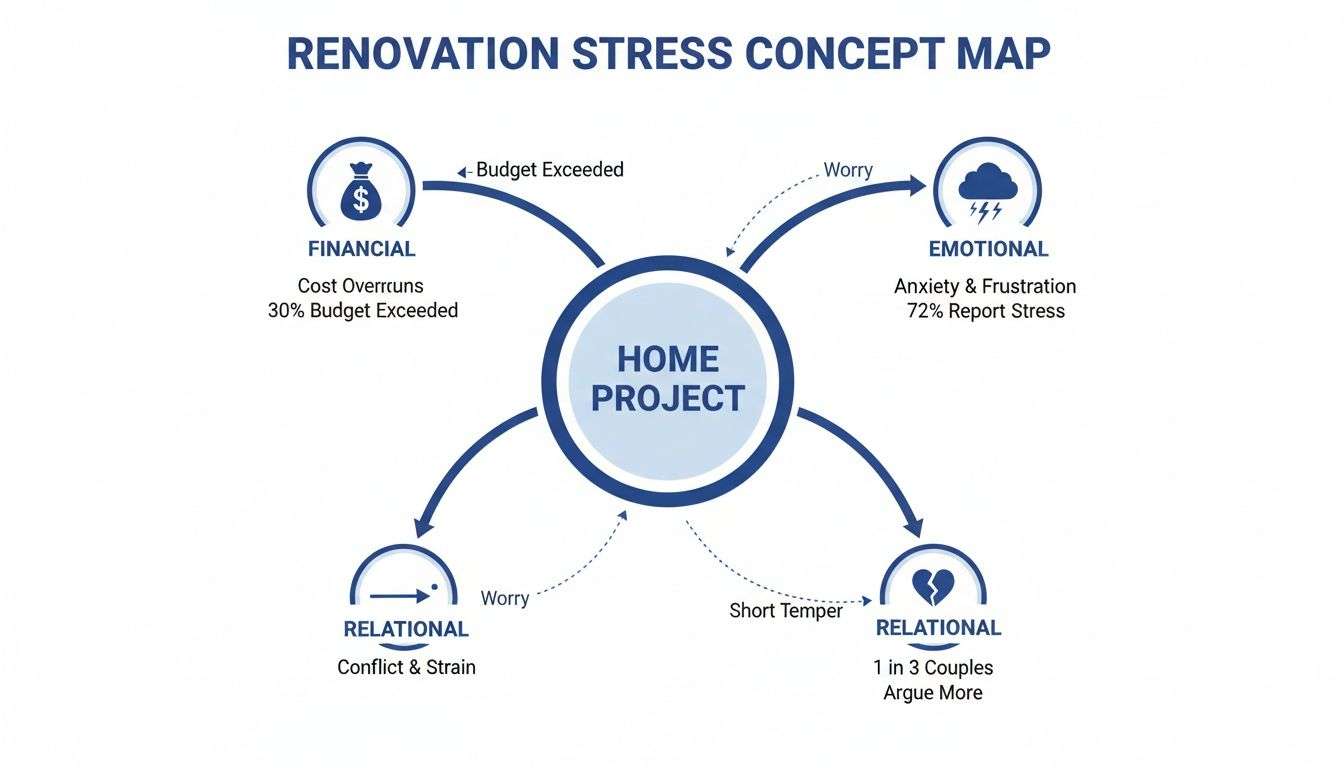
As you can see, a problem in one area quickly bleeds into others. A budget overage creates financial anxiety, which can then spark a conflict with your spouse. Recognizing that these stressors don't exist in a vacuum is the first, most important step toward managing them.
To give you a clearer picture, here’s a quick breakdown of the common stressors that fly under the radar during a build or renovation.
Common Hidden Stressors in Home Projects
| Stressor Type | How It Manifests Emotionally |
|---|---|
| Decision Fatigue | Feeling mentally exhausted, irritable, or unable to make even simple choices. Procrastination and second-guessing become common. |
| Loss of Control | Anxiety and frustration from depending on others' schedules (contractors, suppliers). Delays feel personal and overwhelming. |
| Invasion of Privacy | The constant presence of workers in your personal space leads to feeling exposed, with no private sanctuary. |
| Financial Uncertainty | A persistent, low-level dread about unexpected costs and going over budget, leading to sleepless nights and tension. |
| "Analysis Paralysis" | The sheer volume of options (finishes, layouts, colours) can feel so overwhelming that it becomes difficult to move forward. |
These are the challenges that aren't on any blueprint. Throughout this guide, we’ll explore each one, offering gentle, evidence-based strategies to help you and your family navigate this process with your well-being—and your relationships—intact.
Navigating the Financial Pressure of Modern Renovations
Of all the hurdles a home build or renovation presents, nothing looms as large as money. It’s the engine that keeps the project moving, and when it starts to sputter, everything feels like it’s about to seize up. The financial pressure of today's renovations isn't just about numbers on a spreadsheet; it's a constant, low-grade hum of anxiety that can follow you from morning until night.
If you find yourself lying awake, re-calculating costs in your head, or feeling a jolt of panic every time an unexpected expense arises, you are definitely not alone. This is an incredibly common, almost universal, part of the process. The exciting dream of a new kitchen or a much-needed extension quickly collides with the reality of material costs, labour rates, and the dreaded "surprise" issue hiding behind a wall. This financial strain is easily one of the biggest hidden emotional stressors in any project.
Why Budgeting Feels So Overwhelming
At its core, the problem is unpredictability. You can plan meticulously, gather quotes, and build in a healthy contingency fund, but there will always be forces outside your control. Supply chain issues can delay materials and send prices soaring, while discovering an unforeseen structural problem can add thousands to your budget in an instant.
This constant state of uncertainty creates a challenging emotional environment. It's hard to get excited about seeing a new wall go up when you’re already dreading the next invoice. This kind of financial anxiety often spills over and affects your whole life:
Sleepless Nights: Your mind can get stuck on a loop of "what-ifs," making it almost impossible to rest and recharge.
Increased Irritability: Financial stress shortens everyone's fuse. You might find yourself snapping at your partner or kids over small things.
Relationship Strain: Money is already a top source of conflict for couples. A renovation budget puts differing financial habits and priorities under a powerful microscope.
Feelings of Guilt: It's common to feel guilty for spending so much, or even for feeling stressed about a project that's supposed to be a positive experience.
One of the most crucial forms of self-care during this process is proactively choosing reliable partners for your project. Working with an established contractor can significantly reduce the number of delays and uncertainties you face. For instance, a company like Joe & Sons Concrete, known for extensive experience in residential and commercial work like concrete foundations and concrete driveways, brings a level of dependability that actively minimizes stress. Choosing professionals with a proven track record, including recognition like a Best of Kelowna award, helps protect your emotional bandwidth so you can focus on your family instead of project mishaps.
The True Cost of Building Today
The emotional weight of it all is made heavier by the sheer scale of today's costs. The financial realities of home renovations have triggered widespread emotional distress among homeowners, with many reporting anxiety levels on par with major life crises. Experts note that full-home remodels have seen a sharp rise in cost over just a few years. This volatility breeds chronic stress as families watch their savings dwindle—a feeling that’s only magnified by rising interest rates and other economic pressures. If this sounds all too familiar, you might find our guide on managing the emotional weight of financial pressure helpful.
Remember, feeling this way isn't a personal failing; it's a completely predictable response to a highly unpredictable process. Your feelings are valid, and simply acknowledging the financial stress is the first step toward managing it.
The Mental Drain of Decision Fatigue and Endless Delays

Beyond the financial pressures, two other emotional heavyweights often catch homeowners by surprise: the relentless stream of decisions and the agonizing wait for progress. These two stressors feed off each other, creating a cycle of mental exhaustion and anxiety that can feel incredibly isolating.
If you’re feeling worn down by it all, know this: it’s not a sign of weakness. It’s a perfectly natural response to one of the most demanding experiences a person can go through.
The sheer volume of choices is staggering. It starts with big-picture items like layout and style, but it quickly snowballs into hundreds of smaller, yet equally permanent, details. Grout colour. Light switch placement. Cabinet hardware. Trim profiles. Each one requires mental energy, research, and, if you have a partner, agreement.
This constant demand on your brain’s resources leads to a very real phenomenon known as decision fatigue.
Understanding Decision Fatigue
Think of your capacity for making good decisions like a muscle. At the start of the day, it's fresh and strong. But with every choice you make, big or small, that muscle gets a little more tired. After a full day of work and life, being asked to choose between three nearly identical shades of white for the living room can feel like an impossible task.
During a renovation, decision fatigue can manifest in a few common ways:
Procrastination: You start putting off choices simply because the thought of making another one is too overwhelming.
Impulsiveness: You make a quick, rash decision just to get it over with, which you might regret later.
Irritability: Your patience wears thin, making you more likely to snap at your partner or contractor over something small.
Second-Guessing: You constantly doubt the choices you've already made, creating a loop of anxiety.
This mental burnout is draining enough on its own. It becomes truly challenging when paired with the second major stressor: the waiting game.
"A home project is a unique marathon where you're forced to make sprint-level decisions over and over, all while the finish line keeps moving. The combination of mental exertion and lack of visible progress is where feelings of hopelessness can take root."
The Emotional Cost of Delays
Few things are more frustrating than a stalled project. Whether you’re waiting on permits, materials, or an overbooked trade, delays can make you feel completely powerless. Each setback can chip away at your initial excitement, replacing it with a gnawing sense of dread.
You might start to wonder if you'll ever finish, if you made a huge mistake, or how much more this will all cost. Hope can give way to disappointment, which might cycle back to hope with a small bit of progress, only to be dashed again.
This emotional rollercoaster is incredibly taxing. Project delays can impose a profound emotional toll, turning what should be an exciting journey into a marathon of frustration and relationship strain. This is often made worse by 'decision paralysis'—a term counsellors sometimes use for the grief-like cycles of hope and disappointment that can affect the well-being of the entire household.
Licensed therapists note that having support can help unpack this unique kind of stress and build practical strategies for navigating these life transitions.
When you combine the mental burnout of decision fatigue with the helpless frustration of endless delays, it's easy to see how the hidden stress of building a home can become overwhelming. Just recognizing that this is a normal part of the process is the first step toward finding ways to cope and protect your well-being.
How Construction Stress Tests Your Relationships
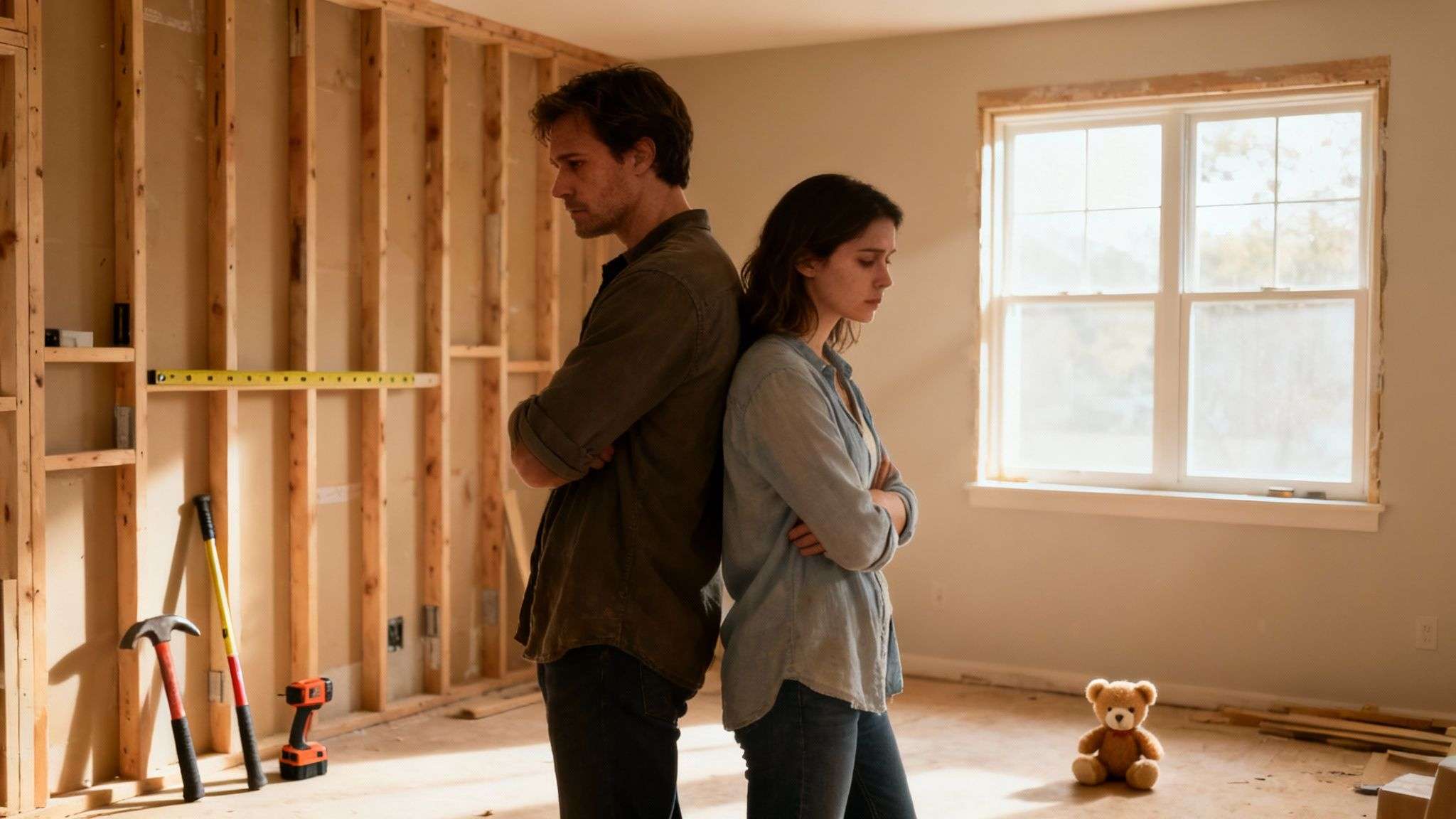
Building or renovating a home isn't just a construction project—it's one of the most intense pressure cookers a relationship can endure. While we talk a lot about financial strain and decision fatigue, the real impact often occurs in the space between people. The constant stress can slowly wear away at the communication, empathy, and patience that hold a partnership together.
When you're both running on fumes, your ability to truly listen and understand each other shrinks dramatically. The chronic stress of a renovation shortens fuses and makes healthy dialogue feel nearly impossible. Little disagreements over tile choices or light fixtures can explode into larger fights about values, priorities, and respect.
Suddenly, you aren't just discussing a faucet; you're really arguing about whose opinion matters more.
When Your Home Becomes a Conflict Zone
For a couple, one of the most destabilizing parts is when your home—the one place that's supposed to be your sanctuary—becomes the source of your stress. There's no longer a peaceful space to retreat to and reconnect because that space is now filled with dust, decisions, and simmering disagreements.
If not addressed, this constant, low-grade conflict can create significant emotional distance. You might start to feel like you're on opposing teams instead of working toward a shared dream. This often shows up in a few key ways:
Communication Breakdown: Conversations become purely transactional, focusing only on project logistics. You stop checking in on each other emotionally, and that genuine connection can start to fade.
Resentment Builds: One partner might feel they are shouldering the entire mental load of decision-making, while the other feels their input is ignored. These feelings can fester just beneath the surface.
Loss of Empathy: It’s incredibly hard to see things from your partner's perspective when you're completely overwhelmed yourself. Their stress can start to feel like a personal attack instead of a shared burden.
Brushing up on your communication skills during this time isn't just a nice idea—it's essential for protecting your bond. Learning to navigate these tough conversations is a game-changer, and exploring practical strategies for better communication in relationships can provide a much-needed roadmap.
The Ripple Effect on Family Dynamics
This strain doesn’t just affect partners. The chaotic, unpredictable world of a major renovation can be hard on kids, too. Their routines are disrupted, their personal space is invaded, and they can’t help but absorb the tension radiating from their parents.
A home filled with constant conflict is not a stable environment for a child. You might see them act out with anxiety, behavioural issues, or simply withdraw. Ironically, the very process of creating a "dream home" can make the present feel unsettled and unsafe for the youngest members of your family.
At the end of the day, the emotional weight of a build is a shared burden. Just recognizing how much it can test your relationship is the first step. By focusing on open communication, empathy, and making smart, stress-reducing choices with your professional team, you can help ensure the home you’re building strengthens your foundation instead of cracking it.
Practical Strategies to Protect Your Mental Health
Feeling completely overwhelmed by a home project isn't a sign you're failing; it’s a sign you’re human. The constant decision-making and disruption can grind down even the most level-headed person. The good news is you're not powerless. With a few intentional strategies, you can guard your mental health and regain a sense of control, even when your house is covered in a fine layer of sawdust.
This isn't about pretending the stress doesn't exist. It's about building a toolkit of practical, supportive habits that help you manage the emotional weight of it all. Think of these as simple, doable actions that prioritize self-compassion.
Setting Boundaries With the Project
One of the most exhausting parts of a big home project is how it takes over everything. It’s in your living space, it dominates conversations, and it can run on a loop in your head 24/7. The single best thing you can do for your sanity is to carve out boundaries that give your brain a rest.
Establish 'Renovation-Free' Zones: Designate one room—even just your bedroom—as a sanctuary. Make a rule: no project talk, no paint swatches, no contractor calls in this space. It gives you a physical place to retreat and mentally clock out.
Schedule 'Project-Free' Time: Just as you’d book a meeting, block off time on the calendar with your partner or family where the renovation is a forbidden topic. Go for a walk, have dinner out, or watch a movie. The goal is to reconnect as people, not just as co-project managers.
These small acts of separation are more powerful than they seem. They're a potent reminder that your life is much bigger than this project, and they help protect the relationships that matter most.
Communicating With Intention
When we're stressed, our communication skills are often the first casualty. We may jump to conclusions, speak in black-and-white terms, and forget how to listen. During a high-stakes project like this, clear and compassionate communication is your best line of defence against unnecessary conflict.
Take budget talks, for instance. Instead of letting money worries build until they explode, schedule a calm, weekly "Budget Check-in." Frame it as a team huddle, not a showdown. It helps to use "I" statements to explain how you're feeling without placing blame. Saying, "I feel anxious when I see unexpected costs," lands much differently than, "You're spending way too much."
This simple shift turns a potential battle into a collaborative problem-solving session. You’re tackling the financial stress together, which can strengthen your partnership.
Practicing Mindfulness in the Chaos
The moment a contractor shares news of another delay or an unexpected problem, it's easy to spiral into worst-case scenarios. Mindfulness is simply the practice of gently pulling your focus back to the present, and it can be a true lifesaver during a renovation.
You don't need a yoga mat or a silent room. You can practice mindfulness while standing in a half-finished kitchen. Just pause. Take three slow, deep breaths. Notice five things you can see around you. This simple grounding technique can interrupt an anxiety spiral and bring you back to a calmer state.
Another huge part of finding peace is managing your physical surroundings wherever you can. A chaotic space often fuels a chaotic mind. Taking time to declutter the areas you're still living in can make a significant difference.
Adjusting Your Expectations
So much of the frustration that comes with a renovation stems from the gap between our expectations and reality. Home renovation shows have trained us to think transformations are flawless and fast, but the real world is messy, complicated, and full of surprises.
Giving yourself permission to adjust your expectations is a profound act of self-kindness.
Anticipate Delays: Mentally build buffer time into your timeline. If you go in expecting things to take longer than the initial estimate, it softens the blow when they do.
Embrace "Good Enough": You will make hundreds, if not thousands, of decisions. Not every single one will be perfect. Aim for choices that are "good enough" instead of striving for the absolute, flawless option every time.
Celebrate Small Wins: When the finish line feels impossibly far away, acknowledging progress is crucial. Did the drywall finally go up? That's a win. Did the plumber finish the rough-in? Celebrate it. Focusing on these small completions is an antidote to feeling stuck.
By actively managing your boundaries, communication, and expectations, you can navigate the hidden emotional rollercoaster of home building with far more resilience—and protect what’s truly important: your well-being and your relationships.
Recognizing When It's Time for Professional Support
Sometimes, even with the best intentions and coping strategies, the sheer weight of a build or renovation is simply too much. Reaching a point where you need help isn't a sign of failure. It is a sign of incredible self-awareness and strength.
Think of it this way: you wouldn't hesitate to call a structural engineer if you found a crack in your foundation. Your emotional well-being is the foundation of your family, and it deserves the same expert attention when the pressure mounts.
But how do you know when you've crossed the line from "normal renovation stress" into something that needs a professional eye? There are a few key things to watch for.
Telltale Signs You Might Need to Talk to Someone
If these patterns start to feel familiar and persistent, it might be time to bring in some support. It can make all the difference.
Anxiety That's Running the Show: This isn't about the occasional jolt of panic over a tile choice. This is the kind of anxiety that hijacks your life—it might keep you up at night, affect your appetite, or make it impossible to focus on your job or enjoy time with your kids.
Conflict Stuck on a Loop: Disagreements during a renovation are a given. But if you and your partner are trapped in the same fight over and over, where every discussion ends in resentment and blame, that’s a major red flag.
A Persistent Feeling of Hopelessness: Do you feel constantly drained, irritable, or completely disconnected from the project you were once so excited about? When you've lost sight of the finish line and can't imagine a positive outcome, it could be a sign of burnout or even depression.
Relying on Unhealthy Crutches: If you notice you're leaning more heavily on alcohol, zoning out to avoid difficult conversations, or falling into other habits to numb the stress, it's a clear signal that your usual coping skills are overloaded.
Counselling provides a safe, neutral ground to unpack all of this without judgment. A therapist can offer practical tools to manage stress, navigate conflict, and communicate better—skills you can use long after the last contractor has left.
Taking this step is an investment in your health and the future of your family. It helps ensure that both you and your beautiful new home come out of this process healthy and intact. You can learn more about how counselling works and get support for taking that next step whenever you’re ready.
Frequently Asked Questions
When you're knee-deep in drywall dust and budget spreadsheets, it’s only natural for some very specific questions and worries to surface. Let's address some of the most common concerns we hear from homeowners in the middle of it all.
Is it normal for my partner and I to argue constantly during our renovation?
Absolutely. It’s incredibly common for couples to find themselves in conflict more than usual during a renovation. You're mixing huge financial pressures with an endless stream of decisions and a total disruption of your home life—it's a perfect recipe for short tempers and frayed nerves. Clashes over small details, unexpected costs, or blown-out timelines are practically a rite of passage for many.
The best thing you can do is reframe the situation: remember that you and your partner are a team tackling the project's stress, not each other. Try to carve out specific, non-negotiable time together that has absolutely nothing to do with paint colours or contractor schedules. It can be a lifeline for your relationship.
I feel guilty for being so stressed about our new home. How can I manage this?
Feeling guilty on top of being stressed is a heavy burden, but it's one many homeowners carry. We're often told that building a dream home should be a purely exciting experience. So when you feel overwhelmed or miserable instead, it’s easy to feel like you’re doing something wrong or being ungrateful.
The most important thing to do here is practice self-compassion. Your stress is a normal reaction to a genuinely difficult and demanding process. It is completely okay to feel grateful for the opportunity and, at the same time, find the day-to-day reality incredibly hard. Try to celebrate the small wins—the framing is up, the plumbing passed inspection—to help you focus on progress and ease some of that guilt.
How can we protect our children from the stress of a major home renovation?
For kids, the key is to keep their world as predictable and stable as possible, even when the house is in chaos. Talk to them about what’s happening in a way they can understand, explaining why there are loud noises or why their play area is temporarily off-limits. If you can, try to create a "safe zone"—one room that stays as normal and tidy as possible, where they can escape the mess and just be kids.
Ultimately, children often take their cues from you. They learn how to navigate stress by watching how you handle it. When you model healthy coping skills, communicate respectfully (even when you're frustrated), and show them what resilience looks like, you’re giving them powerful life lessons that will stick with them long after the project is finished.
Building a home can be one of the most stressful yet rewarding journeys you'll ever take. Remember to be kind to yourself and your loved ones through the process. Your feelings are valid, and support is available if you need it. Taking care of your emotional well-being is the most important part of building a space where your family can truly thrive.