Over half of Canadian adults report periods where the same emotional reactions seem to take control, especially in times of anxiety or after trauma. For those seeking therapy, understanding these patterns is the first step toward freedom. Unpacking the science behind emotional cycles and their early roots can reveal why struggles repeat and how personalized approaches can finally bring lasting relief.
Table of Contents
- Defining Emotional Patterns And Common Misconceptions
- Early Life Influences On Emotional Development
- Trauma, Anxiety, And Pattern Repetition
- The Role Of Relationships In Emotional Cycles
- Strategies To Break Negative Emotional Patterns
Key Takeaways
| Point | Details |
|---|---|
| Understanding Emotional Patterns | Emotions are structured responses shaped by experiences, not random occurrences, allowing individuals to manage and reshape their emotional reactions. |
| Influence of Early Childhood | Early interactions with caregivers establish emotional blueprints that significantly impact emotional regulation and mental health throughout life. |
| Role of Relationships | Interpersonal connections shape emotional cycles, influencing individual psychological responses and offering opportunities for growth and healing. |
| Strategies for Change | Effective coping strategies, including mindfulness and cognitive restructuring, are essential for breaking negative emotional patterns and fostering personal transformation. |
Defining Emotional Patterns And Common Misconceptions
Emotional patterns represent complex psychological roadmaps that shape how individuals perceive, react, and interact with their internal and external environments. Unlike simplistic beliefs about emotions being random or uncontrollable, scientific research reveals they are structured, learned responses deeply rooted in personal experiences and neurological processes.
The American Psychological Association explains that emotions are sophisticated reaction patterns involving experiential, behavioural, and physiological components. These patterns aren’t just spontaneous occurrences but intricate interactions between an individual’s psychological makeup, environmental stimuli, and underlying biological mechanisms. Emotional patterns can be understood as repetitive psychological responses that develop through multiple experiences, creating predictable frameworks for how we process and express feelings.
Common misconceptions about emotional patterns frequently undermine individuals’ understanding of their psychological landscape. Many people mistakenly believe emotions are purely subjective experiences beyond their control. However, research from the Atlas of Emotions demonstrates that emotional responses can be identified, understood, and ultimately managed through targeted psychological techniques. These patterns are not fixed but adaptive mechanisms that can be reshaped through conscious awareness and strategic intervention.
Understanding emotional patterns requires recognizing their multidimensional nature. They encompass cognitive interpretations, physiological reactions, behavioural expressions, and social interactions. By viewing emotions as complex, interconnected systems rather than isolated events, individuals can develop more nuanced strategies for emotional regulation and personal growth.
Pro tip: Start mapping your emotional patterns by keeping a daily journal that tracks triggers, responses, and underlying thoughts to build greater self-awareness and emotional intelligence.
Early Life Influences On Emotional Development
Emotional development begins in the earliest stages of childhood, forming complex psychological foundations that profoundly shape an individual’s future mental health and interpersonal relationships. The initial years of life are particularly critical, as they establish fundamental emotional blueprints that can persist throughout adulthood, influencing how individuals perceive, process, and respond to emotional experiences.
Canadian research on early childhood development highlights the intricate ways in which early interactions with caregivers construct emotional competence. Attachment patterns, established through consistent and responsive caregiving, play a pivotal role in determining a child’s emotional regulation capabilities. These foundational experiences help children develop critical skills such as recognizing and managing emotions, understanding social cues, and building resilient interpersonal connections.
Scientific investigations reveal that early life experiences can create lasting neurological imprints. Research published in neurodevelopmental disorders demonstrates how chronic stress and adverse experiences can fundamentally alter neural circuits responsible for emotional processing. These neurological changes can potentially increase vulnerability to mental health challenges, underscoring the importance of providing supportive, nurturing environments during childhood that promote emotional security and healthy psychological development.
Parental interaction styles, family dynamics, and environmental factors collectively contribute to emotional learning. Children absorb emotional intelligence through observation, mirroring, and direct experiences with primary caregivers. This learning process involves understanding emotional expressions, developing empathy, managing impulses, and constructing internal models of relationships that will guide future social interactions and emotional responses.
Here’s a summary of factors shaping emotional patterns across life stages:
| Life Stage | Key Influences | Lasting Impact |
|---|---|---|
| Early Childhood | Caregiver interactions | Emotional security formation |
| Adolescence | Peer relationships | Regulation skill development |
| Adulthood | Life experiences, trauma | Patterns of coping and growth |
| Older Adulthood | Social support, reflection | Adaptation or rigidity |
Pro tip: Engage in regular, emotionally responsive interactions with children, actively labelling and validating their feelings to support healthy emotional development.
Trauma, Anxiety, And Pattern Repetition
Trauma and anxiety form a complex psychological landscape where repetitive emotional patterns can profoundly impact an individual’s mental health and overall well-being. These interconnected experiences create intricate neural pathways that often perpetuate cycles of psychological distress, making understanding and interrupting these patterns crucial for healing and personal growth.

Canadian public health research reveals that trauma generates persistent emotional responses that can manifest as unconscious behavioural repetitions. These patterns are particularly prevalent among high-risk populations, including public safety personnel, where chronic stress and traumatic experiences can create deeply entrenched psychological mechanisms that continuously replay unresolved emotional narratives.
Psychological research delves deeper into the mechanisms of pattern repetition, exploring how traumatic experiences fundamentally reshape an individual’s emotional processing. Contemporary studies suggest that individuals unconsciously recreate traumatic scenarios as a complex psychological attempt to gain mastery or understanding of their original painful experiences. This compulsion to repeat is not a deliberate choice but a sophisticated survival mechanism where the psyche attempts to reprocess unresolved emotional wounds through repeated exposure and potential reinterpretation.
Anxiety emerges as a primary emotional response within these repetitive patterns, functioning as both a symptom and a signal of unprocessed trauma. The nervous system becomes primed to anticipate threat, creating heightened physiological and psychological reactivity that can perpetuate cycles of fear and avoidance. Breaking these patterns requires comprehensive therapeutic interventions that address both the neurological imprints of trauma and the associated emotional learning that sustains anxious responses.
Pro tip: Practice mindful awareness techniques to help recognise emotional pattern triggers and create conscious interruptions in automatic stress responses.
The Role Of Relationships In Emotional Cycles
Relationships serve as dynamic ecosystems that profoundly shape our emotional landscapes, functioning as intricate networks that both reflect and influence our psychological well-being. These interpersonal connections act as mirrors and sculptors of our emotional patterns, constantly negotiating between individual experiences and collective interactions that define our psychological responses.
Canadian research on youth mental health illuminates how relationship dynamics fundamentally construct emotional frameworks. Peer interactions during developmental stages create powerful feedback loops that can either reinforce healthy emotional regulation or perpetuate challenging psychological patterns. These relationships are not passive experiences but active environments where emotional skills are learned, tested, and refined through continuous social exchange.
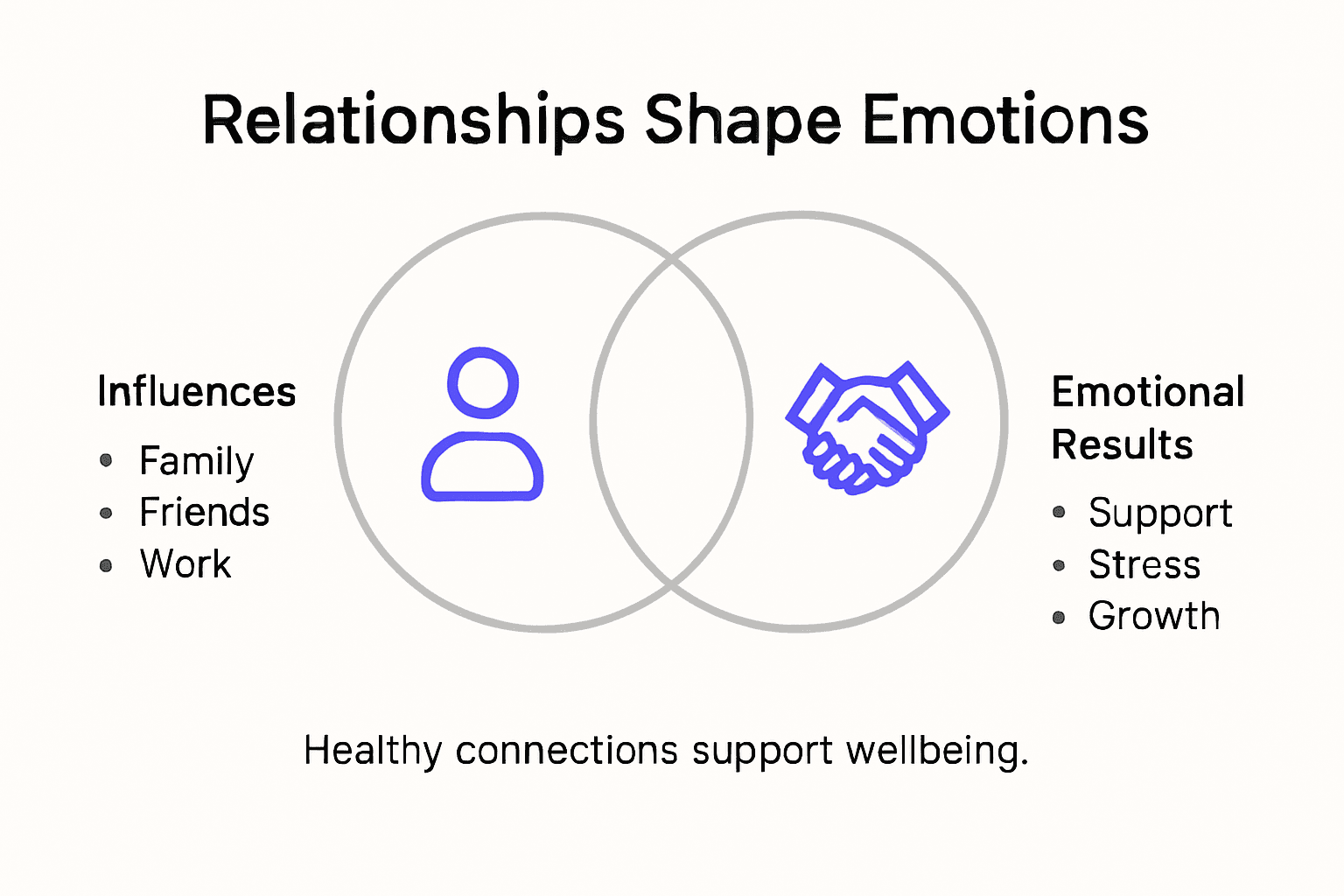
The complex interplay between individual psychological states and relational contexts generates sophisticated emotional cycles. Each interaction becomes a potential catalyst for emotional transformation, where personal histories, attachment styles, communication patterns, and unconscious expectations intersect. These cycles operate like intricate dance choreographies, with each participant contributing movements that shape collective emotional experiences, sometimes repeating generational or learned relational scripts that may no longer serve individual or collective well-being.
Emotional cycles within relationships are rarely static; they represent dynamic, adaptive systems constantly responding to internal and external stimuli. Trauma, attachment history, communication skills, and individual psychological resilience all contribute to how these cycles manifest. Understanding these patterns requires recognizing that relationships are not just external interactions but internal psychological processes that continuously reshape our emotional landscapes, offering opportunities for healing, growth, and profound personal transformation.
Pro tip: Develop active listening skills and cultivate emotional self-awareness to interrupt negative relational patterns and create more authentic, supportive connections.
Strategies To Break Negative Emotional Patterns
Breaking negative emotional patterns requires a comprehensive, intentional approach that addresses the complex psychological mechanisms underlying repetitive psychological responses. These strategies involve understanding the root causes of emotional cycles, developing metacognitive skills, and cultivating adaptive psychological resources that support lasting personal transformation.
Canadian population-based research reveals that effective coping strategies are fundamental to disrupting entrenched emotional patterns. These strategies involve developing cognitive flexibility, enhancing emotional awareness, and building robust social support networks that provide alternative perspectives and emotional regulation techniques.
Successful pattern interruption demands a multifaceted approach that combines self-reflection, psychological skill-building, and strategic intervention. Key components include identifying triggering circumstances, understanding the underlying emotional schemas that drive automatic responses, and deliberately constructing new neural pathways through consistent, mindful practice. Cognitive behavioural techniques, mindfulness practices, and trauma-informed therapeutic approaches offer powerful tools for systematically deconstructing and reconstructing emotional response mechanisms.
The process of breaking negative emotional patterns is not linear but a dynamic, iterative journey of self-discovery and psychological recalibration. It requires patience, compassion, and a willingness to challenge ingrained psychological habits. By recognizing that emotional patterns are learned responses rather than immutable characteristics, individuals can approach personal transformation with hope, curiosity, and strategic intentionality.
The table below compares ways to intentionally break negative emotional patterns:
| Approach | Key Focus | Primary Benefit |
|---|---|---|
| Mindfulness | Present-moment awareness | Reduces automatic reactions |
| Cognitive Restructuring | Challenging thought loops | Builds new response habits |
| Social Support | Engaging with others | Increases resilience |
| Emotional Journalling | Tracking triggers | Heightens personal insight |
Pro tip: Maintain a daily emotional tracking journal to identify pattern triggers and document your progressive shifts in psychological responses.
Understand and Transform Your Emotional Patterns with Expert Support
The article explains how deep-rooted emotional patterns often shape our mental health and wellbeing in profound ways. Many people struggle with repetitive responses to trauma, anxiety, and relationship challenges without knowing these reactions can be changed. If you recognise painful feelings resurfacing or notice habitual emotional cycles limiting your growth, you are not alone. Concepts like emotional regulation, trauma impact, and relational dynamics are key to breaking free from these patterns.
At Interactive Counselling, we offer compassionate, personalized therapy designed to help Canadians identify and interrupt unhelpful emotional patterns. Whether you face anxiety, grief, or relationship stress our licensed therapists provide flexible in-person and online sessions across Kelowna, Vernon, Grande Prairie, and Penticton. Discover practical strategies grounded in your unique experiences to build resilience and reclaim control over your emotional life. Take the first step toward lasting change and visit Interactive Counselling now to book your appointment and explore tailored services that support your wellbeing journey.
Frequently Asked Questions
What are emotional patterns?
Emotional patterns are structured, learned psychological responses that shape how individuals perceive, react, and interact with their emotions and environments over time.
How do early life experiences influence emotional development?
Early life experiences, especially interactions with caregivers, play a crucial role in establishing emotional competencies, such as emotional regulation and understanding social cues, which persist throughout adulthood.
How do trauma and anxiety relate to emotional patterns?
Trauma can create persistent emotional responses that lead to unconscious behavioral repetitions, while anxiety functions as both a symptom and a signal of unprocessed trauma, perpetuating cycles of distress.
What strategies can help break negative emotional patterns?
Effective strategies include mindfulness practices, cognitive restructuring, engaging social support, and maintaining an emotional journaling habit to increase awareness of triggers and foster healthier emotional responses.
Recommended
- Quality Time Love Language: How Presence Builds Connection
- When Love Languages Don’t Match: How to Reconnect When You Feel Out of Sync
- Physical Touch Love Language: Why Feeling Connected Matters
- 7 Types of Therapy Explained for Better Mental Health – Interactive Counselling