The Penticton holiday scene can be a complicated time. We often see picture-perfect scenes in movies or online, but for many of us, the reality feels different. Family gatherings can bring up old arguments, unspoken tensions, and feelings that have been simmering all year. If you find yourself feeling more anxious than excited about the holidays, you are definitely not alone. It’s a common experience, and it’s okay to feel that way. This guide is here to offer some understanding and support, without any judgment. We’ll explore why this time of year can be so challenging and look at gentle, practical ways to navigate it, helping you find a little more peace during a stressful season. For more information, see our Penticton family counselling.
Why Holiday Family Conflict Feels More Intense
It’s not your imagination—family disagreements often feel heavier and more explosive during the holidays. This happens for a few key reasons. For one, everyone is suddenly thrown together in close quarters, often for longer than usual. The normal routines are gone, and every interaction can feel like it’s under a microscope. It’s a perfect setup for friction. For more information, see our counselling in Penticton.
Think about it: For more information, see our family counselling.
- Forced togetherness: You’re sharing space with people you might not see often, which can be draining.
- High expectations: There’s a lot of pressure for everything to be joyful and harmonious. When it isn’t, the disappointment can feel sharp.
- Past issues resurface: Old hurts or unresolved arguments have a way of bubbling up when the whole family is together.
The cultural pressure for a “perfect” holiday adds another layer of stress. This gap between the ideal we see on TV and our actual family experience can make us feel like we’re failing, which only makes the tension worse.
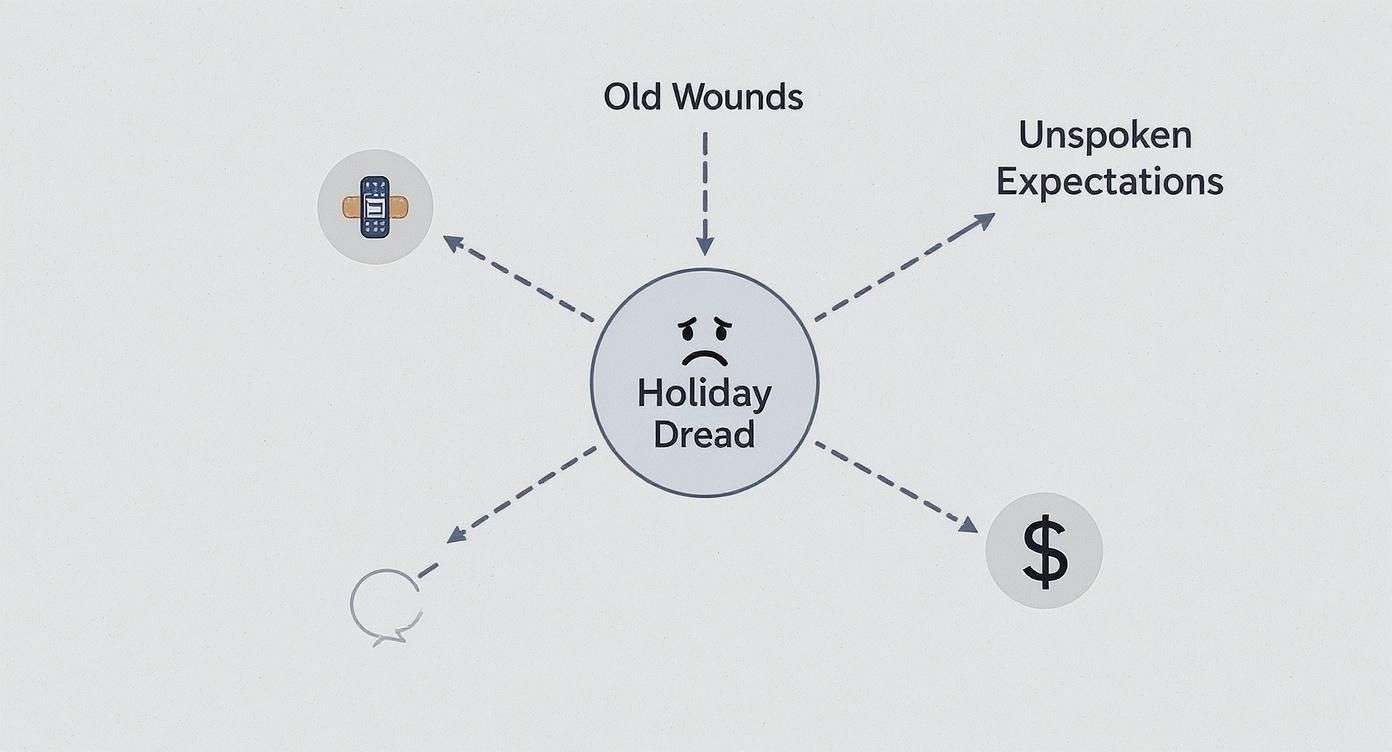
Common Sources of Holiday Tension
Holiday arguments rarely appear out of thin air. They usually grow from a few common seeds that get planted long before the decorations go up. When you mix high stress with these sensitive topics, it’s easy for things to escalate. Recognizing these patterns is the first step toward navigating them more calmly.
Here are a few familiar sources of friction:
- Traditions and change: A small disagreement over whose turn it is to host or what to eat for dinner can tap into deeper feelings. It’s often not about the turkey; it’s about feeling heard, valued, and respected as the family changes and grows.
- Unsolicited advice: Comments about your job, your parenting, or your life choices can feel like criticism, even if the person means well. This can leave you feeling judged and put you on the defensive.
- Money matters: Financial pressures are very real, especially with the South Okanagan’s cost of living. The unspoken rules around gift-giving, travel costs, and hosting can create a lot of resentment that often comes out in arguments about something else entirely.
- Differing values: When everyone is tired and on edge, conversations about sensitive topics like politics or personal beliefs can quickly become heated and hurtful.
Learning to spot these triggers in your own family can be empowering. It allows you to prepare and respond differently, sometimes with the help of supportive family counselling in Penticton to guide the conversation.
The Emotional Weight Behind Family Expectations

Holiday arguments are rarely just about what’s happening in the moment. The real weight comes from the unspoken expectations we all carry. Each of us walks into a family gathering with an idea of what the day should be like. This mental picture is often a mix of cherished childhood memories, scenes from holiday movies, and the perfect family photos we see online.
The problem is, everyone has their own version of this ideal holiday. Your idea of a perfect day might involve quiet connection, while another family member might expect a loud, boisterous celebration. When these invisible expectations don’t line up with reality—or with each other—it creates a space for disappointment and hurt feelings. The arguments about small things are often just the surface expression of deeper, unmet needs for connection, validation, and a sense of belonging. It’s a quiet grief for the holiday we wish we were having.
How Family Conflict Affects Your Well-Being
Have you ever noticed how the tension from a family argument can linger in your body long after the event is over? That’s not just your imagination. The stress from these interactions is very real and can take a genuine toll on both your mind and body. Your feelings are a valid signal that you’ve been through something difficult and need time to recover. It’s a natural response, not an overreaction.
This kind of stress can show up in several ways:
- Feeling emotionally drained: You might feel completely exhausted, irritable, or tearful for days afterward, like your emotional battery is completely empty.
- Lingering anxiety: A persistent feeling of dread or a knot in your stomach can be hard to shake, making it difficult to truly relax.
- Trouble sleeping: It’s common to lie awake at night, replaying conversations or worrying about the next family encounter.
- Physical symptoms: Stress often appears in the body as tension headaches, an upset stomach, or sore muscles in your neck and shoulders.
Practical Ways to Reduce Holiday Tension
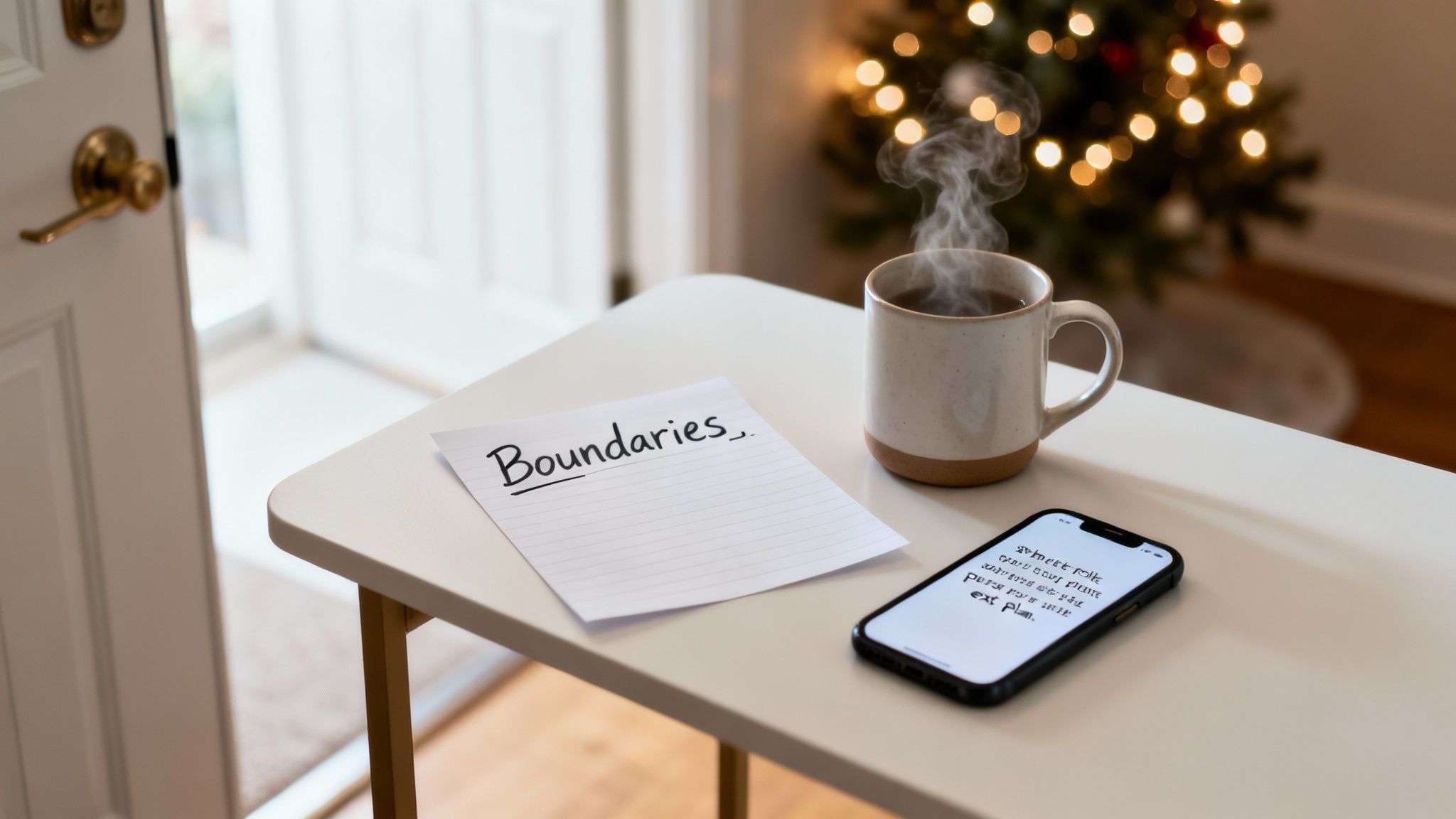
You can’t control how your relatives behave, but you can take steps to protect your own peace. The goal isn’t to win an argument but to make the entire experience more manageable for yourself. It’s about having a few gentle, practical strategies ready before you even walk in the door.
Here are some ideas you can try:
- Set a time limit: Decide ahead of time how long you can comfortably stay. It’s perfectly okay to have other plans, even if those plans are just to go home and relax. Having a clear end time gives you a sense of control.
- Plan an escape route: Have a quiet signal with your partner or a friend that means, “I’m reaching my limit, and I need a break.” This could be a code word or simply stepping away to “make a phone call.”
- Prepare neutral topics: Keep a few easy, low-stakes conversation starters in mind. Asking about a new TV show, a favourite recipe, or a recent trip can gently steer the conversation away from tense subjects.
- Share the load: If you are hosting, you don’t have to do it all. Ask people to bring a dish, help with cleanup, or take on a specific task. People are often happy to help if they know what’s needed.
Sometimes, professional guidance can make all the difference. Exploring holiday stress counselling can provide you with personalized tools to feel more grounded and prepared.
When Stress Turns Into Burnout During the Holidays
There’s a difference between feeling stressed and feeling completely burnt out. Holiday burnout is more than just being tired; it’s a deep sense of exhaustion that can leave you feeling cynical, disconnected, and resentful of the very season that’s meant to bring joy. It happens when the demands of the season have completely drained your emotional and physical energy, leaving you running on empty. This is your mind and body’s way of sending up a flare, signaling that it’s time to stop and prioritize your own well-being. For some in our Penticton community, pressures like travel logistics or challenging weather can make this feeling even more intense. Recognizing that you’ve hit a wall is the first step. Taking time for yourself isn’t selfish; it’s a necessary act of self-preservation that allows you to truly recover.
With our counsellors across BC and Alberta and through virtual therapy across Canada, we’re here to support you. If holiday stress is affecting your well-being or relationships, our therapists can help you regain balance, set boundaries, and feel grounded again.
Frequently Asked Questions
How can I set boundaries without causing more conflict?
The key is to state your needs calmly and kindly before things get heated. Use “I” statements to explain what you need, rather than making demands. For example, say, “I’ll need to step outside for some fresh air every so often,” instead of, “You all are too loud.” Your goal is to take care of yourself, not control others.
What if my partner’s family is the source of the stress?
It’s essential to approach this as a team. Before the gathering, talk with your partner about potential triggers and agree on a plan. This could be setting a time limit on your visit or having a subtle signal for when one of you needs support or a break. Presenting a united front shows you have each other’s backs.
Is it okay to skip a family holiday event altogether?
Yes, it is absolutely okay. Protecting your mental and emotional health is a valid reason to decline an invitation. If you know an event will be genuinely harmful to your well-being, you have the right to say no. A simple, “Thank you for the invitation, but we won’t be able to make it this year” is enough.
How do I deal with guilt over not meeting family expectations?
Feeling guilty is a common reaction when you start prioritizing your own needs over long-held family traditions. Try to remember that you cannot pour from an empty cup. Taking care of yourself isn’t selfish; it’s what enables you to be present and healthy in all of your relationships long-term.
What’s a simple technique to use when I feel an argument starting?
The moment you feel yourself getting tense, take a slow, deep breath. Focus on the feeling of your feet on the floor to ground yourself in the present moment. Another helpful tool is to briefly excuse yourself by saying, “I’m just going to get a glass of water.” This creates a small pause, giving you a chance to respond thoughtfully instead of reacting.
How can I help my children navigate tense family gatherings?
Prepare your kids beforehand by talking simply about who they will see and what to expect. Let them know you are their safe person. You can say, “If you feel overwhelmed or need a break, you can come to me, and we can step away for a bit.” Bringing a book or a small game can also give them a healthy way to retreat if the energy gets too intense.