
Most Canadian young adults are surprised to learn that early life experiences can wire the brain for coping challenges well into adulthood. If you grew up with difficult or unpredictable family dynamics, you might notice patterns in how you handle stress or connect with others. Understanding where your coping styles begin is key. This guide explores how childhood trauma shapes emotional responses and highlights what you can do to support your own healing journey. For more information, see our trauma counselling.
Table of Contents
- Defining Early Life Experiences And Coping
- Types Of Childhood Experiences That Impact Coping
- How Early Events Shape Adult Responses
- Recognizing Coping Patterns Linked To Trauma
- Therapeutic Approaches For Healthier Coping
Key Takeaways
| Point | Details |
|---|---|
| Impact of Early Life Experiences | Early life experiences shape emotional responses and coping mechanisms, influencing an individual’s ability to manage stress and challenges. |
| Coping Mechanisms Types | Coping strategies can be problem-focused, emotion-focused, or avoidance-based, each reflecting different adaptive responses shaped by childhood. |
| Role of Positive Experiences | Positive childhood experiences significantly contribute to resilience and healthier coping strategies, enabling better emotional regulation in adulthood. |
| Therapeutic Approaches | Cognitive Behavioral Therapy and mind-body interventions are effective for transforming maladaptive coping patterns rooted in early traumatic experiences. |
Defining Early Life Experiences and Coping
Early life experiences form the complex psychological foundation that significantly shapes an individual’s emotional responses, behavioural patterns, and coping mechanisms. These formative experiences, which occur during childhood and adolescence, create intricate neural pathways that fundamentally influence how we process stress, manage challenges, and interact with our environment.
Understanding coping styles requires recognizing that they are not merely learned behaviours, but deeply ingrained psychological adaptations developed through interactions with caregivers, family dynamics, and significant life events. Some individuals develop resilient coping strategies that help them navigate difficulties effectively, while others might develop maladaptive mechanisms that create ongoing emotional challenges. Research in developmental psychology suggests that these patterns are often unconsciously established before individuals reach adulthood.
Coping mechanisms can be broadly categorized into three primary types: problem-focused strategies that directly address challenges, emotion-focused approaches that manage emotional responses, and avoidance techniques that temporarily shield individuals from uncomfortable situations. These strategies are not inherently positive or negative but reflect unique adaptive responses shaped by an individual’s early life context. Children who experience consistent emotional support and secure attachments tend to develop more flexible, healthier coping mechanisms compared to those exposed to unpredictable or traumatic environments.
Here is a comparison of common coping mechanism categories and their potential outcomes:
| Coping Mechanism Type | Key Features | Typical Outcomes | Potential Risks |
|---|---|---|---|
| Problem-Focused | Directly addresses issues | Greater sense of control | Overwhelm if challenge is unresolvable |
| Emotion-Focused | Manages internal feelings | Emotional relief and stability | Possible avoidance of core issues |
| Avoidance | Distracts from stressor | Temporary reduction of distress | Long-term emotional buildup |
Pro tip: Recognizing your default coping style is the first step towards developing more adaptive and emotionally intelligent strategies for managing life’s challenges.
Types of Childhood Experiences That Impact Coping
Childhood experiences represent a complex tapestry of interactions that profoundly shape an individual’s psychological development and future coping strategies. Adverse childhood experiences (ACEs) encompass a range of traumatic events including physical, emotional, and sexual abuse, neglect, household dysfunction, and exposure to domestic violence that can significantly disrupt normal emotional development.
These experiences create neurological and psychological imprints that manifest in distinct coping mechanisms. Individuals who have experienced chronic stress or trauma during childhood often develop hypervigilant or avoidant coping styles as protective responses. For instance, children who grew up in unpredictable or unsafe environments might develop heightened threat detection mechanisms, leading to increased anxiety and difficulty regulating emotional responses in adulthood.

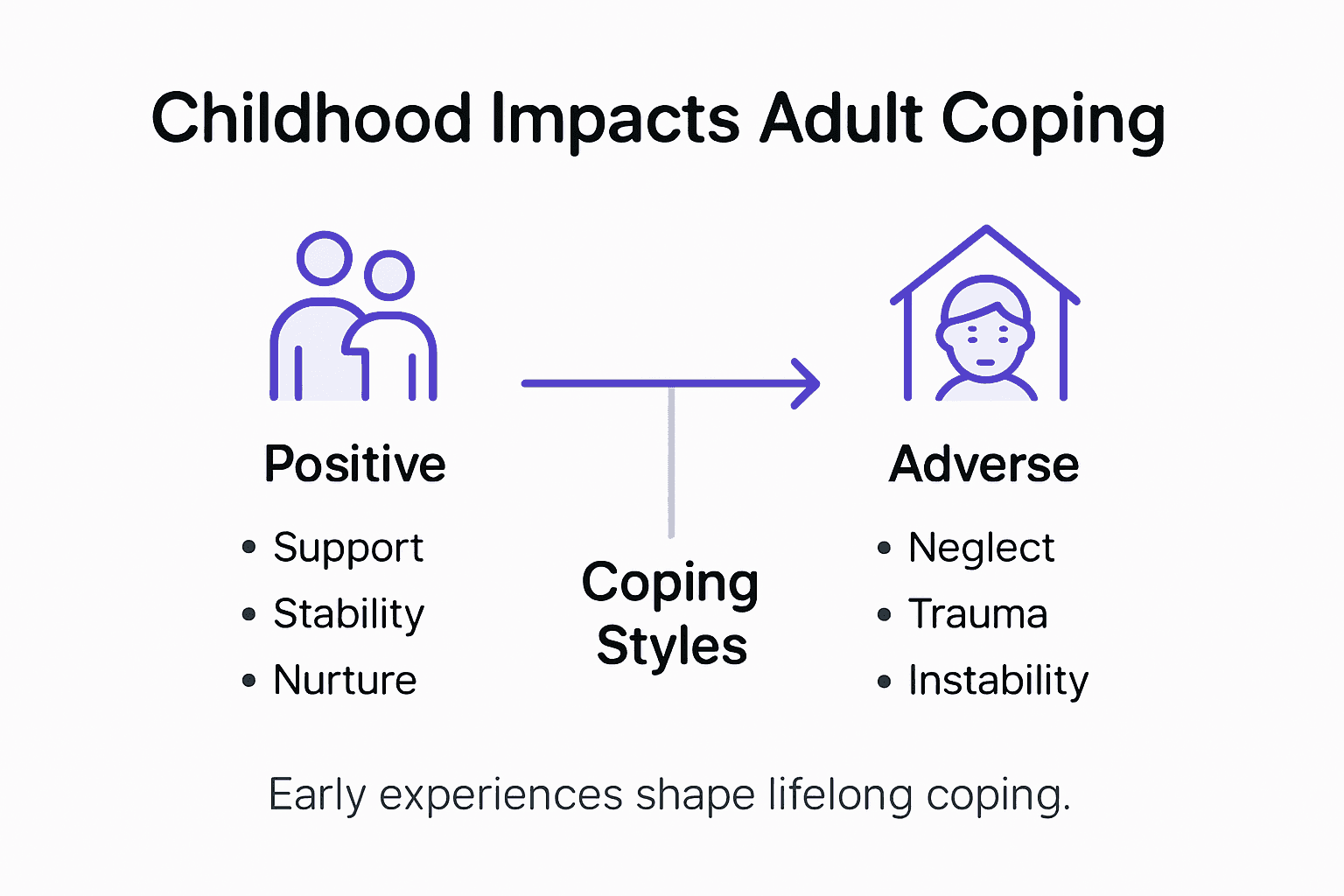
Positive childhood experiences can counterbalance adverse experiences and contribute to resilience. Supportive relationships, consistent emotional validation, and safe environments enable children to develop more adaptive coping strategies. These experiences teach emotional intelligence, problem-solving skills, and healthy emotional regulation, allowing individuals to navigate challenges with greater psychological flexibility.
The following table summarizes positive and adverse childhood experiences and their long-term effects:
| Childhood Experience | Examples | Impact on Adult Coping |
|---|---|---|
| Positive Experiences | Stable caregiving, emotional support | Enhanced resilience, emotional regulation |
| Adverse Experiences (ACEs) | Abuse, neglect, household dysfunction | Prone to hypervigilance, maladaptive coping |
Pro tip: Seek professional counselling to understand how your childhood experiences may be influencing your current coping mechanisms and emotional responses.
How Early Events Shape Adult Responses
The intricate relationship between childhood experiences and adult psychological functioning reveals a complex neurobiological landscape of adaptation and resilience. Emerging adult research from Canadian studies demonstrates how early life events create profound, long-lasting imprints on an individual’s emotional and physiological response systems, fundamentally shaping their approach to future challenges.
Traumatic or unstable childhood environments can trigger sophisticated neurological adaptations that persist into adulthood. These adaptations often manifest as hypervigilant stress responses, where individuals develop heightened threat detection mechanisms that remain activated long after the original traumatic context has passed. Neuropsychological research indicates that emotional neglect and abuse can significantly alter hypothalamic-pituitary-adrenal axis functioning, resulting in prolonged and intense stress recovery periods.
Interestingly, not all early life experiences lead to detrimental outcomes. Resilient individuals can develop robust coping mechanisms through protective factors such as supportive relationships, emotional validation, and external resources. These positive experiences can create neurological pathways that enable more adaptive stress management, emotional regulation, and psychological flexibility. The brain’s remarkable plasticity allows for healing and transformation, suggesting that early challenging experiences do not definitively determine one’s future emotional landscape.
Pro tip: Invest in professional therapy to understand and reframe your early life experiences, transforming potential psychological barriers into opportunities for growth and healing.
Recognizing Coping Patterns Linked to Trauma
Trauma survivors often develop intricate psychological defence mechanisms that serve as protective strategies, yet can ultimately impede emotional healing and personal growth. Canadian healthcare research highlights the critical importance of understanding these complex coping patterns, which frequently manifest as survival techniques developed in response to overwhelming emotional experiences.
These coping mechanisms typically emerge through predictable patterns, including hypervigilance, emotional numbing, avoidance, and persistent anxiety. Individuals might unconsciously recreate protective behavioural responses that once shielded them from perceived threats, even when those original dangers no longer exist. Cognitive Behavioral Therapy approaches provide evidence-based strategies for identifying and gradually transforming these deeply ingrained neurological patterns, helping individuals recognize how their trauma-based coping mechanisms might be limiting their current emotional experiences.
Recognizing trauma-linked coping patterns requires compassionate self-observation and professional guidance. Common indicators include persistent relationship difficulties, extreme emotional reactions to seemingly minor triggers, chronic anxiety, difficulty trusting others, and an internalized sense of vulnerability. These patterns are not character flaws but adaptive responses developed during times of significant stress, representing the mind’s remarkable capacity to protect itself during challenging circumstances.
Pro tip: Keep a reflective journal documenting your emotional responses and behavioural patterns to help identify trauma-linked coping mechanisms and create awareness for potential healing.
Therapeutic Approaches for Healthier Coping
Cognitive Behavioral Therapy (CBT) represents a powerful therapeutic approach for transforming deeply ingrained coping mechanisms rooted in early life experiences. This evidence-based method focuses on identifying and systematically restructuring maladaptive thought patterns that emerge from childhood trauma, enabling individuals to develop more resilient and adaptive emotional responses.
Modern therapeutic interventions recognize that healing involves more than symptom management. Mind-body interventions offer complementary strategies that support holistic psychological recovery. Comparative research on trauma-focused therapies demonstrates that approaches like meditation, mindfulness, and CBT can work synergistically to help individuals reframe their traumatic experiences, reduce hypervigilance, and cultivate emotional regulation skills.
Effective therapeutic approaches share common elements: creating a safe therapeutic environment, validating the individual’s emotional experience, and teaching practical skills for emotional management. Techniques such as cognitive restructuring, exposure therapy, and emotional processing help individuals gradually replace survival-based coping mechanisms with more flexible, healthy adaptive strategies. The goal is not to erase traumatic memories but to reduce their emotional charge and integrate them into a coherent, empowering narrative.
Pro tip: Approach therapy with patience and self-compassion, understanding that healing is a gradual process of rebuilding emotional resilience.
Transform Your Coping Styles Through Compassionate Therapy
Early life experiences shape the way we cope with stress and trauma in adulthood. If you find yourself struggling with hypervigilance, avoidance, or difficulty regulating emotions due to past childhood challenges, you are not alone. Understanding how these ingrained coping mechanisms influence your daily life is the first step toward healing.
At Interactive Counselling, our licensed therapists provide personalised, supportive care across multiple Canadian locations and online. Whether you are seeking to rebuild resilience from adverse childhood experiences or develop healthier coping skills, our therapy services offer a safe space to explore and transform these patterns. Start your journey with approaches grounded in evidence and empathy. Take action now to connect with compassionate professionals ready to guide your healing. Visit Interactive Counselling to learn more and book your session today.
Frequently Asked Questions
What are early life experiences and how do they impact coping styles?
Early life experiences refer to the formative events and interactions during childhood and adolescence that shape an individual’s emotional responses and coping mechanisms. These experiences affect how we manage stress and challenges throughout adulthood.
How do adverse childhood experiences (ACEs) influence adult coping mechanisms?
Adverse childhood experiences, such as abuse or neglect, can lead to hypervigilant or avoidant coping styles in adulthood. Individuals who faced such challenges may struggle with anxiety and might have difficulty regulating their emotions as a result.
What are the different types of coping mechanisms?
Coping mechanisms can be categorized into problem-focused strategies that directly address issues, emotion-focused approaches that manage feelings, and avoidance techniques that temporarily shield individuals from stressors. Each type has its own potential outcomes and risks.
How can therapy help in reshaping coping styles developed from early life experiences?
Therapy, particularly Cognitive Behavioral Therapy (CBT), helps individuals identify and reframe maladaptive thought patterns from their childhood. It teaches emotional management skills and promotes healthier coping strategies that replace survival-based responses.
Recommended
- How Emotional Patterns Shape Canadian Wellbeing
- Emotional Regulation: Building Resilience in Everyday Life
- Coping with Covid 19 – Interactive Counselling
- Guilt vs. Shame: Understanding the Crucial Difference