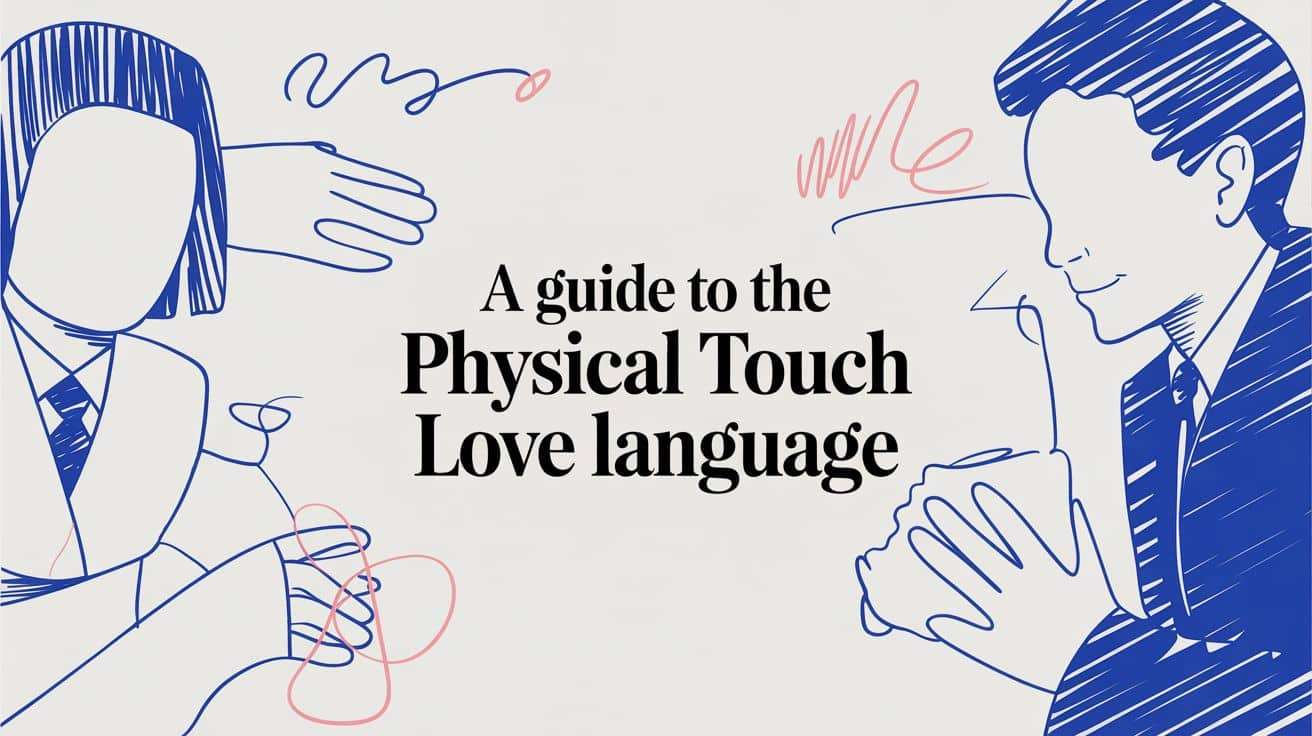
For some of us, a simple, reassuring touch says more than a thousand words ever could. It’s the quiet language of connection, communicating support and presence in a way that feels deeply real. If physical affection is your primary way of feeling loved, its absence can feel like an emotional void. It isn’t just about missing a hug; it can feel like your partner is miles away, even when they’re in the same room. A warm embrace, holding hands while you walk, or a spontaneous back rub are the gestures that fill your emotional tank. This non-verbal comfort is a tangible way of hearing, “I’m here, and we’re in this together,” making you feel truly seen and secure. Understanding this need is a great starting point for exploring all the different love languages and how they appear in our most important relationships. For more information, see our couples counselling.
What Physical Touch Really Means
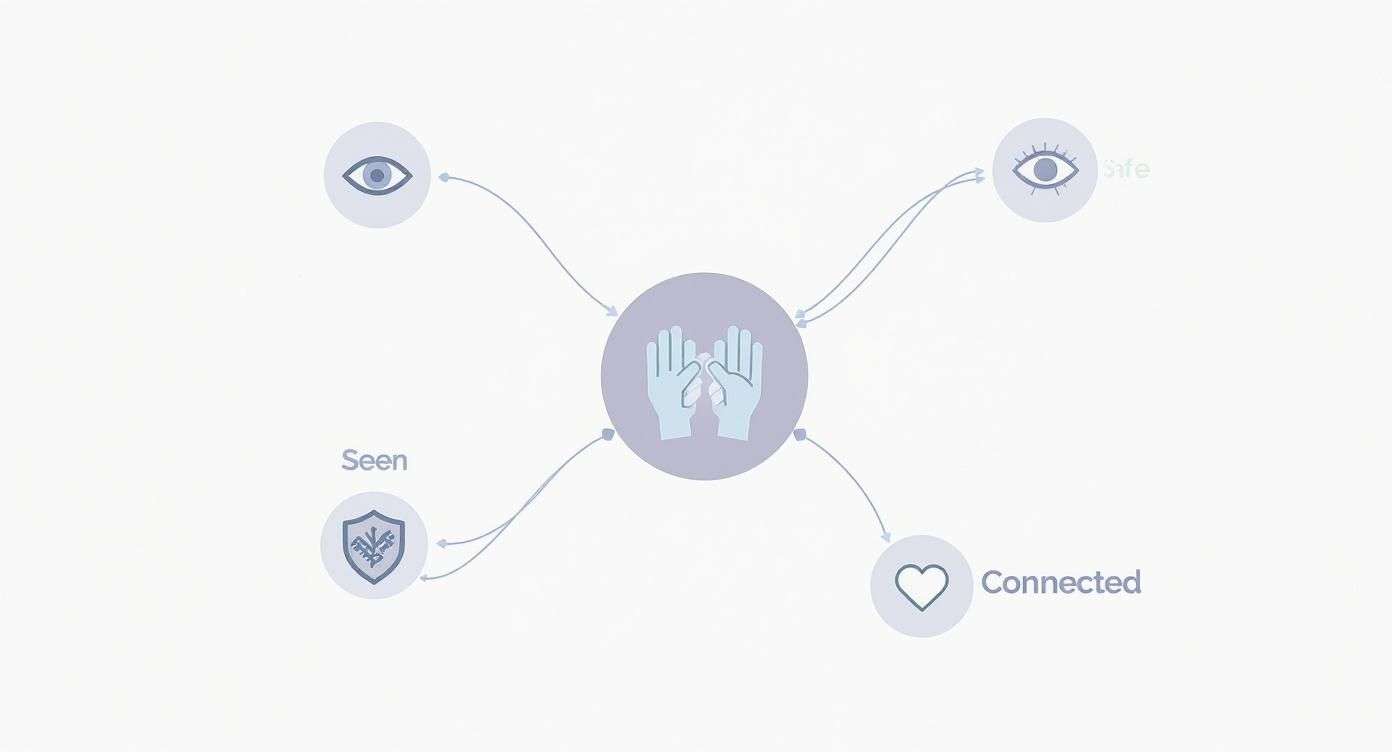
This form of connection isn’t always about big, passionate embraces; its true power often lies in the small, quiet gestures that happen every day. It’s about feeling present, secure, and genuinely seen by the people who matter most. For those who feel love this way, these connections are the most direct path to feeling safe and emotionally bonded. Think of it less as a grand statement and more as a constant, gentle reminder of your presence. A simple touch on the arm during a conversation is a quiet acknowledgment that says, “I’m right here with you.” A reassuring hand on the back can instantly calm a racing mind, creating a profound sense of security. Physical closeness literally closes the emotional gap, offering a tangible way to reinforce your shared bond and whisper “you’re not alone” in a way words sometimes can’t.

Why Touch Feels Like Love for This Love Language
Affection goes way beyond skin deep, acting as a direct line to the emotional core and speaking to the nervous system in a way words often can’t. A simple, reassuring touch can instantly communicate, “You are safe, you are seen, and you are not alone.” This is precisely why a heartfelt hug can offer more comfort than a thousand well-intentioned words ever could. This response is hardwired into our biology. When we receive a caring touch, our bodies often release oxytocin—the “cuddle hormone”—which is crucial for building bonds of trust and connection. At the same time, this physical contact can calm the nerves that fire up when we’re stressed. Research shows how a gentle hand on the arm or a warm embrace can lower cortisol levels and ease anxiety. Understanding this biological and emotional connection is key to appreciating why, for some, touch isn’t just one way to show love—it’s the most important one.
Physical Touch in Romantic Relationships
In a partnership, physical touch is often the quiet, unspoken language that keeps emotional intimacy alive. It’s found in the small, everyday acts of connection that build a solid foundation of trust. Think about the little things that silently say, “I’m thinking of you.” It could be a gentle hand on your partner’s back as you pass them in the hallway, or choosing to sit close enough on the sofa that your shoulders touch. These seemingly minor gestures are powerful, reinforcing your bond and making your partner feel seen and cherished. Lingering hugs for a few extra seconds, resting a hand on their knee during dinner, or a spontaneous tousle of their hair can inject warmth into your day-to-day life. When offered with genuine care and consent, these moments strengthen your bond by creating a steady, reliable current of safety and closeness flowing through your relationship.

Physical Touch in Parenting & Family Life
Long before romance, our first lessons in love and safety come from touch. For children, a gentle hand or a big hug after a scraped knee sends a powerful message that words can’t match: “You are safe, you are loved.” These moments of non-verbal reassurance are the building blocks of secure attachment. They teach a child they have a safe harbour to return to when the world feels too big or scary. You don’t need big displays of affection to build a strong family bond. It’s the small, consistent acts woven into daily life that create belonging. For instance, when a child is upset, a hug does more than console—it helps regulate their nervous system. Walking hand-in-hand offers a tangible sense of togetherness and protection. Even playful wrestling or a tickle fight is a fantastic way to bond, release energy, and create joyful, connected memories that last a lifetime.

Physical Touch & Emotional Burnout
Have you ever felt like you just can’t handle one more touch? For parents who’ve spent the day as a human climbing frame, or anyone emotionally drained from stress, physical contact can feel overwhelming. This is often called being ‘touched-out.’ It’s a completely normal response to overstimulation and doesn’t mean you love your partner or family any less; it’s your nervous system’s way of saying it needs a break. This can be tough when a partner’s primary love language is physical touch, as they might interpret your need for space as rejection. The key is finding a gentle middle ground. Communicating your needs honestly while finding low-energy ways to show you care, like resting your hand on their arm for a moment or leaning your head on their shoulder for a few seconds, can bridge the gap. These acts send a powerful message: “I’m still here, I just need some space right now.”
When Physical Touch Turns Into Disconnection
Touch is supposed to bring us closer, but what happens when it becomes the very thing that pushes you apart? Suddenly, a hug feels loaded and reaching for a hand is met with a flinch. This usually isn’t about the touch itself, but what’s happening underneath the surface. Unresolved fights, broken trust, or simply not feeling heard can create emotional distance. When that gap exists, physical affection can stop feeling loving and start feeling like an empty or unwanted intrusion. For the person whose love language is touch, this silence is devastating, feeling like deep personal rejection. For the one pulling away, it can be a desperate attempt to protect their own well-being when feeling overwhelmed. When touch becomes a battleground instead of a safe harbour, it’s a clear signal that something deeper needs attention. Navigating this often requires patience and sometimes outside help, and that’s where supportive couples counselling can be incredibly helpful.
Final CTA
With our counsellors across BC and Alberta and through virtual therapy across Canada, we’re here to help you reconnect. If the physical touch love language has become a source of tension or disconnection, our therapists can help you rebuild trust, closeness, and emotional safety.