The receiving gifts love language means feeling most loved through tangible tokens of thought — an object that proves you were held in mind while you were apart. It is one of the five love languages described by Gary Chapman, and it is the one most often misread: it is not about materialism, price, or expecting expensive things. For someone who feels loved this way, a gift is a tangible, physical symbol of affection. It’s a quiet message that says, “You were on my mind even when we weren’t together.” It’s the thoughtfulness, effort, and care behind the present that makes them feel truly seen, valued, and cherished.
This guide is here to help you look past the price tag and understand the profound emotional meaning these symbols can hold. We’ll explore how even the simplest item, when chosen with care, can carry incredible weight, turning an ordinary object into a powerful expression of love. This is one of the core ways people feel connected, and you can get the full picture in our guide to what are the 7 love languages.
What Receiving Gifts Really Means
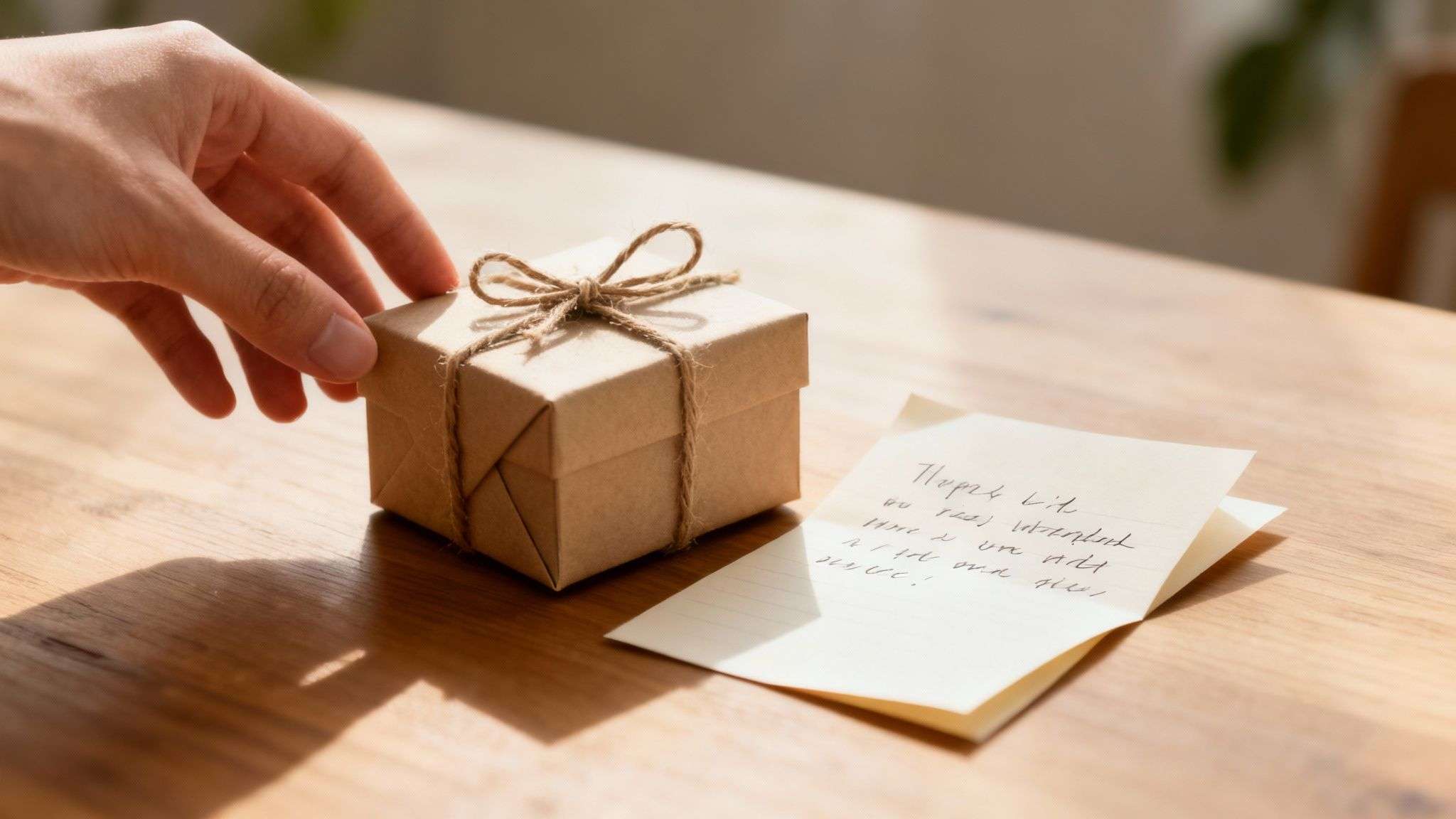
For someone whose primary love language is receiving gifts, the present itself is just a stand-in for something much deeper. It’s not about the item at all, but about the story it tells—the moment you picked up on a hint, the effort you put into finding it, and the love that’s literally wrapped up in the act of giving. A thoughtful gift becomes a powerful messenger, delivering emotional truths that words sometimes struggle to capture. It’s a tangible way of saying, “I see you, I listen to you, and I cherish what makes you, you.” This is the heart of it all.
For the person on the receiving end, a well-chosen gift isn’t just a nice thing; it’s tangible proof of being seen and understood. The real value has nothing to do with the price tag and everything to do with the consideration behind it. This is why the power of a handmade gift can often speak louder than the most expensive store-bought item.
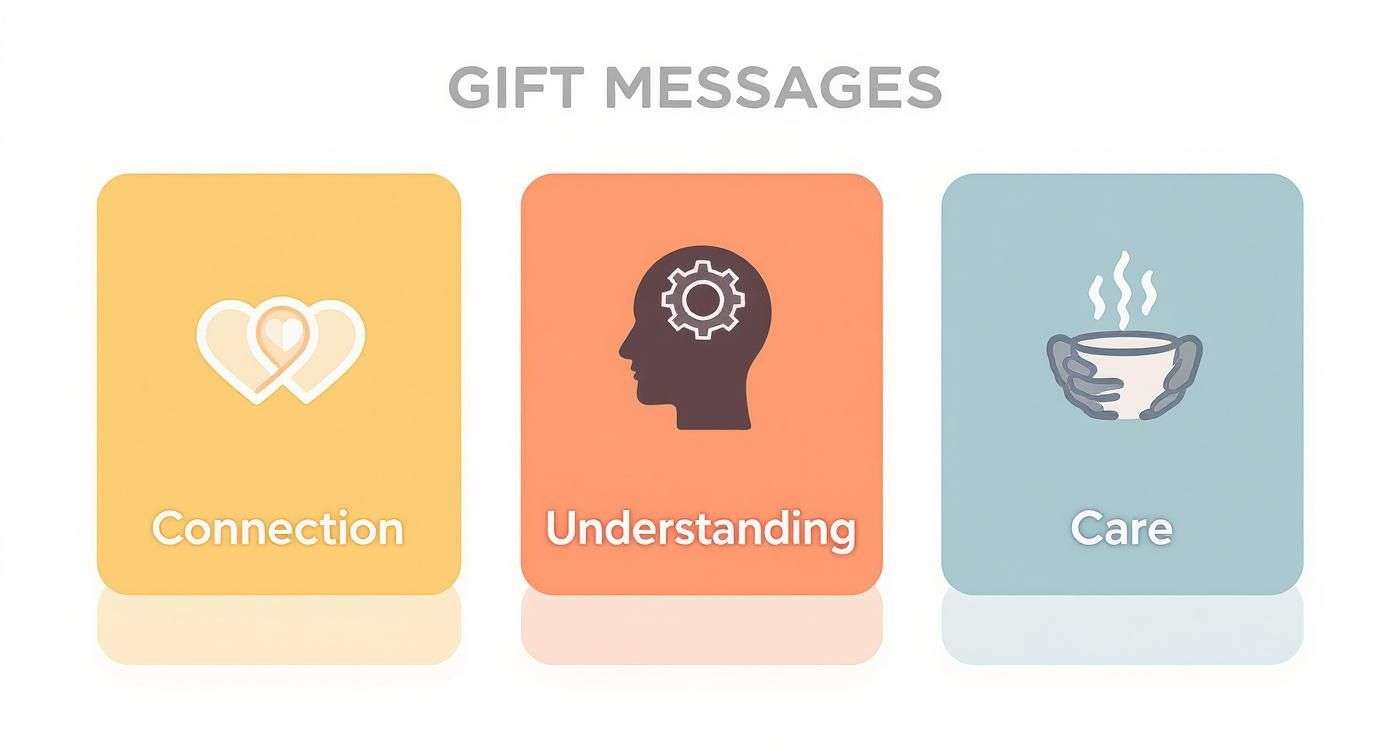
A truly meaningful gift sends a few key messages, loud and clear:
- “I Was Listening”: Remembering a passing comment about something they liked or needed shows you’re paying attention. It makes them feel heard and valued.
- “I Understand Your World”: Gifting something related to their niche hobby or a quirky passion shows you genuinely care about what brings them joy. It proves you’ve invested time in learning what lights them up.
- “You’re On My Mind”: A “just because” gift, no matter how small, is a powerful reminder that they are important to you even on a random Tuesday. It’s a little burst of affection out of the blue.
- “I Remember Our Moments”: A gift that references a shared memory or an inside joke acts like an anchor to your connection. It becomes a physical keepsake of your shared history.
For more inspiration on putting this into practice, you can explore these love language examples.
Why Thoughtfulness Matters More Than Price
For someone whose heart speaks the language of receiving gifts, the emotional weight of a present has nothing to do with the price tag. It’s all about the thought behind it. A pricey, generic gift can feel empty, while a small, deeply personal item can feel like the warmest embrace. It proves you’re paying attention—that you see them and cherish what makes them unique. The good news? You don’t need a bigger budget to become a better gift-giver, just a bit more mindfulness.
The secret is to become a quiet observer of your loved one’s world. Tune into the little things they mention offhand, the hobbies that make their eyes light up, and the simple comforts they can’t live without.
- Keep a running “ideas” list. Did they mention a book they want to read or a new local coffee shop they’re dying to try? Pop it into a note on your phone. Future you will be very grateful.
- Lean into their passions. If they’re a passionate gardener, a packet of rare seeds or a beautifully crafted hand trowel shows you support their happy place.
- Revisit shared memories. Think about a framed photo from a favourite trip or a silly souvenir that connects to an inside joke. Suddenly, a simple object becomes a treasure.
The goal is to find something that whispers, “I was listening.” That level of care and connection is something money just can’t buy. It’s interesting that while this language is profoundly meaningful to those who speak it, some find it the hardest to express. You can discover more insights about these love language preferences.
Receiving Gifts in Romantic Relationships
When it comes to romantic partnerships, the receiving gifts love language can be an incredibly powerful way to show your devotion. For a partner who feels most loved through these tangible symbols, a thoughtful present is more than just an object—it’s a touchstone. It serves as a physical reminder that they are seen, cherished, and on your mind, pushing back against any feelings of being taken for granted. Of course, it’s easy to focus on big occasions like birthdays and anniversaries. But the real magic often happens in the small, unexpected moments. It’s those “just because” gifts that truly forge a deep connection.
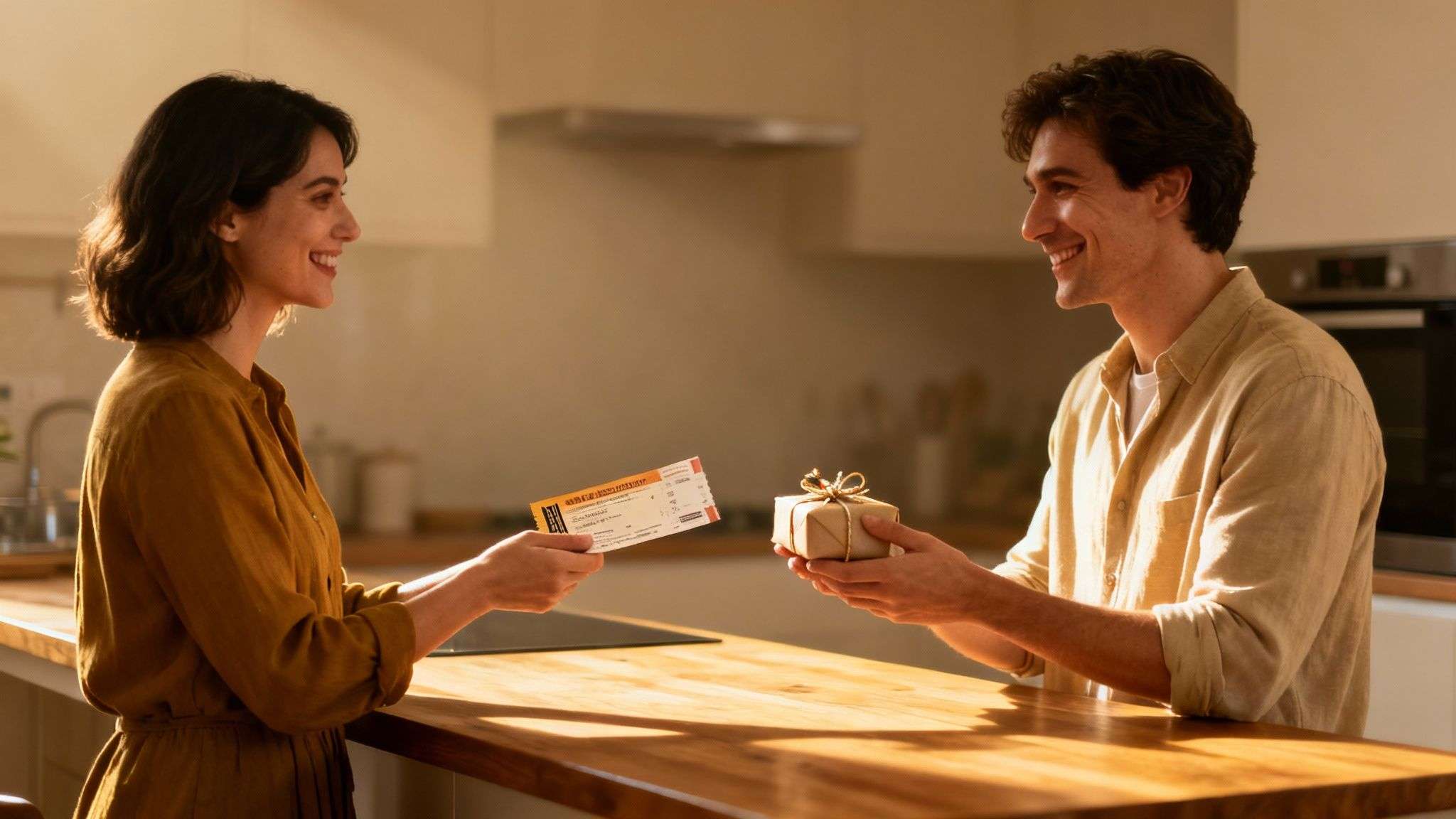
Weaving this love language into the fabric of your relationship doesn’t have to be complicated or expensive. It’s all about creating small habits that keep you tuned in to your partner’s world.
- Keep a shared “gift ideas” note. The next time your partner casually mentions something they like, you can discreetly jot it down. No more guesswork!
- Give experiences that build memories. Think tickets to their favorite band, a pottery class for two, or a planned weekend getaway. These gifts offer a double dose of love.
- Never underestimate their favorite little things. Bringing home their go-to snack after a long day can feel just as loving as a grand gesture. It sends a simple, powerful message: “I was thinking of you.”
It’s interesting to note that while this language is profoundly meaningful, it’s actually the least common primary love language for many. One poll found it was the preferred language for a smaller segment of the population. If you’re curious about the stats, you can Learn more about these love language findings.
Receiving Gifts in Parenting & Family Relationships
When we think about the receiving gifts love language, our minds often jump to romantic partners. But it’s just as powerful within the family circle. For a child, a gift isn’t about the price tag; it’s about feeling seen and known.
- Imagine finding a perfectly smooth, heart-shaped rock and giving it to your little one for their collection.
- Or surprising them with a single new crayon in that very specific shade of blue they adore.
- These small, thoughtful gestures tell a child, “I see you. I know what makes you light up.”
The same idea holds true for our relationships with parents or siblings. It’s not about grand presents. It’s the simple act of remembering your mom’s favorite brand of tea or grabbing a book by an author your brother mentioned. These little things are tangible proof that you’re paying attention and that you care. These thoughtful tokens become symbols of your connection, creating a foundation for lasting memories and reinforcing family ties across generations.
Gifts as Emotional Repair After Conflict
Words can sometimes fall short after a disagreement, and tension can linger. For someone whose love language is receiving gifts, a carefully chosen present can be a powerful, tangible olive branch in these moments. It’s crucial to understand this isn’t about trying to “buy” forgiveness or gloss over the problem. Instead, a gift acts as a sincere gesture of repair—a quiet, heartfelt way of saying, “I’m sorry, and I want to reconnect.”
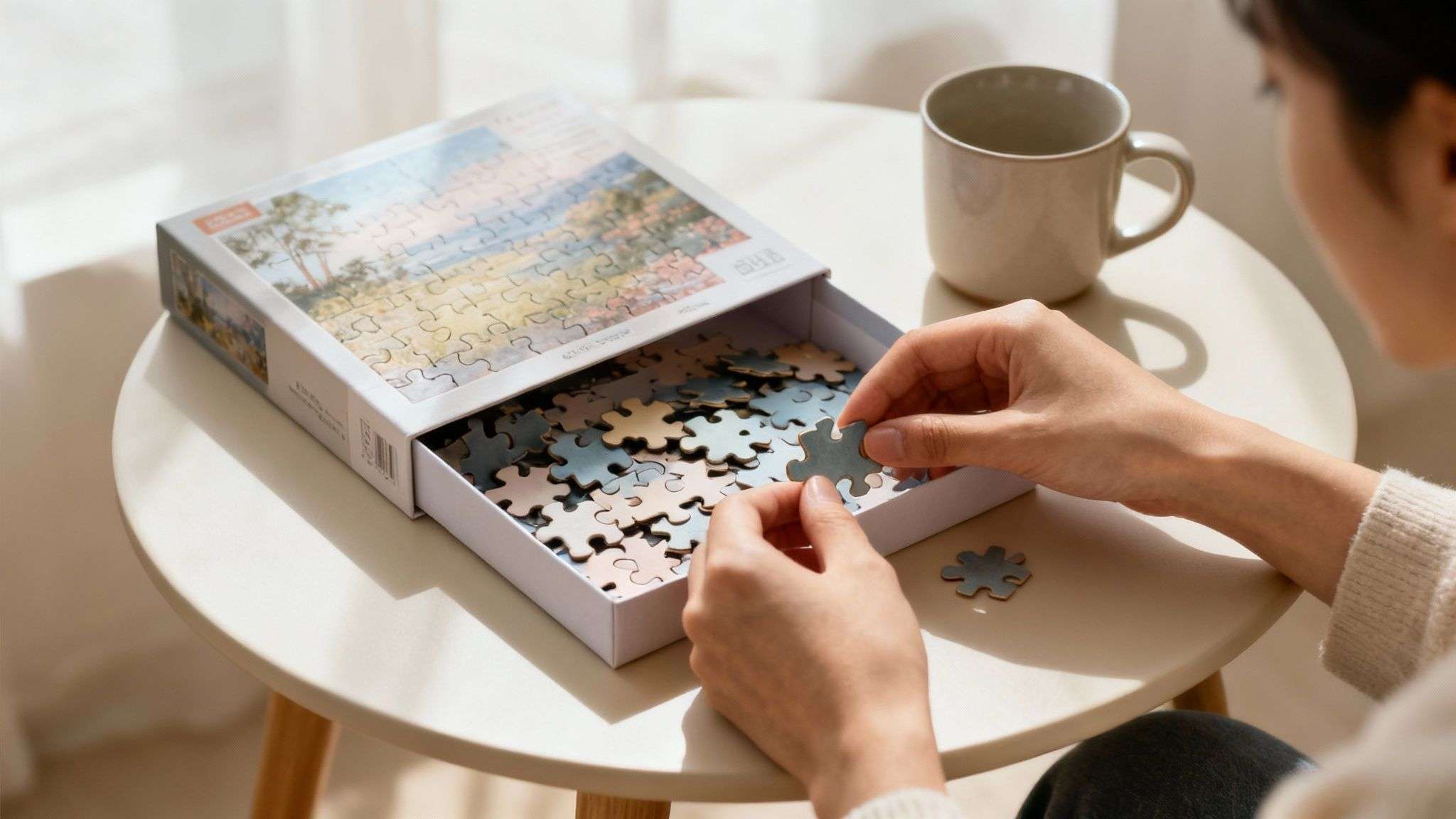
This simple act shows you’re committed to moving past the conflict together. The gift itself becomes a physical reminder of your desire to close the emotional distance that the argument created.
- Let’s say an argument started because one of you felt disconnected. Gifting a jigsaw puzzle to tackle as a team is more than just a puzzle; it’s a direct invitation to spend focused time together, intentionally rebuilding your connection.
- It shows you heard the underlying issue and are actively offering a solution, turning a simple object into a meaningful step toward healing.
Of course, this only works if the intention is genuine. The gift has to be backed up by a real effort to work through the conflict. When offered with sincerity, a gift can soften hearts and pave the way for a calmer, more productive conversation. For a deeper dive into navigating disagreements, our guide on how to communicate better in relationships has some great insights.
What Hurts Someone With This Love Language
It’s one thing to learn how to give good gifts, but it’s just as crucial to understand the common ways we can miss the mark. When a loved one’s primary love language is receiving gifts, a misstep isn’t just a simple mistake—it can feel like a direct emotional blow. Forgetting a birthday or an anniversary isn’t really about the physical gift that’s missing. For them, the empty space where a gift should be can feel like a message of “I forgot about you.” It can feel like a deep, personal rejection.
To avoid accidentally causing pain, it helps to know the biggest pitfalls.
- Thoughtless, Last-Minute Gifts: That generic box of chocolates you grabbed from the gas station on the way home can feel worse than getting nothing. It communicates a lack of forethought and can make someone feel like an afterthought.
- Giving a Gift That’s Really for You: Buying them tickets to see your favorite band or a new gadget that you’ve been wanting isn’t a gift for them; it’s for you. It shows your focus was on your own desires.
- Ignoring a Hint: Have they been dropping hints for weeks about a book they’re dying to read? Ignoring those clues can make them feel like you’re not listening or that their desires don’t matter. It’s a quick way to make someone feel invisible.
Building Stronger Connections Together
Understanding the receiving gifts love language is a beautiful way to show you care through thoughtful, tangible symbols that say, “I was thinking of you.” Take some time to reflect on what truly makes you and the people you love feel seen and cherished.
But what if you’re trying and still feel like you’re speaking different languages? If communication gaps are leading to the same old arguments, please know that support is out there. Sometimes, having a neutral third party can provide the tools you need to finally understand each other.
Our counsellors across BC and Alberta, and through virtual therapy across Canada, are here to help you build a more resilient, connected relationship. We can help you turn those points of friction into real opportunities for growth.
What to Do If This Is Not Your Language
The hardest version of this is not disagreement, it is bafflement — one partner genuinely cannot see why a small object carries so much weight, and reads the whole thing as pressure to spend money. If that is you, the useful reframe is that the gift is a receipt, not a transaction. It is evidence of attention, and the cost is close to irrelevant: a book they mentioned once, a coffee brought back unasked, something picked up on a walk.
Set yourself a low, sustainable bar rather than an occasional grand gesture. Someone with this love language would rather have twelve small unprompted things across a year than one expensive item at Christmas, because frequency is what carries the message. Writing down the two or three things they have mentioned wanting, as you hear them, is not unromantic — it is how most people who are good at this actually do it.
And if money is genuinely tight, say so plainly rather than going quiet. Silence gets read as indifference by the very person most tuned to notice it, whereas "I can’t spend anything this month, so I made you this" lands entirely differently.
Frequently Asked Questions
Does receiving gifts mean someone is materialistic?
Not at all. This is the biggest misunderstanding. For someone with this love language, the value is symbolic, not monetary. A handmade card or a single flower picked “just because” can mean more than an expensive, impersonal item because it shows genuine thought and care.
Why do gifts feel emotionally meaningful to some people?
Gifts act as lasting, physical reminders of love. They represent the time, effort, and thought someone invested in you. This entire process—being thought of, chosen for, and given to—is a powerful demonstration of care that makes a person feel seen, understood, and cherished.
Are small gifts still important?
Yes, absolutely! Small, thoughtful presents are often the most powerful expressions of this love language. They show that you’re thinking of them in your regular, everyday life, which reinforces a constant sense of connection and being valued.
Can forgotten gifts harm relationships?
Yes, they can. When a special occasion is missed, the hurt isn’t about the object. The pain comes from what the absence of a gift symbolizes: “I wasn’t on your mind.” It can feel like a deep personal slight, leaving them feeling unimportant or invisible.
Are experiences also considered gifts?
Definitely! Gifting an experience—like concert tickets, a planned picnic, or a class to take together—is a fantastic way to show love. It combines the thoughtfulness of planning with the bonus of creating a new shared memory, often overlapping with the Quality Time love language.
Can counselling help with misinterpretation of gift giving?
Yes, counselling can be incredibly helpful. Frequent hurt feelings around gift-giving often signal deeper communication breakdowns. A therapist can provide a safe space to unpack these dynamics, learn to understand each other’s emotional needs, and turn a point of friction into an opportunity for a stronger connection.
If you feel stuck in a cycle of misunderstanding, the team at Interactive Counselling is here to help. Our counsellors across BC and Alberta offer virtual therapy across Canada to guide you toward better communication and stronger relationships. If you are in the North Okanagan you can book couples counselling in Vernon, or work with us online from anywhere in BC or Alberta. We are open seven days a week and no referral is needed — call 250-859-4485 to book.